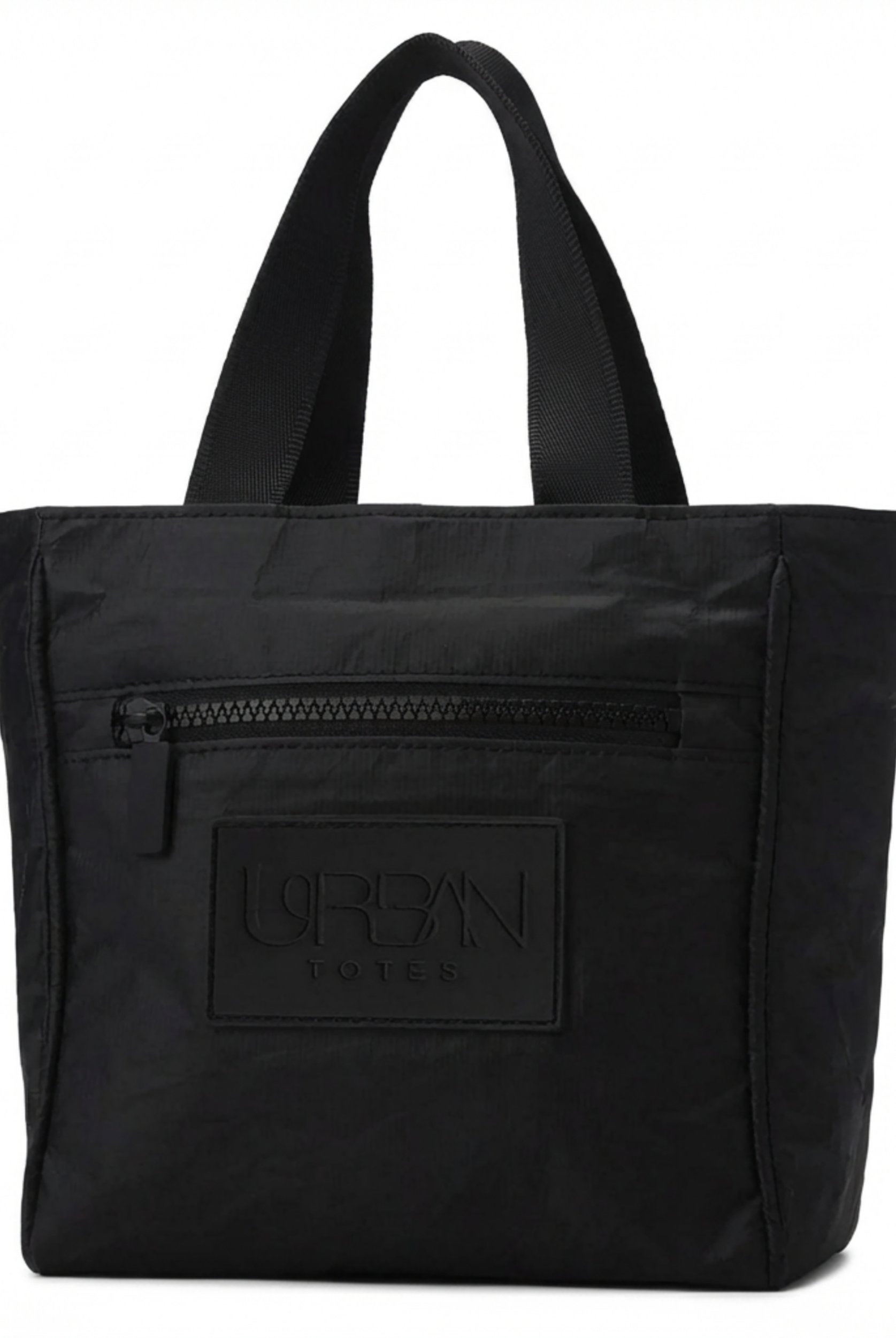
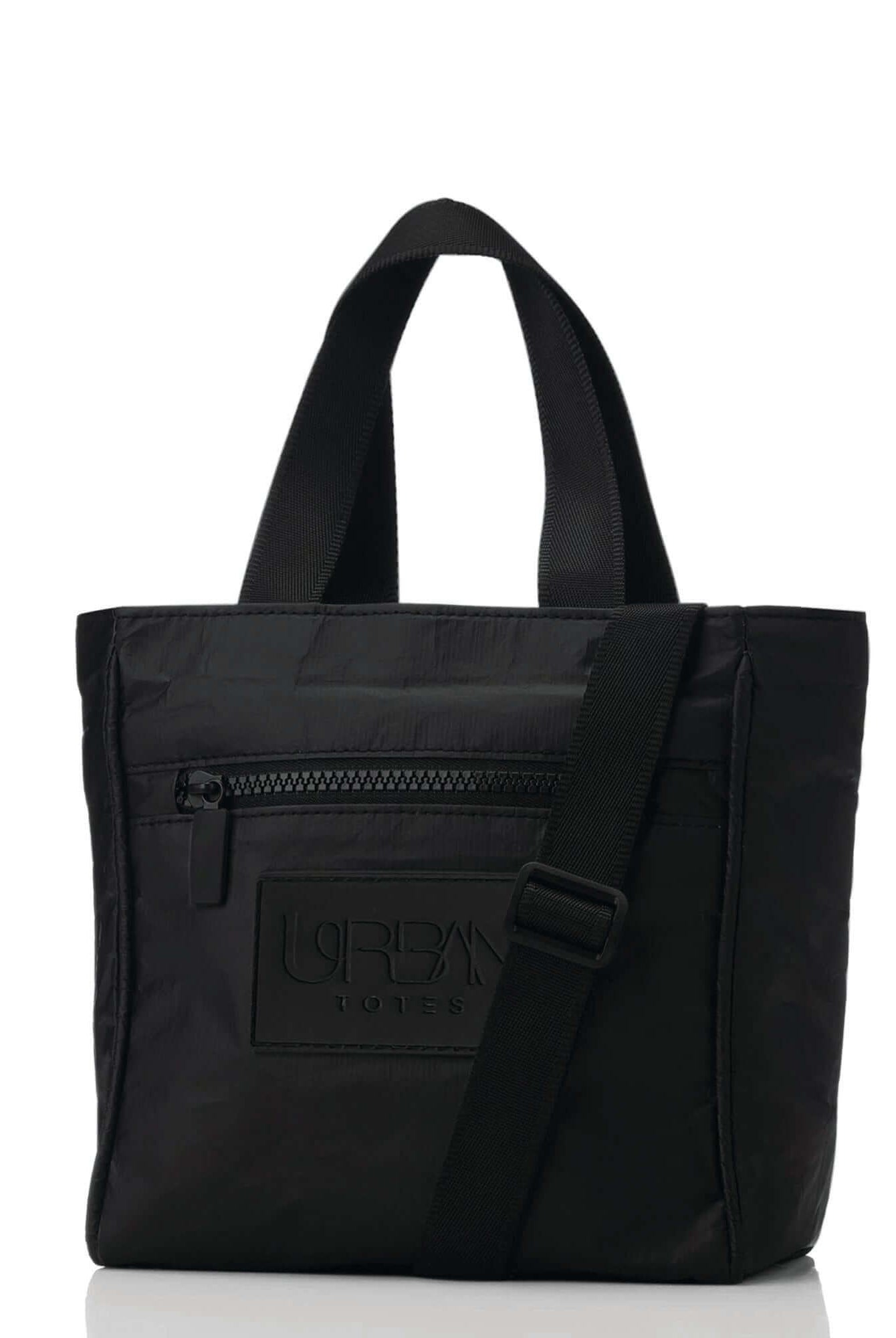
You're leaving school drop-off with coffee in one hand, your phone buzzing somewhere beside your lunch, and keys that seem to have slipped beneath everything you packed. Your bag has pockets. They just aren't helping when you need them.
A good work tote with pockets should make a full, moving day easier, not turn organization into another task. The useful question isn't how many compartments you get. It's whether you can reach what matters when the tote is packed, on your shoulder, and coming along for everything after work, too.
Table of Contents
- Pocket Layouts Matched to Real Days
- How to Test Pocket Layouts Against Real Carry Scenarios
- Sizing a Work Tote for Your Daily Load
- Materials and Durability Specs Worth Checking
- Carrying Comfort and Balanced Loading
- Packing Examples for Five Different Days
- Keeping Pockets, Zippers and Coatings Working Over Time
- Buying Checklist and FAQ for Your Work Tote
Pocket Layouts Matched to Real Days
Placement decides whether a pocket gets used, and pocket count rarely does. A slot tucked behind a laptop, or pinched shut by a folded sweater, stays unused once the tote is loaded and on the move.
Match each pocket to the moment you need it. Then judge that layout with the bag full, on your shoulder, and shifting as you walk.
Pocket layouts matched to daily carry
| Pocket layout | Best for | What belongs there | Watch for |
|---|---|---|---|
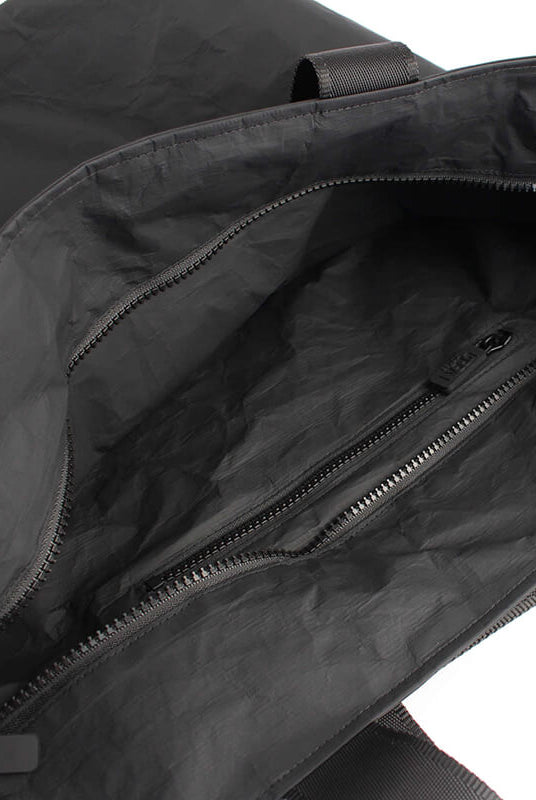
| Main zippered compartment | Work and travel carry | Laptop sleeve, notebook, water bottle near the centerline | Dense loads can crowd smaller pockets |
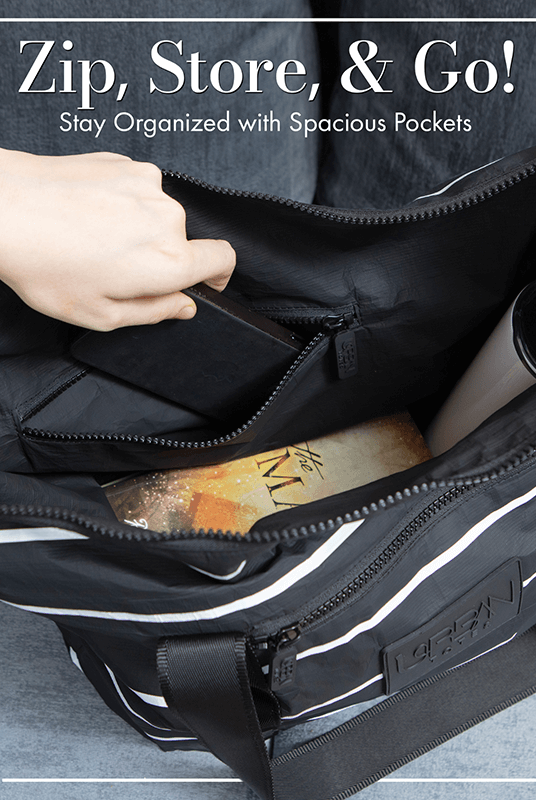
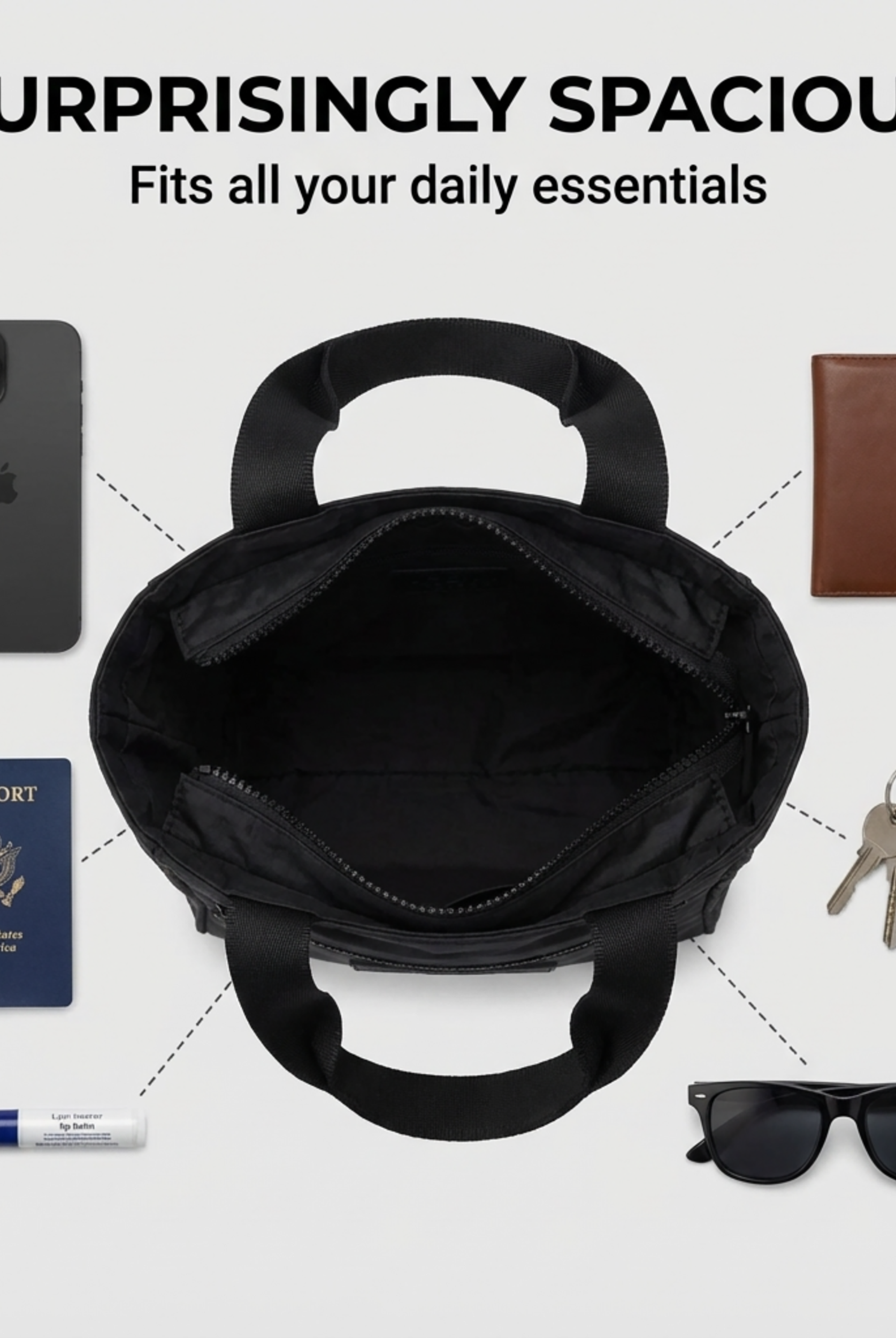
| Dedicated phone pocket | Commuting and errands | Phone, transit card, sunglasses | Confirm a large phone in a case still fits |
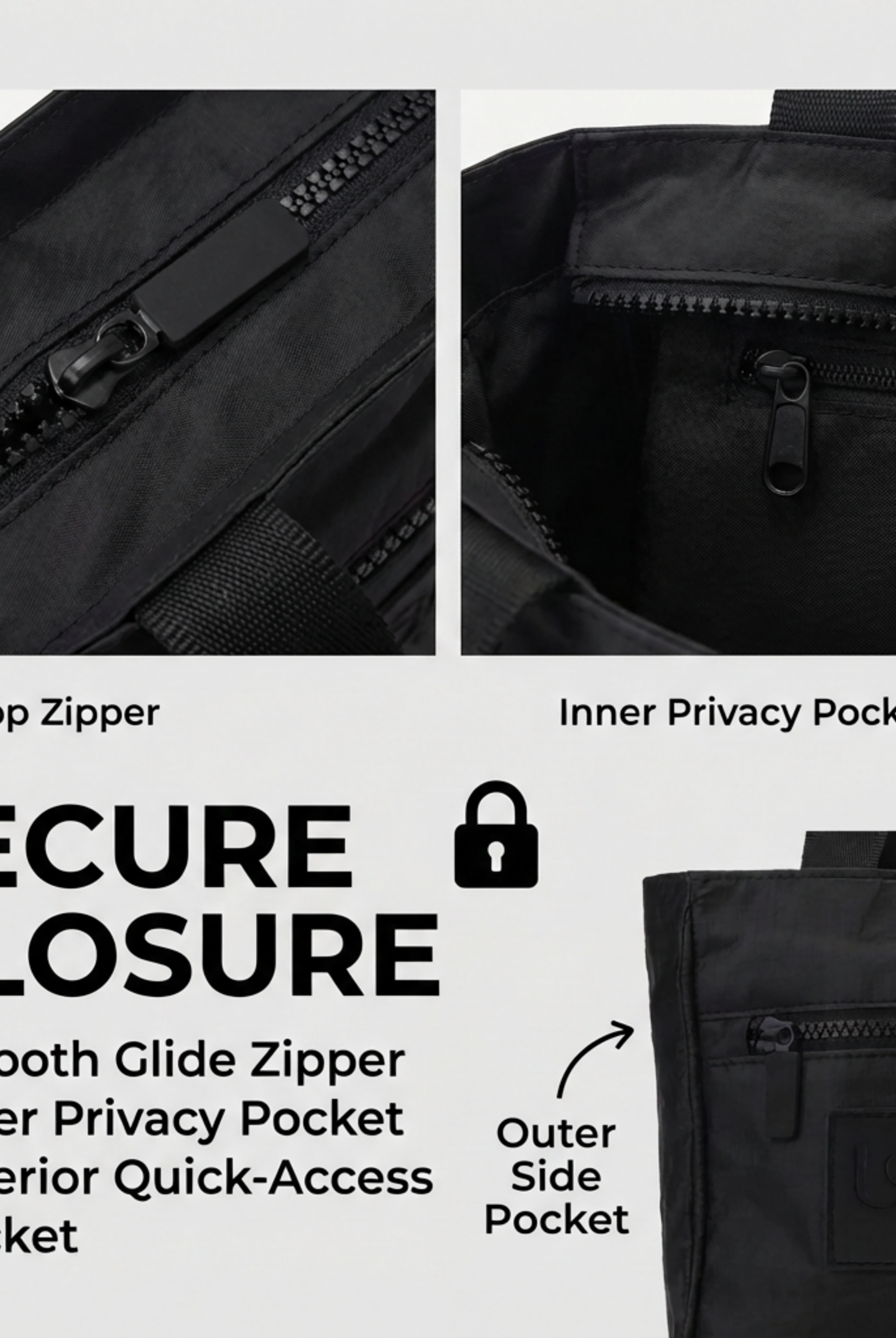
| Key or quick-access pocket | Caregiving and daily errands | Keys, fob, small snacks | Check whether it opens without emptying the bag |
| Interior zip pocket | Travel and gym days | Wallet, passport, earbuds | Slower to reach one-handed while walking |
| Outside side pocket | Gym and beach days | Wet swimsuit, sweaty kit, water bottle | Keep damp items away from documents |
| Open exterior slip pocket | Quick grabs | Tickets, pens, hand sanitizer | Small items can slip out when the bag is set down |
On a crowded train, one hand grips the pole while the other searches beneath a notebook for your keys. A pocket that looks convenient on an empty bag can become almost unreachable once lunch and a sweater press against its opening. That is the standard I use: can you get the item in one motion while the rest of the load stays put?
Treat the table as a set of options, not a packing prescription. Sunglasses need protection from keys, and snacks should stay wrapped rather than sharing loose space with a fob. A damp swimsuit belongs in a sealed wet pouch unless the pocket has an expressly suitable separating construction. An interior zip is the safer home for a wallet or passport, and it is slower while you are walking. An open exterior slip is faster for a ticket or pen, and those small items can fall out when the bag is set down.
For bottle placement, our guide to a bag with a water bottle holder helps you consider access alongside the room your bottle needs.
Pocket check: Write down the five items you reach for most. Give each a home you can reach one-handed in a single motion.
Try your actual phone with its case, not just a similar-looking display phone. Check that keys come out without unpacking the main compartment, and that documents do not share a surface with damp gear. If an essential has no usable home, change its zone or reconsider the bag.
How to Test Pocket Layouts Against Real Carry Scenarios
Test a tote full, not beautifully empty. Spare fabric and open space can hide awkward pocket placement, shallow openings, and a laptop sleeve that becomes tight once lunch goes in.
Practical quality deserves that attention. In the European Commission Joint Research Centre's 2025 textile preparatory study, 61% cited quality and 15% cited environmental impact when selecting apparel. Those are apparel findings, not tote performance results, but they support judging a purchase by useful construction rather than a reassuring label.
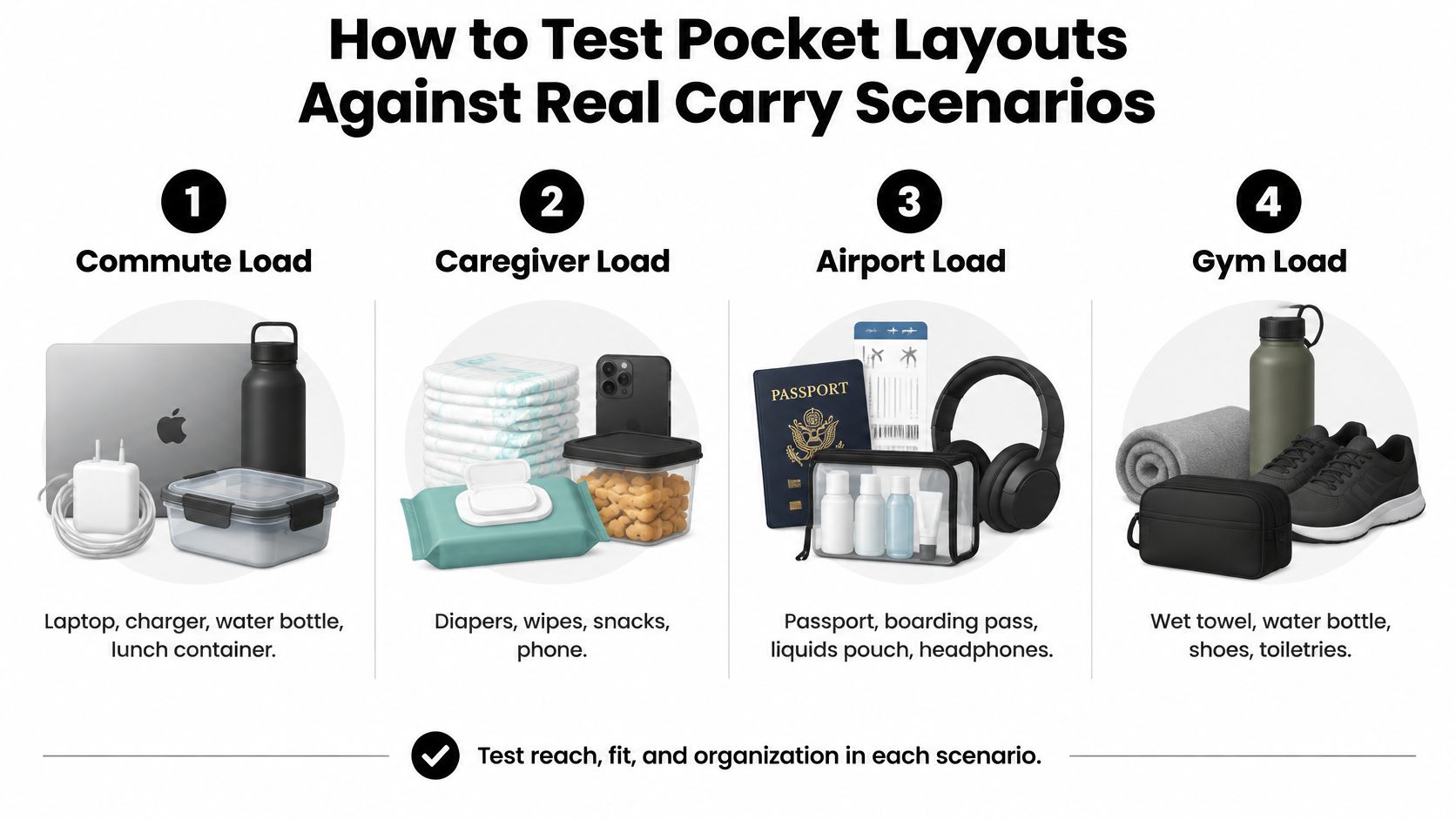
Run a loaded-pocket test
- Choose realistic loads. Try commute essentials, laptop, charger, bottle, and lunch; caregiver supplies, diapers, wipes, snacks, and phone; airport items, passport, boarding pass, liquids pouch, and headphones; or gym gear, a wet towel, sweaty kit, and bagged shoes.
- Pack your normal day. Include the things that habitually stay in your tote, because an artificially light load won't reveal crowding.
- Time your access. While standing still, retrieve your phone and keys one-handed; aim for a few seconds rather than a search, then check whether you can return them just as easily.
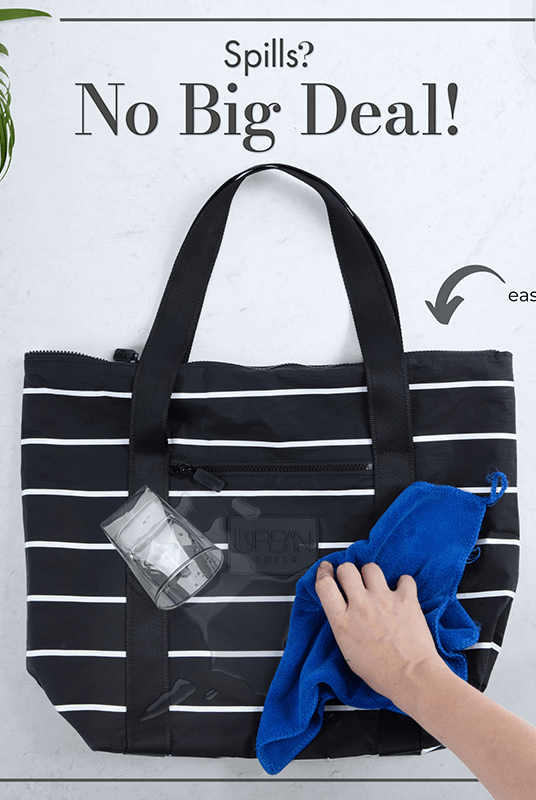
- Check spill paths carefully. With electronics removed, gently tip the packed bag and inspect whether moisture from a damp test cloth can reach adjacent pockets; don't deliberately leak a bottle into merchandise.
- Look before rummaging. Open the bag and locate your wallet without removing other contents, because a pocket isn't helpful if you can't see or recognize its opening.
- Retest the laptop fit. With the water bottle and lunch container inside, slide the device into its sleeve without forcing it; surrounding items shouldn't pinch the sleeve shut.
- Repeat half full. Remove some contents and check access again, since soft pockets can sag or fold away from the opening.
- Walk for ten minutes. Notice slipping straps, twisting, and pressure rather than treating a comfortable lift off the table as proof of carrying comfort.
Extra dividers consume space, and additional zippers add hardware and weight. They can also leave you remembering several possible hiding places for the same earbuds.
Keep the layout if your most-used item passes the access test and remains accessible with the laptop packed. If both checks fail, drop that layout rather than planning to become more patient with it.
Sizing a Work Tote for Your Daily Load
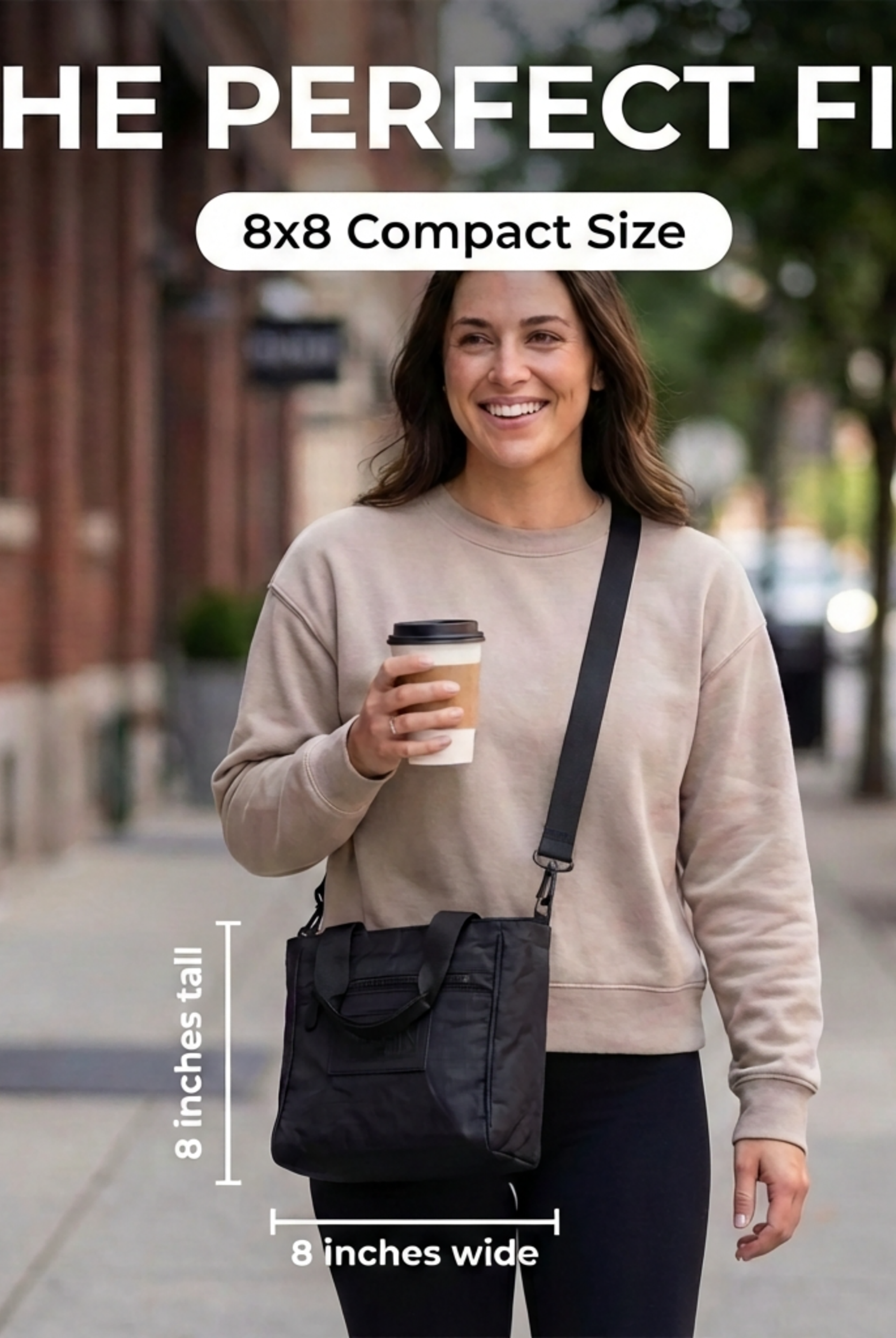
Start with your belongings on a table, not the word roomy on a product page. Lay out your laptop, lunch container, bottle, notebook, and whatever joins you after work, perhaps a toddler's snack pouch or a folded beach towel. Leave room for the cardigan or small purchase that comes home with you.
Measure usable space, not just the silhouette. A tote can look generous while thick seams, narrow openings, and internal dividers reduce what fits.
Measure the items that set the size
- Laptop and sleeve: Compare your device's width, height, and thickness with the sleeve's internal measurements. Include any protective case you normally use.
- Phone and pocket: Check pocket depth, opening width, and thickness with the phone inside its everyday case.
- Lunch and base: Place your lunch container flat beside the bottle. Make sure neither has to lean against the laptop to fit.
- Straps and clothing: Try the handles over your usual coat, with enough clearance to reach the opening without wrestling the tote off your shoulder.
Our guide to choosing a work bag with a laptop compartment offers another way to assess device space without relying on exterior dimensions.
A broad base can help a loaded tote sit upright, but soft construction and uneven packing still affect stability. Set it down as you would beside a desk and see whether it stays put.
The right size closes around your day. It shouldn't require you to press down on lunch to pull the zipper across.
Consider where it will ride, too. Check your airline's current allowance before treating a tote as a personal item, and measure any luggage-handle attachment rather than assuming it fits your suitcase.
Materials and Durability Specs Worth Checking
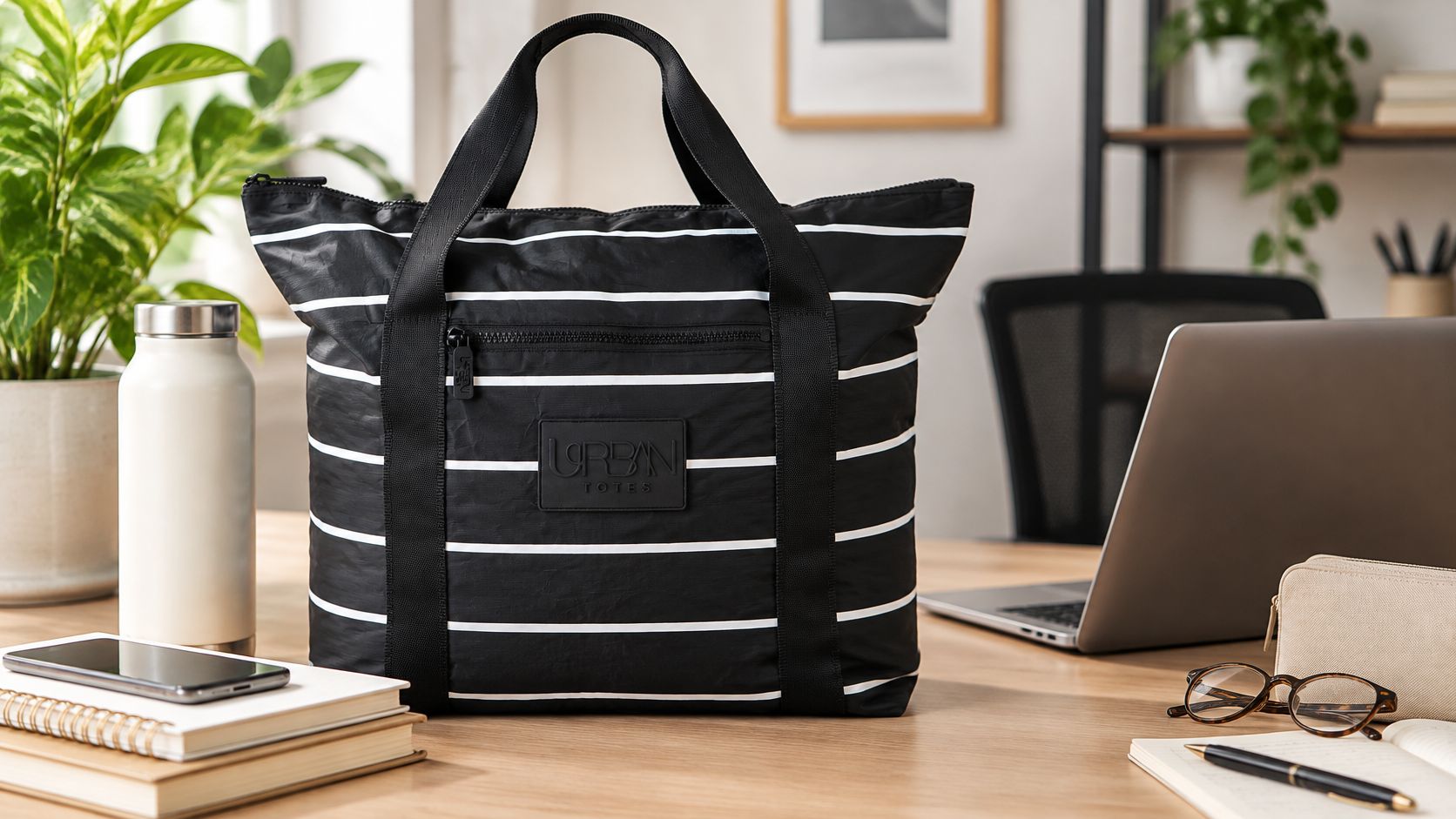
A pocket earns its keep when the tote is full and you are walking, not when the bag is empty on a product page. Extra pockets add seams, zipper tape, and stress points. Those details fail differently from the main fabric, so the specs below are worth reading before you trust a layout for a commute.
Durability specs, test methods and reference ranges
| Specification | Test method | Reference range | What it means for pockets |
|---|---|---|---|
| Water resistance, hydrostatic head | ISO 811 or AATCC 127 | 3,000-5,000 mm basic; 10,000-15,000 mm coated, per PT Outwear's technical fabric guide | Higher values resist water pressure better, but seams and zippers can still leak |
| Abrasion | ISO 12947 or ASTM D4966, Martindale | Ask the brand for the cycle count | Floors and transit seats wear corners and bases |
| Tear strength | ASTM D1424 | Ask for the published value | Pocket openings can tear under heavy loads |
| Fabric weight, denier or mass | Yarn denier or fabric mass specification | Publish per fabric | Heavier constructions can add strength, but also carry weight |
| Coating type | Brand specification | Name the coating | Coatings can wear with repeated cleaning |
| Seam and zipper construction | Visual check and gentle pull test | Reinforced stitching at corners and straps | Concentrated stress makes these areas worth inspecting |
PT Outwear cites approximately 3,000-5,000 mm for basic rain protection and 10,000-15,000 mm for more protective coated constructions, and it lists the abrasion and tear methods used in the table. Those figures are fabric reference points. They are not test results for Urban Totes, and they do not prove a finished bag is waterproof.
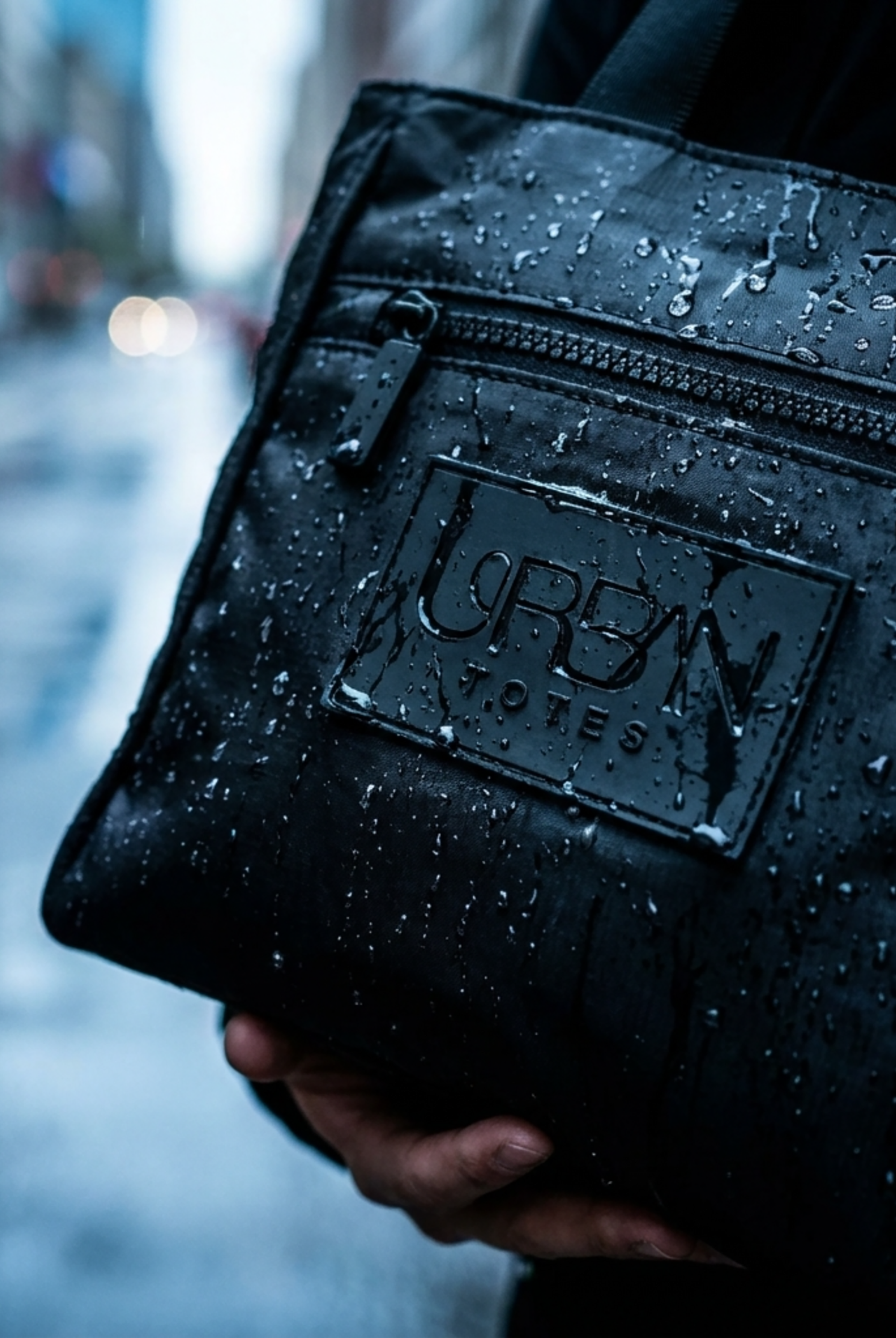
Water-resistant is useful language. It does not tell you how the complete bag behaves in prolonged rain. Hydrostatic head measures the water column a fabric withstands before penetration. Needle holes, seams, and ordinary zippers remain possible entry points, especially where a stuffed side pocket flexes as you move.
Abrasion results address rubbing. Tear testing addresses a different failure. A fabric may tolerate everyday scuffing and still need reinforcement where a loaded pocket pulls against its stitching.
Read the construction as well as the label
Denier describes yarn size, not a universal strength score. Fabric mass, weave, coating, and reinforcement all change how a pocket holds up, so heavier does not automatically mean better. Our tote bag material guide compares those trade-offs in more detail.
Recycled polyester can perform comparably to conventional polyester when construction is equivalent. Recycled content alone does not establish waterproofness or durability.
I would rather inspect stress points than trust a fabric name. For a family-use inspection mindset, InchBug's simple durability checks for parents are a useful companion resource. Examine pocket corners, strap attachments, and zipper ends gently. Look for loose stitching, distortion, or fabric pulling away from the seam. Those details matter more than a polished material description once the bag is packed and in motion.
Carrying Comfort and Balanced Loading
A 10% load is a real number on a bathroom scale, not an abstraction. Empty weight matters, but loaded balance matters too. Weigh the bag with everything already inside it, then set that total against the proportions below. A pocket that looks tidy on the kitchen counter can still drag the strap once you start walking.
GenTwenty's discussion of one-sided tote loading summarizes a randomized study of 13 healthy women carrying handbags at 5%, 7%, and 10% of body weight, in which heavier loads shifted the center of pressure toward the carrying side and increased asymmetric upper-trapezius and back-muscle activity; it also describes a study of 34 women linking habitual one-sided carrying with gait differences.
Load at 5%, 7% and 10% of body weight
These are calculated examples using the study's load proportions, not recommended targets or product weight limits. For a real-world comparison, include the bag itself when weighing what hangs from your shoulder.
| Body weight | 5% load | 7% load | 10% load |
|---|---|---|---|
| 50 kg | 2.5 kg | 3.5 kg | 5 kg |
| 60 kg | 3 kg | 4.2 kg | 6 kg |
The tote felt fine at the front door. By the next bus stop, you're lifting your shoulder to stop the strap sliding and wishing you'd left the spare shoes behind. That slide usually starts when a full pocket sits off to one side. A heavy bottle in an outer pocket pulls the bag outward with every step. If the tote twists, move the bottle inward or load the opposite side. Gripping the strap harder only hides the imbalance.
Keep dense items close to the bag's centerline and low enough that they don't make the tote top-heavy. Position the laptop in its intended sleeve, then arrange the charger and bottle without pushing the device sideways. Use reachable pockets for lighter items such as your phone, keys, and transit card. Extra pockets help while the bag is moving only if those pockets stay light. A stuffed outer pocket undoes the even load you just set in the main compartment.
Comfort rule: Don't use available space as a reason to carry more than you need.
Look for a stable base, balanced pocket placement, and straps that spread pressure without slipping. Wide padded straps are worth considering for heavier everyday carry, though strap fit still needs a loaded trial. I would judge the layout on a walk with the bag full, not by counting pockets while it sits empty.
Our guide to how to wear a tote bag covers carrying arrangements to consider. Switch shoulders during the day, or use a crossbody configuration where the bag offers one, rather than relying exclusively on the same side.
Packing Examples for Five Different Days
Assign each item to the pocket you reach for next. The next thing you need has no reliable home when it sinks under lunch, a charger, or a damp swimsuit.
These five days use one rule in different settings: assign space according to the next action, not the category of the object. Judge the layout while the bag is full and moving. A pocket that looks tidy on a table can fail once the tote swings, tips, or gets set down in a hurry.
Beach-day mom
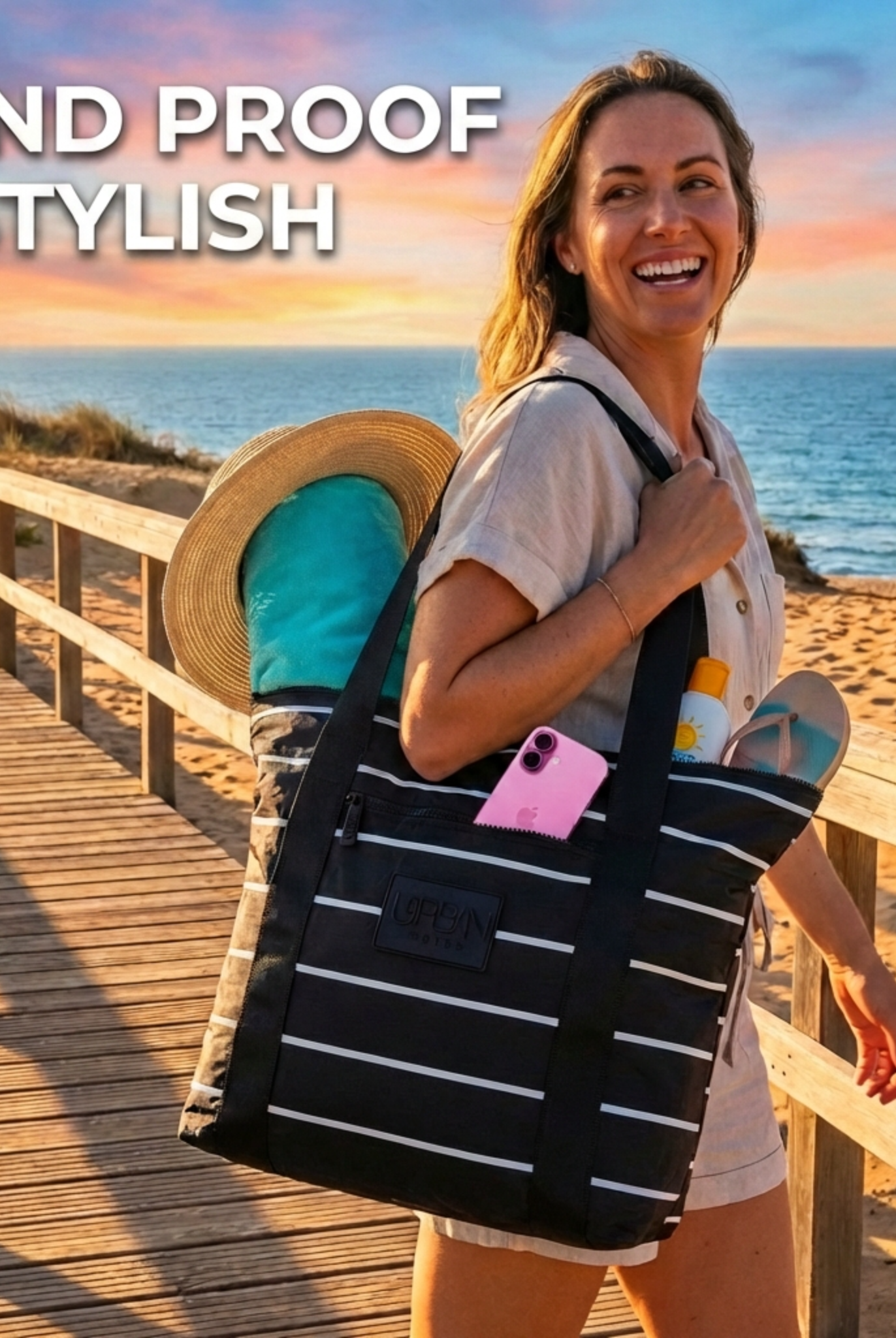
Put the wet swimsuit in a sealed pouch in the outside side pocket. Sunscreen and wipes go in the interior zip pocket. Snacks stay in the main compartment, and the phone stays in the front pocket, away from sand and damp fabric.
Before you sit, turn the phone pocket toward you. Easy reach should not leave the phone on the outer face of a bag you are not watching. If the tote is stuffed with towels, that front pocket still has to open without unloading the main compartment.
Daily commuter
Keep the phone in quick access, keys on a clip near the opening if the bag has one, and lunch low in the main compartment. Separate charging cables from food so you do not lift lunch to find a charger.
For a desk snack that fits the same routine, Gym Snack's a practical guide to plant-based office snacking can help with food choices. Pack that snack in a closed container. Crumbs in an organizer pocket stick to cards the next time you reach in on the train.
Weekend traveler
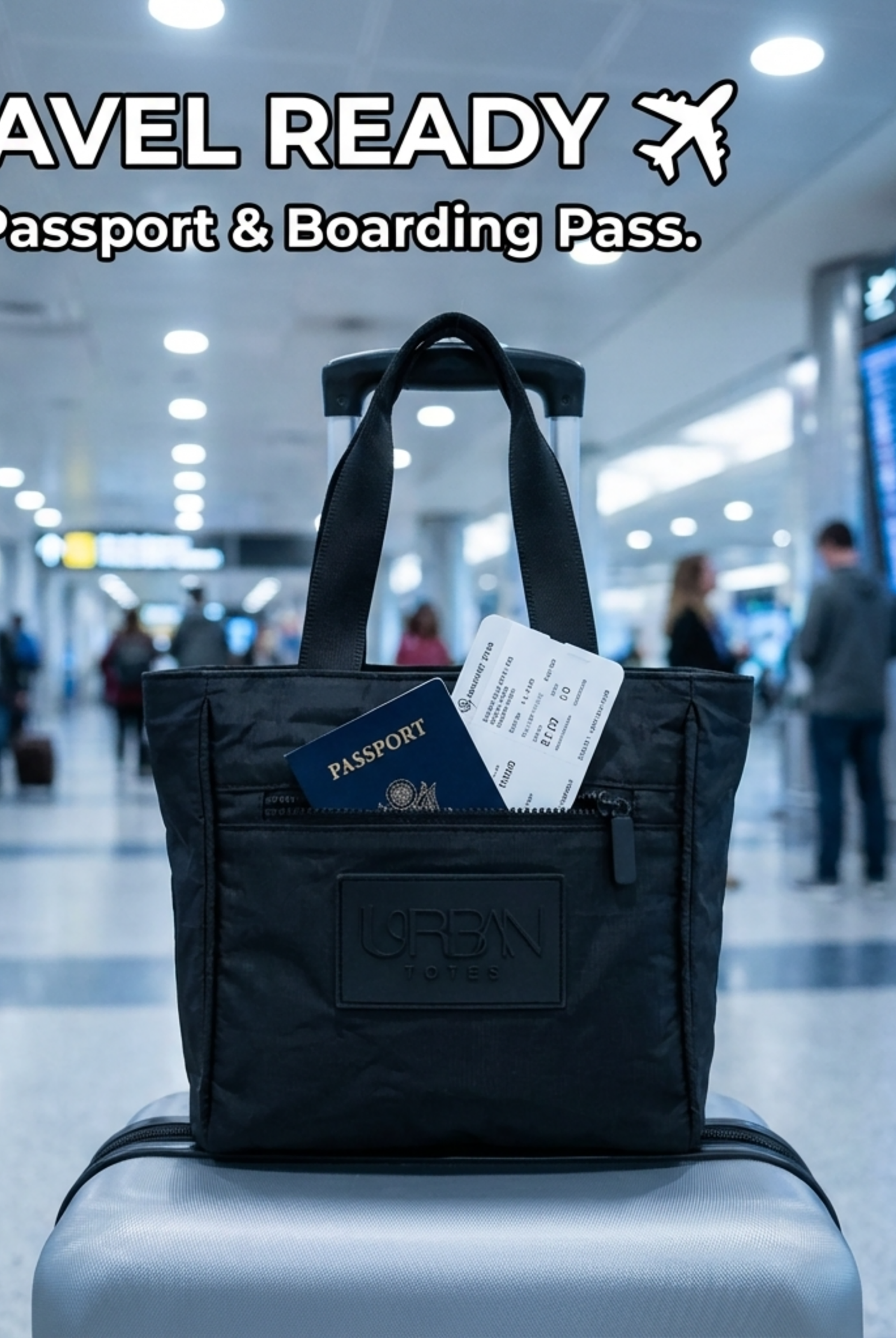
Passport and boarding pass go in an interior zip pocket between checkpoints. Keep chargers together in a small pocket, toiletries sealed in the main compartment, and your phone in a reachable exterior pocket.
Once you sit in the terminal, put the documents back before you open a book. A coat pocket is a poor stand-in. When you stand for boarding, the zip pocket is the place your hand already knows.
Errand-runner
Keep the shopping list and cards in the front pocket while you are using them, produce bags in the main compartment, and keys in quick access. Return cards to a closed pocket before you walk on, especially when you bend over a market stall.
A full tote shifts when you crouch. An open front pocket can drop cards onto the pavement. Closed, that same pocket still lets you pull the list without digging past groceries.
Style-conscious minimalist
Use the phone pocket and the main compartment. Leave unused pockets empty. You do not need to fill every compartment for a multi-pocket tote to earn its keep.
I would rather leave two pockets empty than bury the phone under a sweater. Empty space is useful if the pockets you do use stay clear when the bag is heavy. The everyday rule is simple: the item you need within ten seconds goes in the pocket you can reach fastest, provided that spot also protects it.
Keeping Pockets, Zippers and Coatings Working Over Time
In the 2025 global circularity study, 47% of respondents identified durability and long-lasting quality as defining sustainable clothing, compared with 37.8% who selected lower-impact materials. Those findings concern clothing, but the practical question applies to a tote: can you keep using it, cleaning it, and repairing it?
Care should suit the actual construction, especially when a bag combines coated fabric, lining, hardware, and reinforcement. A washable outer fabric doesn't automatically make the complete bag suitable for every wash cycle.
A routine you can keep
- Empty pockets weekly: Shake out crumbs and remove grit with a soft brush or vacuum attachment so debris doesn't collect along seams.
- Spot-clean first: Use a damp cloth on the outer fabric and lining. Test any mild cleaning solution on a hidden area before treating a visible stain.
- Respect the care label: Machine wash only when the bag's instructions allow it. Avoid harsh solvents and unapproved heat, which can damage coatings or distort components.
- Brush zipper teeth: Use a dry, soft brush to remove grit. If a pull catches, back it up gently and free trapped fabric instead of forcing it.
- Inspect stress points: Every few months, examine pocket corners and strap ends. Have loose stitching secured before the opening grows.
- Dry before storing: Leave compartments open until the lining is dry, then fold only as the construction allows.
Our tote bag maintenance guide offers a useful reference when you're deciding how to clean and store your bag.
A failed seam doesn't have to end the bag's working life. A tailor or bag-repair specialist may be able to restitch a pocket or replace a zipper, depending on access and construction.
When you no longer need the tote, resell or donate it if it's usable. For a worn-out bag, check whether a local textile collection accepts coated fabrics and mixed-material accessories before dropping it off.
Buying Checklist and FAQ for Your Work Tote
You are late, the bag is already full, and the door is closing. That is when a work tote with pockets either earns its layout or fails it. Phone and keys have to come out one-handed while the laptop stays put and a bottle does not tip the bag. A tidy product photo will not show you that. Buy the layout that matches how you already pack, not the one that looks most organized empty.
Your buying checklist
- Assign your essentials. Your five most-used items should each have a reachable home, with phone and keys available one-handed in a few seconds.
- Check the loaded sleeve. Your laptop or tablet should slide into its intended compartment with the bottle and lunch already packed.
- Use your real accessories. Test the phone in its case and confirm whether you can retrieve keys without opening the main compartment.
- Read beyond material labels. Look for published water-resistance measurements, abrasion cycles, tear strength, fabric specifications, and construction details. Missing results mean those specifications have not established performance.
- Match straps to the load. Look for width, padding where needed, stability, and a stated recommended load that suits your normal belongings.
- Choose manageable care. The cleaning instructions should match what you will do after a spilled drink or a sandy afternoon. Extra pockets that add weight or steal open space are only worth it if you use them every day.
Frequently asked questions
Are more pockets always better?
No. A pocket earns its place when you can still use it with the bag full and moving. Extra dividers can shrink the open space you need for a bulky lunch or a change of clothes.
Can I machine wash a work tote?
Treat washability as a buying filter. If the care label does not allow a machine wash, decide whether damp-cloth cleaning fits your week before you pay for the bag.
How heavy should a day's load get?
Use a ten-minute walk as a practical comfort check, not a medical threshold. If you keep adjusting, leaning, or wanting the bag off your shoulder, cut the load or change how you carry it.
What if the pockets disappear once the bag is full?
Load your real day, then walk. If the phone pocket collapses under the laptop, or the key pocket rides where your hand cannot reach it, those pockets are not doing the job. I would rather one pocket you can hit while moving than several that only work when the tote is empty.

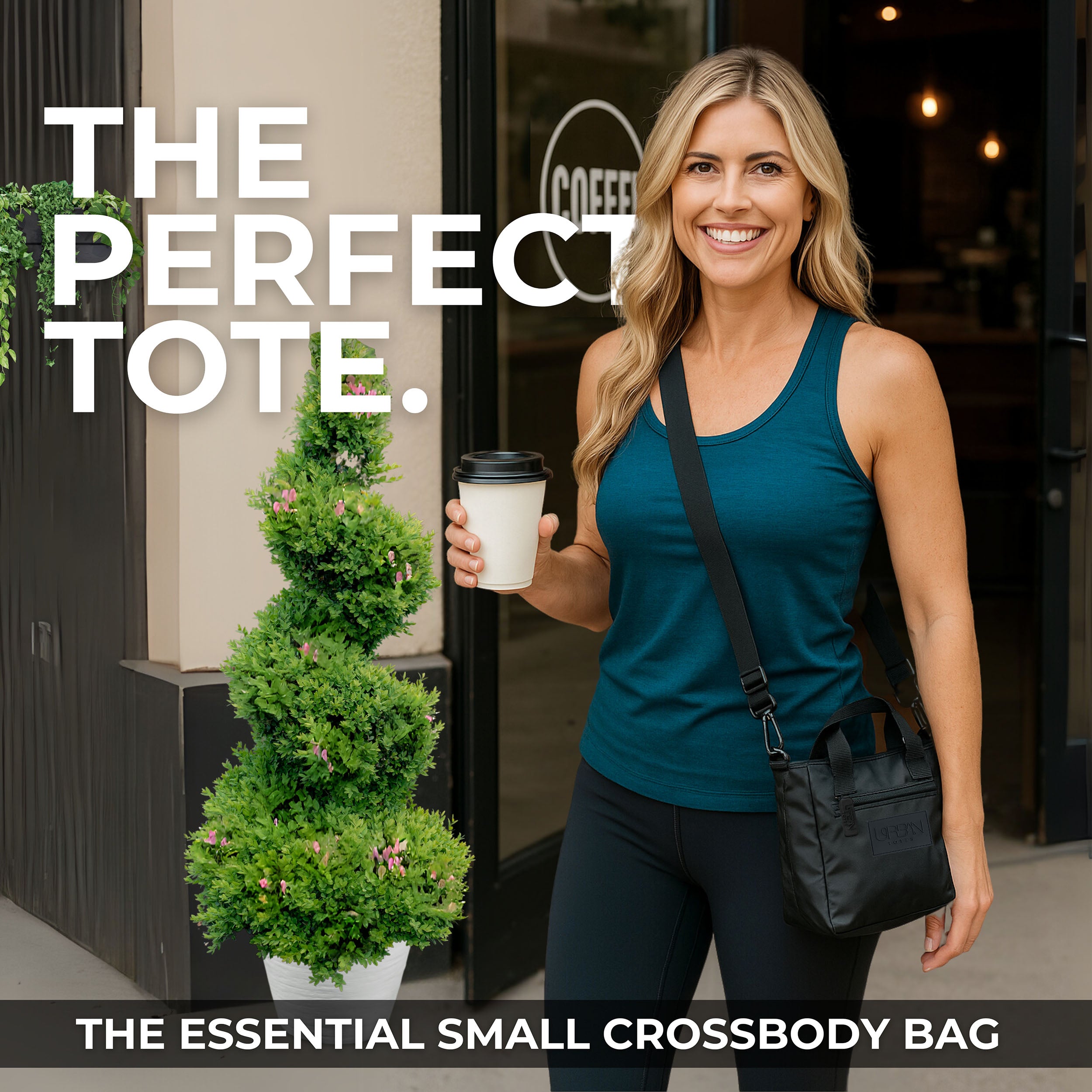
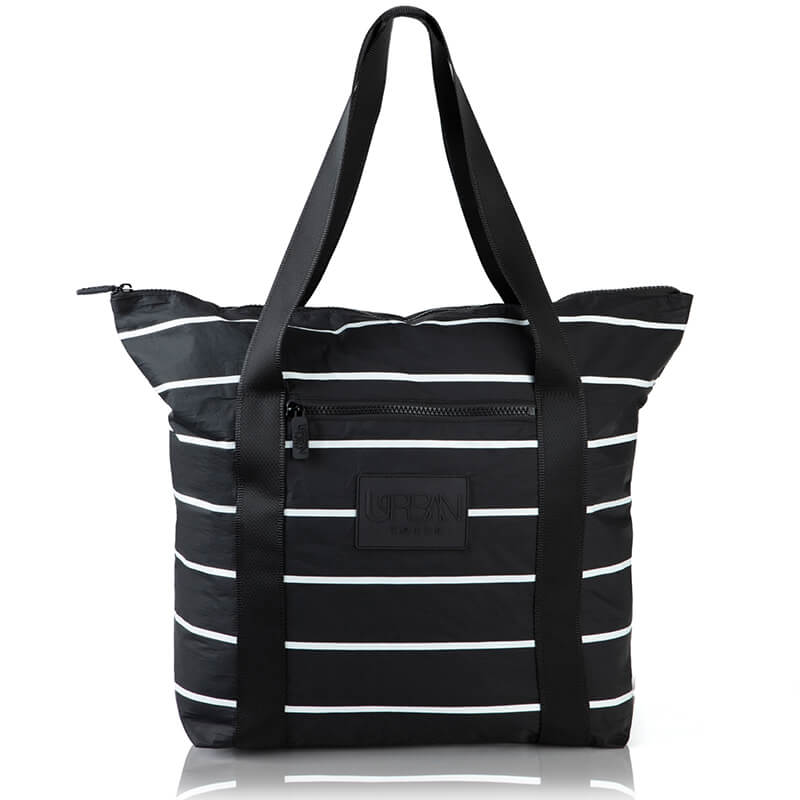
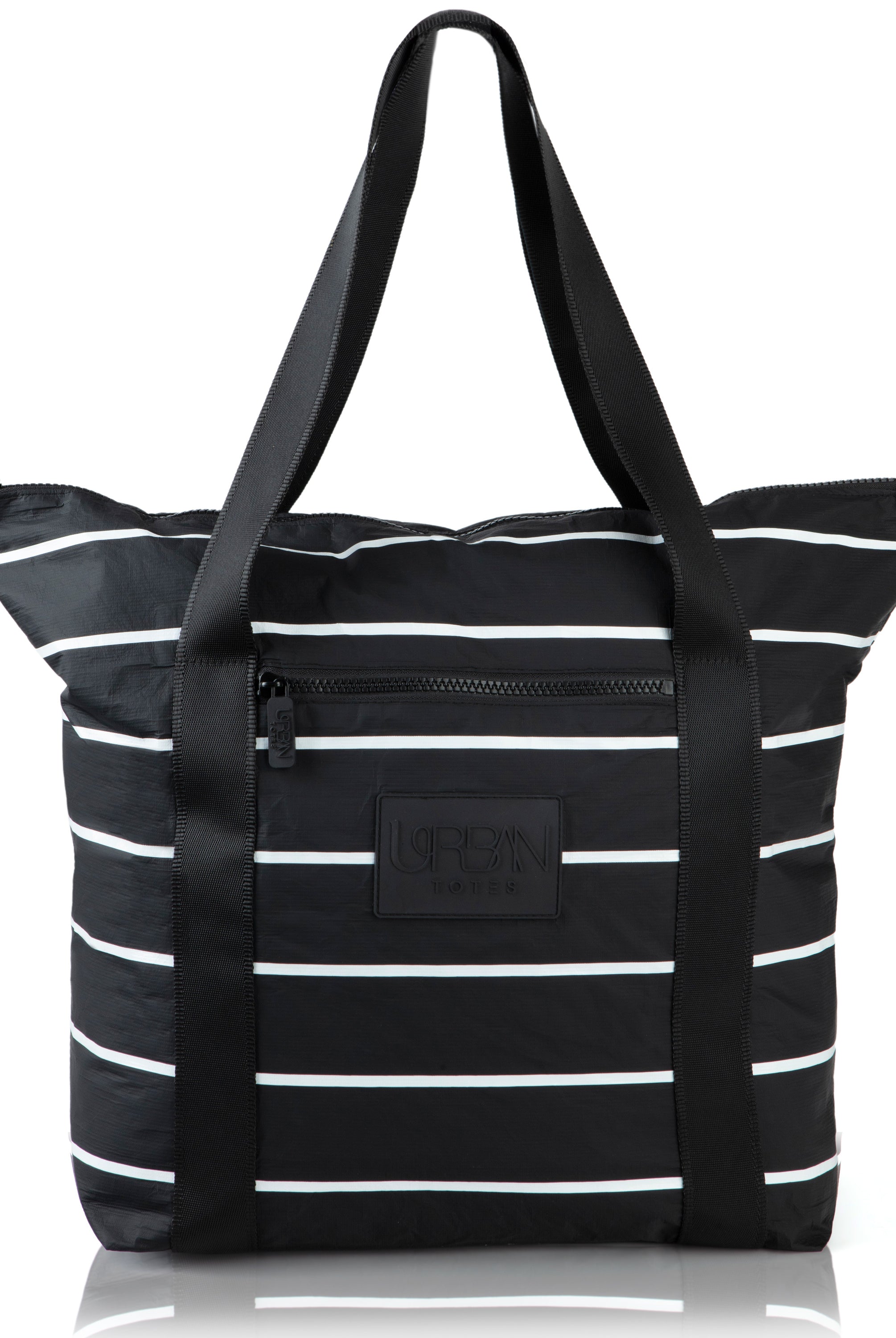
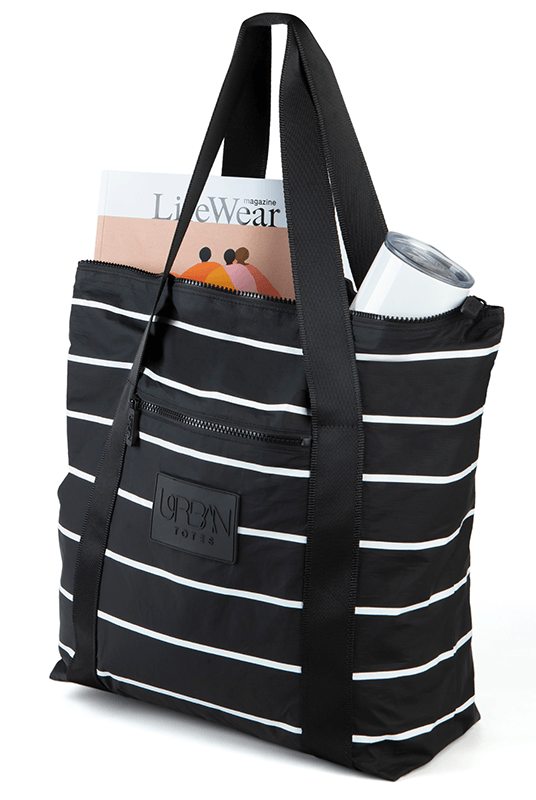
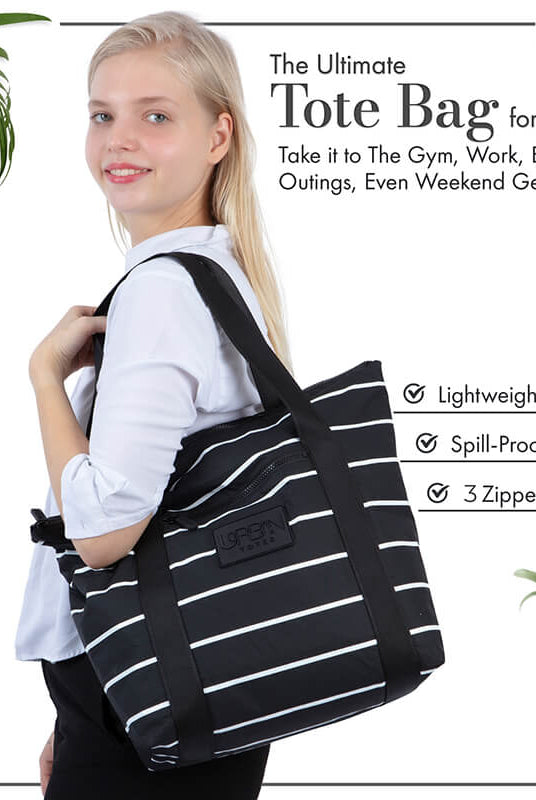
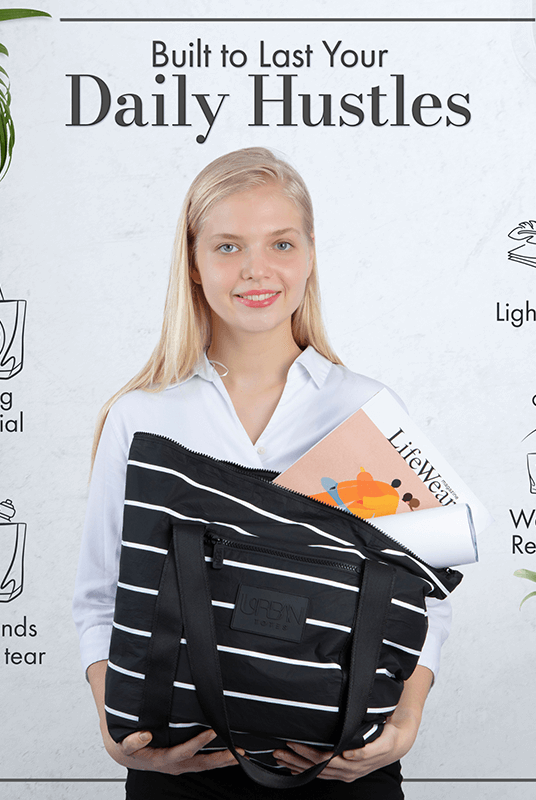
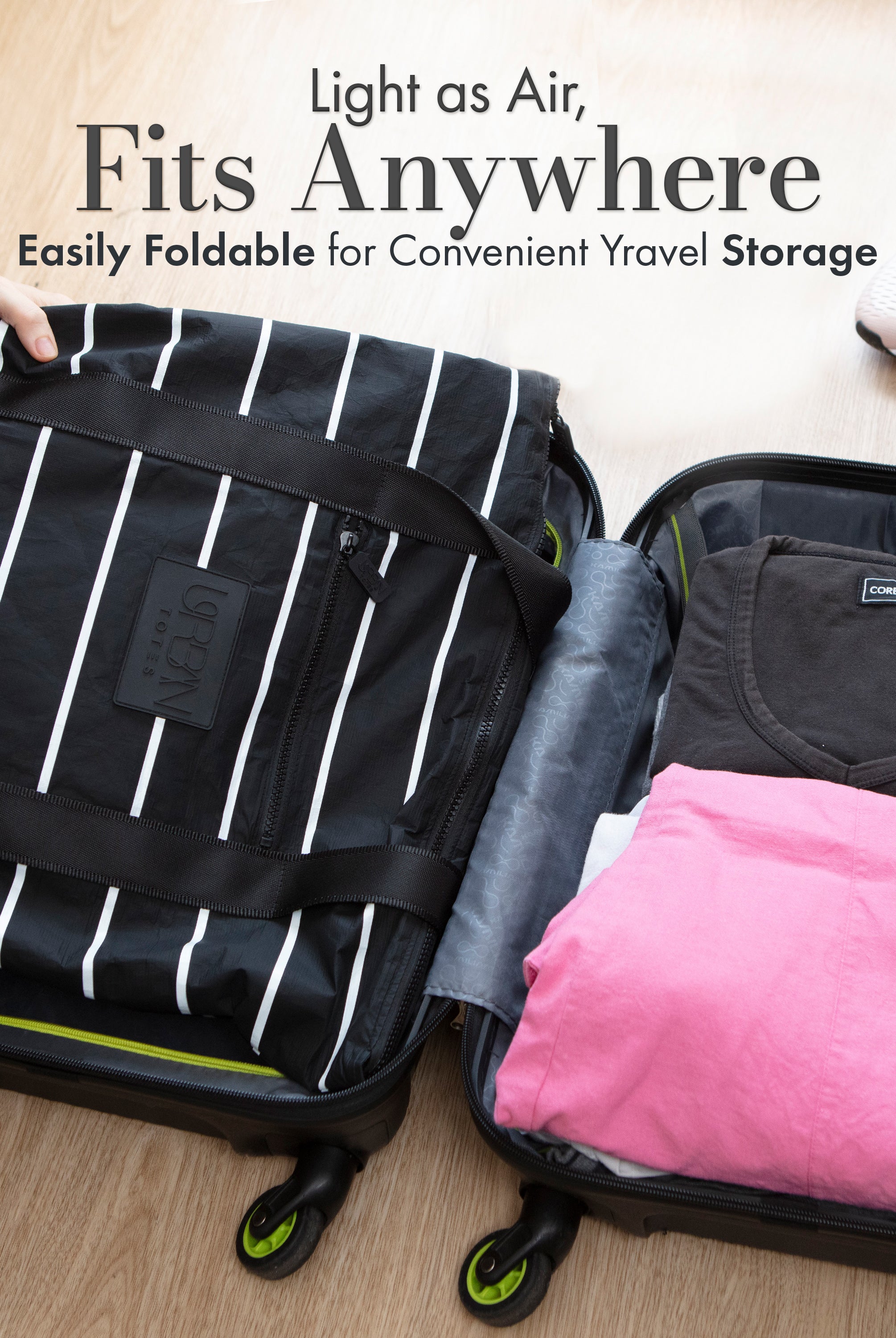
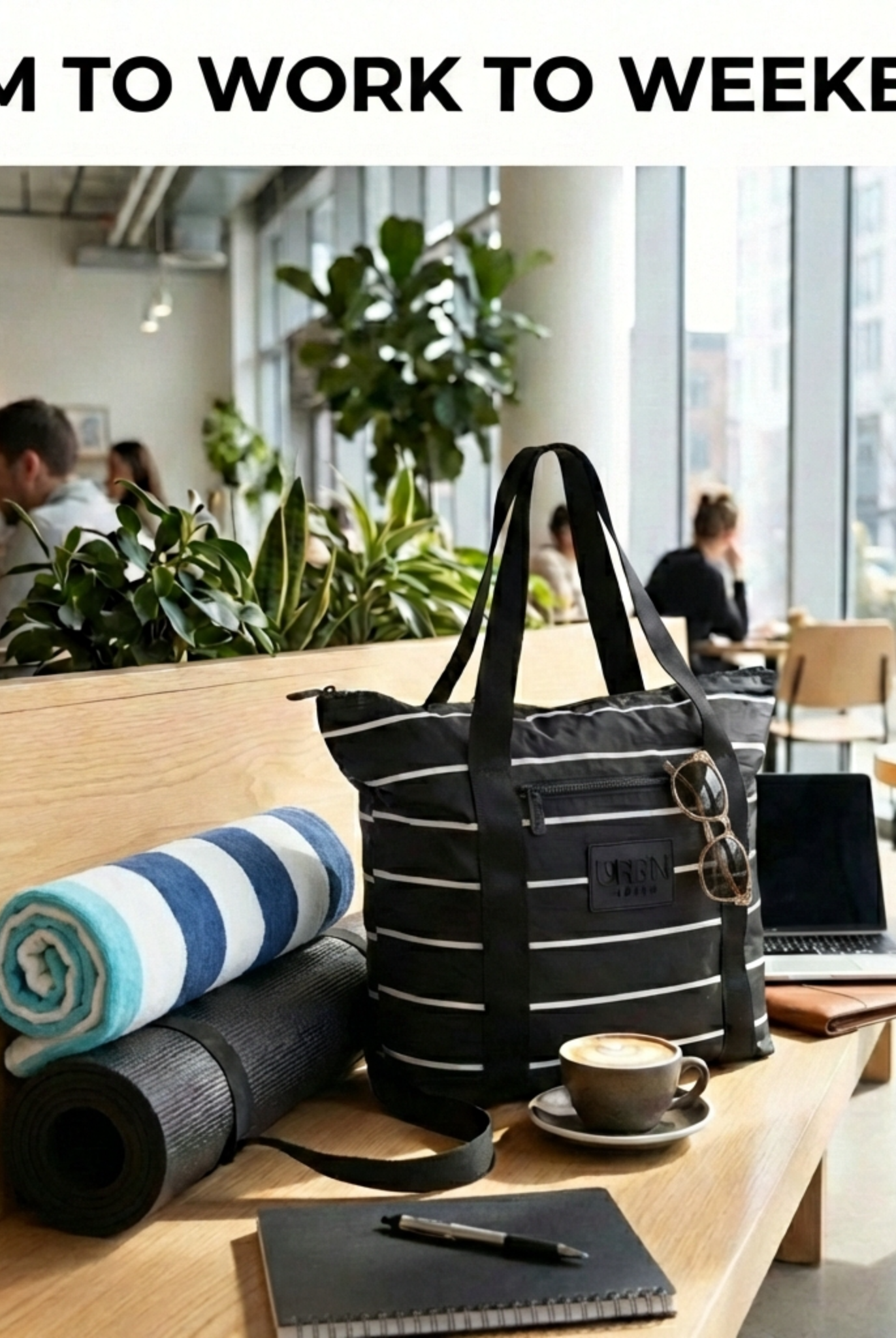
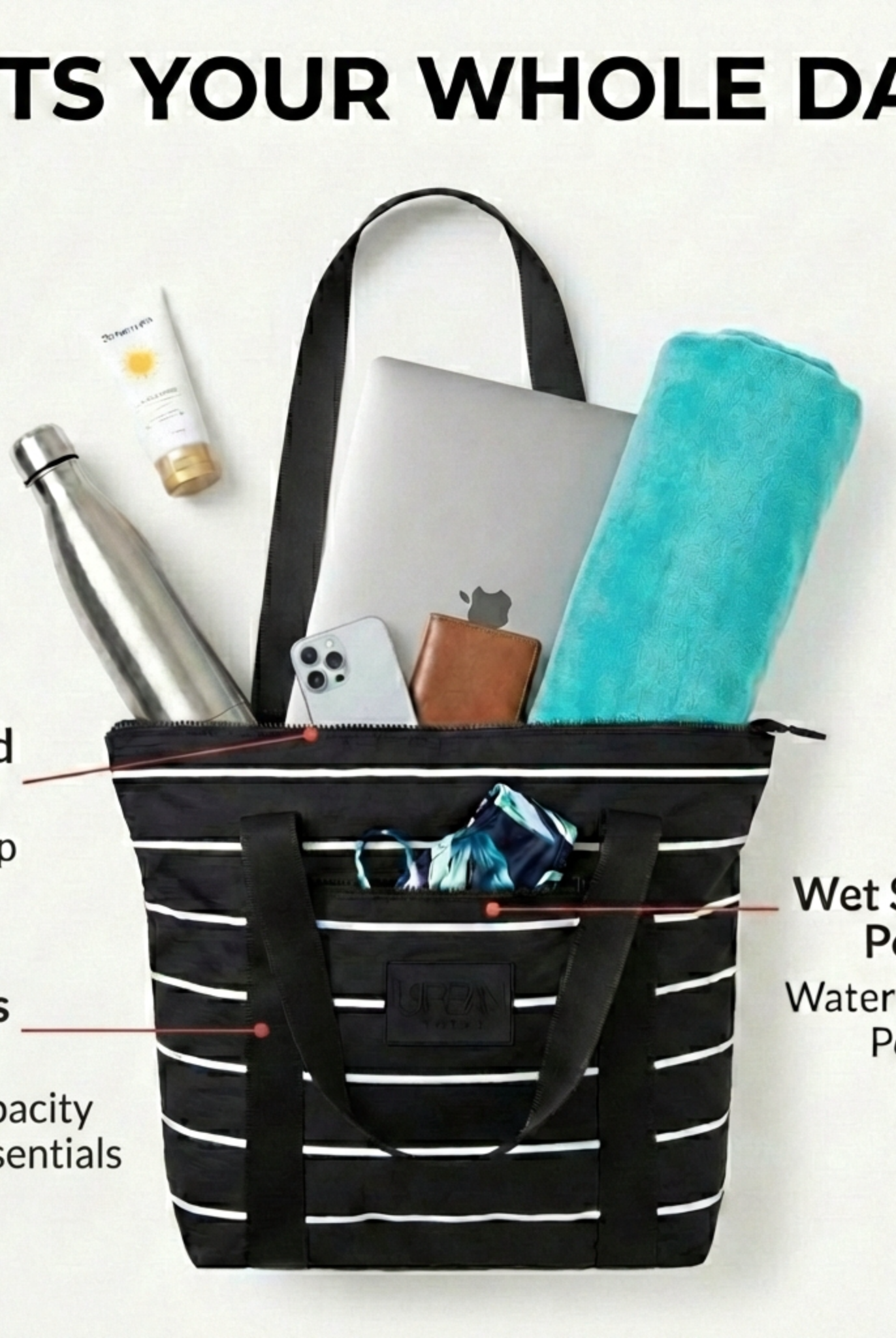
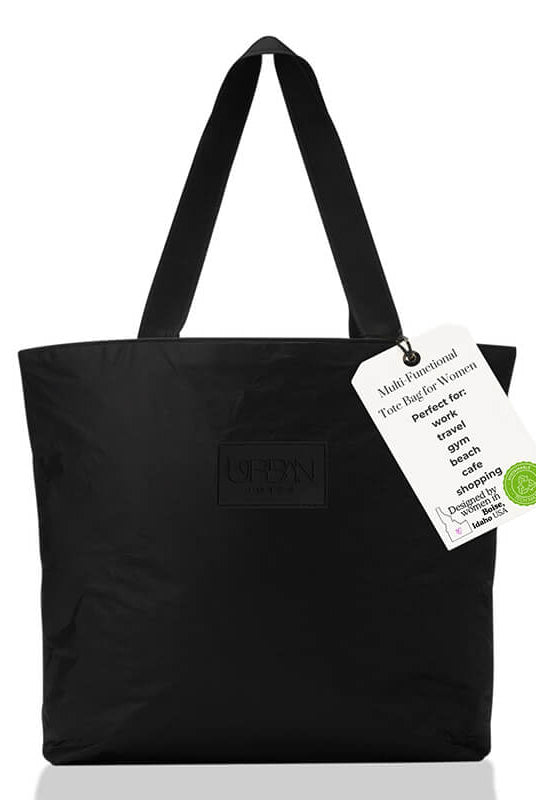
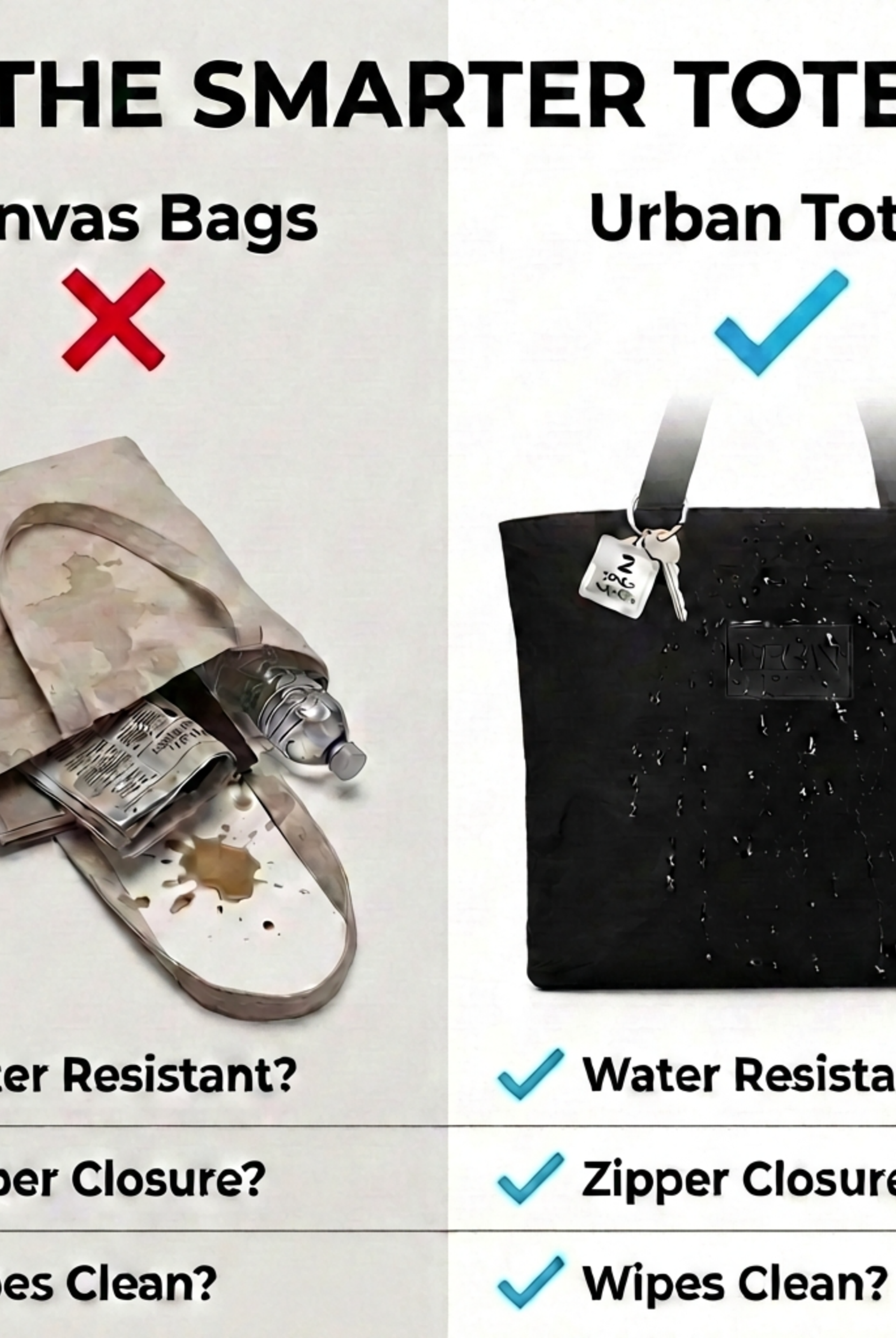
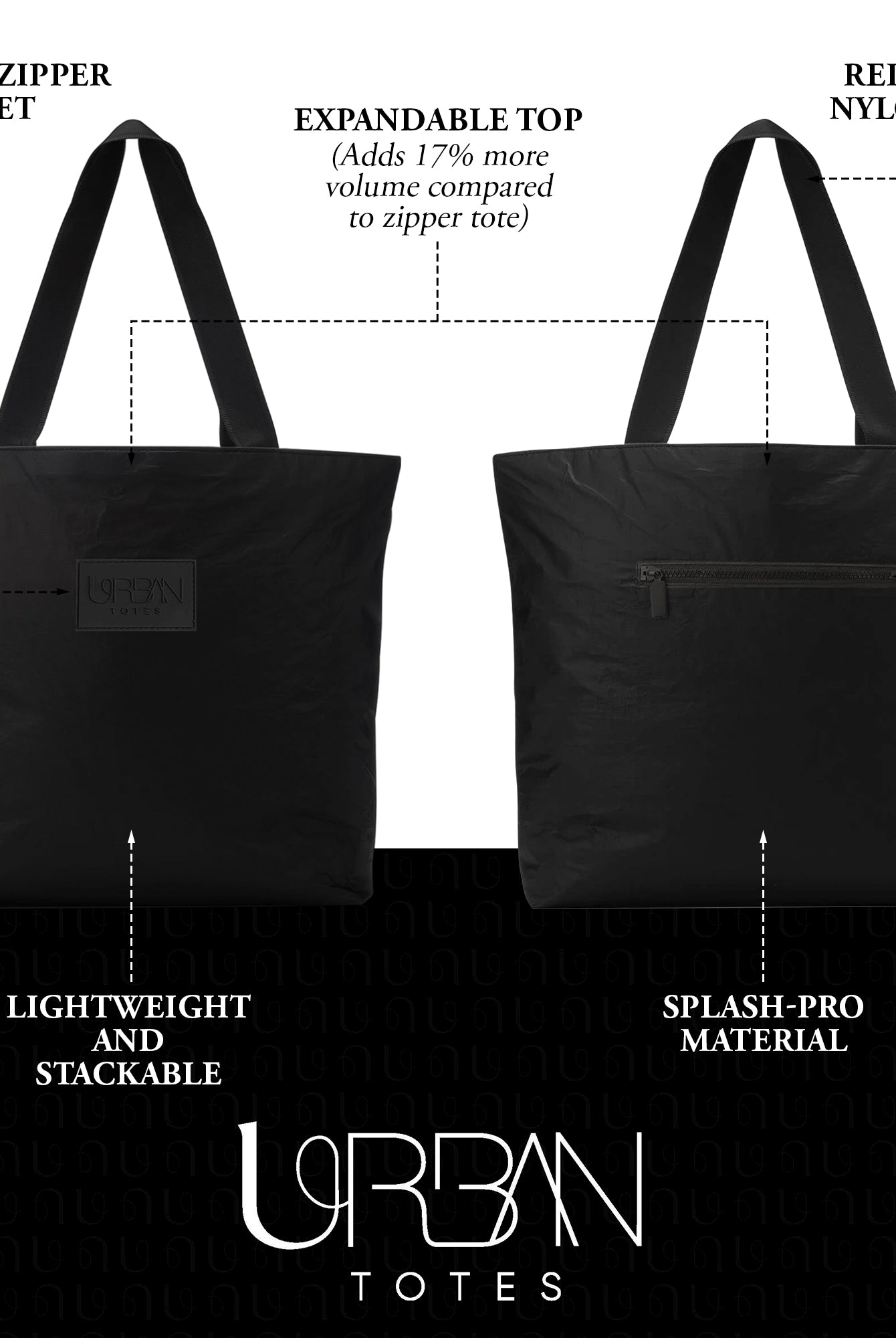
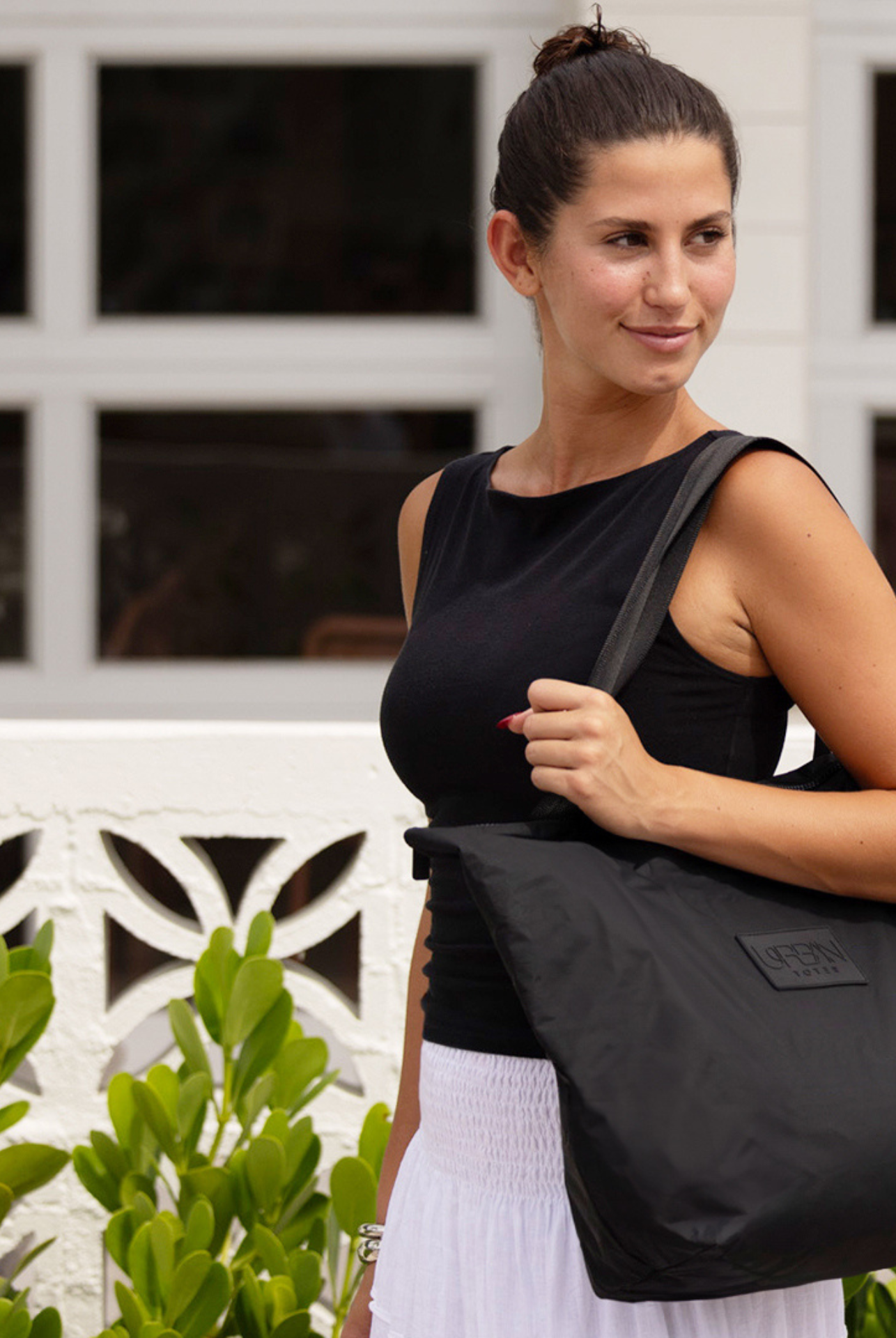
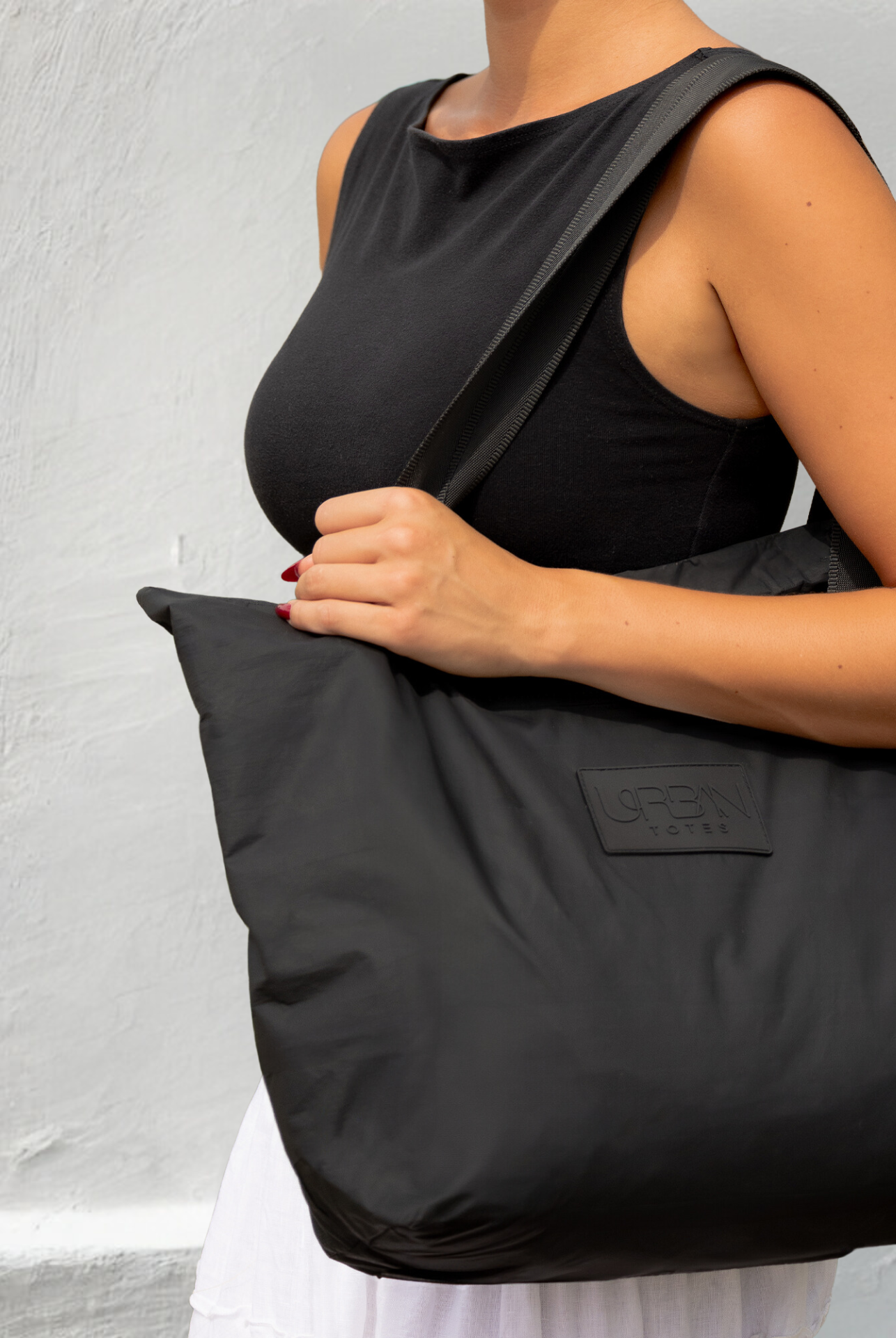
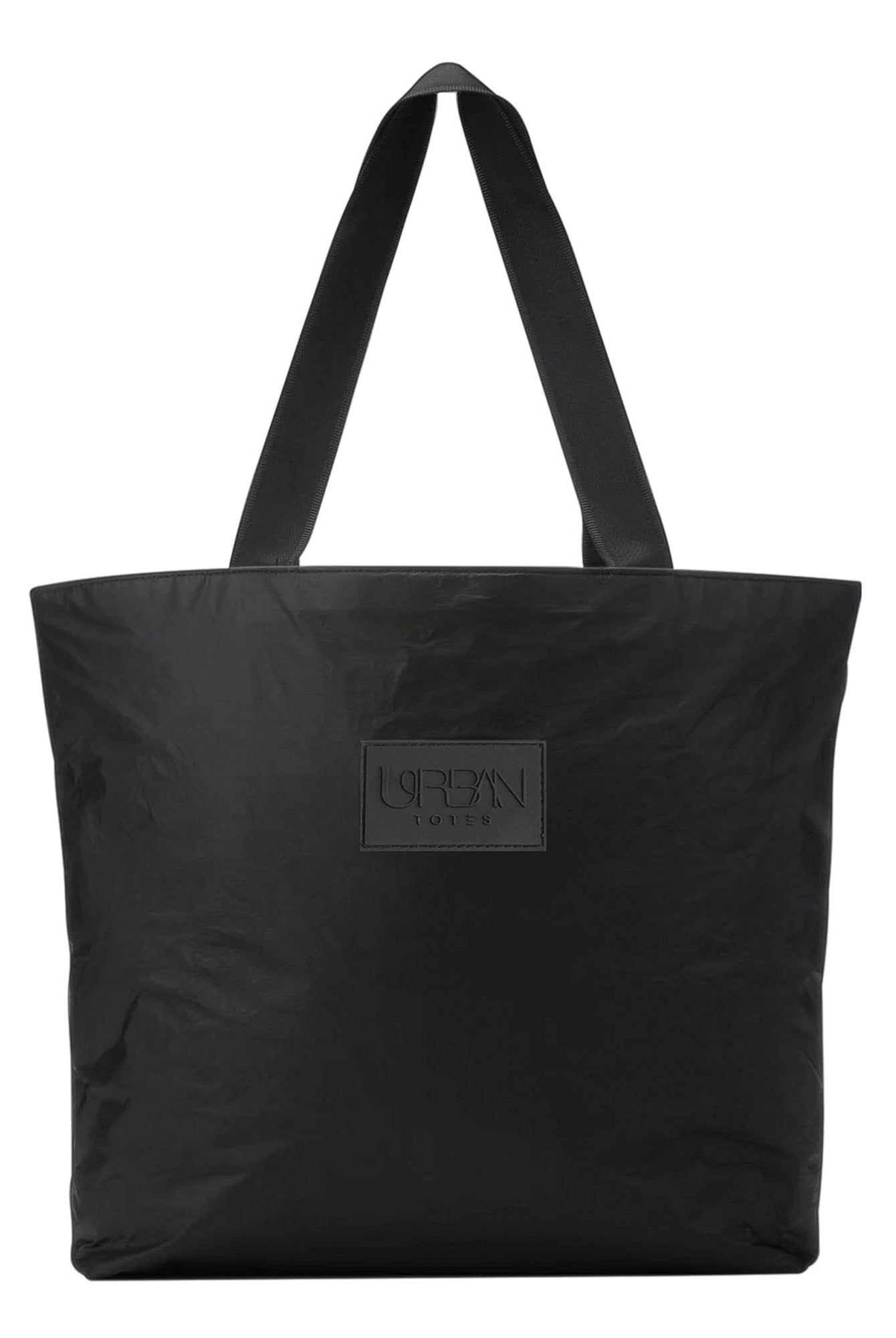
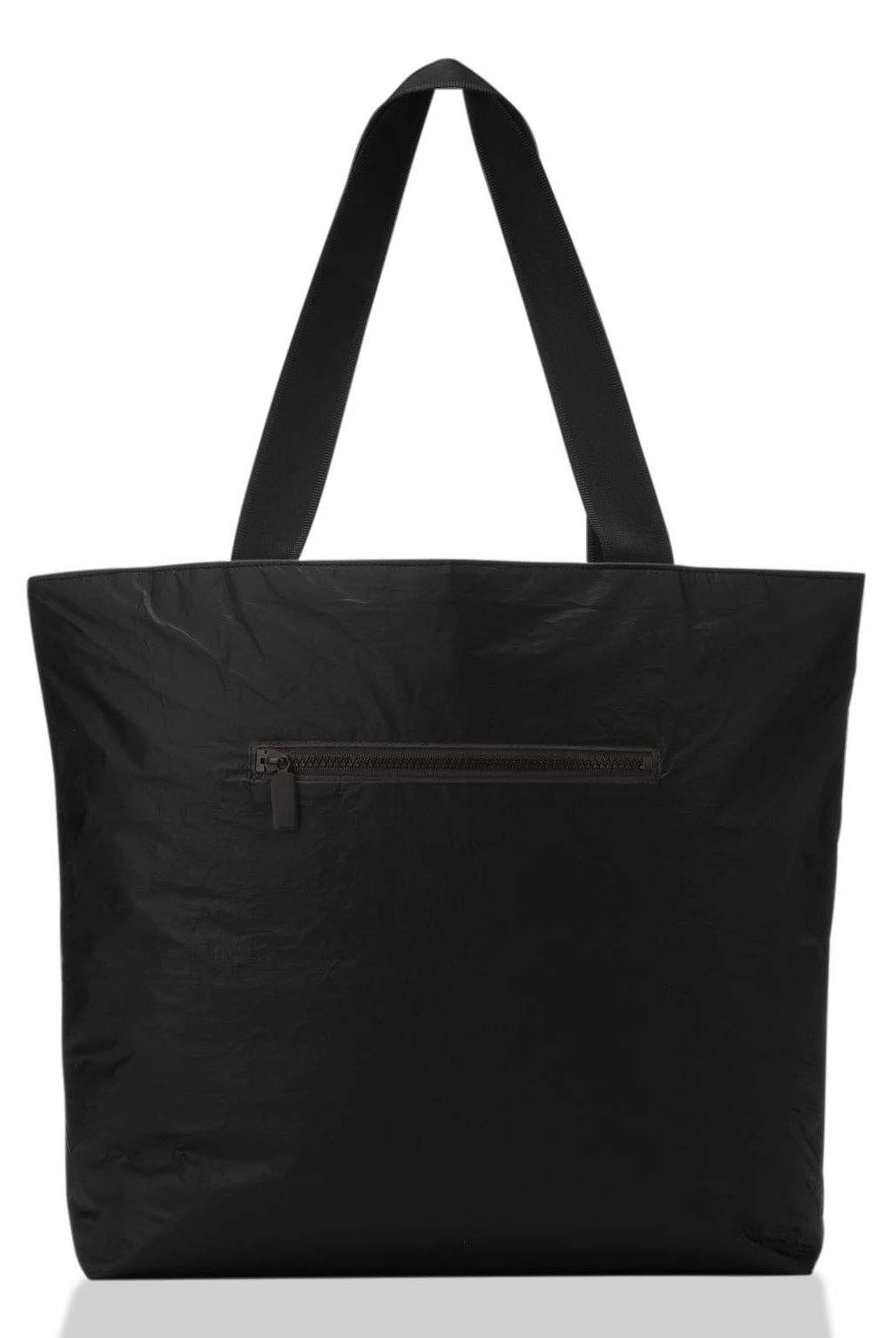
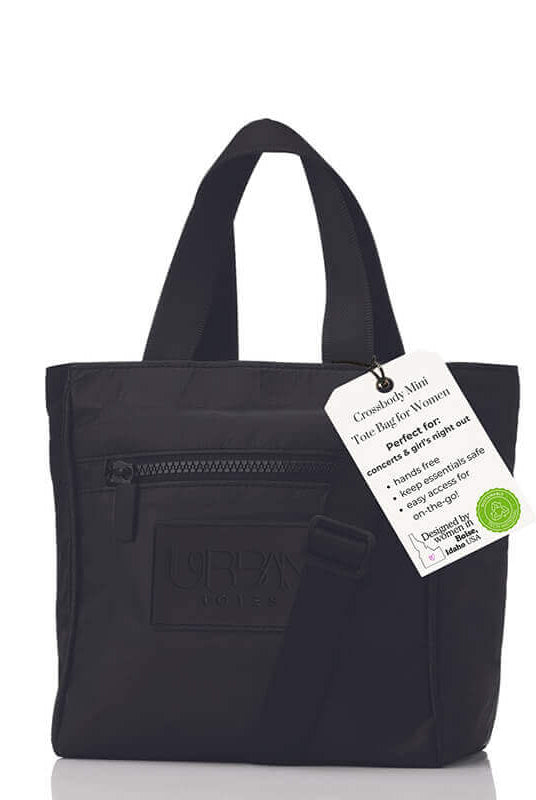
Urban Totes is a woman-owned bag brand designed in Boise, Idaho, with a practical approach to bags for changing daily roles. The OG Zipper Tote Bag has three large pockets for items such as an iPhone and a slim wallet, inside and outside zipper pockets, and side pockets for wet swimsuits or sweaty workout gear. It is lightweight, water-resistant, foldable, and packable. The Go Anywhere Day Trip Tote Bag has three large zippered compartments, specific pockets for an iPhone and keys, and zipper closures on all compartments.
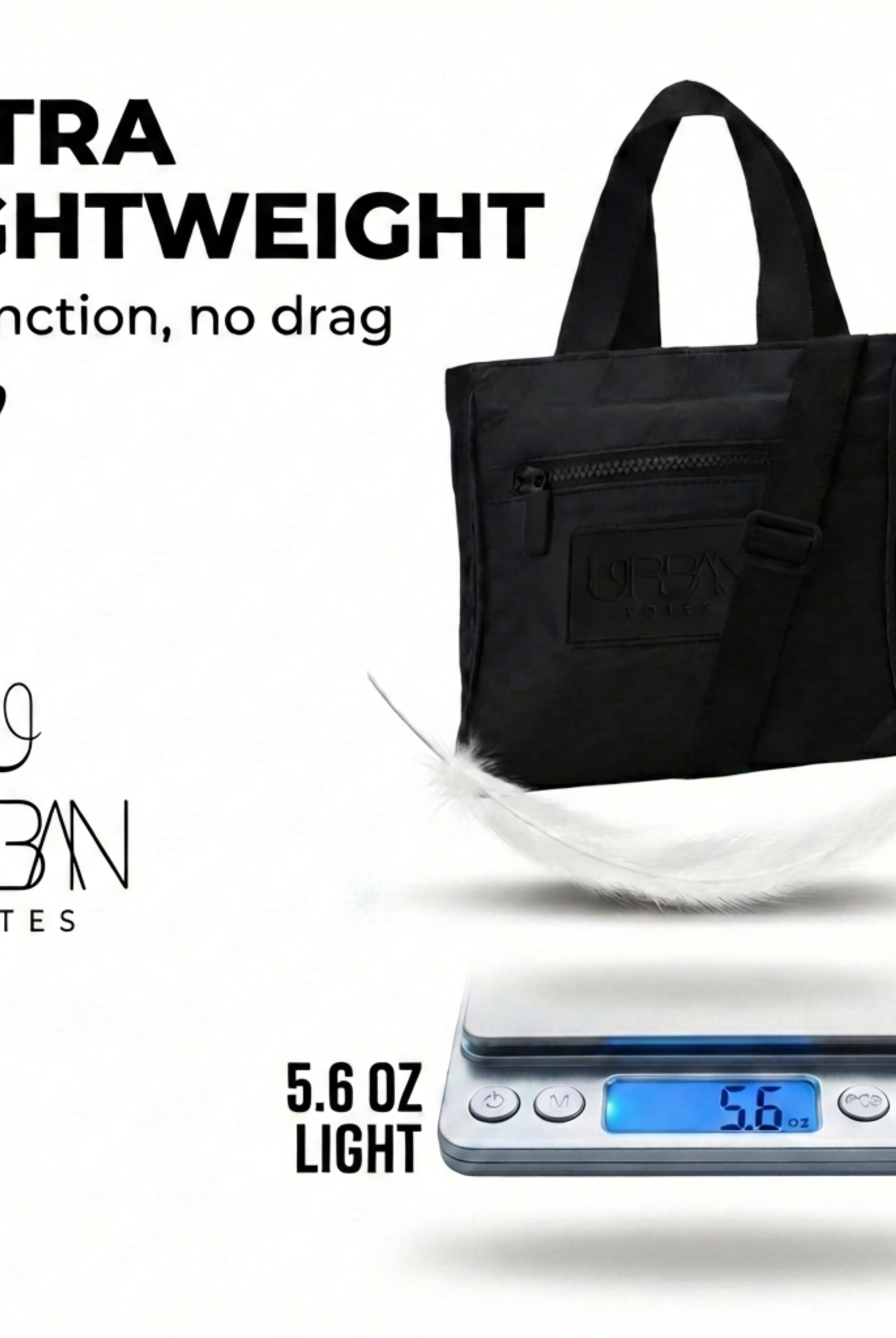
Urban Totes designs lightweight tote and crossbody bags with organized compartments for work, travel, errands, the gym, and the beach. Materials are water-resistant and packable, with dedicated pockets for phones and keys so you are not digging through a full bag. Visit Urban Totes to shop the collection and choose a pocket layout that still works when the day is already packed.