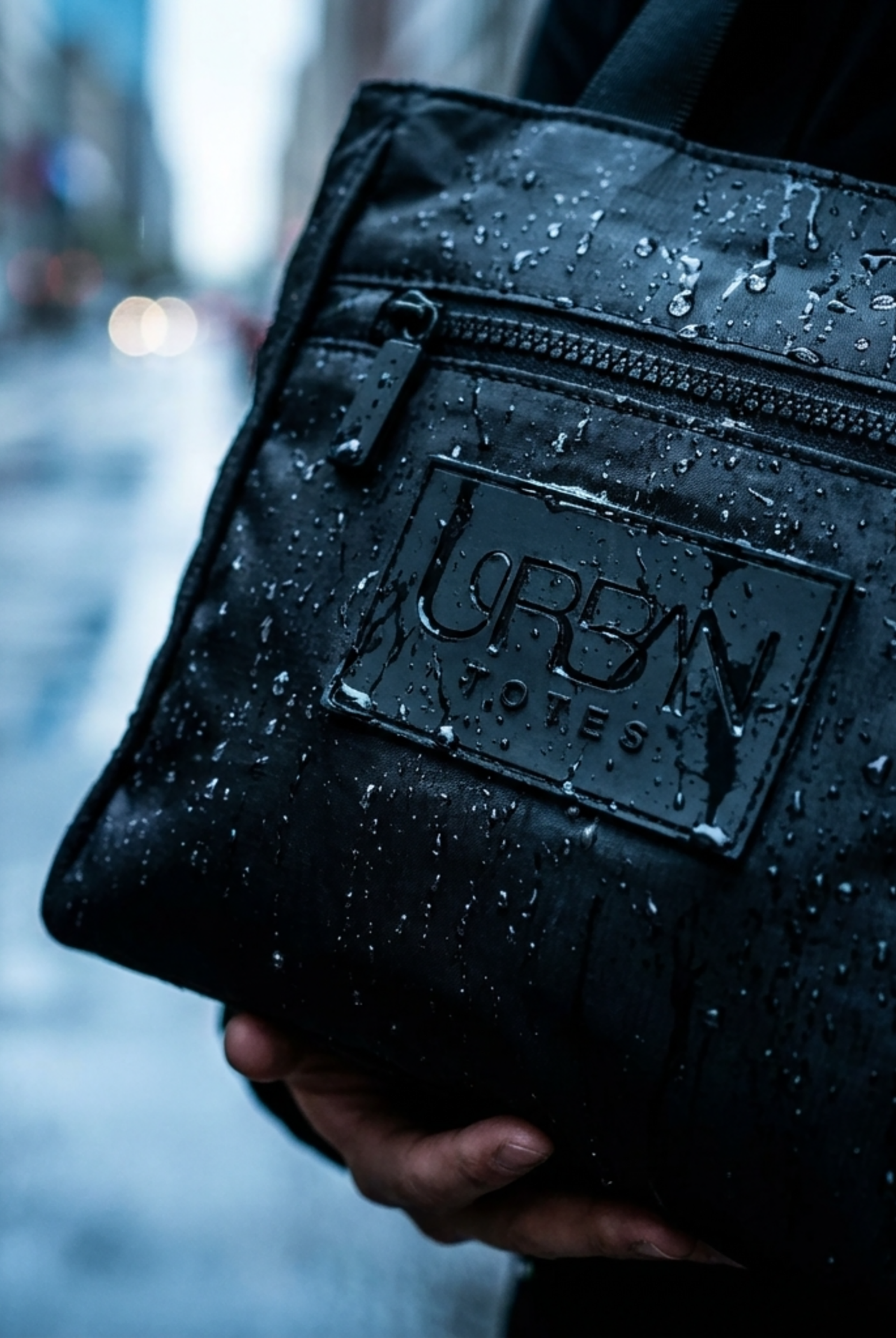
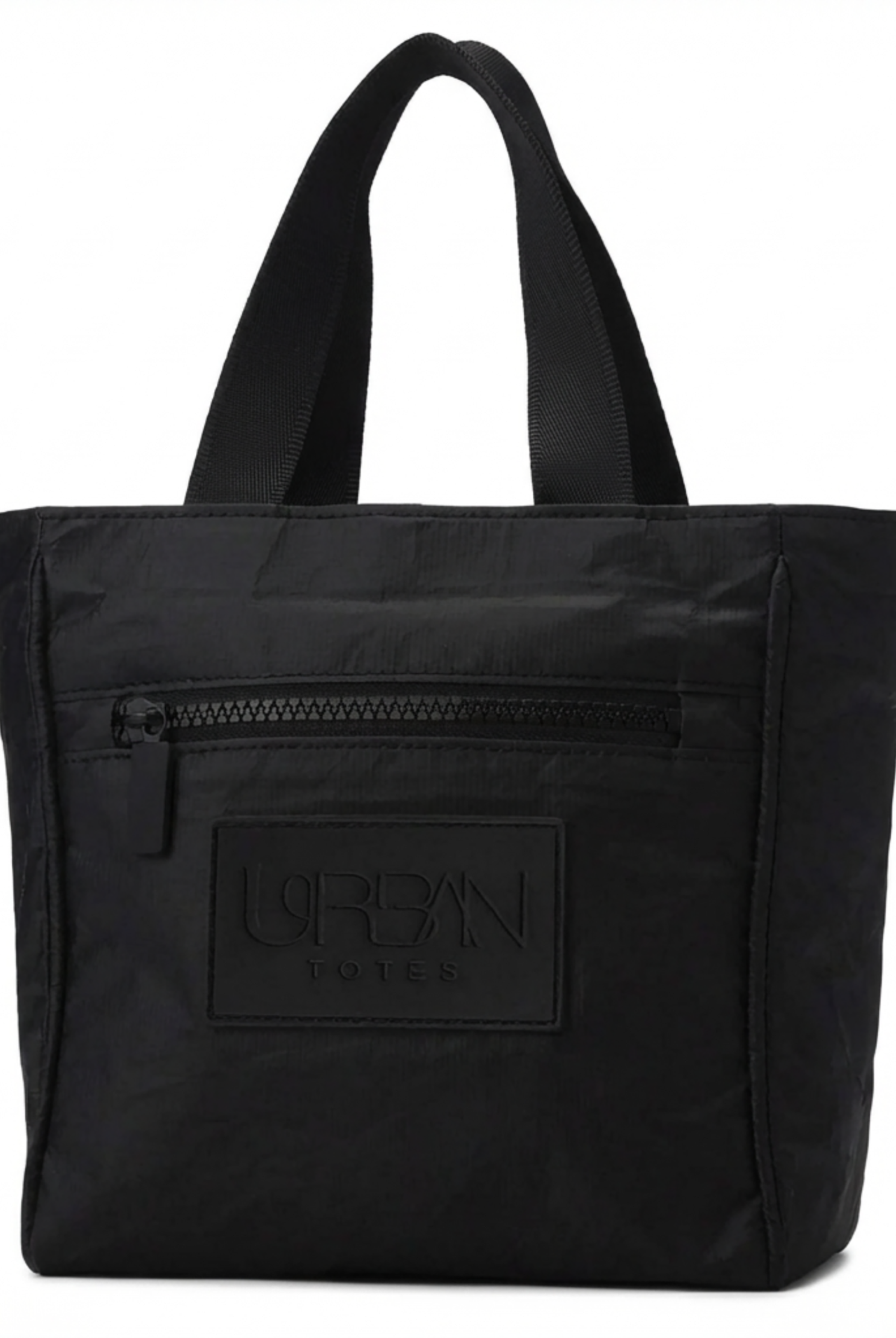
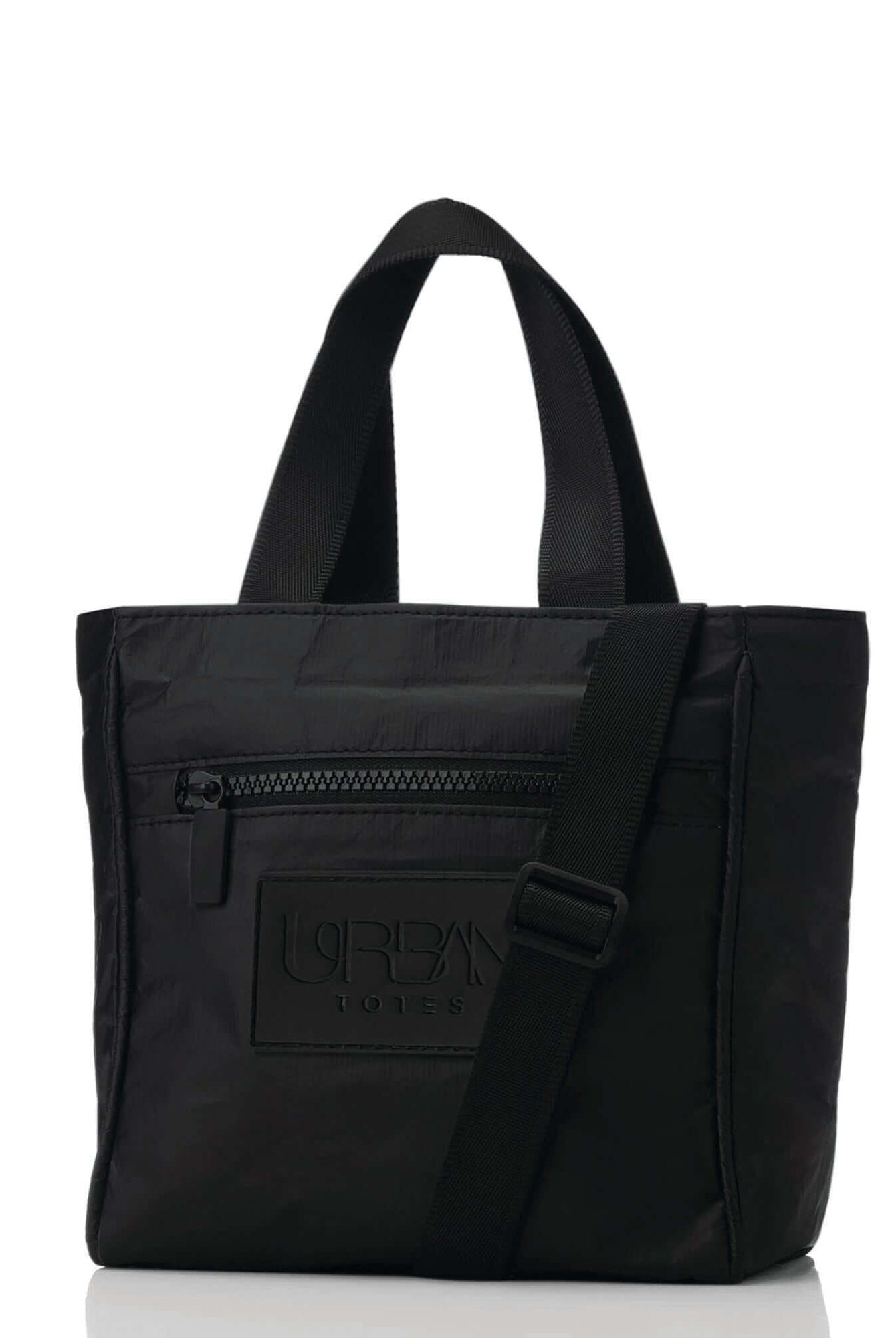
You're carrying the same bag through school drop-off, a workout, the farmers market, and maybe an airport terminal before the day is over. By the time you reach the gym, the straps are digging into your shoulder, your shoes are pressed against your clean clothes, and a damp towel is sharing space with your laptop. Then you're left wondering whether an “eco friendly gym bag” is better for everyday life, or covered in a reassuring label.
The honest answer is more useful than a simple yes or no. A lower-impact gym bag isn't defined by recycled content alone. Its fabric structure, coating, ventilation, organization, care instructions, repair potential, and useful lifespan all shape the result. A bag that stays in rotation for years can make more sense than one with an impressive material claim that wears out quickly or requires frequent washing.
This guide will help you make that decision without jargon. You'll learn what common bag materials mean, why recycled polyester has limitations, which construction details support daily durability, how to read environmental claims, and how to pack and care for your bag so it stays fresh between uses. For a broader look at responsible tote choices, you can also explore this guide to an eco friendly tote bag.
By the end, you'll be able to choose a water-resistant, lightweight, organized, and travel-ready bag based on your actual routine, whether you're a commuter, a beach-day mom, a weekend traveler, or someone squeezing in a workout between meetings.
Table of Contents
- What Makes a Gym Bag Eco Friendly Beyond the Label
- Why Recycled Content Does Not Tell the Full Story
- Essential Features to Look For in a Gym Ready Everyday Bag
- How to Evaluate Sustainability Claims Without the Greenwash
- Care Packing and Longevity Tips That Make Any Bag More Sustainable
- Finding Your Go Anywhere Eco Friendly Gym Bag with Urban Totes
What Makes a Gym Bag Eco Friendly Beyond the Label
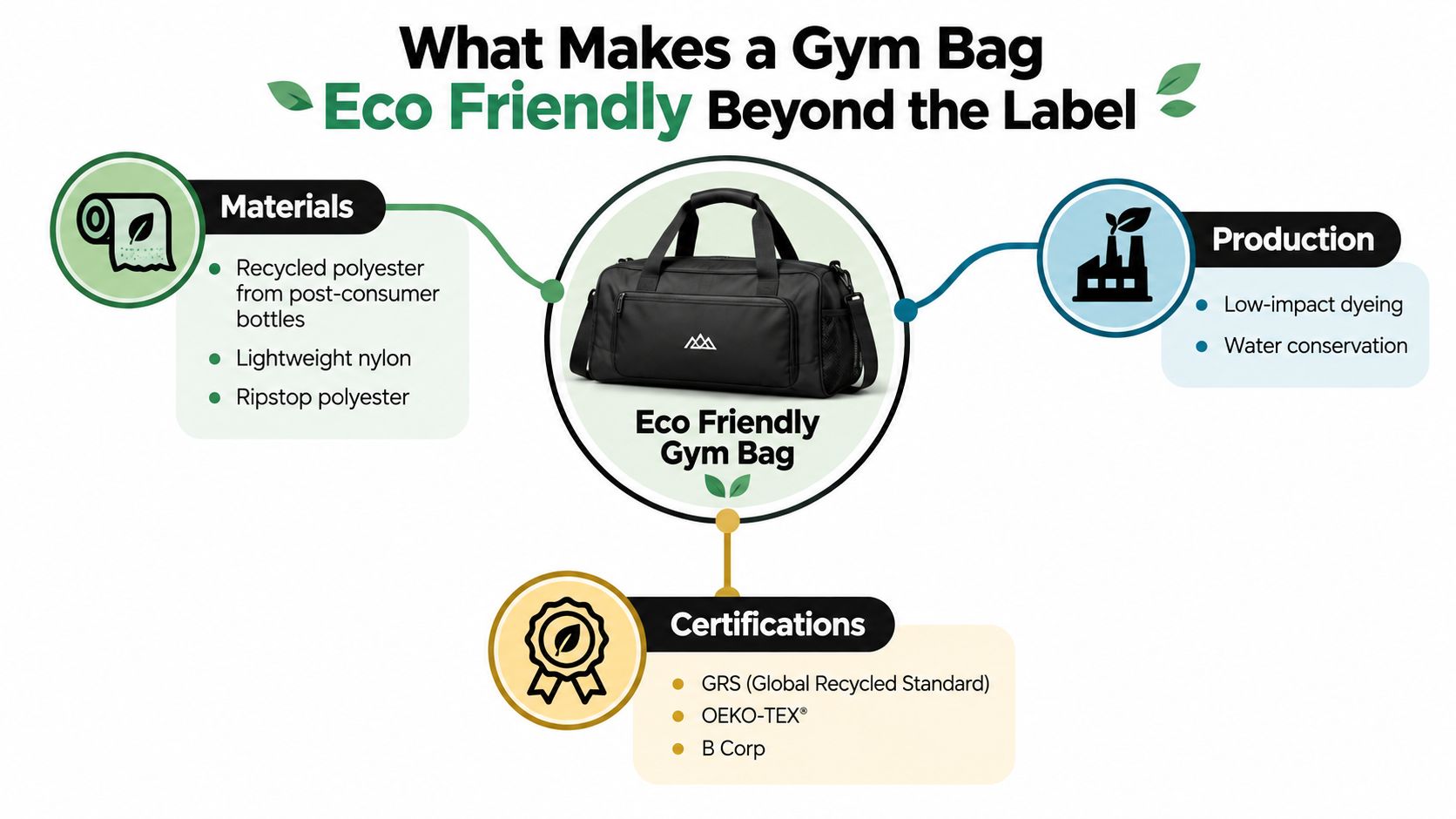
Start with the material, but don't stop there. A practical evaluation looks at what the fabric is made from, how the bag is constructed, how long it can remain useful, and what evidence supports the claims.
Materials tell only the first part of the story
Recycled polyester, often called rPET, is commonly made from post-consumer plastic bottles. Turning those bottles into fiber can help keep single-use plastic out of landfills and oceans while producing a material that can be durable and water-resistant for gym use, as explained in this deep dive into tote bag materials.
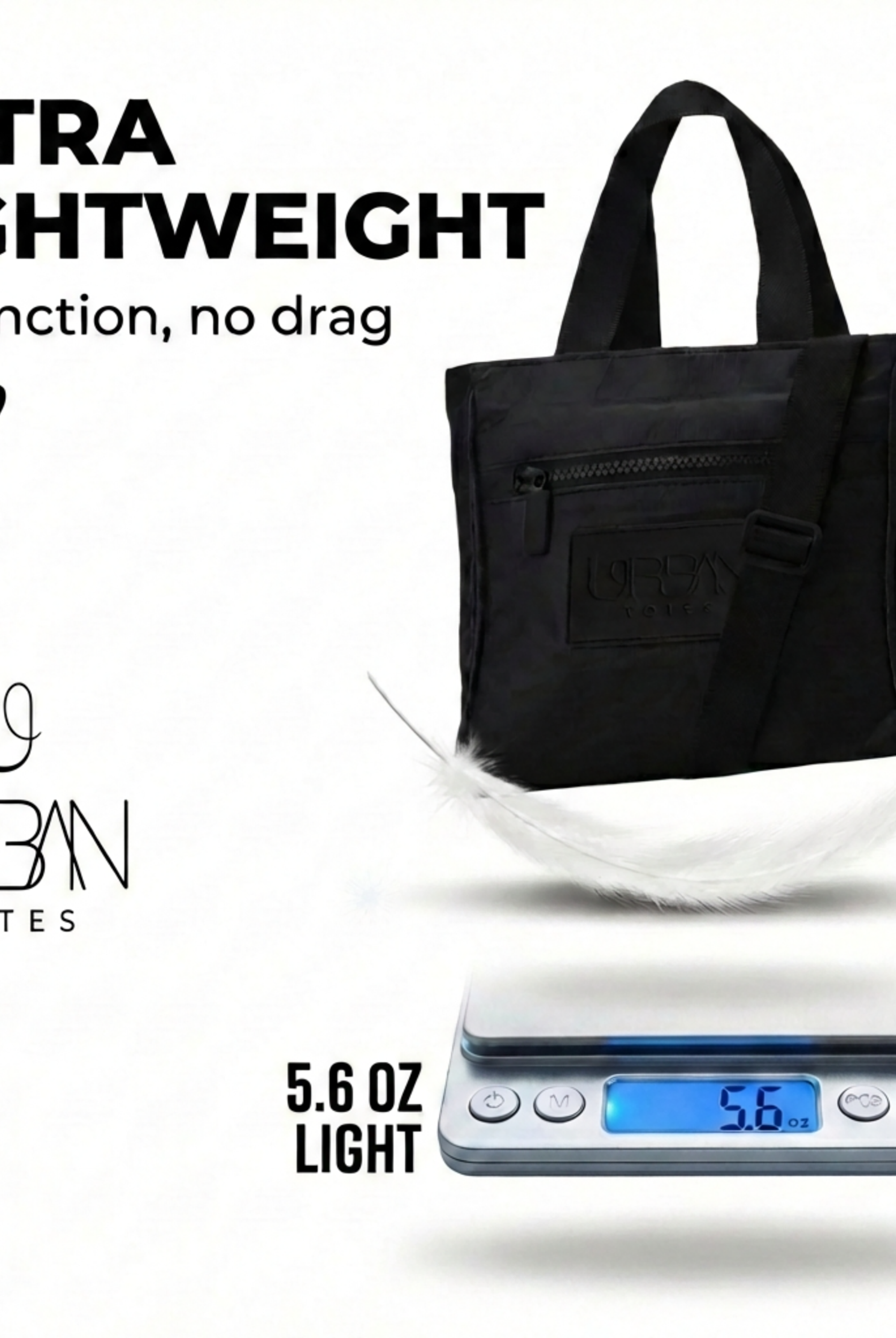
Lightweight nylon and ripstop polyester are also common in packable bags. These synthetics are often chosen because they weigh about 30% to 50% less than equivalent canvas or leather, making them easier to carry through a commute, fold into luggage, or keep in a car for spontaneous plans, according to this guide to lightweight totes. The practical benefit is simple: a lighter bag can be easier to use consistently, especially when it already contains shoes, a towel, toiletries, and a water bottle.
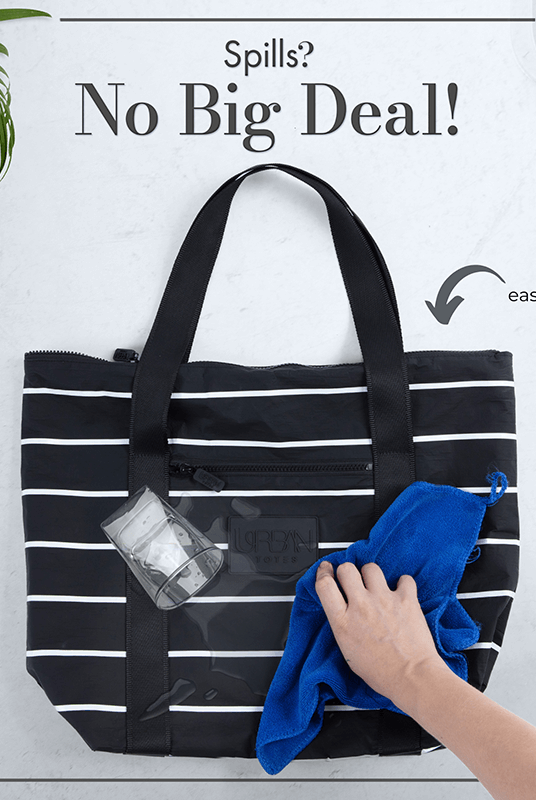
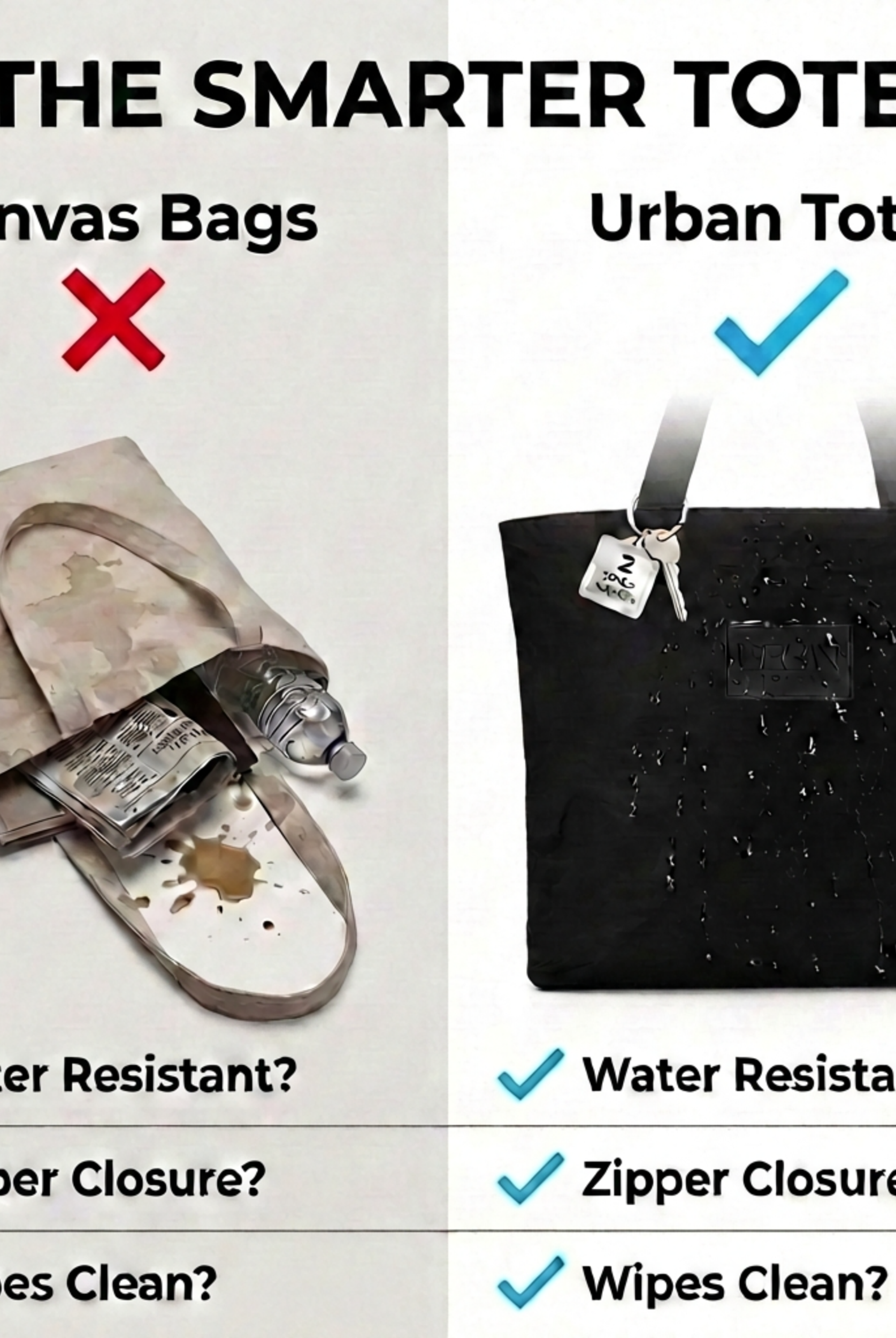
A coating adds another layer of function. PU and DWR-style finishes can help a shell resist rain and spills, while some product descriptions specifically identify materials made without PFCs or PFAS. Those are specific construction or chemical-management details, not automatic proof that the entire bag has a lower impact.
Construction and documentation complete the picture
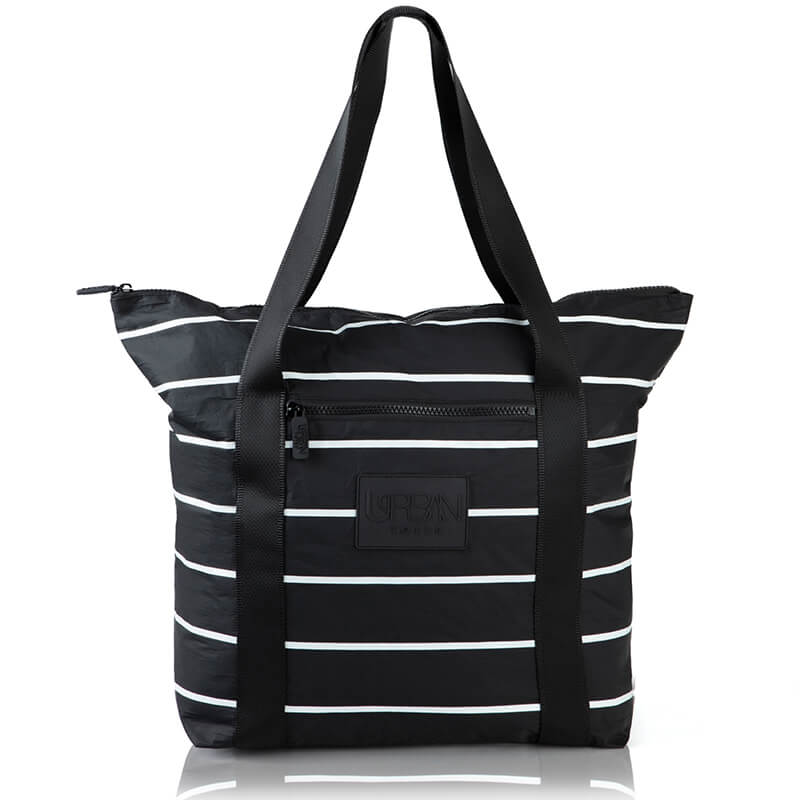
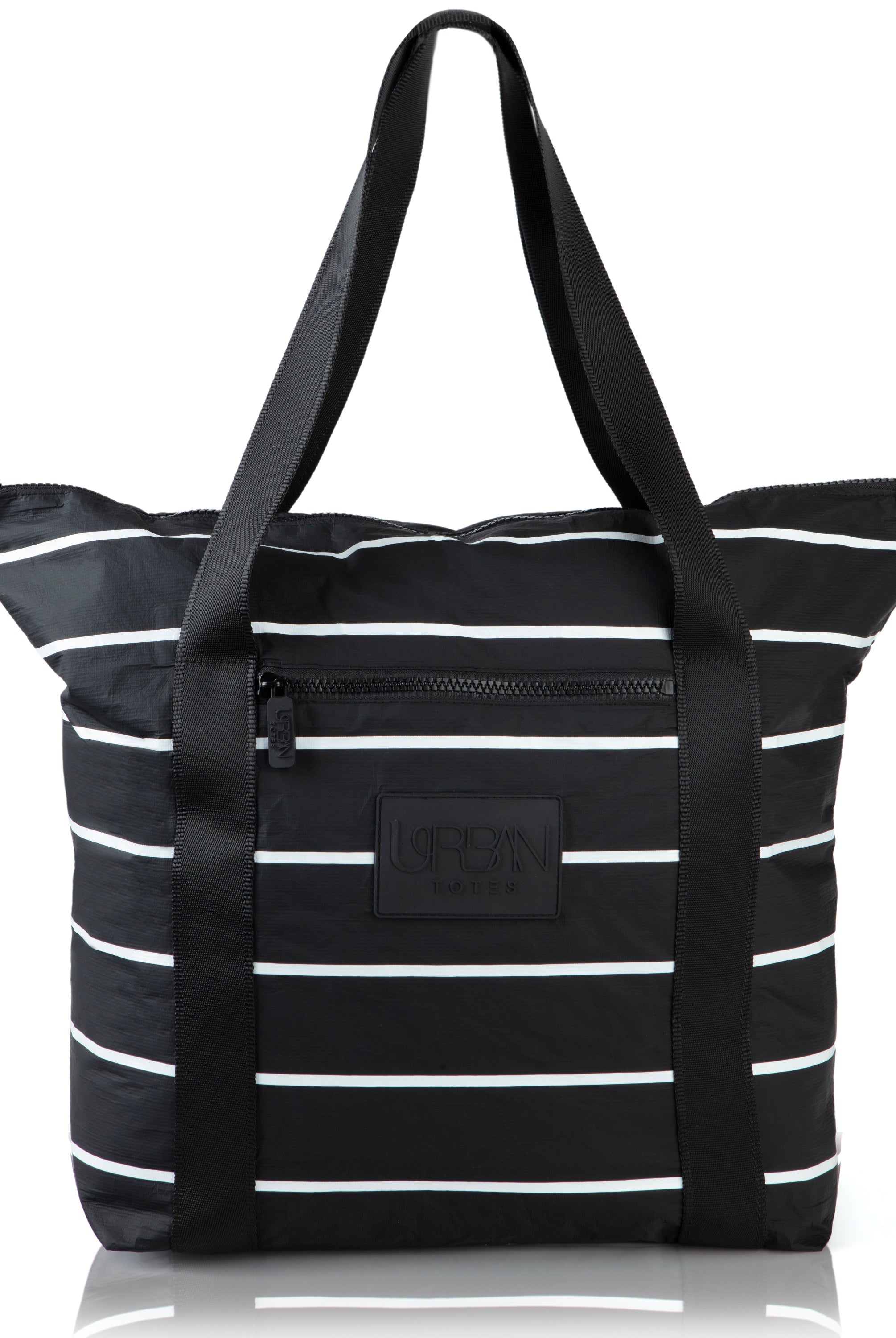
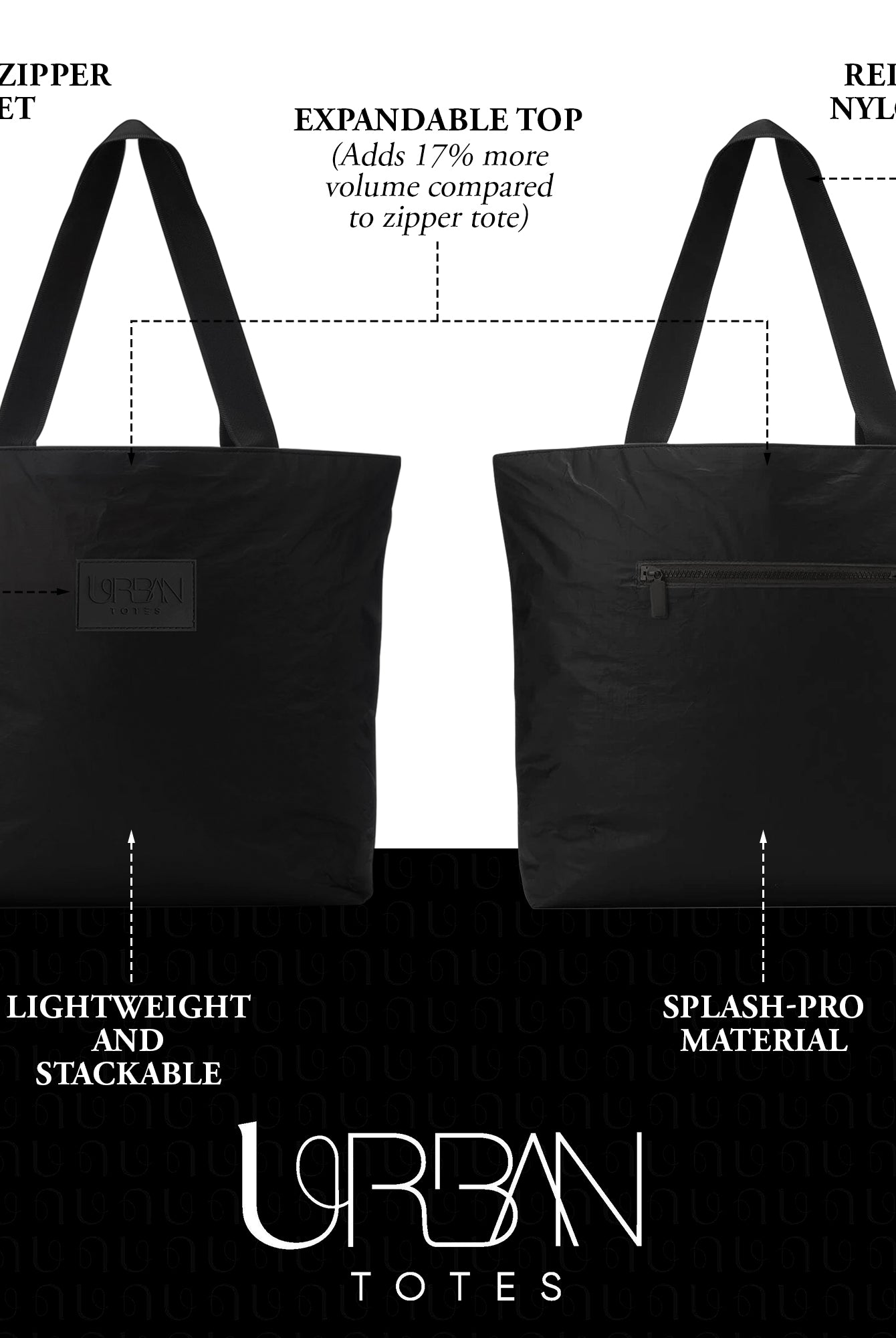
Look at the bag's seams, closures, lining, handles, and pockets. A zipper closure can protect contents and keep the shape controlled, while multiple compartments help separate shoes, clean clothing, wet items, and small essentials. A single-piece shell with fewer seams can reduce stress points and improve spill protection, as shown in this review of packable tote construction.
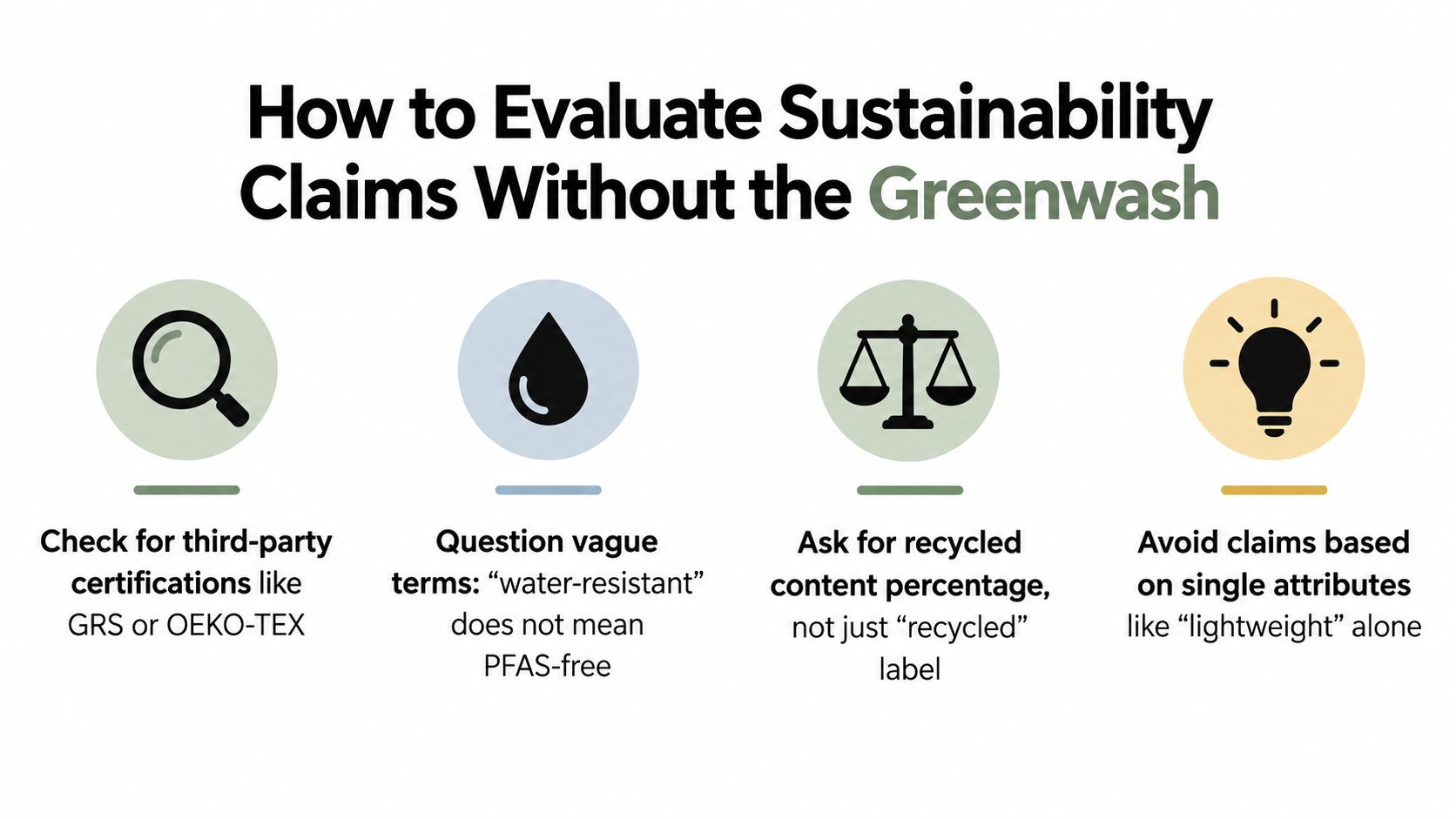
Certifications can make broad claims easier to assess. Depending on the material and supply chain, shoppers may encounter standards such as GRS or OEKO-TEX, and broader business certifications such as B Corp. Check the exact certification, its scope, and whether it applies to the fabric, the finished product, the facility, or the company.
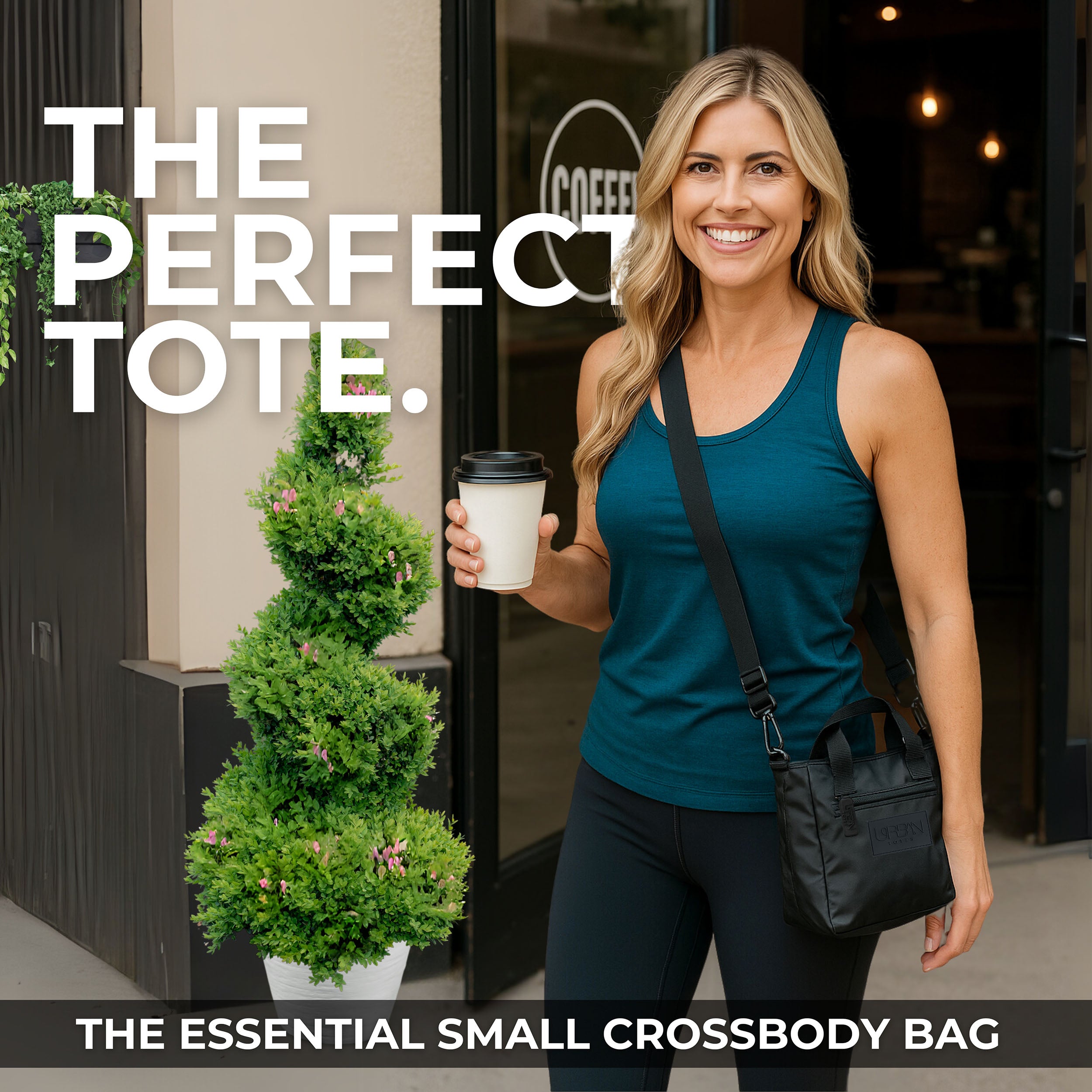
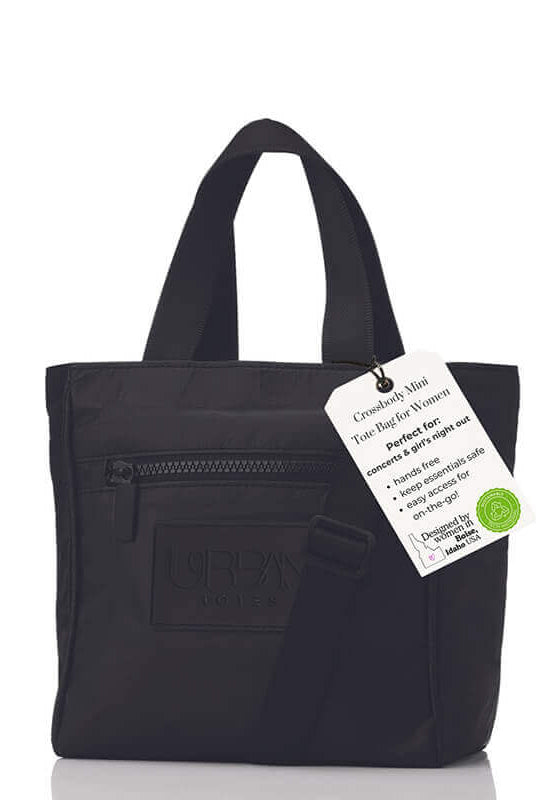
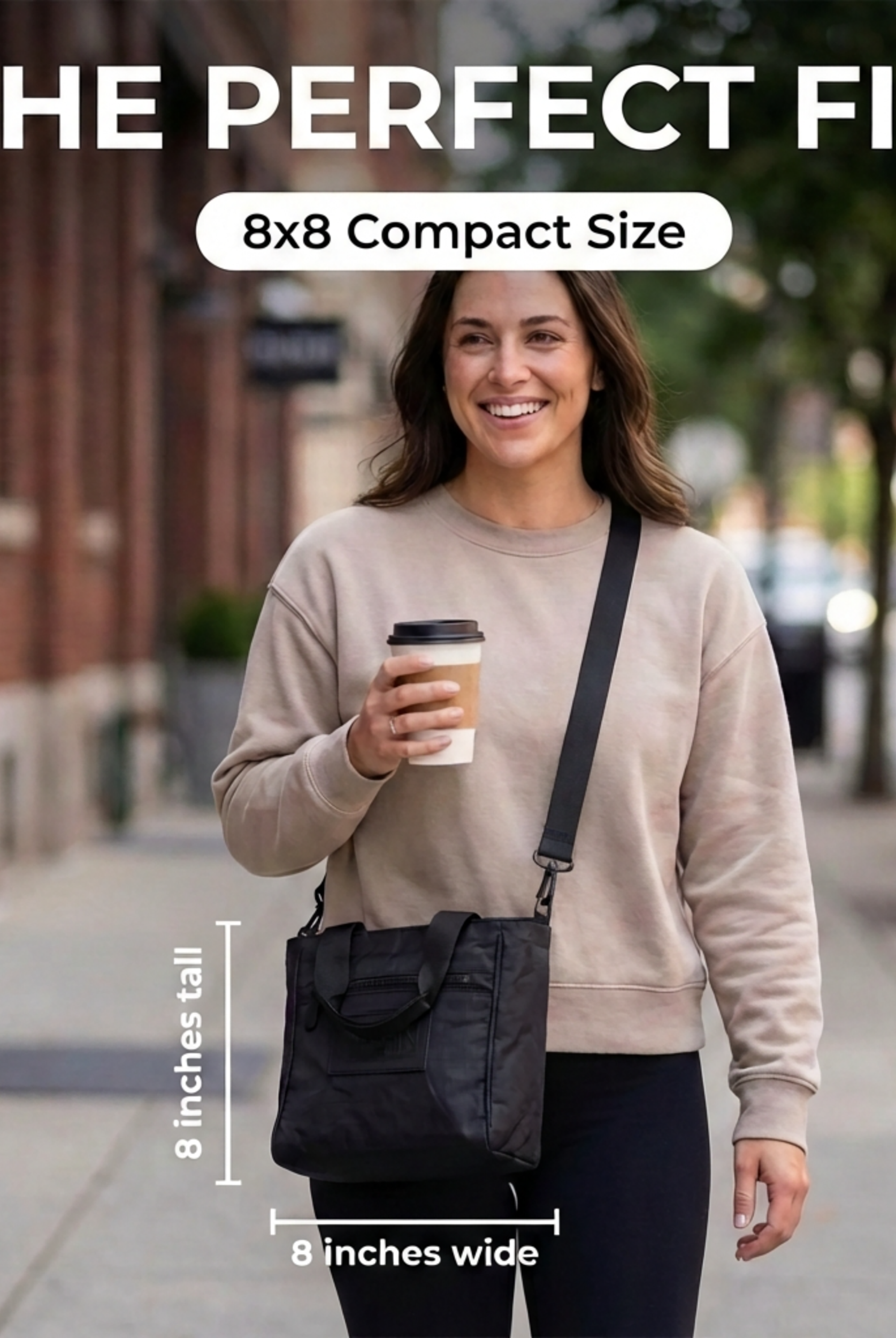
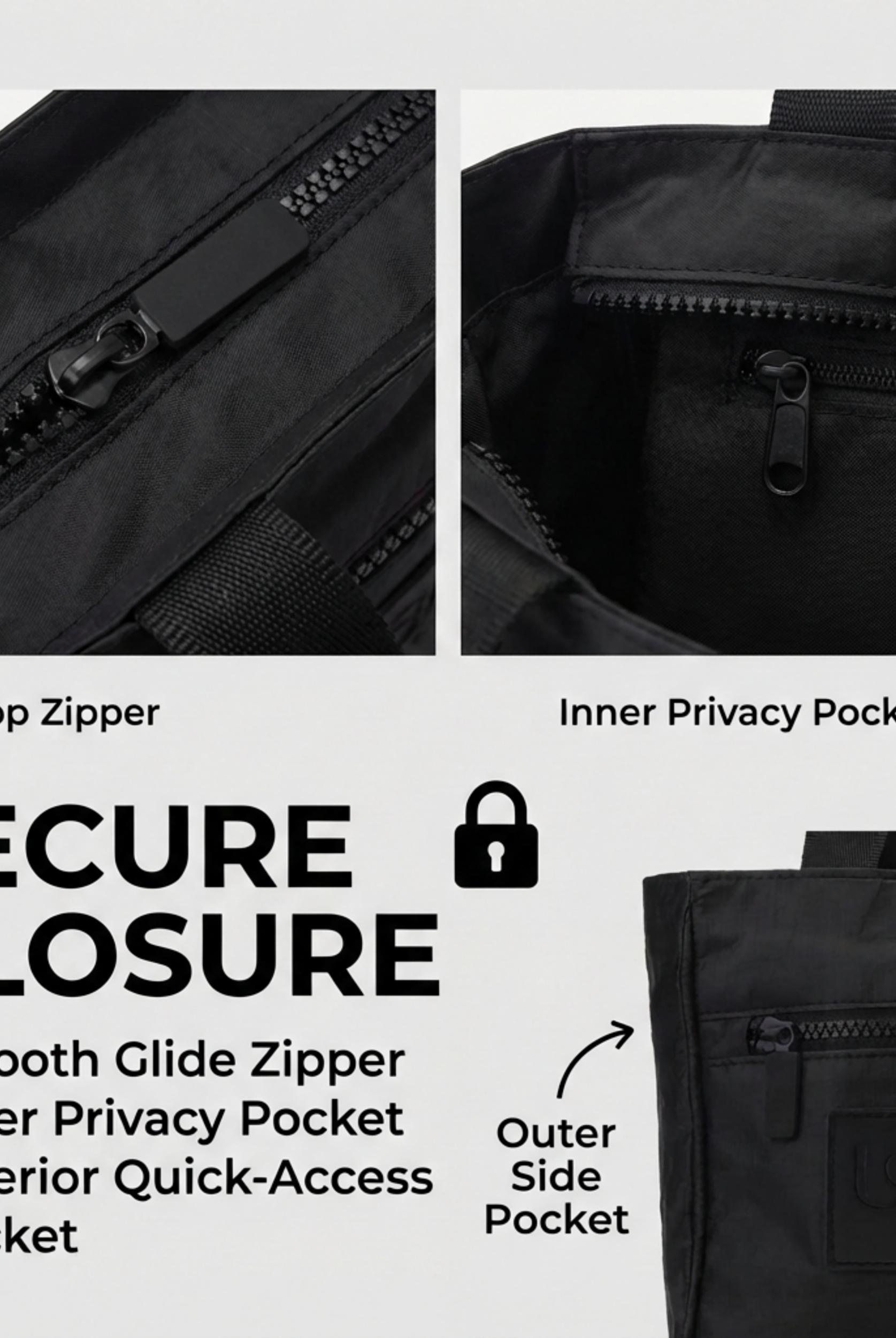
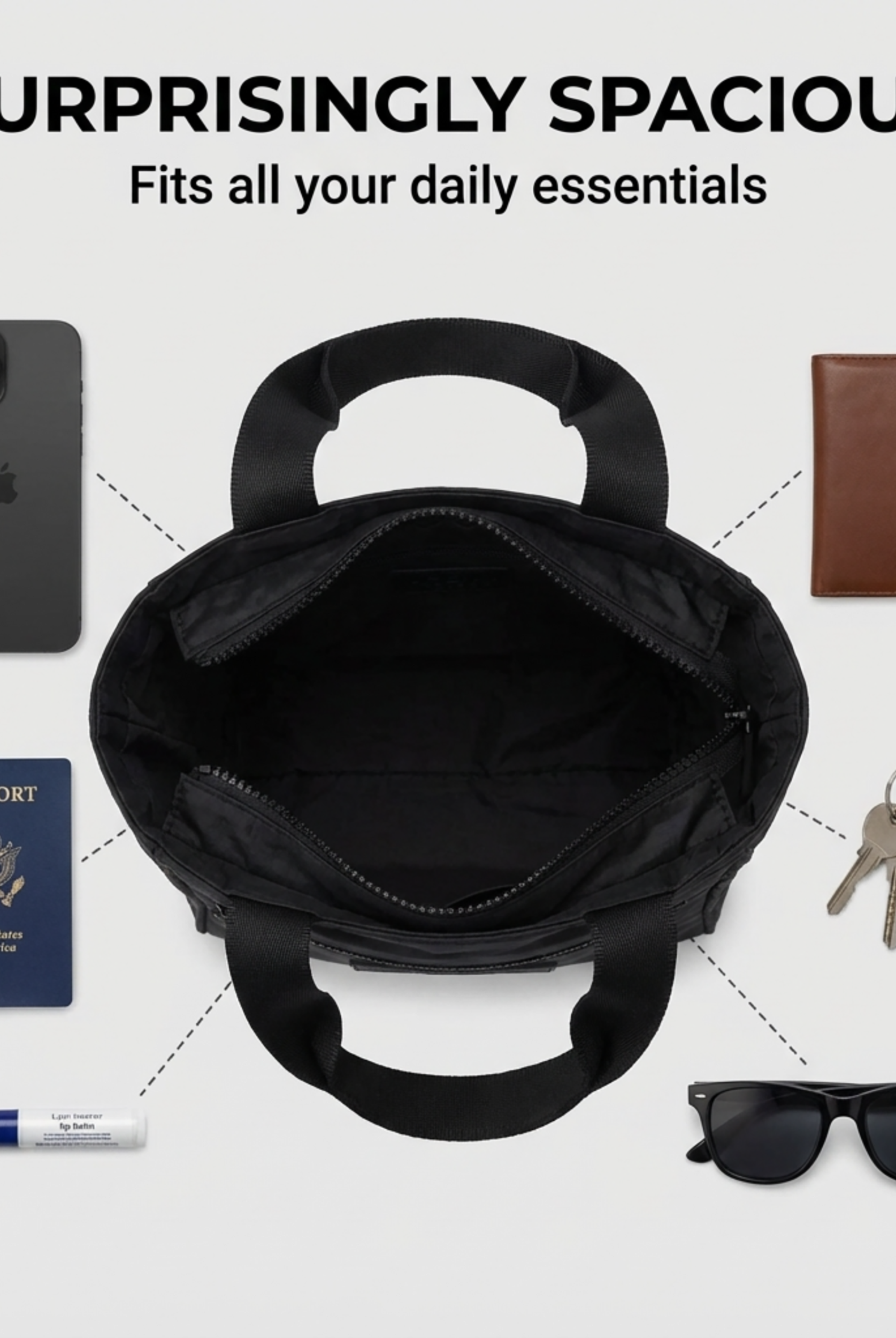
For a closer look at recycled inputs, read this overview of recycled material bags. A compact example of organization-focused design is the Crossbody Tote Bag Mini Purse, which has a zip-top closure, outside and inside pockets, a foldable design, and water-resistant materials.
Why Recycled Content Does Not Tell the Full Story
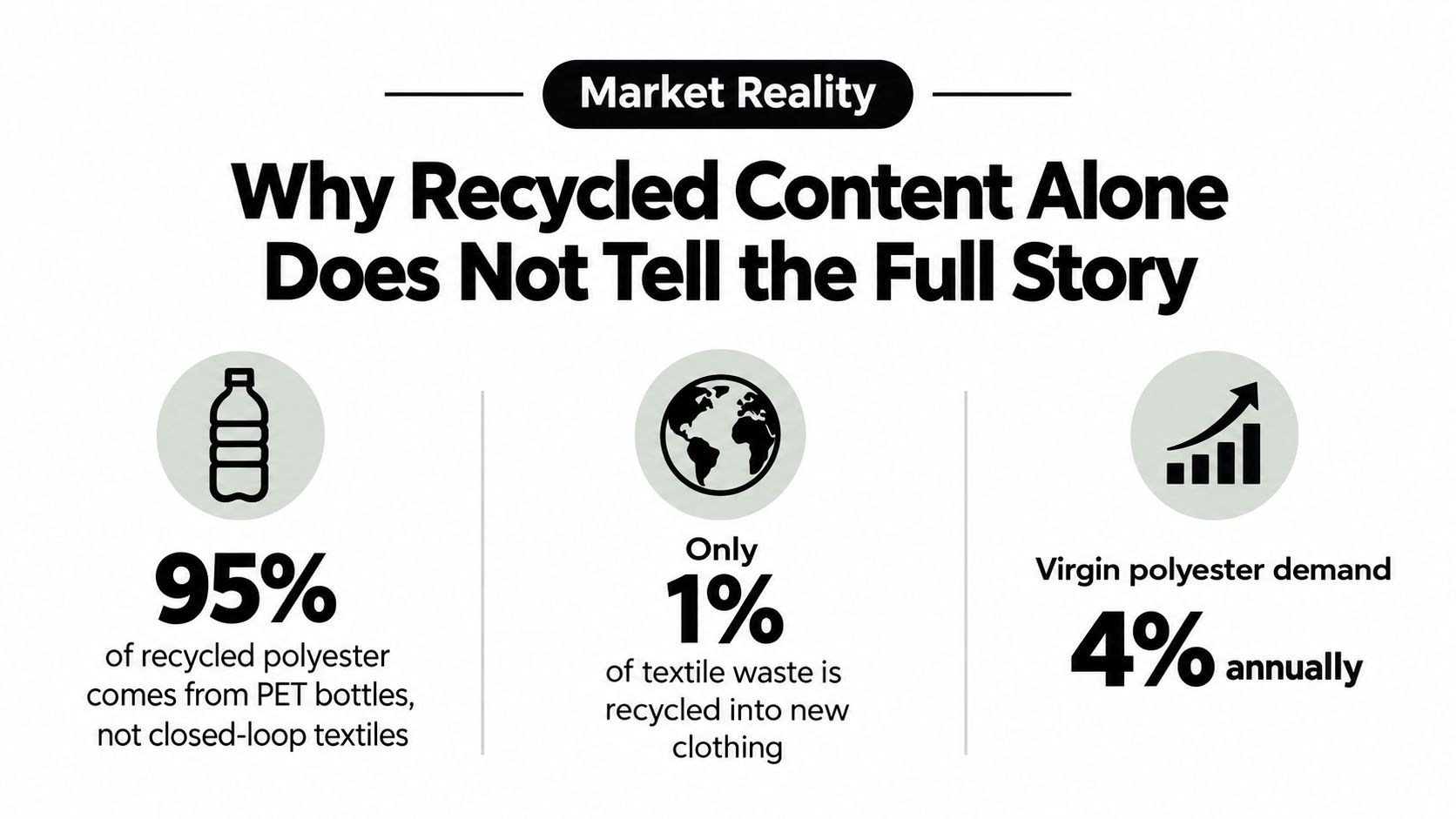
Recycled polyester is useful, but the phrase can create the wrong mental picture. Many shoppers hear “recycled fabric” and imagine old clothing becoming new fabric in a closed loop. For gym bags, the more common pathway is plastic bottle to polyester fiber.
Textile Exchange reports that about 98% of recycled polyester is made from PET bottles rather than recycled textiles in its Materials Market Report 2025. That pathway can divert plastic waste into a new product, but it doesn't solve textile waste at the same scale. The distinction matters because bottle-to-fiber recycling and textile-to-textile recycling address different waste streams.
The same report records roughly 9.3 million tonnes of recycled polyester output in 2024, up from about 8.9 million tonnes in 2023. Yet recycled polyester's share of total polyester slipped from 12.5% to 12%, because virgin polyester grew faster. Recycled fibers accounted for 7.6% of all fibers produced worldwide in 2024, while less than 1% of the global fiber market came from pre- and post-consumer recycled textiles. These figures don't make recycled polyester meaningless. They show why a recycled label should be treated as one input in a larger evaluation.
Fabric structure changes how a bag performs
Microfiber shedding adds another layer of nuance. Independent textile research found no statistically significant difference in microfiber release between virgin and recycled fabrics. Instead, yarn type, fiber length, weave structure, and finishing treatments were the important drivers of shedding behavior, according to this recycled versus virgin polyester comparison.
That means a tightly woven recycled-polyester shell may perform better than a looser virgin-polyester shell in terms of abrasion and fiber loss. The material label doesn't tell you whether the surface is dense, whether the lining creates friction, or how the finish behaves after repeated use.
Practical rule: Read “recycled” as a starting point. Then inspect the weave, lining, seams, coating, and care instructions.
This shift also changes how you define an eco friendly gym bag. A bag that protects its contents, resists ordinary commuting wear, reduces odor buildup, and stays useful for a long time may be a more thoughtful choice than a flimsy bag with a stronger-sounding label.
Essential Features to Look For in a Gym Ready Everyday Bag
A gym bag has to work in motion. It may sit on a locker-room floor, ride beside groceries, hold damp clothing, and slide beneath an airport seat. Sustainability becomes practical when the design prevents damage, confusion, odor, and unnecessary replacement.
Durability is a specification, not a mood
For premium outer shells, technical bag specifications commonly target about 8,000 to 12,000 Martindale abrasion cycles. TPU- or PU-coated recycled polyester can reach roughly 5,000 to 10,000 mm of water-column resistance, according to this fabric decision matrix.
You don't need to memorize those measures. Ask whether the brand provides any fabric-weight, abrasion, coating, or seam information. A dense outer fabric can slow wear from floors, lockers, and commuting, while a coated exterior and sealed seams can reduce moisture entering from rain or sweaty clothing.
Structure matters too. A zip closure keeps contents contained, a single-piece shell can minimize seams and stress points, and reinforced handles help distribute weight. These details may look small, but they determine whether the bag remains useful after the novelty wears off.
Match features to the way you move
A busy mom may need a multi-pocket tote that keeps a water bottle upright, a towel separate from snacks, and keys within reach. A daily commuter may prioritize a lightweight, packable shape that folds into a larger work bag. A weekend traveler may want a more structured carry with a secure top and enough room for gym gear plus a change of clothes.
Ventilation and separation deserve special attention. Shoe pockets, breathable panels, and compartments for damp items can reduce odor buildup. If poor airflow forces you to wash the entire bag often, the material choice alone won't tell the full environmental story.
For hydration planning, this guide to top insulated bottles for training can help you choose a bottle that fits your routine and your bag's organization. You can also compare designs with a bag with a water bottle holder.
| Feature | What to Look For | Why It Matters for Sustainability |
|---|---|---|
| Outer shell | Dense weave, durable fabric, clear weight information | Slows surface wear and supports longer use |
| Water resistance | TPU or PU coating, coated base, sealed seams | Helps protect contents and reduces moisture damage |
| Airflow | Ventilated section or breathable construction | Can reduce trapped odor and unnecessary washing |
| Organization | Shoe pocket, wet-item separation, phone and key pockets | Keeps clean and damp items apart |
| Closure | Full zipper or secure top closure | Protects contents during commutes and travel |
| Packability | Foldable body that doesn't rely on fragile thinness | Makes the bag easier to carry and reuse |
| Repair potential | Replaceable or reinforced straps, accessible seams | Keeps a small failure from ending the bag's useful life |
The best configuration depends on your day. A lightweight foldable tote may be ideal for errands and travel, while a structured gym carry may serve better if you regularly transport shoes, toiletries, and heavier gear.
How to Evaluate Sustainability Claims Without the Greenwash
A claim becomes useful when you can understand exactly what it covers. “Recycled,” “water-resistant,” “lightweight,” and “packable” describe different attributes, and none should stand in for the others.
“Recycled” should tell you the material source and, ideally, the percentage of recycled content. “Water-resistant” describes how the fabric handles moisture under stated conditions. It doesn't automatically mean a product is PFC-free or PFAS-free. “Lightweight” tells you about carrying comfort, not how long the bag will last. “Packable” tells you the bag can fold or compress, but you still need to inspect the shell, seams, closure, and coating.
Specific language is easier to assess. A packable tote described as using 100% ocean-recycled nylon and being made without PFCs or PFAS gives you distinct details to investigate, as shown on this packable tote product page. Those details still don't prove that every part of the finished bag has the same profile, but they're more informative than a broad green slogan.
Ask better questions before buying
Use the product page or customer service channel to clarify:
- Material source: Is the fabric recycled, bio-based, virgin, or blended?
- Recycled content: What percentage is recycled, and does that apply to the shell or the whole bag?
- Coating details: Is the water-resistant finish identified by type?
- Construction: Are seams bound or sealed, and is the base reinforced?
- Care: Can you spot-clean the bag, and does the brand discourage frequent machine washing?
- Certification scope: Which third party verified the claim, and what exactly was certified?
Synthetic gym bags, including recycled-polyester versions, can still release microplastics during washing. One independent source cites an estimate of about 16.2 mg per wash and 421 mg per year for a reusable bag washed every couple of weeks, as discussed in this coverage of synthetic gym bags and washing.
That doesn't mean you should reject every synthetic bag. It means you should reduce avoidable washing through ventilation, separation, airing, and spot cleaning. If lower microplastic exposure is your priority, compare synthetic choices with organic cotton, hemp, or other non-synthetic options across the full use cycle, including weight, drying time, durability, and care.
For travel-focused options, this eco friendly travel bag guide offers another way to think about material claims alongside real-life function.
Care Packing and Longevity Tips That Make Any Bag More Sustainable
The most responsible gym bag is the one you keep using. A simple care routine can protect the fabric, reduce odor, and prevent a small stain from becoming a reason to replace the whole bag.
Build a lower-wash routine
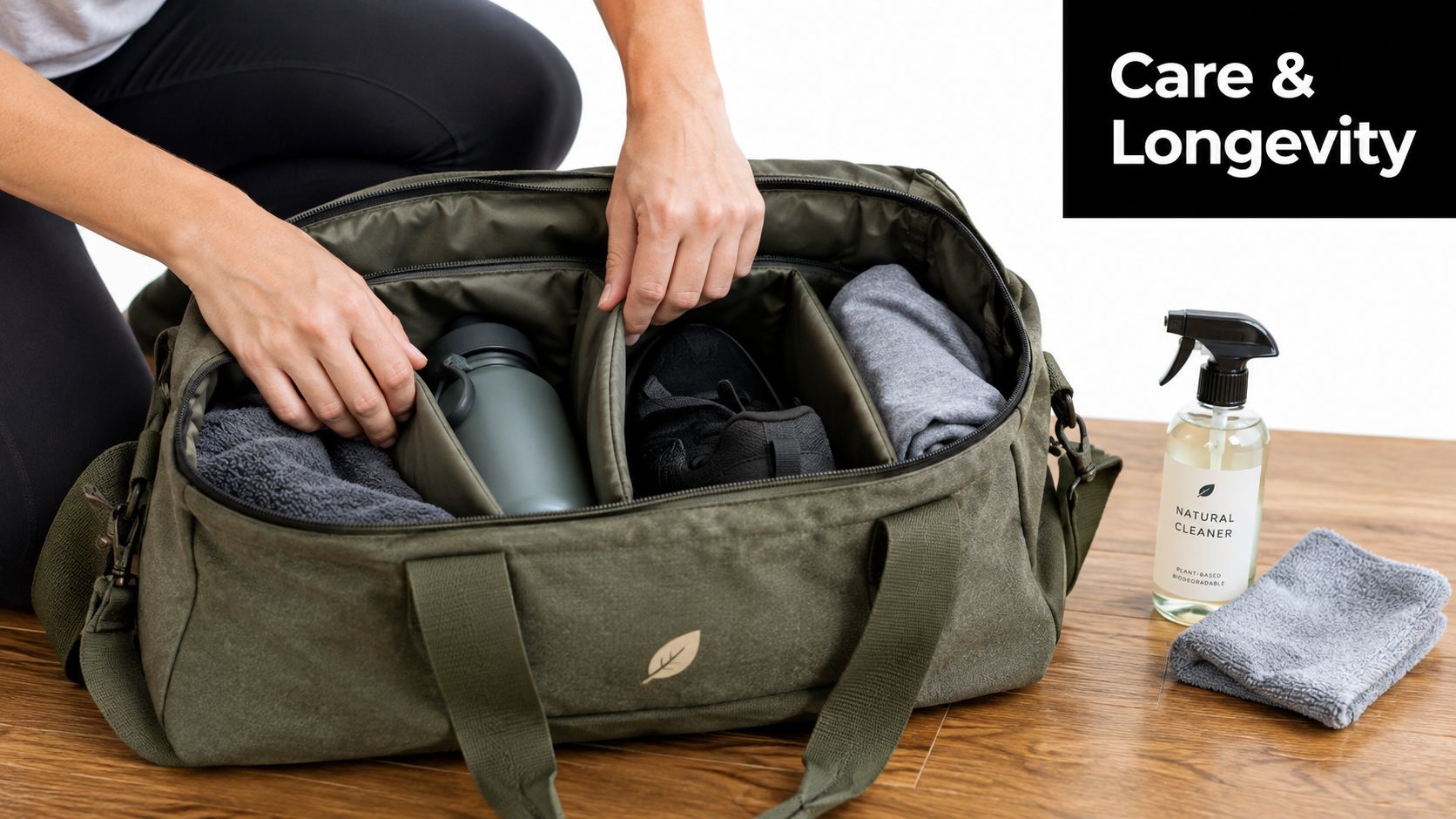
Empty the bag after each workout. Remove damp clothing, towels, and shoes instead of leaving them sealed overnight. Open every compartment and let the interior air out before storing the bag in a closet, car, or locker.
Spot-clean small marks with a damp cloth and follow the care label. Avoid assuming that a coated or recycled shell belongs in a washing machine. For brand-specific maintenance guidance, use these tote bag care tips.
A ventilated shoe pocket can keep footwear from sharing air with clean clothes. A separate wet section can protect the lining and make it less tempting to launder the entire bag after one sweaty session.
Pack by function, not by wishful thinking
For a morning gym commute, place shoes at the bottom or in their dedicated pocket, clothes in the main compartment, and toiletries in a smaller zippered section. Keep your water bottle upright in a holder or side pocket, and store keys and earbuds where you can reach them without unpacking everything.
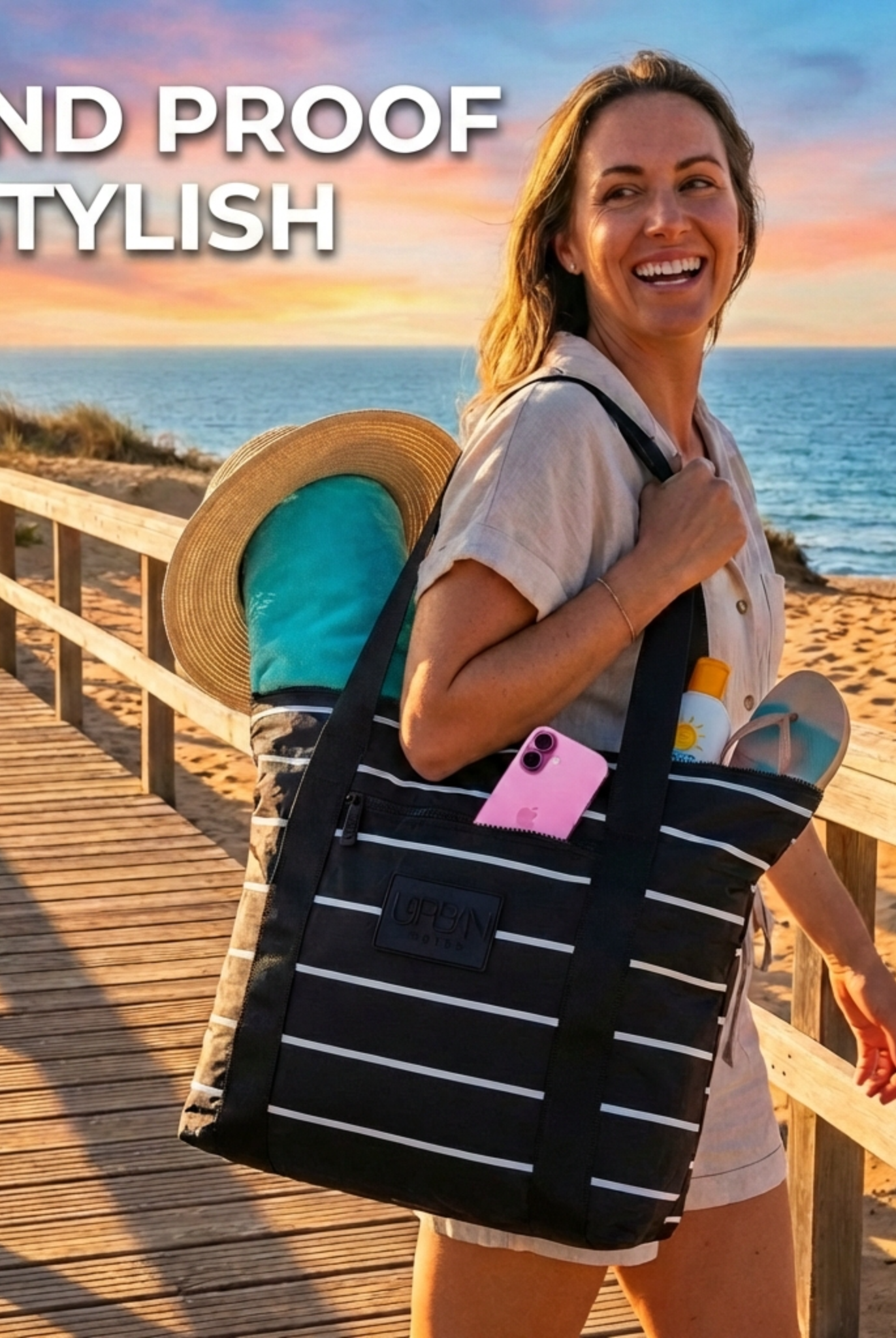
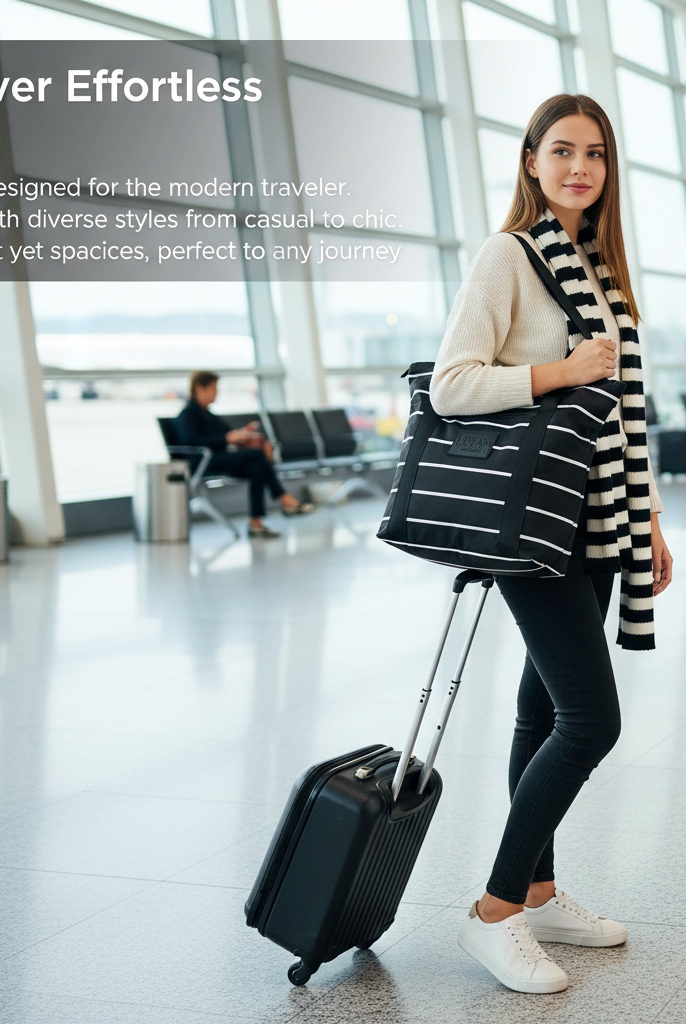
For a beach day, use compartments for sunscreen, a cover-up, snacks, and a damp swimsuit. For an airport morning, keep travel documents and small electronics in a secure zipper pocket while leaving the main section flexible for a layer or book.
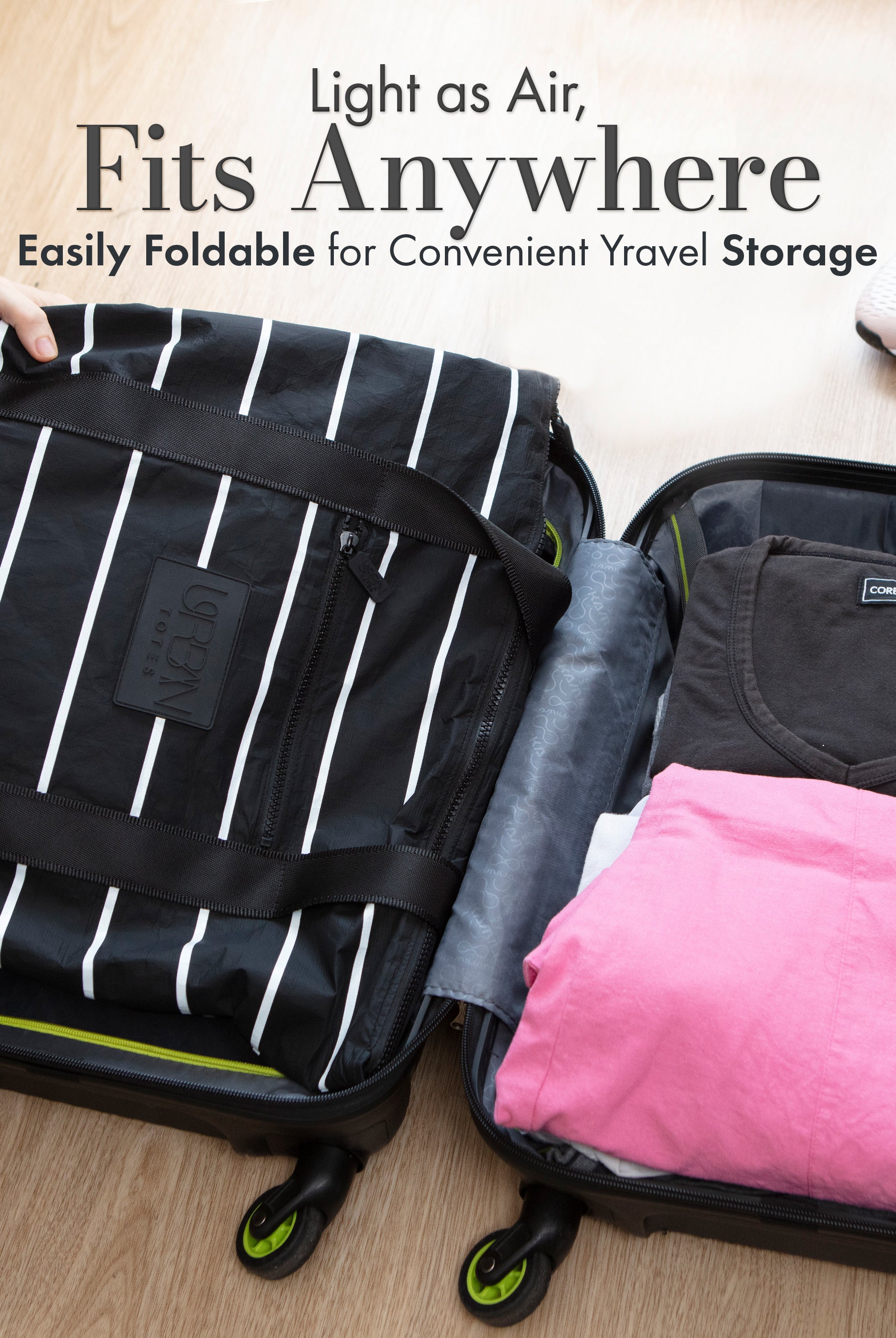
A lightweight, foldable, packable bag earns more chances to be used. It can travel inside a suitcase, wait in the car for errands, or become an extra carryall after a workout. The more naturally it fits into your routine, the less likely you are to buy a separate bag for every occasion.
Small habit, lasting benefit: Air the bag first, spot-clean second, and machine-wash only when the care instructions support it.
Finding Your Go Anywhere Eco Friendly Gym Bag with Urban Totes
Choosing an eco friendly gym bag becomes clearer when you separate the decision into three questions. What material suits your priorities? What construction can handle your routine? What care habits will help you keep it in service?
For some women, that points toward a dense recycled-polyester shell with a durable coating, ventilation, and clear wash instructions. For others, a breathable natural-fiber option may better match their concern about synthetic shedding. There isn't one perfect material for every commute, workout, beach day, or weekend trip.
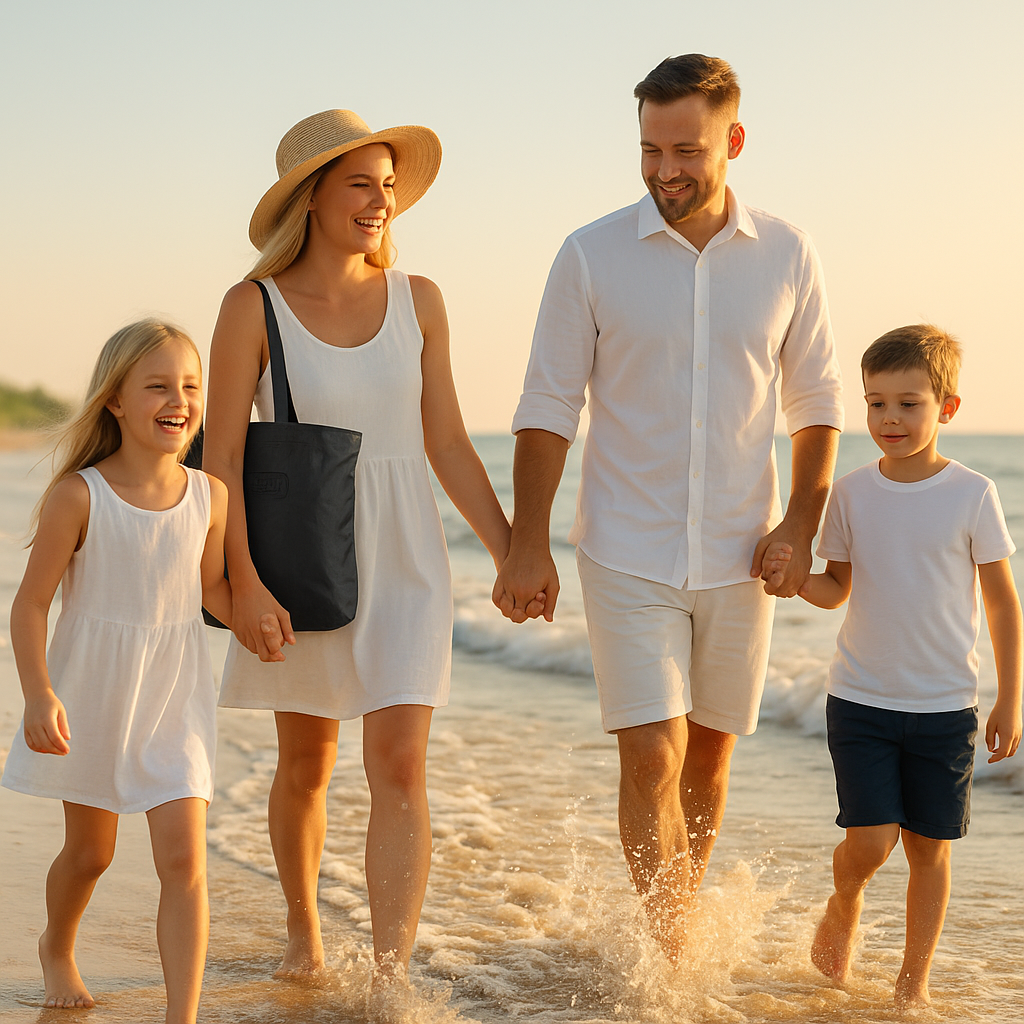
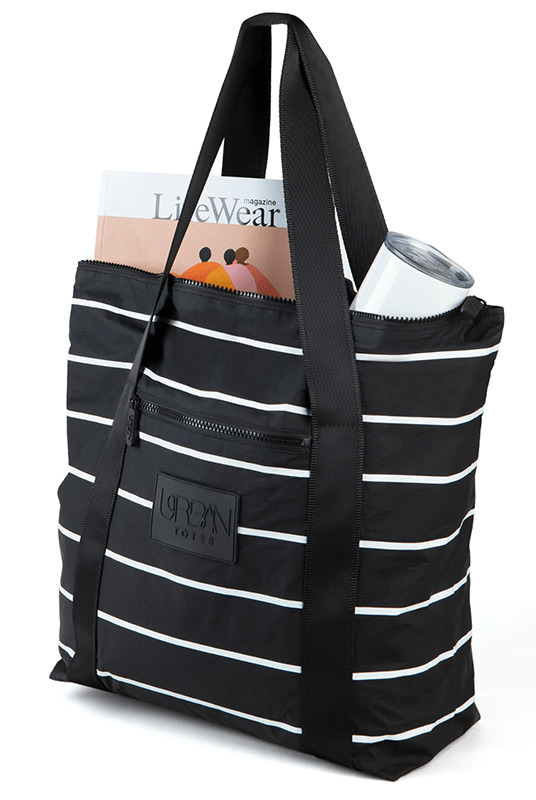
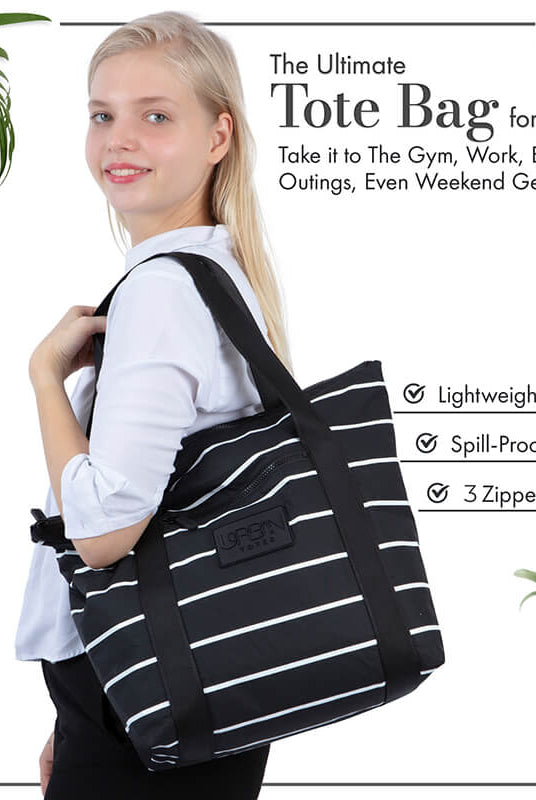
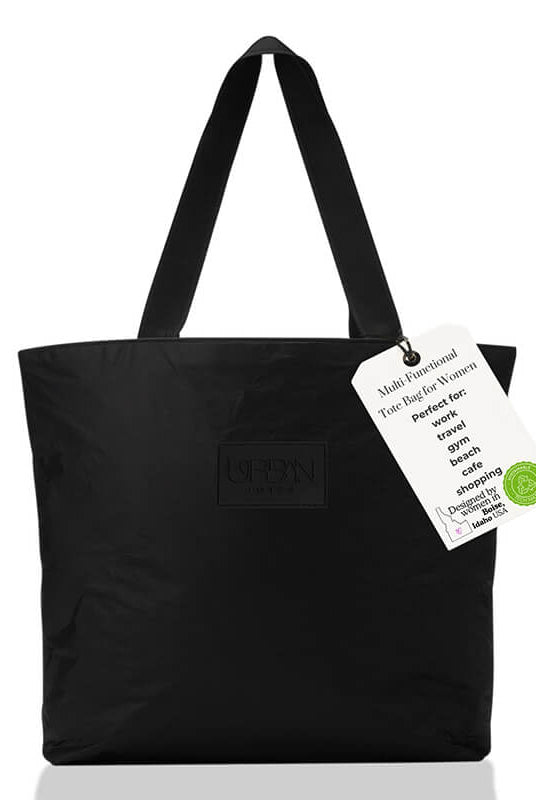
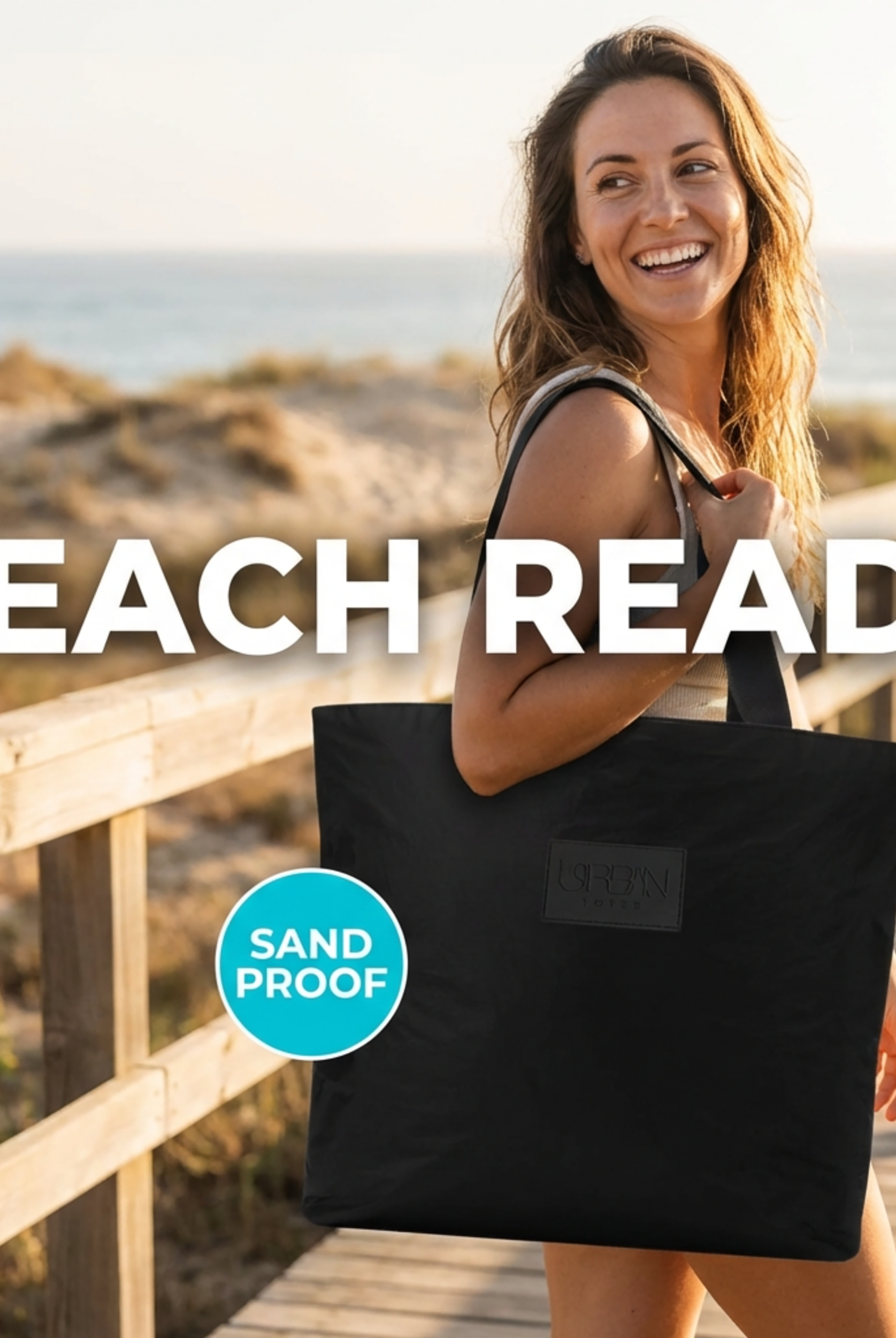
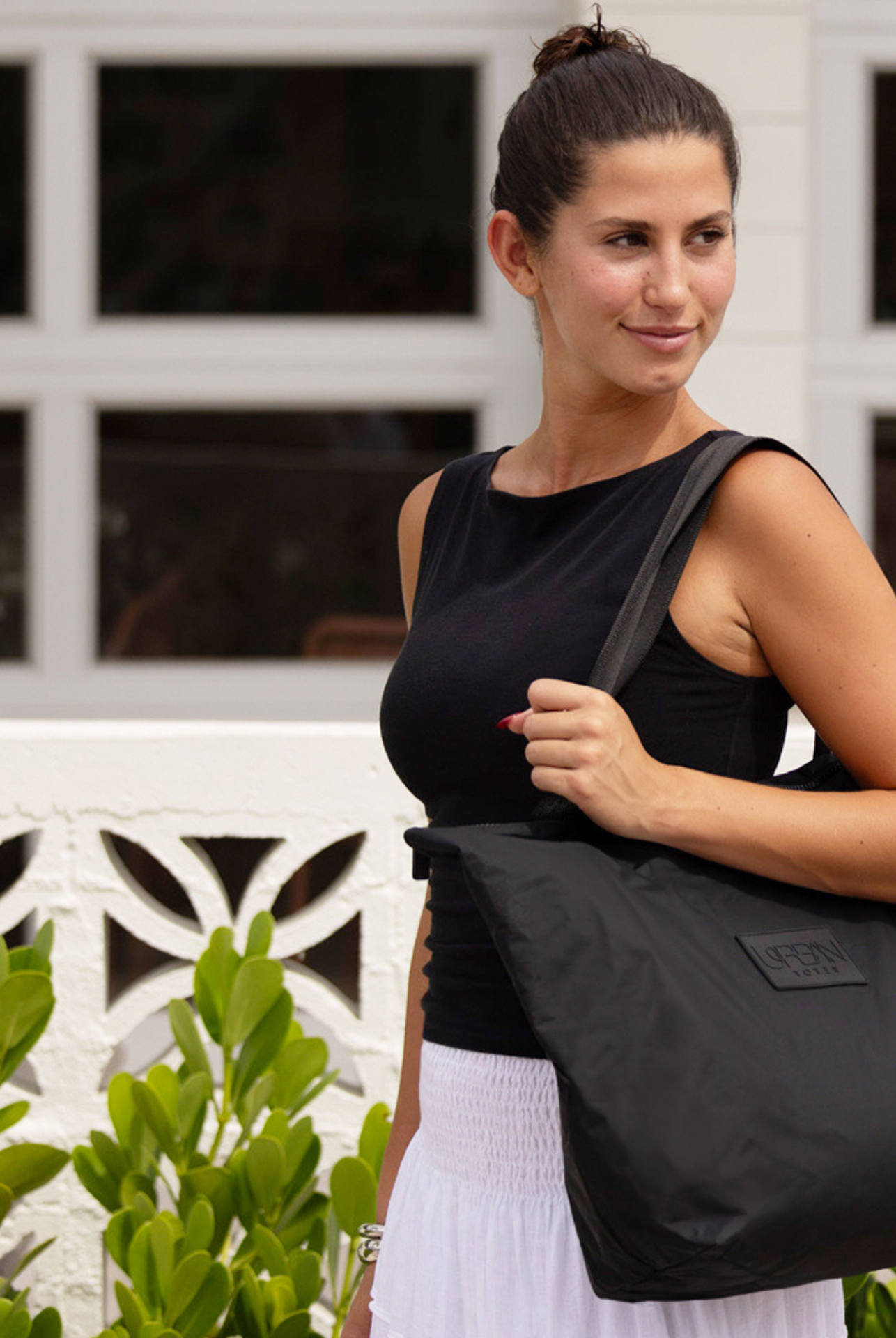
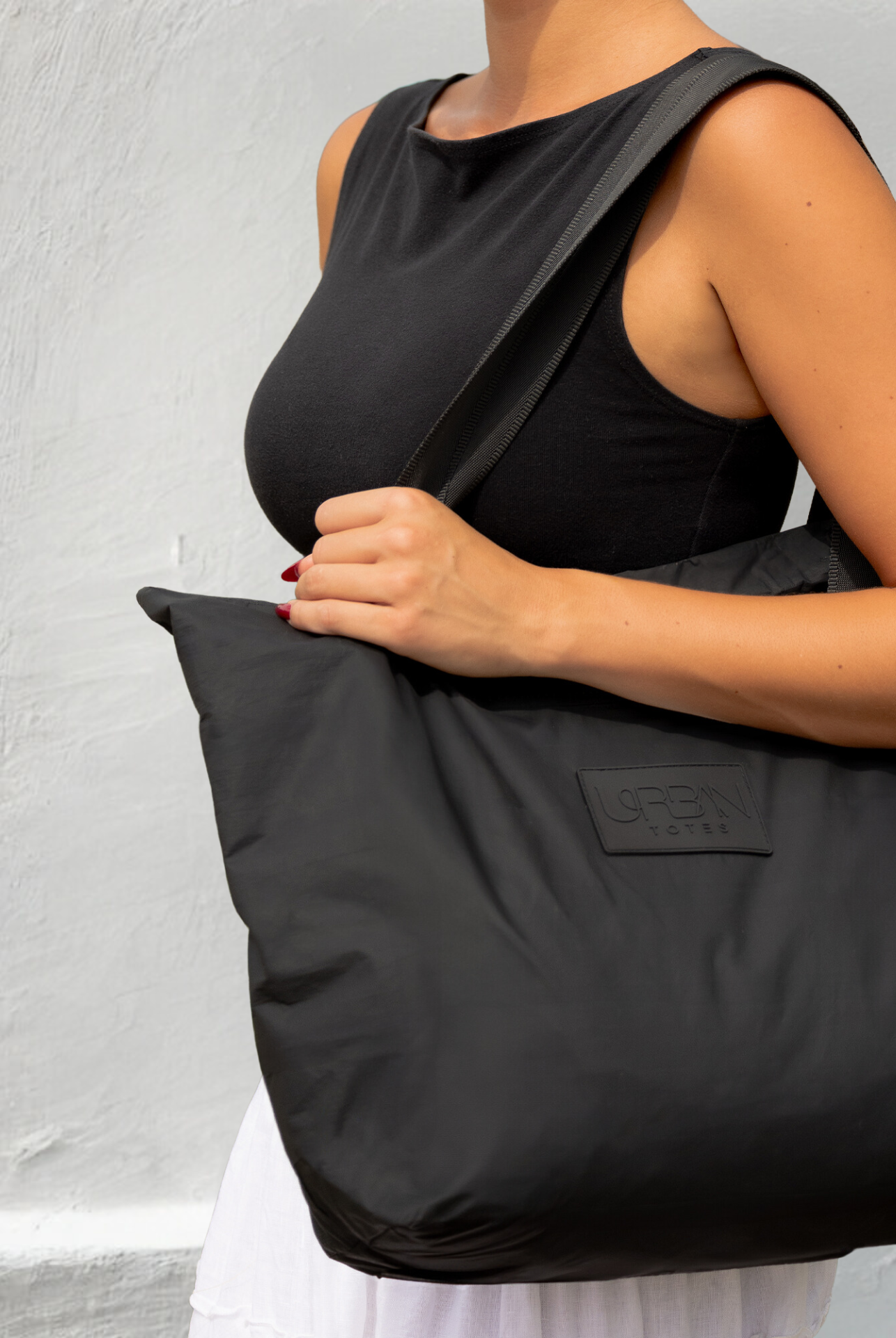
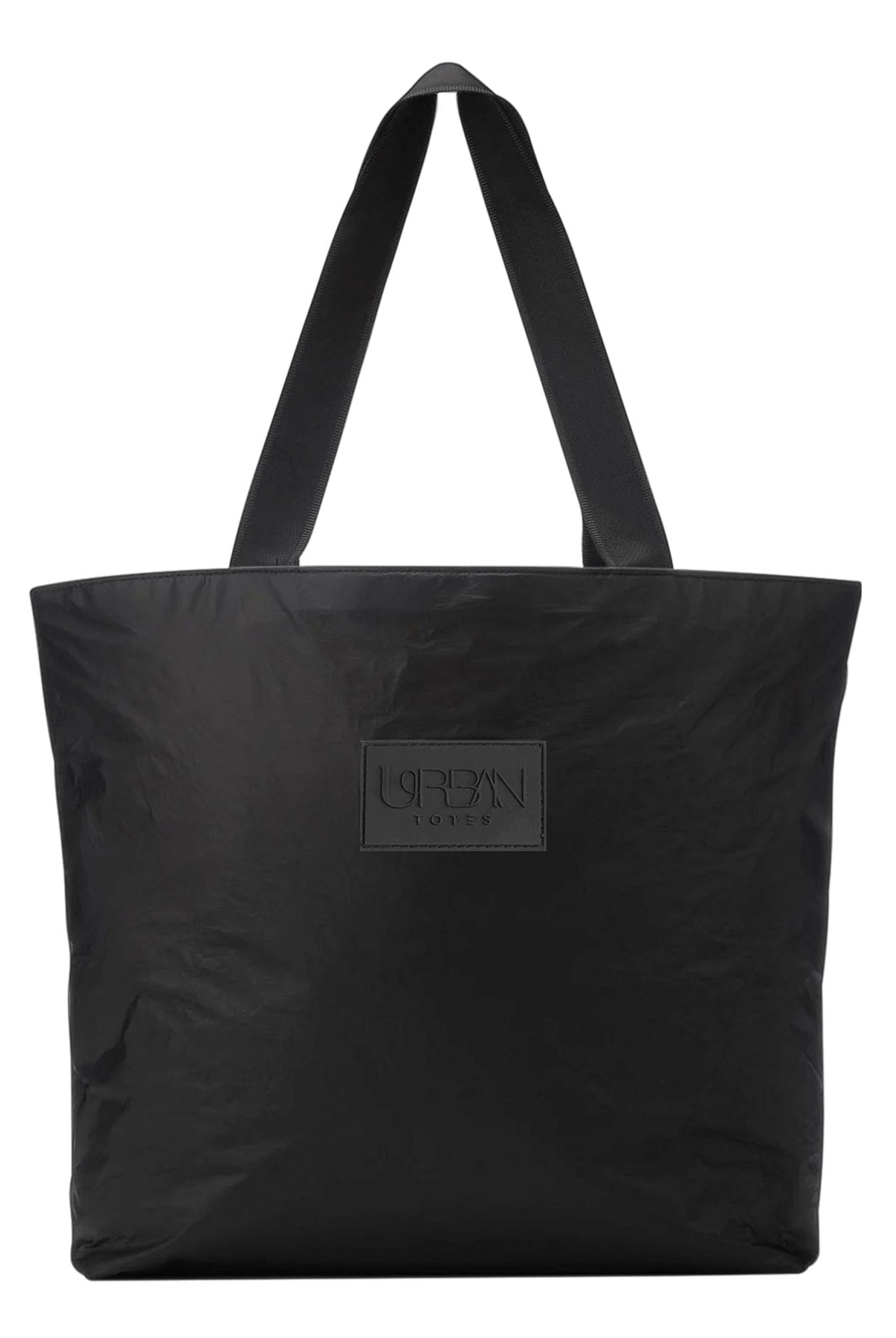
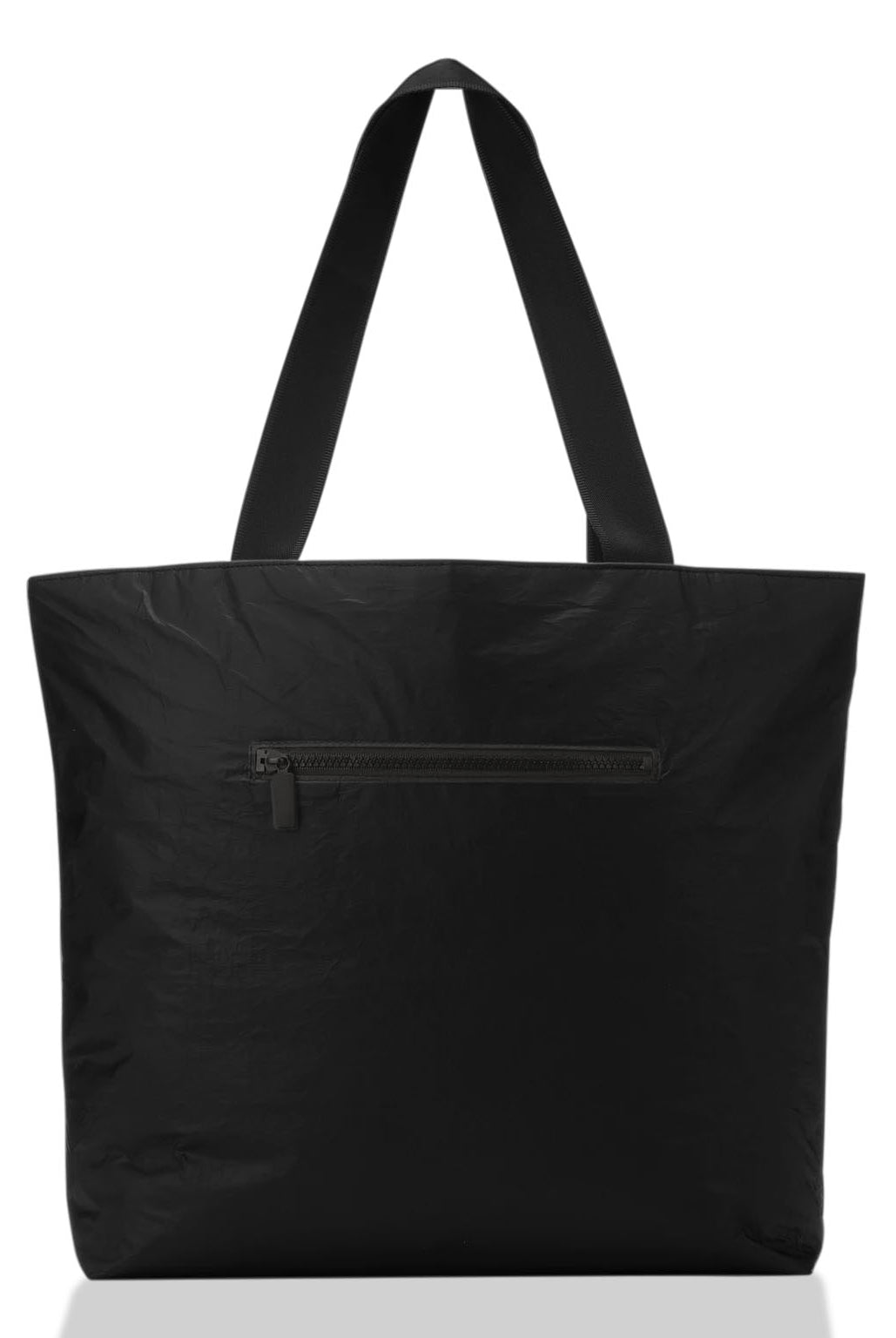
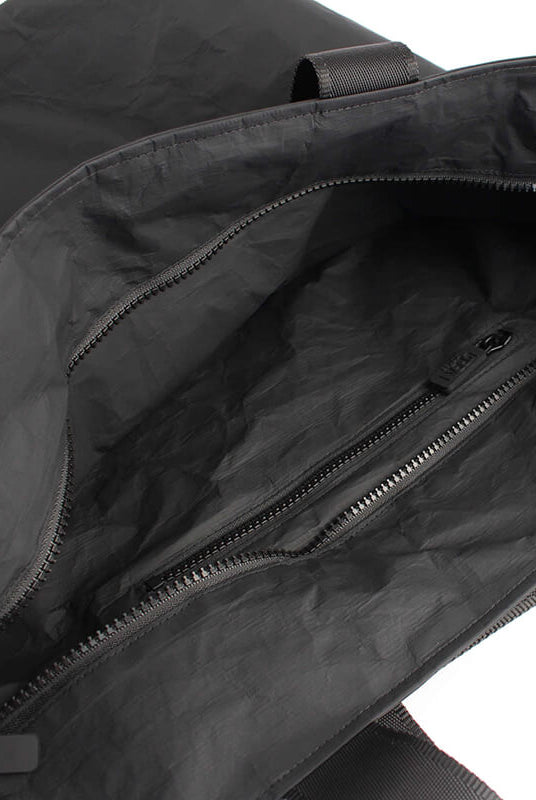
Urban Totes brings a lifestyle-focused option to that decision. The woman-owned, Boise-made brand designs bags that are water-resistant, lightweight, packable, and foldable, with thoughtful organization such as multi-pocket interiors and zipper closures. Those features support everyday carry across school drop-off, office commutes, gym sessions, farmers markets, beach days, and travel.
The founder perspective is visible in the practical details: a bag should look polished enough for daily life while still giving you useful separation for the items that make a day complicated. A go-anywhere design isn't about carrying everything without a plan. It's about keeping the essentials organized, protected, and easy to reach.
Your final checklist is straightforward:
- Choose the material with open eyes.
- Inspect the weave, coating, seams, and lining.
- Prioritize ventilation and separation if odor drives washing.
- Look for clear care instructions and specific certifications.
- Select a size and shape you'll use.
The right bag should move easily from the gym to the rest of your life. That's the spirit of Go Anywhere. Tote Everything.
Shop the thoughtfully designed, water-resistant, lightweight, and organized collection from Urban Totes for a versatile everyday carry that can move from workouts and commutes to beach days and weekend travel. Choose a packable, foldable style that fits your routine, then take it wherever the day leads.