You're probably reading this while carrying too much in a bag that's doing too little. Maybe it's slouching off your shoulder on the train, swallowing your keys somewhere near the bottom, or already showing frayed corners even though you bought it for work, not for mountain climbing.
That's the frustrating part about shopping for durable tote bags for work. Plenty of bags look polished online. Far fewer survive real life. A tote has to handle the commute, the coffee run, the laptop, the extra cardigan, the receipts, the charger, and the random snack stash you forgot was in there. Then it still has to look pulled together when you walk into the office.
A good work tote isn't just a style choice. It's part of how your day runs. When the straps stay put, the shape holds, and your essentials are easy to reach, you feel more organized before the first meeting even starts.
Table of Contents
- Your Work Bag Should Work as Hard as You Do
- The Anatomy of a Truly Durable Tote
- Choosing Your Material Canvas Nylon and Beyond
- From Seams to Straps Construction That Lasts
- Smart Organization for the Modern Commute
- Beyond the Desk Versatility for Your Go-Anywhere Life
Your Work Bag Should Work as Hard as You Do
A bad bag day can unravel your whole morning. You're balancing coffee, checking your phone, moving fast, and then one weak strap or one blown-out seam turns your commute into a sidewalk clean-up. Laptop out. Wallet out. Lip balm rolling away like it has somewhere better to be.

That kind of failure usually doesn't come out of nowhere. Most totes give you warning signs first. The corners start to fuzz. The handles twist. The base loses shape. The stitching near the strap attachment looks tired. People often ignore those clues because the bag still looks cute from the front.
For daily commuters, the bag has to perform over and over again, not just on the day you unbox it. For women ages 25 to 55, the average commute time in major U.S. metro areas is 28.5 minutes per direction, which is exactly why a work tote needs to stay lightweight and organized without adding extra strain during repeated use, according to Urban Totes' commuter-focused brand background.
Why this matters more than people admit
A work tote sits in that sneaky category of things you rely on constantly but don't always evaluate carefully. You notice when shoes hurt. You notice when your phone battery dies. But a mediocre tote can drain your day in smaller, annoying ways. It slides off your coat. It makes you dig. It feels heavier than it should.
A reliable tote buys back tiny moments of calm. That matters on a rushed weekday.
That's why the right work bag feels less like an accessory and more like a system. You want something that supports the rhythm of your day, from train seat to conference table to school pickup. If you're comparing silhouettes and features, this guide to a business tote bag for daily use is a helpful companion read.
What a better bag changes
The difference is practical, not dramatic. Your laptop goes in cleanly. Your phone has a real place. The straps don't bite. The bag doesn't collapse when you set it down. And when you walk into work, you look composed instead of mildly defeated by your own belongings.
That's the standard worth shopping for.
The Anatomy of a Truly Durable Tote
“Durable” gets tossed around so casually that it almost stops meaning anything. In a work tote, durability comes down to three things: material strength, construction quality, and stress-point reinforcement. If one of those is weak, the bag won't age well no matter how nice the shape or color looks.

Material is the foundation
The fabric does most of the heavy lifting. For durable work totes, the optimal fabric spec is 280+ gsm cotton canvas with double stitching or bar-tacking at stress points, because that balance supports tensile strength and load-bearing capacity up to 15kg. For wet environments, 1000D high-density nylon is the stronger technical option, as outlined in this material guide on durable tote construction.
That matters because a fabric can feel thick in your hand and still wear quickly at the corners. Dense material usually holds shape better, resists abrasion longer, and gives the bag a cleaner office-ready silhouette over time.
Construction carries the load
A tote works like a small structure. The fabric is the shell, but stitching decides whether the shell can handle repeated stress. The most important areas are the handle attachments, the upper side seams, and the base.
A useful shopping checklist:
- Check the handle connection: Look for visible reinforcement where the straps meet the body.
- Inspect the seam consistency: Tight, even stitching usually signals better assembly.
- Turn the bag slightly: A durable tote should keep some shape instead of puddling immediately.
- Look at the bottom panel: A stronger base helps the bag stand up to commuting and desk-to-floor repeats.
Practical rule: If the straps look decorative instead of structural, keep shopping.
Hardware should be boring in the best way
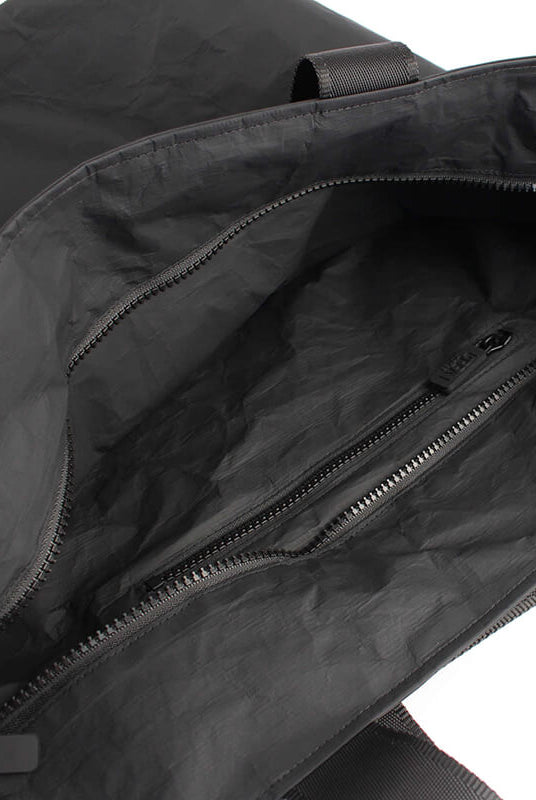
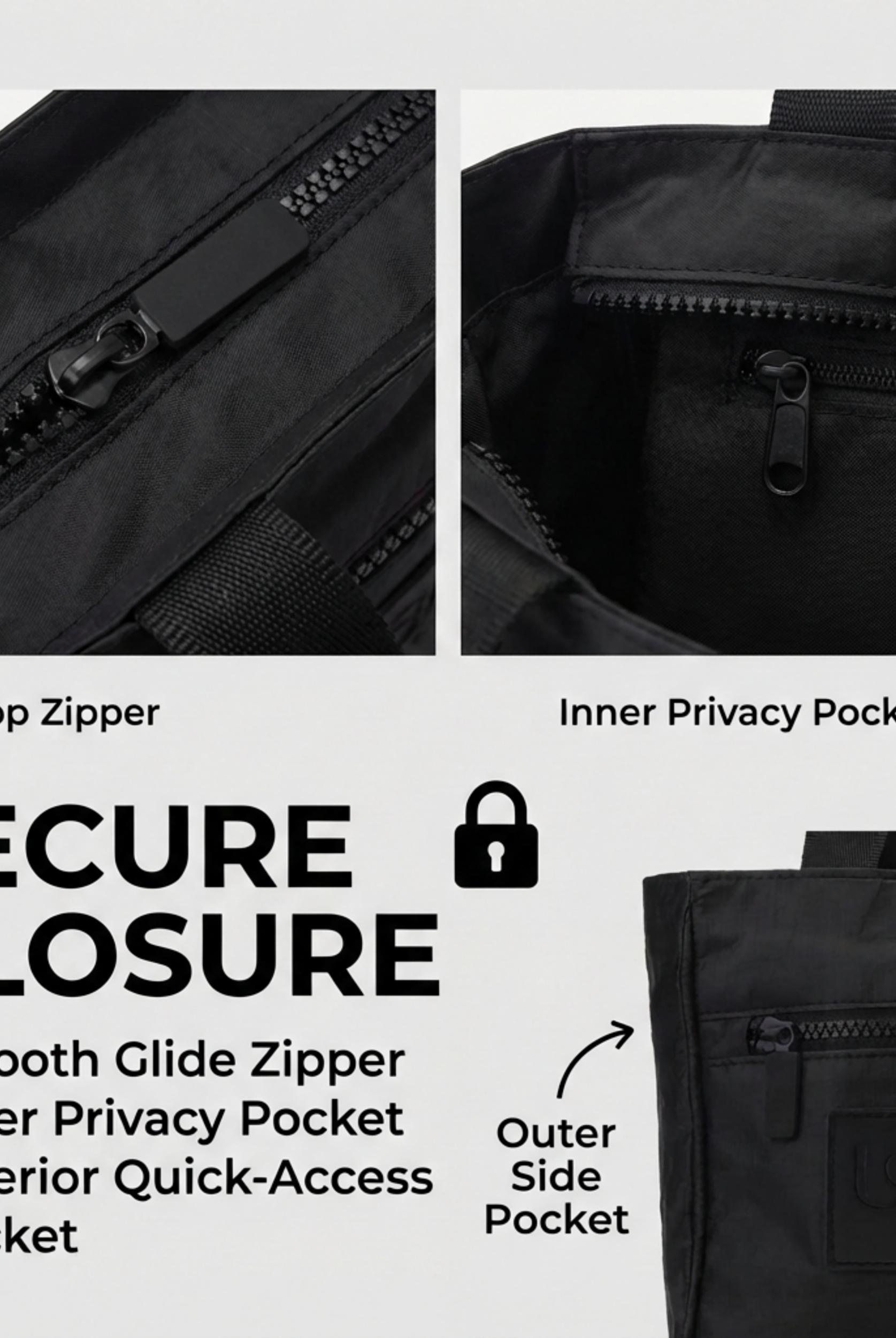
Good hardware shouldn't demand attention. Zippers should run smoothly. Pulls should feel attached, not flimsy. Closures should work one-handed when you're half in a doorway and half in your day.
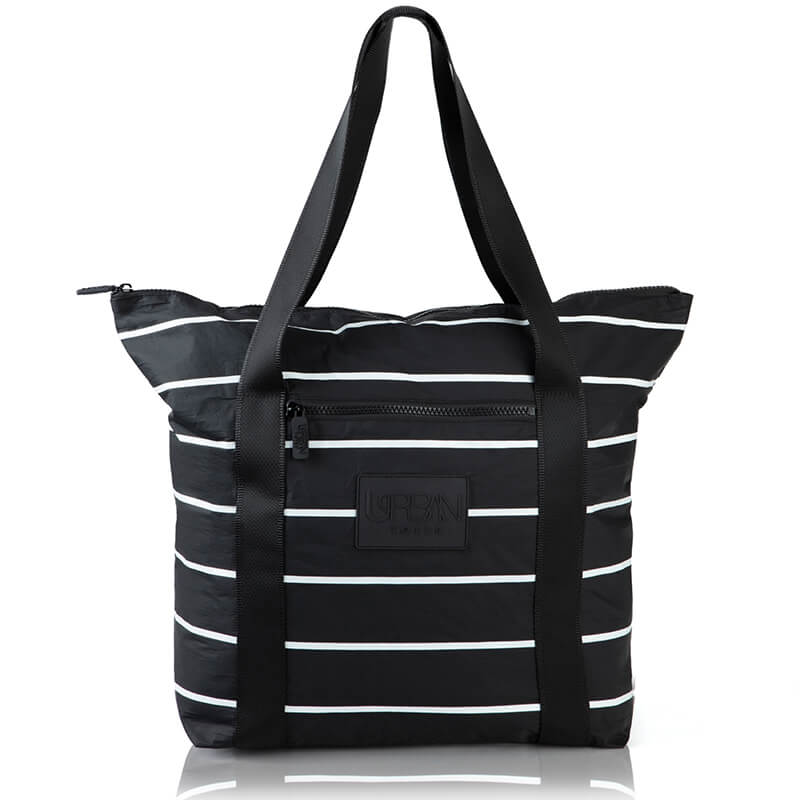
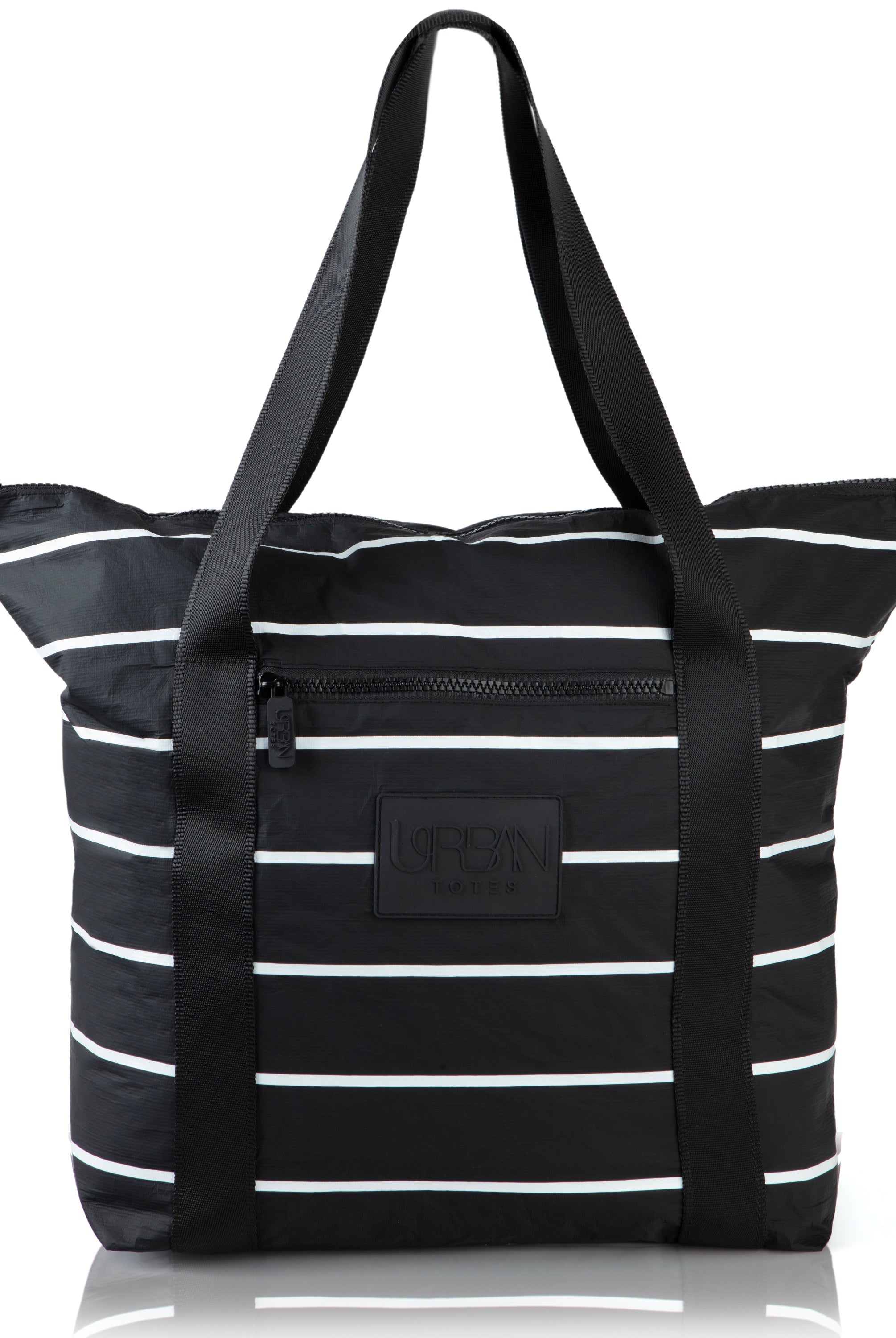
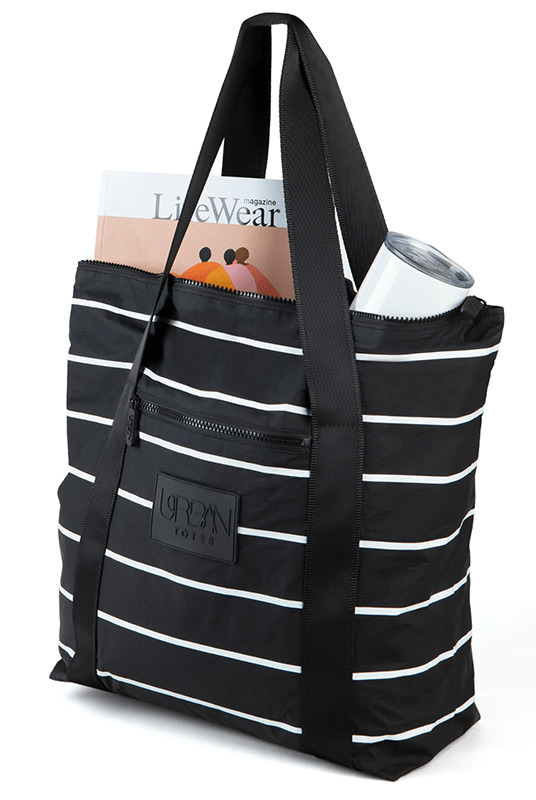
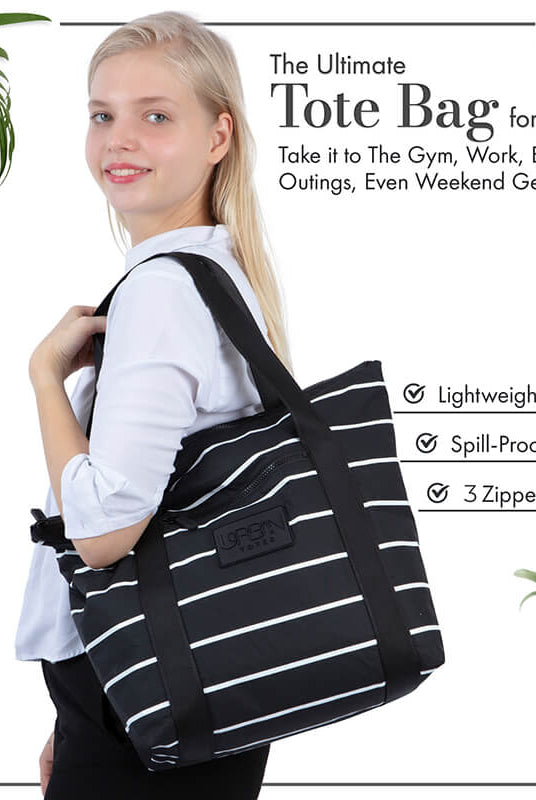
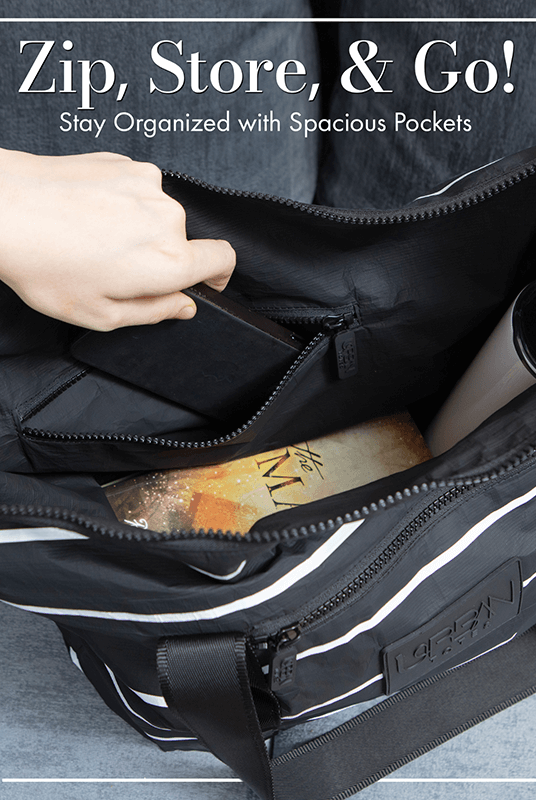
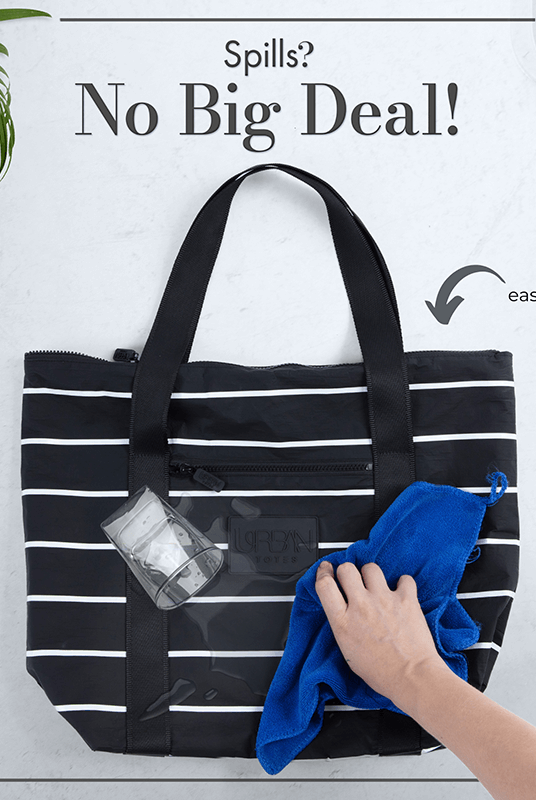
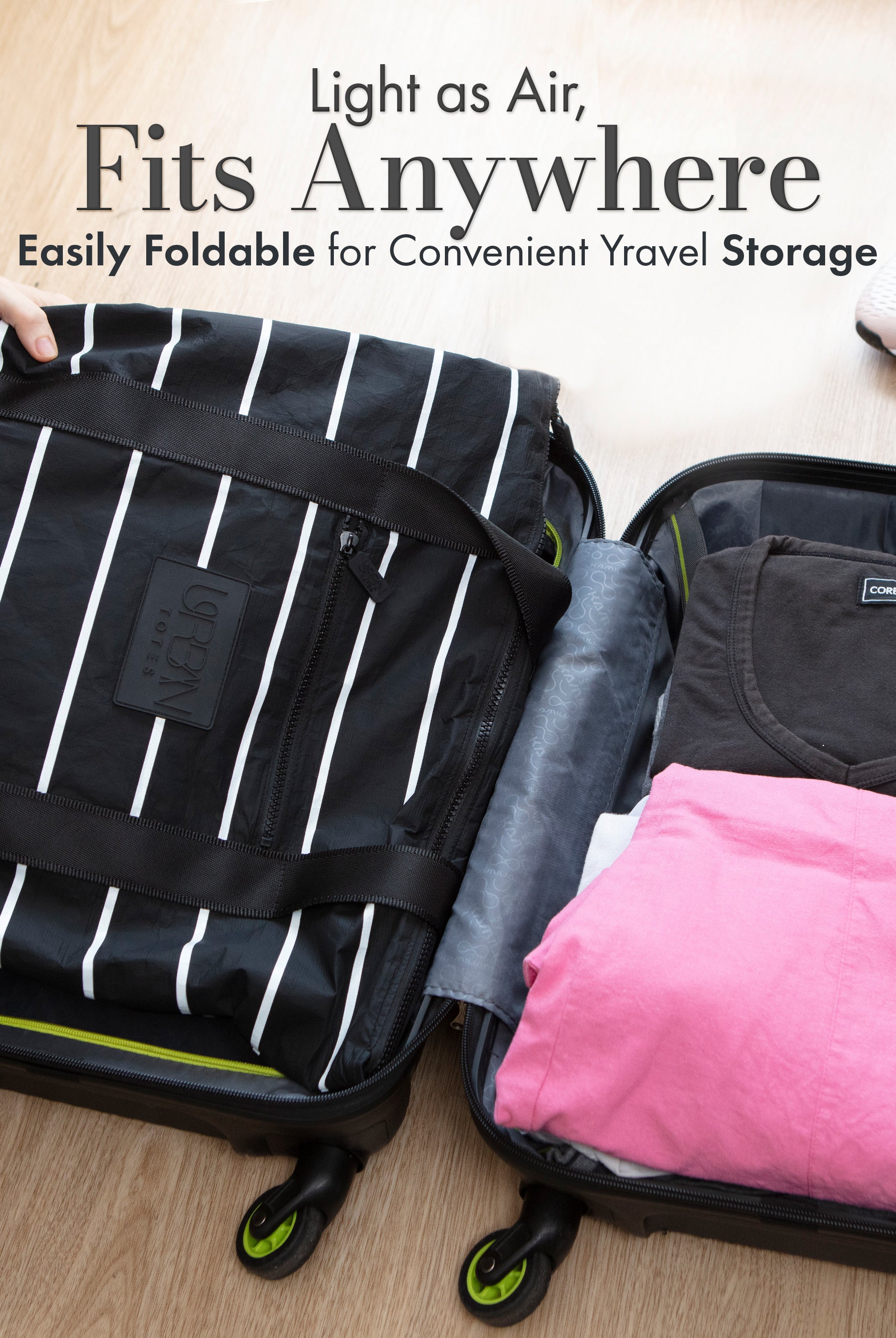
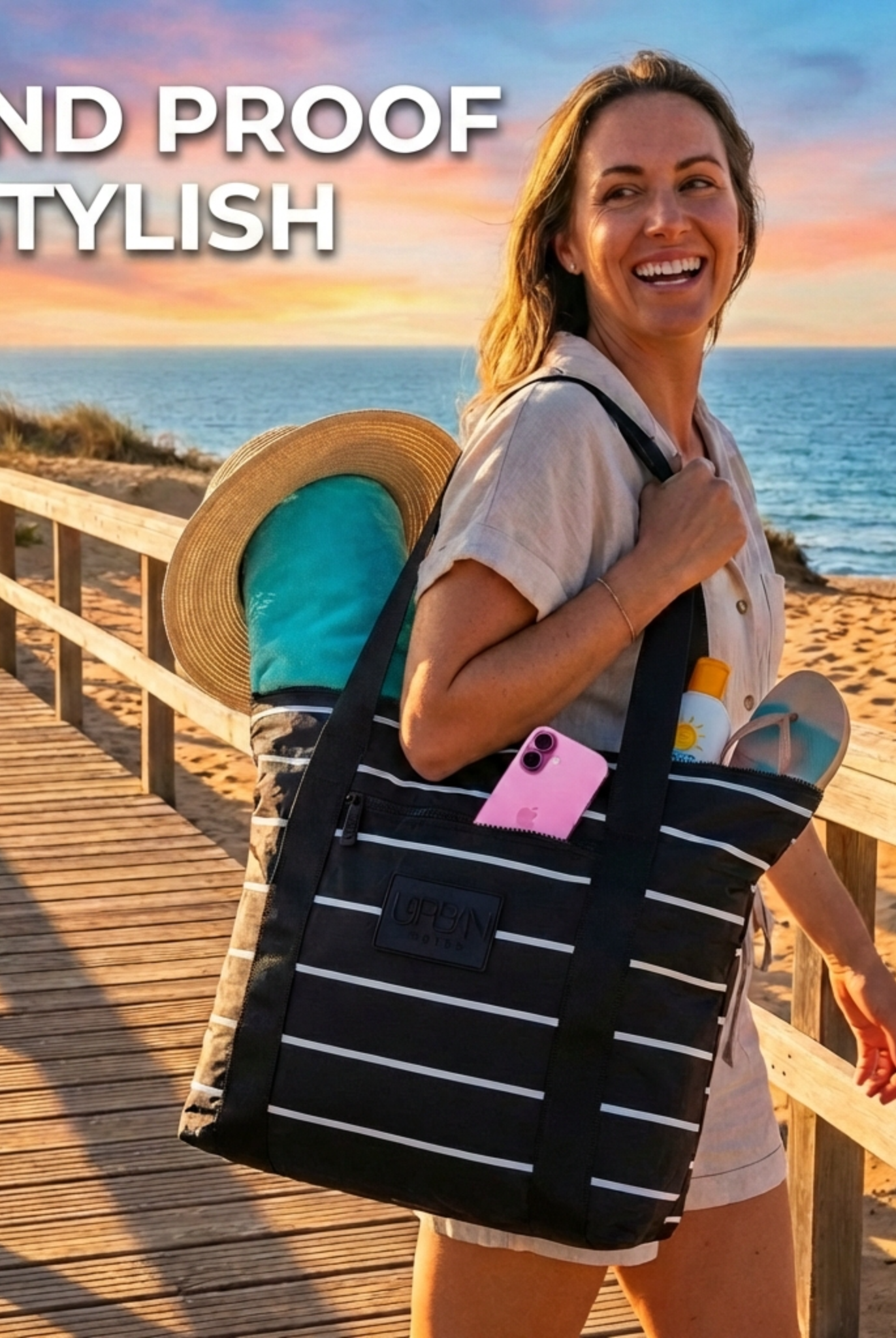
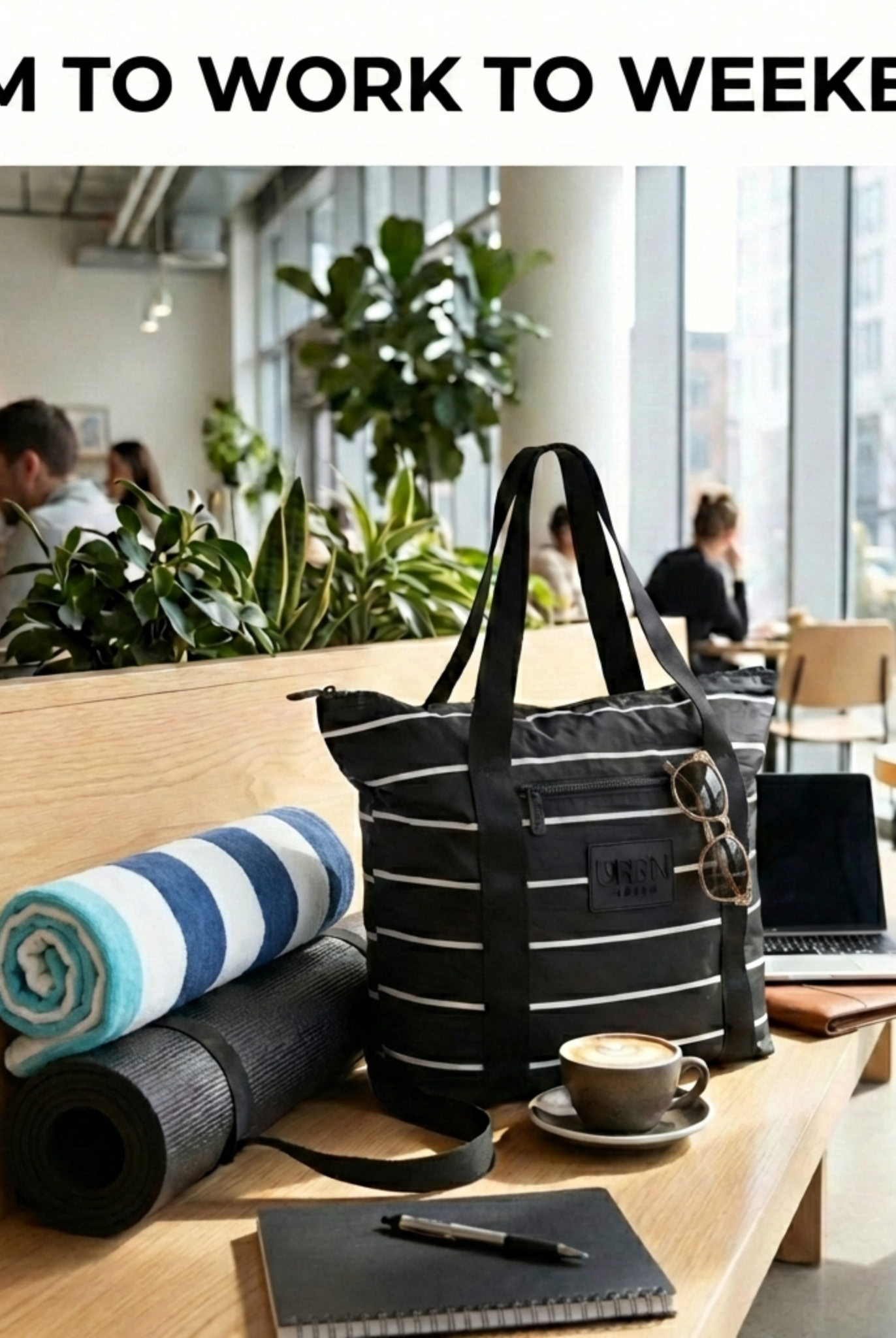
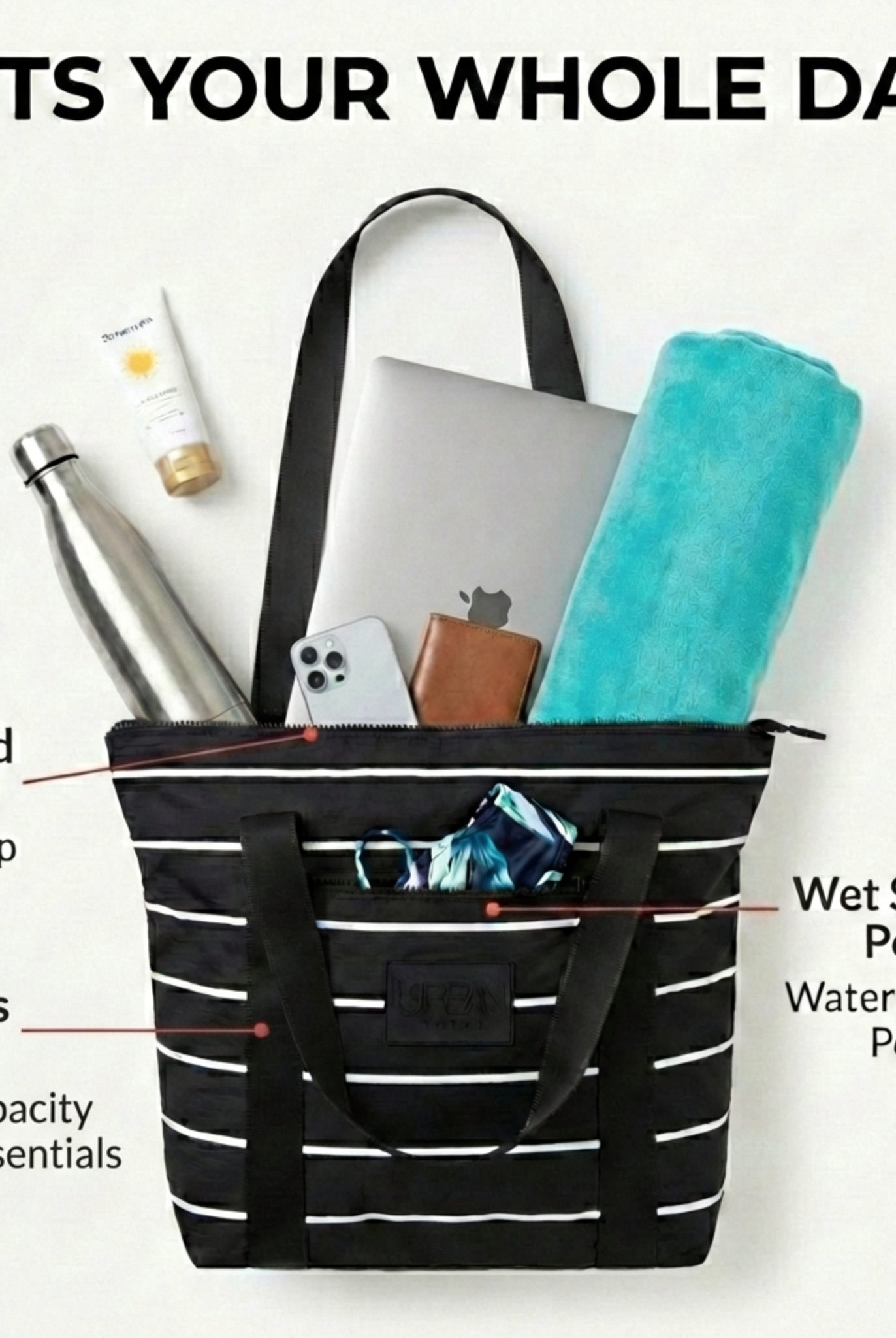
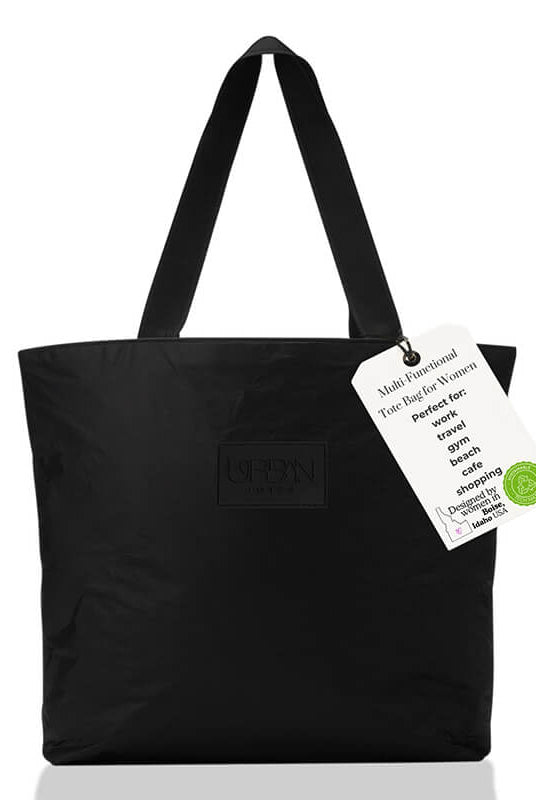
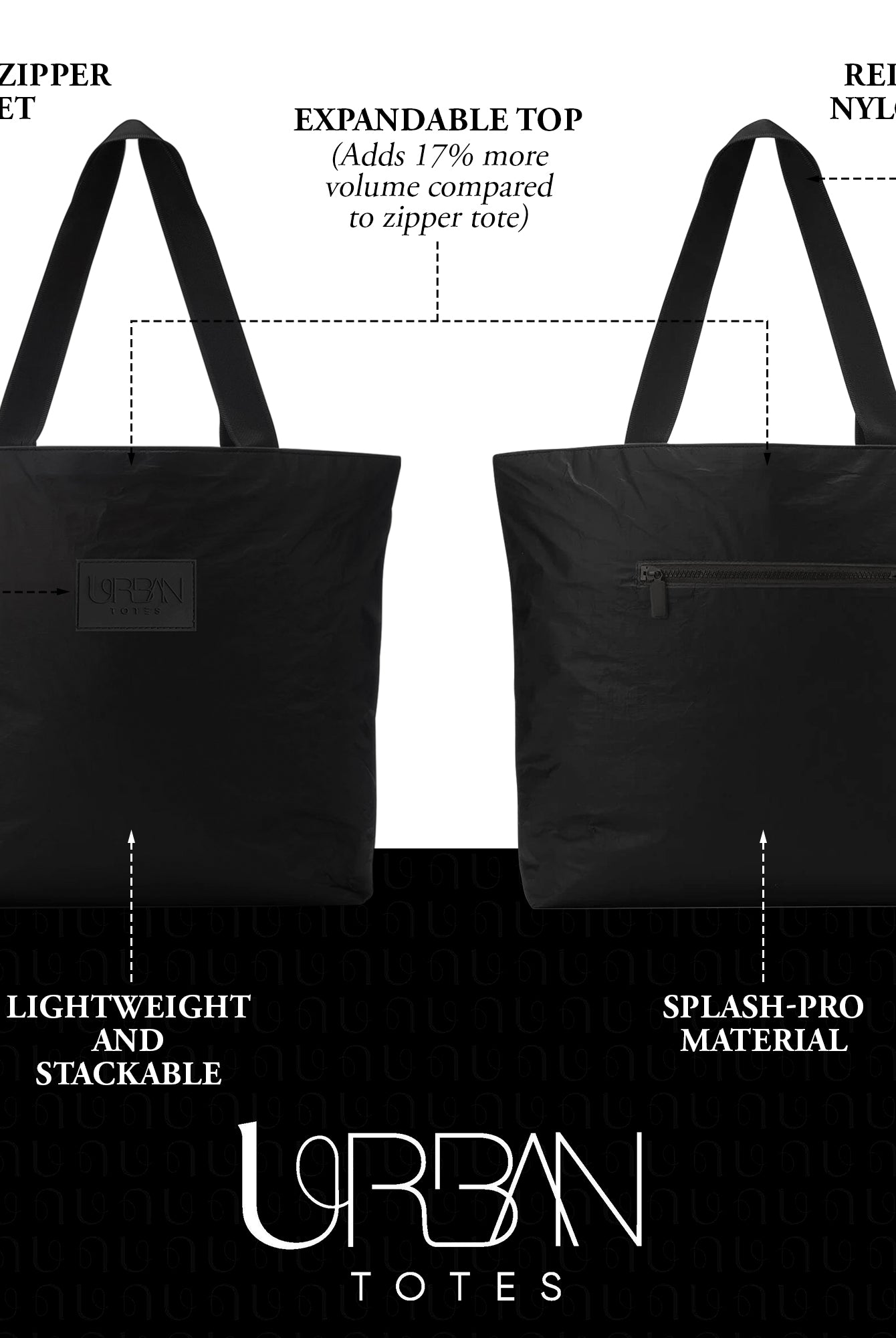
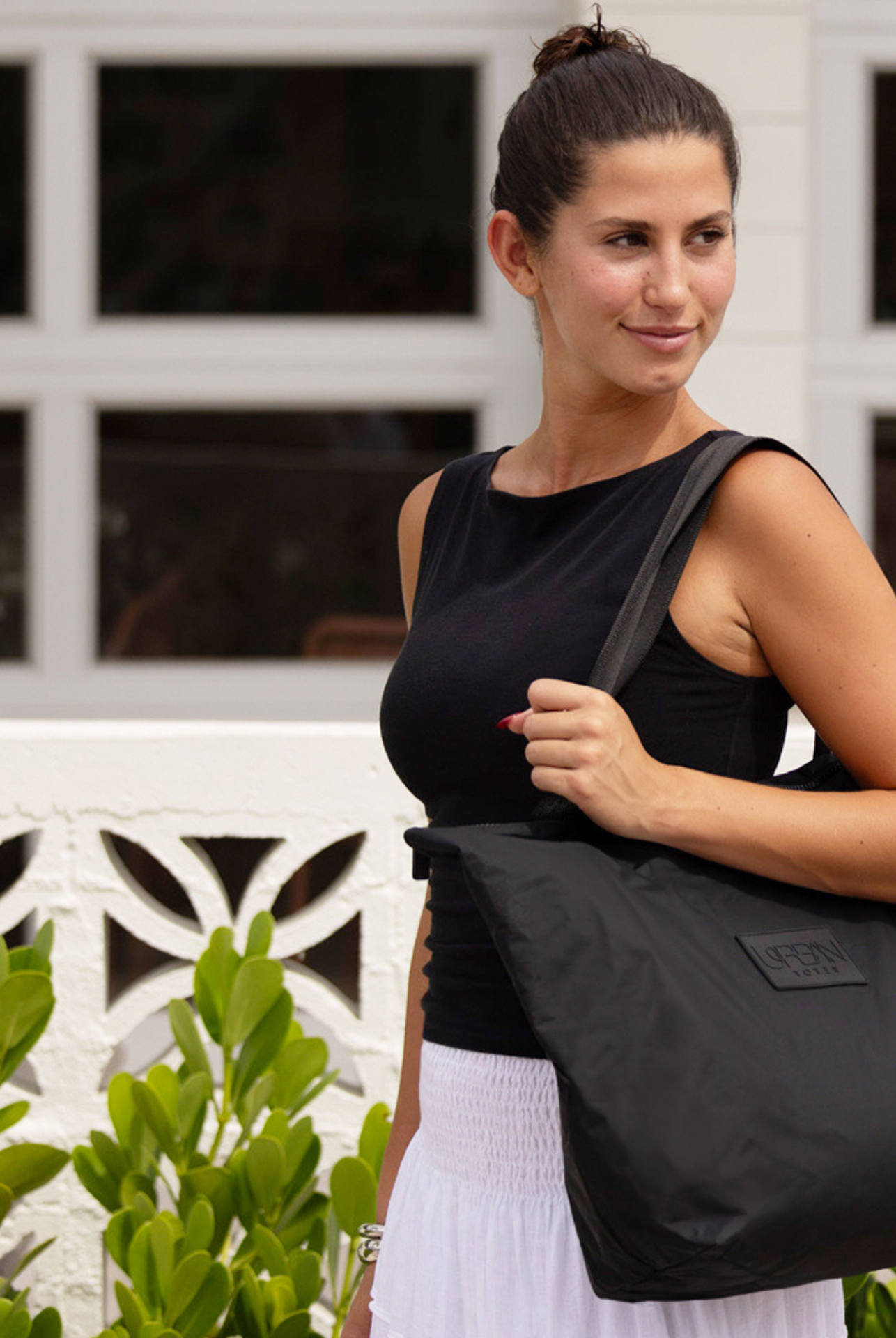
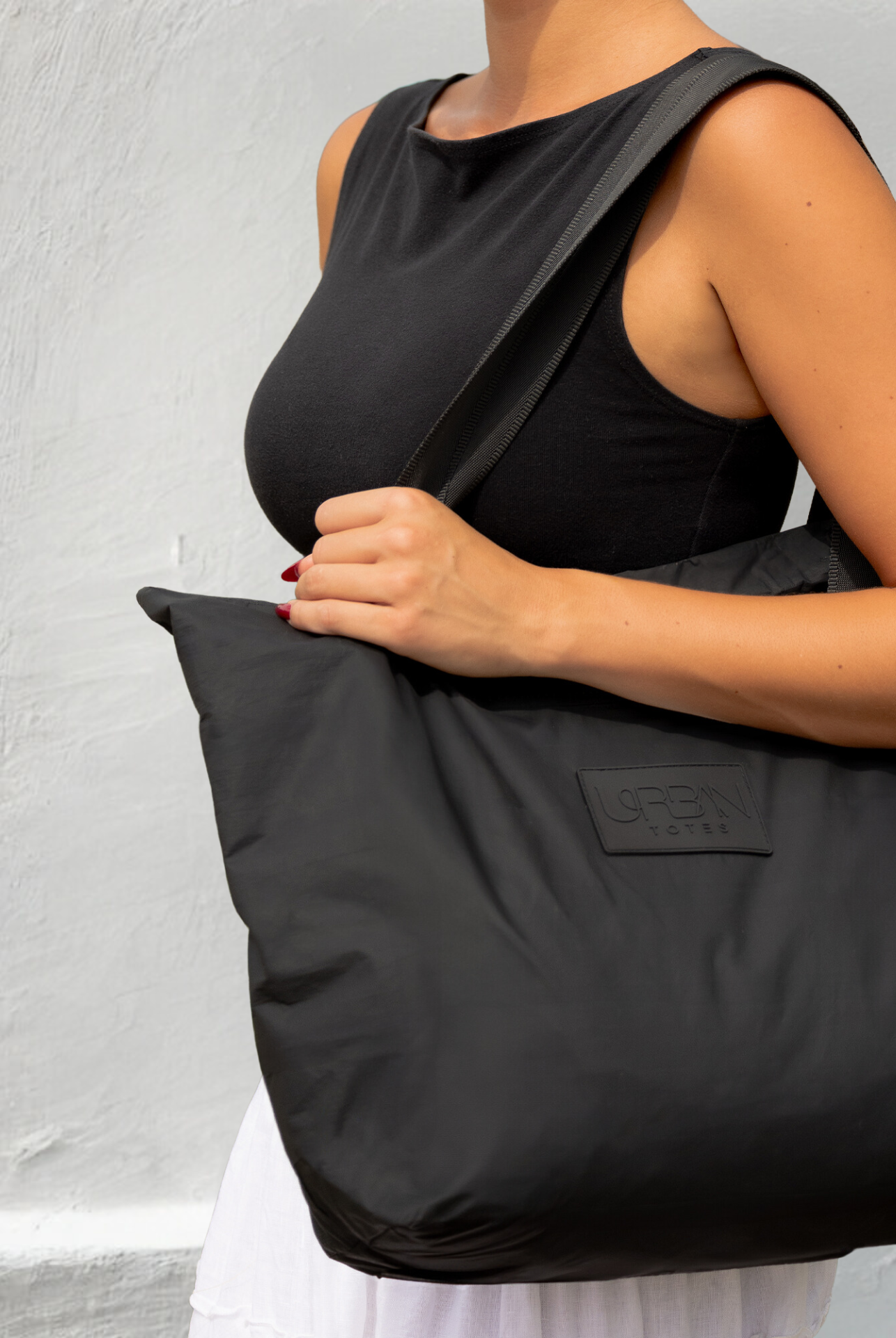
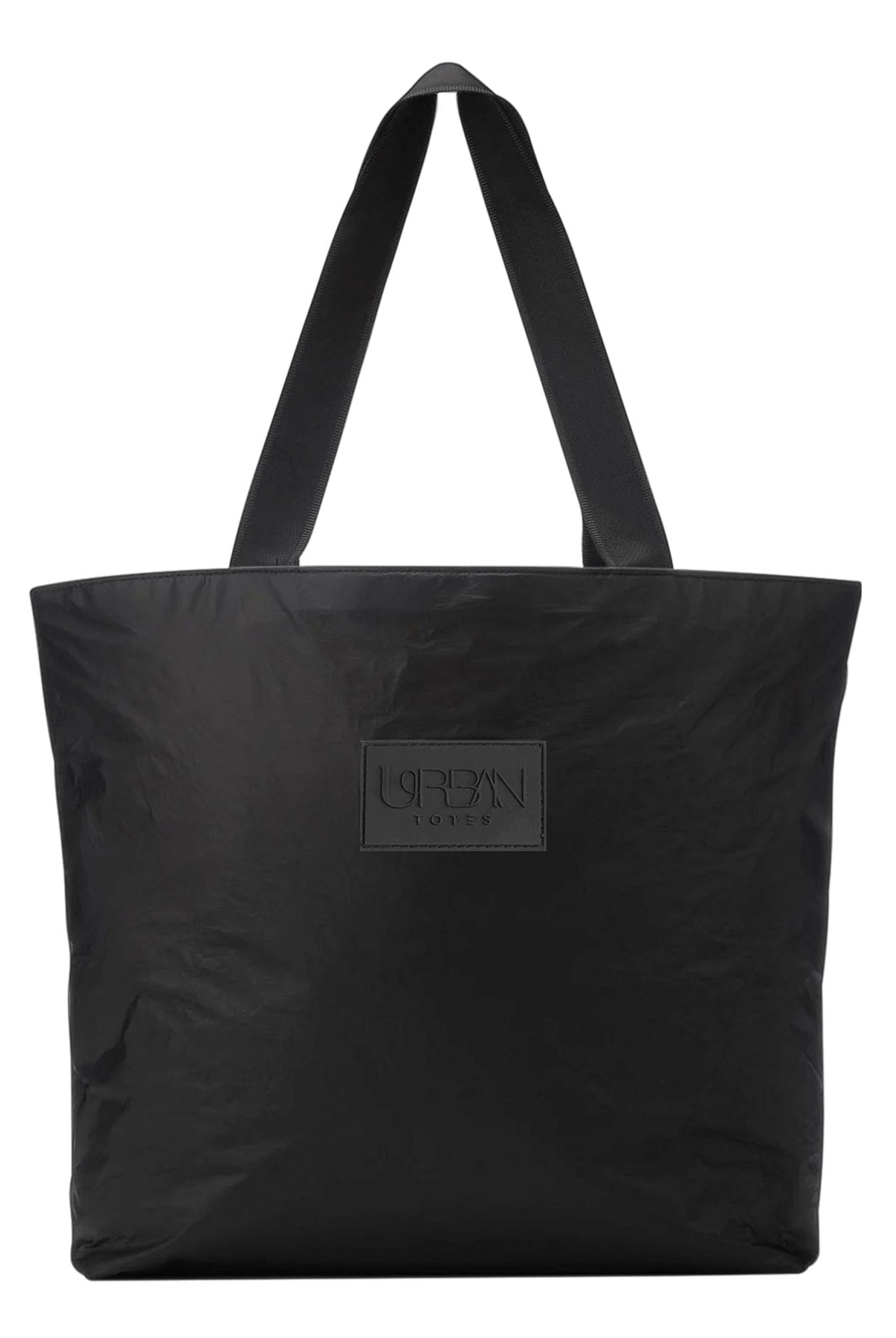
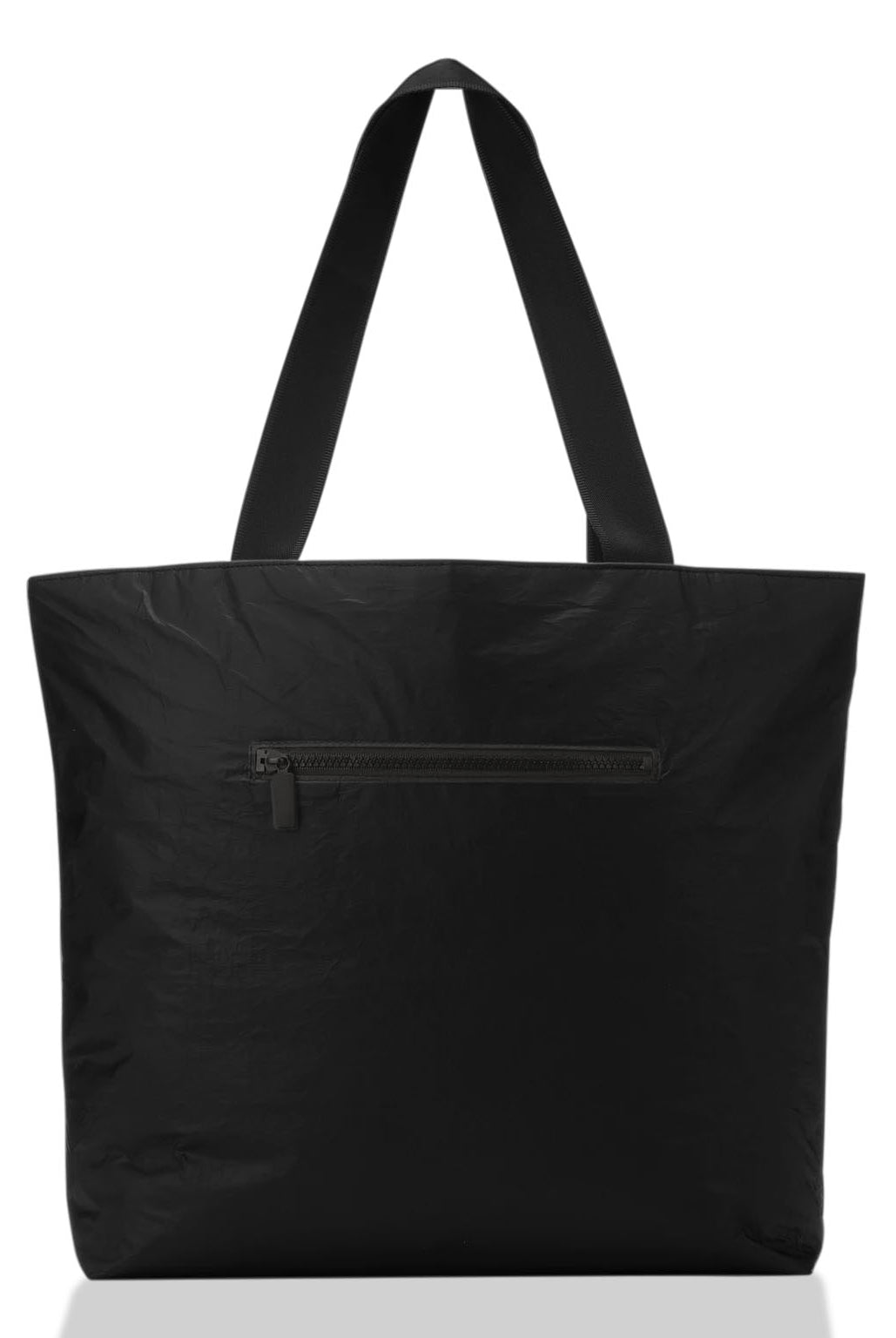
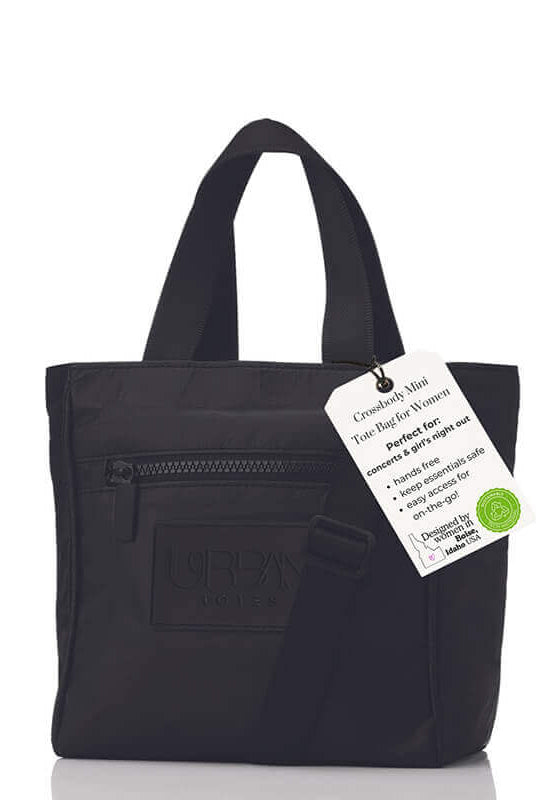
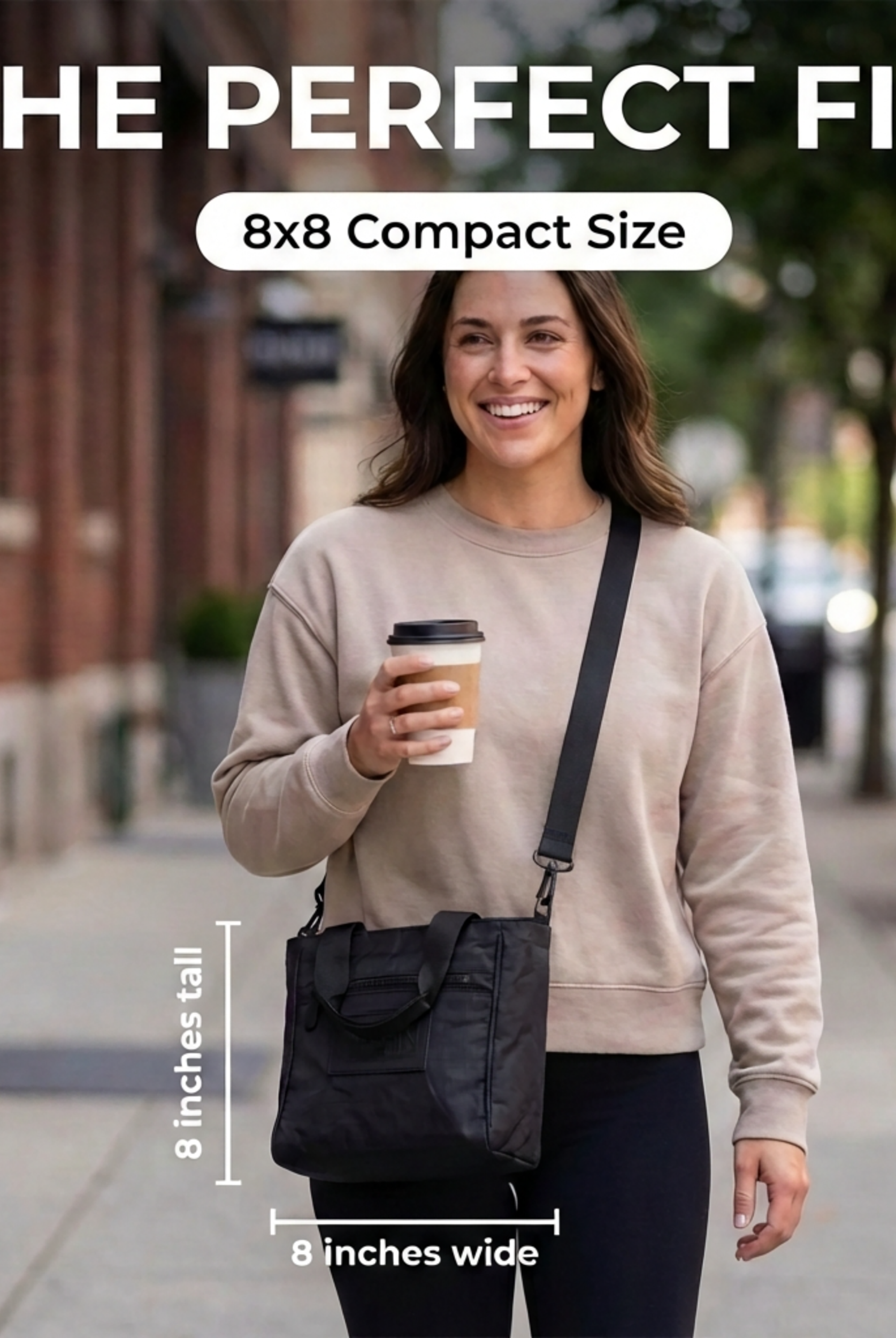
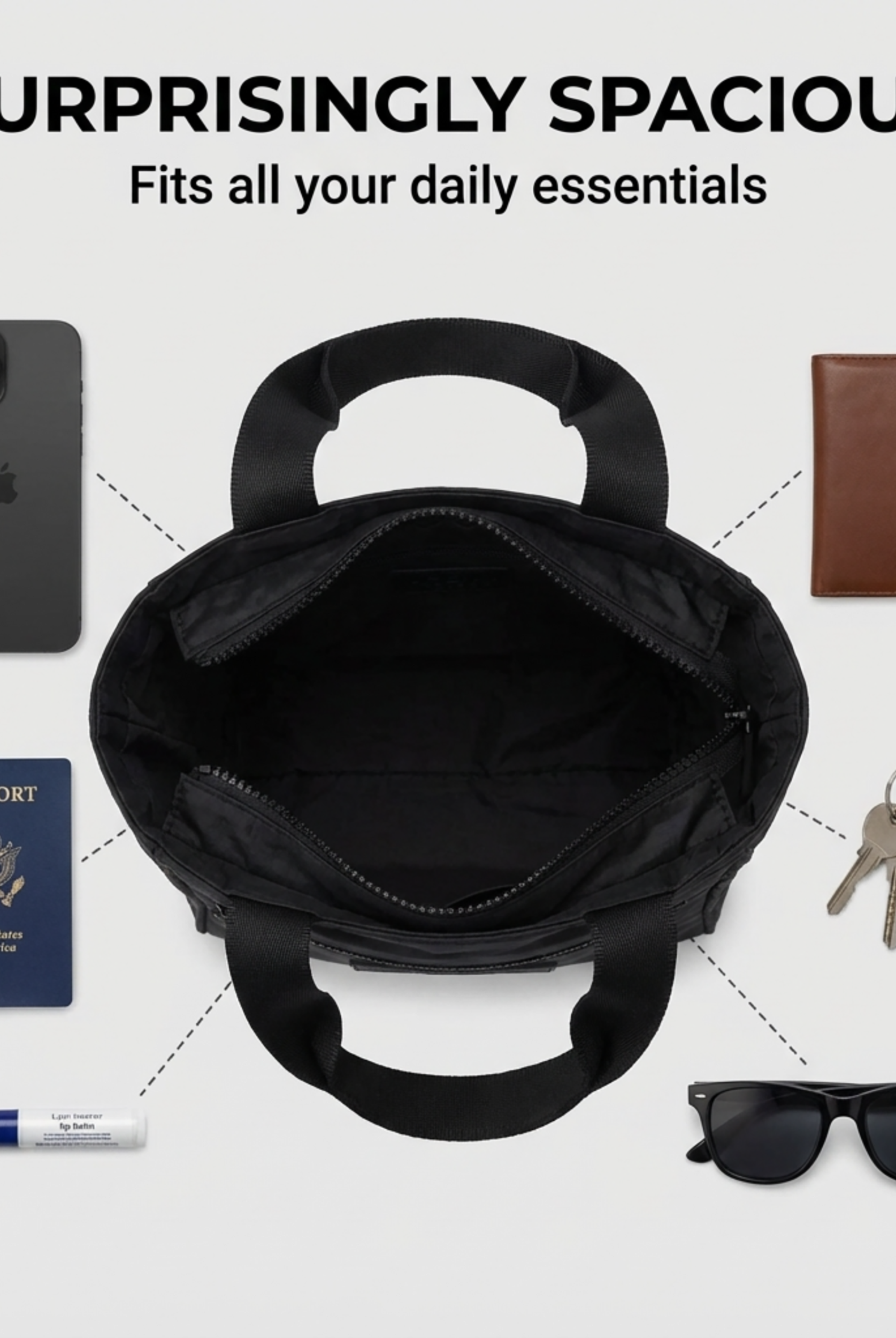
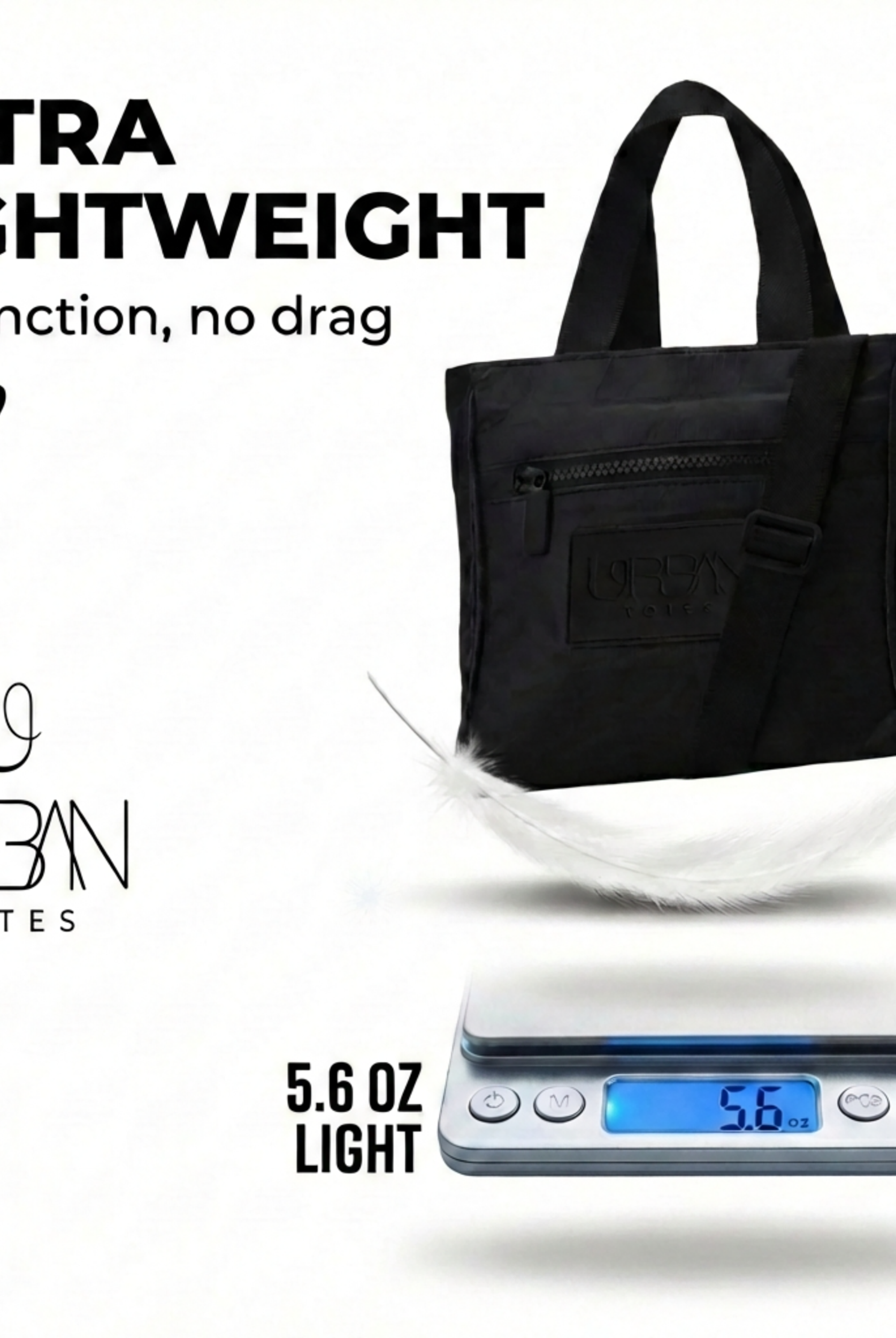
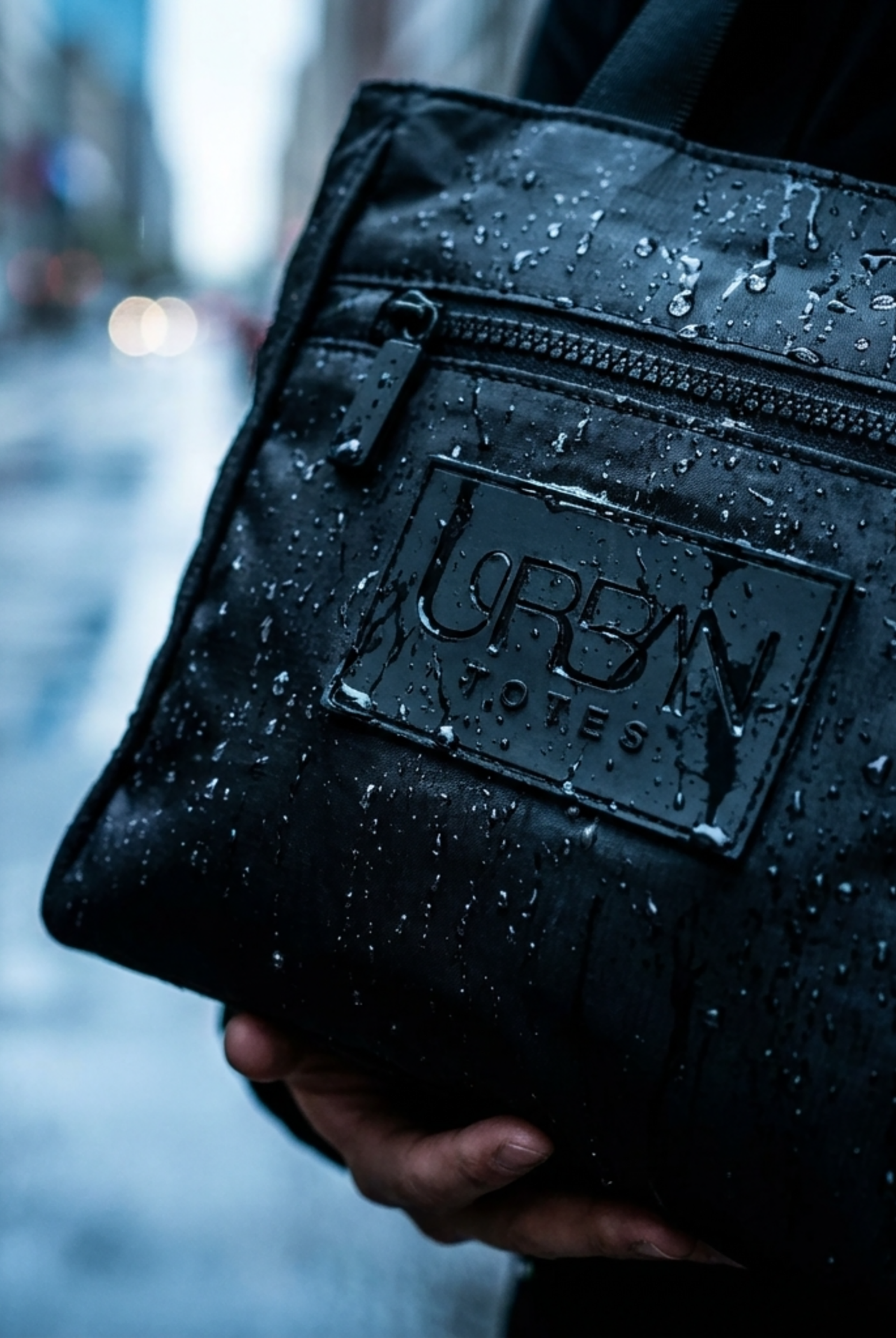
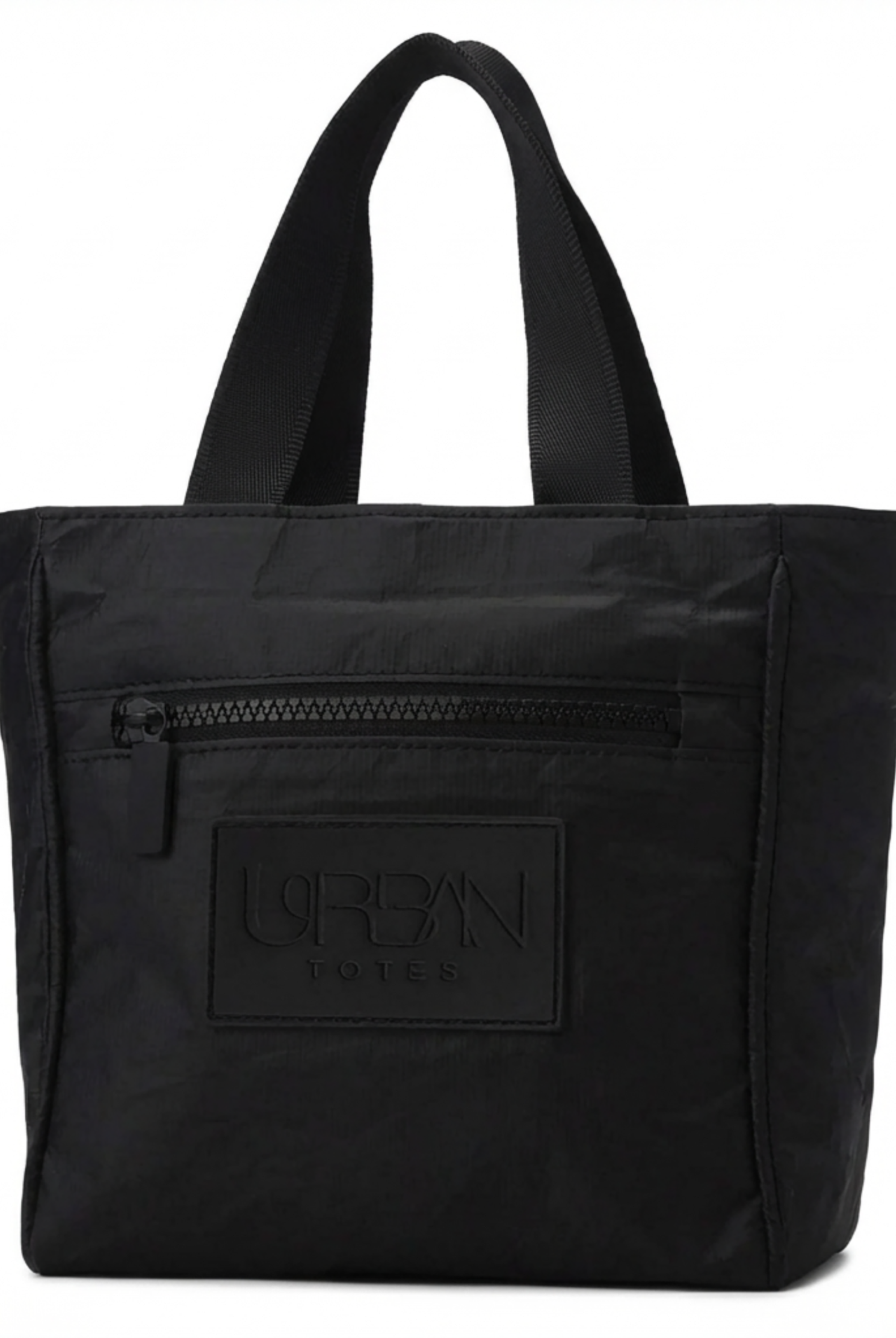
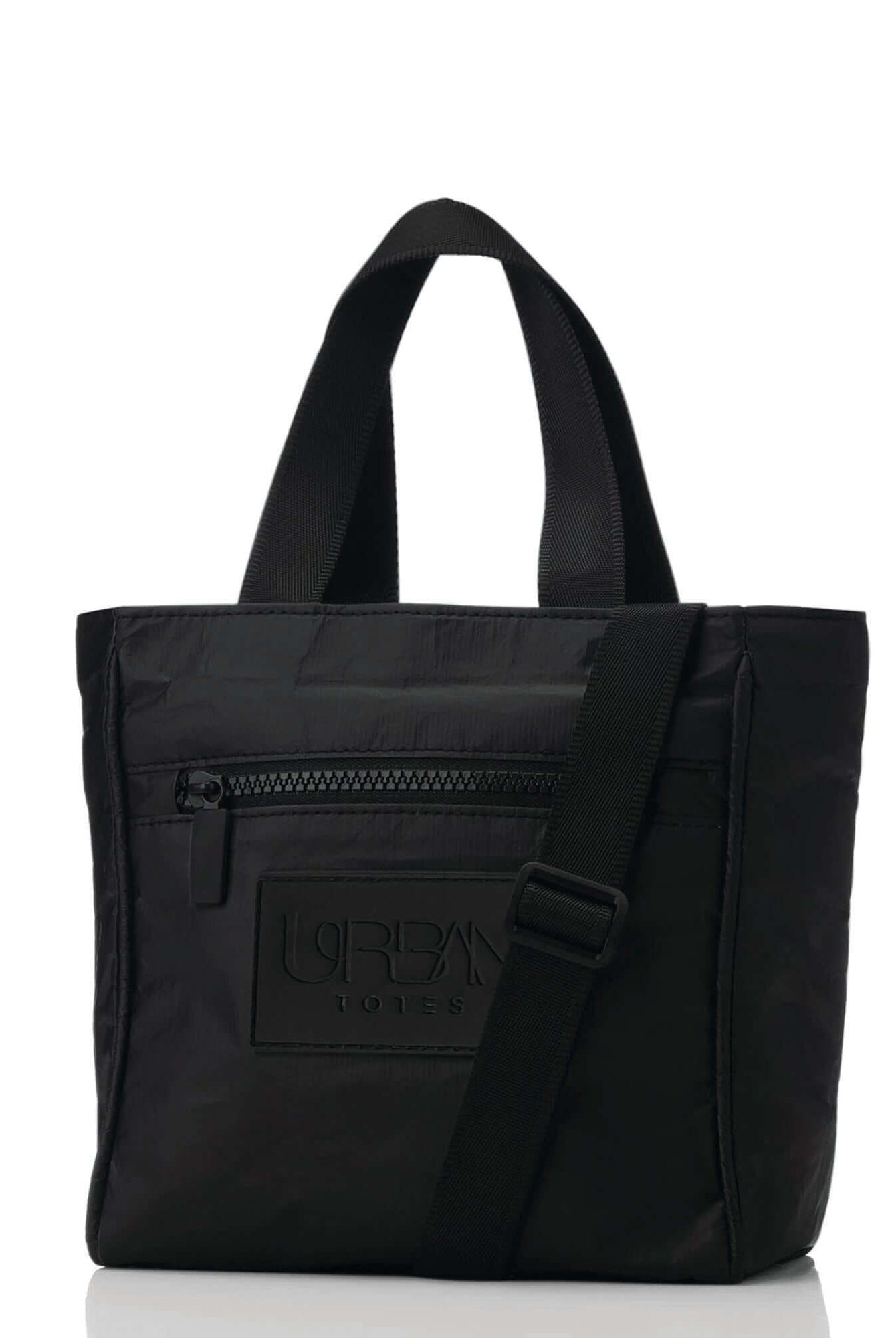
A well-designed option in this category is The Go Anywhere Day Trip Tote Bag by Urban Totes. Based on the available product snapshot, it includes three large zippered compartments, dedicated iPhone and key pockets, zipper closures on all compartments, water-resistant materials, and a lightweight, packable, foldable build. Those are functional details that matter in a work tote because they support organization and everyday handling without turning the bag into something bulky or fussy.
Urban Totes is a woman-owned Boise brand, and that practical point of view shows up in details that feel built for real routines, not just product photos.
Choosing Your Material Canvas Nylon and Beyond
By Wednesday, a work tote has already told on itself. The corners either still look crisp, or they're starting to fuzz. The straps either sit comfortably on your shoulder, or the bag feels heavier every block. Material choice decides a lot of that long before stitching or hardware enters the picture.
For a work bag, fabric is performance. It affects how much the tote weighs before you add a laptop, how it reacts to rain and coffee drips, how quickly the bottom corners show abrasion, and whether it still looks office-ready after a month of commuting. If you want durable tote bags for work, start with the fabric, then judge the color.
What each material does well
Canvas earns its place because it looks grounded and polished without feeling precious. In heavier weights, it usually holds shape better and gives the bag a more structured profile at your desk. The trade-off is simple. More fabric density usually means more durability, but also more weight on your shoulder. Untreated canvas also absorbs weather and stains faster than technical fabrics.
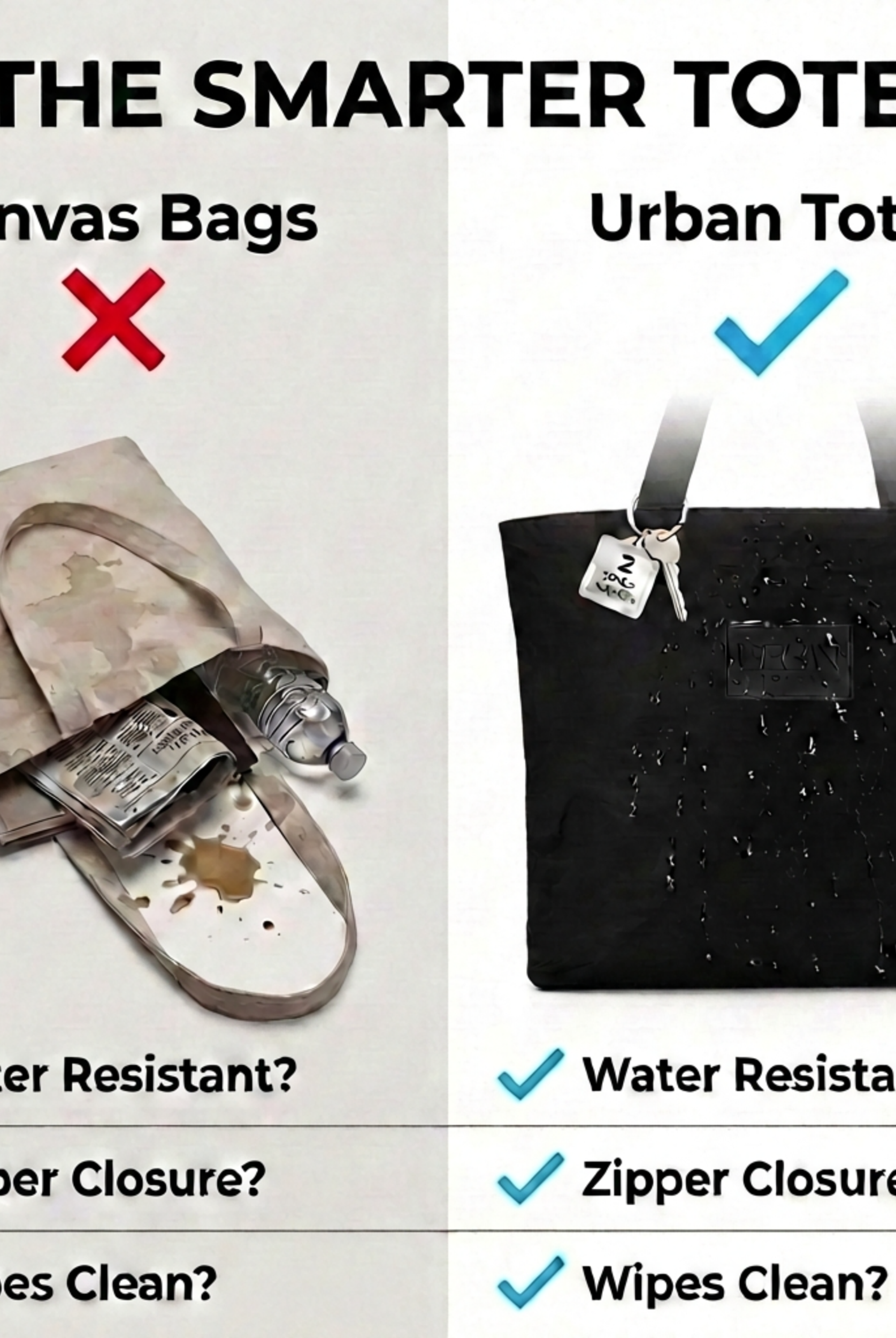
Nylon suits the daily commute for a reason. It stays lighter, wipes clean easily, and handles surprise rain better than many traditional options. Higher-density nylon tends to resist abrasion better at the corners and base, which matters if your tote spends part of every day brushing against coat zippers, train seats, and office floors. The weak point is aesthetic. Some nylon reads too sporty for a conservative office, so the smartest versions pair technical fabric with a clean silhouette and restrained hardware.
Leather still looks refined, but it asks more from the owner. It starts heavier, marks more easily in rough daily use, and needs regular care if you want it to age well. For some people that patina is the appeal. For others, especially anyone commuting with a laptop, lunch, charger, and water bottle, the added weight loses its charm fast.
Faux leather can deliver structure and a polished look at a lower price, but the quality spread is wide. The best versions hold up decently for office use. The weaker ones crease, peel, and crack at the handles and edge paint, which makes the bag look tired long before the rest of it is worn out.
Recycled polyester deserves a spot in this conversation too. It is light, practical, and often easy to clean, which makes it a strong candidate for everyday work use. If you want a clearer breakdown of coatings, hand feel, and daily wear trade-offs, this guide to tote bag material options is a useful reference while comparing fabrics.
Some fabrics soften with use. Others show every hard commute.
Work Tote Material Comparison
| Material | Durability | Weight | Water Resistance | Ease of Cleaning |
|---|---|---|---|---|
| Canvas | Strong in heavier weights, especially for structured bags | Moderate to heavy | Usually limited unless treated | Spot cleaning is usually safest |
| Nylon | Strong for daily commuting, especially in dense technical weaves | Lightweight | Often very good | Usually easy to wipe down |
| Leather | Long-lasting with care, but surface wear shows in hard use | Heavy | Limited in wet conditions | Higher maintenance |
| Faux leather | Depends heavily on finish quality | Moderate | Can resist light moisture on the surface | Usually easy to wipe, but edges can wear quickly |
| Recycled polyester (rPET) | Good for regular daily use | Lightweight | Good | Typically easy to clean |
Making Your Decision
For work, errands, transit, and the occasional travel day, the most useful choice is often a fabric that stays light, resists weather, and still looks polished indoors. That is why well-made nylon and recycled technical fabrics keep winning in real life. They ask for less maintenance, protect better against daily friction, and hold their appearance longer when the commute is part of the job.
That balance is where thoughtfully designed Urban Totes styles make sense. A refined shape keeps the bag office-appropriate, while practical materials make sure it still looks good after repeated use instead of giving up at the corners first.
From Seams to Straps Construction That Lasts
Monday morning is where a work tote gets judged. It is heavy before 9 a.m., bumped against a train seat, set on the floor at lunch, then carried into a meeting where it still needs to look polished. Bags rarely give out because the fabric looked good on day one. They fail where stress repeats, day after day.
That wear pattern matters. Fabric density helps a tote resist abrasion, but construction decides whether that strength holds at the corners, the opening, and the strap base. A dense nylon body with weak attachment points still quits early. A well-built tote spreads weight across reinforced seams, keeps the top edge from stretching out, and protects the base from grinding down first.
Where work totes usually fail
The weak spots are predictable. Handle anchors take the full load every time you lift the bag. Upper corners absorb friction from coats, doorways, and desk edges. The zipper line twists when the tote is overpacked or opened one-handed. The base takes repeated impact from floors, car seats, and subway platforms.
I check those areas before I care about any styling detail.
Good construction usually shows up in small choices that are easy to miss online. Look for bar-tack stitching or boxed stitching where the handles meet the body, clean edge finishing along the top opening, and a base with enough structure to keep the bag from sagging into its own corners. Those details extend the useful life of the tote because they reduce concentrated strain instead of letting one seam do all the work.
What to inspect before you buy
Don't judge a bag only from the front photo. Zoom in on the parts that carry weight and friction.
Here's what deserves a closer look:
- Handle anchors: Multiple rows of stitching or reinforced patches hold up better than one decorative seam.
- Top edge finishing: A bound or reinforced opening resists stretching and fraying with daily use.
- Base structure: A supported bottom helps the bag stand better and reduces corner wear.
- Zipper installation: The zipper should sit flat, without ripples that suggest pulling or poor alignment.
- Strap width: Narrow straps can dig in fast once you add a laptop, water bottle, and charger.
A soft tote can feel luxurious in your hand and still be frustrating by week three. For commuting, a little structure usually wears better, carries better, and looks sharper in the office. That is one reason thoughtfully designed Urban Totes styles tend to age well in real use. The shape stays clean, and the stress points are built for actual load instead of just shelf appeal.
One quick test helps. If a tote slumps so much that the handles collapse into the opening when it is empty, it often becomes harder to carry once it is full.
Strap comfort decides whether durability feels good to live with. Even a strong bag becomes irritating if the drop is awkward over a blazer or winter coat, or if the straps slide off your shoulder every few blocks. If that part is on your checklist, this guide to choosing an adjustable shoulder strap for everyday carry is useful.
The best-built work tote rarely calls attention to itself. It just keeps its shape, carries the weight, and still looks office-ready after a long month of real commuting.
Smart Organization for the Modern Commute
Durability solves one problem. Chaos solves none. A tough tote that turns into a bottomless pit still makes mornings harder than they need to be.

The difference between roomy and organized
A lot of women don't need more bag. They need better layout. In 2024, 68% of working mothers reported carrying a minimum of 7 distinct items during their daily routine, including things like a laptop, phone, keys, water bottle, snacks, nursing pads, and wallet. That's why multi-compartment totes with dedicated zippered pockets matter, according to Urban Totes' published customer-focused data.
That finding lines up with what people already feel in practice. The stress usually isn't the number of items. It's the constant search for them.
A better layout for real days
A smart work tote should support how you move, not just how you pack. That means easy-grab zones for the things you reach for in motion and secure zones for what shouldn't shift.
Good organization often looks like this:
- Fast-access pocket: For phone, badge, or transit card.
- Zippered compartment: For wallet, earbuds, or anything you don't want floating.
- Larger main section: For laptop, notebook, snack pouch, and the inevitable extras.
- Key-specific spot: Because nobody wants to dig at the bottom of a tote in a parking lot.
One reason multi-pocket bags feel calmer is that they reduce hand-searching. You're not rooting around next to pens, receipts, and a half-open granola bar while your phone rings.
The best organized tote lets you find what you need with one hand and no guesswork.
That matters in all the unglamorous parts of the day. The school drop-off line. The office elevator. Airport security. The grocery stop between work and home. If your current setup needs help, this practical guide on how to organize tote bags gives a few simple ways to make a work bag function better without overpacking it.
For commuting, multi-pocket, zipper closure, and an organized interior aren't bonus features. They're what keep the bag useful after the honeymoon phase.
Beyond the Desk Versatility for Your Go-Anywhere Life
You leave work with your laptop, stop for groceries, head to dinner, and get a last-minute text about a weekend train trip. A good work tote handles all of it without looking frayed, sagging at the straps, or reading too casual for the office.
That kind of versatility starts with durability, not styling alone. A tote that works beyond the desk needs fabric with enough body to hold its shape, enough abrasion resistance to handle car floors and overhead bins, and corners that do not show wear after a few weeks of hard use. Material density matters here. Flimsy fabric tends to collapse, scuff, and crease fast. A sturdier weave keeps the bag looking polished longer, which is what makes it useful on Monday morning and still worth carrying on Saturday.
A work tote should earn space in your closet
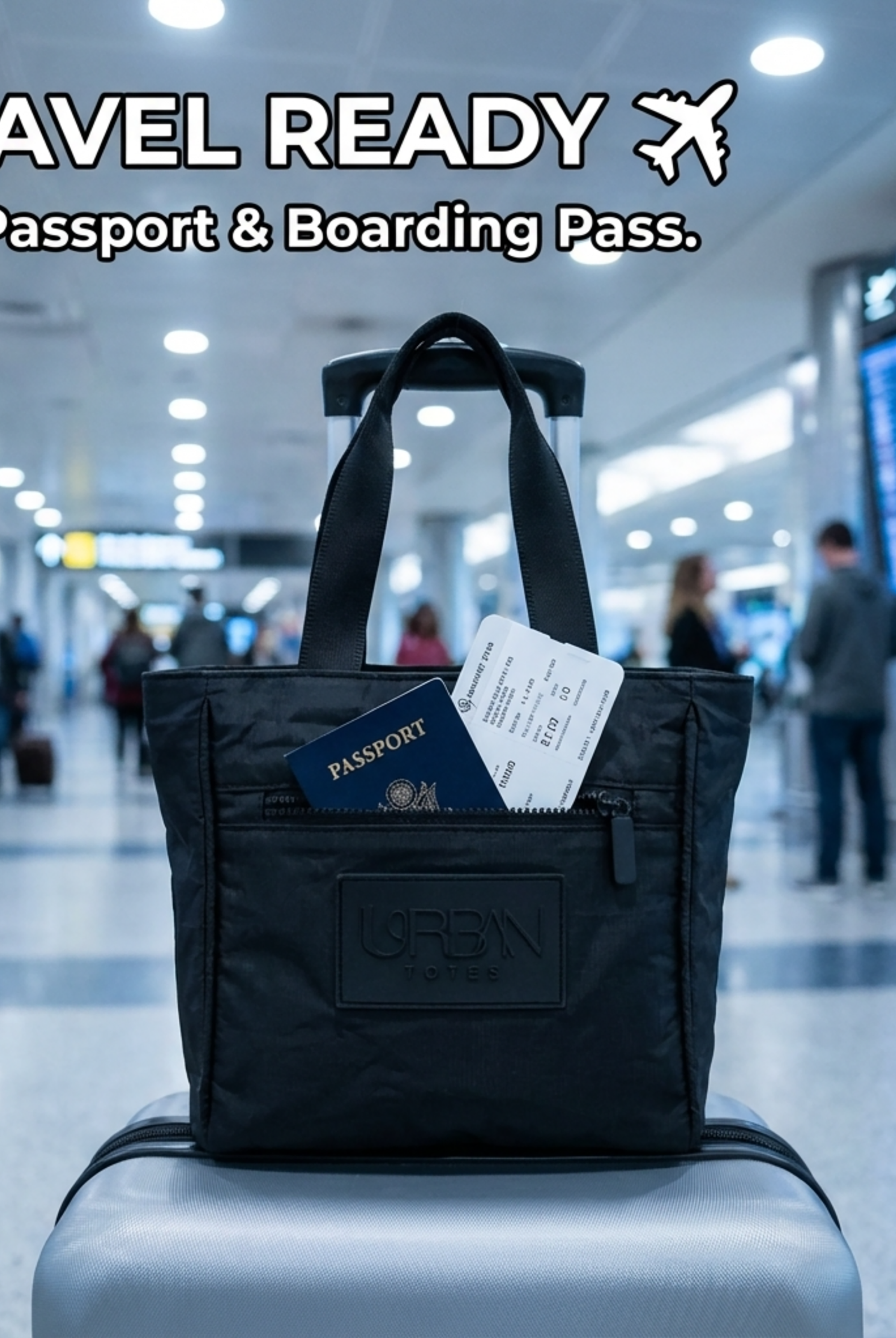
The bags that get used most are the ones that adapt without asking for special treatment. They wipe clean after a coffee spill, slide under an airplane seat, and still look appropriate at a client lunch. If you want one bag to cover workdays and short trips, it helps to compare features that matter for travel too. This guide to the best tote for travel breaks down what makes a tote easier to carry, pack, and live with on the road.
Packability helps, but structure still matters. A fold-flat tote is convenient in a suitcase, yet if the fabric is too thin or the base has no support, it often turns into a slouchy catch-all the minute you add a charger, water bottle, and cardigan. The better balance is a bag that stores easily but has enough construction to stand up to repeated use.
What versatility looks like in practice
A go-anywhere tote proves itself in the in-between parts of life:
- Weekdays: It carries work gear cleanly and keeps a professional shape through the commute.
- Travel days: It fits the extras that never stay contained, from snacks to a paperback to the layer you take off at the gate.
- Errands: It handles heavy, awkward loads without the straps biting into your shoulder.
- After hours: It still looks intentional with jeans, sneakers, or a blazer.
That is the standard Urban Totes is built around. The bags are designed to move through a full day, then keep going, with materials and construction choices that support real wear instead of just looking good on the shelf.
A durable work tote should age well. The fabric should soften without thinning out. The corners should resist scuffing. The straps should stay comfortable after months of carrying actual weight. When those details are right, the bag does more than survive your routine. It stays in rotation.