You're probably reading this with a half-packed tote nearby. Maybe you just came in from school drop-off with a damp sleeve, or you set your bag next to a sweating iced coffee at the farmers market, or you're sitting at an airport gate hoping your snacks, charger, and book stay dry while the weather outside does its thing.
That's where the phrase moisture resistant bag starts to matter. Not in an extreme, expedition kind of way. In everyday life. In the kind of life where a tote rides in the passenger seat, hangs off a stroller, slides under an airplane seat, and somehow ends up carrying both lip balm and a damp swimsuit in the same afternoon.
At Urban Totes, a woman-owned brand based in Boise, Idaho, we think about bags the same way busy women use them. They need to be stylish, lightweight, organized, and ready for real messes. They also need clear language around what they can handle. A lot of shoppers see moisture resistant, water-resistant, water repellent, and waterproof all blended together, and that's where the confusion starts.
Table of Contents
- When Everyday Moisture Meets Your Favorite Tote
- What a Moisture Resistant Bag Really Is
- How Moisture Resistant Compares to Water Repellent and Waterproof
- Materials and Construction That Create Lasting Resistance
- How to Read Test Ratings and Keep Your Bag Performing
- Choosing the Right Moisture Resistant Bag for Your Life
- Tote Smarter and Go Anywhere With Confidence
When Everyday Moisture Meets Your Favorite Tote
It usually starts with something small.
You're walking from the car to the school entrance in a light drizzle. Your tote brushes against a wet jacket. Later, you toss in berries from the market, a chilled drink, and a folded cardigan. By noon, there's condensation at the bottom, and by evening, somebody's swim lesson towel ends up tucked beside your planner.
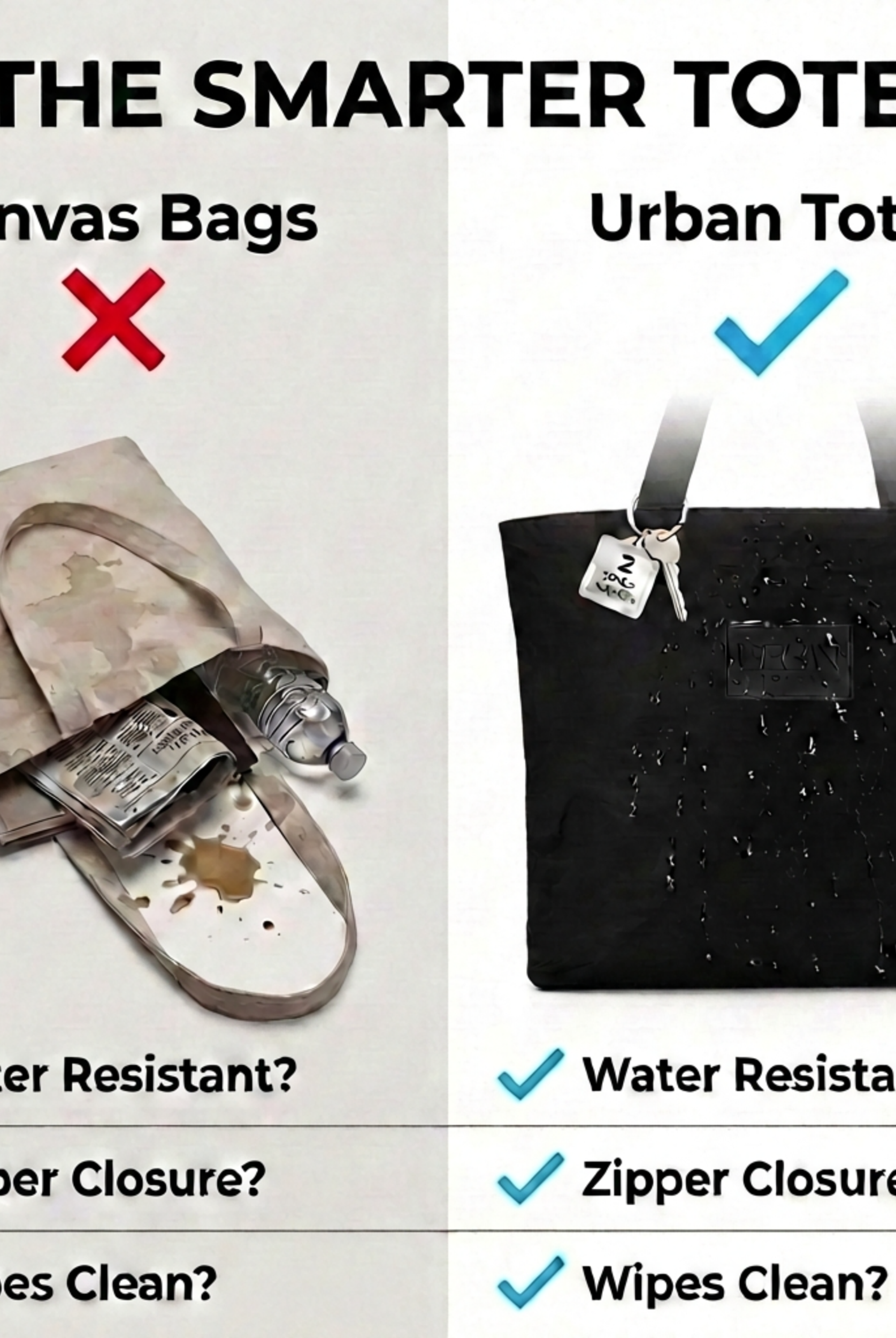
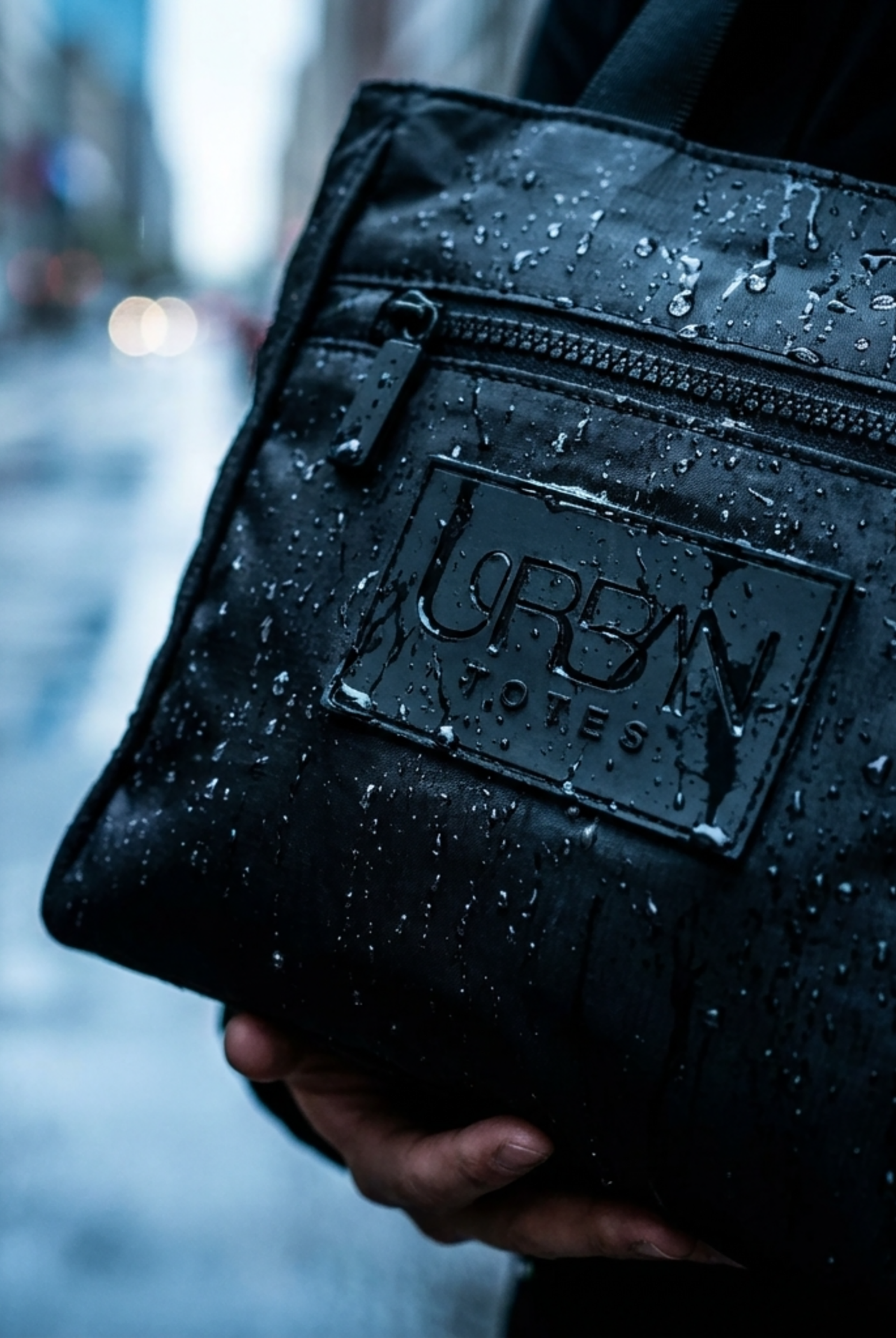
That's the moisture problem for most women on the go. It's not dropping your bag in a river. It's the quiet accumulation of dampness from weather, spills, condensation, and wet items inside the bag itself.
The everyday frustration no one talks about
A bag can look polished and still become a problem fast. Some fabrics darken and hold moisture. Some bags get heavy once they're wet. Others keep out a little rain but let moisture creep in through the zipper line or stitched corners.
A useful tote doesn't just carry more. It handles the messy overlap between dry things and damp ones.
If you've ever pulled out a notebook with curled edges, reached for a phone charger in a clammy bottom pocket, or realized your snacks are sitting next to a wet swimsuit, you already know why this matters.
Why this matters beyond rainy days
A good moisture resistant bag earns its place in all kinds of routines:
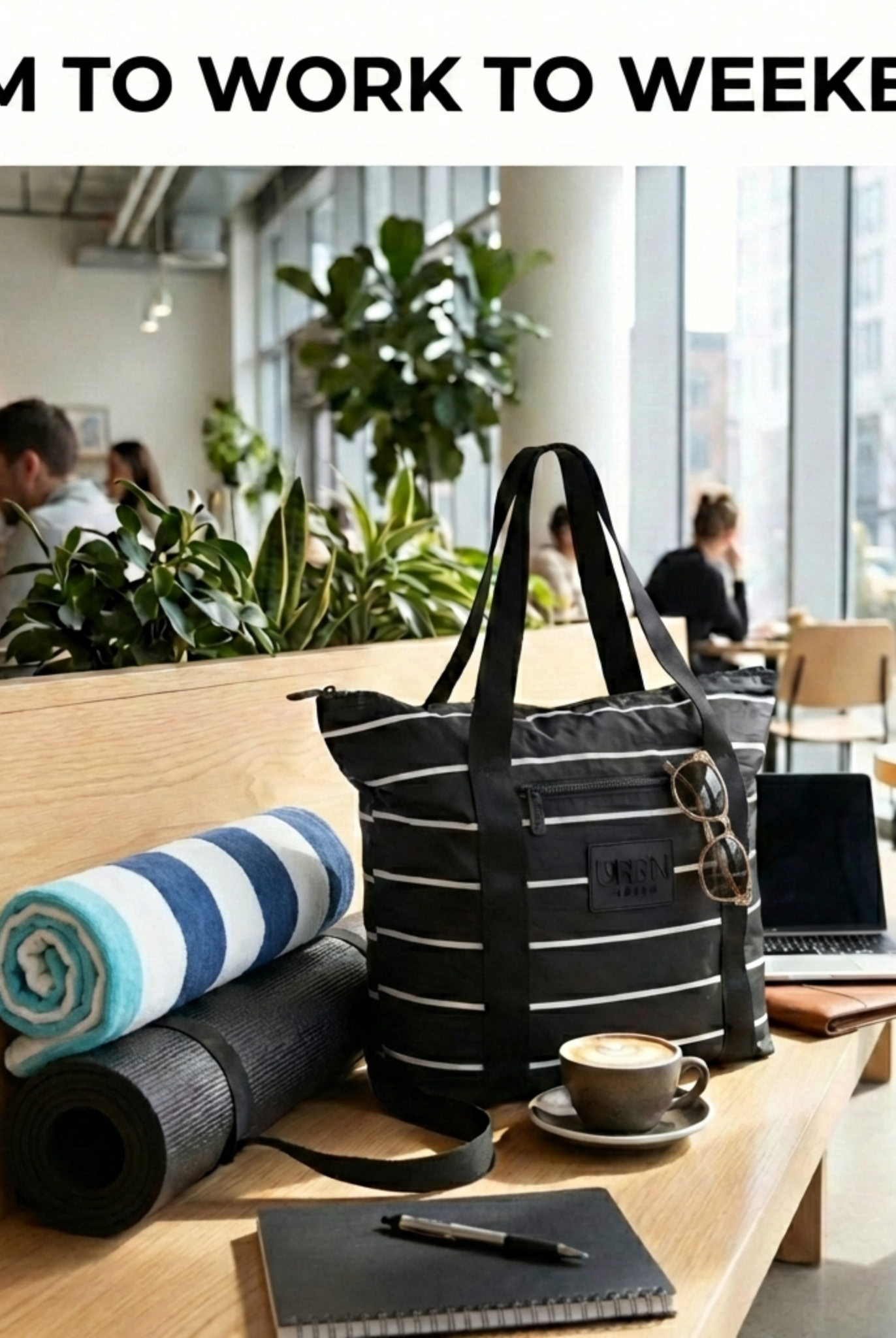
- For commuters: It helps with drizzle, sidewalk spray, and coffee cup condensation.
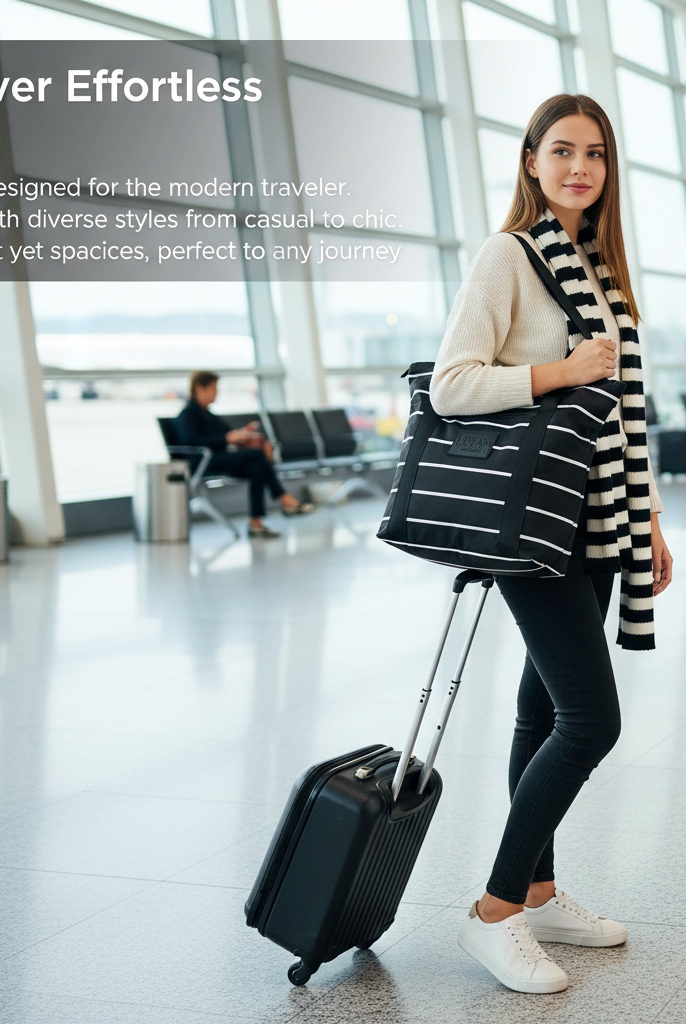
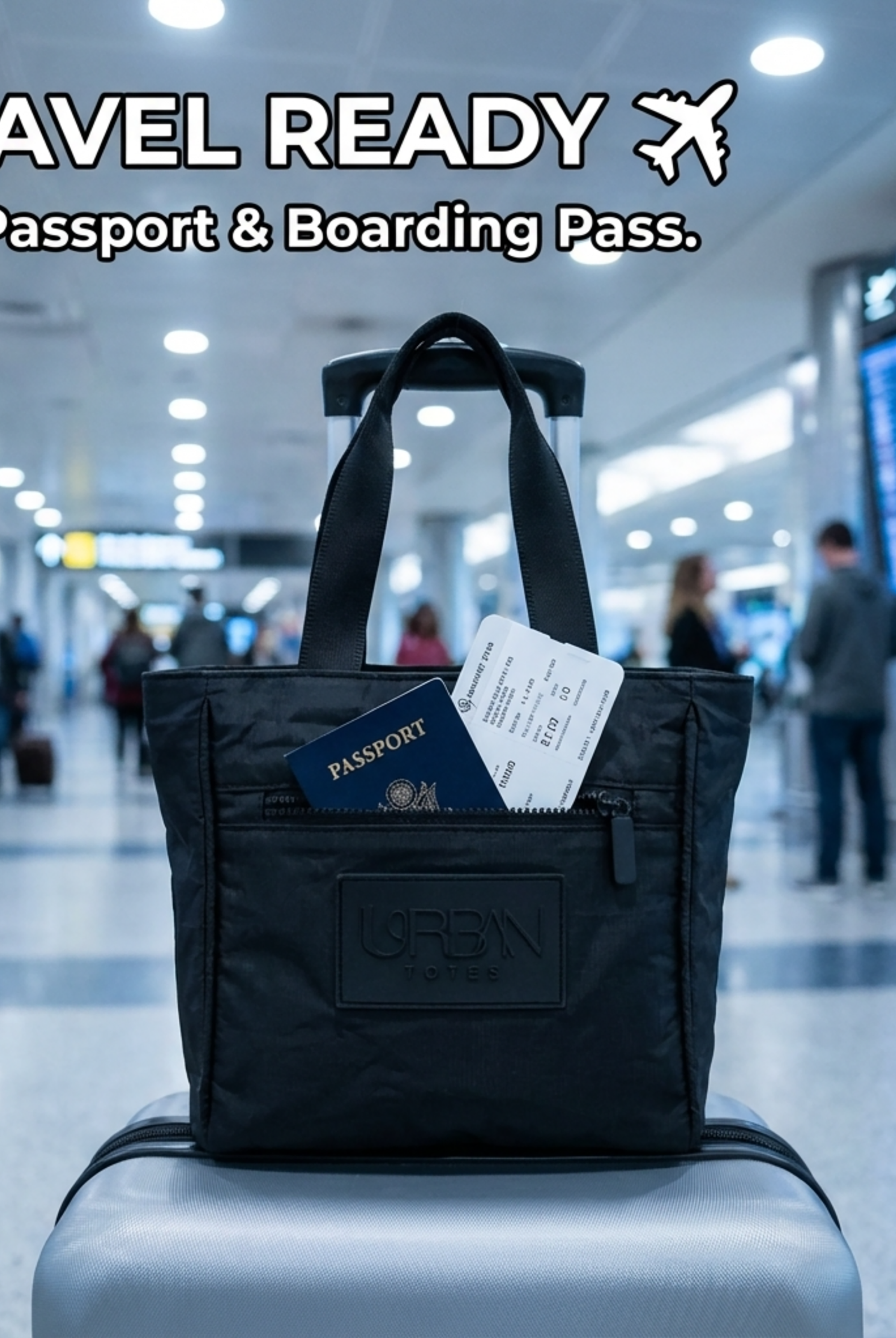
- For travelers: It handles airport hustle, packed toiletries, and unpredictable weather.
- For parents: It makes room for damp layers, snack leaks, and post-practice gear.
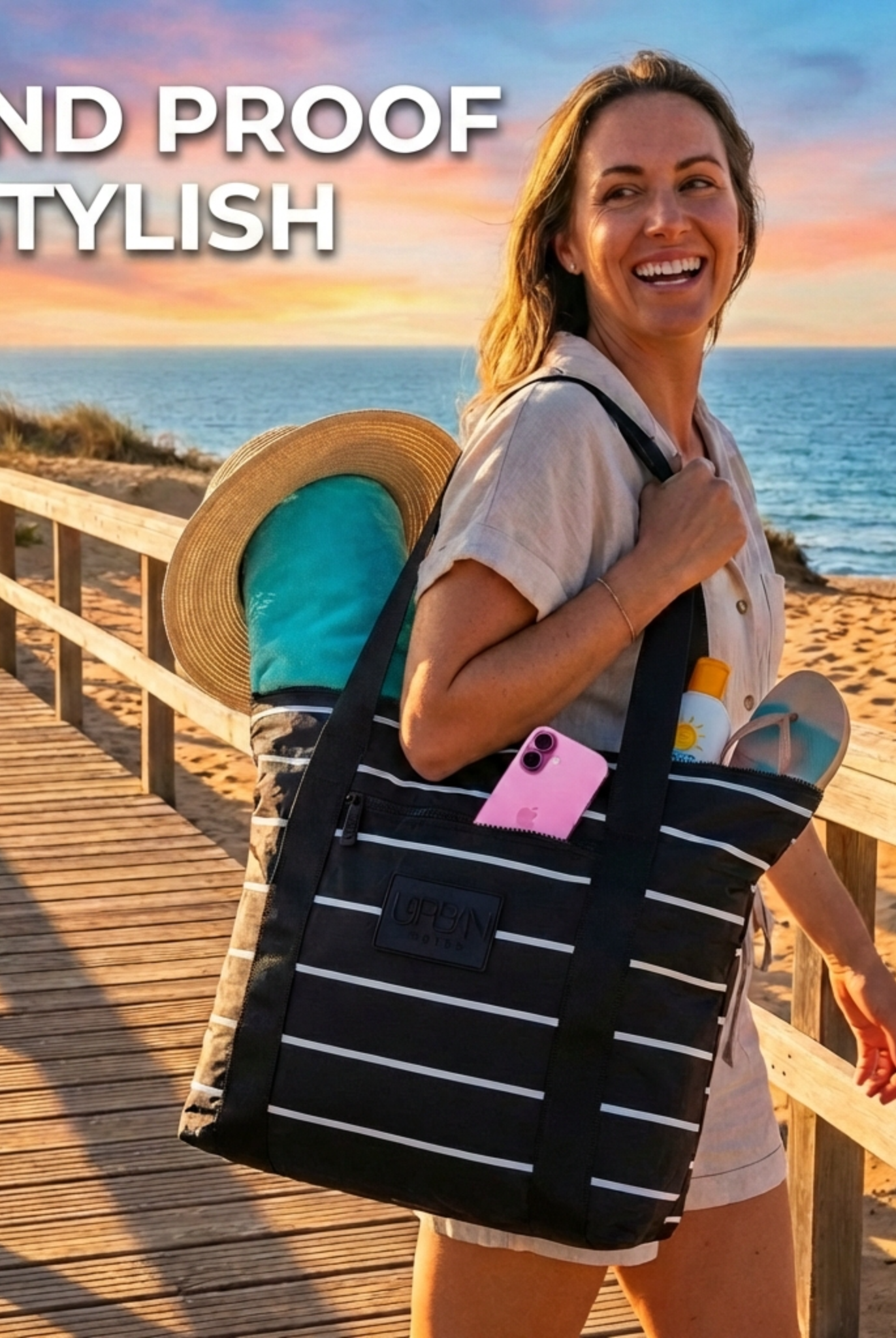
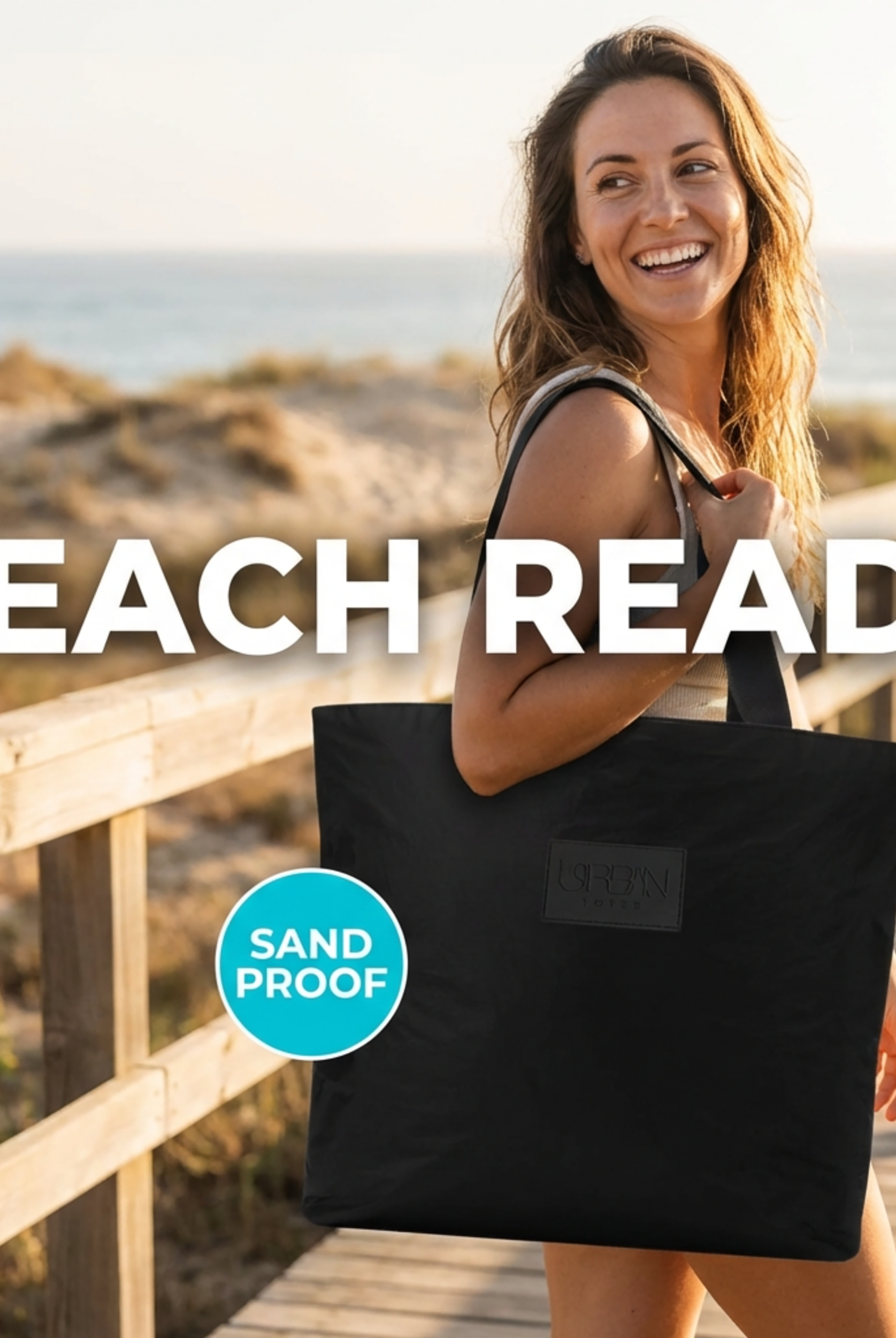
- For beach and pool days: It helps separate wet from dry instead of turning everything into one soggy pile.
Even travel plans shift around the weather. If your vacation includes a rainy afternoon, practical planning helps just as much as a practical tote. A guide like things to do in Bled when it rains is a good reminder that wet weather doesn't have to derail the day. You just need gear and plans that work with it.
What a Moisture Resistant Bag Really Is
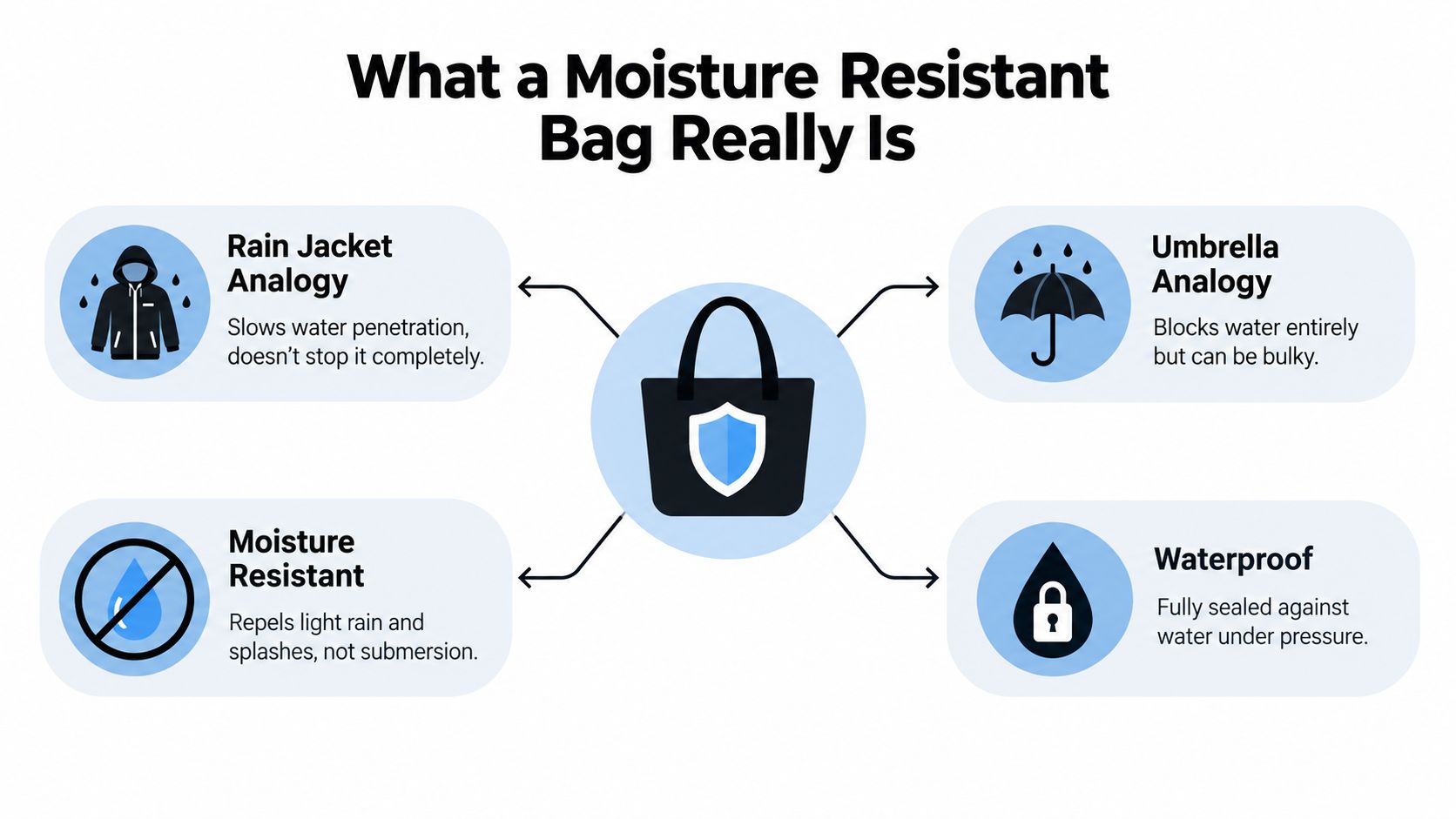
A moisture resistant bag is easiest to understand if you think about the difference between a rain jacket and a full marine dry bag.
A rain jacket helps you move through normal weather without instantly getting soaked. It sheds light rain and gives you a buffer. But if you stand in a downpour long enough, or sit in wet fabric for hours, water can still find a way in. A moisture resistant bag works much the same way.
Think in scenarios, not labels
For most everyday carry, the question isn't “Can this survive underwater?” The better question is “What happens in regular life?”
A moisture resistant tote is usually meant to help with things like:
- Light rain on the walk to the car
- A wet countertop at a coffee shop
- Humidity inside a packed trunk
- Condensation from a water bottle
- A damp towel tucked into one section of the bag
That's different from a fully sealed bag designed for prolonged exposure to water under pressure.
It's a system, not a magic fabric
Readers often get tripped up. They look for one miracle material name, but a bag's performance usually comes from several parts working together. The outer fabric matters, of course. So does any coating or backing. But closures, seams, pocket construction, and overall design matter too.
If you want a deeper look at common fabrics, coatings, and what they do in real life, Urban Totes has a helpful breakdown of water-resistant bag materials.
The modern version of this idea has a long history behind it. Charles Macintosh's rubber-coated waterproof fabric in 1823 is widely treated as a major milestone in modern waterproof materials, and later developments included vulcanized-rubber fabric coating in 1884 and the cravenette process in 1888. Earlier cultures also used natural latex, waxed cotton, and tar-coated canvas for protection from rain and rot. Much later, nylon and polyester made water-resistant bags lighter and more practical for daily use (history of waterproof bags and fabrics).
Practical rule: Don't shop by label alone. Shop by how the whole bag is built and how you'll actually use it.
That's one reason moisture resistance has become a standard expectation instead of a niche feature. One market estimate values the global moisture barrier bags market at USD 1,579.52 million in 2023 and projects USD 2,229.96 million by 2030, with a 5.1% CAGR over that period. Another forecast places the broader market at USD 490.88 million in 2022 and USD 797.87 million by 2030, with a nearly 6.26% CAGR (global moisture barrier bags market estimates).
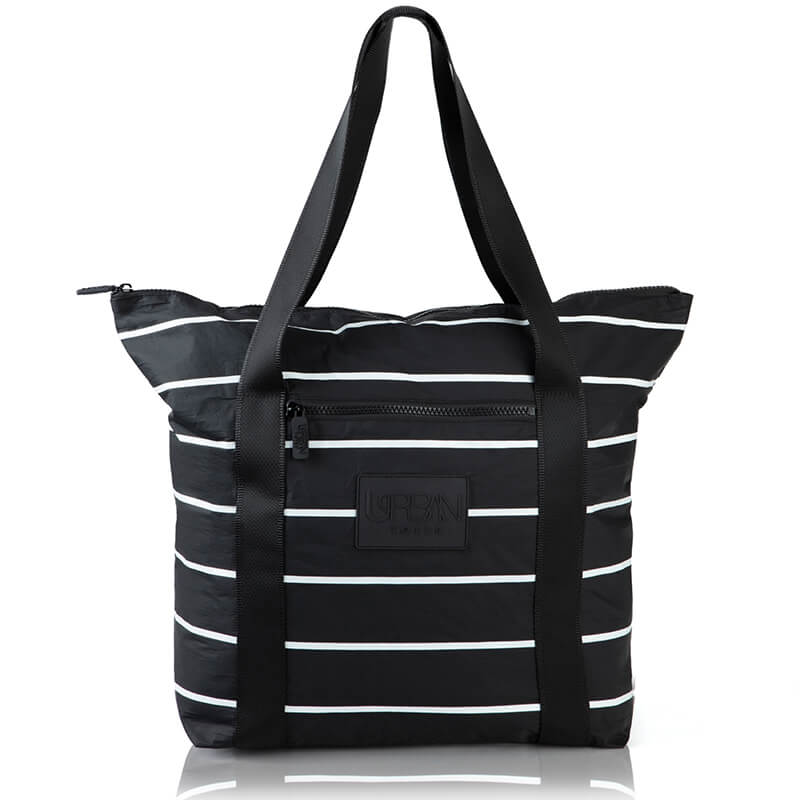
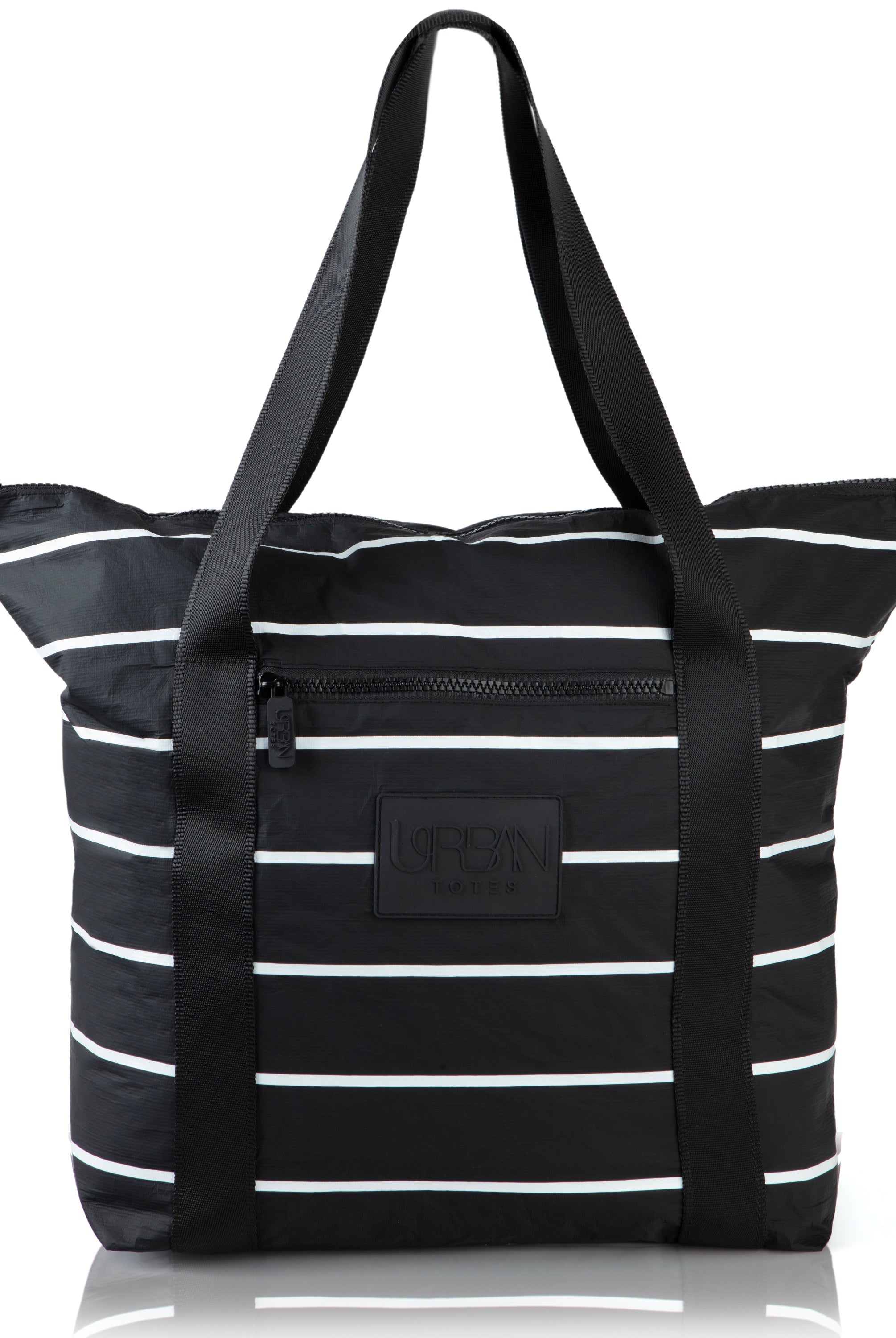
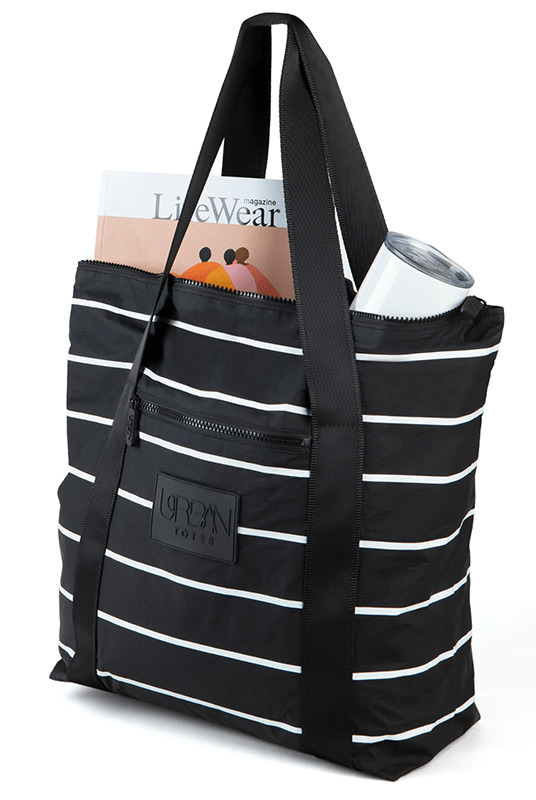
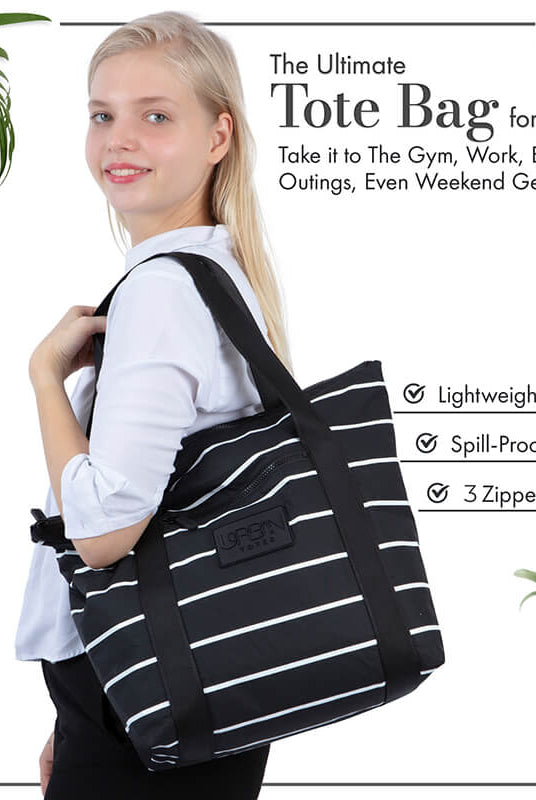
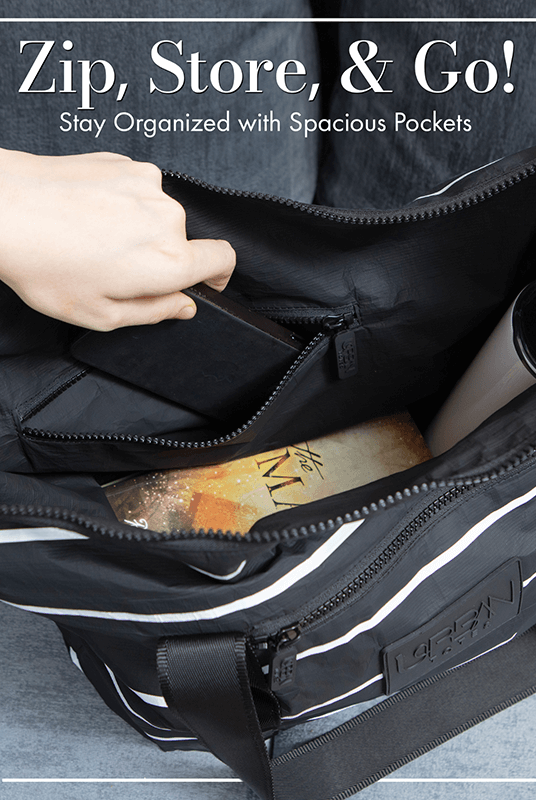
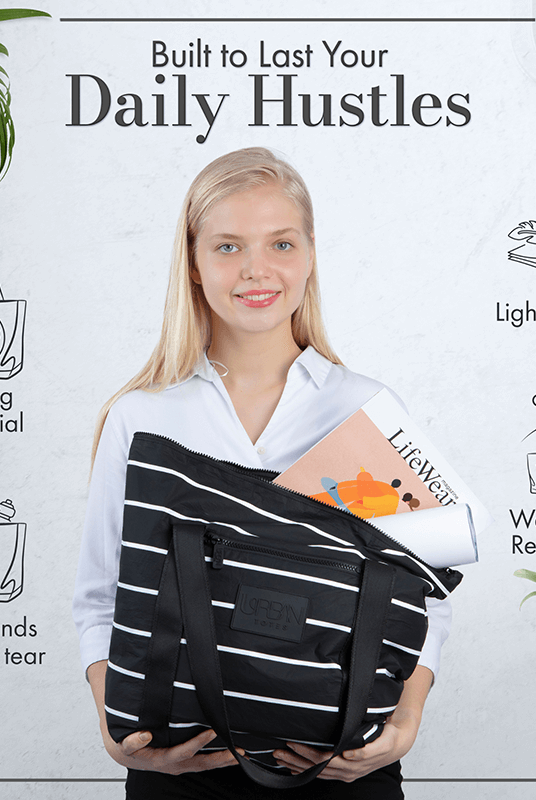
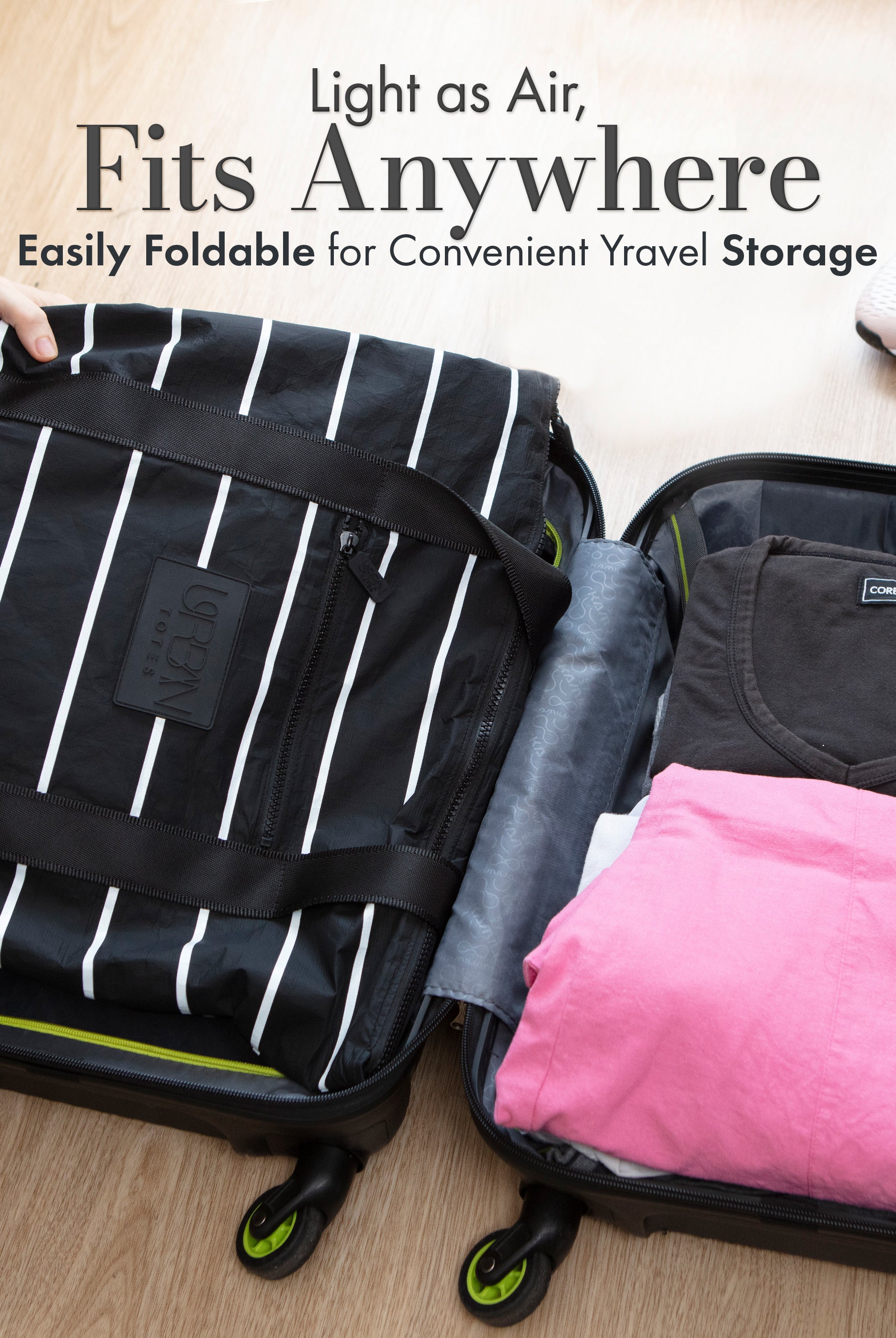
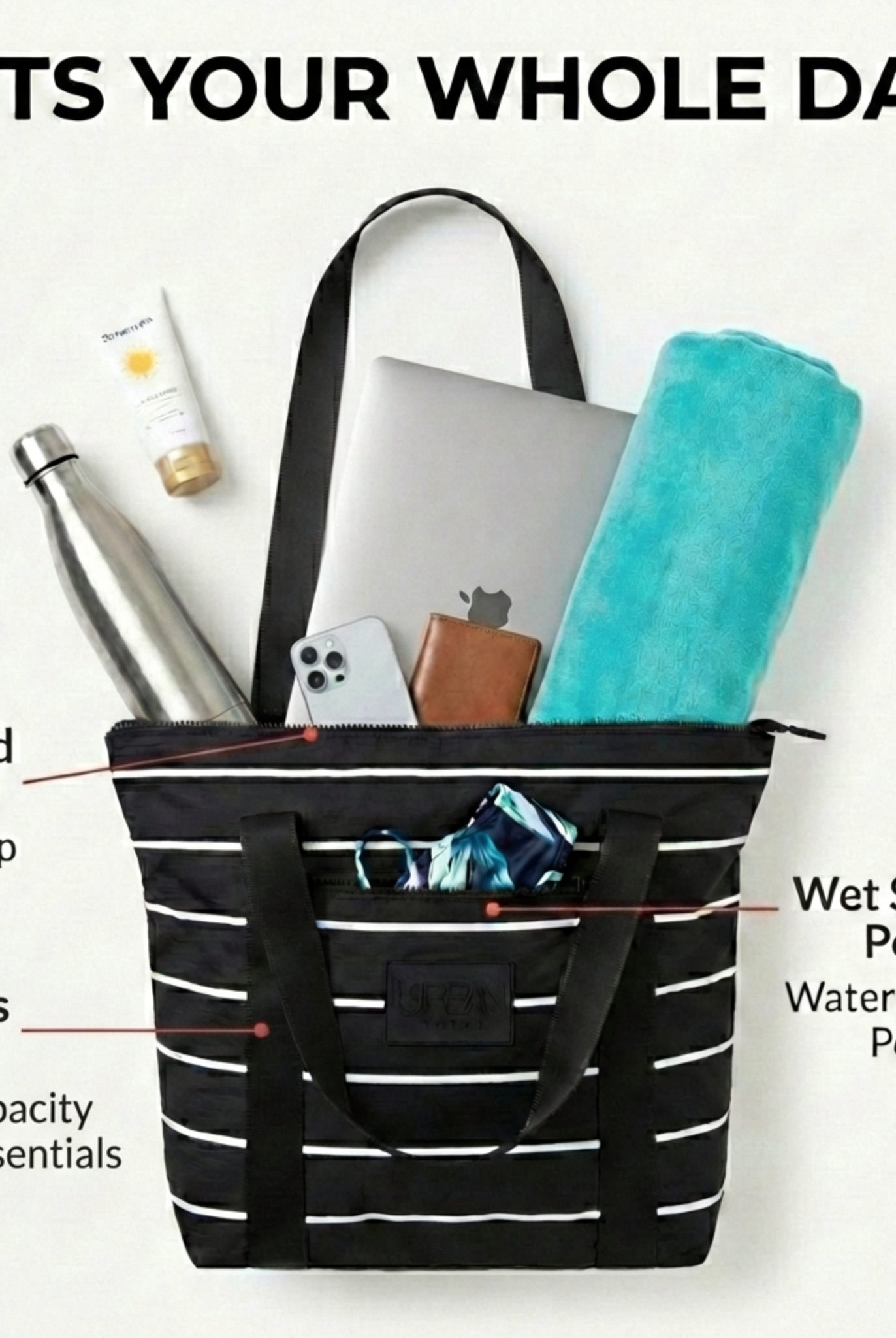
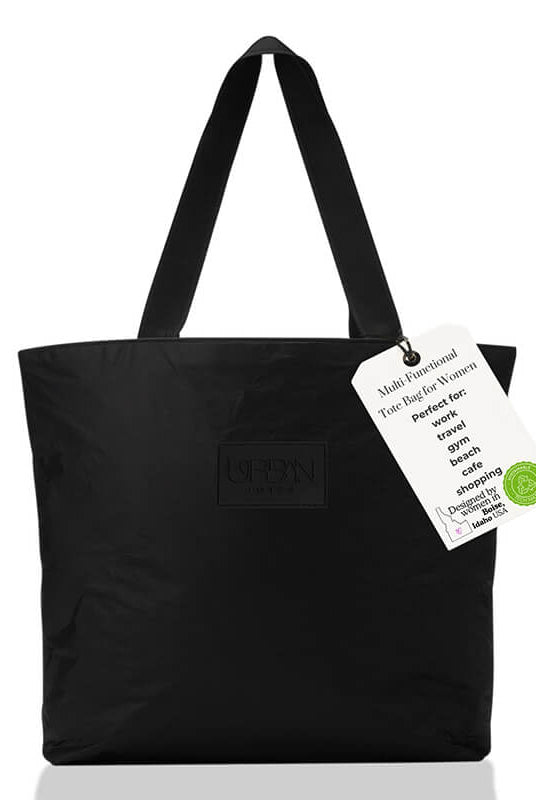
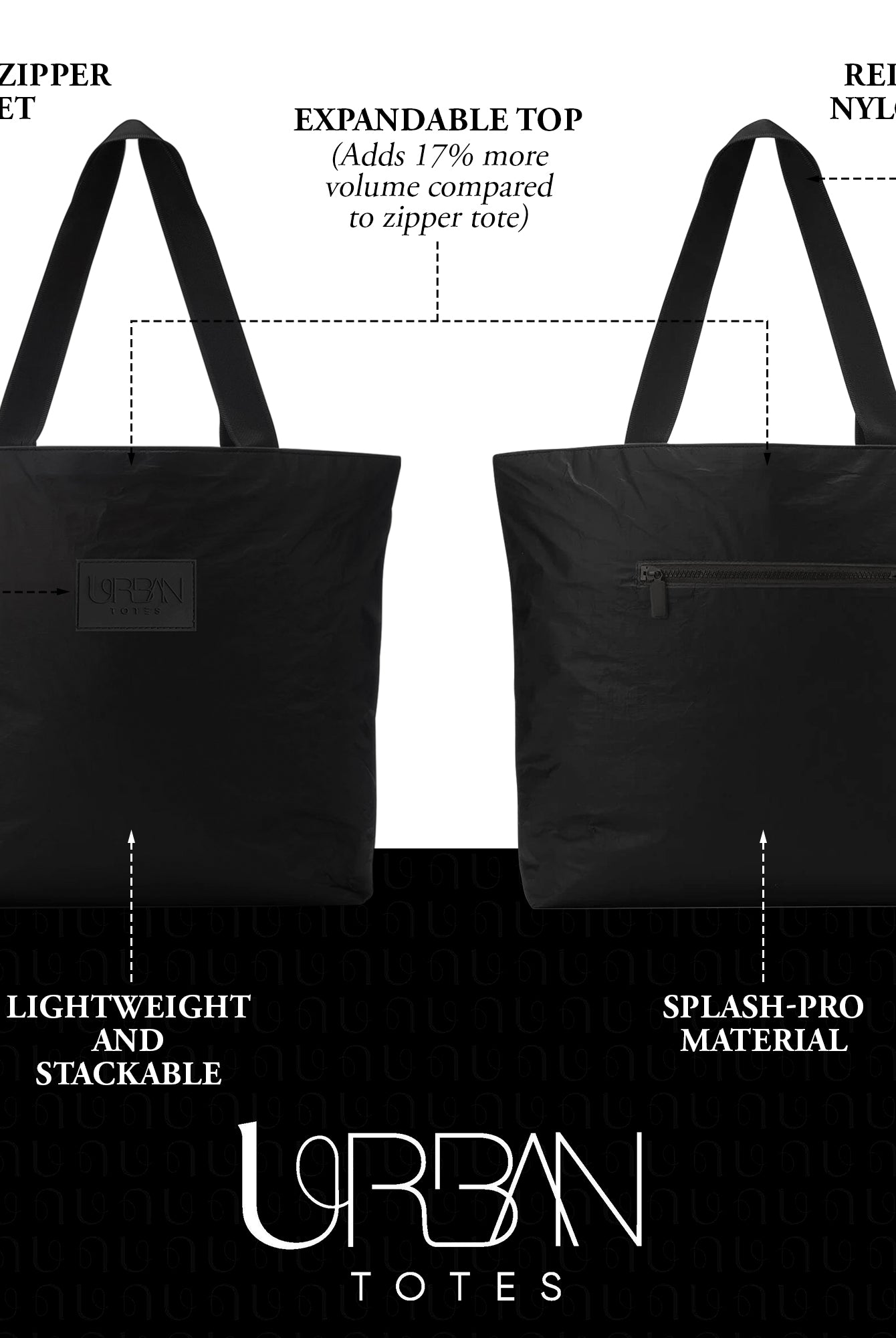
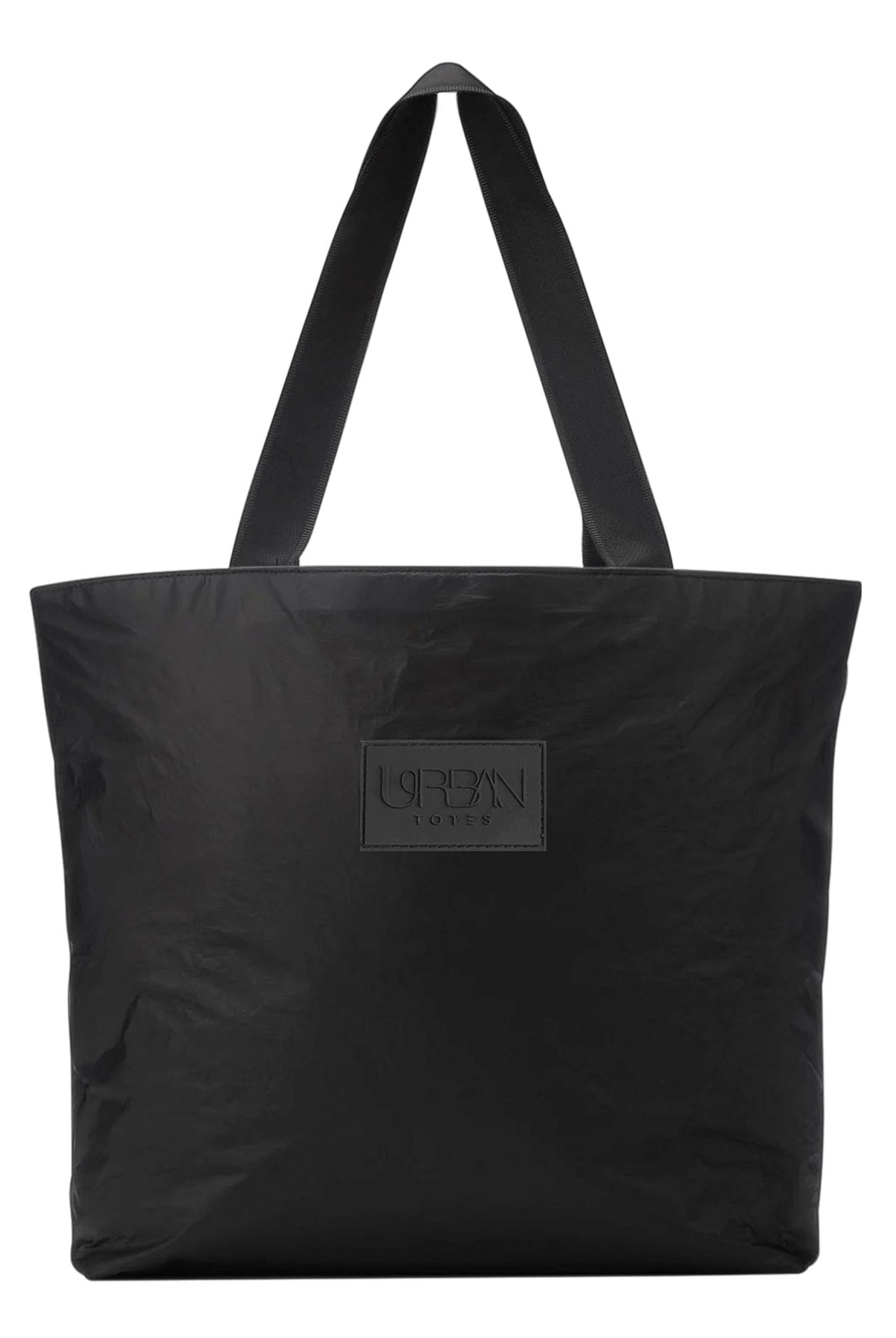
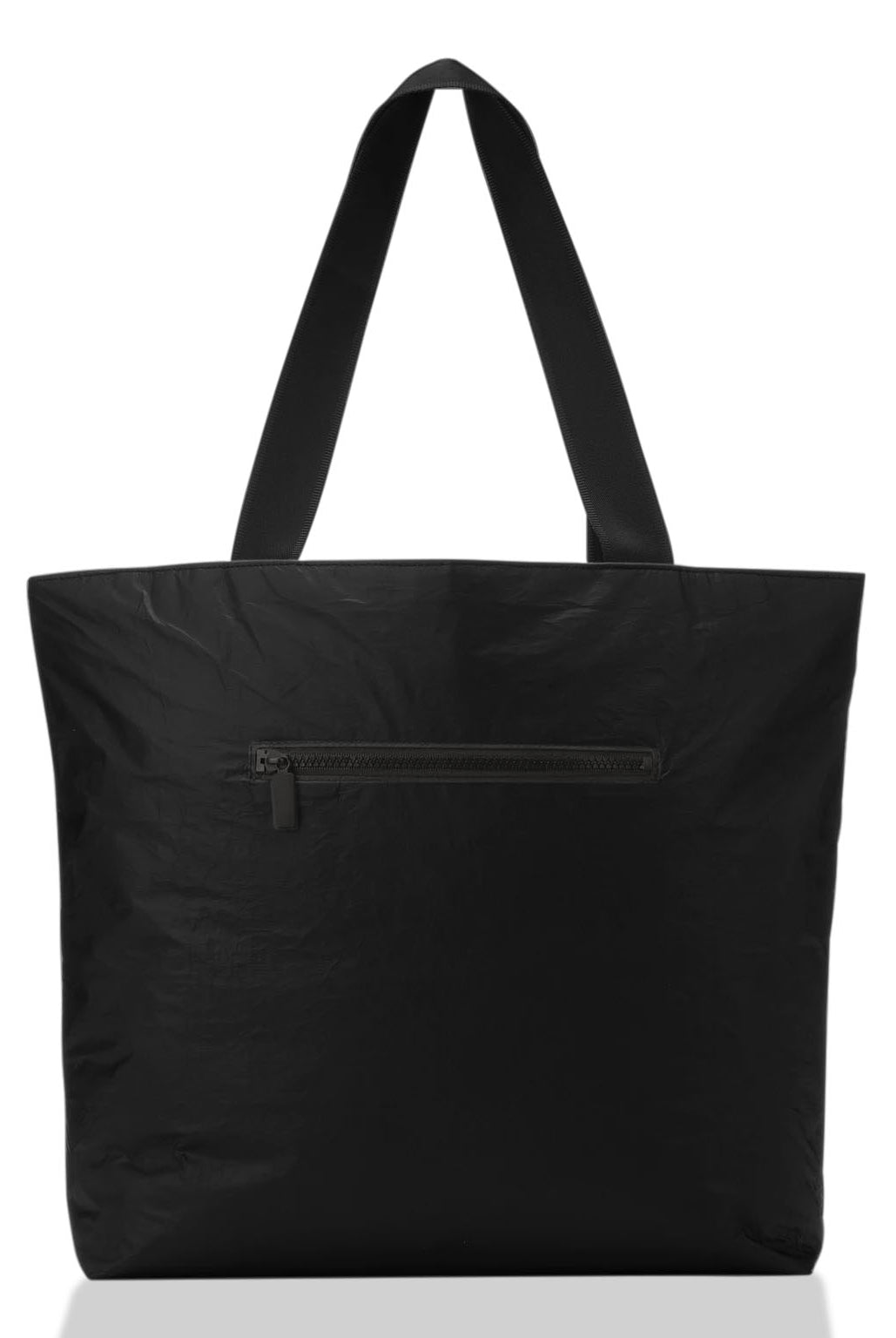
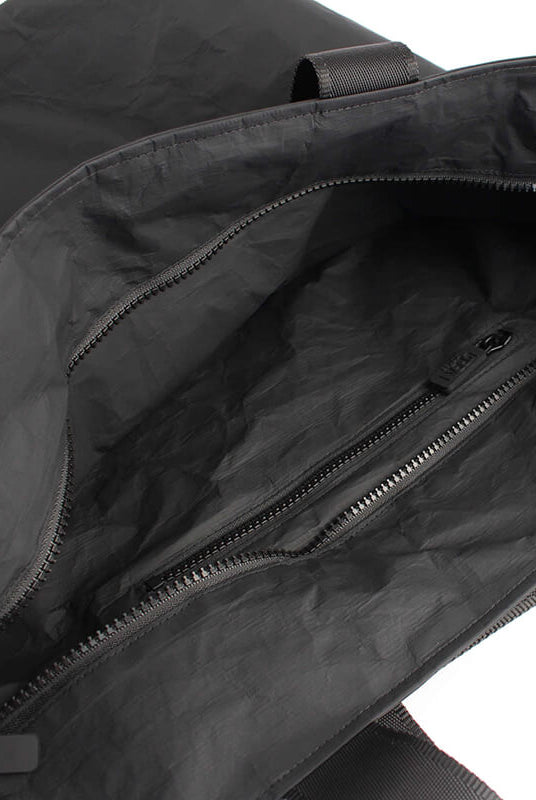
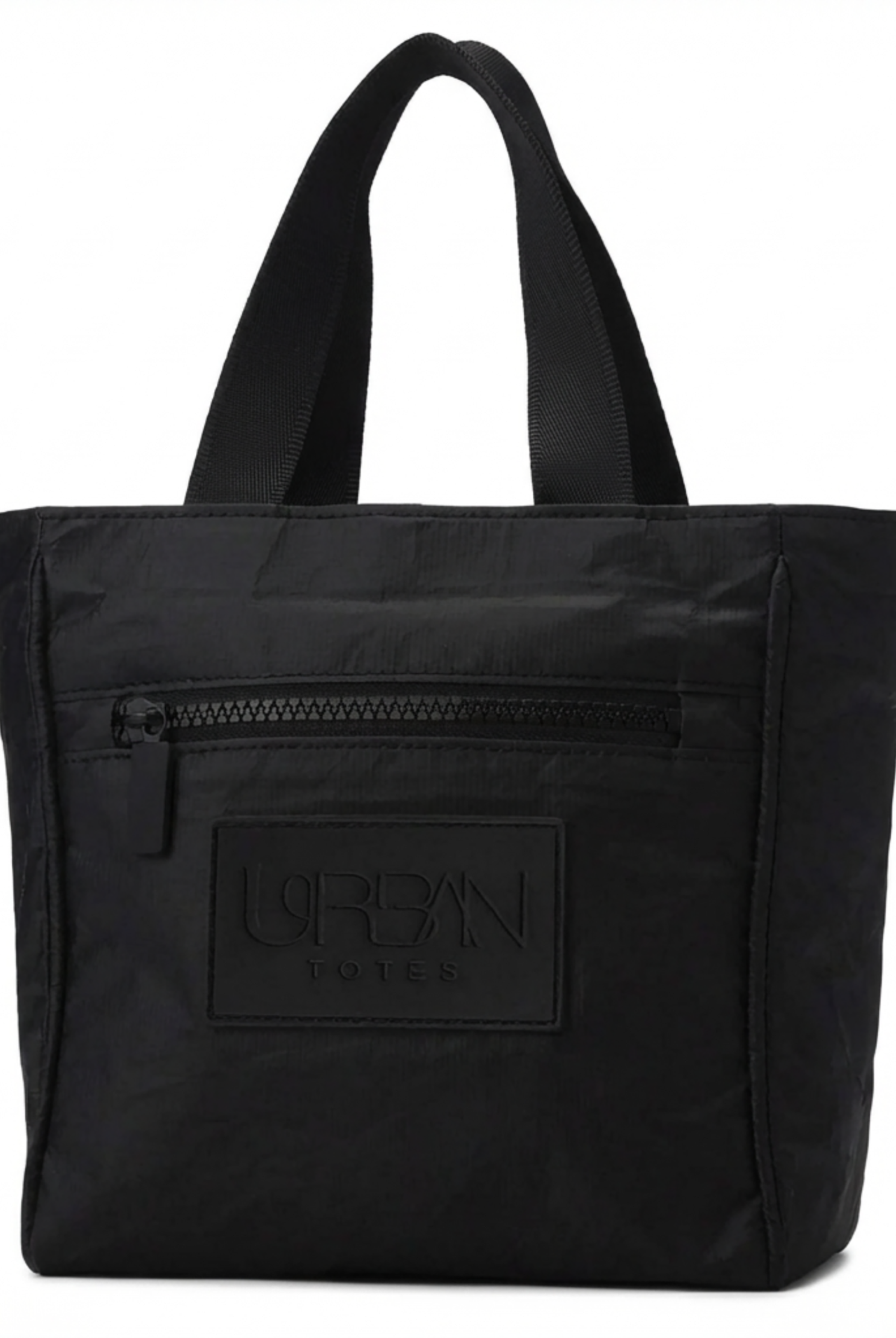
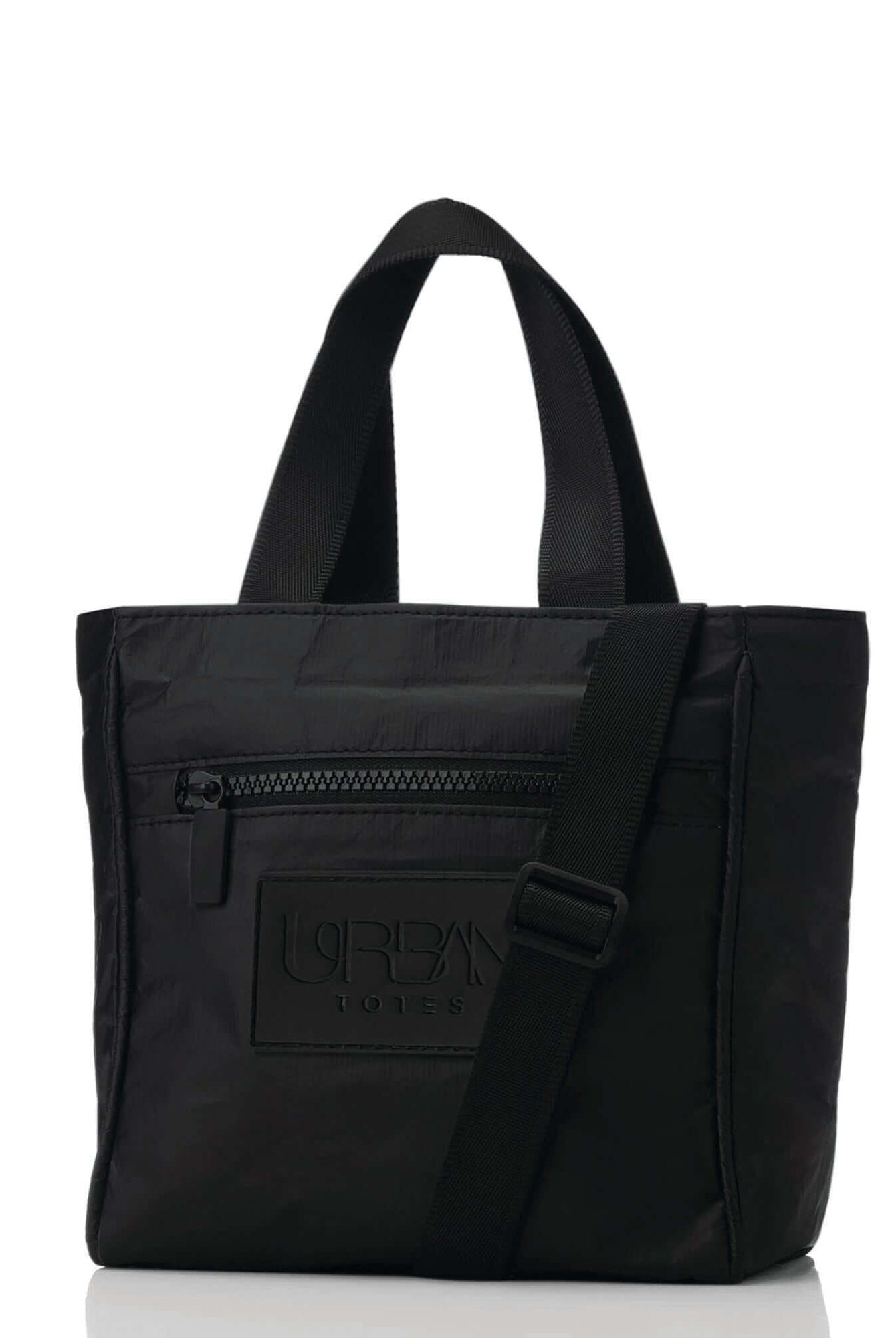
A practical example is Elevate Every Adventure with The OG Zipper Tote Bag by Urban Totes. Its factual features include a zipper closure, inside and outside zipper pockets, three large pockets, a lightweight build, a packable design, and dimensions of 19" W x 14.5" H. Those details matter because moisture management in real life often comes from organization and closure design as much as from fabric alone.
How Moisture Resistant Compares to Water Repellent and Waterproof
These three terms get mixed together all the time, and they shouldn't. They describe different levels of protection and different expectations.
Water repellent usually describes a surface effect. Water hits the bag and beads up for a while instead of soaking in right away. That can be useful, but surface treatments can wear down over time and repeated use.
Moisture resistant or water-resistant sits in the middle for daily life. It's the practical zone for errands, commuting, travel days, and family routines. It's made to manage ordinary exposure rather than complete immersion.
Waterproof points to a more fully sealed approach built for stronger exposure. But even then, shoppers should look closely at construction details, not just the word itself.
For a fuller brand-side explanation of the difference, this article on whether water resistant means waterproof is worth bookmarking.
Moisture Protection Levels at a Glance
| Protection Level | How It Works | Best For | Limitation to Watch |
|---|---|---|---|
| Water repellent | Helps water bead on the surface | Brief contact with mist or a small spill | Surface performance can fade with wear |
| Moisture resistant | Slows moisture from getting through during everyday exposure | Drizzle, commuting, travel, beach gear, errands | Not meant for full submersion |
| Waterproof | Uses a more sealed construction intended for stronger water exposure | Sustained rain or harsher conditions | Can still depend on seams and closure design in the finished bag |
Match the term to the moment
A commuter heading from the parking lot to the office usually doesn't need an expedition-style bag. She needs something lightweight, organized, and functional that handles a damp umbrella, wet pavement, and a coffee cup sweating through the morning.
A parent coming back from the pool has a different challenge. The issue isn't only rain from the outside. It's the wet towel, swimsuit, and snack wrappers creating moisture from within. In that case, pockets and zippered separation become a bigger deal than a dramatic waterproof claim.
If your routine includes drizzle, condensation, and damp gear, the middle category is often the one that makes the most sense.
Why the wording matters
The wrong label can lead to two bad outcomes. You either overbuy and end up carrying a stiffer, less everyday-friendly bag than you wanted, or you underbuy and assume any treated fabric will protect everything inside under all conditions.
One recent comparison of recycled and virgin nylon models adds an important wrinkle. It noted interior moisture in 30% of recycled nylon models versus 10% of virgin nylon models, along with faster DWR degradation in recycled versions. The useful takeaway isn't that one label always wins. It's that seams, closures, coatings, and quality control matter more than a single fiber label when you're evaluating a bag for repeated rain and humidity exposure (recycled nylon versus virgin nylon rain performance comparison).
Materials and Construction That Create Lasting Resistance
When women shop for a moisture resistant bag, most attention goes straight to the fabric. That makes sense. But construction is often where performance is won or lost.
A bag can have a good shell and still let moisture in through the places where the pieces are joined. It can also do a much better job than expected when the maker pays attention to layers, closures, and pocket placement.
If you like understanding what different tote fabrics bring to the table, Urban Totes has a useful guide to tote bag material options.
Fibers are only the starting point
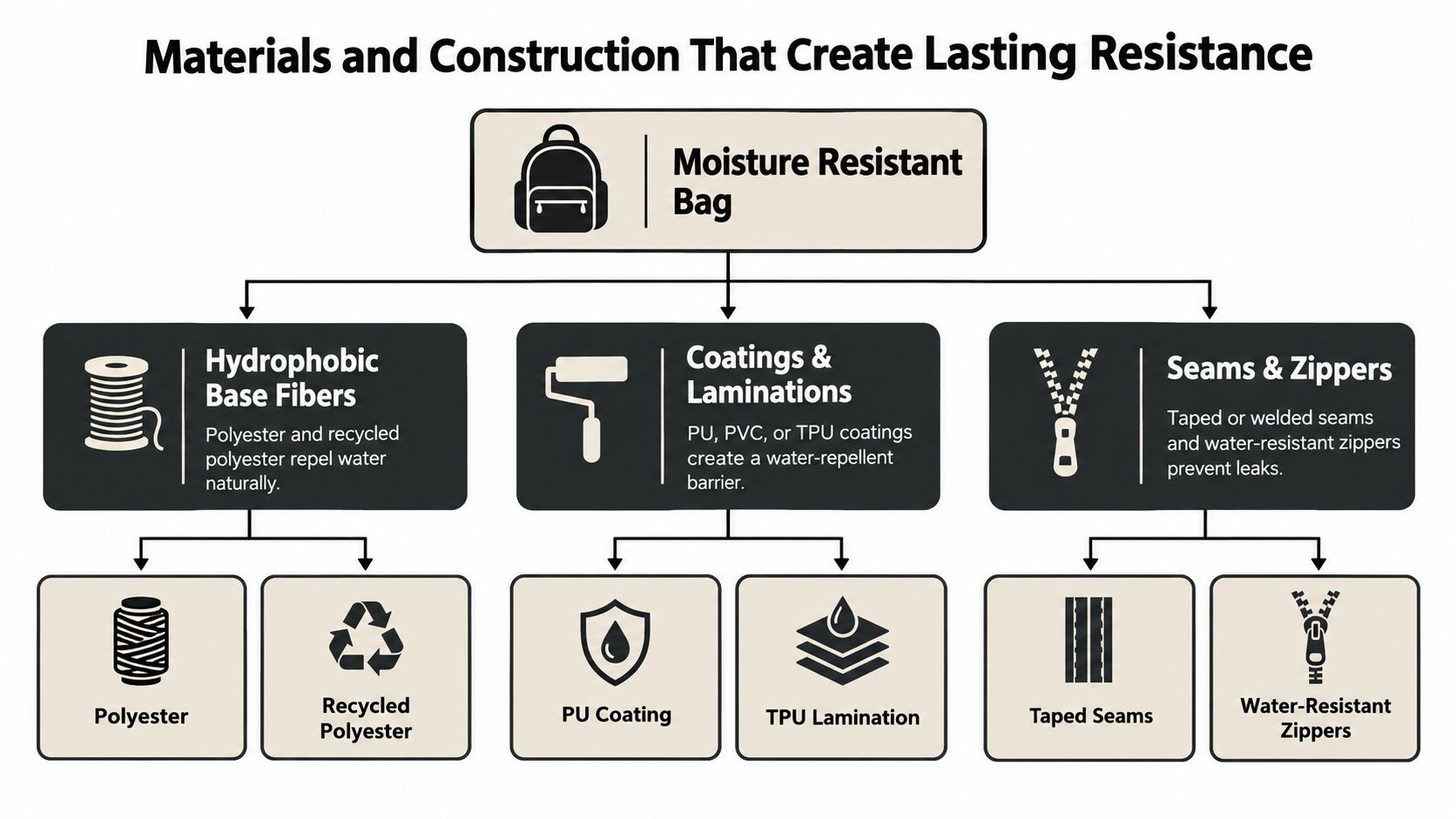
Some base fibers naturally handle moisture better than others. Polyester is often used because it's hydrophobic by nature. Recycled polyester can behave similarly in this area. One source reports water absorption at about 0.4% to 0.8% for both recycled and virgin polyester, which is why recycled polyester can still be a practical foundation for a moisture resistant bag (recycled polyester versus virgin polyester moisture behavior).
That said, a base fiber doesn't finish the job. A bare fabric and a coated fabric can act very differently in a rainy parking lot or on a humid road trip.
Coatings and backings do a lot of the work
A moisture resistant tote often depends on the layer you don't notice at first glance. Coatings, films, and laminations can change how the fabric responds to wet conditions.
One technical fabric example is ECOPAK, which a manufacturer describes as using 100% recycled polyester fiber and film with a 0.5 mil RUV matte film backing. The same source says each yard upcycles about 20 plastic water bottles and reports better moisture absorption performance than traditional laminated nylon (ECOPAK construction details).
That's a good reminder that “What is it made of?” should really become “What is the full material stack?”
Seams, stitch holes, and zipper lines are the vulnerable spots
Here's the point most shoppers miss. In coated-fabric bags, the seam is often the first place to fail, not the panel itself.
A technical report on coated-fabric rainwear states that at least two coats of seam sealant are necessary to waterproof seams, even when the fabric already has a water-repellent treatment (technical report on seam waterproofing). That matters because every sewn join creates tiny needle holes. Those holes can become entry points for both liquid water and moisture vapor.
What to look for in a real bag
In everyday carry, these details matter more than flashy wording:
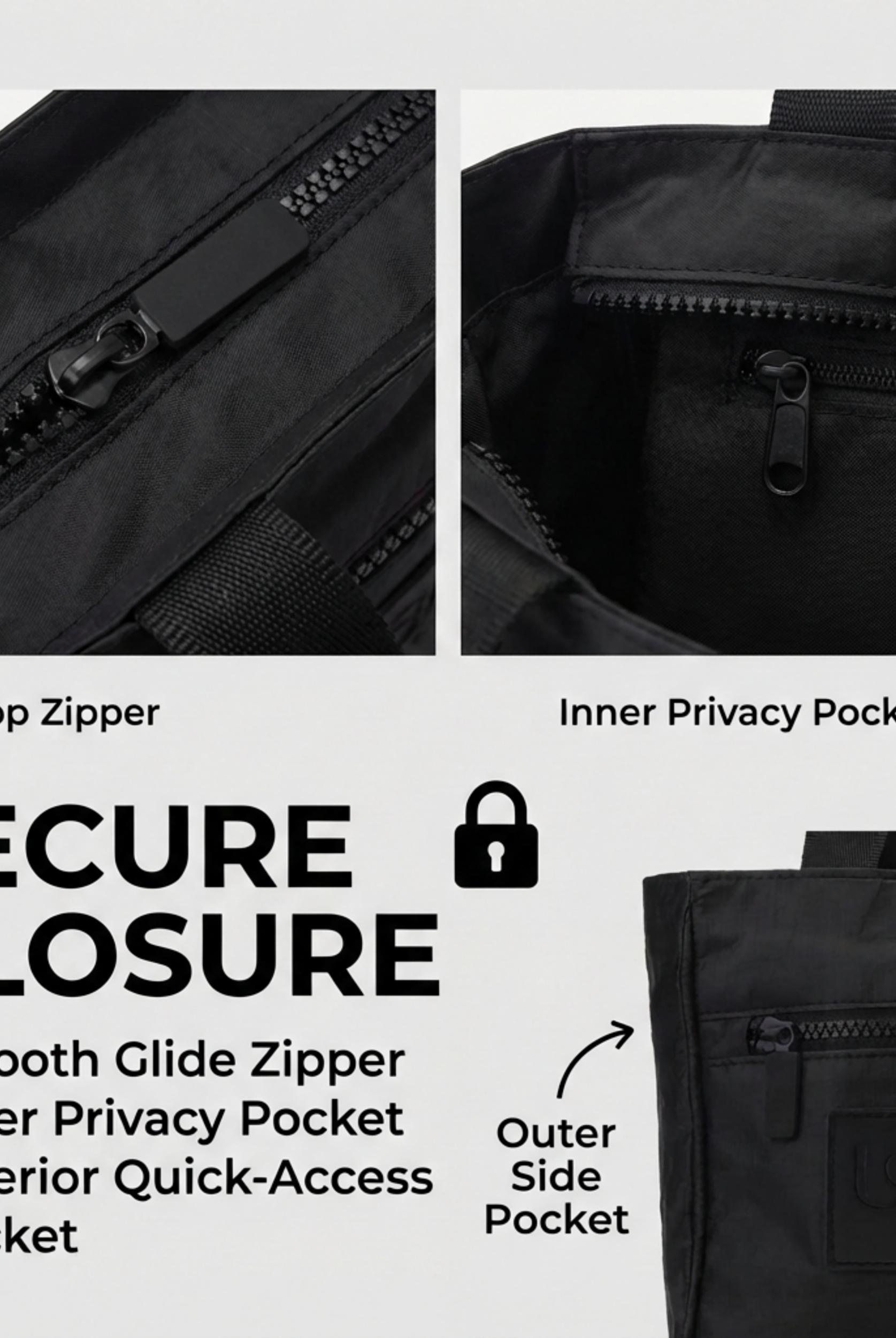
- Zipper closure: A top zipper helps reduce open exposure when you're walking through rain or setting the bag down near a spill.
- Multi-pocket layout: Separate compartments make it easier to isolate damp items from paper goods, electronics, or snacks.
- Reinforced stress areas: Handles, pocket edges, and corners take extra strain and often see more wear.
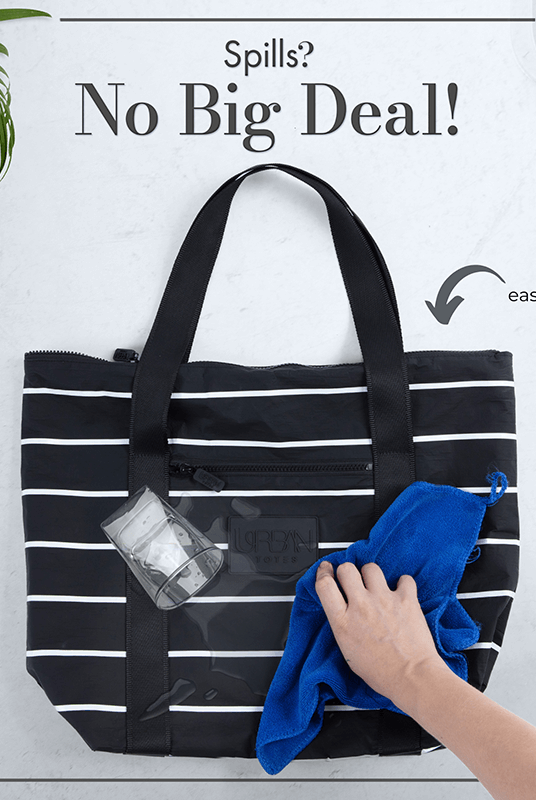
- Easy-clean interior surfaces: Helpful when a wet swimsuit, gym shirt, or snack leak ends up inside.
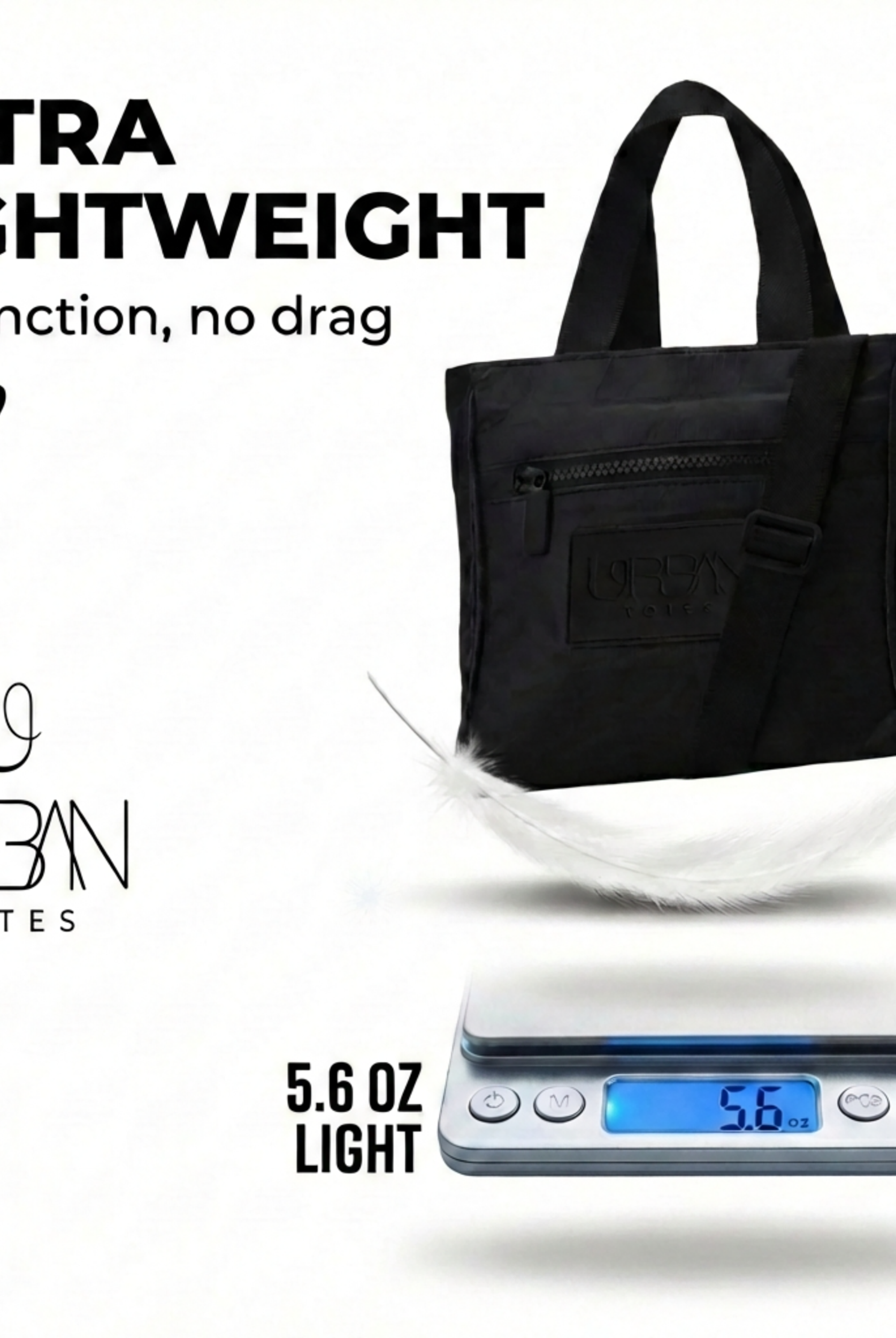
- Lightweight and foldable construction: Easier to pack, carry, and air out after use.
The strongest everyday design choice is often simple. Keep wet and dry items from touching in the first place.
That's why thoughtfully designed organization matters so much in a stylish tote. A multi-pocket interior isn't just about neatness. It's part of moisture management.
How to Read Test Ratings and Keep Your Bag Performing
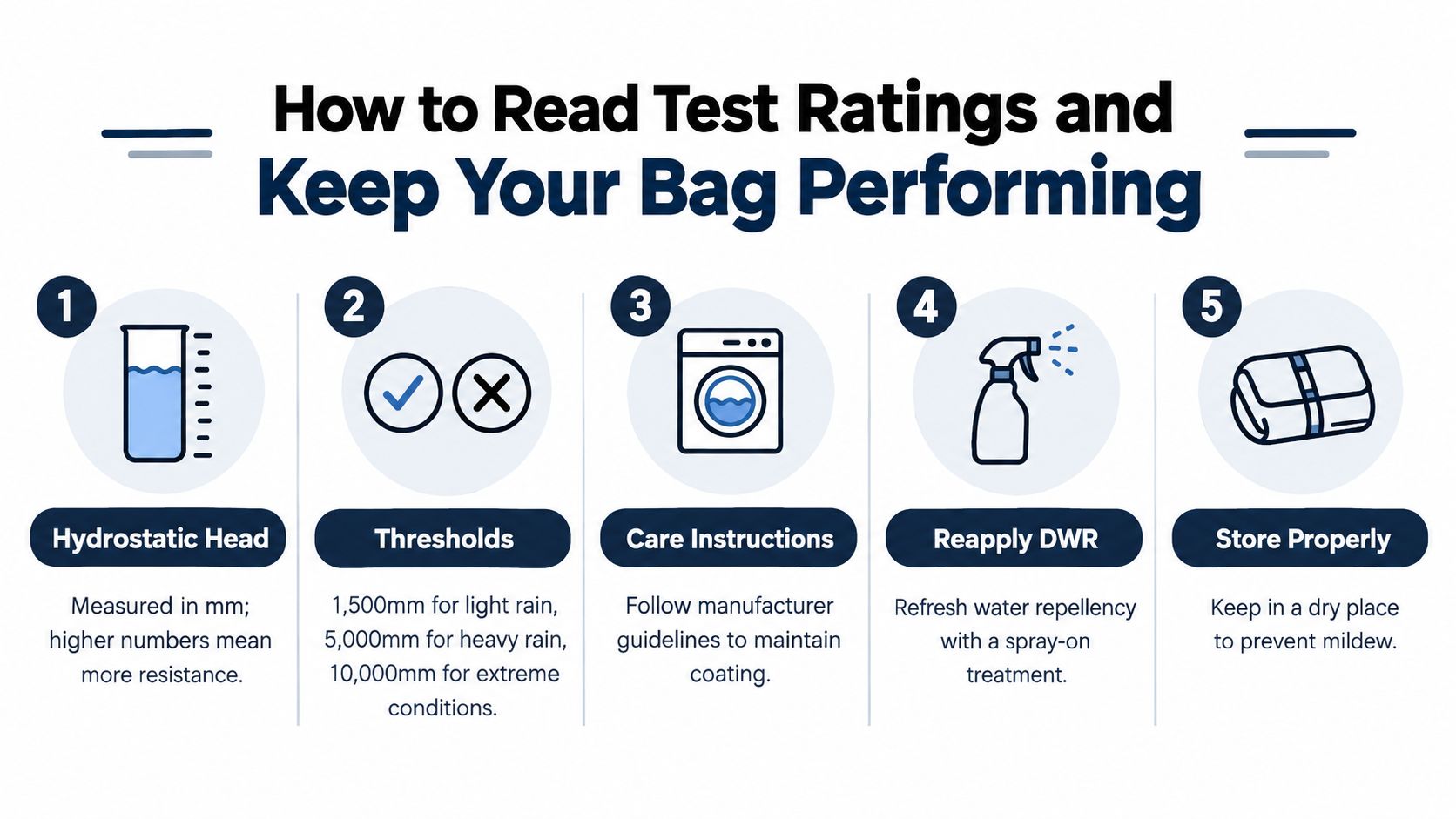
If you've ever seen a bag or fabric described with a number followed by “mm,” that's usually talking about hydrostatic head. It sounds technical, but the basic idea is straightforward. It measures how much water pressure a fabric can withstand before leakage, and the result is given in millimeters of water column.
For care habits after purchase, Urban Totes also shares practical advice in this guide on how to care for your tote bag.
What the test numbers actually mean
A 1,000 mm rating means the fabric resisted the pressure of a 1-meter water column. A 5,000 mm rating corresponds to 5 meters. Industry guidance in technical materials maps that roughly like this: around 2,000 mm for light rain, 5,000 mm for sustained rain, 10,000 mm for heavy rain and short submersion, and 20,000 mm+ for extreme exposure (waterproofness explained with hydrostatic head thresholds).
Another helpful detail is that hydrostatic pressure testing is standardized. ISO 811 and AATCC 127 are commonly used methods for measuring how much pressure a fabric can take before leaking (bag fabric testing guide with ISO 811 and AATCC 127).
Why the rating doesn't tell the whole story
This is the part that matters most in real shopping. A hydrostatic head number describes the fabric under controlled conditions. It does not automatically mean the finished bag is equally protected everywhere.
A tote can use a well-rated fabric and still struggle at the stitched joins, zipper opening, or corners if those details weren't built to the same standard.
Shopping shortcut: Read test numbers as fabric clues, not as a blanket promise about the whole bag.
Care habits that help in real life
Even a well-made bag needs a little attention if you want the protection to last through normal wet-dry cycles.
Try these habits:
- Empty damp contents quickly: Don't leave wet swimsuits, towels, or gym clothes sitting inside longer than needed.
- Air the bag out after use: Open it up at home instead of zipping moisture inside overnight.
- Wipe interior surfaces when needed: This helps with condensation, sand, and the general residue of daily carry.
- Check seam areas now and then: Stress points around straps and pocket edges often show wear first.
There's another reason this matters. Moisture retention affects durability differently than surface rain does. Research on paper-based materials shows they can lose up to 40% of load-bearing capacity at 80% relative humidity, which is a good reminder that stored moisture changes how materials perform over time. The same source also notes a projected USD 35.70 billion by 2034 water-resistant packaging sector, reflecting broader demand for moisture control in everyday products (research touching on humidity, material performance, and packaging demand).
For your tote, the practical takeaway is simple. Outside rain is only half the story. The moisture you trap inside matters too.
Choosing the Right Moisture Resistant Bag for Your Life
The right moisture resistant bag depends less on the trend word on the tag and more on the kind of day you live most often.
A school-run mom, a daily commuter, and a weekend traveler might all want a stylish tote. But the details that make one bag feel right for each of them can be different.
If your routine leans heavily on secure closures and organized compartments, this guide to a water-resistant tote bag with zipper is a smart next read.
For the commuter
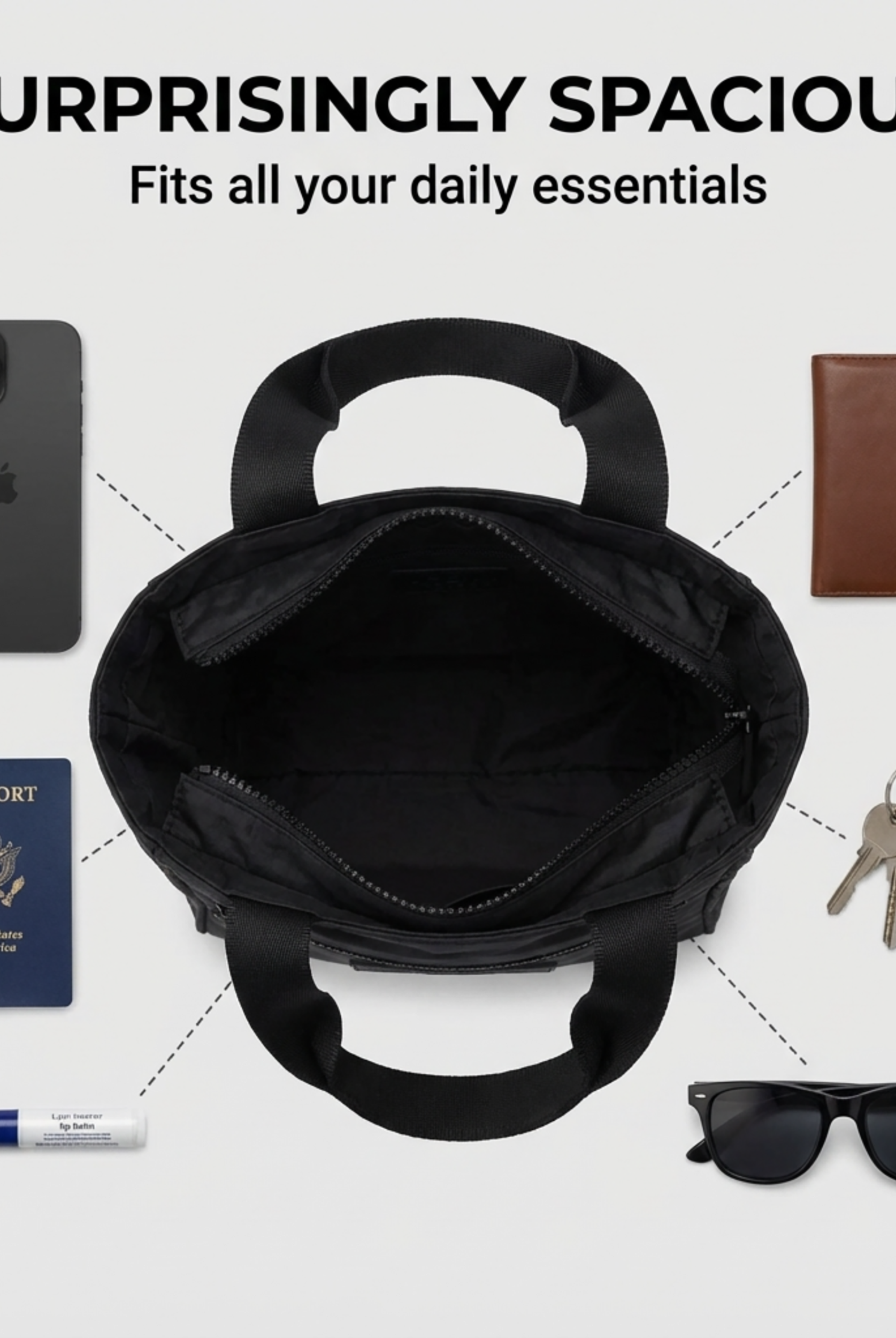
You want a bag that feels light on your shoulder and stays organized when the morning gets choppy. Think phone, keys, wallet, charger, notebook, lunch, and maybe a cardigan.
Look for:
- A zipper closure so your everyday carry isn't left open to drizzle or a jostled commute
- Multi-pocket organization so small items don't sink to the bottom
- A lightweight shape that doesn't add bulk before you even fill it
For the traveler
Travel days ask more from a tote. It may slide under a seat, sit on a damp terminal floor, hold toiletries, and carry a layer you took off three gates ago.
The sweet spot here is a bag that's:
- Packable and foldable enough to tuck into luggage
- Travel-ready with enough compartments to separate categories
- Versatile enough to go from airport to hotel to day trip without looking purely utilitarian
For the parent, beach-goer, or errand-runner
Interior separation really shines. A damp towel, sandy cover-up, water bottle, and snack pouch can all end up together fast.
A practical checklist helps:
- Do you carry wet items often? Prioritize compartmentalization.
- Are you in and out of the car all day? Choose something lightweight and easy to grab.
- Do you need one bag for many settings? Look for a polished exterior with functional interior storage.
- Do you hate digging for essentials? A multi-pocket layout matters as much as moisture resistance.
The best choice usually isn't the most extreme one. It's the one that fits your actual routine and keeps your day feeling organized instead of improvised.
Tote Smarter and Go Anywhere With Confidence
A moisture resistant bag isn't just a fabric story. It's a real-life design story.
The useful question isn't whether a tote sounds technical enough on a product page. It's whether it handles your version of moisture. Morning drizzle, a leaking water bottle, a humid trunk, a post-swim towel, or the usual chaos of a packed weekday all ask for slightly different things. That's why seams, zipper closures, compartments, and easy-clean interiors deserve just as much attention as the outer material.
From our Boise perspective, that's what thoughtful design should do. It should make daily life easier without asking you to carry something bulky or overly precious. Stylish and functional can absolutely live in the same bag.
When you know how to read the language and spot the details that matter, shopping gets simpler. You stop chasing vague promises and start choosing a go-anywhere tote that fits the way you move through the day.
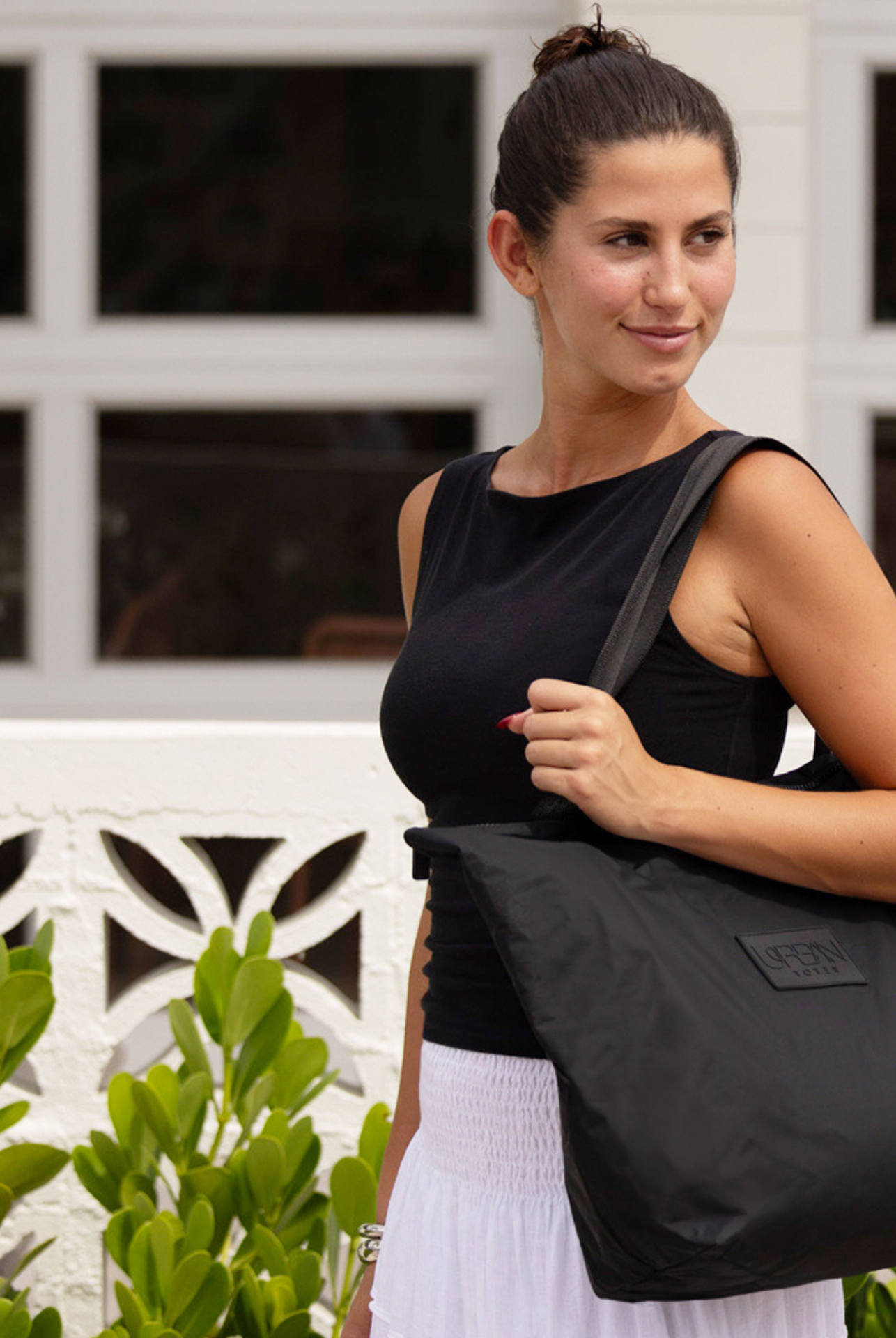
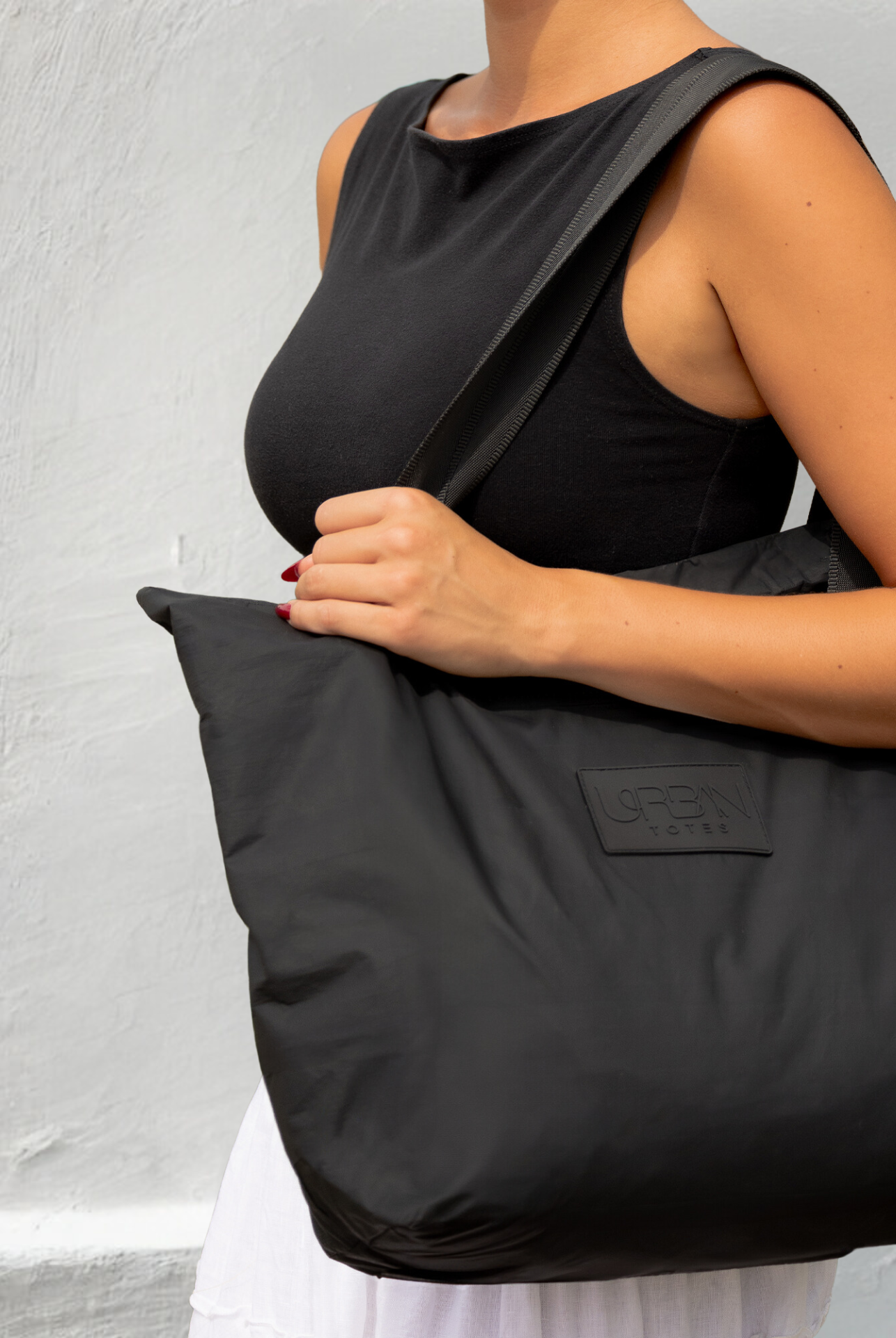
Urban Totes creates lightweight, packable, foldable bags with zipper closures and organized compartments for commuting, travel, errands, and beach days. If you want a stylish moisture-resistant bag that feels thoughtfully designed for real life on the go, visit Urban Totes and find the carry that fits your routine.