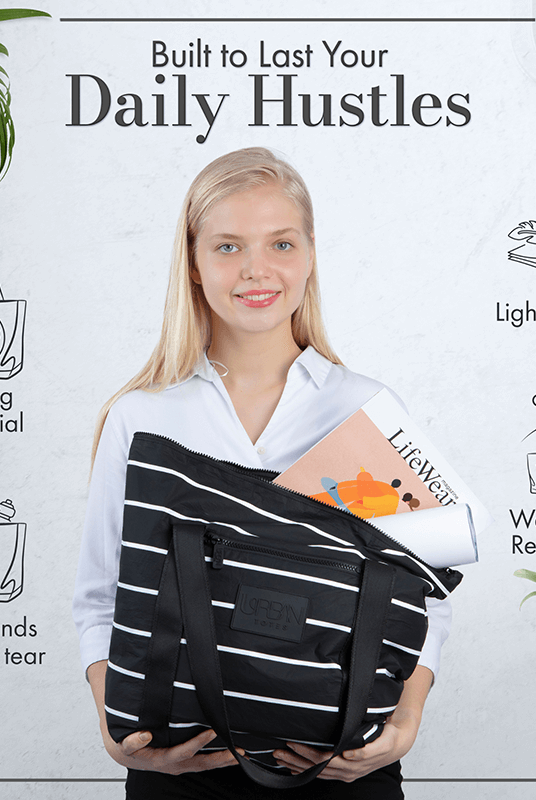
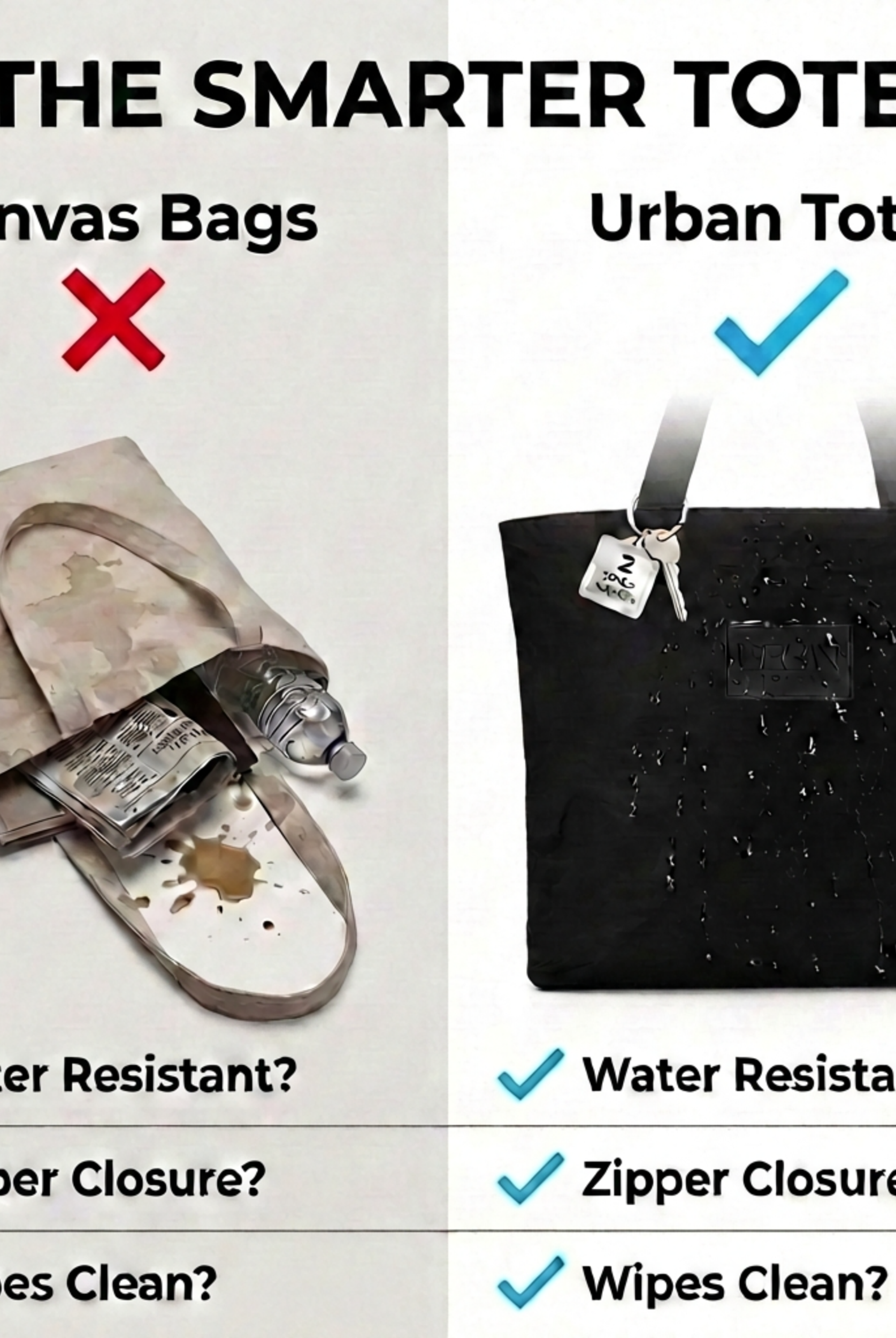
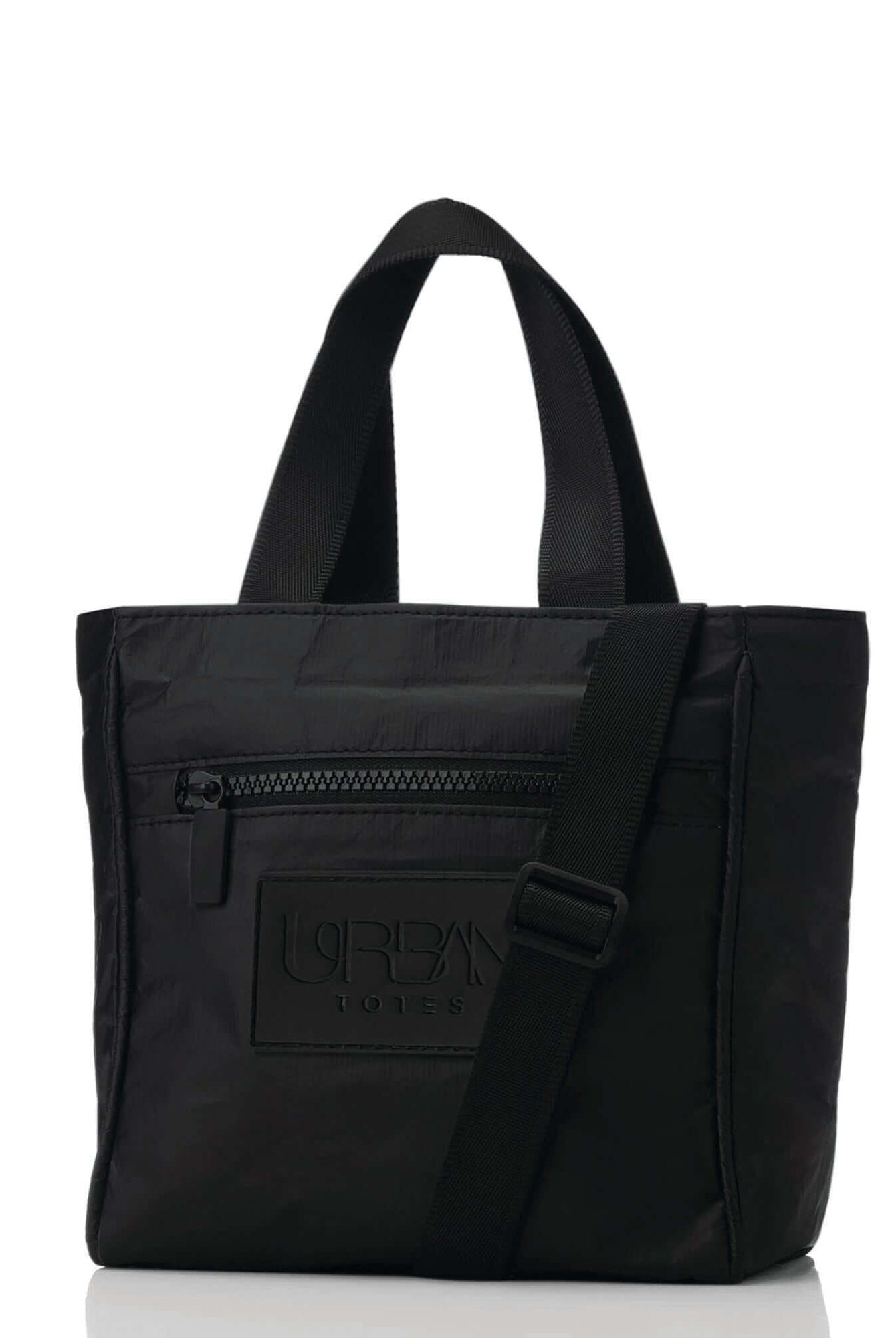
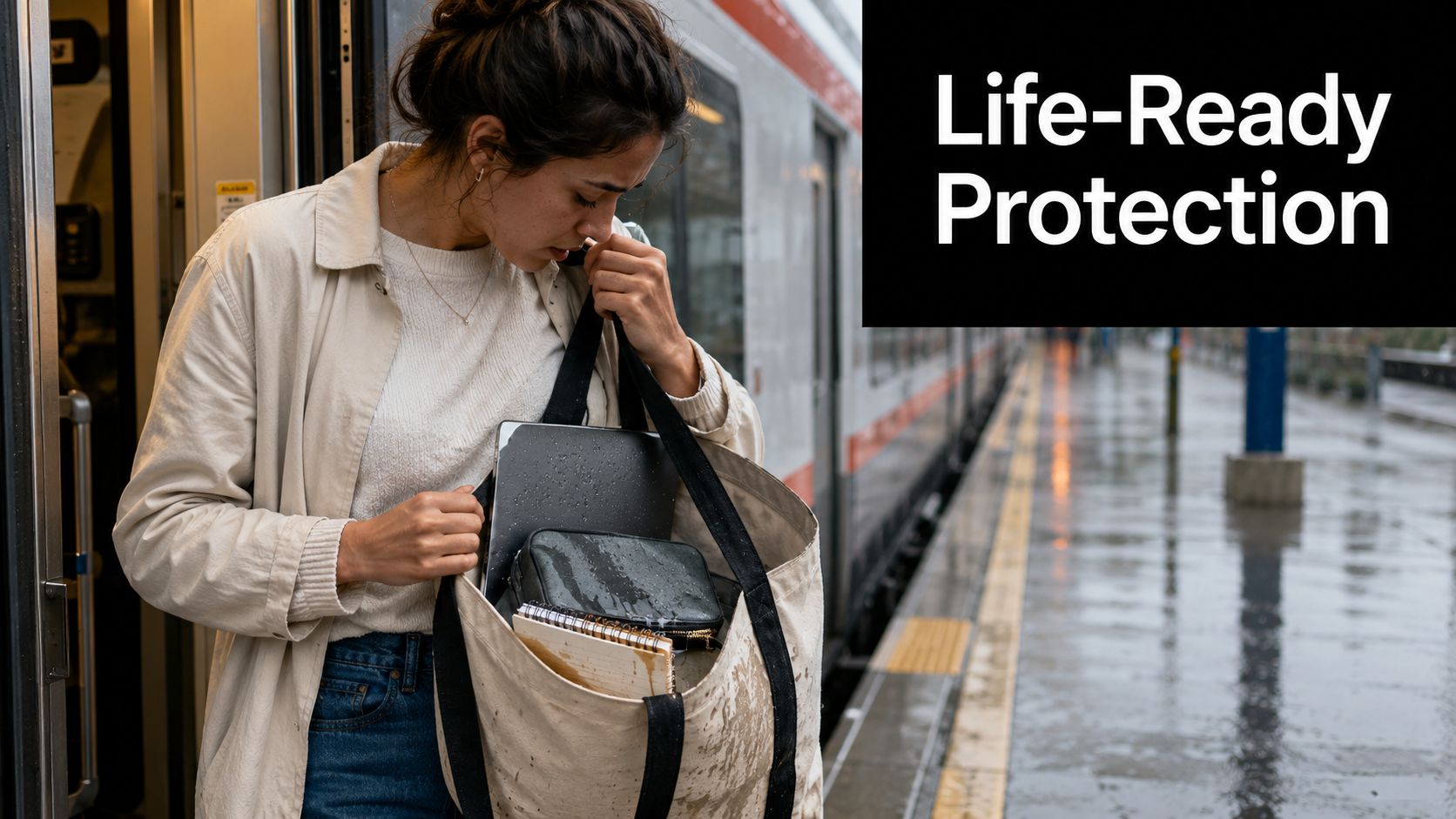
You're stepping off the train when the rain turns sideways. Your open-top tote is pressed against a damp coat, your laptop is sliding toward a wet notebook, and the lunchbox you packed before sunrise has started leaking into everything else. By school pickup, the same bag may be holding permission slips, snacks, groceries, and a child's sweater under a sudden drizzle.
A water-resistant tote bag with a zipper is designed for those ordinary disruptions. It adds a secure top closure without losing the roomy, easy-access shape that makes totes so useful. The important detail, though, is that a zipper alone doesn't make a tote waterproof. Fabric, coating, seams, stitching, and the opening all work together.
This guide looks past the surface label. You'll learn what water resistant really means, how zipper construction affects wet-weather performance, which fabrics and pockets deserve attention, and how to choose a versatile, travel-ready tote for commuting, errands, beach days, and weekend plans.
Table of Contents
- A Tote That Keeps Up With Real Life
- What Water Resistant Really Means
- Zipper Types and Why Closure Matters
- Fabrics Coatings and Construction Details
- Organization Features That Earn Their Place
- Matching the Tote to Your Daily Moments
- Caring for Your Tote So It Lasts
- Choosing the Right Tote for You
A Tote That Keeps Up With Real Life
A tote earns its place in a busy day because it accepts whatever comes next. A cardigan, tablet, water bottle, and last-minute purchases can share one roomy compartment without the careful packing that luggage demands. That convenience becomes less helpful when rain, spills, or windblown sand reach the opening.
At school pickup, a light shower can find the tablet beside a folder. At the farmers market, damp produce may touch a paperback. After a beach afternoon, sandy towels can rest against dry clothes while the tote tips onto its side. These small disruptions reveal the difference between a bag that looks protective and one built to handle daily use.
A zipper gives the top a defined barrier. It helps keep contents inside when the tote falls over, limits direct exposure to rain, and adds privacy on a crowded commute. Its performance still depends on the fabric, seams, stitching, and the way the zipper meets the side panels. A closure is one part of the protection system, not the whole answer.
Real-life test: Choose a tote based on what you carry through a messy day, not only how it looks on a clean product page.
Interest in protective carry goods has grown alongside the wider waterproof bags market. One market estimate places that category at about USD 6.1 billion in 2024, with projections suggesting roughly USD 9.6 billion by 2031 at a 6.2% CAGR. Another estimate places it at about USD 13.44 billion in 2025, with projections suggesting nearly USD 19.38 billion by 2032. The estimates differ, yet both describe projected demand for bags used with rain, spills, travel, gym gear, and everyday moisture (Verified Market Reports).
A water-resistant tote is not a substitute for a dry bag during immersion. It can still protect belongings during the situations that fill ordinary weeks: an unexpected shower, a leaking bottle, a damp bench, or a hurried walk from the car to the front door. The most dependable choice combines a useful zipper with fabric and seams that support the same level of protection.
What Water Resistant Really Means
The easiest way to understand water resistance is to compare it with clothing. A water-resistant tote is like a rain jacket that beads up light drizzle and keeps you comfortable for a while. A waterproof bag is closer to a sealed container designed to keep water out under pressure or during immersion.
That distinction matters because shoppers often treat “water resistant” and “waterproof” as interchangeable. Water resistant usually means limited protection from light rain, splashes, and spills. Prolonged exposure, pooling water, pressure, open zipper ends, and unsealed seams can still create paths for moisture.
Read the label as a range
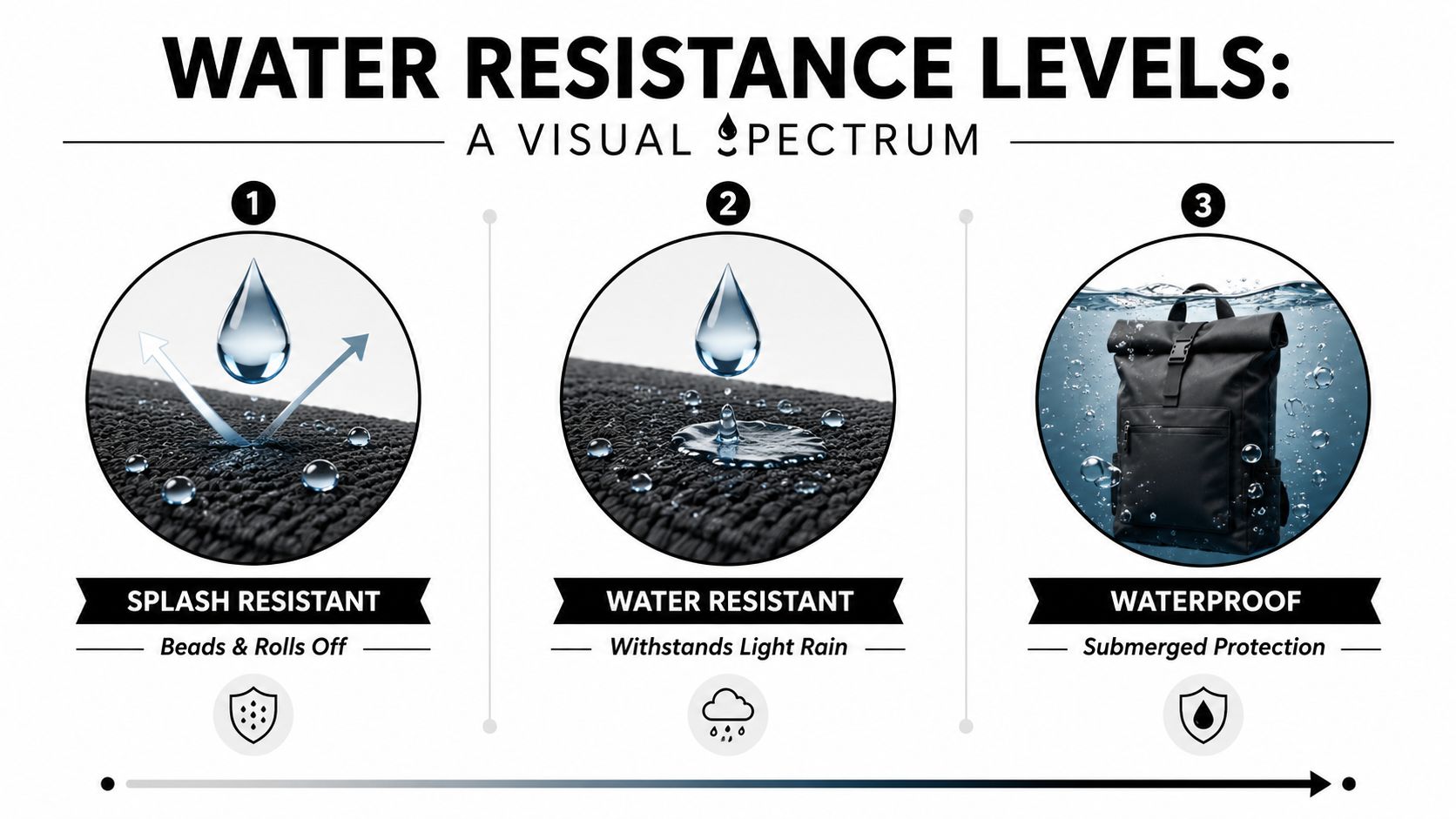
Think of protection as a spectrum:
- Splash resistant: Handles brief droplets and minor contact.
- Water resistant: Helps repel light rain and everyday spills.
- Waterproof: Uses construction intended to block water more completely, including under stronger exposure.
True waterproof construction often requires sealed seams, specialized laminates, and closures designed to resist pressure. That can make a bag feel stiffer or less flexible than the lightweight, foldable tote many people want for errands and travel.
If a product page lists an IP rating, it gives you a more useful reference than a broad adjective. One technical guide explains that IPX4 covers splashing from any direction, IPX5 covers low-pressure water jets, and IPX7 covers temporary immersion (CEO Zipper). An unlabeled claim deserves a closer look rather than automatic trust.
Ask what the whole bag does
Look for information about seam finishing, zipper ends, fabric coating, and the opening. Water can enter through stitching holes, attachment points, seams, zipper ends, or gaps around the lining, even when the zipper tape itself repels moisture. That's why a water-resistant versus waterproof guide is useful when a product description sounds broader than the construction details support.
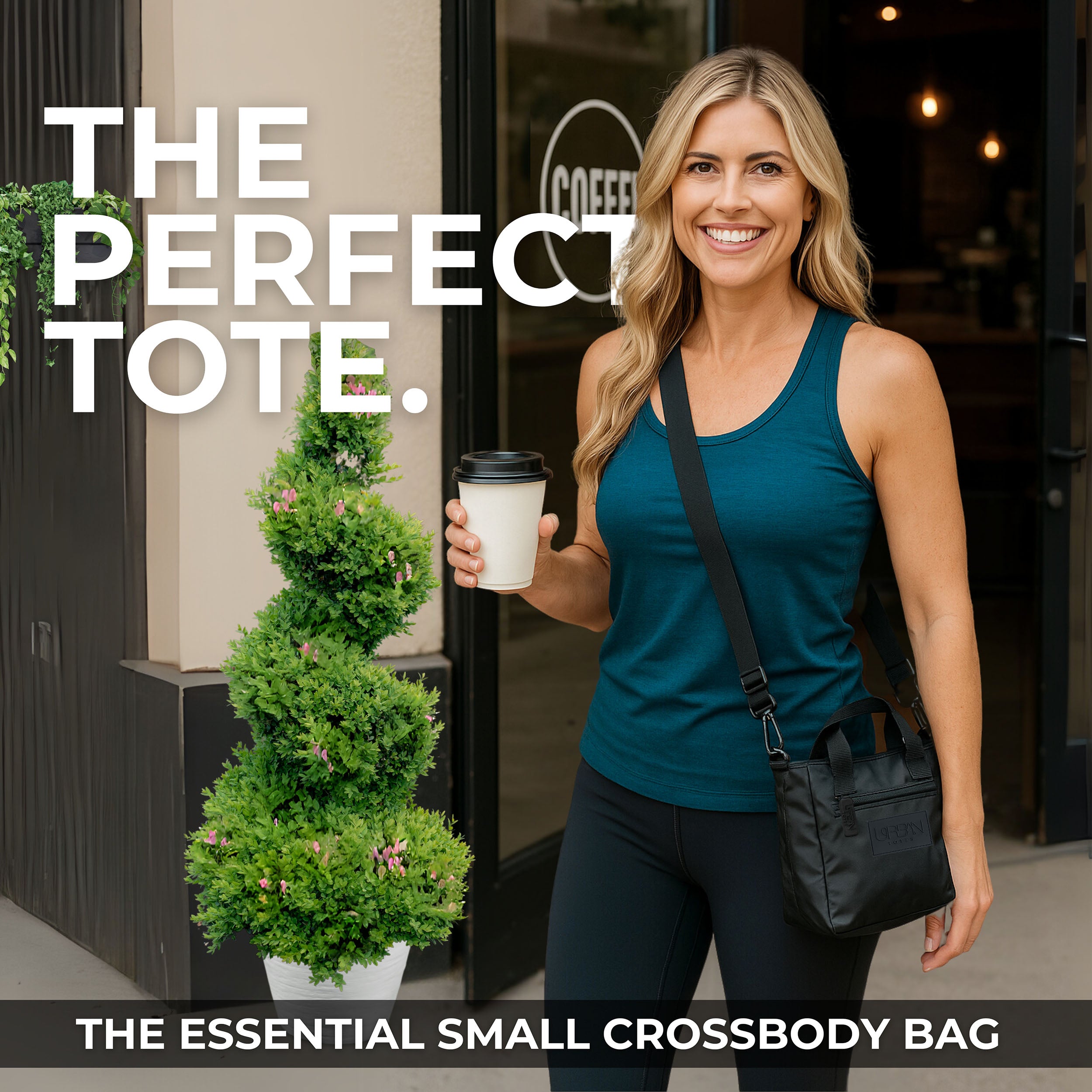
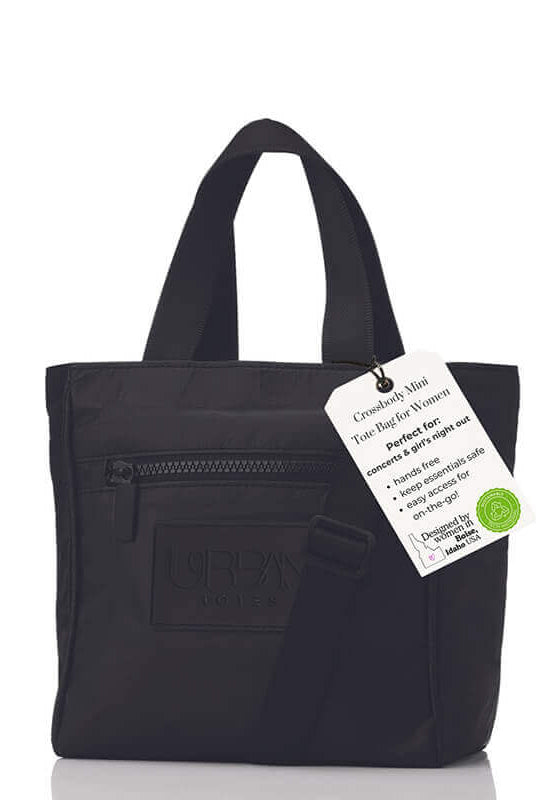
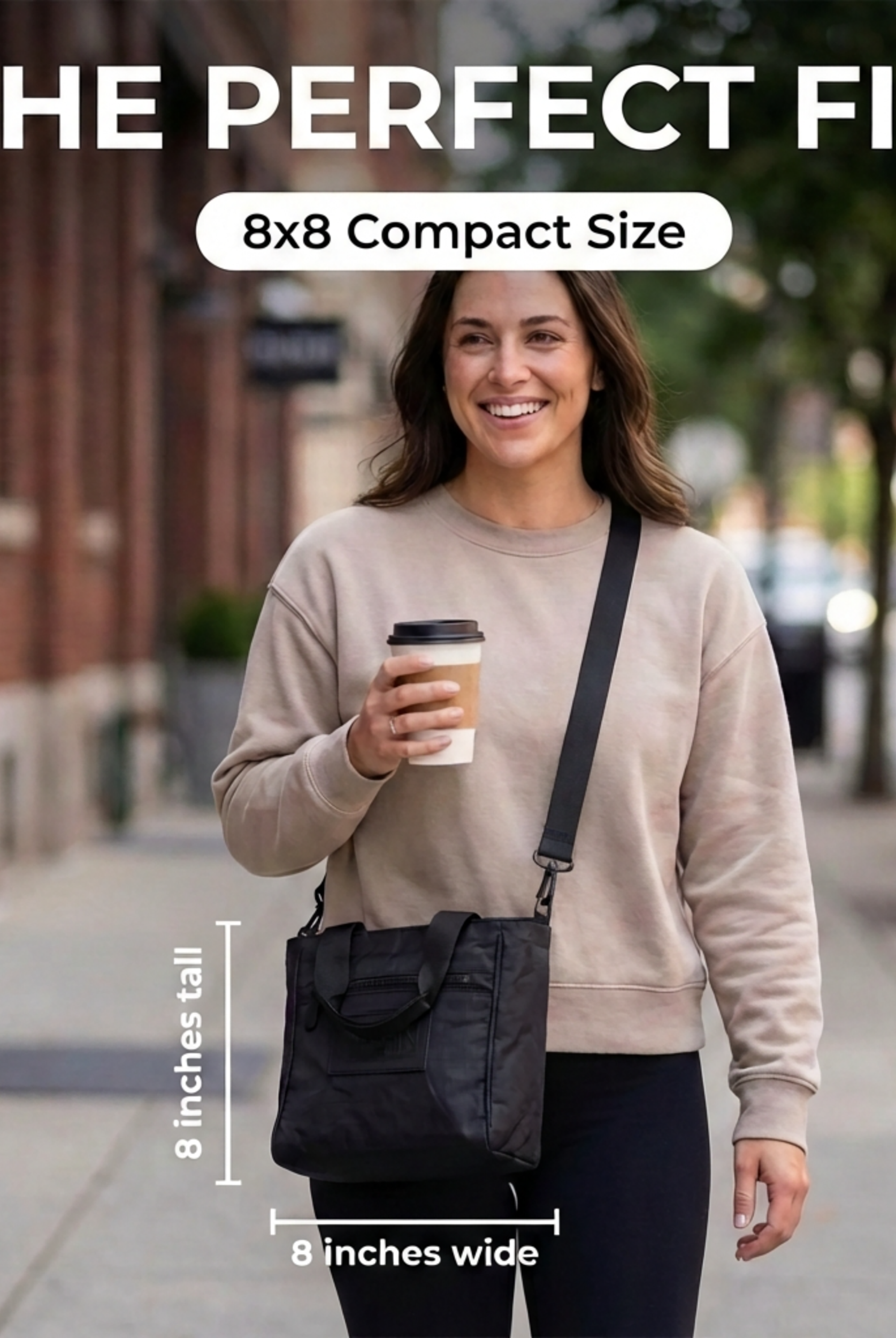
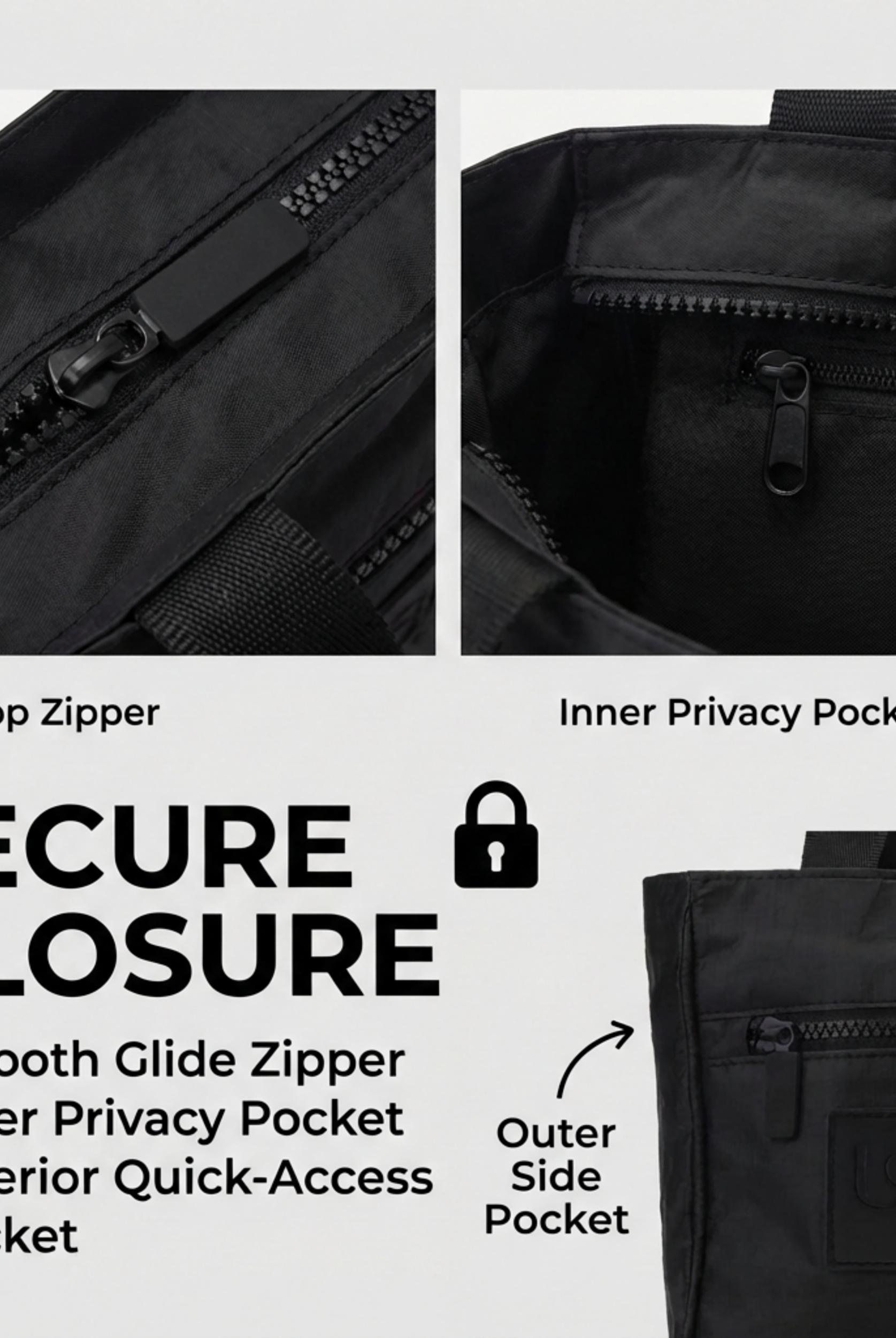
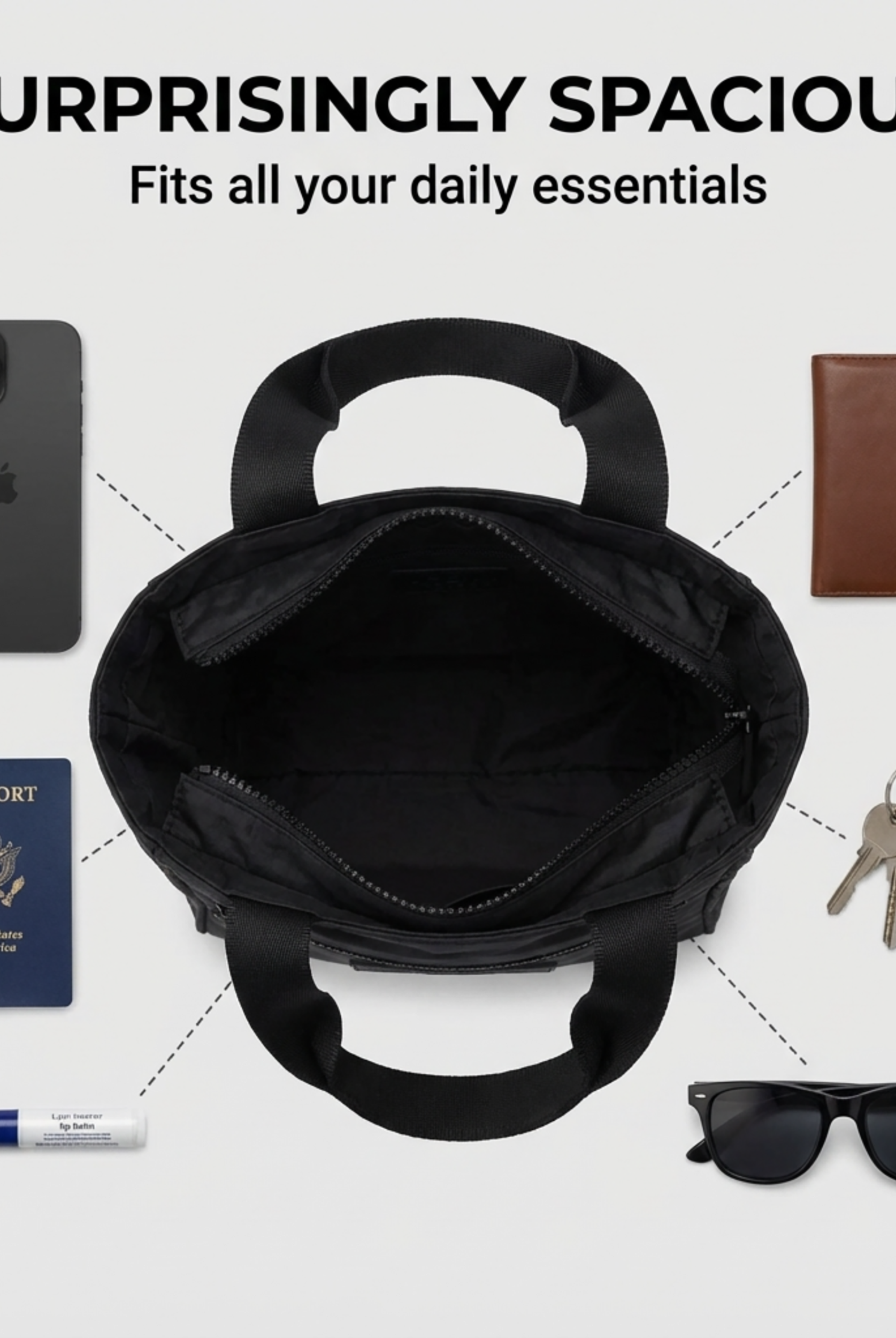
For a smaller everyday option, the Crossbody Tote Bag Mini Purse combines a zip-top closure, outside zipper pocket, easy-access pocket, water-resistant material, and a foldable design. It's described as measuring 7.5 x 4 x 7.75 inches, with a removable strap extending to 53 inches.
Zipper Types and Why Closure Matters
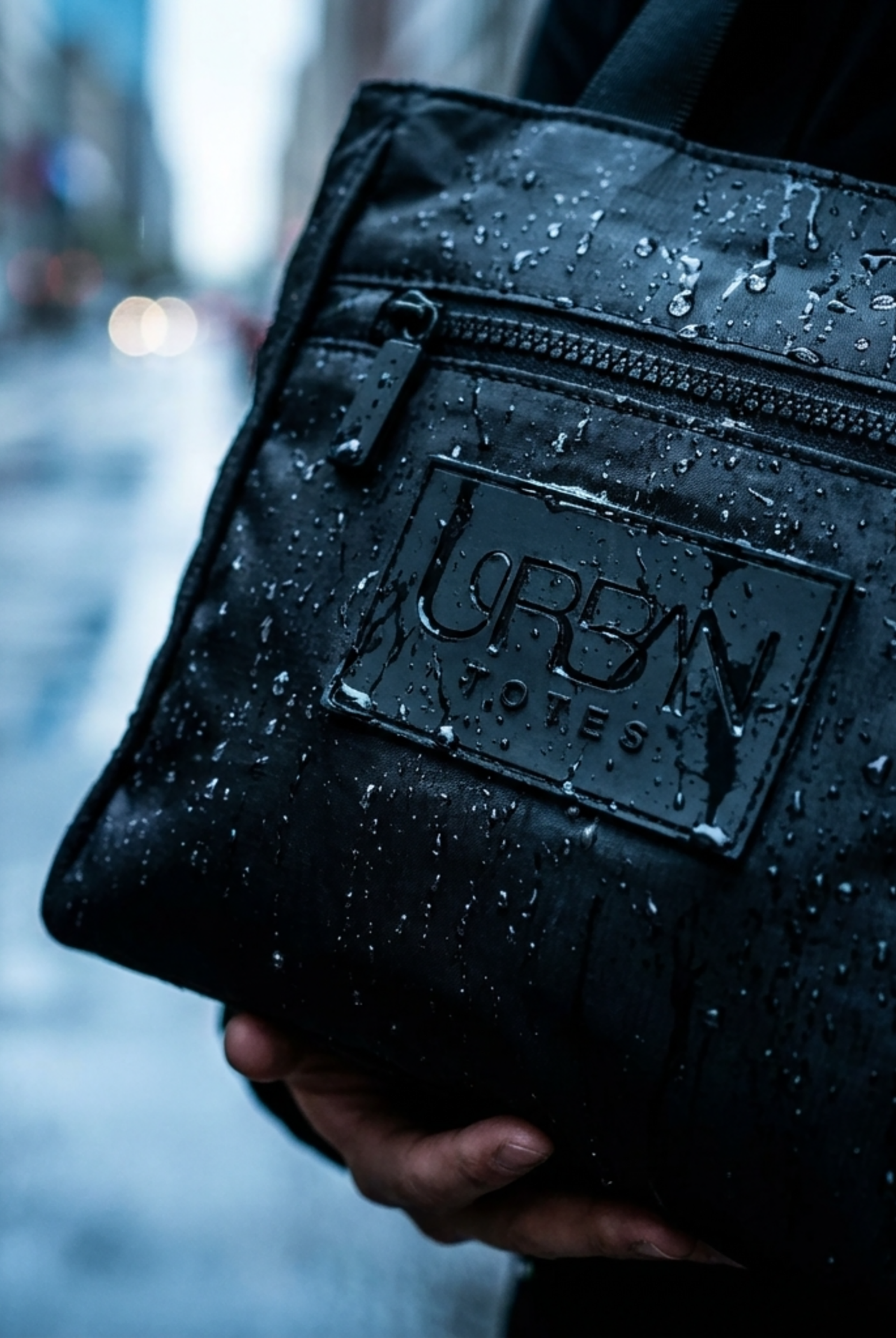
On a rainy commute, water does not politely stop at the bag's outer fabric. It follows the easiest route, often through the zipper opening, its ends, or the stitching around it. A coated tote can still leave your notebook damp if the closure is exposed. The zipper matters because its design and installation work with the fabric and seams, not because any zipper makes a bag waterproof.
A standard nylon coil zipper is light, flexible, and comfortable for errands or daily travel, but its exposed coil is not intended to block water. Molded plastic teeth feel sturdier, while metal teeth give a more structured, durable character. Both can serve well, yet neither provides waterproof protection by itself.
Weather-resistant closures add another layer of defense. A storm flap sits over the zipper like a small roof, while a reverse-coil zipper turns the smoother side outward. PU-coated tape or laminated film narrows the exposed path between the teeth. A waterproof laminated zipper uses a continuous TPU film bonded to the tape, rather than depending only on an ordinary zipper and surface treatment. The same technical guide also explains the IP code: IPX4 covers splashing, IPX5 covers low-pressure water jets, and IPX7 covers temporary immersion (CEO Zipper). Those levels describe tested protection, not a promise that every part of a tote will resist water equally.
Zipper types at a glance
| Zipper Type | Water Protection | Best For | Trade-offs |
|---|---|---|---|
| Standard nylon coil | Limited | Commuting, errands, gym use | Flexible and light, but exposed teeth can admit moisture |
| Molded plastic | Moderate when covered | Travel and structured totes | More substantial feel and less flexibility |
| Coated or reverse-coil | Better resistance to runoff | Rainy commutes and frequent travel | May still leak through ends or under prolonged pressure |
| Waterproof laminated zipper | Highest closure-level protection | Specialized wet-weather carrying | Can feel stiffer and cost more |
| Covered zipper with storm flap | Added practical protection | Everyday totes exposed to drizzle | Performance depends on coverage and seam construction |
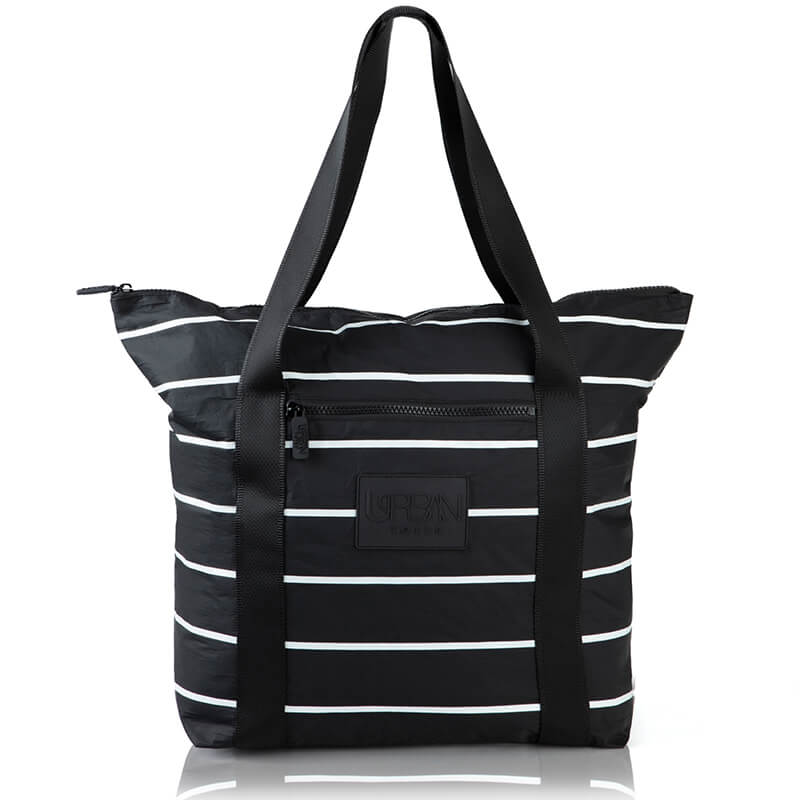
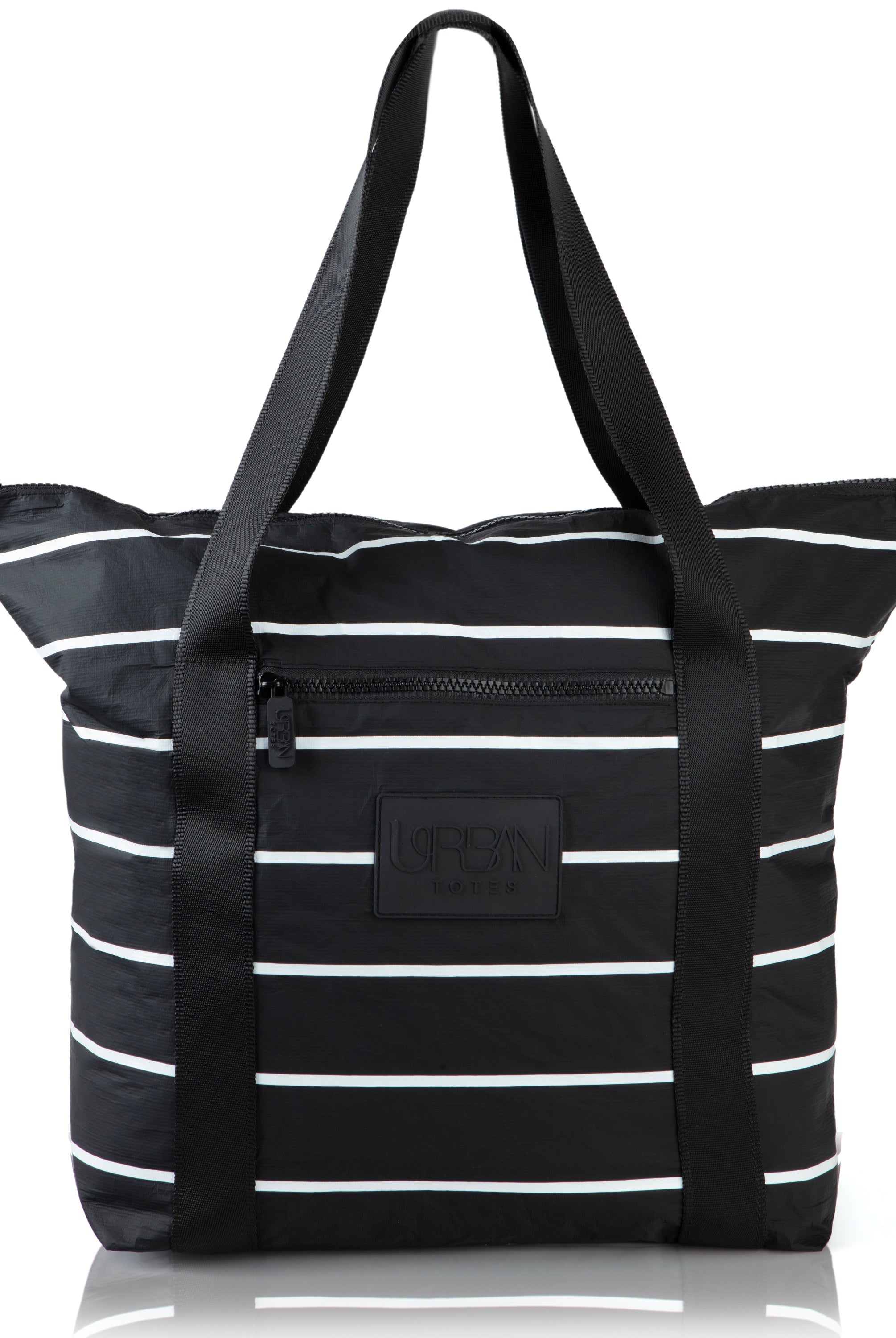
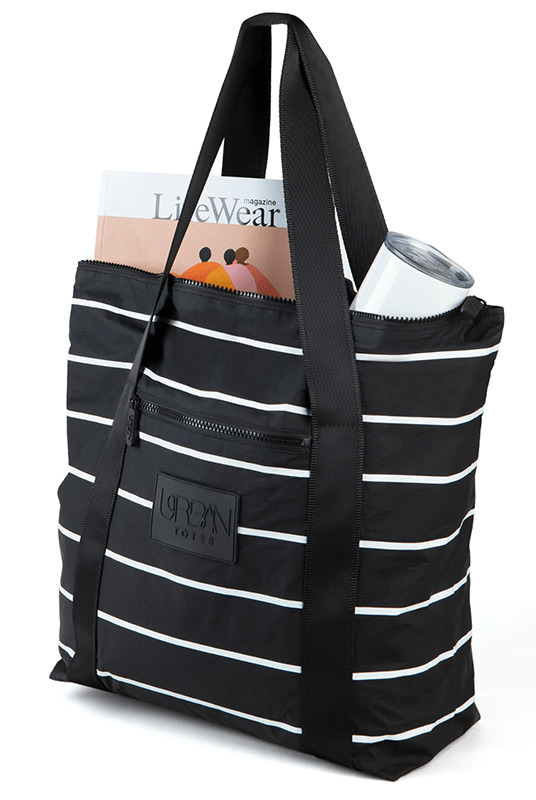
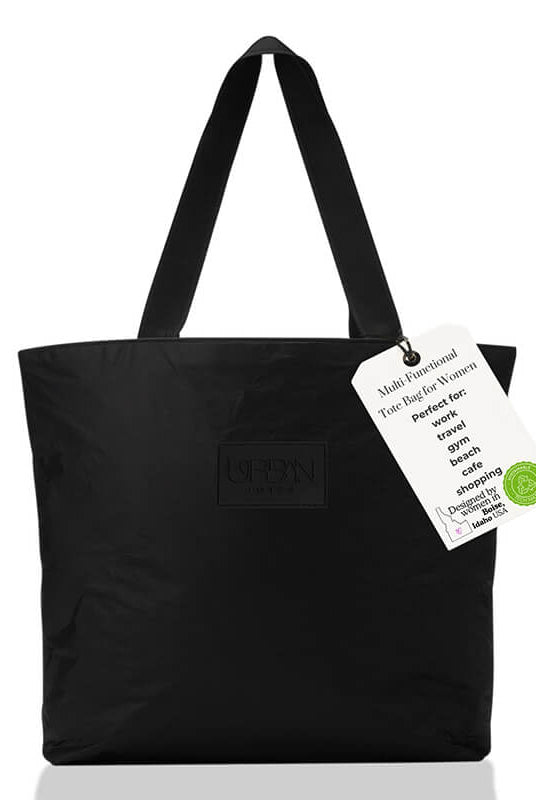
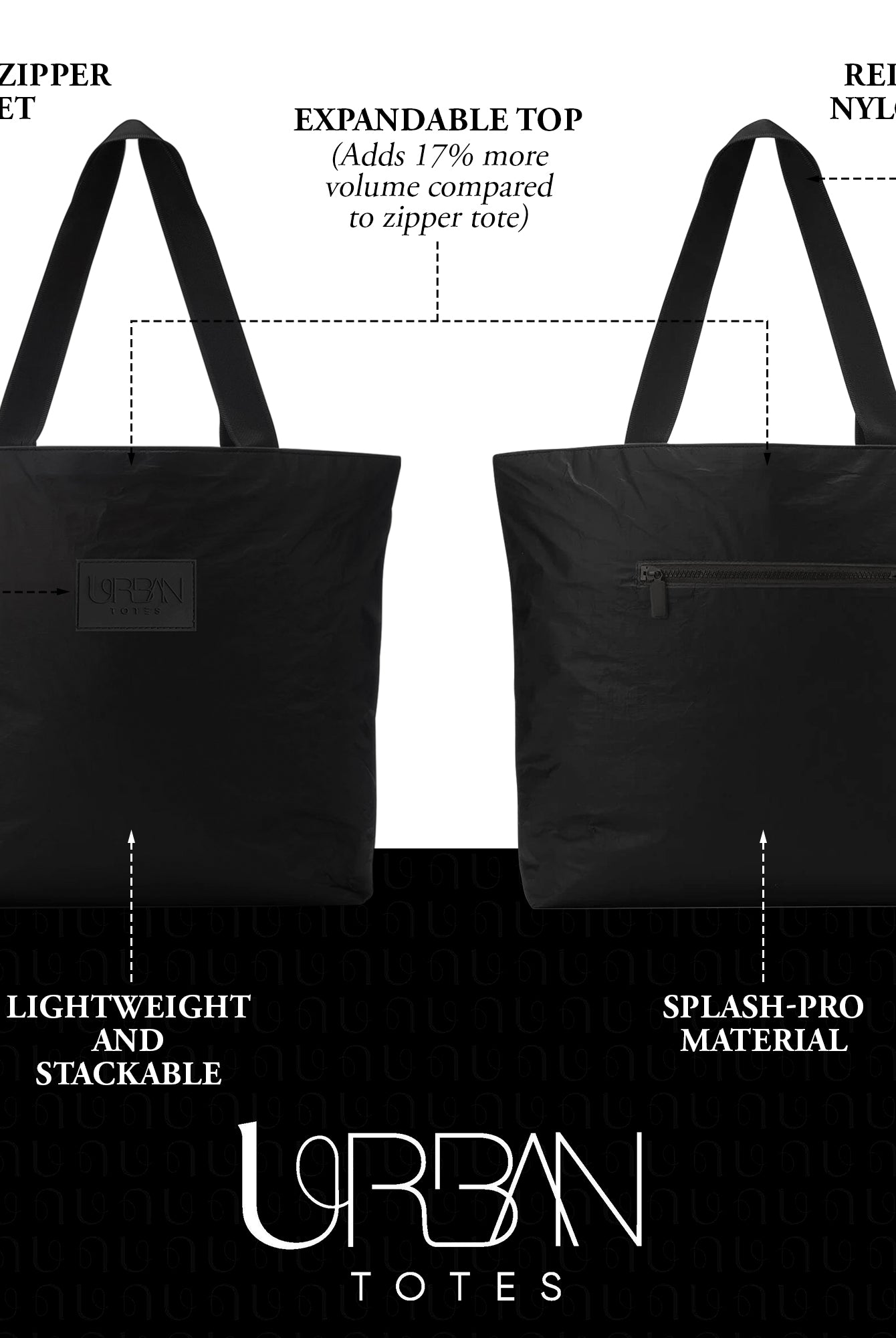
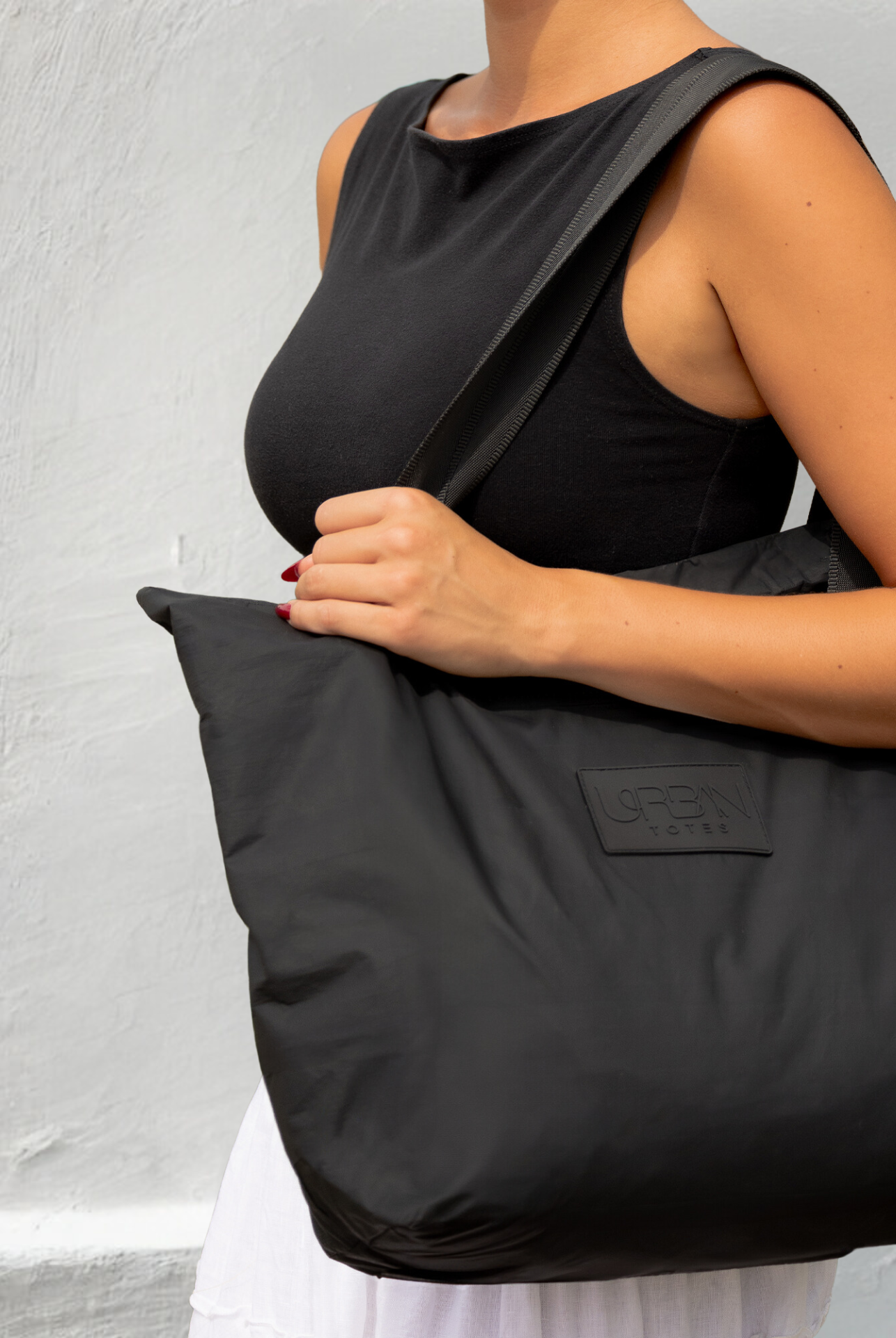
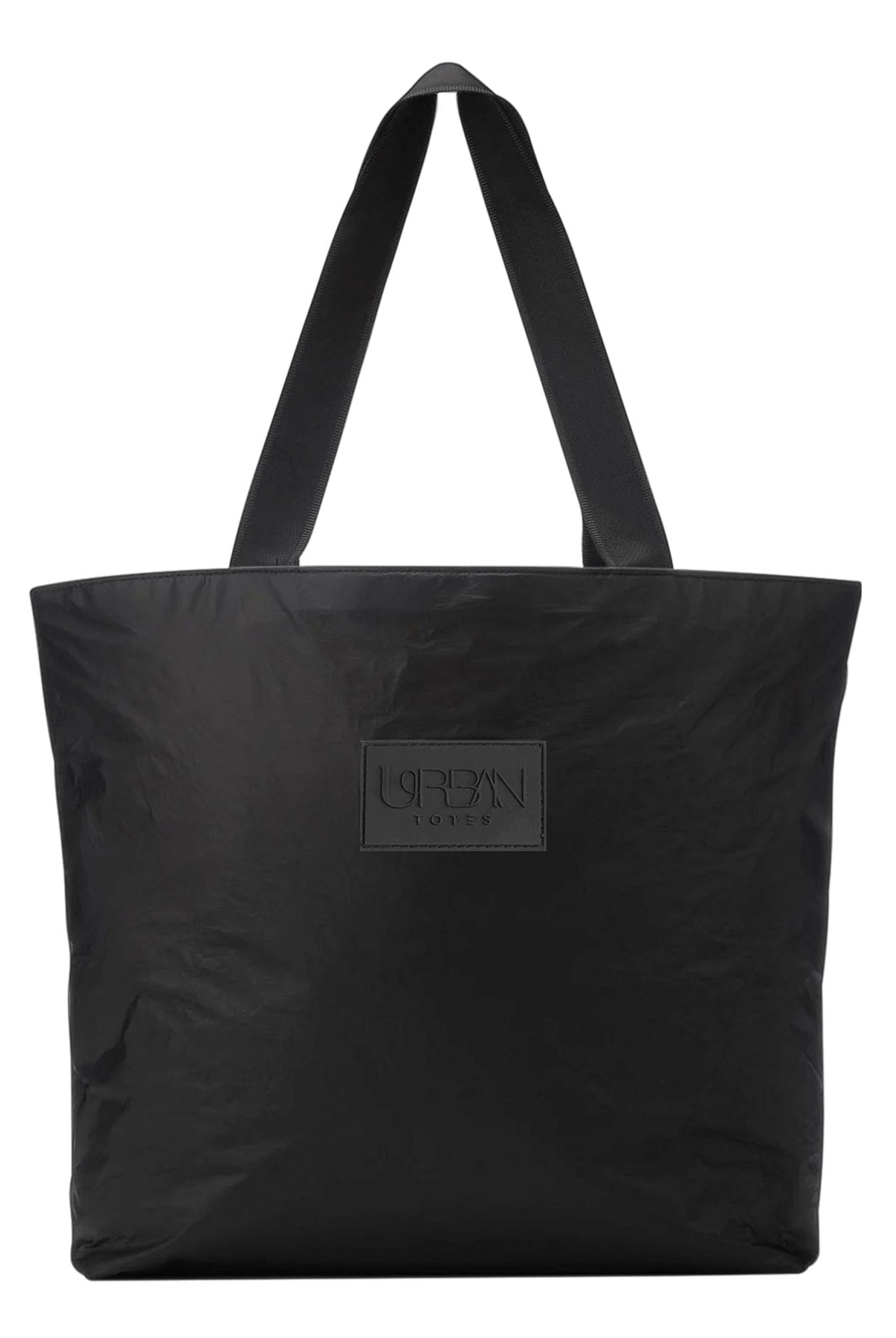
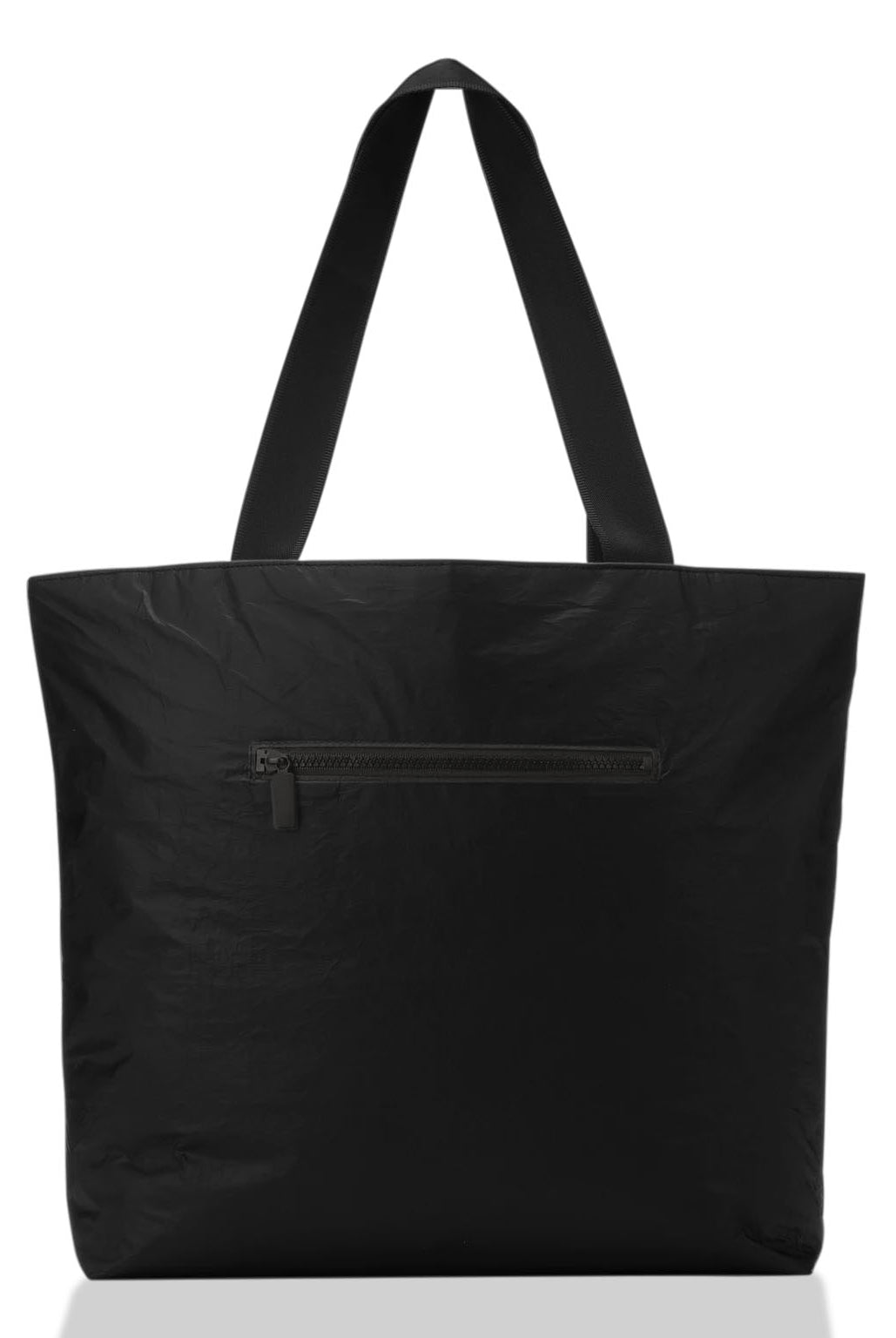
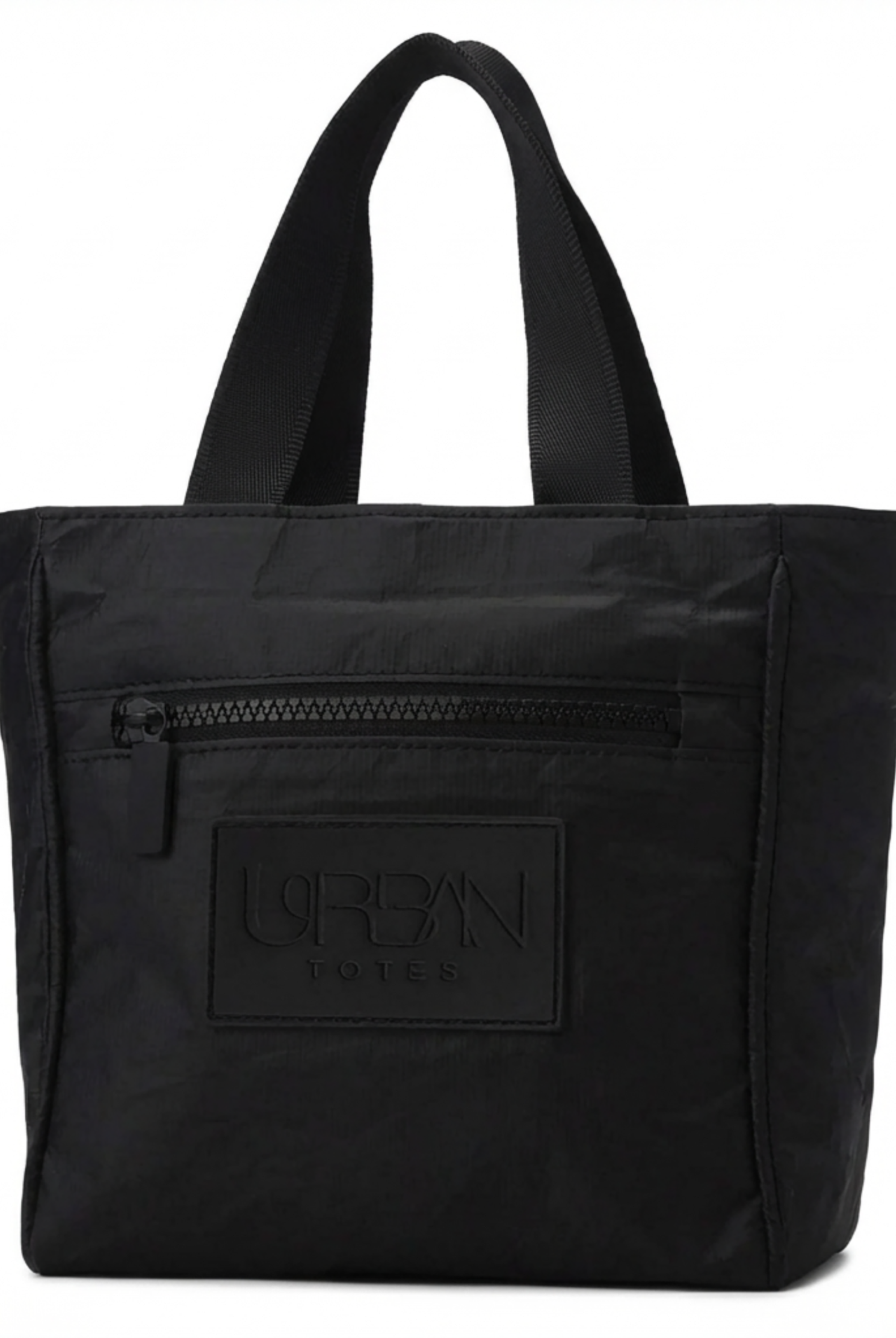
The zipper's surrounding details deserve the same attention. Check whether its ends are covered, whether the opening sits under a flap, and whether the stitching leaves visible gaps. A black tote with specialty zipper shows how closure hardware can become part of a tote's overall design. For comparing access, coverage, and everyday layouts, this zippered tote bag guide offers a useful reference.
Fabrics Coatings and Construction Details
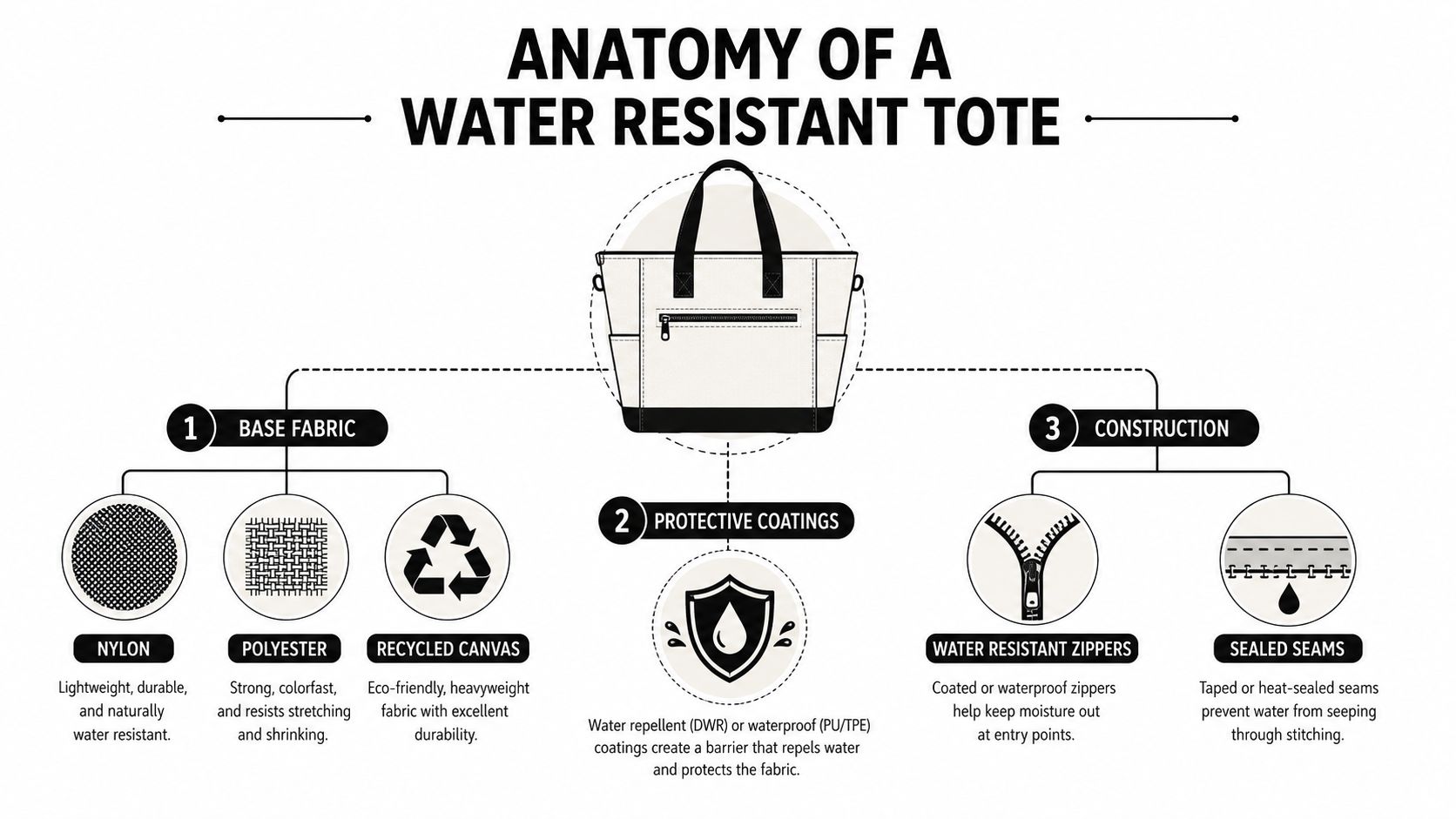
A tote can carry a “water-resistant” label and still leave damp marks inside. The base fabric, coating, and construction work as a system. Fabric affects feel and load handling, the coating helps droplets bead or move across the surface, and construction determines whether moisture enters through seams, corners, strap attachments, or the zipper opening.
Nylon ripstop feels smooth and light, with a subtle grid that helps limit tearing. Polyester is often slightly more structured and suits packable bags. Canvas has a familiar, substantial hand, while a coated version may feel rubbery on the reverse. TPU lamination bonds a flexible film to the textile, adding a moisture barrier without turning the tote into a rigid case.
A foldable-bag guide describes nylon ripstop as a common lightweight material and identifies TPU or DWR treatments as common water-resistance options. It also points to bartacking at stress points and quality zippers as construction details that matter (Travel Buzzy).
Coatings in plain language
DWR, or durable water repellent, works like a surface finish that encourages droplets to gather and roll away. PU coating forms a more continuous layer over the fabric. TPU lamination adds a flexible film bonded to the textile.
Neither treatment seals every opening. Needles create tiny holes during sewing, so seam placement and finishing still affect performance. Welded seams join materials with heat instead of needlework. Taped seams cover stitched areas with sealing tape, much like clear tape over a row of small pinholes.
Small details carry large loads
Inspect the handle attachments, bartacks, and bottom-panel stitching. These points receive repeated pulling and often reveal whether a tote was built for daily use or occasional light carrying. A well-coated body cannot compensate for loose stitching or an exposed seam.
For a material reference, you can browse Cirrus Solids Rain and compare the fabric's hand, backing, and coating description. This water-resistant material guide can help translate those specifications into practical expectations, such as how the surface may handle drizzle, splashes, or a damp item placed inside.
Organization Features That Earn Their Place
Water protection doesn't help much if everything inside becomes one damp, tangled pile. A useful tote separates the items you reach for constantly from the things you only need later. It also keeps electronics away from the bag wall, where condensation or a damp umbrella may rest.
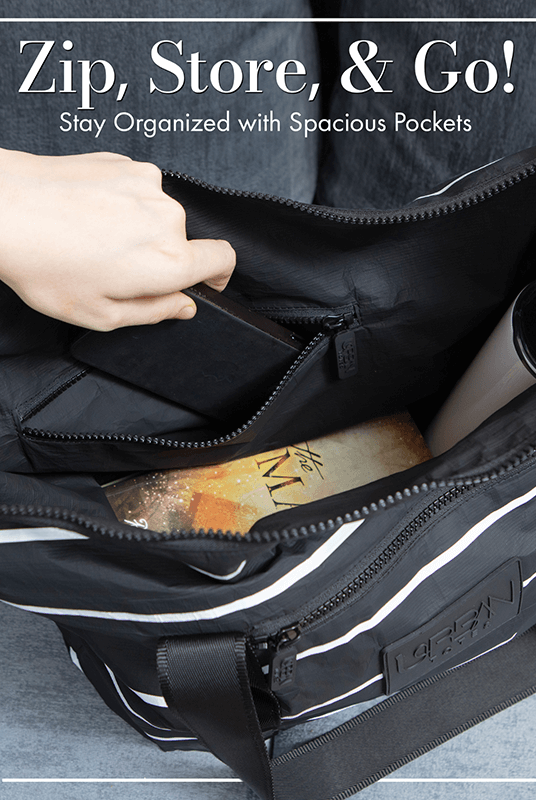
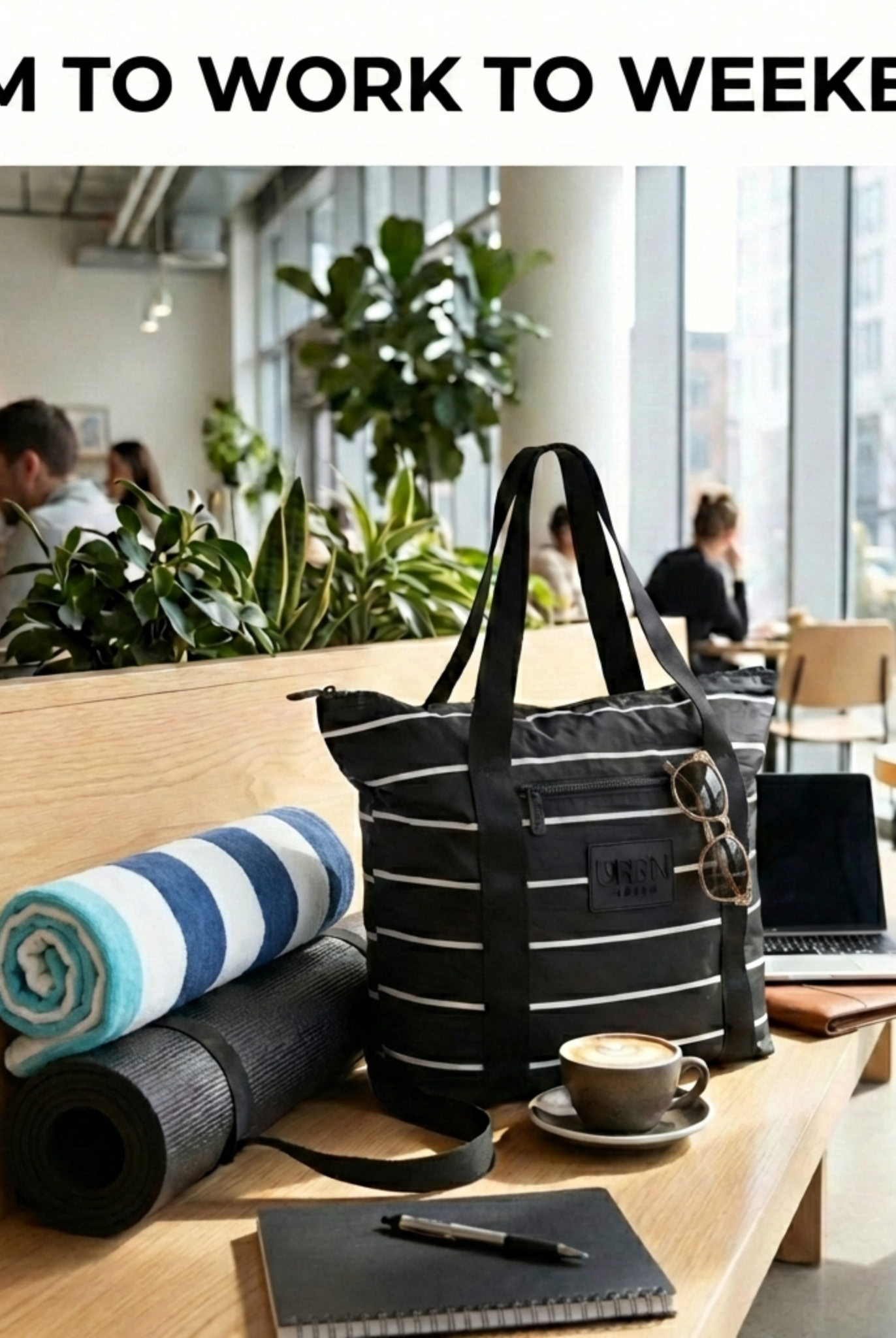
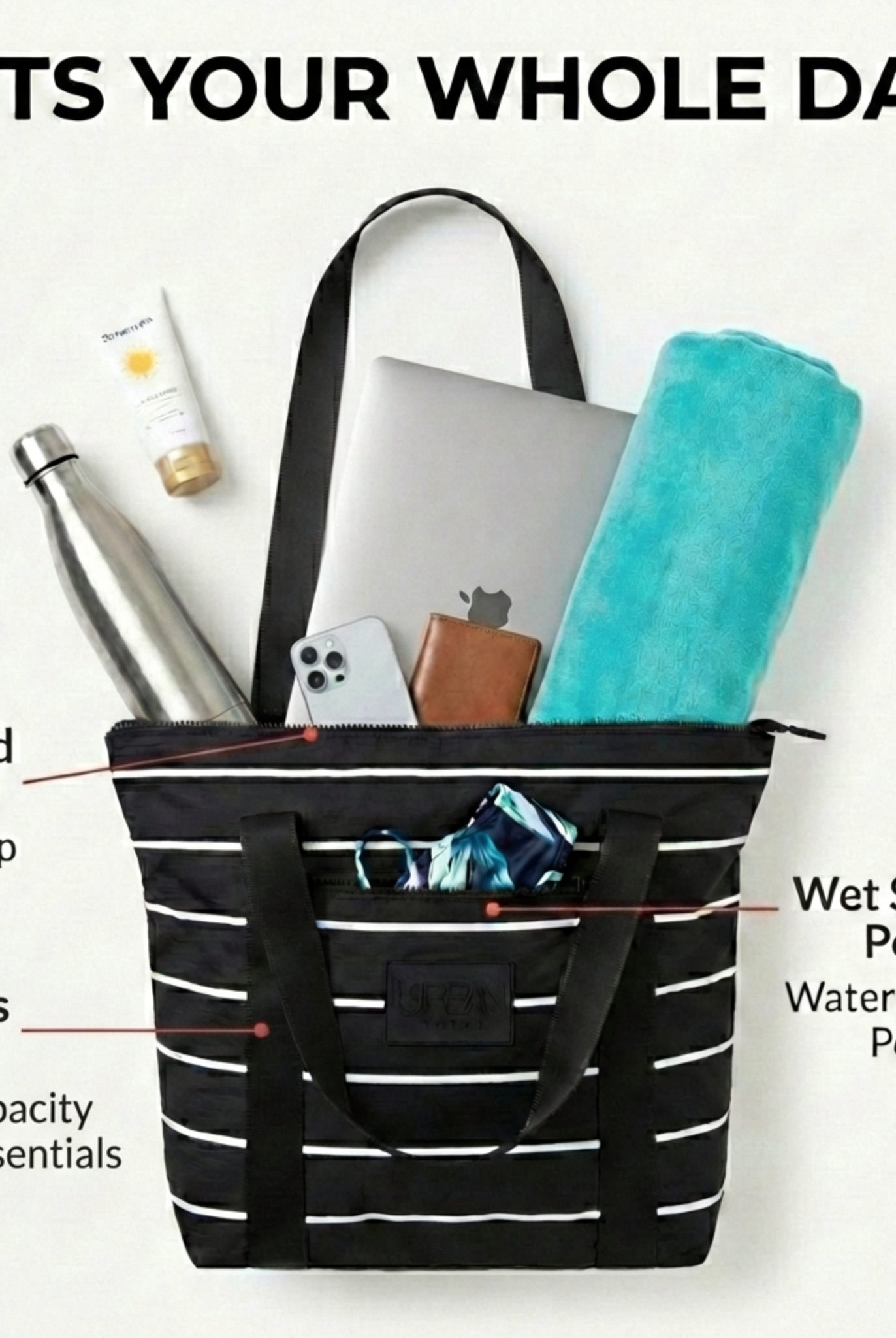
A commuter might prioritize a padded laptop sleeve, a key leash, and an exterior phone pocket. A parent may prefer a wipeable compartment for changing supplies, plus a separate space for snacks. A traveler benefits from a zippered passport slot and a pocket that keeps charging cables from disappearing beneath a sweater.
Build around your habits
- For work: Choose a sleeve that fits your device, an interior zipper pocket for small valuables, and handles that sit comfortably on your shoulder.
- For school pickup: Add an easy-access compartment for wipes, tissues, and snacks, with a closed interior space for paperwork.
- For gym days: Separate damp clothing or a bottle from clean layers, and look for lining that wipes clean.
- For travel: Keep identification, keys, and a phone in places you can reach without unpacking the main compartment.
The layout should feel intuitive when you're standing in an airport line or holding a child's hand. A pocket earns its place when you use it repeatedly, not because a product page lists a long feature inventory.
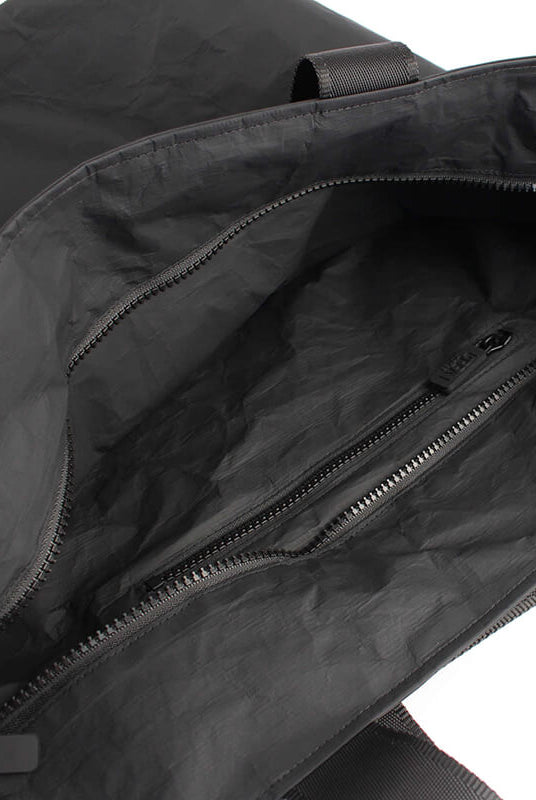
A multi-pocket, organized interior also supports water resistance indirectly. If a tote has dedicated sections, you're less likely to overstuff it, force the zipper out of alignment, or press delicate electronics against a wet item. The tote bag organizer with zipper guide offers another way to think about compartments as part of daily function rather than decoration.
Matching the Tote to Your Daily Moments
The right tote changes character depending on the day. A single versatile bag may move from school drop-off to a work meeting, then wait in the car for a grocery stop. The best choice begins with the moments that routinely create trouble.
The school run
A sudden drizzle threatens permission slips, library books, and a tablet. A coated tote with a top zipper gives those flat, important items a more protected place, while an insulated side pocket can keep a drink separate from papers. The parent carrying it doesn't need a technical expedition bag. She needs a lightweight, organized carryall that closes quickly while a child is climbing into the car.
The farmers market
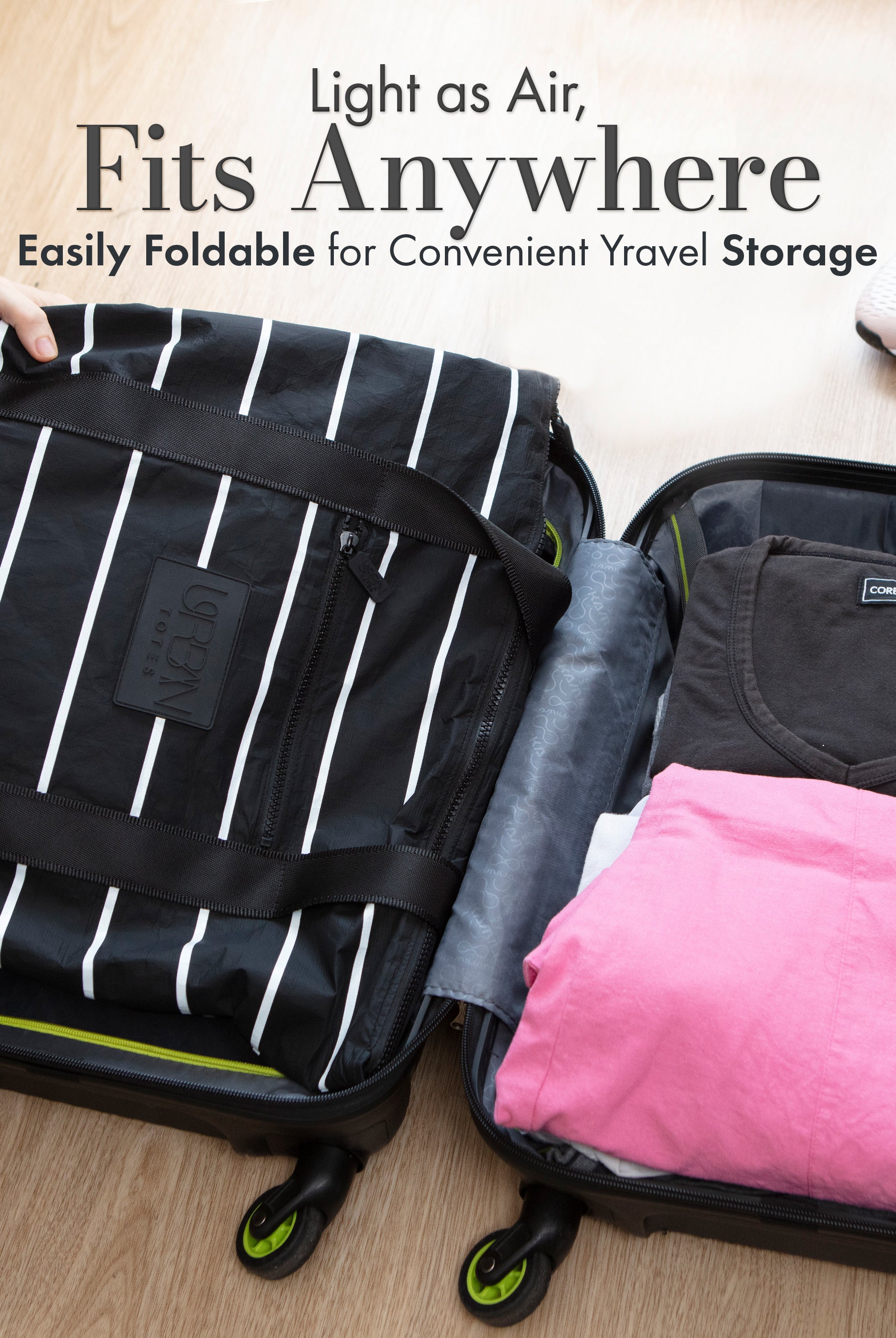
Market mornings call for flexibility. A lightweight nylon tote folds down easily when empty, then opens wide for greens, bread, and packaged goods. A zip closure can keep smaller purchases from sliding out as the bag shifts, although bulky produce may fit more comfortably in a tote with a generous opening.
The most useful construction details here are a reinforced base, comfortable straps, and pockets that keep keys away from food. A bag that cleans easily is especially practical after a morning around damp produce and melting ice.
The airport terminal
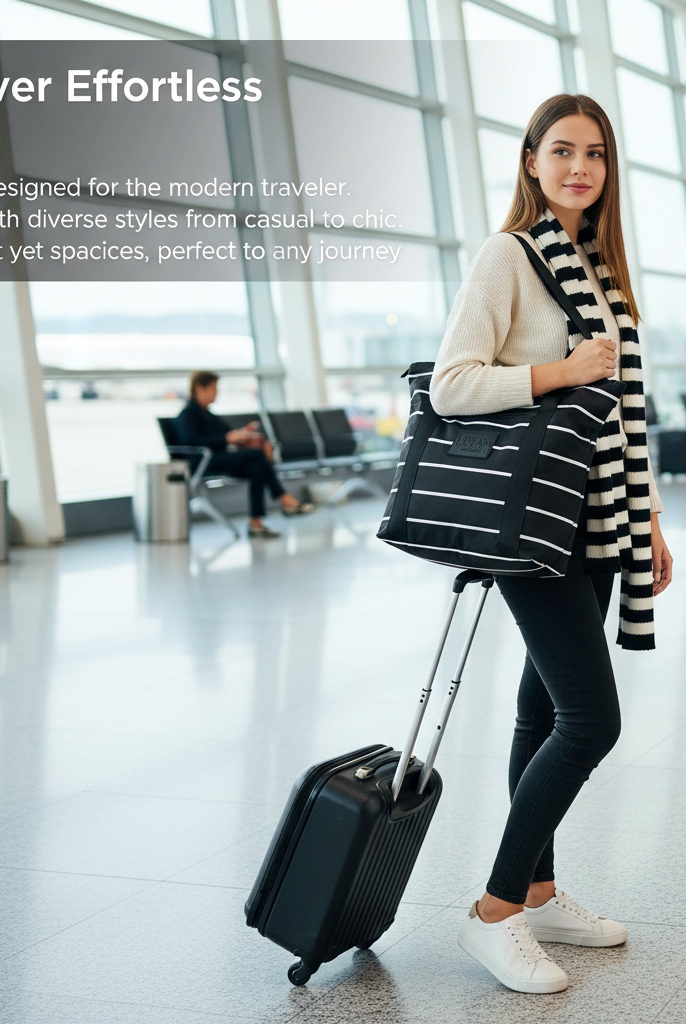
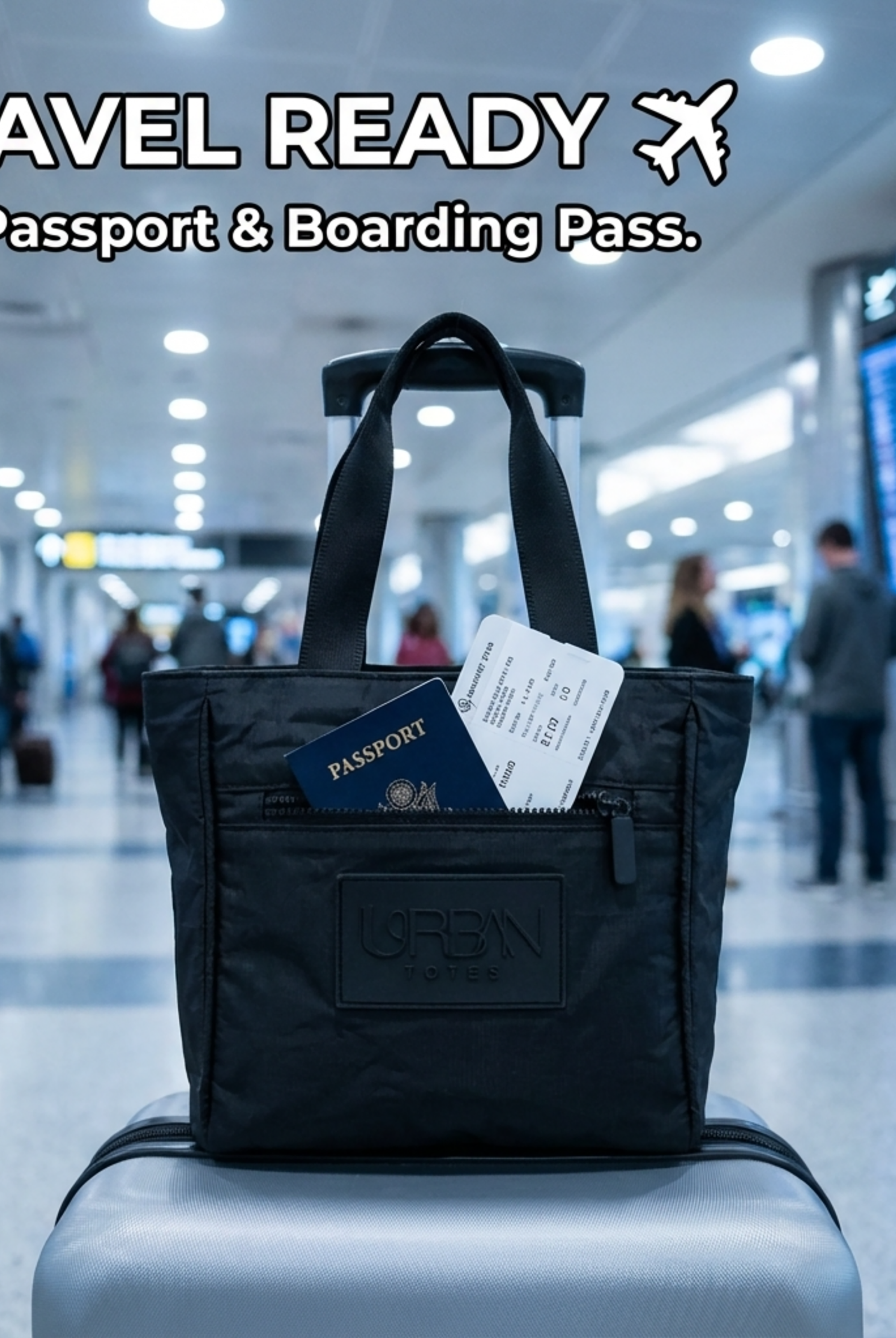
Gate changes reward organization. A structured tote with a trolley sleeve can sit over luggage, while a dedicated phone or passport pocket keeps essentials accessible. A water-resistant base helps when the bag rests on a damp floor, but a laptop should still have an internal sleeve or separate protective pouch for extended wet-weather exposure.
A zipper matters during security lines and crowded boarding areas because it keeps the main compartment contained. You can reach in when needed without worrying that loose items will spill while the tote is under a seat.
The beach
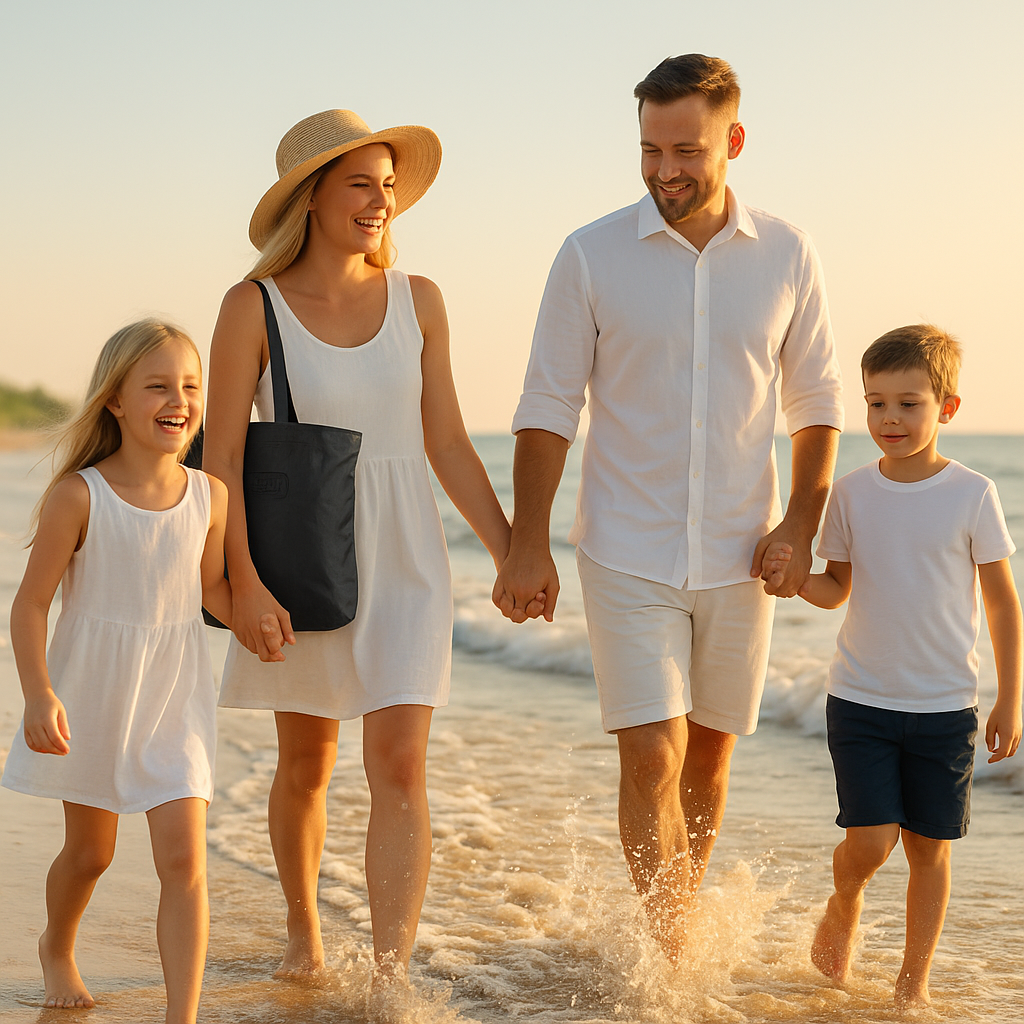
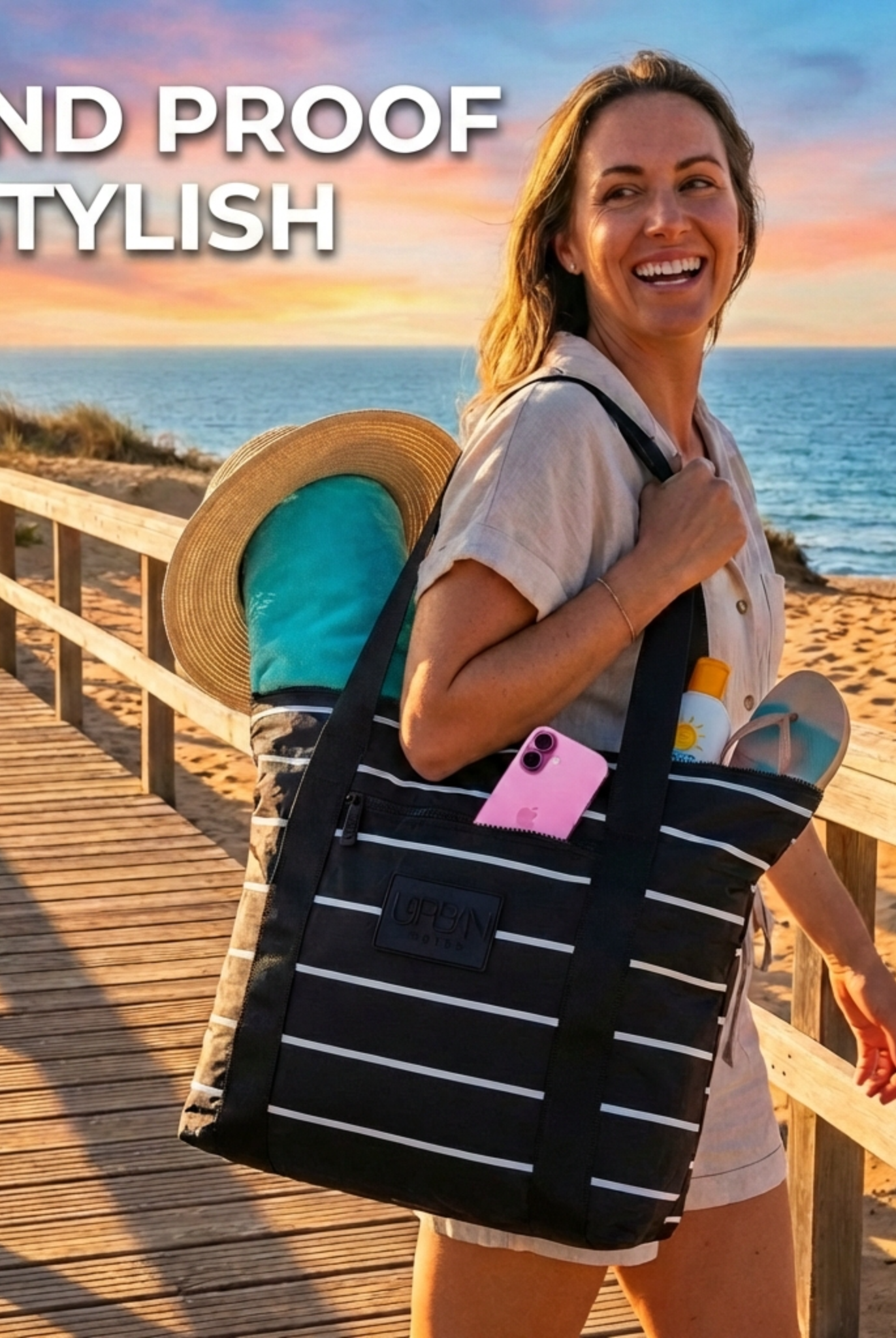
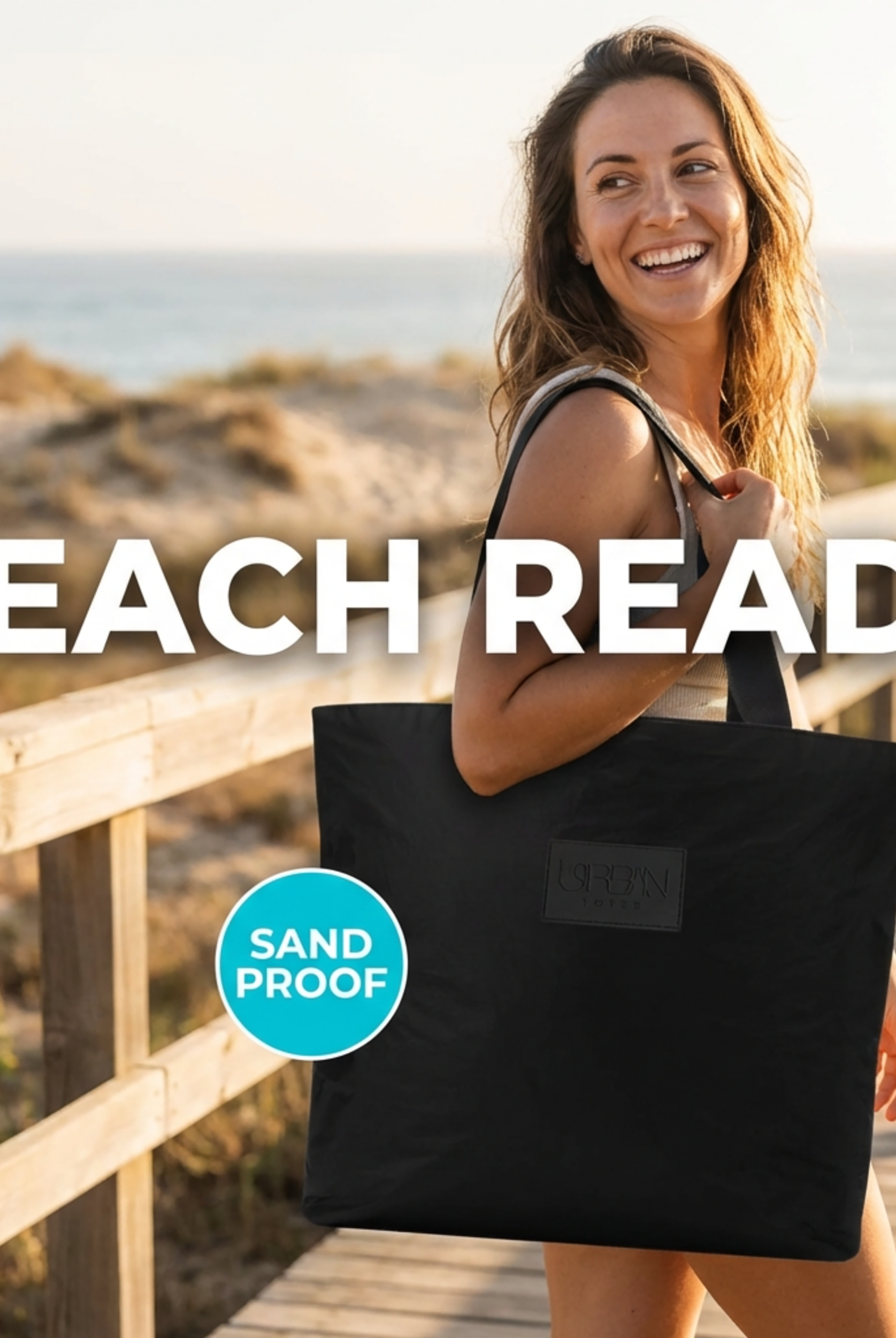
Beach days create a different challenge. Sand gets everywhere, towels stay damp, and dry clothes need their own space. A wipeable lined tote with separate compartments can keep wet or sandy items away from sunglasses, a cover-up, and a book.
Windblown sand also makes zipper maintenance important. Brush the track clean before closing it, and don't force the slider when grit catches. By the end of the week, the same water-resistant tote may have carried school supplies, market finds, airport essentials, and a beach towel. That's the point of a go-anywhere, foldable design.
Caring for Your Tote So It Lasts
Care protects the fabric finish, lining, seams, and zipper from the small buildup that makes a useful tote feel tired. A short weekly routine is easier than trying to remove a deep stain or stubborn grit after a long season of commuting and travel.
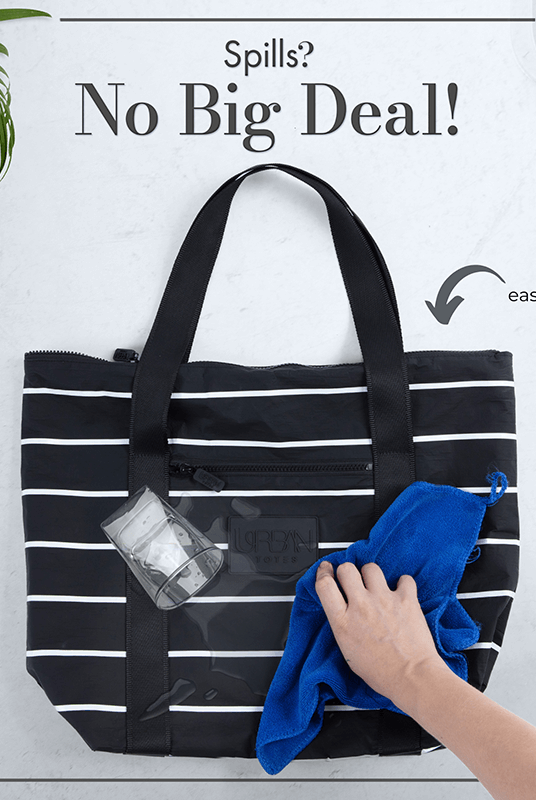
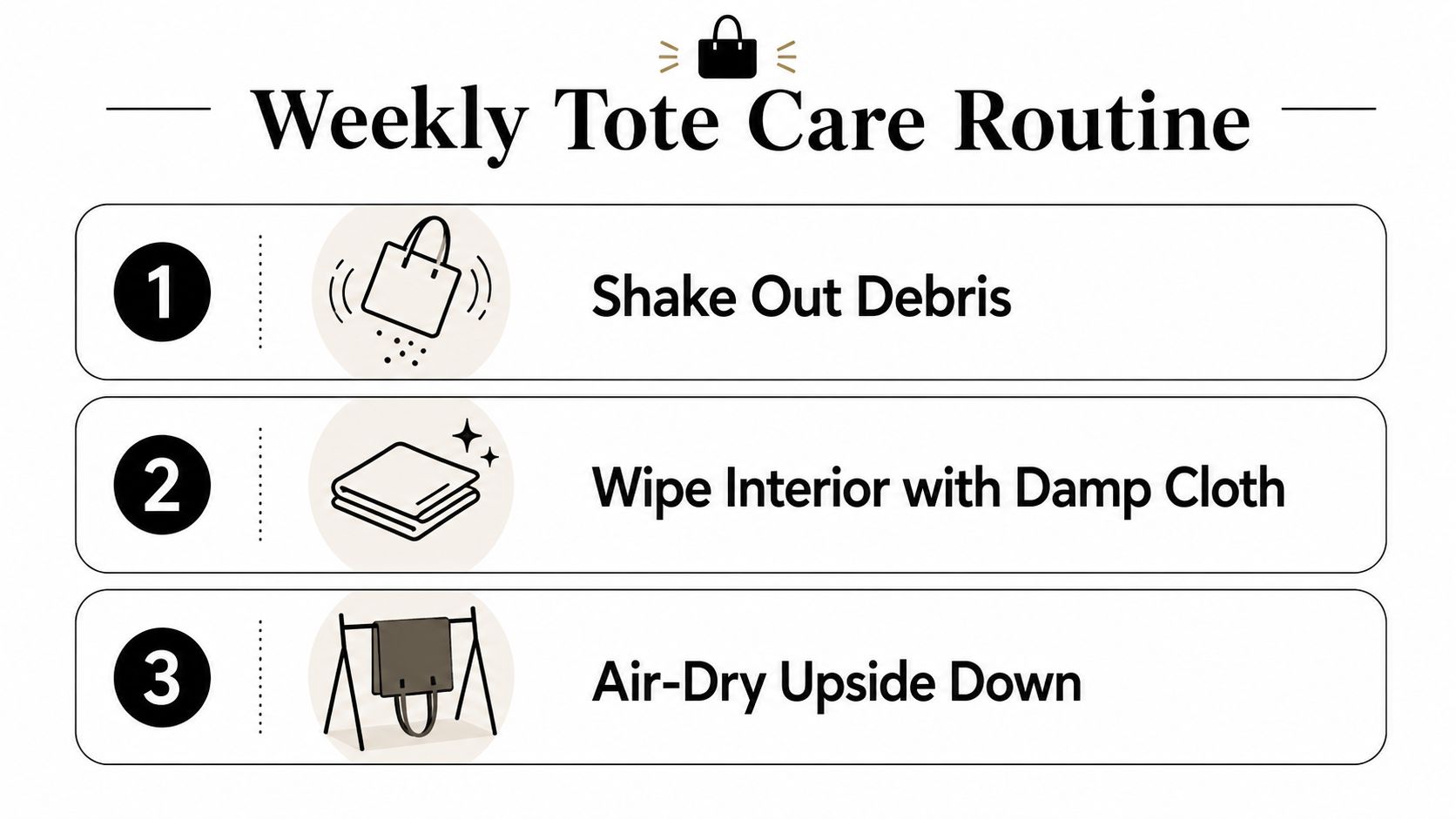
Start by emptying every pocket and shaking out crumbs, sand, and lint. Wipe the interior with a damp cloth, then leave the tote open or upside down so moisture can escape rather than settle into corners and seams.
Use a gentle cleaning method
For coated nylon or polyester, mild soap and cool water are usually a sensible starting point. Test a hidden area first, and avoid harsh scrubbing that can wear down a surface treatment. Machine washing isn't appropriate for every bag, especially one with laminated fabric, structured panels, or DWR-treated material, so follow the maker's care instructions before putting it in a washer.
If the zipper slider sticks, check for dirt before adding anything. A small amount of graphite from a pencil can help a stubborn track move more smoothly. A beeswax candle may also be used sparingly on suitable zipper teeth, but keep wax away from fabric and don't force the slider.
Zipper habit: Empty the tote before closing it, and avoid overstuffing. A warped coil places unnecessary strain on the slider and can prevent the teeth from meeting cleanly.
Store the tote unstuffed in a cool, dry place. Let it dry fully after a wet outing, and don't leave damp towels or clothing inside. If the surface no longer sheds droplets as it once did, a compatible spray-on DWR treatment may help refresh the finish, provided the product is suitable for the fabric.
The Urban Totes tote care guide offers a helpful reference for turning maintenance into a simple part of your routine.
Choosing the Right Tote for You
Start with one question: where will this bag live most of the time? The answer matters more than a long list of impressive-sounding specifications. A daily commuter, weekend traveler, farmers market shopper, and beach lover may all want a water-resistant tote bag with zipper, but they won't need the same balance of structure, access, and protection.
Match features to the main scene
For commuting and travel, prioritize a secure top closure, a coated or covered zipper, reinforced handles, and an internal sleeve for electronics. If you expect sustained heavy rain, look for clearly described seam treatment rather than assuming the zipper solves everything.
For market runs, lighter coated nylon, comfortable shoulder straps, and exterior slip pockets may matter more than a rigid frame. The bag should fold or pack easily when you're not using it, yet hold its shape enough that produce doesn't collapse into a corner.
Beach shoppers should look for a wipeable lining, a reinforced base, and compartments that separate damp towels from dry essentials. A zipper can help contain the main load, but sand-friendly hardware and easy cleaning will determine whether the tote stays pleasant to use.
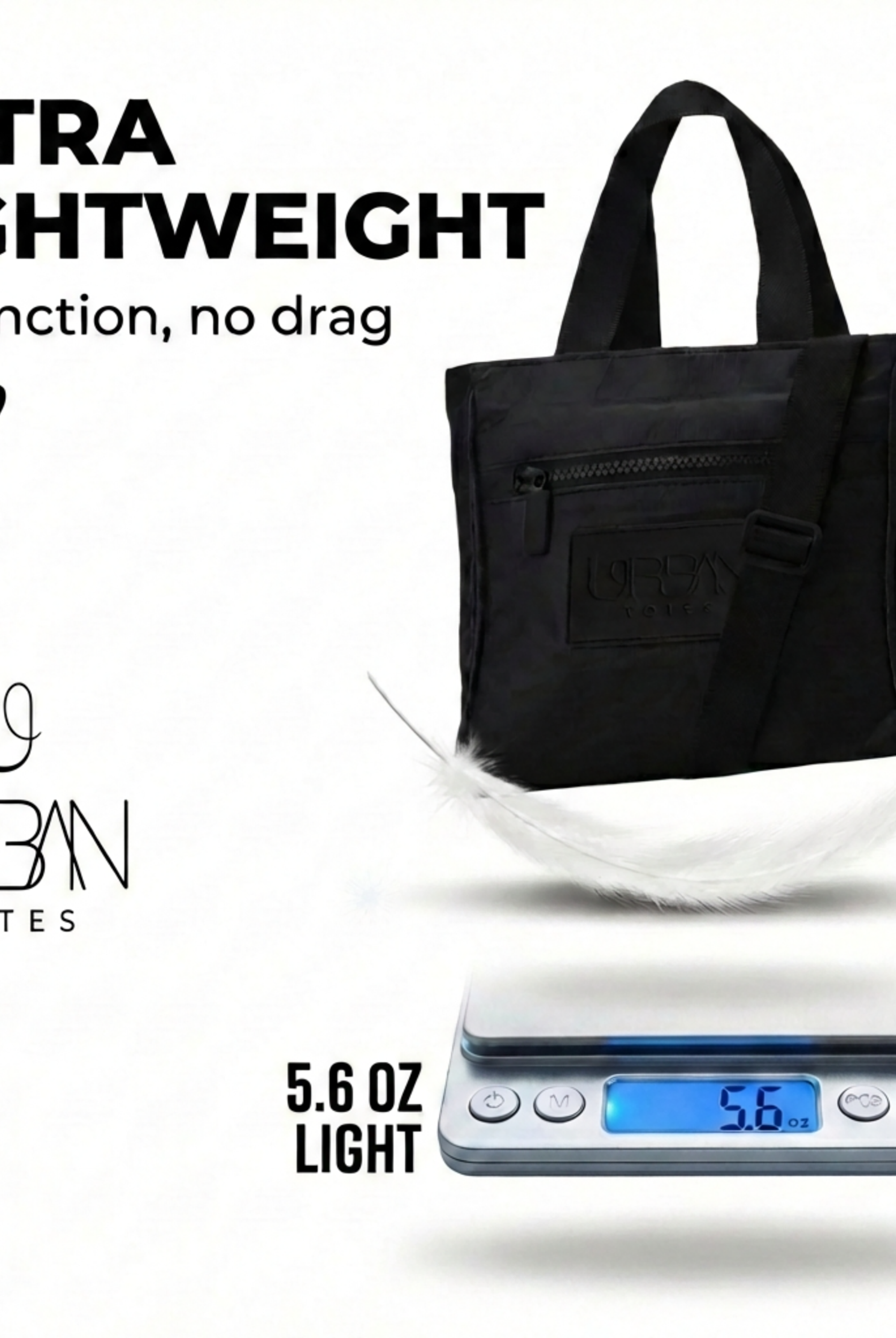
A lightweight material can reduce bulk, but it changes carrying limits. Nylon and ripstop polyester are described as weighing 30 to 50% less than equivalent canvas or leather, while a full-length YKK zipper adds about 0.15 to 0.2 pounds compared with an open-top design (The Wearify). Those details help explain why a bag can feel light while still needing sensible load management.
Strap drop, bottom reinforcement, pocket placement, and closure quality deserve equal attention. For additional beach-specific considerations, the Blitz Surf Shop tote guide provides a useful comparison point.
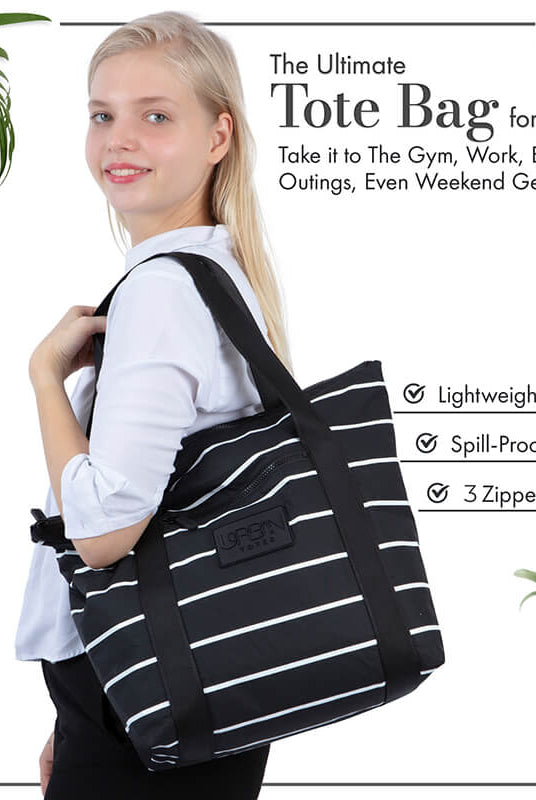
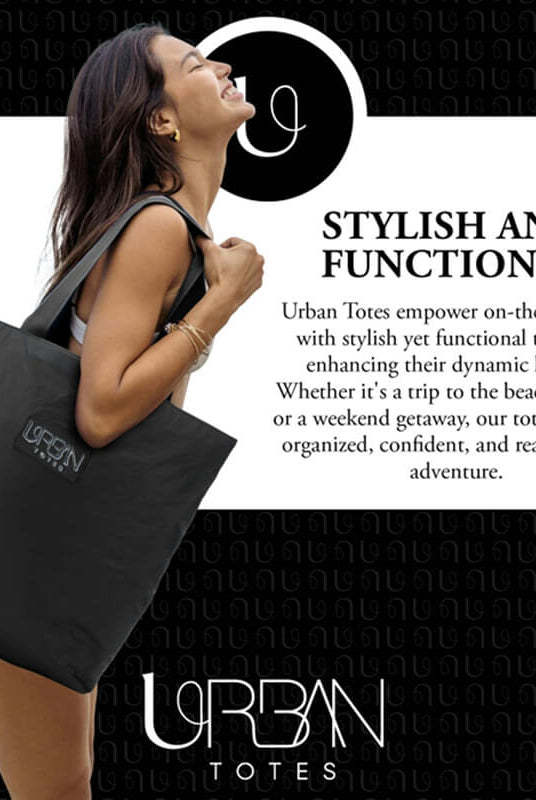
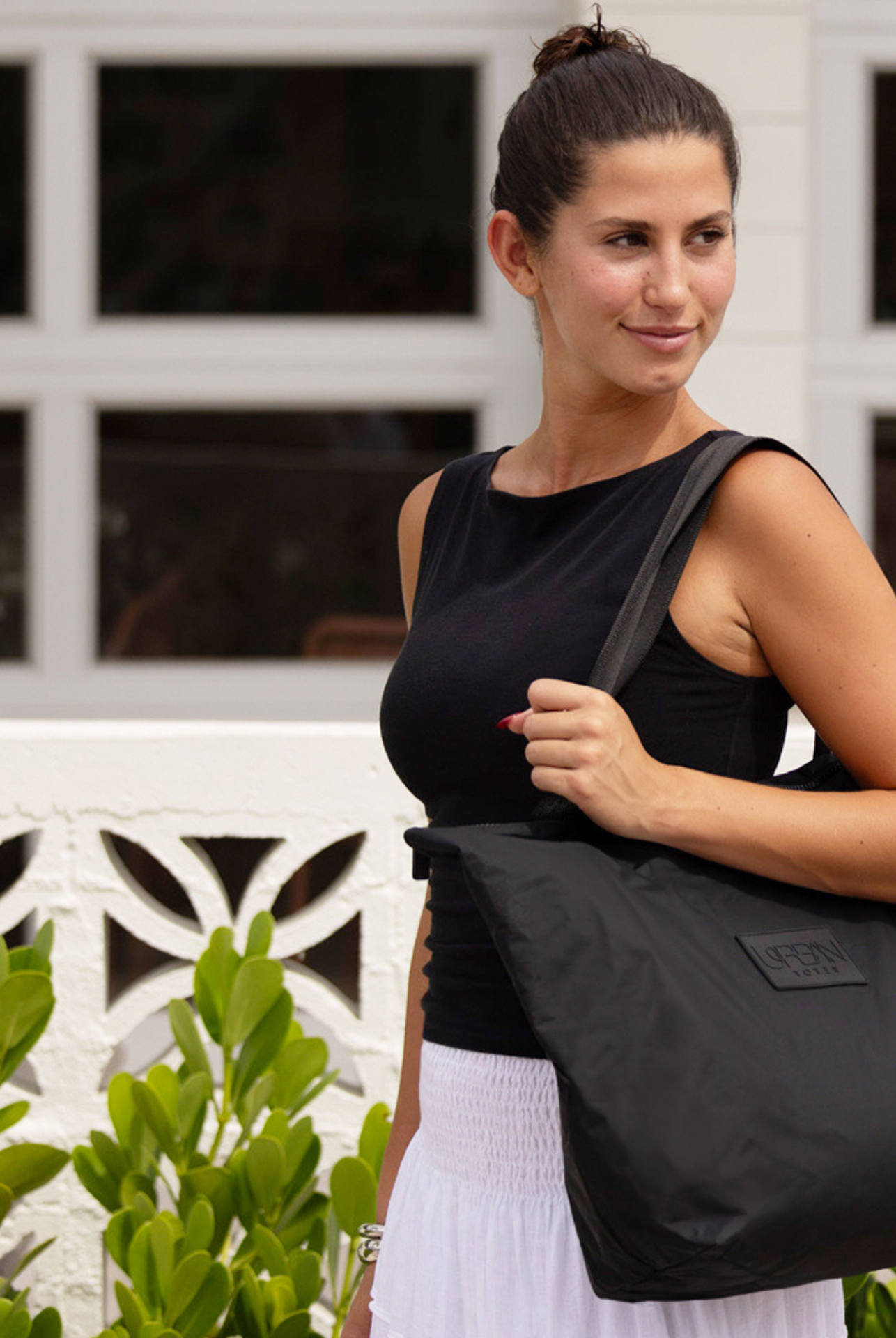
Urban Totes is a woman-owned Boise-made brand offering lightweight, packable, foldable tote and crossbody styles with zipper closures, multiple compartments, and water-resistant materials. Its designs suit everyday carry, commuting, errands, gym sessions, beach days, and travel when you want fashion and function in the same bag.
Choose the tote that matches your real routine, whether that means school drop-off, a rainy commute, or a spontaneous weekend away. Explore the thoughtfully designed, water-resistant collection at Urban Totes and find a go-anywhere bag ready to tote everything your day brings.