You're probably doing this the same way most of us do. One tab open with a tote bag you love, one hand on your coffee, half your brain already planning school pickup, a grocery stop, and that weekend flight you still haven't packed for. Then you spot the product tag or description: made from recycled fabric.
It sounds good. It feels like the kind of choice you want to make. But if you're practical, you also pause for a second. Does that mean old clothes were turned into this bag? Is it going to hold up? Will it still feel stylish, lightweight, and polished, or will it feel like you traded function for principle?
Those are fair questions. For women who need a bag to move from airport terminal to farmers market to beach chair without falling apart or looking bulky, the material matters. A lot. Recycled fabric isn't just a label. It's a real category of textiles with real strengths, real limits, and a very direct connection to the kind of go-anywhere bag you enjoy carrying.
Table of Contents
- That "Recycled Fabric" Tag on Your New Favorite Bag
- The Real Meaning of Recycled Fabric
- How Plastic Bottles Become Beautiful Fabric
- Common Types of Recycled Fabric
- How We Use Recycled Fabric in Your Go-Anywhere Bag
- An Honest Look at the Pros and Cons
- Your Recycled Fabric Questions Answered
That "Recycled Fabric" Tag on Your New Favorite Bag
A lot of shoppers meet recycled fabric in a very ordinary moment. You find a tote that looks chic enough for brunch, sturdy enough for a plane seat and overhead bin, and practical enough for sunscreen, snacks, chargers, and one mystery item your kid insists on bringing. Then you notice the line on the tag.
That's when curiosity and skepticism show up together.
You might wonder if “recycled” means it came from old T-shirts. You might also wonder if it's code for rough texture, lower quality, or something that won't survive your everyday carry routine. If you've ever had a bag lose its shape, soak through in light rain, or become a black hole of loose items, you know why material claims deserve a closer look.
Recycled fabric can be a smart choice. But the useful question isn't whether the label sounds good. It's what the fabric is made from, how it was processed, and whether that matches the life you actually live.
For bags especially, that matters. A stylish tote still has to perform. It needs to feel lightweight, stay organized, handle repeated use, and work across real settings like school drop-off, errands, travel, and beach days. That's why recycled materials in bags have become such a practical topic, not just a trend. If you want a broader look at how this shows up in accessories, Urban Totes has a helpful read on recycled material bags.
The good news is that recycled fabric isn't one thing. It's a category. Some options are especially well suited to water-resistant, durable, packable, foldable bags. Others work better in soft apparel or home textiles. Once you understand that difference, the label starts making a lot more sense.
The Real Meaning of Recycled Fabric
Recycled fabric is textile material made from existing waste instead of newly produced raw material. That waste might be discarded plastic, factory scraps, or used textiles that are processed into new fiber, yarn, or woven fabric.
What the term covers
For a bag buyer, the useful question is simple. What was this fabric before it became fabric?

The answer matters because "recycled fabric" is a broad label. It can refer to polyester made from used plastic bottles, nylon recovered from industrial waste, or fibers reclaimed from old garments and offcuts. Those inputs do not behave the same way in finished products, and they do not involve the same level of sorting, cleaning, and reprocessing.
For bags, the material you will see most often is recycled polyester made from plastic bottles. Textile Exchange notes that recycled polyester makes up the large majority of recycled fiber production, while recycled fibers from textile waste remain a much smaller share. That gap explains why many recycled bags start with bottles rather than old clothes.
This distinction is not a problem. It is the honest definition.
Bottle-based recycled polyester is widely used because the input is more consistent than post-consumer clothing. Old garments come with mixed fiber blends, zippers, coatings, prints, elastic, and stitching that are difficult to separate cleanly. From a design and manufacturing standpoint, consistency matters. It helps mills produce fabric with predictable strength, weight, and finish, which is exactly what a daily-use tote needs if it has to stay light, resist splashes, and hold its shape through errands, commuting, and travel.
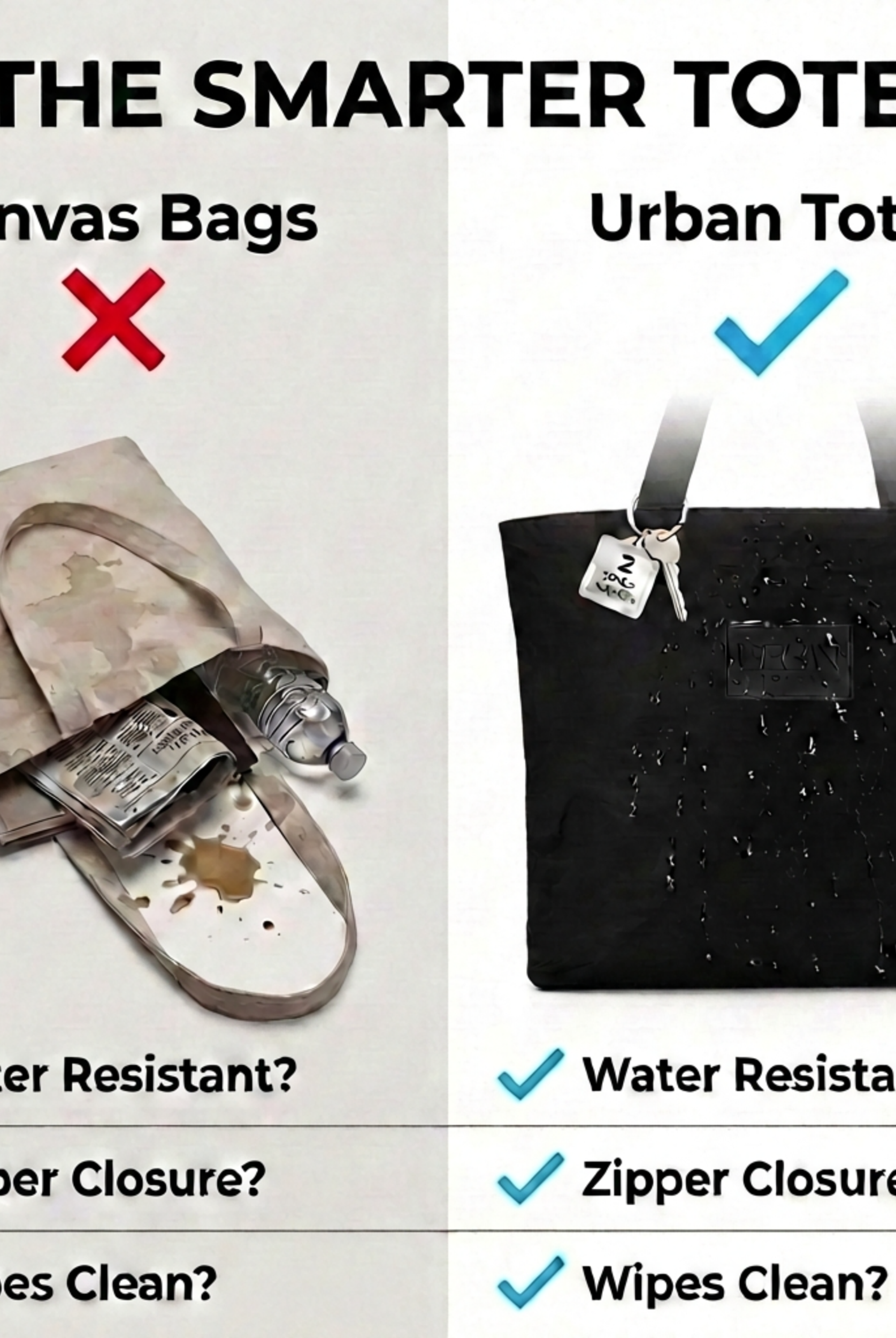
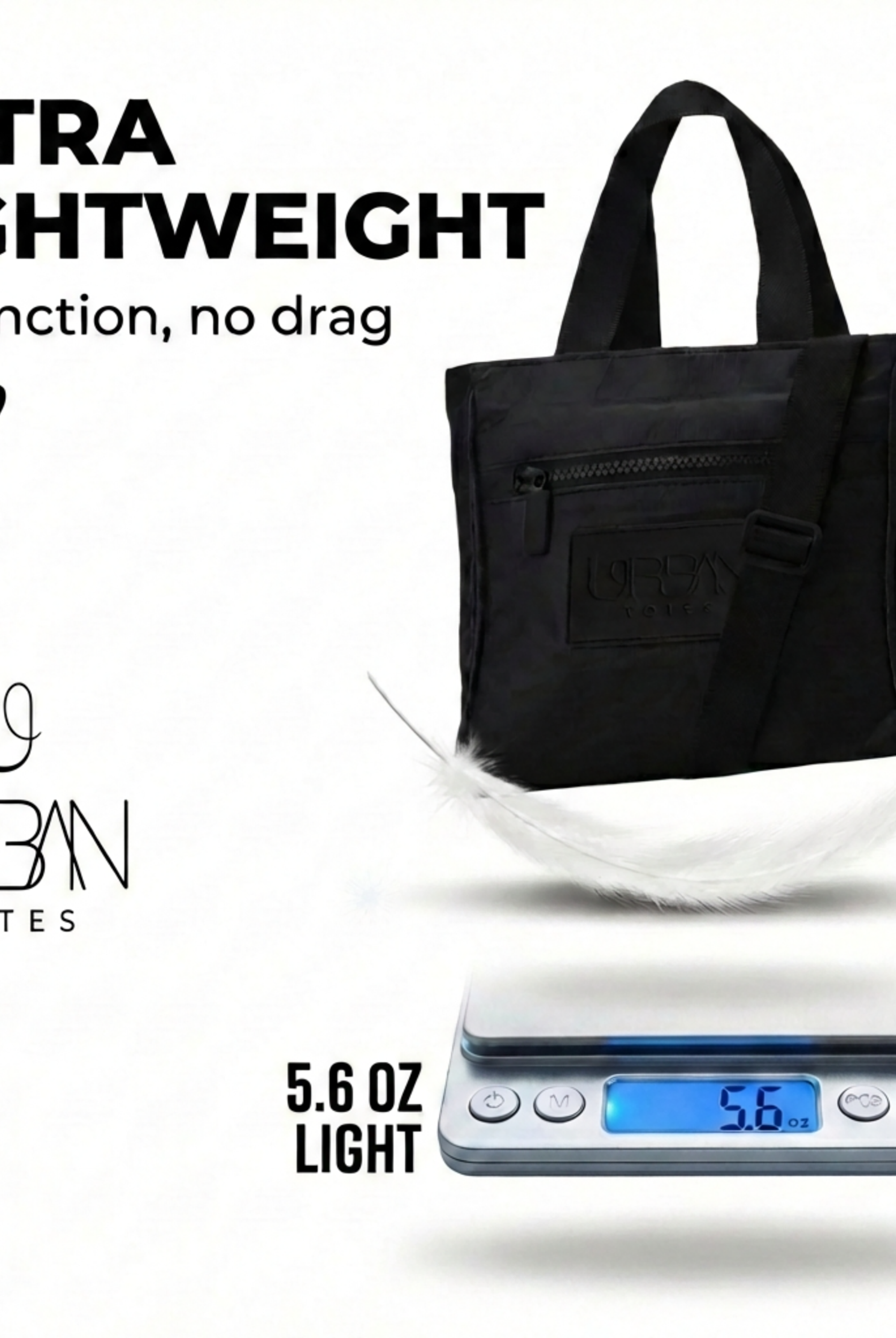
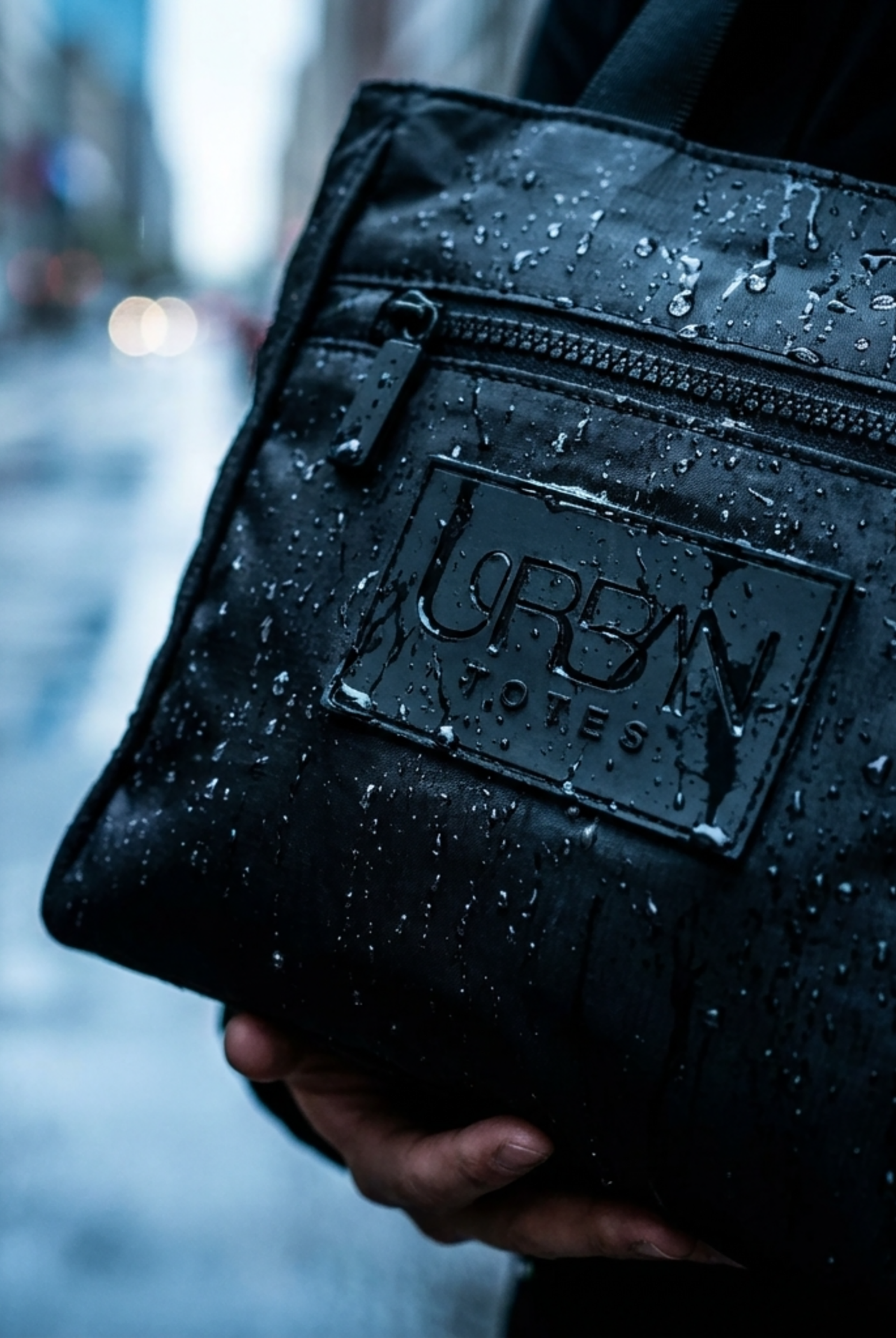
That is also why recycled fabric can feel technical rather than rough or flimsy. In a well-made tote, the benefit shows up in real use. The bag is easier to carry all day, easier to wipe down, and better able to handle the wear that comes from being packed, set on the car floor, or caught in light rain. If you are comparing materials across sustainable tote bags, this is one of the first distinctions worth checking.
The same need for clear sourcing applies in adjacent product categories too. Brands that print on recycled or lower-impact materials face similar questions about inputs, processing, and performance, which is why a sustainable print on demand guide can be a useful companion read.
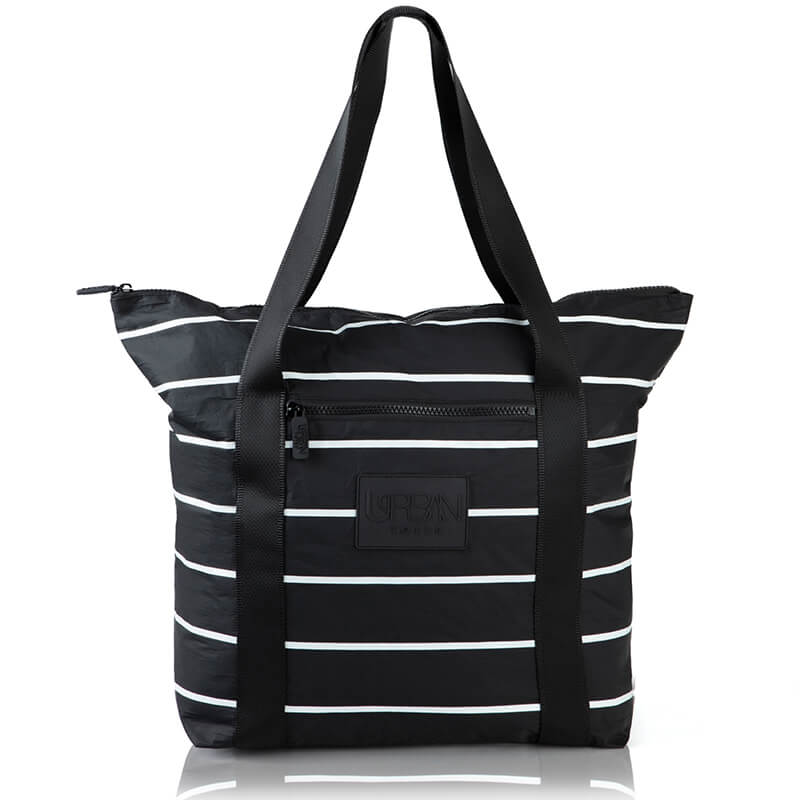
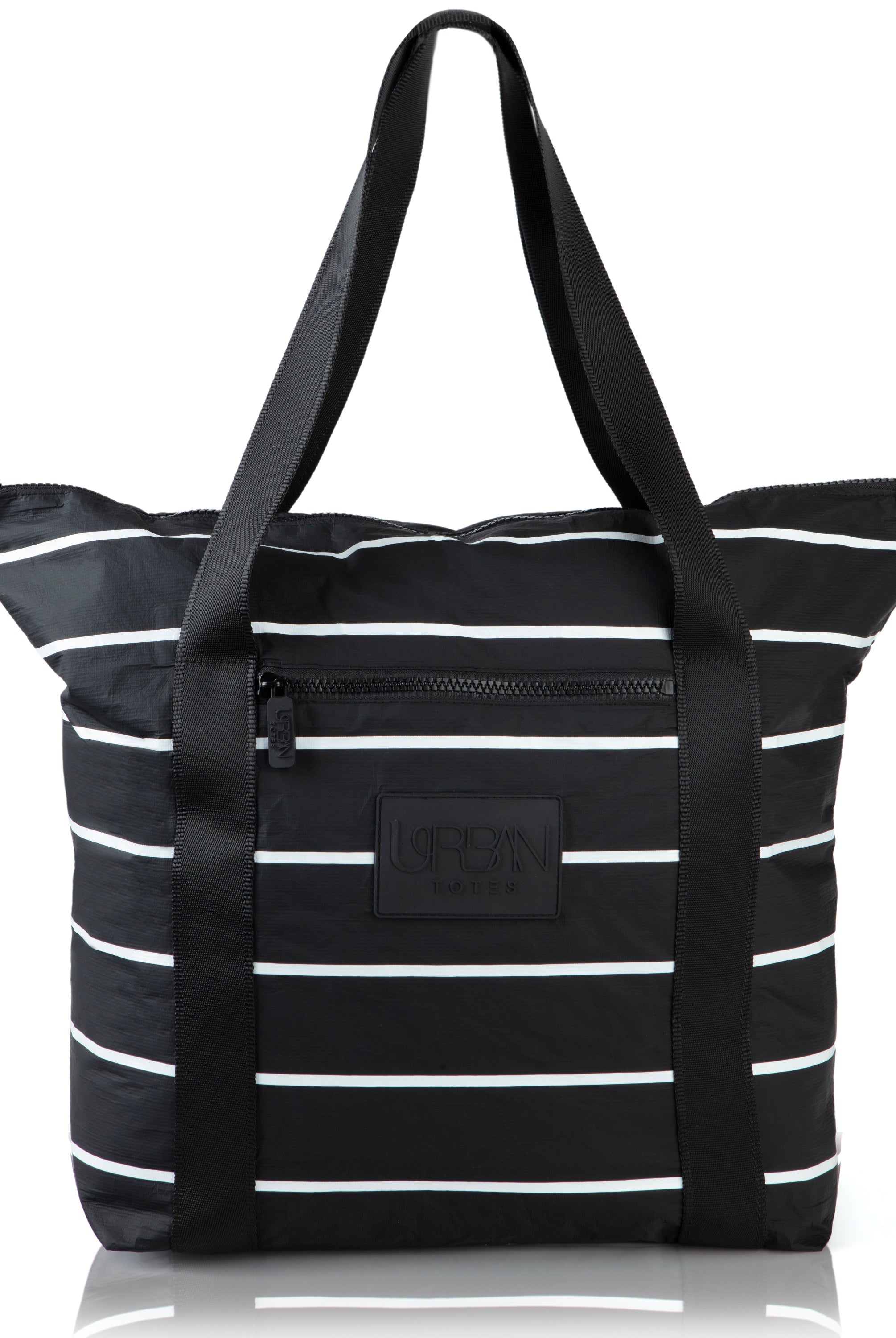
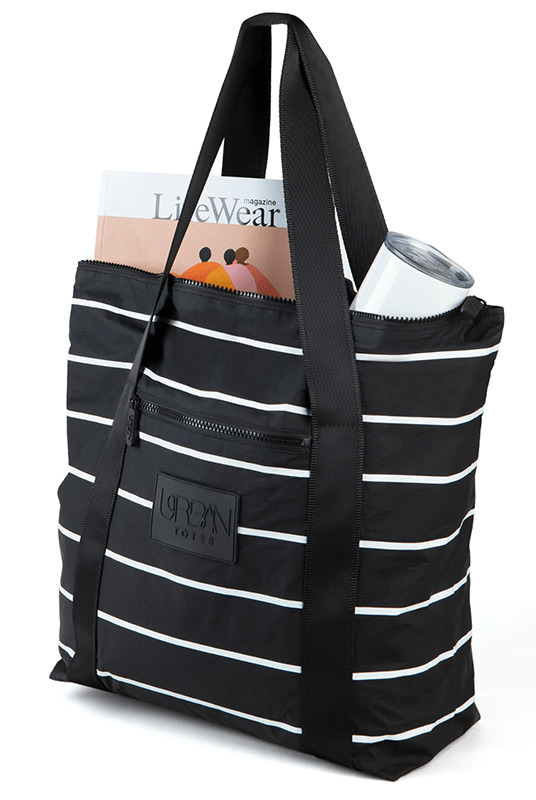
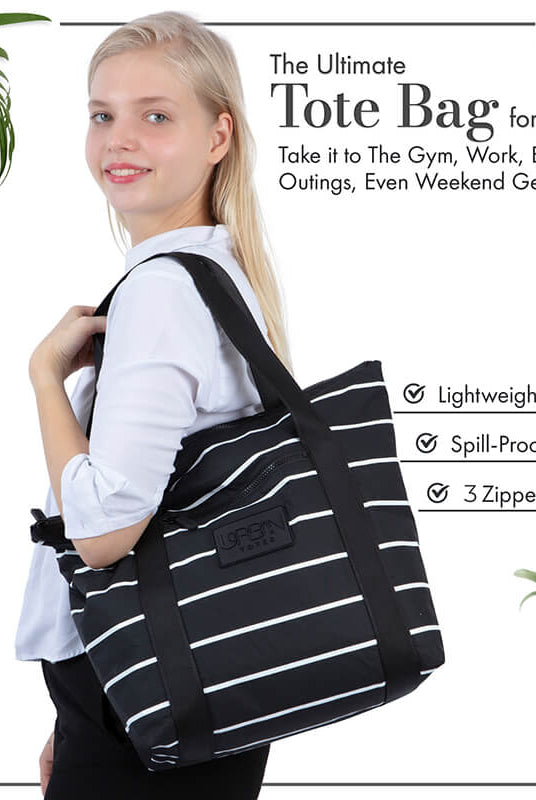
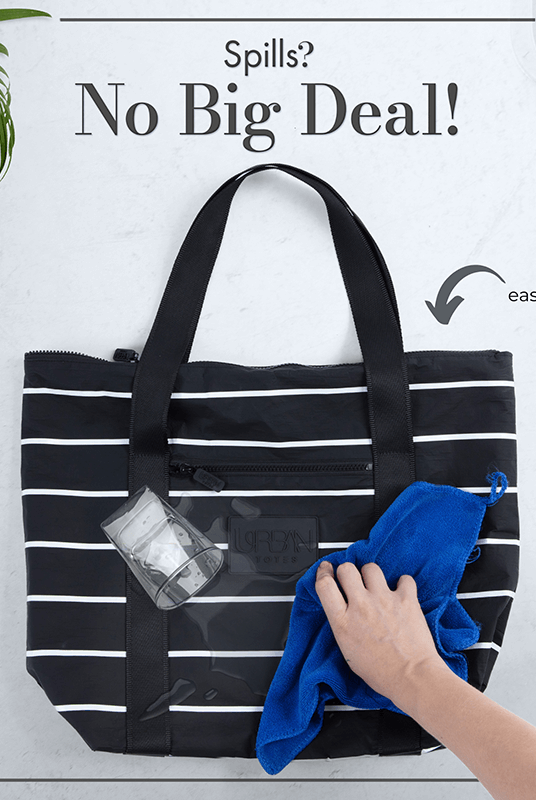
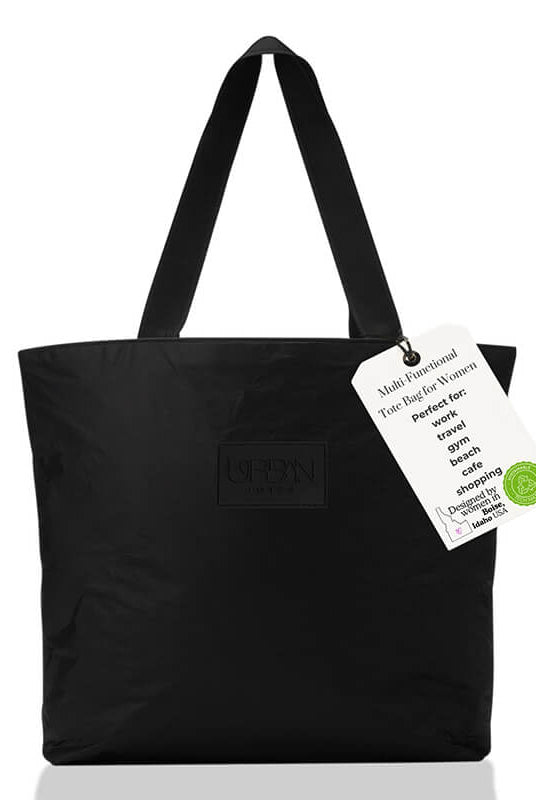
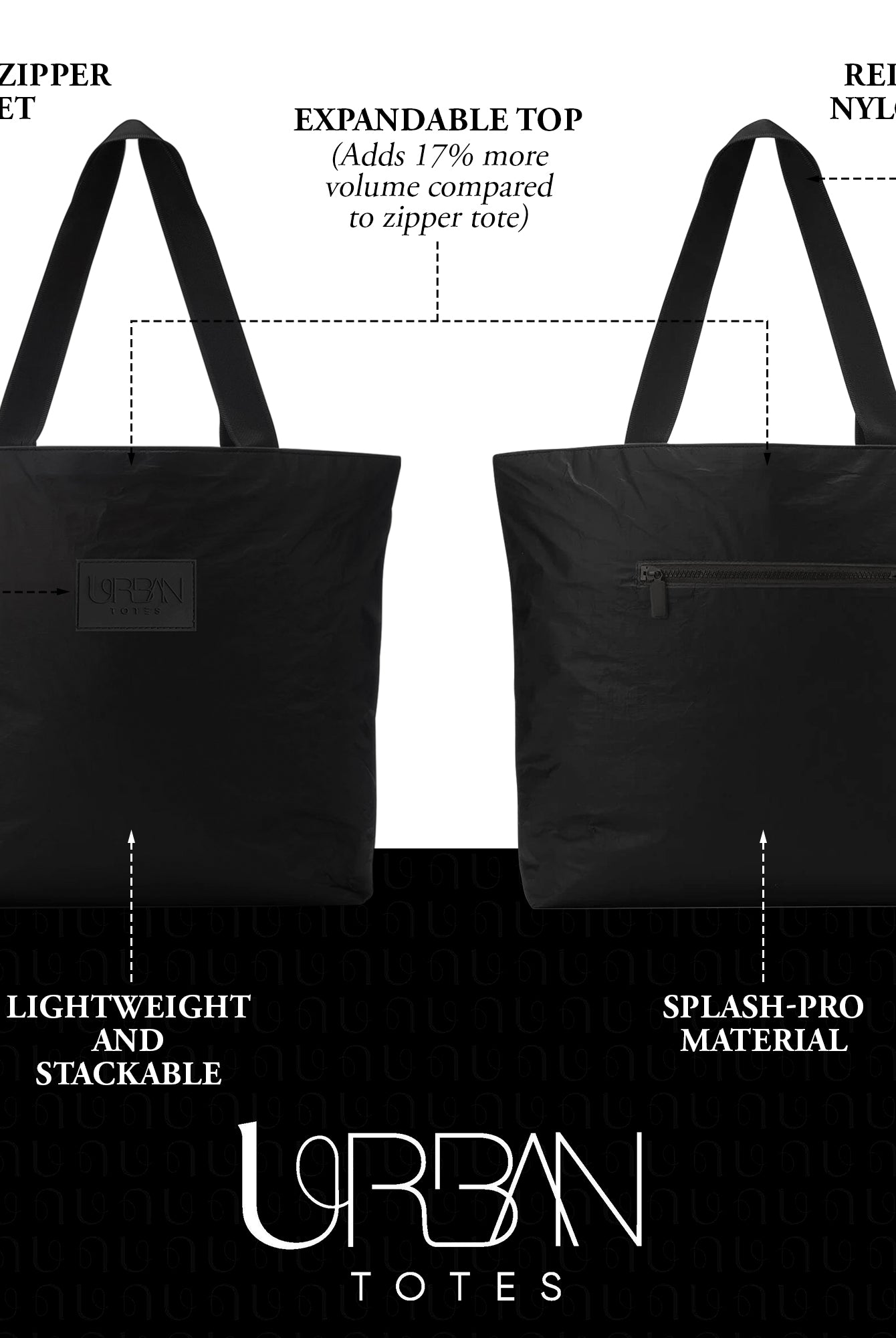
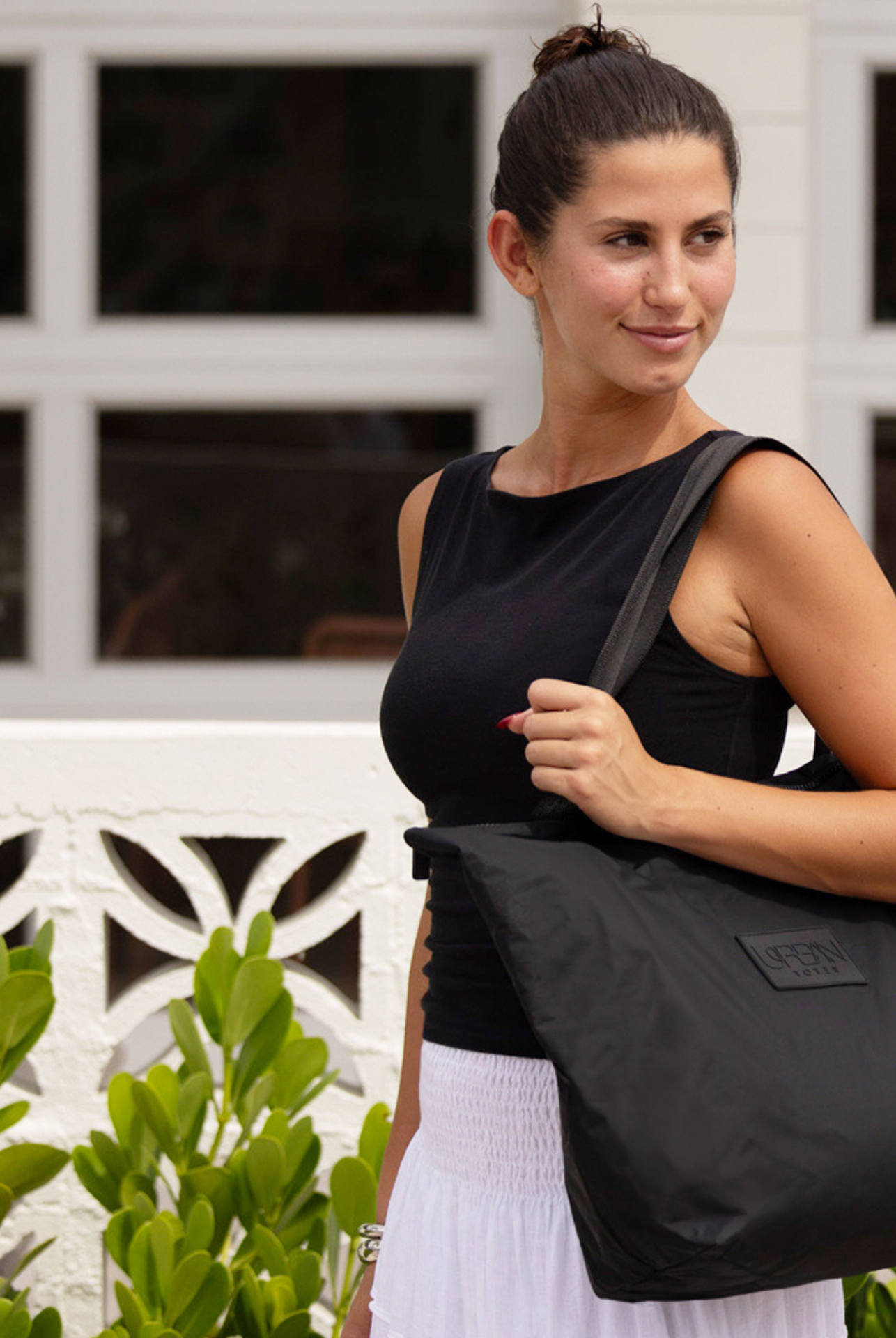
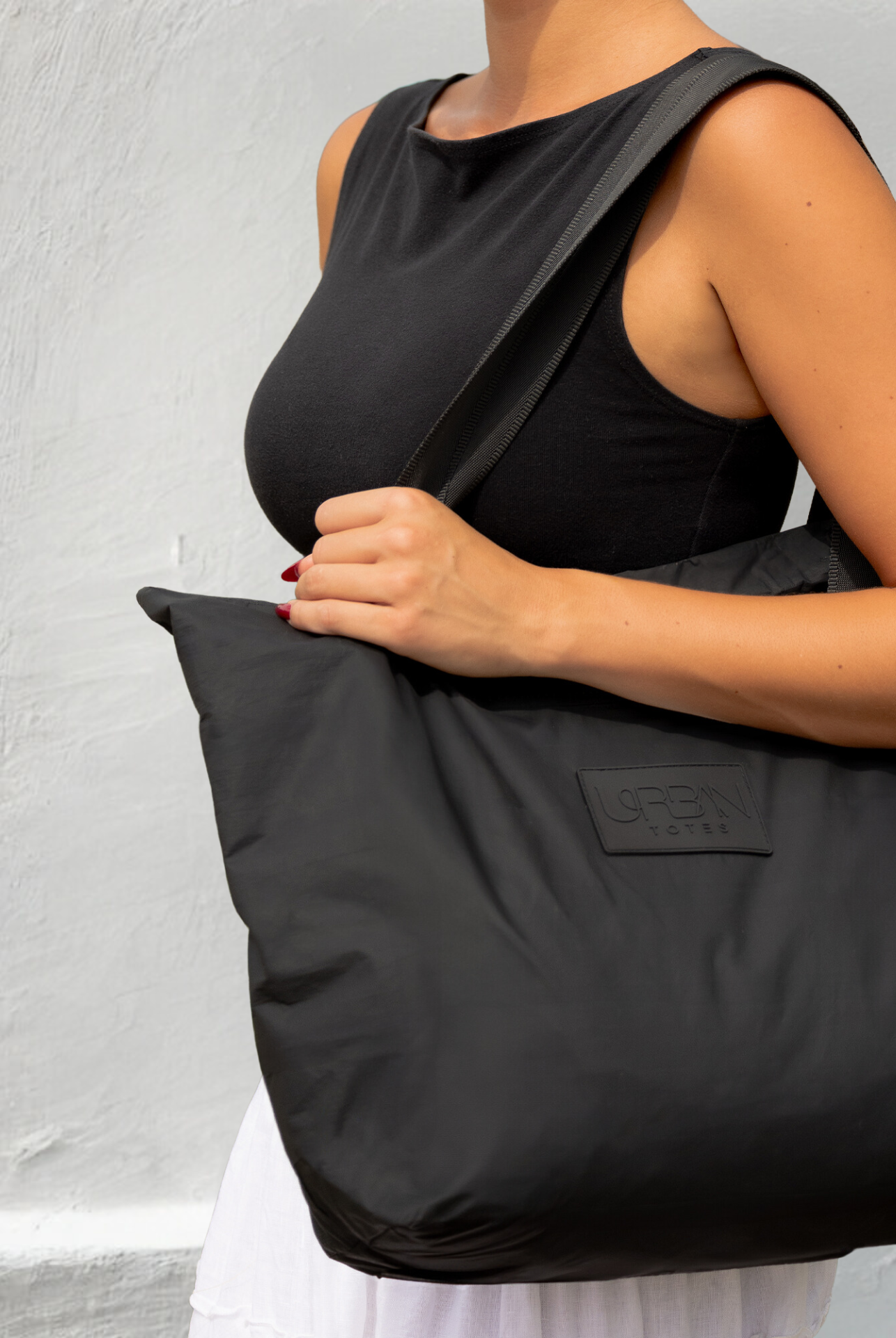
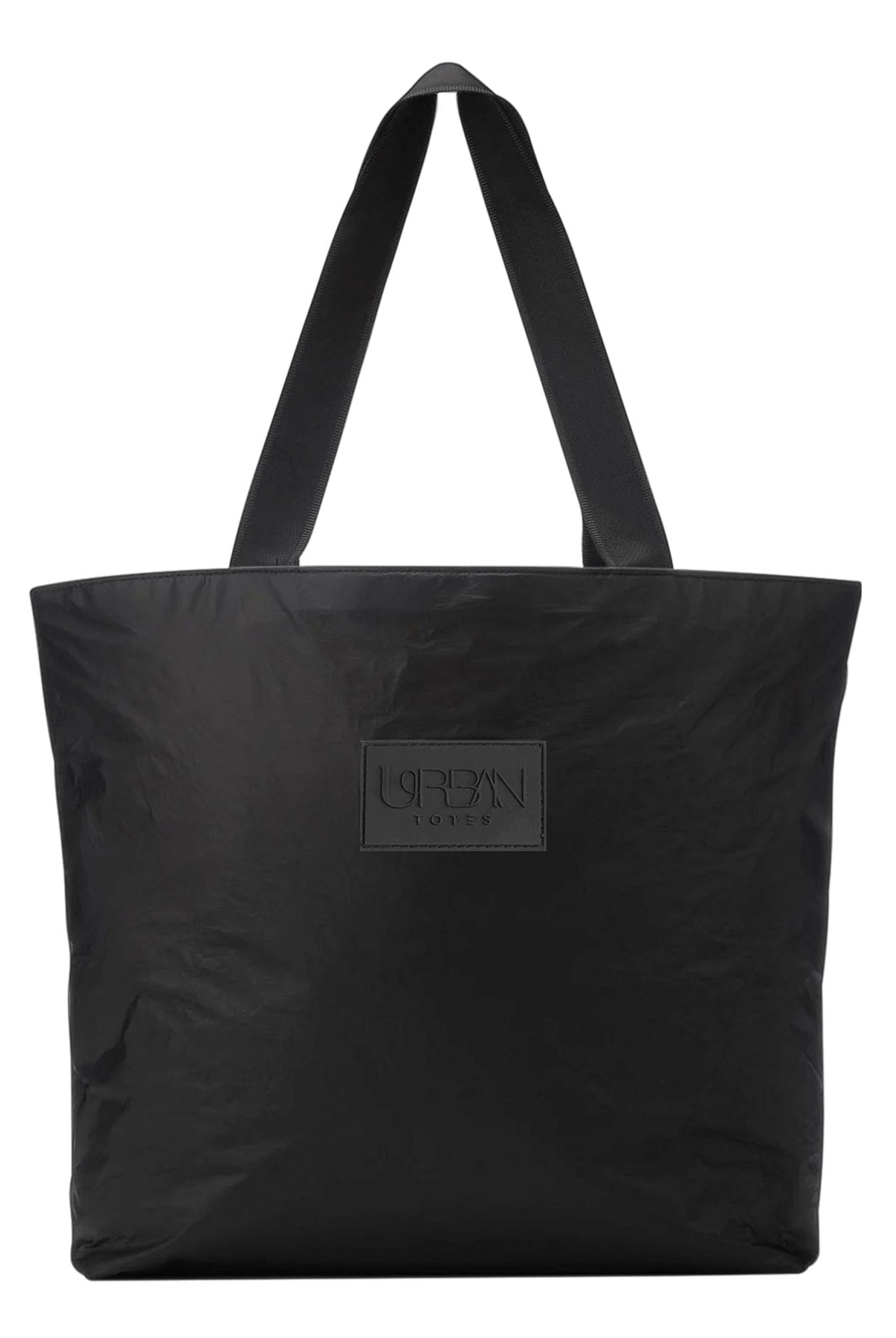
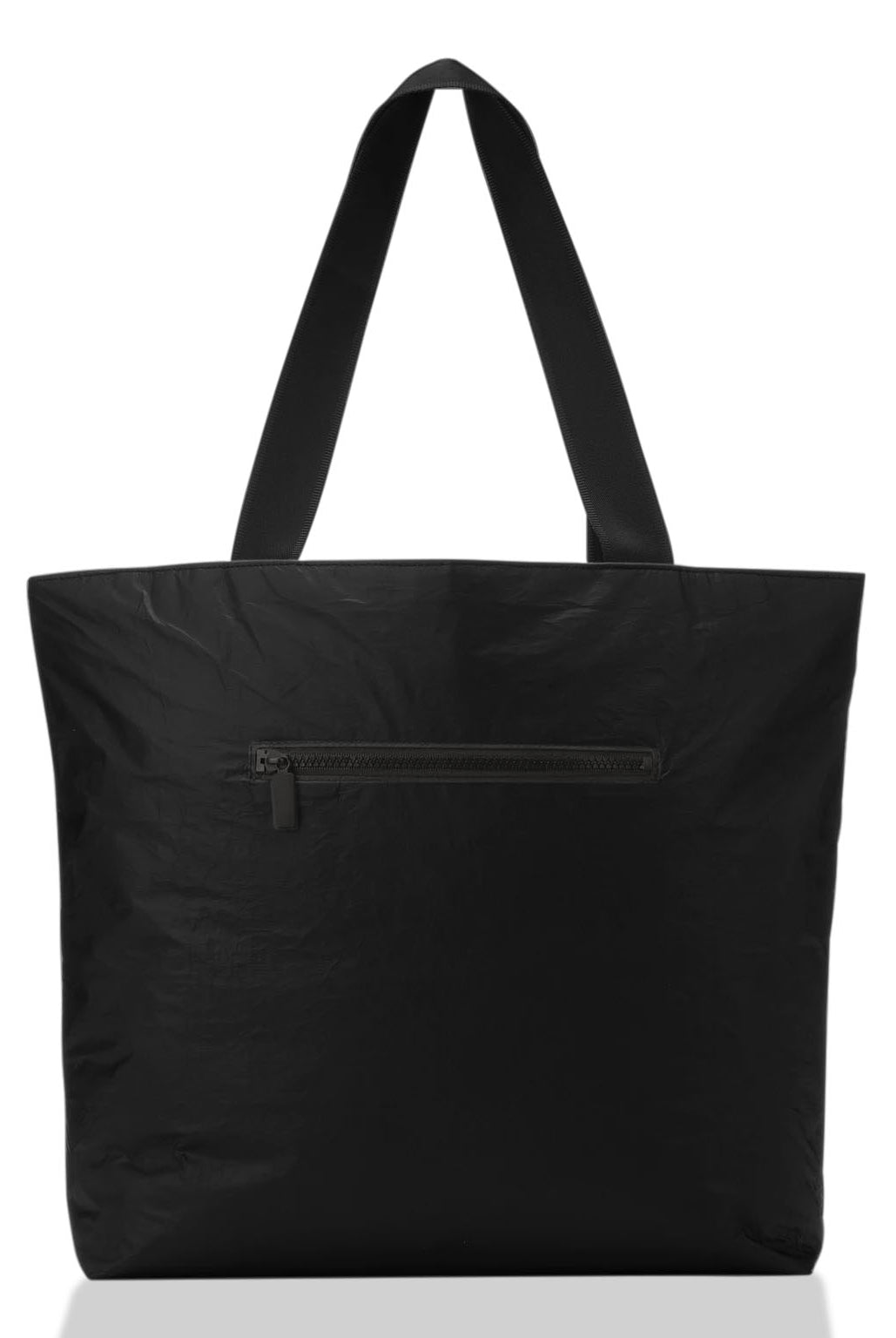
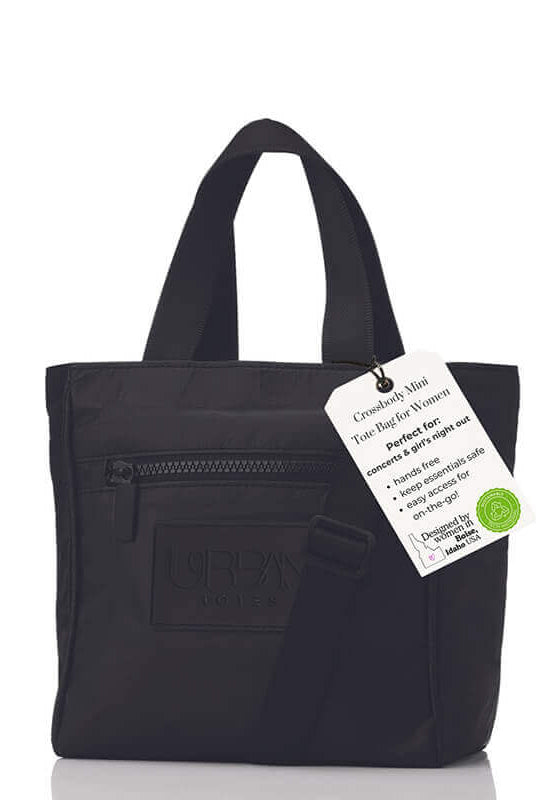
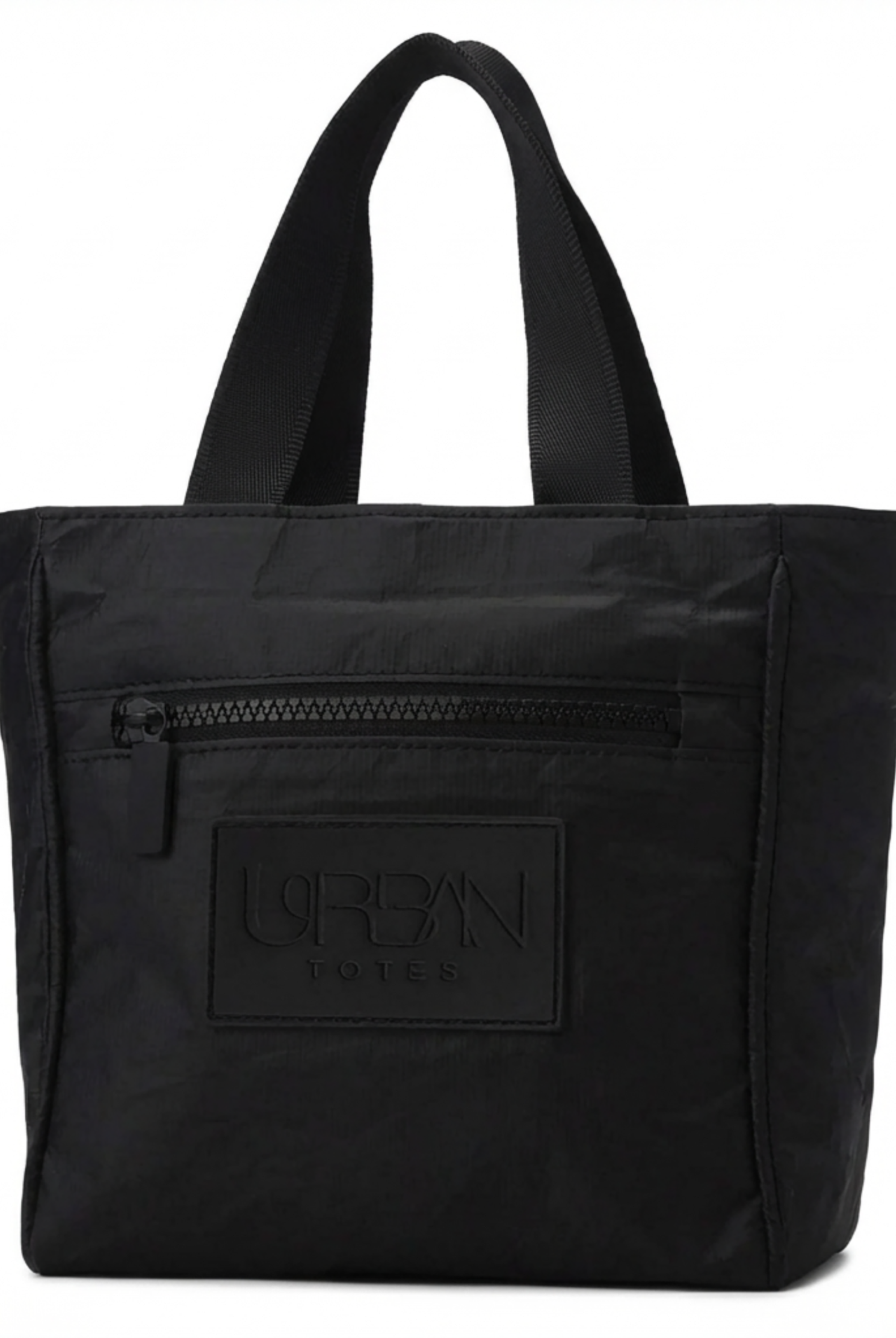
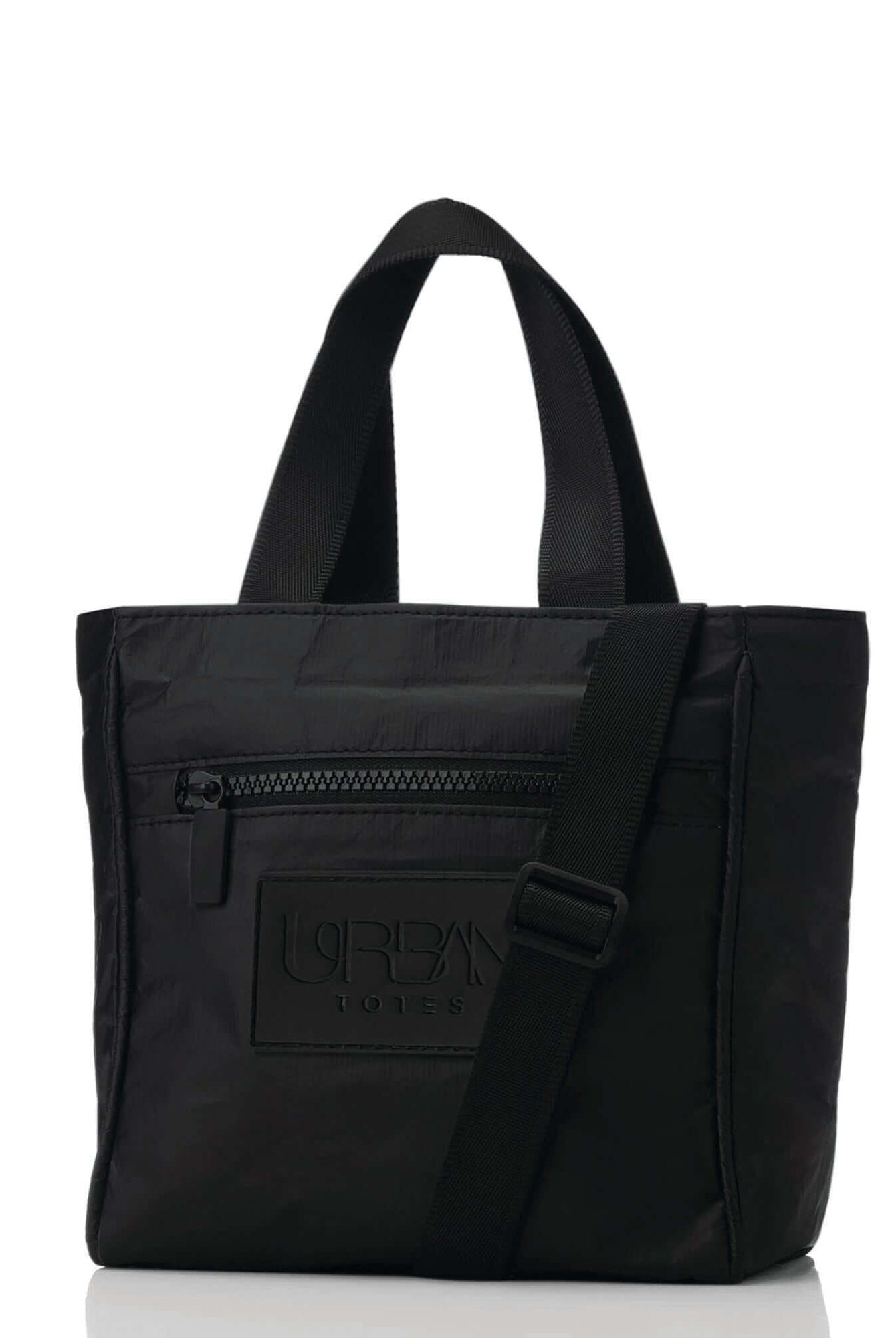
A bag like The Go Anywhere Day Trip Tote by Urban Totes fits this definition in a practical way. The point is not that it is "recycled" in the abstract. The point is that recycled material can still support the lightweight, water-resistant performance a woman expects from a bag she uses all week.
How Plastic Bottles Become Beautiful Fabric
If recycled fabric sounds abstract, the process helps. Once you see how a bottle becomes yarn, it stops feeling like marketing language and starts feeling like material engineering.

The bottle-to-fabric path
Most recycled polyester for bags is made through mechanical recycling. The short version goes like this:
- Used plastic bottles are collected.
- They're sorted and cleaned.
- The plastic is shredded into flakes.
- Those flakes are melted.
- The molten material is pushed through fine holes to create long strands.
- Those strands become fibers, yarn, and then fabric.
The most helpful mental image is a pasta maker. The plastic becomes a thick melted polymer, then gets pressed through tiny openings so it comes out in thread-like form. That isn't just a rough analogy. The mechanical recycling process described here involves melting collected plastic flakes into a viscous liquid polymer, then forcing that molten material through fine extrusion nozzles to form continuous, thread-like strands that become the foundation for polyester fibers.
Practical rule: If a bag uses recycled polyester, the material likely started as a very standardized waste stream. That consistency is one reason it works well in technical, durable accessories.
After extrusion, the fibers are spun into yarn and woven or knitted into fabric. Then the fabric can be cut and sewn into everything from apparel linings to travel-ready totes.
For readers comparing product options in this category, Urban Totes also shares more context on recycled material tote bags.
Recycling methods at a glance
Not all recycled fabric is made the same way. Mechanical and chemical recycling solve different problems.
Recycling methods at a glance
| Feature | Mechanical Recycling | Chemical Recycling |
|---|---|---|
| Starting point | Existing plastic or textile material is cleaned and reprocessed | Material is broken down to its chemical building blocks |
| Common use | Most recycled polyester made from bottles | Often discussed for more complex synthetic recovery, including nylon |
| Core process | Melt, extrude, spin into fibers | Depolymerize, then rebuild the material |
| Strength | More established for current production | Can produce very high-quality output |
| Limitation | Material quality can be affected by contamination and prior use | More complex and often more expensive |
Chemical recycling matters because some materials are difficult to rework mechanically. It's part of the future of textile circularity. But for the stylish, functional tote bag you carry now, bottle-based mechanical recycling is the process you're most likely seeing behind the scenes.
Common Types of Recycled Fabric
Different recycled fabrics behave differently. That matters because the ideal fabric for a beach tote isn't always the ideal fabric for a sweater, and the right material for a crossbody isn't always the right one for upholstery.

Recycled polyester
This is the one most women are likely to encounter in a tote bag. Recycled polyester, often called rPET, is made by reprocessing plastic bottles and discarded polyester textiles. According to Ecolife's explanation of recycled polyester fabric, it retains strength, elasticity, and moisture-wicking properties comparable to virgin polyester while reducing carbon emissions by up to 85%.
In bag design, those qualities are easy to appreciate. Recycled polyester is often a strong fit when you want a fabric that feels lightweight, resists everyday wear, and works well in water-resistant constructions. For a tote that goes from commute to weekend getaway, that balance is useful.
It's also worth noting what it is not. It isn't biodegradable, and it's still a synthetic material. So if your priority is a natural-hand fabric with a softer, more organic feel, this may not be your first pick.
Recycled nylon
Recycled nylon usually shows up in technical products where toughness and flexibility matter. It can come from discarded nylon waste and is often associated with higher-performance applications.
For bags, recycled nylon can be a strong option when you want a polished surface and a fabric that holds up to repeated use. The trade-off is that recycling nylon can be more complex, and buyers often need to pay close attention to sourcing quality and processing consistency.
Some recycled materials sound interchangeable on a tag. In practice, they're not. A fabric that works beautifully for a foldable travel tote may feel wrong for a slouchy casual bag or a soft garment.
Recycled cotton
Recycled cotton appeals to shoppers who like a more familiar natural fiber feel. But the feedstock often comes from pre-consumer waste rather than post-consumer clothing. During traditional cotton textile production, an average waste rate of 45% occurs due to scraps and processing losses, making factory waste a major source of recycled cotton feedstock, as explained by Manteco's look at recycled cotton fabric.
That's useful from a manufacturing standpoint because factory scraps are easier to collect and sort by color and fiber type.
If you're exploring plant-based or natural-feel alternatives alongside technical synthetics, Urban Totes has a separate piece on the hemp tote bag. It's a good reminder that material choice should match use case. For a chic, travel-ready, wipe-clean, multi-pocket bag, recycled polyester often wins on function. For softness and texture, recycled cotton may be the draw.
How We Use Recycled Fabric in Your Go-Anywhere Bag
When you design bags for real life, the material choice has to earn its place. It can't just sound modern on a tag. It has to help the bag carry well, clean up easily, fold down when needed, and still feel polished when you're running from the airport to lunch or from school pickup to the grocery store.
Why this material works for real life
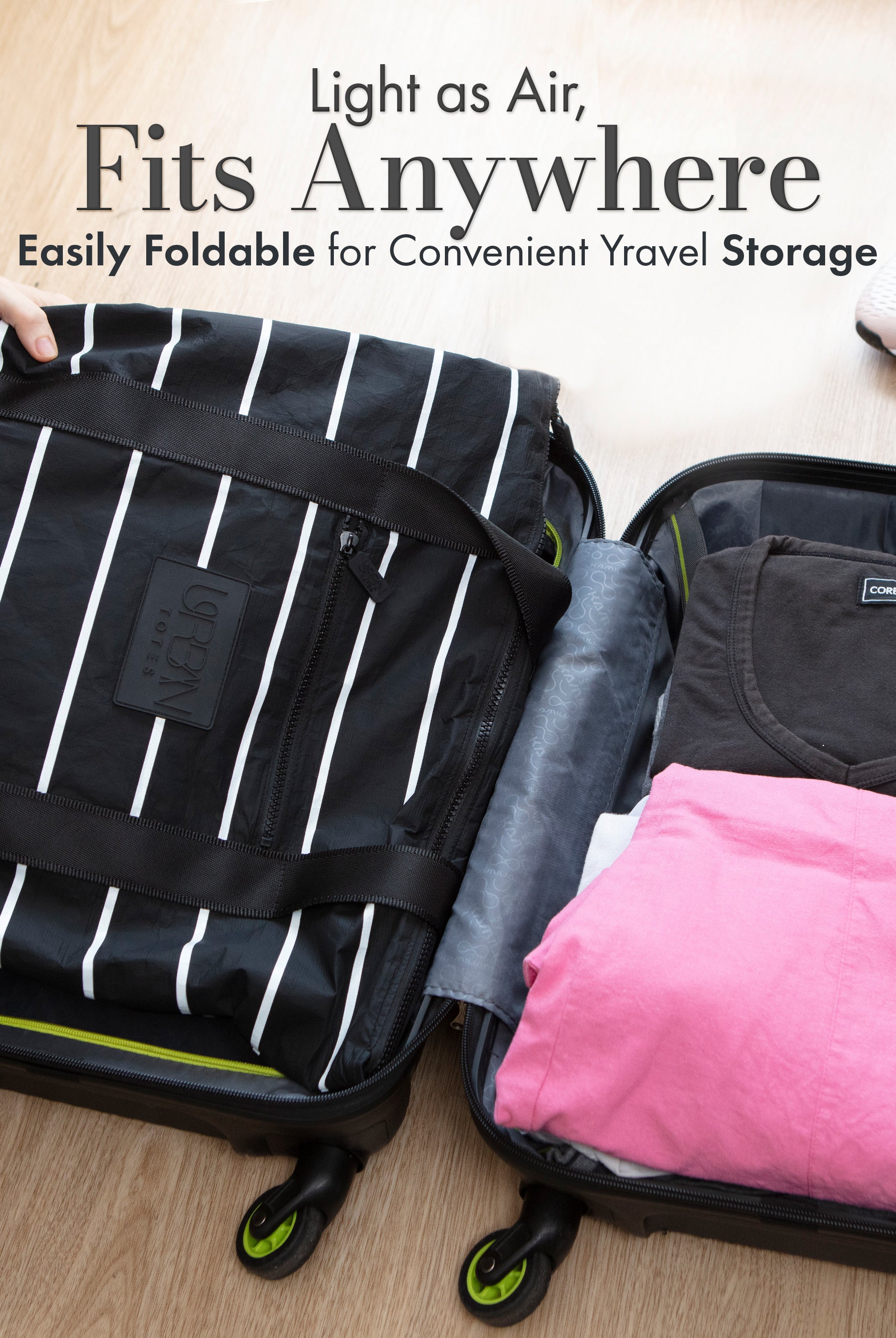
At Urban Totes, that's why recycled technical fabrics make sense. A go-anywhere tote needs to be lightweight enough that it doesn't add bulk before you even put your essentials inside. It needs to be water-resistant for the small messes of daily life. And it needs structure that supports an organized, versatile, everyday carry routine.

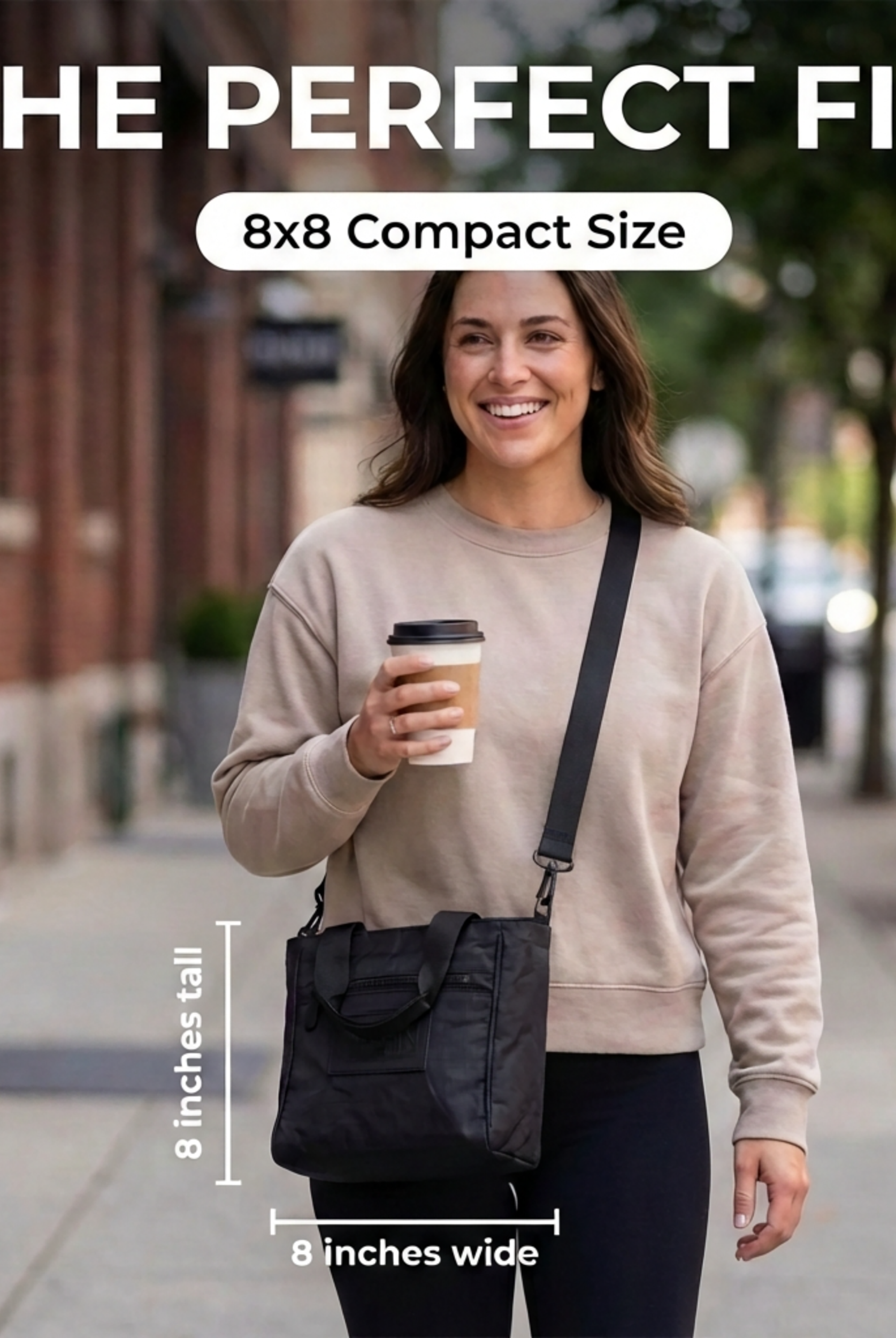
That's especially true for women who use one bag across multiple settings. A tote that's headed to a beach chair in the morning might be sitting beside a laptop in the afternoon. A foldable, packable bag sounds simple until you need it to keep its usefulness when fully loaded. Material choice affects all of that.
What we look for before a fabric makes the cut
One of the practical standards brands can use is the Global Recycled Standard. As explained in this guide on buying recycled fabric, GRS helps verify recycled content and responsible processing. That same source also notes that five recycled water bottles can yield enough fiber for one extra-large T-shirt, which gives you a concrete sense of how material conversion can work.
For me, the important part isn't the novelty of turning bottles into fabric. It's whether the final fabric performs well in the finished bag.
That's also why I appreciate seeing recycled content used across product categories, not just fashion accessories. If you're interested in how this thinking extends into home goods, these sustainable heirloom textiles offer another example of recycled-content design being used in a tactile, everyday way.
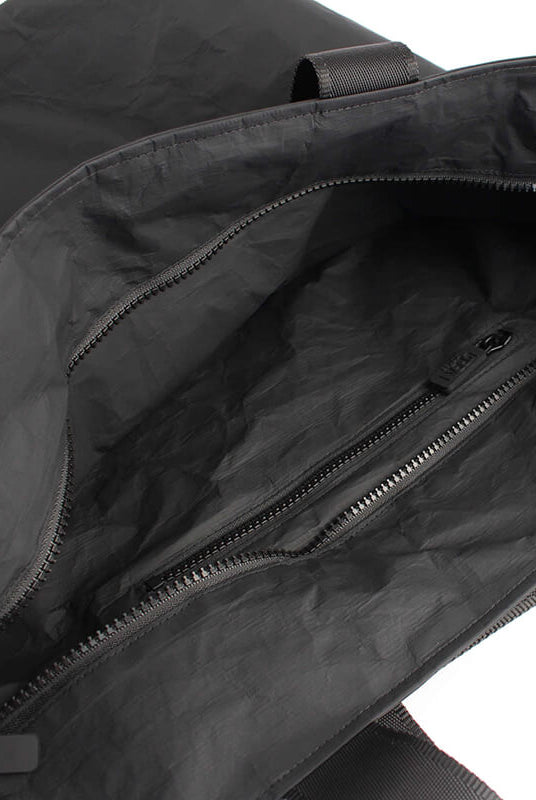
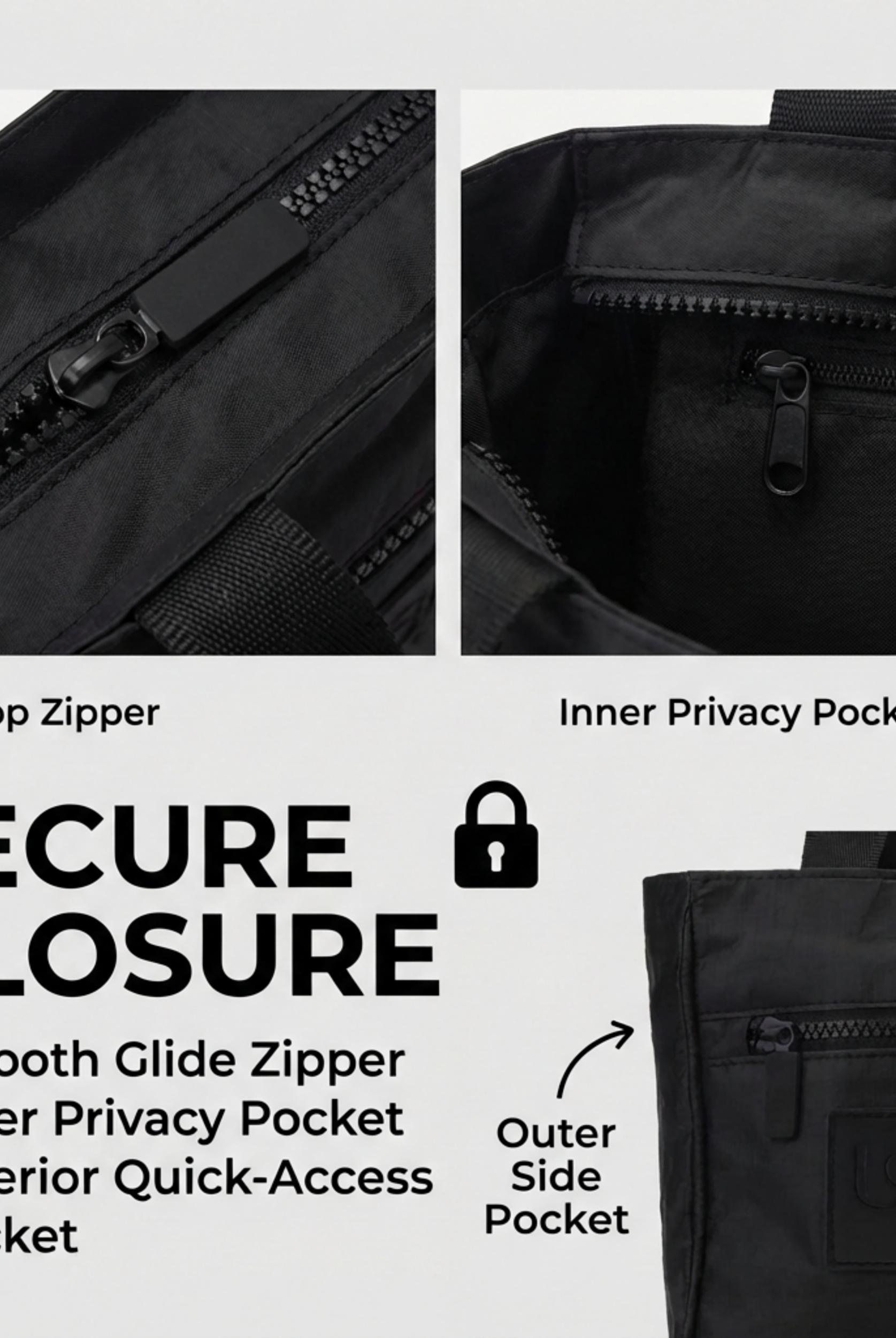
A woman-owned, Boise-made brand like Urban Totes lives or dies on whether the bag works once it leaves the studio. Good recycled fabric supports that. It helps create bags with zipper closure, compartments that keep essentials in place, and the kind of durable, stylish utility women reach for again and again.
An Honest Look at the Pros and Cons
Recycled fabric is useful. It's also imperfect. Both things can be true at the same time.
Where recycled fabric helps
The strongest case for recycled fabric is straightforward. It gives existing waste material another job. In a category like tote bags, that can translate into fabrics that are practical, durable, easy to care for, and better aligned with lower reliance on virgin inputs.
For shoppers, there's also an emotional benefit to transparency. You're not buying into a fantasy. You're choosing a material that puts waste back into circulation in a form that can be stylish and functional.
- For bags, performance can be a real advantage: Recycled polyester often works well in travel-ready, wipe-clean, water-resistant designs.
- For daily life, lighter materials matter: A tote that starts light is easier to carry through errands, terminals, and long days out.
- For design, technical fabrics support organization: Structured recycled synthetics pair well with multi-pocket layouts and secure closures.
Where the limits show up
The hard truth is that textile recycling is still limited. According to this review of textile recycling challenges and market context, the world generates 92 million metric tons of textile waste annually, yet less than 1% is successfully recycled back into new clothing. That same source notes that most recycled fibers are downcycled into insulation, cleaning cloths, or mattress stuffing because fibers often degrade during mechanical processing.
That's a useful reality check. “Recycled” doesn't always mean a neat circular loop.
There are also material-specific trade-offs. Synthetic recycled fabrics are still synthetics. They don't biodegrade, and they sit in a broader conversation about microfiber shedding that applies to both virgin and recycled synthetics. On the other hand, natural fibers bring different trade-offs around performance, care, and use case. If you want to compare another path, this guide to explore organic fabrics on More Sewing is a good complement.
For bag buyers, the practical conclusion is simple. Choose the material that fits the job. If you need help understanding one common performance term, Urban Totes explains the difference in this article on is water resistant waterproof.
Honest material choices are better than perfect-sounding labels. A recycled technical fabric can be the right answer for a stylish tote, even if the larger recycling system still has a long way to go.
Your Recycled Fabric Questions Answered
Are recycled fabrics as durable and safe as new ones
Often, yes. A key nuance from the World Economic Forum's discussion of recycled materials in fashion is that recycled fabrics meet the same safety standards, but some high-stability products may need a blend of recycled and virgin material to extend lifespan.
Does recycled fabric mean biodegradable
No. Some recycled fabrics, especially recycled polyester, are still synthetic. Recycled doesn't automatically mean the material will break down naturally.
How should I care for a recycled fabric bag
Follow the maker's care instructions first. In general, gentle washing, air drying when possible, and not overloading the bag help preserve shape and finish. For a busy routine, easy-care, wipe-clean fabrics are often the most practical choice.
Is recycled fabric always made from old clothes
No. In many cases, especially with recycled polyester, the source material is plastic bottles rather than worn garments. That's one of the most important things shoppers should know when reading the label.
If you want a bag that feels stylish, organized, lightweight, and ready for real life, take a look at Urban Totes. Find your perfect go-anywhere bag and take on whatever the day brings.