You're double-parked outside school with the engine running, one hand on the wheel and the other buried elbow-deep in a tote that has swallowed your keys, a granola bar wrapper and the permission slip you signed ten minutes ago. The line inches forward. Your fingers close on a charger cable, then a stray sock, then nothing useful at all.
A bag gets heavy, deep and shapeless one harmless item at a time. None of it feels like a problem until you're the woman holding up the drop-off line with her whole arm in a tote. Here's the reframe that changes everything: organisation isn't about buying more inserts or owning less stuff. It's about giving each thing a permanent address, so your hand learns the route and stops asking your brain for directions.
The eight handbag organisation ideas below move in a deliberate order. The first three set the layout inside the bag. The next three fine-tune how things travel, so a beach morning doesn't soak your phone and an airport queue doesn't slow you down. The last two keep the whole system alive with routines small enough that you'll find yourself repeating them. Every one of them works in a tote, a crossbody or a weekender, because the principle holds whatever shape you carry.
Table of Contents
- 1. Zone Your Tote by Category
- 2. Give Phones and Keys a Dedicated Landing Pocket
- 3. Nest Small Zippered Pouches Inside the Bag
- 4. Use Clear Pouches for Quick Visibility
- 5. Separate Wet and Dry Items for Beach and Gym Days
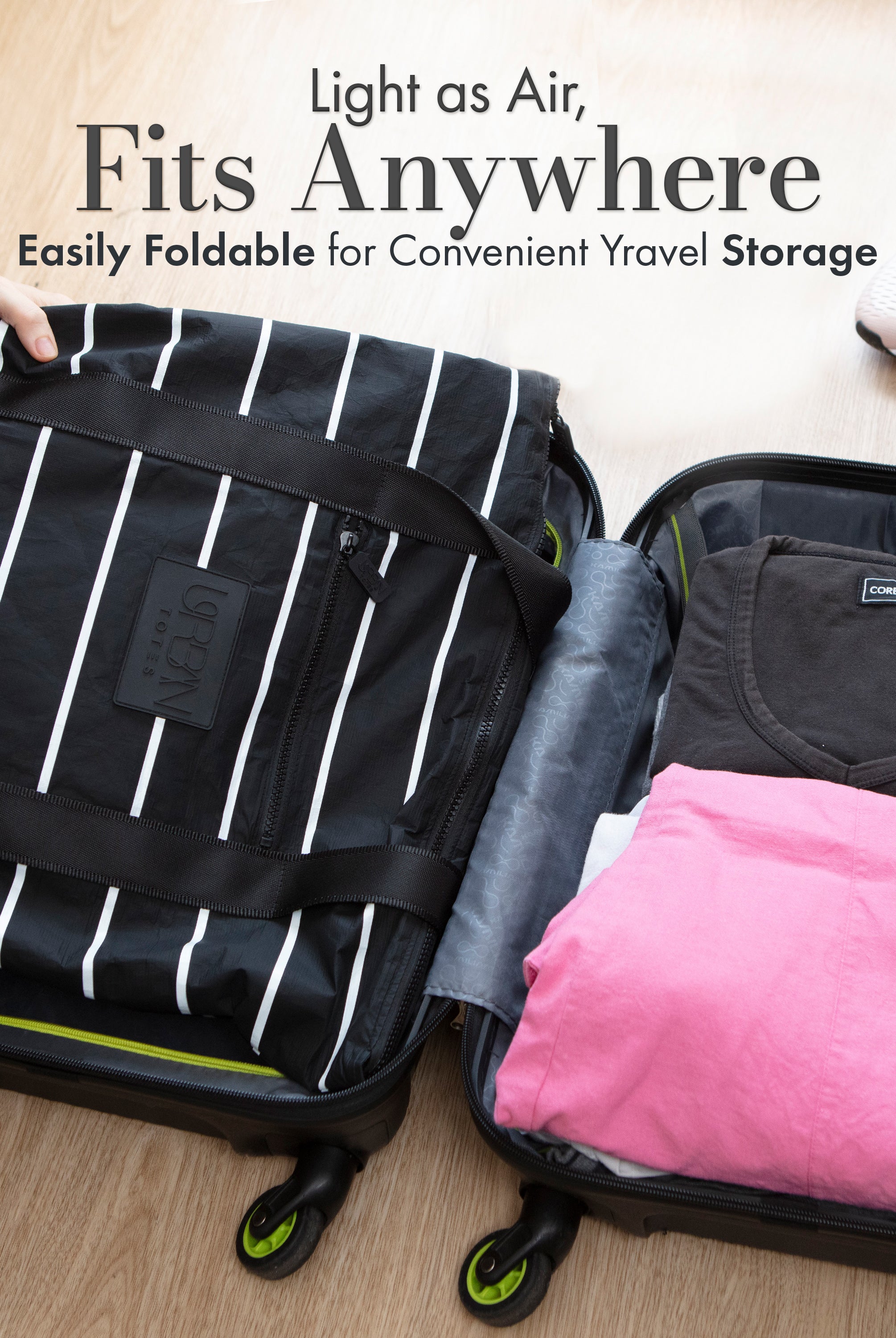
- 6. Pack Layers Strategically for Travel
- 7. Run a Weekly Bag Reset
- 8. Build a Grab-and-Go Essentials Kit for Errands
- The Eight Bag Organisation Ideas Side by Side
- Pick One Zone Tonight and Let the Bag Do the Rest
1. Zone Your Tote by Category
The drop-off line is a full-contact sport. One arm holds a lunchbox, two fingers pinch a permission slip, and somewhere in your tote sits a half-eaten granola bar you'd rather not think about. You still need your keys.
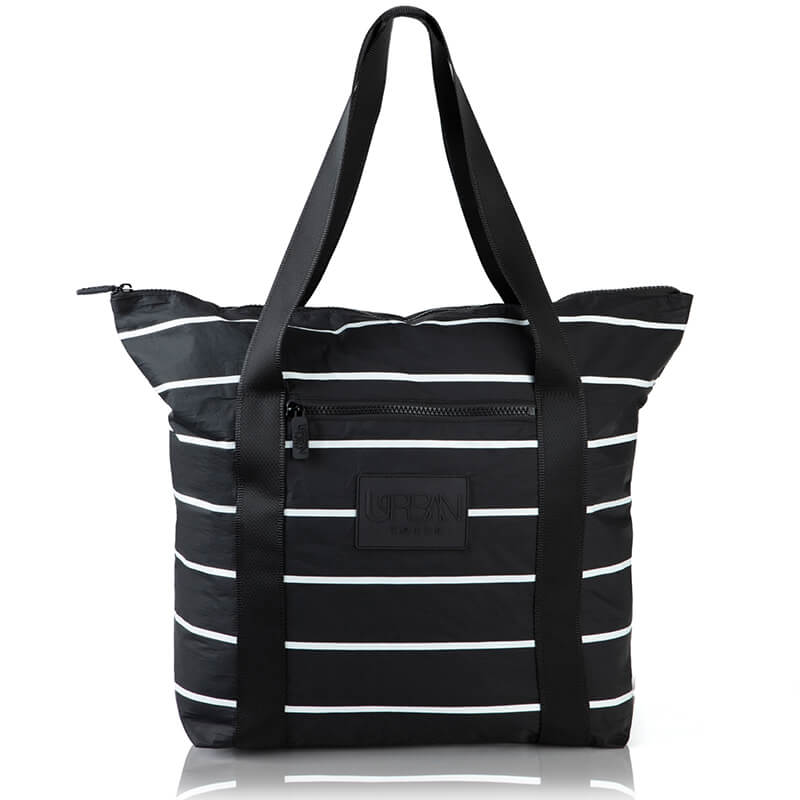
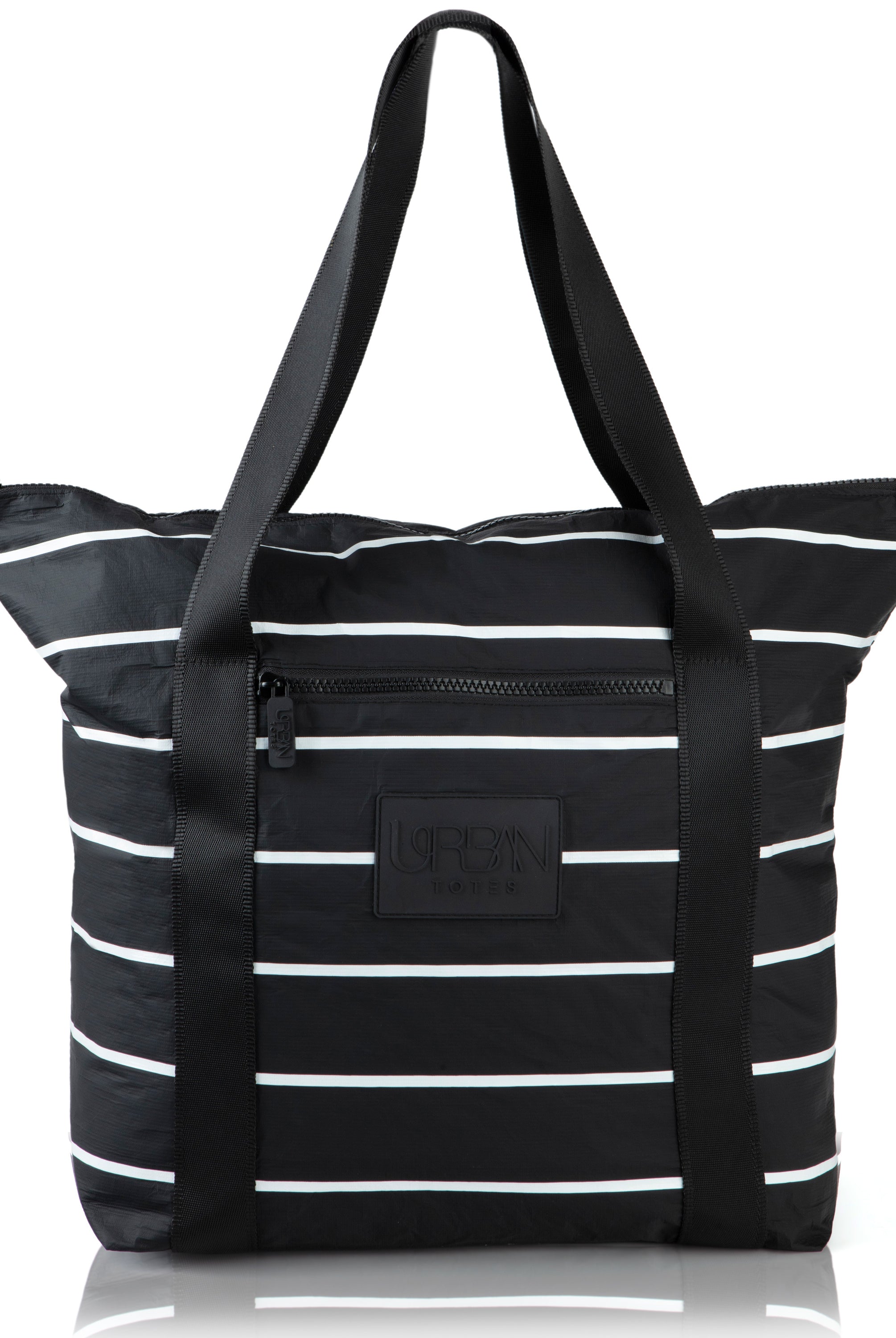
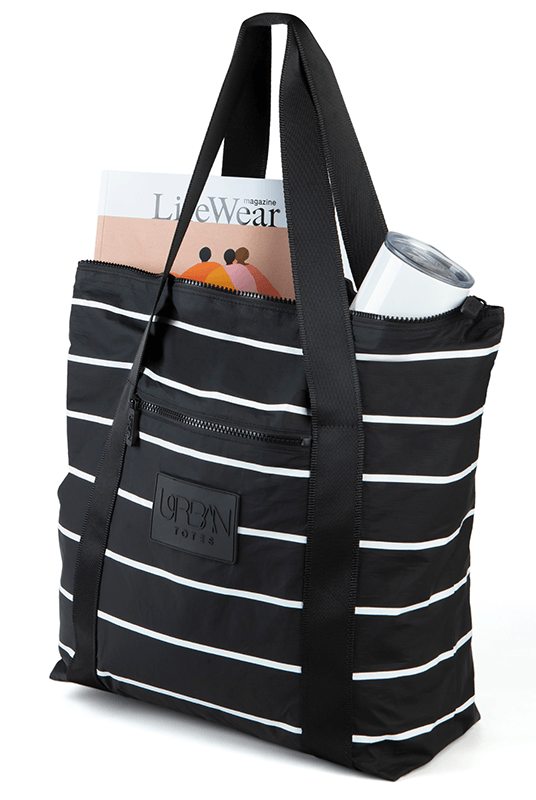
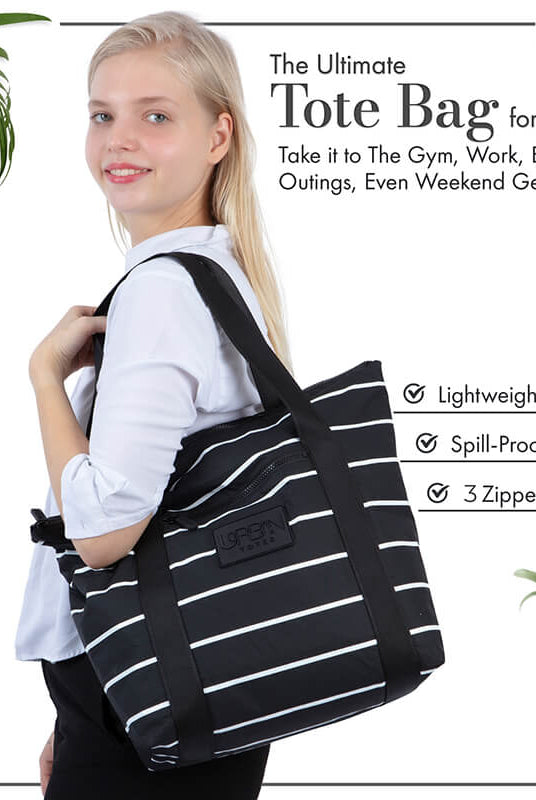
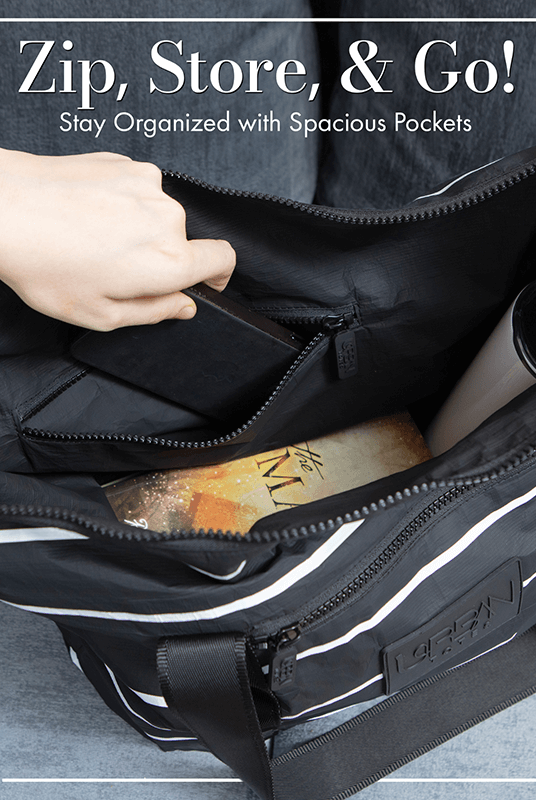
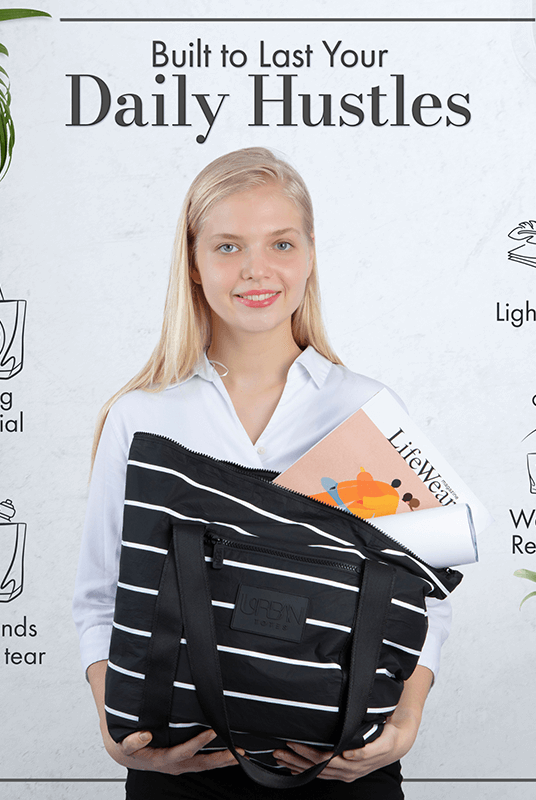
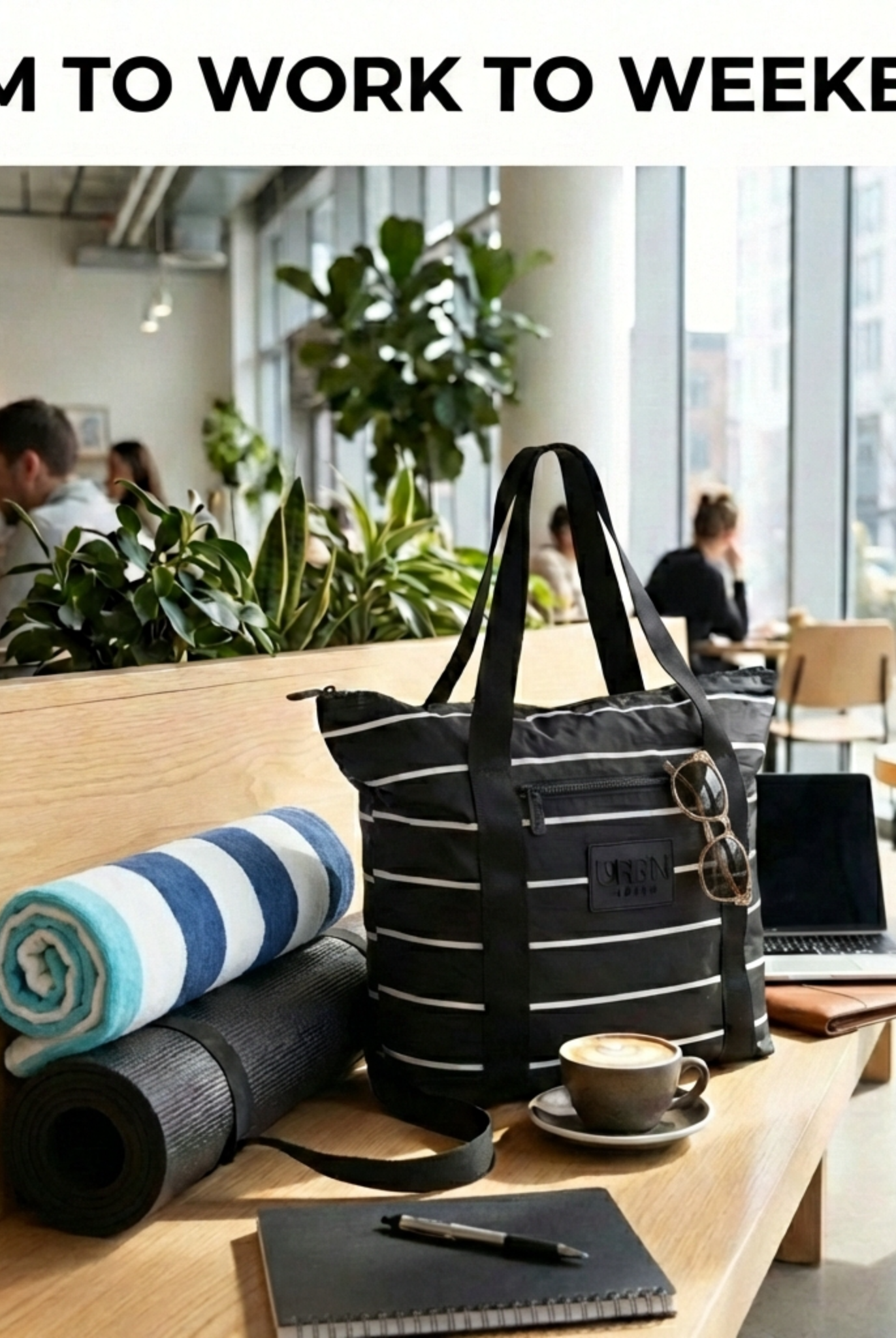
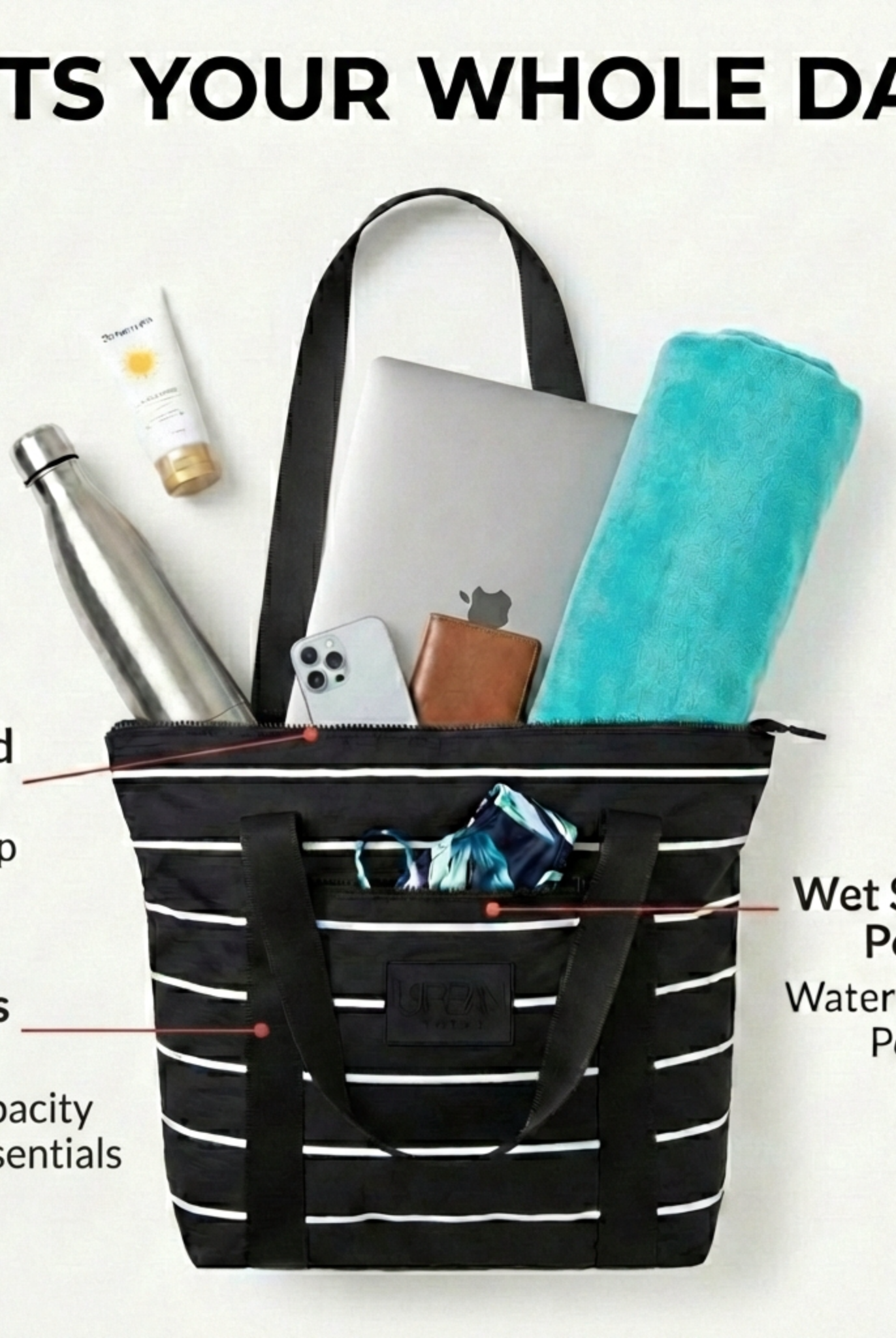
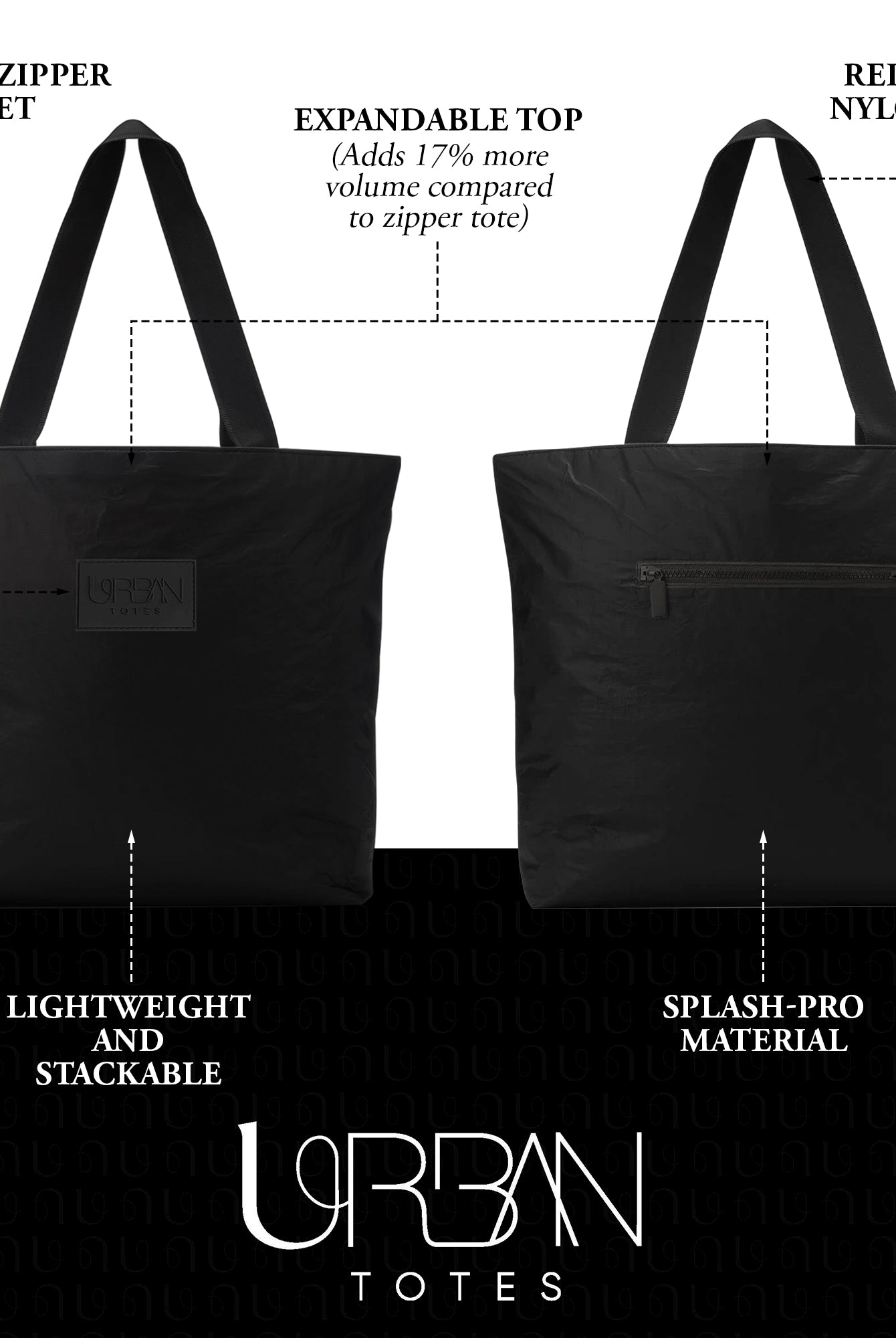
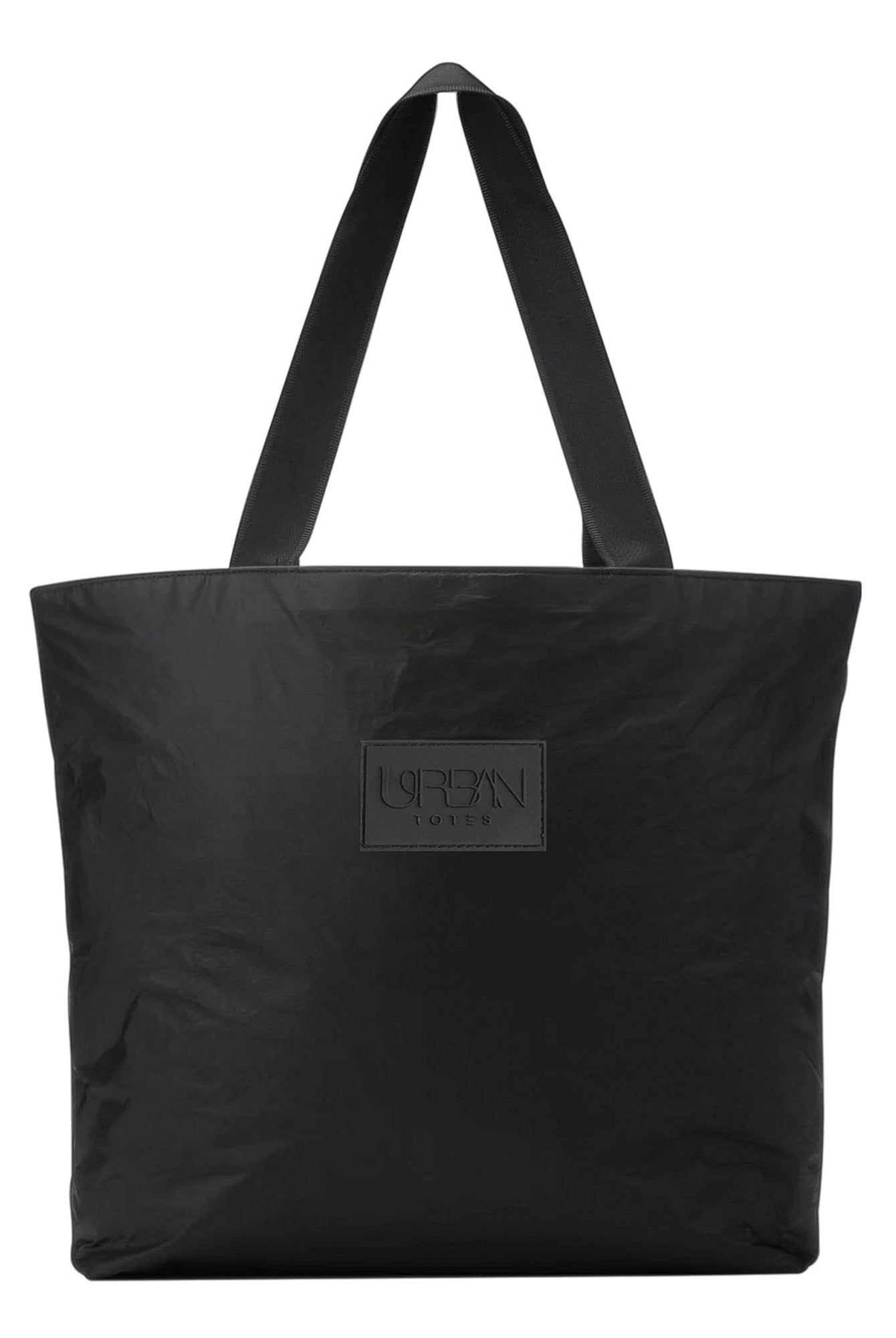
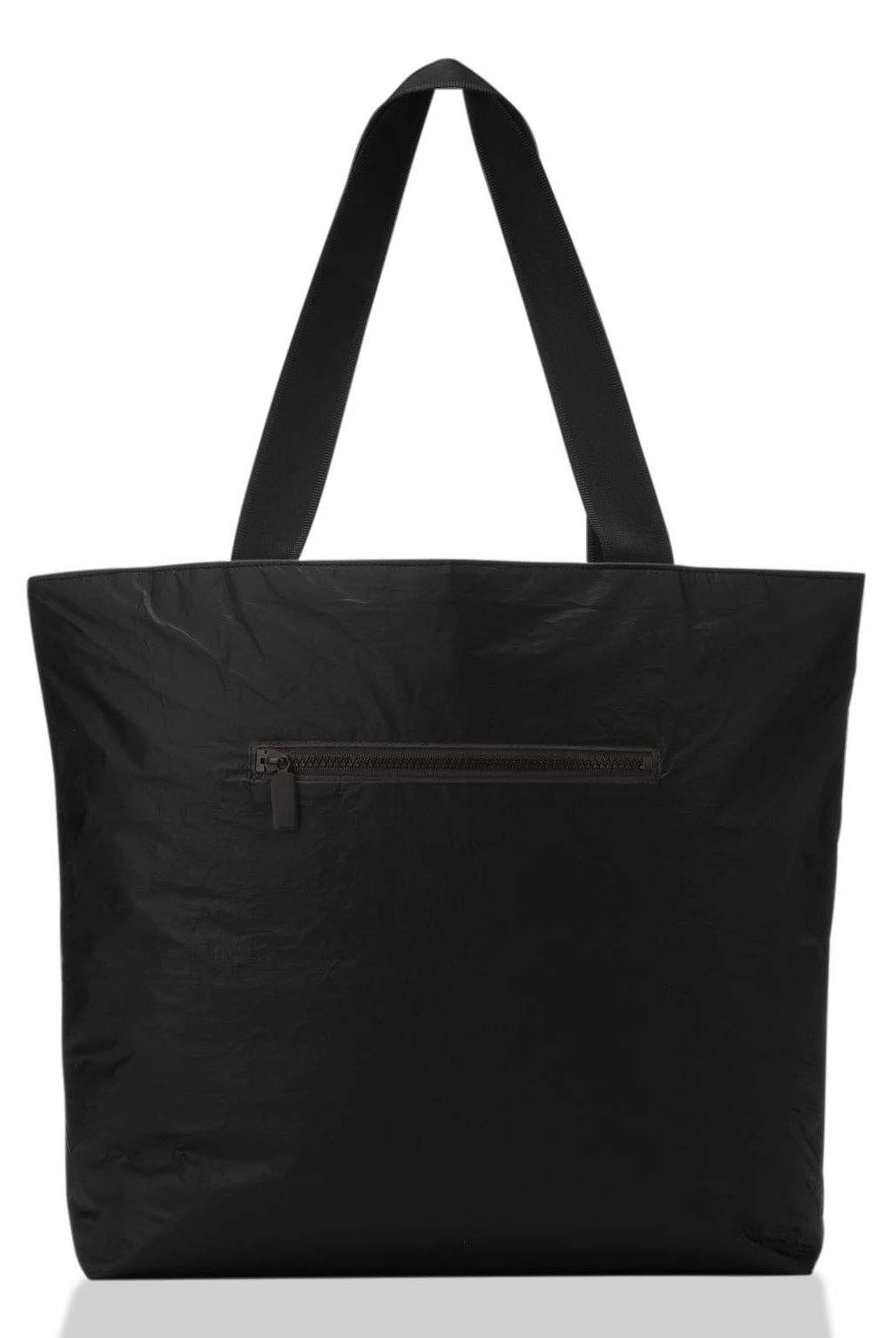
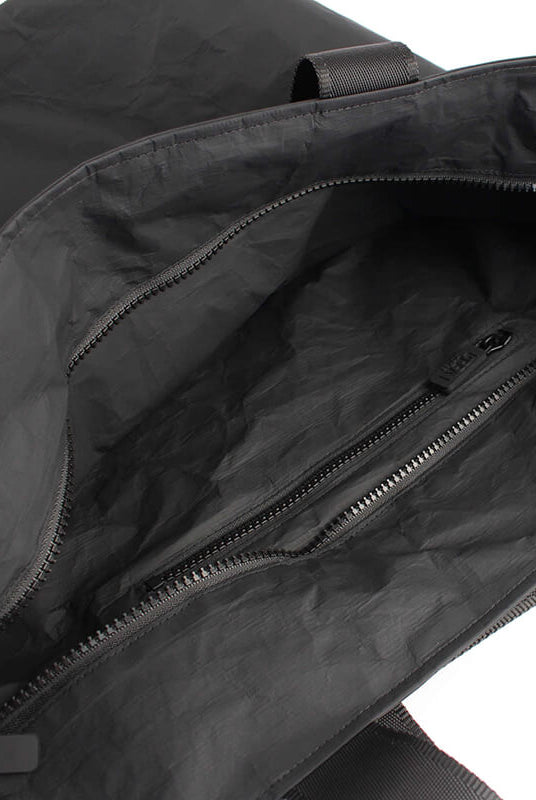
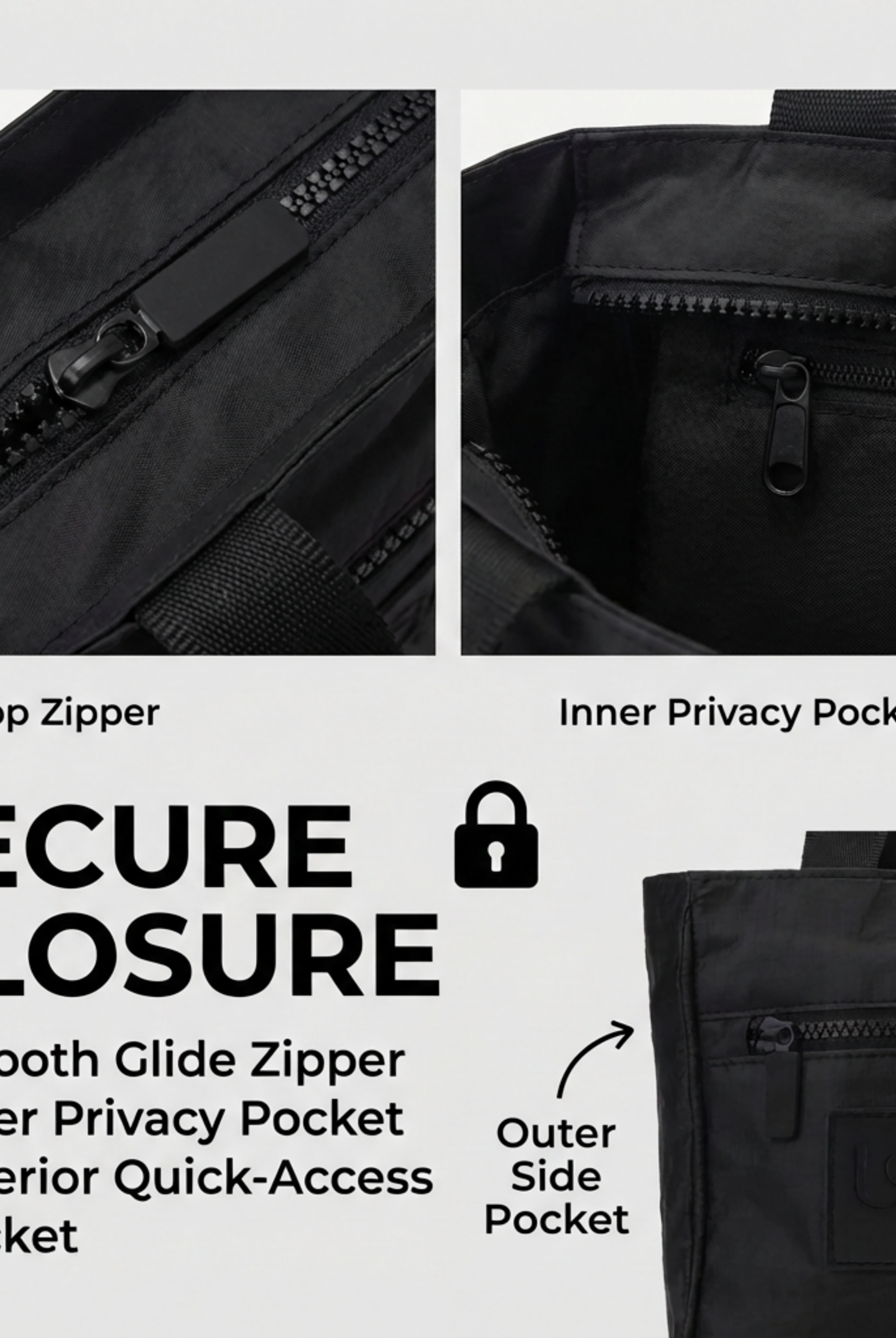
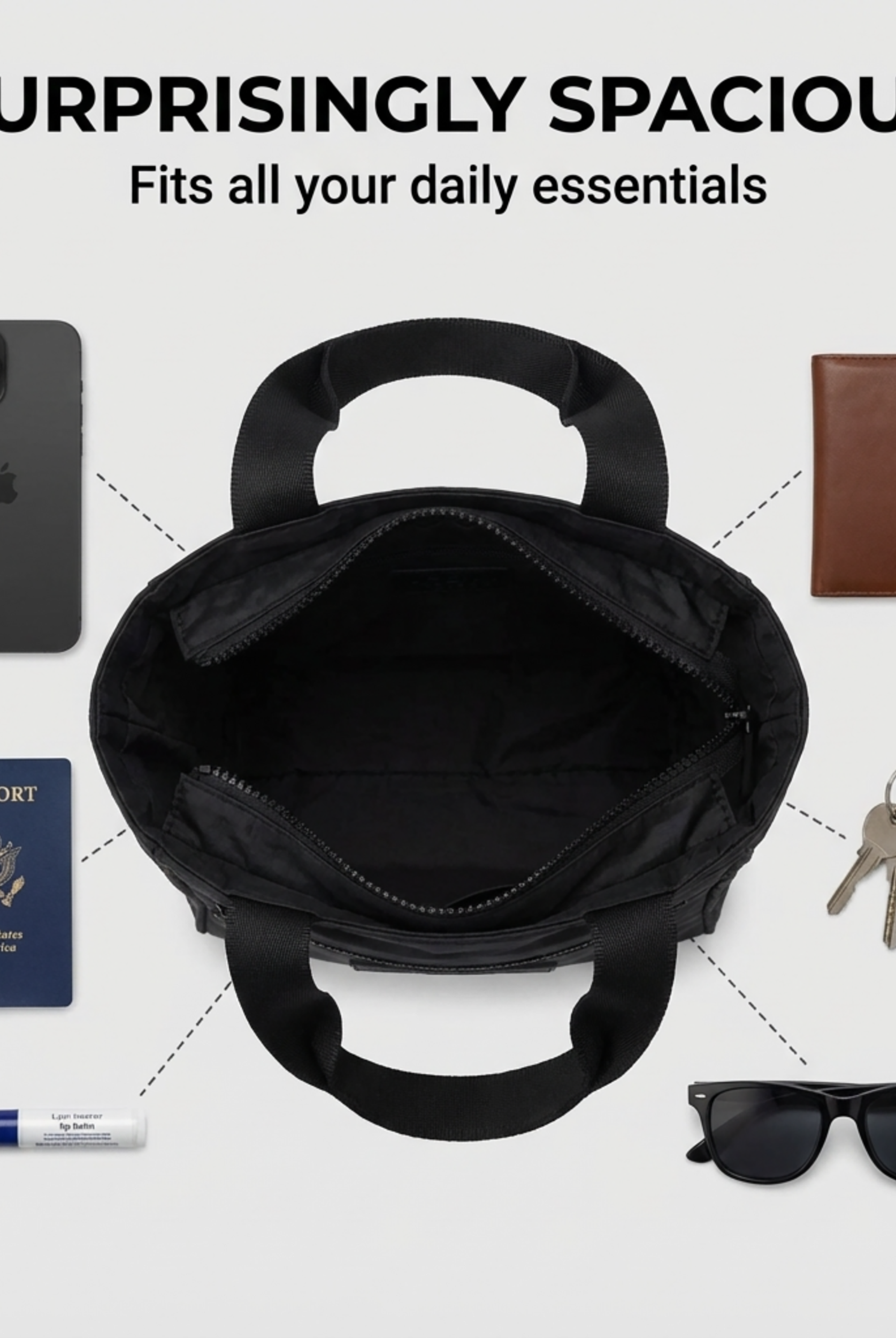
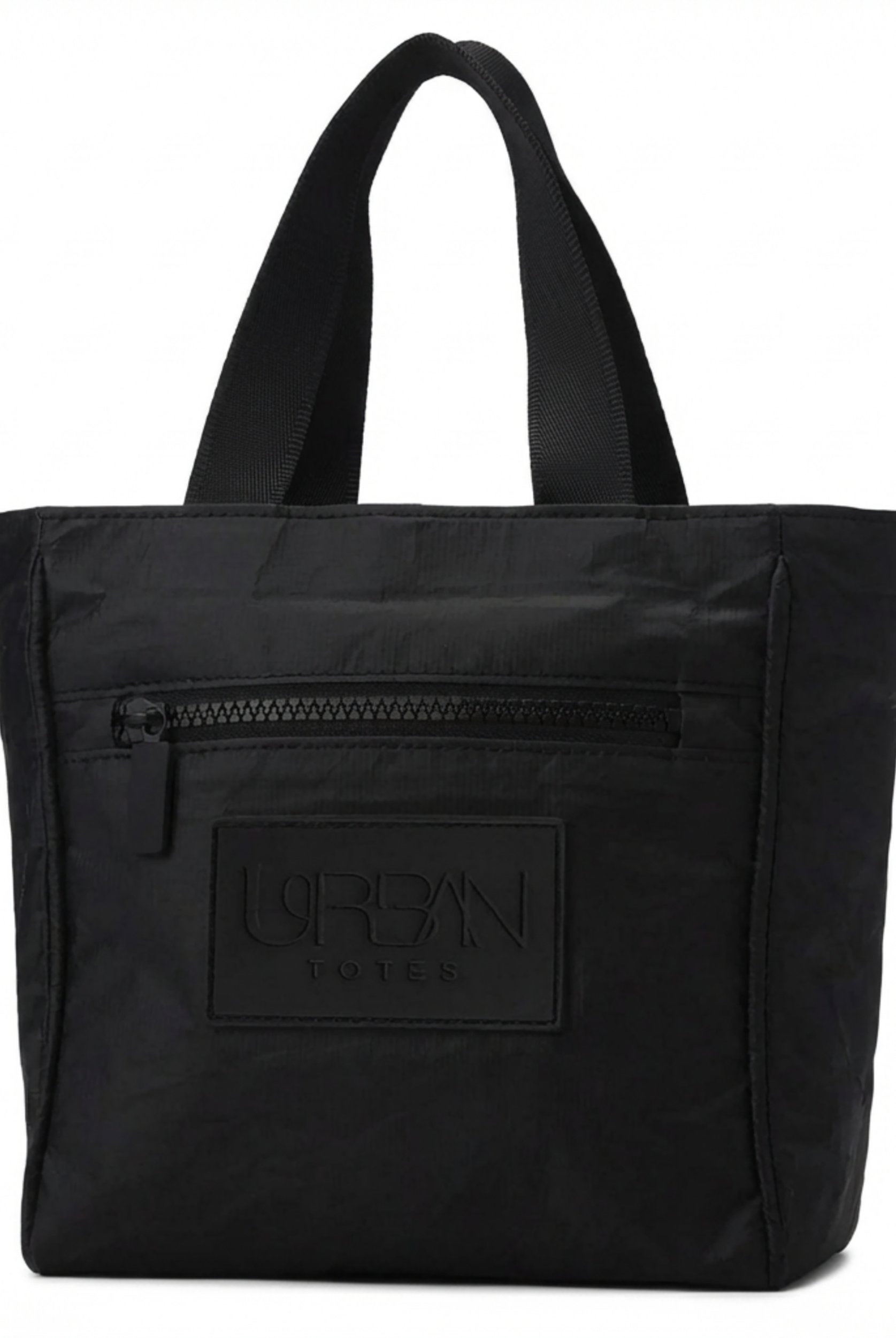
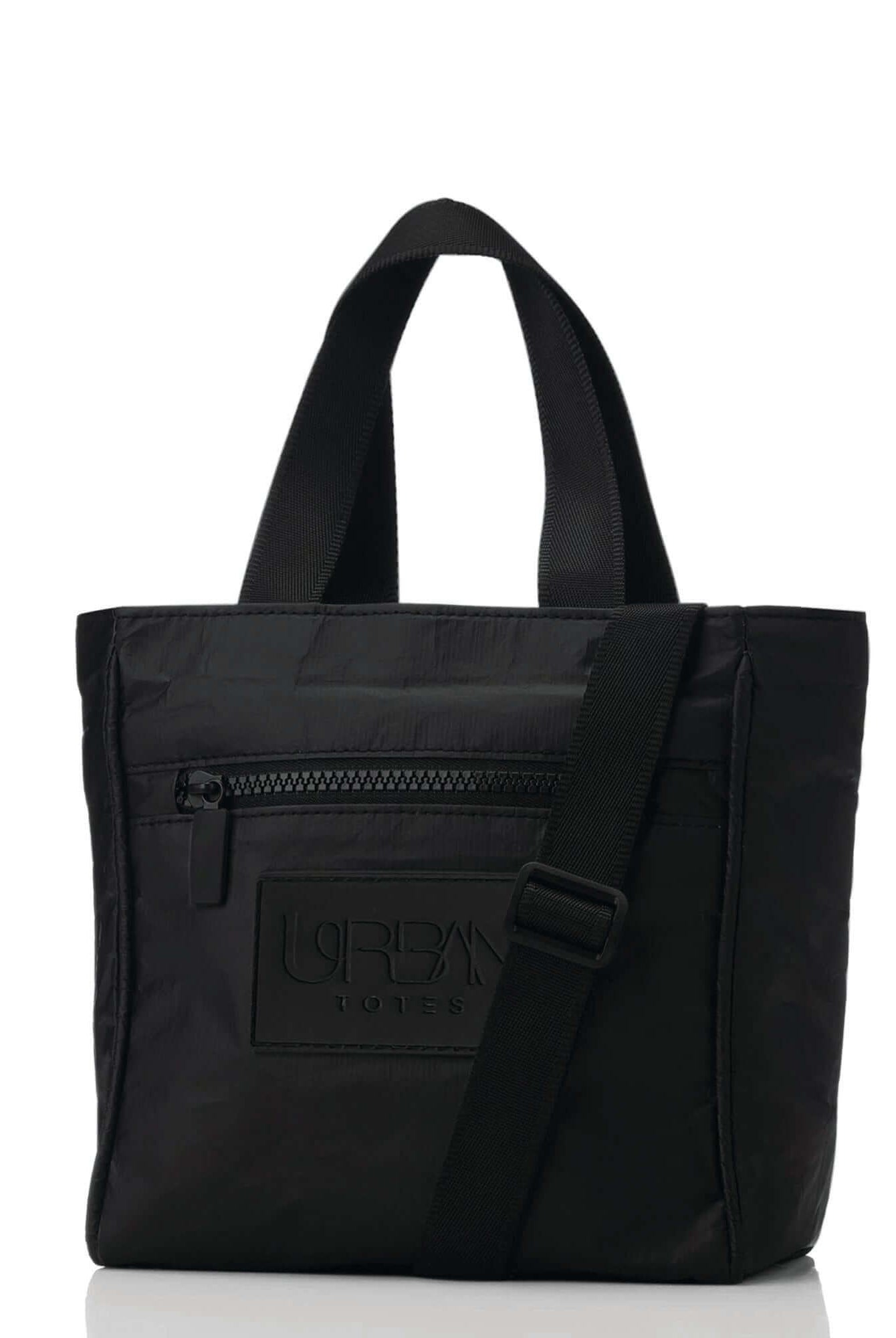
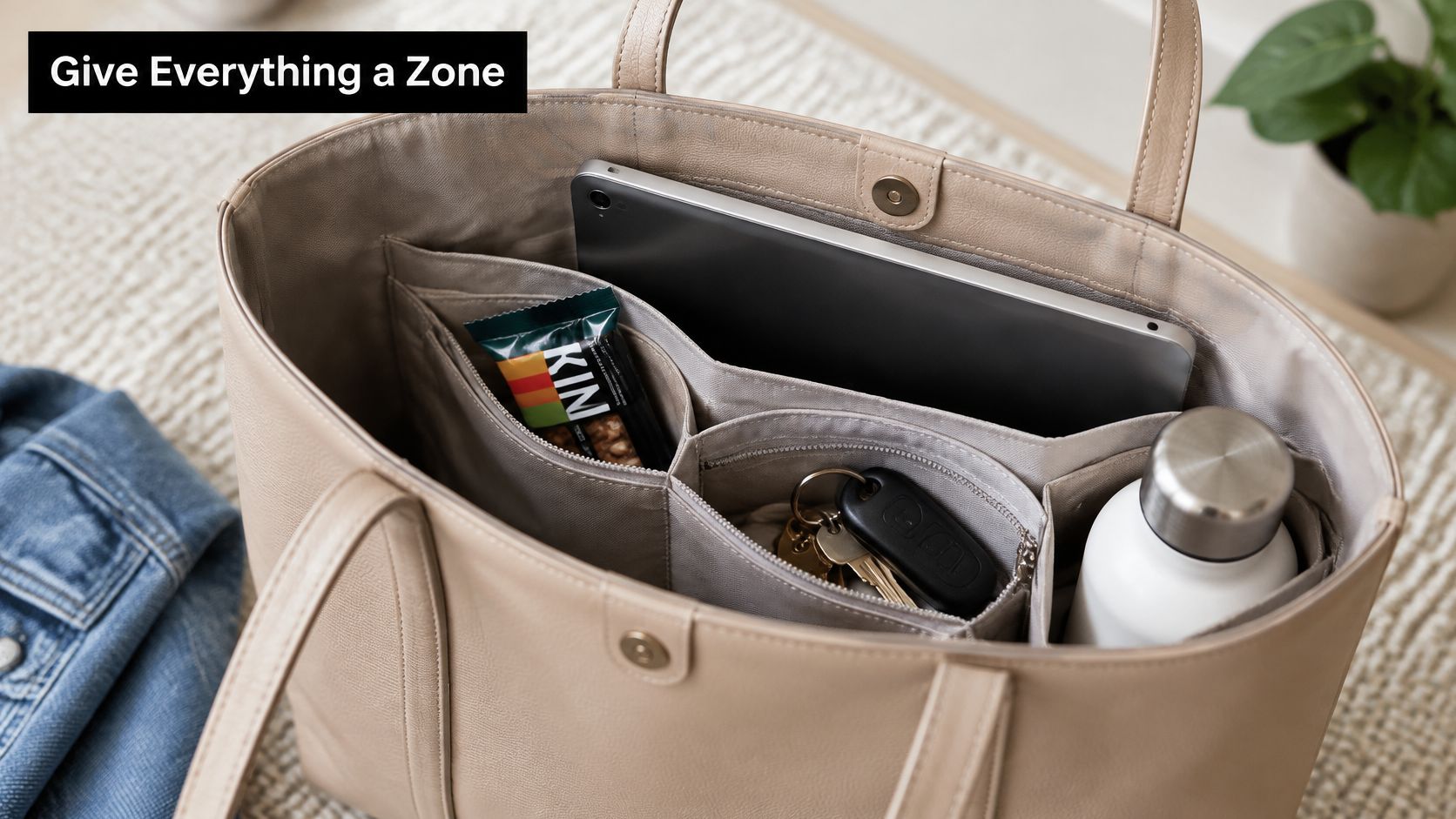
Zoning answers that by giving every category its own address. Tech goes in one compartment, daily essentials in another, snacks and small comforts in a third. A multi-pocket tote does the dividing for you. The Go Anywhere Day Trip Tote has three large zippered compartments plus dedicated pockets for an iPhone and keys, so the boundaries exist before you start sorting. If your bag is the one-big-cavern type, start with this guide to organising tote bags and build the zones from scratch.
The instinct to separate categories is older than any of us. Art UK's visual history of handbags traces it from seventeenth-century pockets tied around the waist, through the slim 1790s fashions that pushed women toward the drawstring reticule, to nineteenth-century rail travel, when bags picked up ticket pockets and compartmentalised interiors because people suddenly had papers and money to keep close.
Three zones to start with
- Tech: phone, charger, earbuds, tablet sleeve. Nothing else goes here, ever.
- Daily essentials: wallet, keys, lip balm, sunglasses. The things you touch twenty times a day.
- Everything else: snacks, wipes, a spare hair tie, whatever the season demands.
A zone isn't a pocket. It's a promise that the same thing will be in the same place tomorrow.
Use the largest compartment for bulky items so they stop shifting around, and reassign zones when your routine changes. The school-year layout and the summer layout are not the same bag.
2. Give Phones and Keys a Dedicated Landing Pocket
Say you're in the drop-off line, one hand on the wheel and the other reaching for your keys. A dedicated pocket makes them easier to find than a deep, unstructured tote. Give your phone and keys the same landing spot every day, and your hand will learn where to go.
Give the pocket a repeatable job
At the farmers market, keep your phone and keys in a quick-access pocket, with a transit card or earbuds if there's room. Put the spare charger deeper in the bag. The small-bag layout follows the same idea: keep your phone and keys together in a small bag for keys and phone.
- Return them when you arrive: Put your keys and phone back before taking off your coat.
- Keep the keyring compact: A smaller ring is less likely to crowd the pocket.
- Clip keys in place: A small lanyard or clip can keep them from sinking to the bottom.
At the airport gate, use the same pocket after security. Familiar placement makes the next reach simple, even when the rest of your bag is full.
3. Nest Small Zippered Pouches Inside the Bag
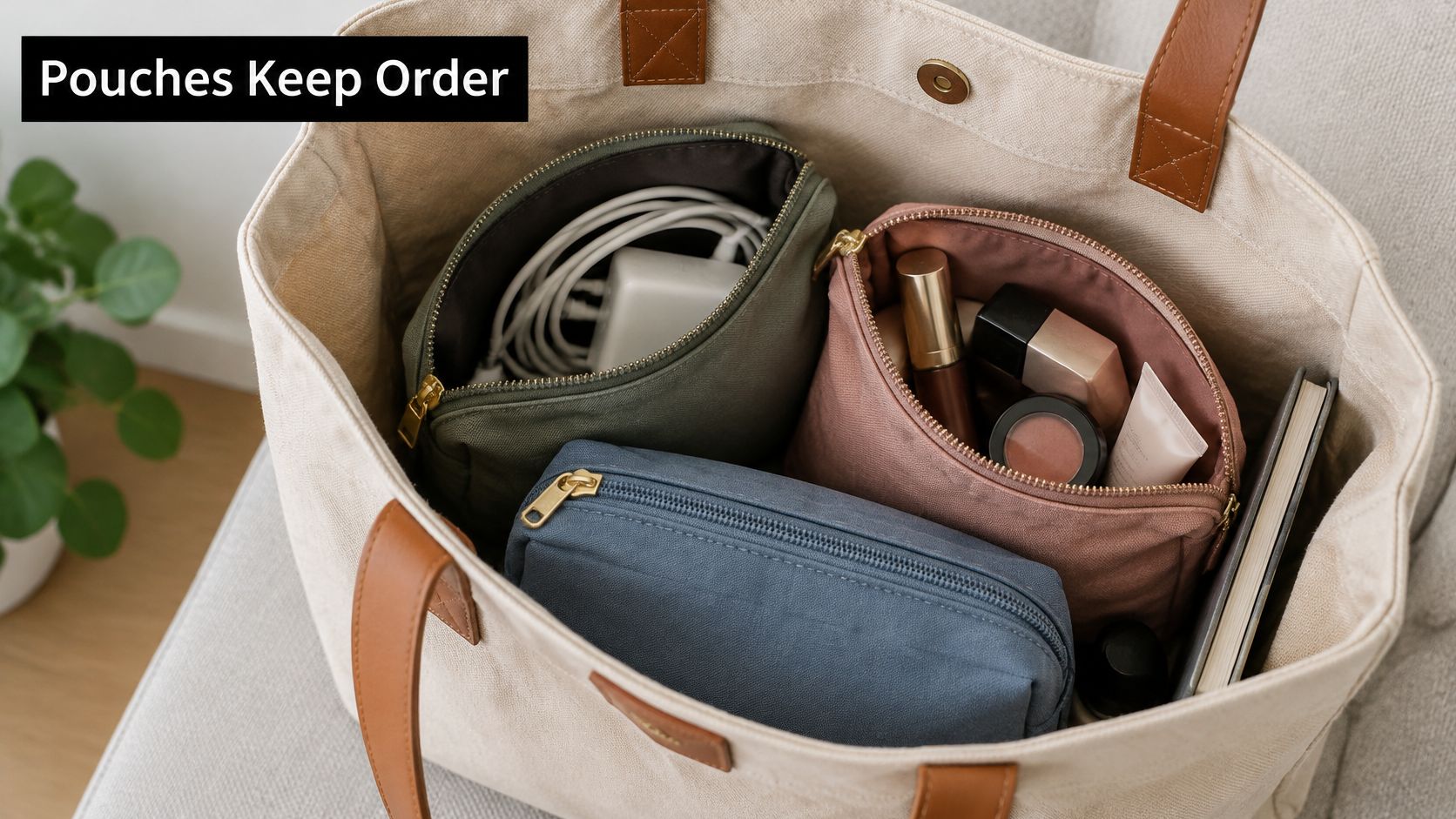
Say a café owner is heading from a morning shift to an overnight stay. A zippered pouch keeps her chargers together, another holds toiletries, and a third contains medication or first-aid supplies. At the hotel, she can lift out what she needs without tipping everything onto the bed.
Choose pouches that fit inside the tote without crowding it, then keep the ones you use most near the top. A handbag pouch for organising small items can hold one clear category, such as cosmetics or cables. Give each pouch a consistent place so packing and unpacking feel straightforward.
The one-item rule
At the airport gate, a lip balm should be easy to reach without removing more than one other item. If finding it takes several zips and a full bag search, simplify the pouch layout.
A few pouches can separate categories while leaving room for the rest of the day's essentials. Label them if the bag is shared. Keep special travel items together so they're easier to pull out when needed. For carry-on screening, TSA's passenger FAQ explains the rules for medically necessary liquids and for formula, breast milk, juice, and toddler food.
4. Use Clear Pouches for Quick Visibility
A crowded farmers market, a Saturday morning queue for peaches, and the one thing you want is a lip balm that has vanished beneath a reusable shopping bag and a child's water bottle.
Clear pouches cut that search in half. You see the contents before you commit to unzipping, which means fewer small delays across a day that's already full. They pair beautifully with a zoned tote: categories stay separate, and everything stays visible.
Practical rule: if you'd be comfortable opening it in a checkout queue, it belongs in a clear pouch.
Three things make a clear pouch earn its place. Right-size it so your most-used items fill it without rattling around. Keep opaque pouches for anything private, medical or easily embarrassed by daylight. Wipe it clean every week or two, because a cloudy pouch defeats the entire point.
A beach-day mum can use a clear pouch for sunscreen and lip balm and spot both from the car. A commuter can use one for cables and earbuds and never untangle a headphone cord again.
5. Separate Wet and Dry Items for Beach and Gym Days
You come off the sand or out of the pool, and the next stop is the school gate. Your phone is in the bag. So is a damp swimsuit, thanks to a hopeful towel.
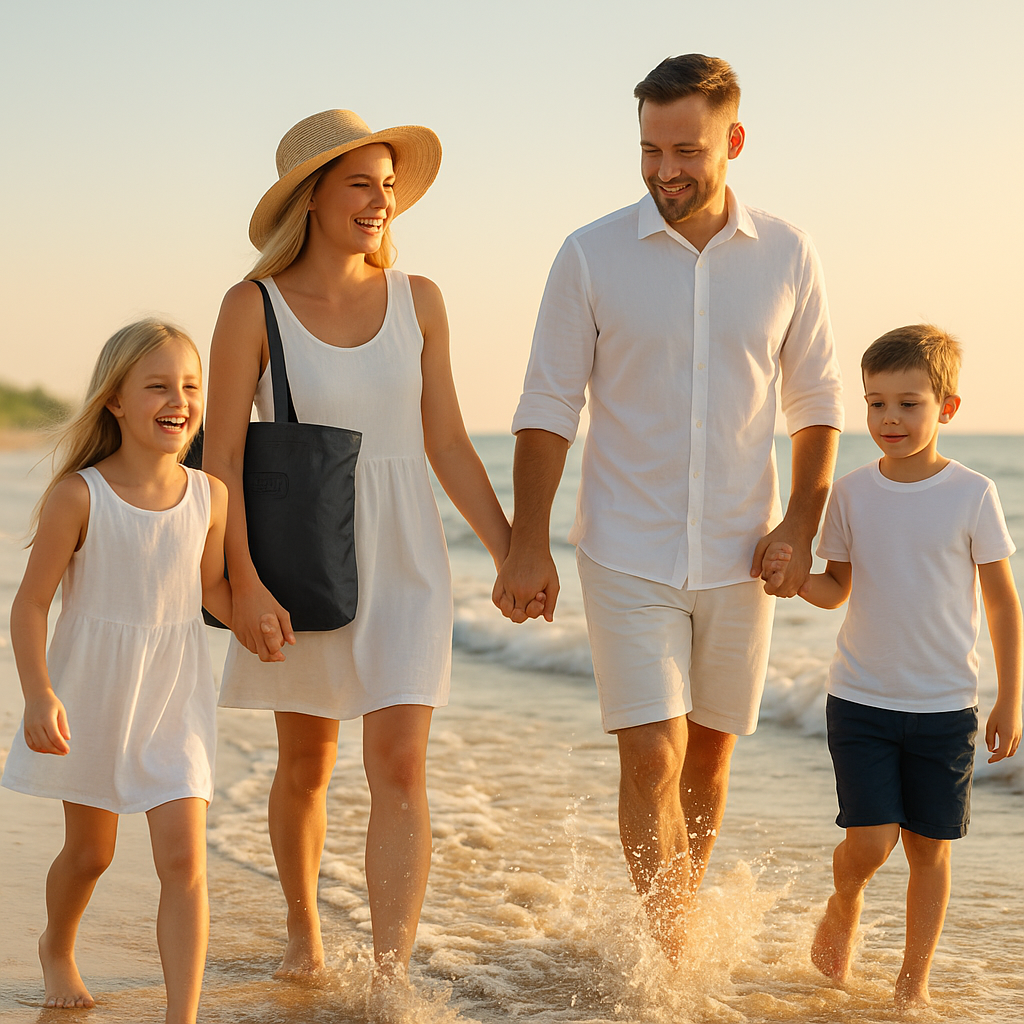
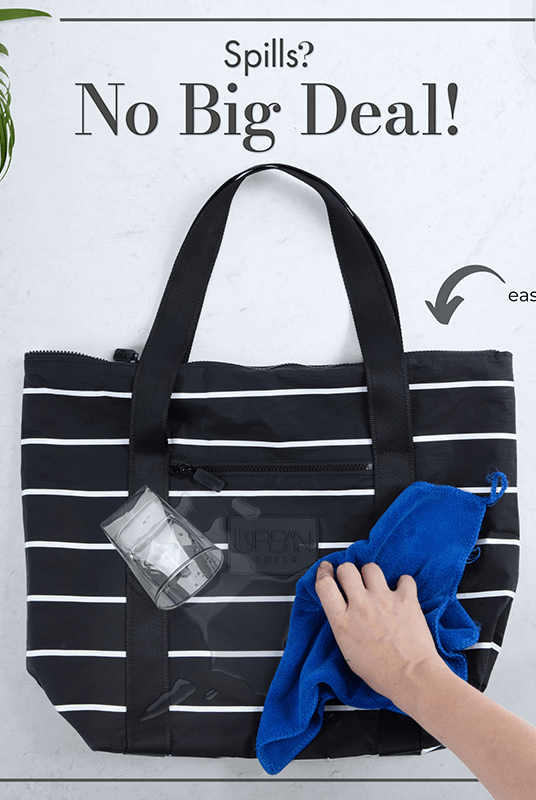
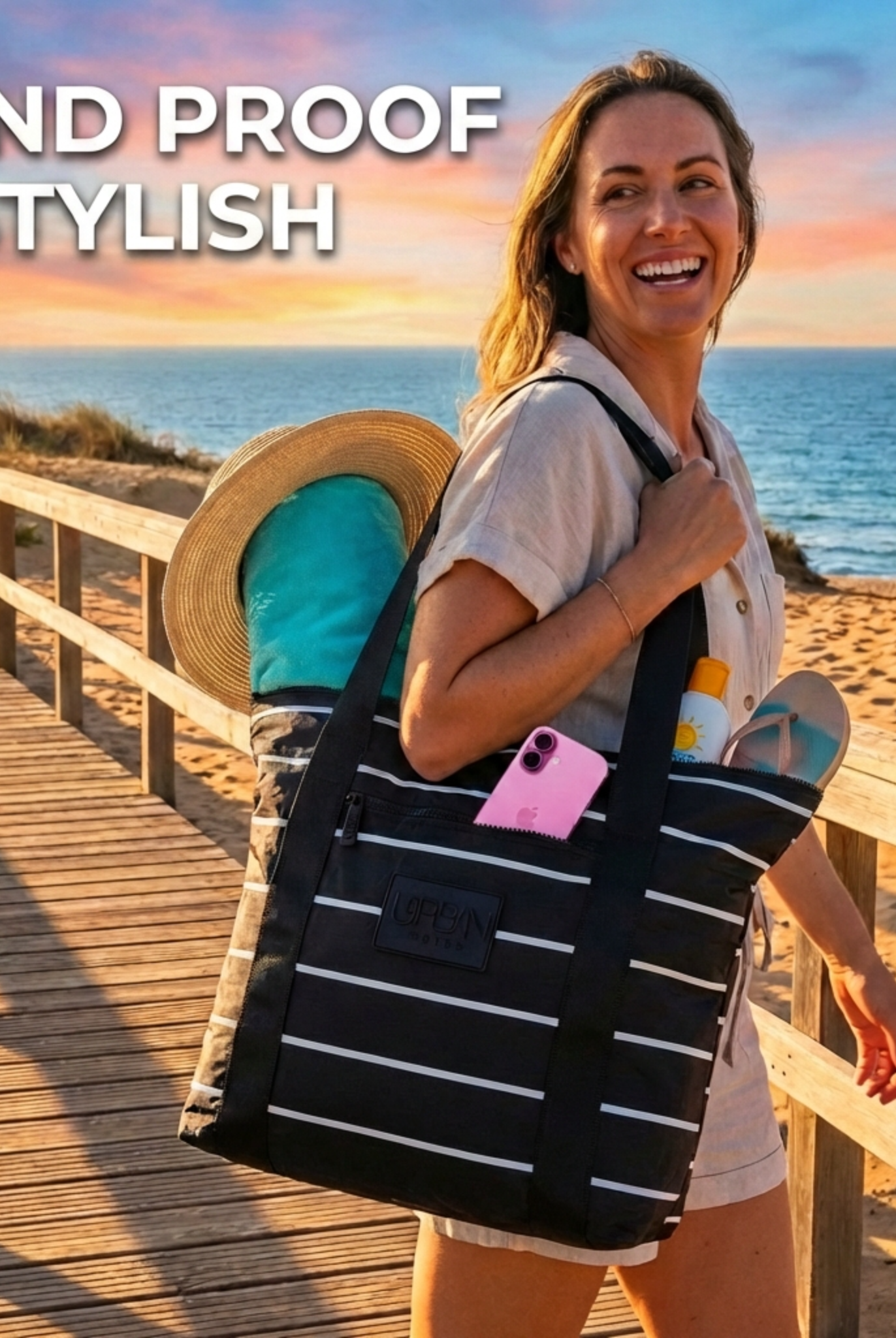
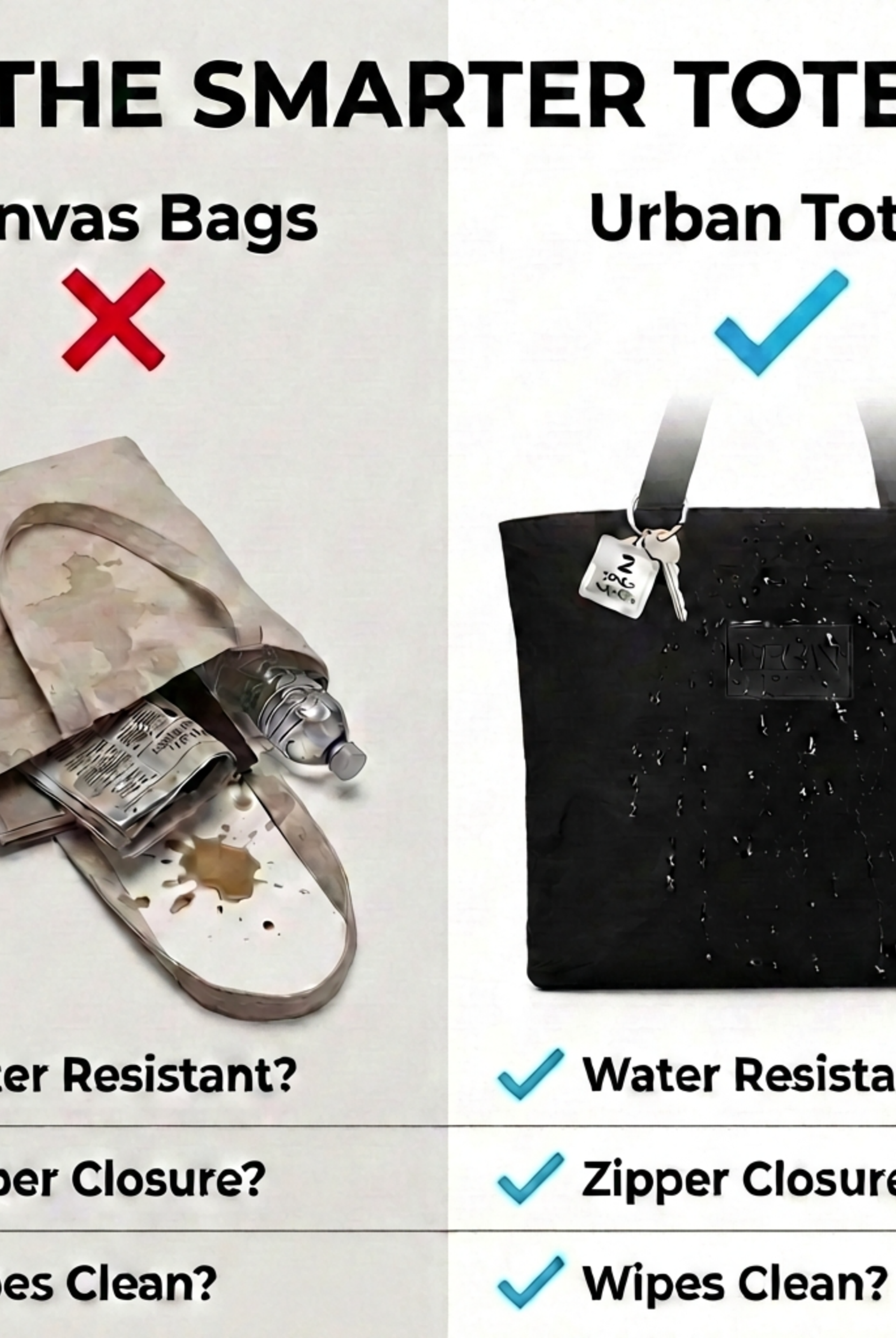
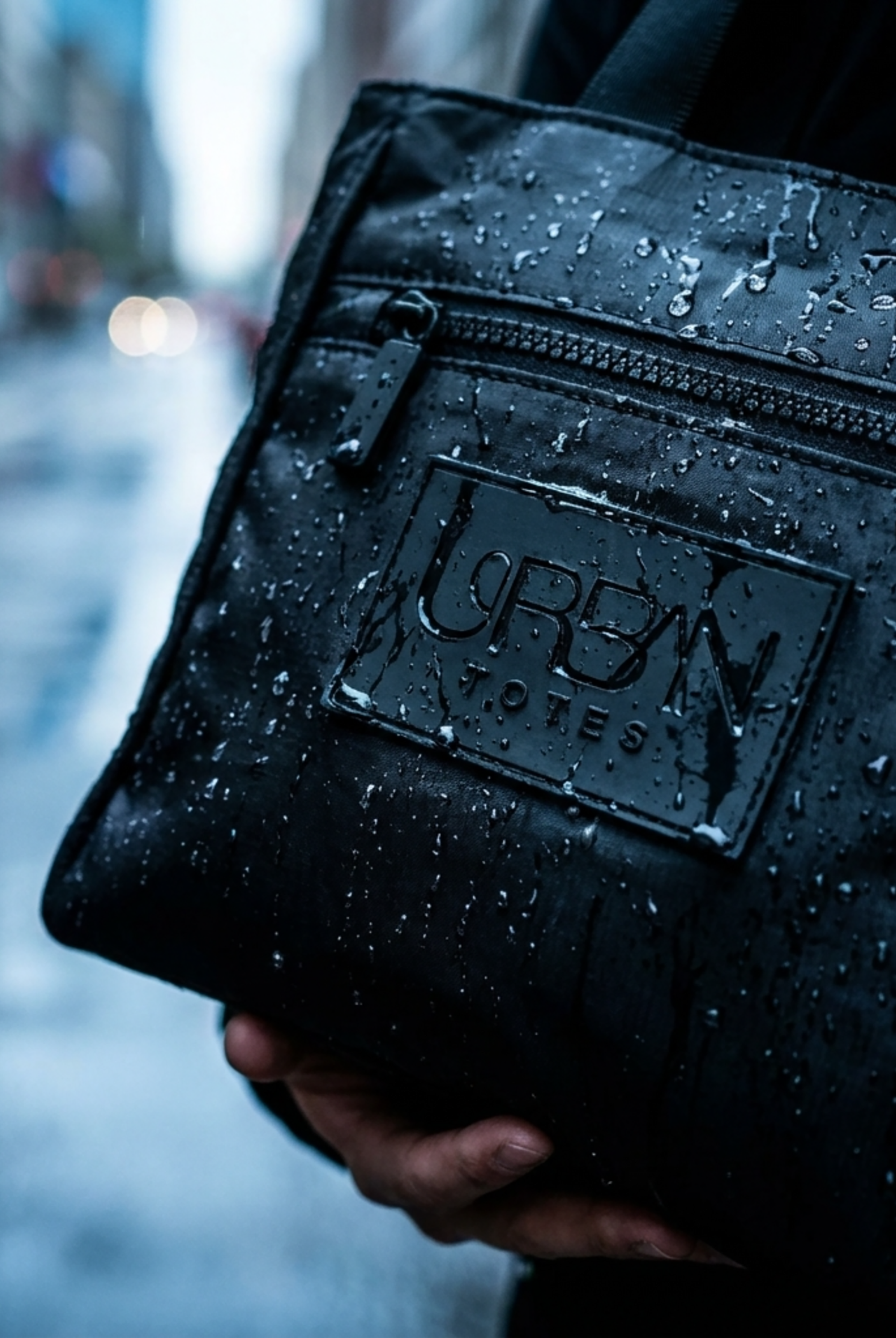
Separating wet from dry protects everything else in the tote. A zippered pouch for swimwear, a damp towel or sweaty gym clothes gives you a hard boundary, while the main compartment keeps your phone, wallet and keys clean and dry. Our water-resistant totes were designed for exactly this rhythm, from the beach car park to the driveway at home.
That zipper is doing serious work. Business Insider's history of how handbags changed traces how bags moved from small decorative reticules to miniature pieces of luggage with sturdy handles, snap closures and multiple internal compartments meant to separate and protect different categories of belongings. The zipper was invented in 1913 and was reportedly used in a handbag design a decade later, when the Hermès Bolide became associated with the first handbag using a zipper closure.
Build the wet side properly
- Zip pouch for anything damp: swimsuit, towel, socks, gym layers.
- Air it out first: wet items come out of the bag the moment you're home.
- Rinse and dry the bag: after a sandy day, shake it out and wipe the interior.
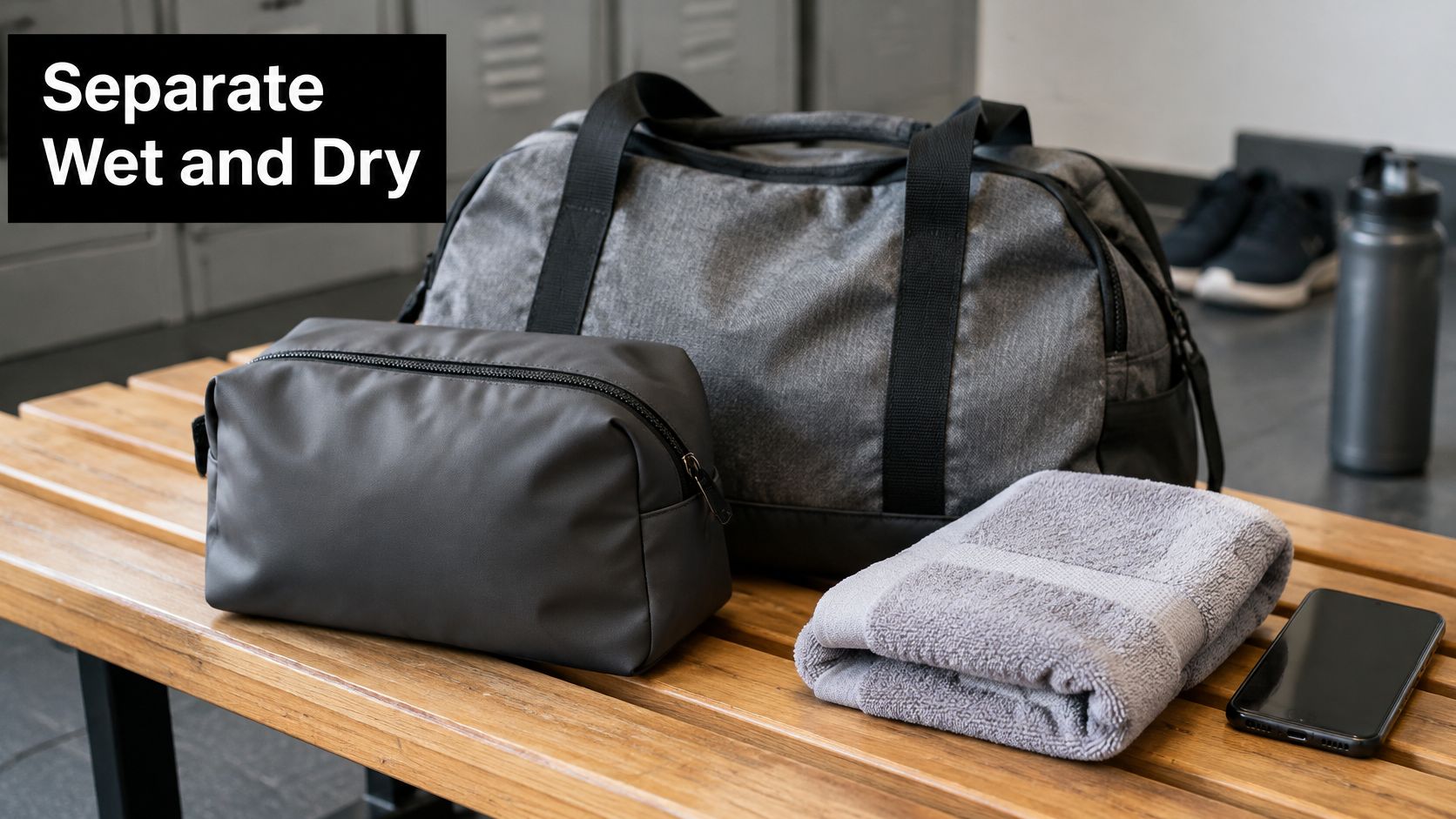
A yoga regular can run the same play after class. Sweaty clothes go to the wet pouch, clean layers stay in the dry compartment, and the phone never touches a damp towel.
6. Pack Layers Strategically for Travel
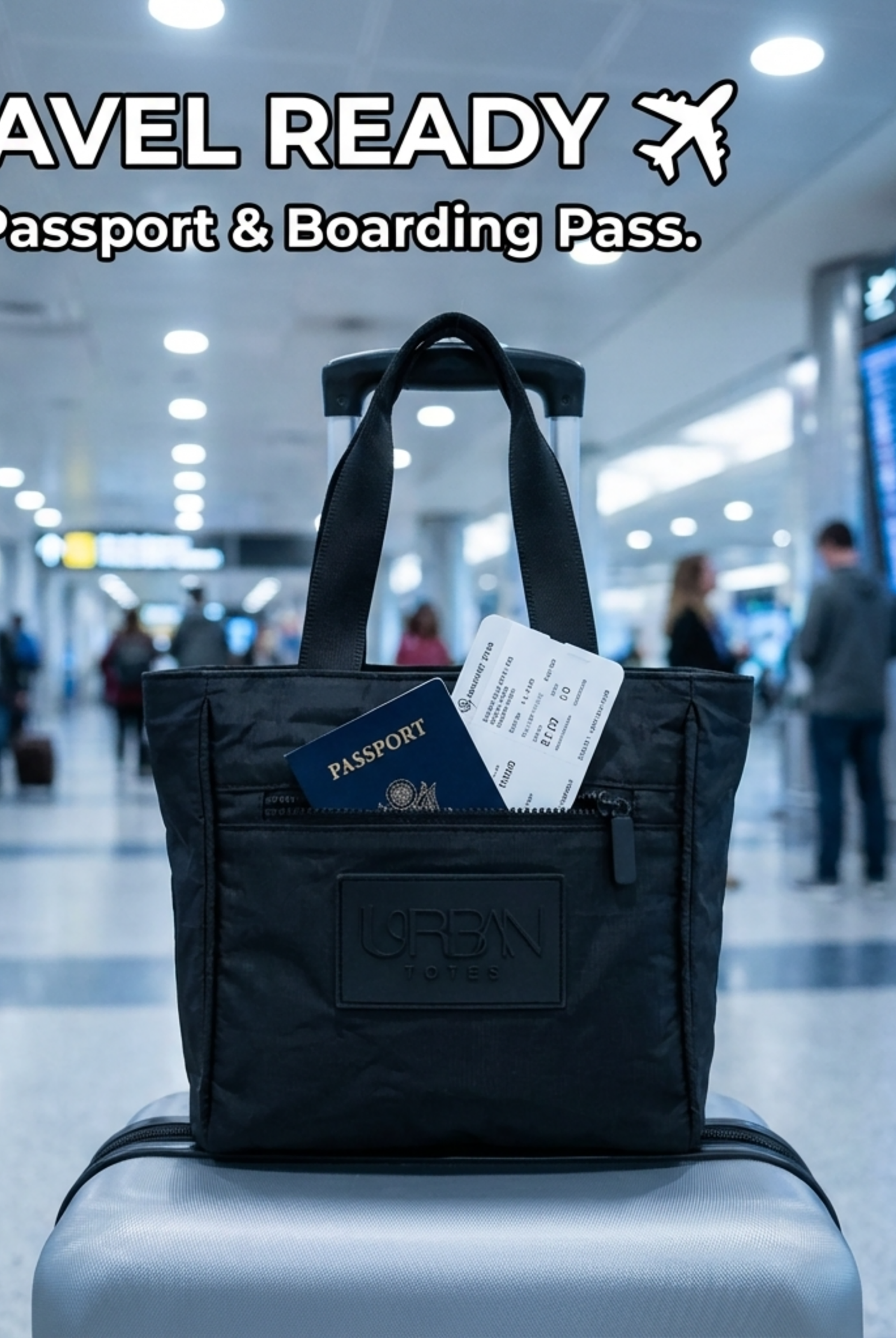
The terminal is loud, your boarding pass is in the bag somewhere, and the gate agent has just called your zone.
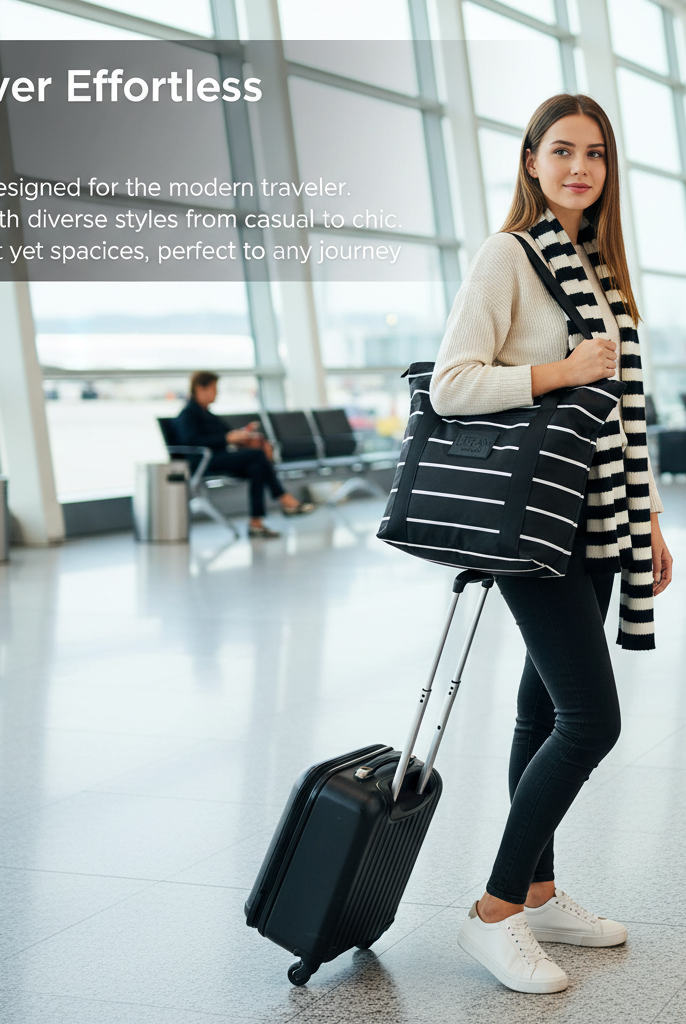
Strategic layering fixes this. Heavy, bulky items go low and close to your back. Flat things like documents and a tablet go in the interior sleeve. Quick-grab items sit at the top. Everyday-carry guidance for commuters and travellers recommends keeping heavy objects close to the body and near the bag's centre, separating rigid tech into a padded sleeve, and keeping frequently handled items in a quick-access zone. Dense items carried near the body reduce strain on your shoulder, and a dedicated sleeve stops a laptop corner pressing into a phone screen.
The packing order that lasts a full travel day
- Bottom layer: shoes or anything bulky, wrapped so it doesn't rub.
- Back and centre: laptop and heavy items, closest to your spine.
- Top layer: a liquids pouch and snacks, ready for screening.
- Outer pocket: boarding documents, passport, phone.
The liquids pouch isn't optional. The TSA 3-1-1 rule limits each liquid, gel, aerosol, cream or paste container to 3.4 ounces (100 milliliters), requires all of them to fit in one quart-sized clear zip-top bag, and permits one bag per passenger. Decanting at home is faster than buying at the airport, and Mouthology's travel-size toothpaste packing tips show how small that kit can get.
Electronics have their own rule. TSA's travel checklist recommends placing laptops, tablets, e-readers and any device larger than a cell phone in a screening bin with nothing above or below them, and packing large electronics on the top layer of a carry-on. When the layers follow that logic, you're not repacking under pressure. Read the full walkthrough on how to pack a tote bag for travel before your next trip.
7. Run a Weekly Bag Reset
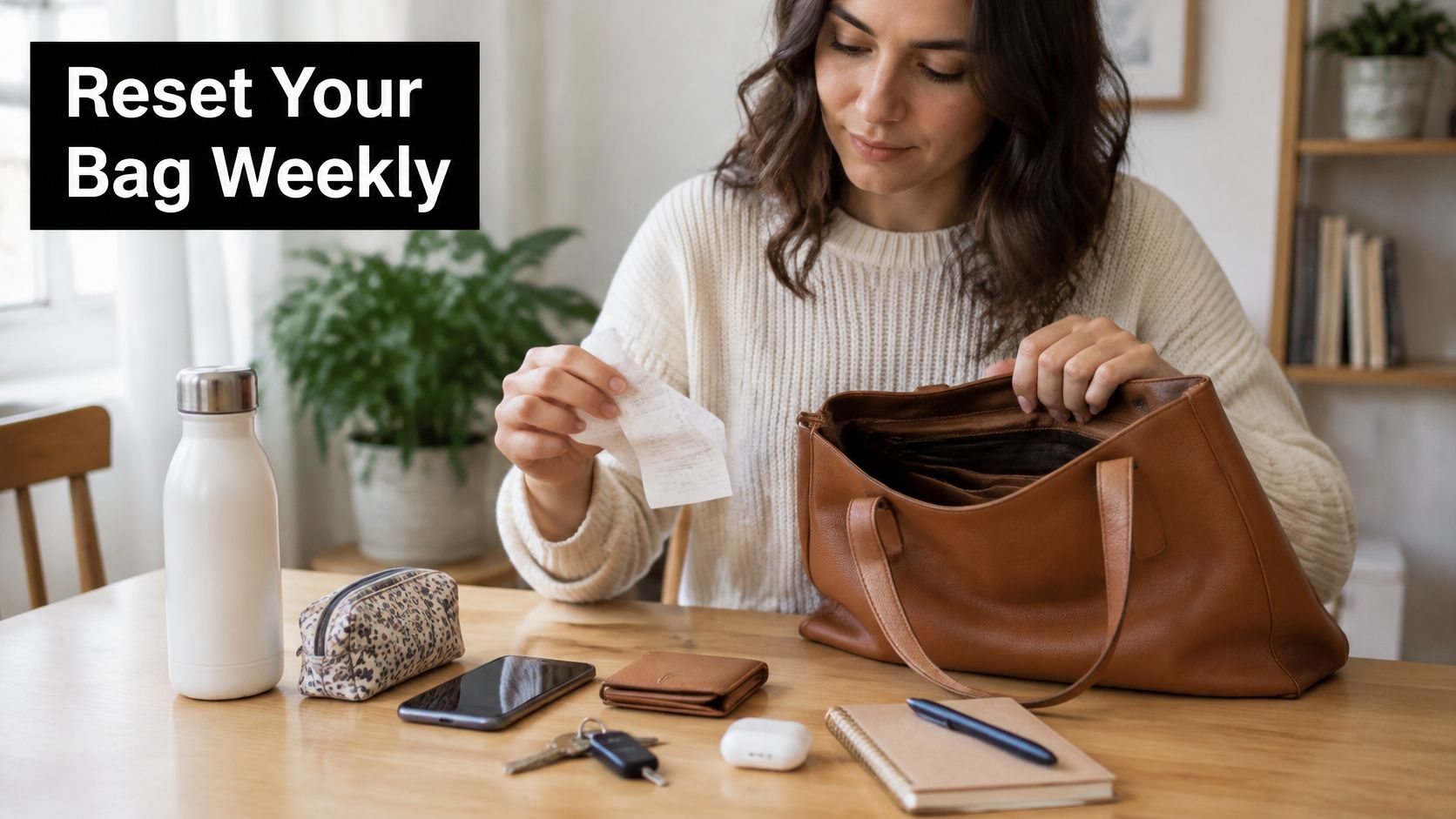
Friday afternoon, a commuter sets her tote on the entryway table before heading out for the weekend. Receipts, a loose peppermint, and two chargers come out first. A quick reset clears the clutter and makes Monday's essentials easier to find.
Empty the bag, wipe it down, and return each item to its usual zone. Regular wiping and emptying help keep a bag looking good and lasting longer. Notice what you used and what stayed untouched, then adjust what you carry.
Make the reset stick
- Choose a regular time: Set a phone reminder for Friday afternoon or Sunday evening.
- Contain loose bits: Keep a small pouch for receipts and wrappers.
- Check your layout: With the bag empty, see whether each zone still suits the week ahead.
A parent might use Sunday evening to check what belongs in the tote for Monday's drop-off line. A commuter could clear it on Friday, ready for a different weekend routine. For more ideas on keeping a tote tidy between outings, explore tote bag storage ideas.
8. Build a Grab-and-Go Essentials Kit for Errands
The errand run was supposed to take thirty minutes. You're in traffic, the bag is full of things you don't need, and the one thing you do need is under all of it.
A grab-and-go kit is the smallest fix in this list. One slim pouch holding only the cards, sanitiser, sunglasses and small notebook you reach for on quick outings. It lives in your bag and moves between totes and crossbodies without repacking.
Preparedness is the whole point of the exercise. A New Zealand Herald survey of 100 American women found every respondent described a handbag's main purpose as being prepared for possible situations, with common contents including wallets, payment cards, rewards cards, pens, beauty and hair-care products, identification and keys.
Core kit versus maybe kit
The best-organised bag isn't the one with the fewest items. It's the one with a deliberate decision rule for what earns permanent space. Split your contents into two groups.
- Core kit: ID, one payment card, keys, lip balm. Always in the same pocket.
- Conditional items: the spare charger, the emergency snack, the foldable rain layer. They earn their place by situation, not habit.
- Modules: a tech pouch for the office, a caregiving pouch for school pickup, a gym pouch for the evening.
The best system isn't the one with the most pockets. It's the one where every pocket has a job.
A style-conscious minimalist can carry a slim kit with cards, lip balm and keys for quick stops, and leave the big tote at home. A student can build a campus kit with an ID, cash and a charger. Refresh the kit when the season changes and you'll never carry last winter's gloves in July.
The Eight Bag Organisation Ideas Side by Side
| Idea | Best For | Bag Feature It Relies On | Main Trade-Off |
|---|---|---|---|
| Zone Your Tote by Category | Everyday carry and commuting | Multiple compartments with clear boundaries | Needs setup and regular resets |
| Give Phones and Keys a Dedicated Landing Pocket | Quick access to daily essentials | Dedicated phone or key pocket | Works only if items are returned consistently |
| Nest Small Zippered Pouches Inside the Bag | Keeping small items grouped in a large tote | Main compartment with room for pouches | Pouches add bulk and reduce free space |
| Use Clear Pouches for Quick Visibility | Finding small items quickly | Space for transparent zippered pouches | Less privacy and can look busy |
| Separate Wet and Dry Items for Beach and Gym Days | Beach, swimming, or gym trips | Water-resistant exterior and space for a zippered pouch | A pouch adds load; water-resistant is not waterproof |
| Pack Layers Strategically for Travel | Travel and day trips | Interior sleeve and accessible pockets | Requires planning; heavy loads can strain the shoulder |
| Run a Weekly Bag Reset | Preventing clutter over time | Compartments that can be emptied and reset | Requires a regular time commitment |
| Build a Grab-and-Go Essentials Kit for Errands | Quick outings and switching between bags | Space for a small, portable pouch | Needs refilling and can be forgotten when changing bags |
Pick One Zone Tonight and Let the Bag Do the Rest
Stand in your kitchen tonight and name the moment today that made you grit your teeth. It probably involved a bag, a search, and a clock that wouldn't slow down.
If it was the key hunt, set up idea two and nothing else. Phone and keys in the same pocket, used and returned, every single trip. If it was the daily dig through everything, build the three zones from idea one and stop there for a week before you add anything else. One small change, made before bed, and tomorrow's drop-off line feels different.
Organisation is maintenance, not perfection. A bag will get messy again, because life keeps arriving in it. The weekly reset is what brings it back, whether the week held a school run, a gym class or a weekend away.
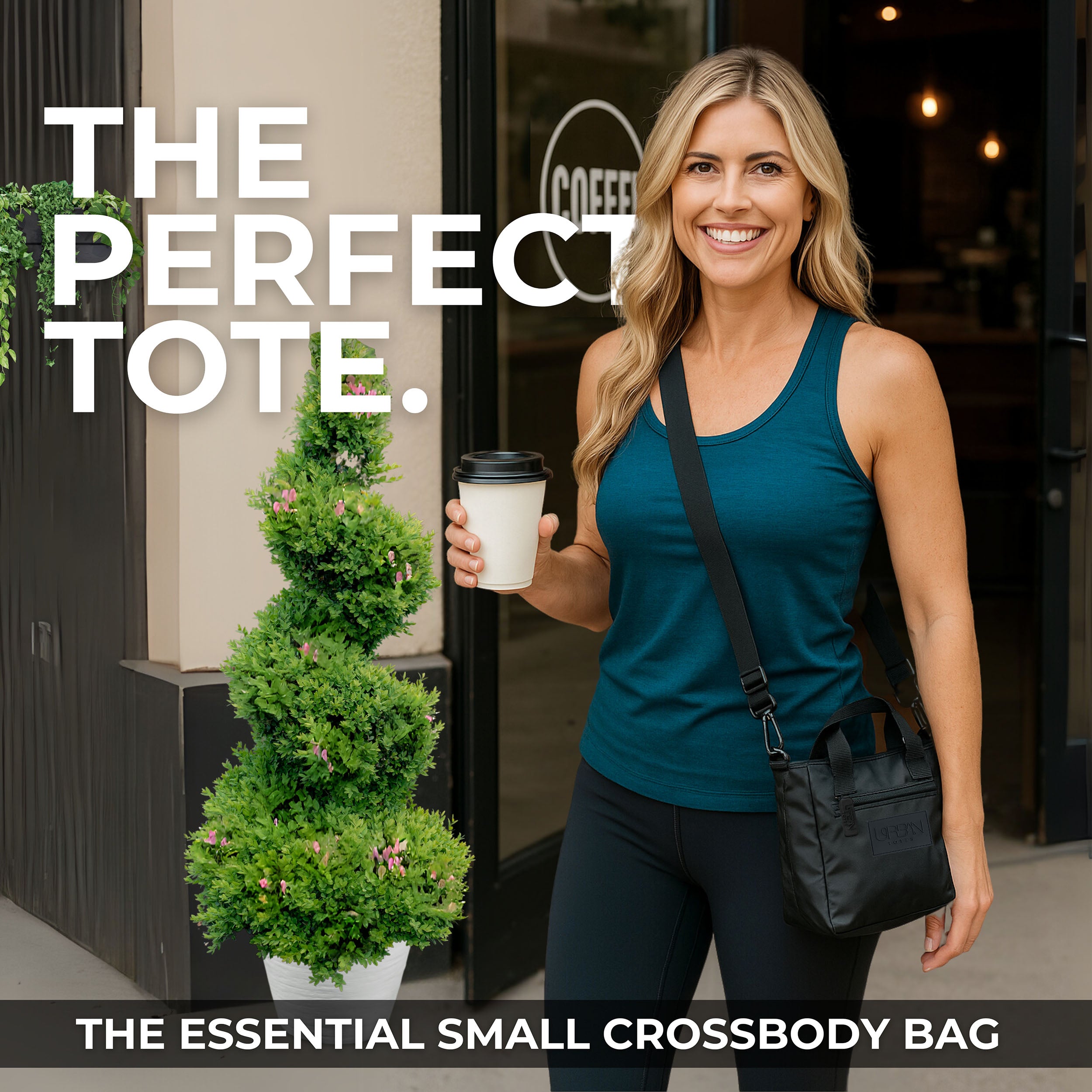
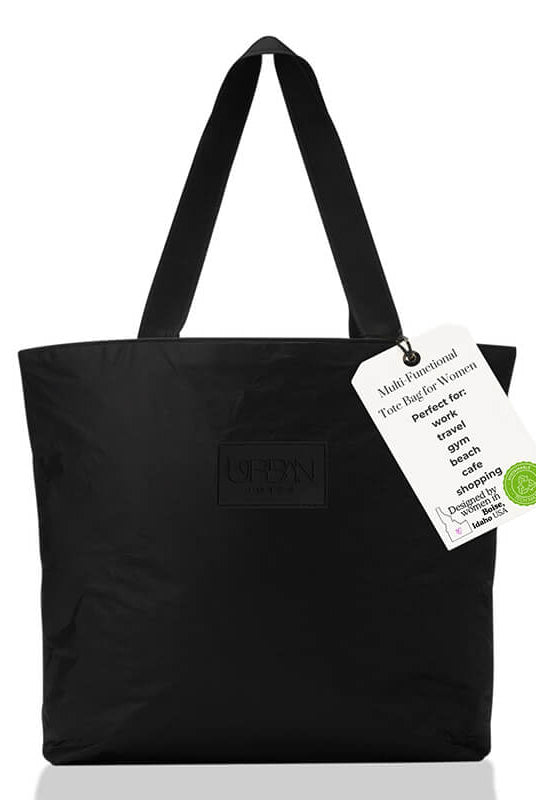
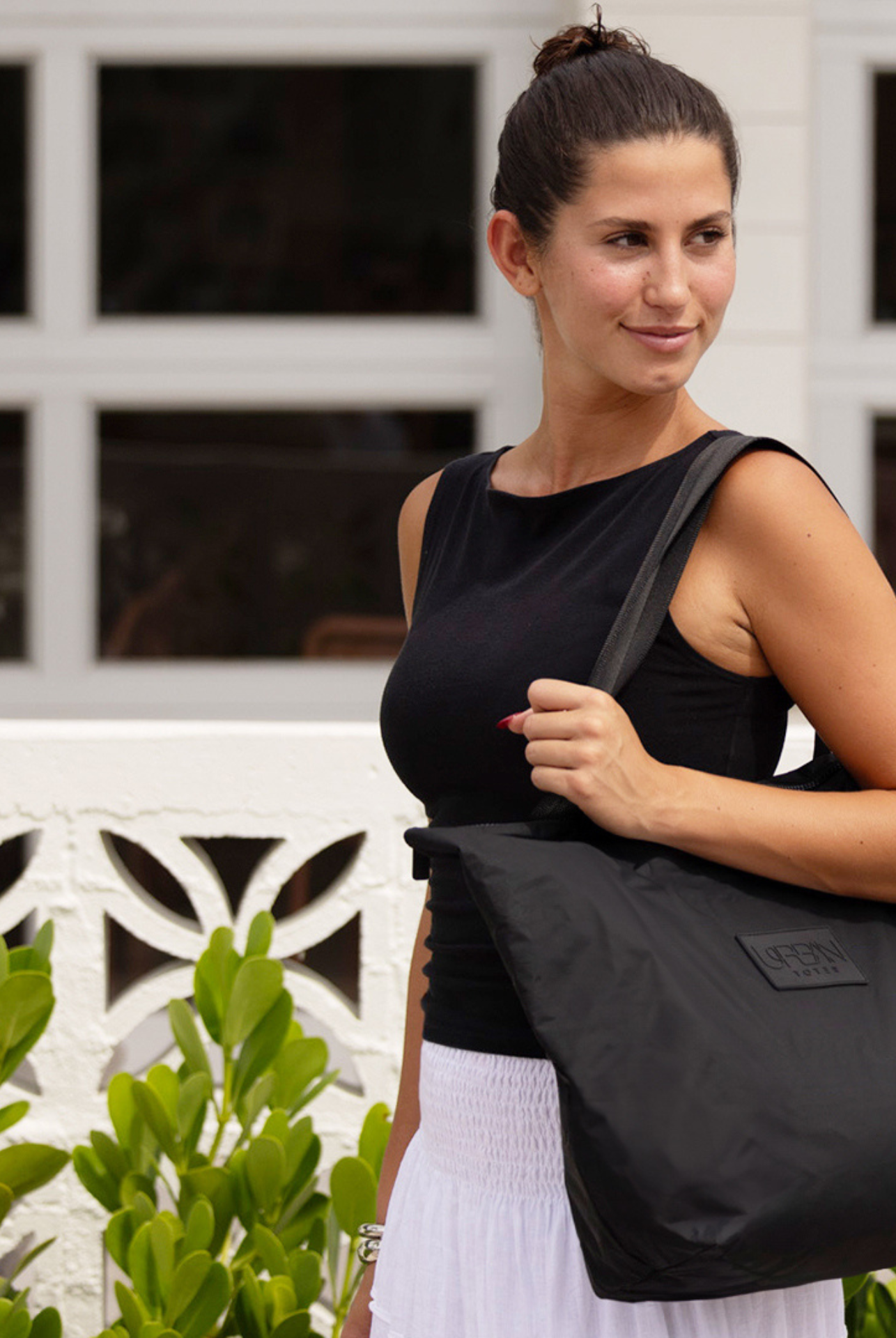
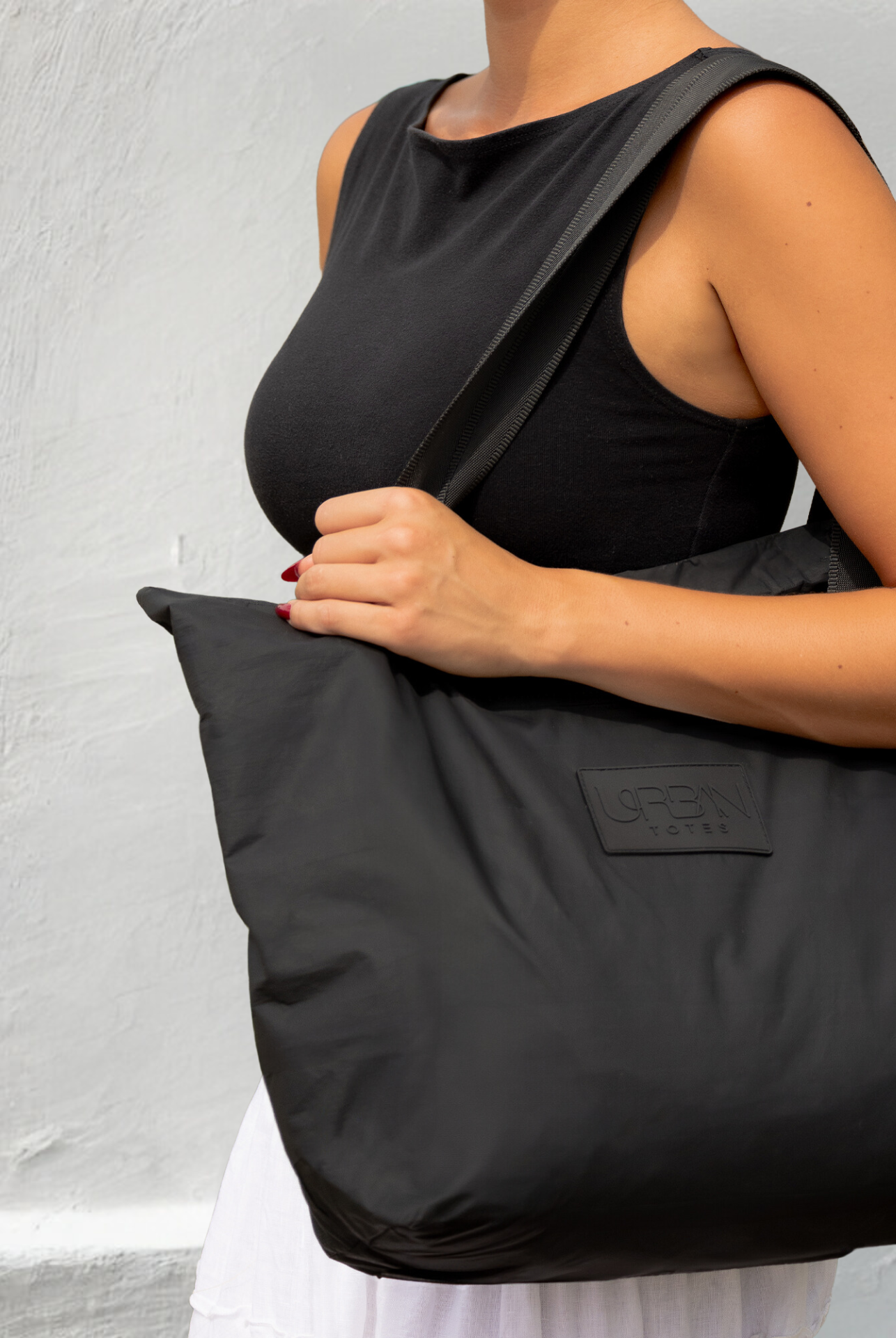
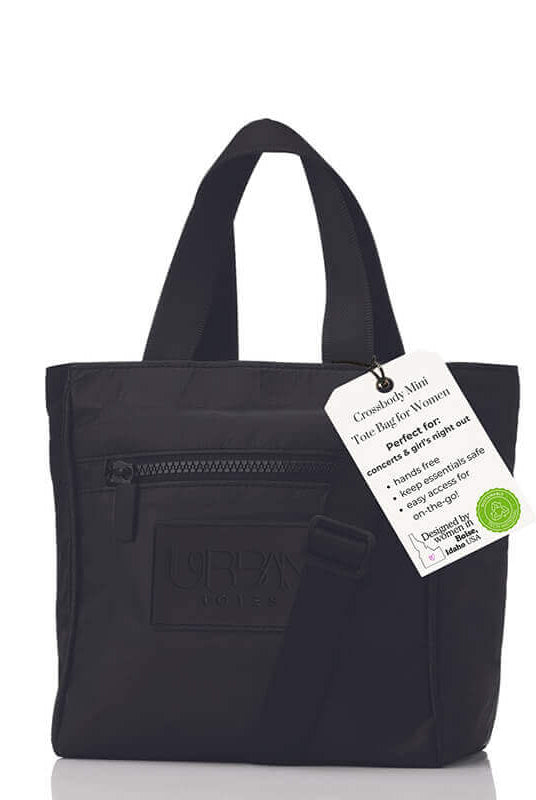
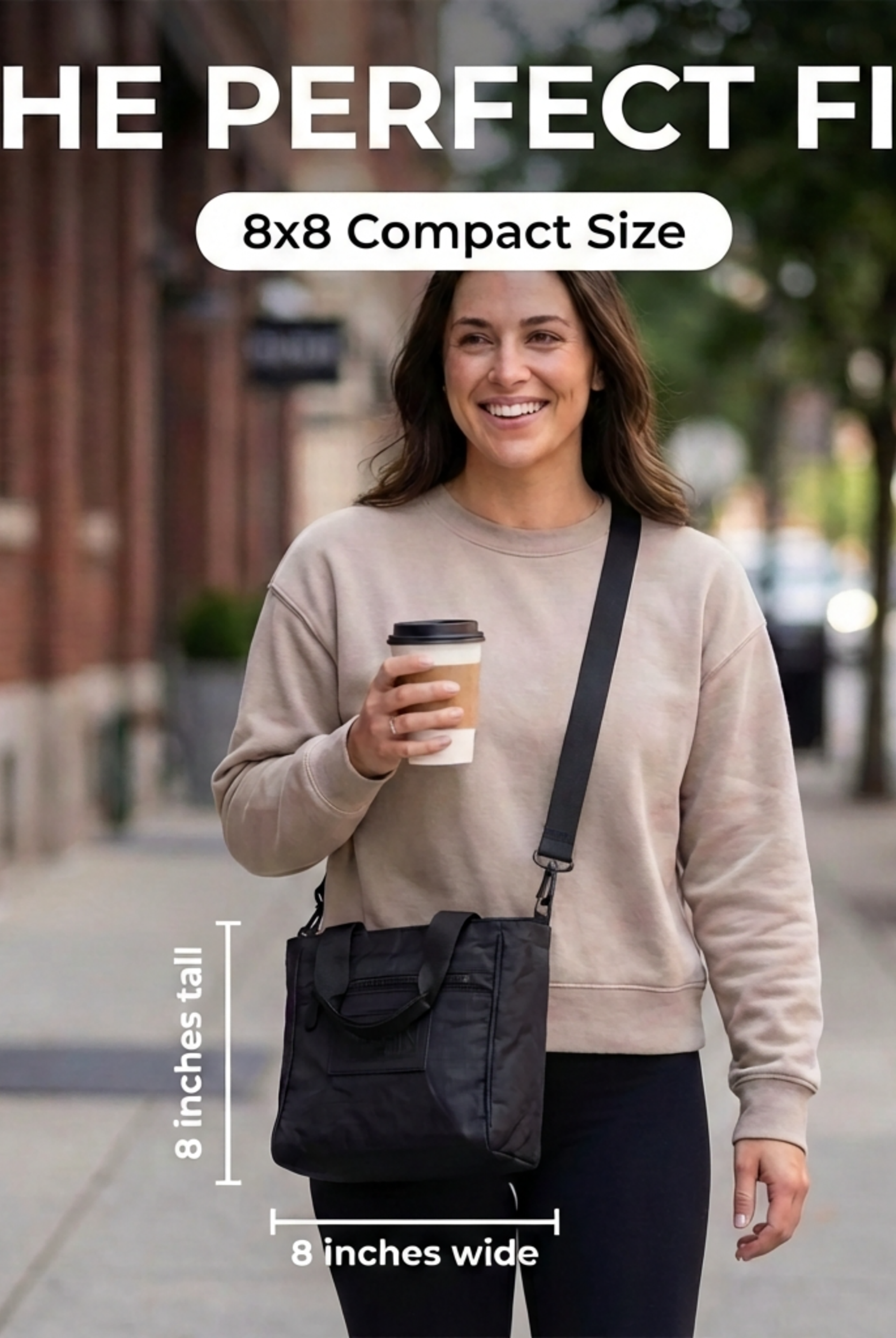
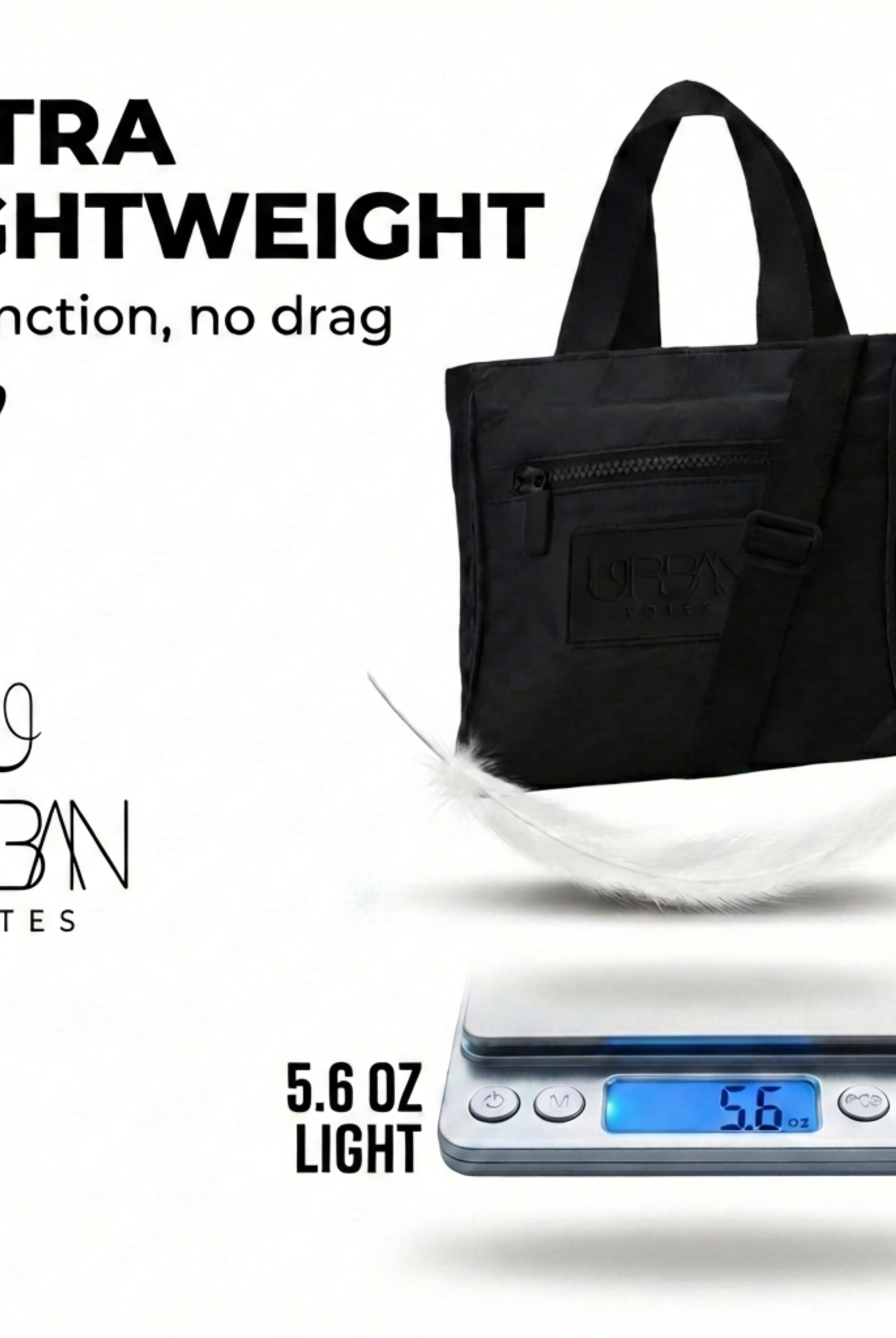
The bag itself does half the work when it's built with compartments and dedicated pockets, so you're not fighting the design every morning. Urban Totes makes lightweight, water-resistant totes and crossbodies with multiple large zippered compartments and specific pockets for your phone and keys, which is the structural half of every idea here. You bring the routine. The bag carries the rest.
If your mornings still start with a search, start with one bag that ends it.
Urban Totes is a woman-owned, Boise-designed brand making water-resistant, lightweight, packable totes and crossbodies with the multi-pocket layout this guide keeps recommending, so the zones, the landing pocket and the layered pack are built in from day one. Every style is designed to move from the office to the gym to the beach without being unpacked in between. Visit Urban Totes to find the tote or crossbody that matches the way your days run.