The boarding call is already echoing through the airport, your phone is at 12%, and the bag on your shoulder has become a portable junk drawer. Your boarding pass is buried under sunglasses, snacks, and a charger, while the tiny purse you considered bringing would barely hold your phone. The same problem appears at school drop-off, the farmers market, and the beach. One bag is too bulky, the other is too small, and neither keeps your actual essentials organized.
A mini travel bag should sit between those extremes. It should be lightweight enough for all-day movement, structured enough to protect your belongings, and versatile enough to move from an airport terminal to a city walk without looking like luggage. The right choice gives you hands-free freedom, quick access, and enough room for the essentials you genuinely use.
Table of Contents
- Why Your Everyday Carry Needs a Mini Travel Bag
- Defining the Mini Travel Bag Size and Capacity
- Choosing the Right Silhouette for Your Lifestyle
- Key Features That Make a Bag Truly Travel-Ready
- Smart Packing Strategies for Compact Spaces
- Elevate Your Journey With the Perfect Go-Anywhere Bag
Why Your Everyday Carry Needs a Mini Travel Bag
A mini travel bag earns its place when your day involves several transitions. You might leave home with your coffee, move through a crowded train station, collect your child from school, and head straight to dinner. A tiny fashion bag can look polished, but it often forces you to choose between your charger and your sunglasses. A large tote solves the capacity problem, then creates another one by turning every item into a search expedition.
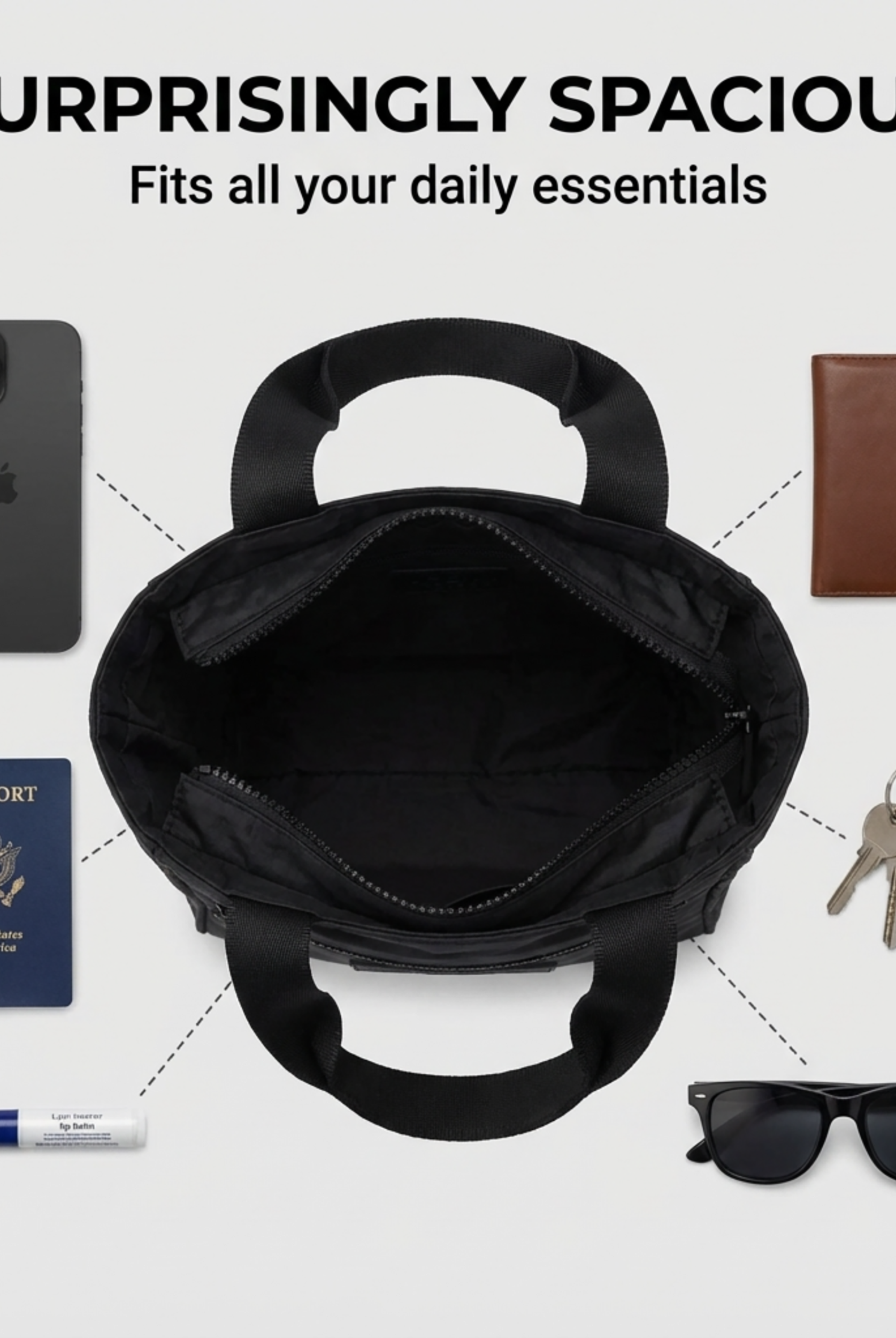
The better middle ground is a compact, organized everyday carry. It holds your phone, wallet, keys, charger, small toiletries, and a light layer without asking you to haul unnecessary bulk. A zipper closure keeps the contents contained, while multiple compartments give each essential a place. You shouldn't need to empty your entire bag onto an airport bench to find your passport.
Practical rule: If you need both hands for coffee, children, transit cards, or a suitcase handle, start with a hands-free silhouette.
The global travel bag market grew from about US$15.2 billion in 2020 to US$21.3 billion in 2026, with a projection of US$32.7 billion by 2033 at a 6.3% CAGR, according to Fortune Business Insights' travel bag market overview. That broader growth reflects how often people now move between commuting, short breaks, air travel, and ordinary daily errands. A smaller carry format makes sense because those trips don't always call for a suitcase or full-size weekender.
The bag that reduces friction
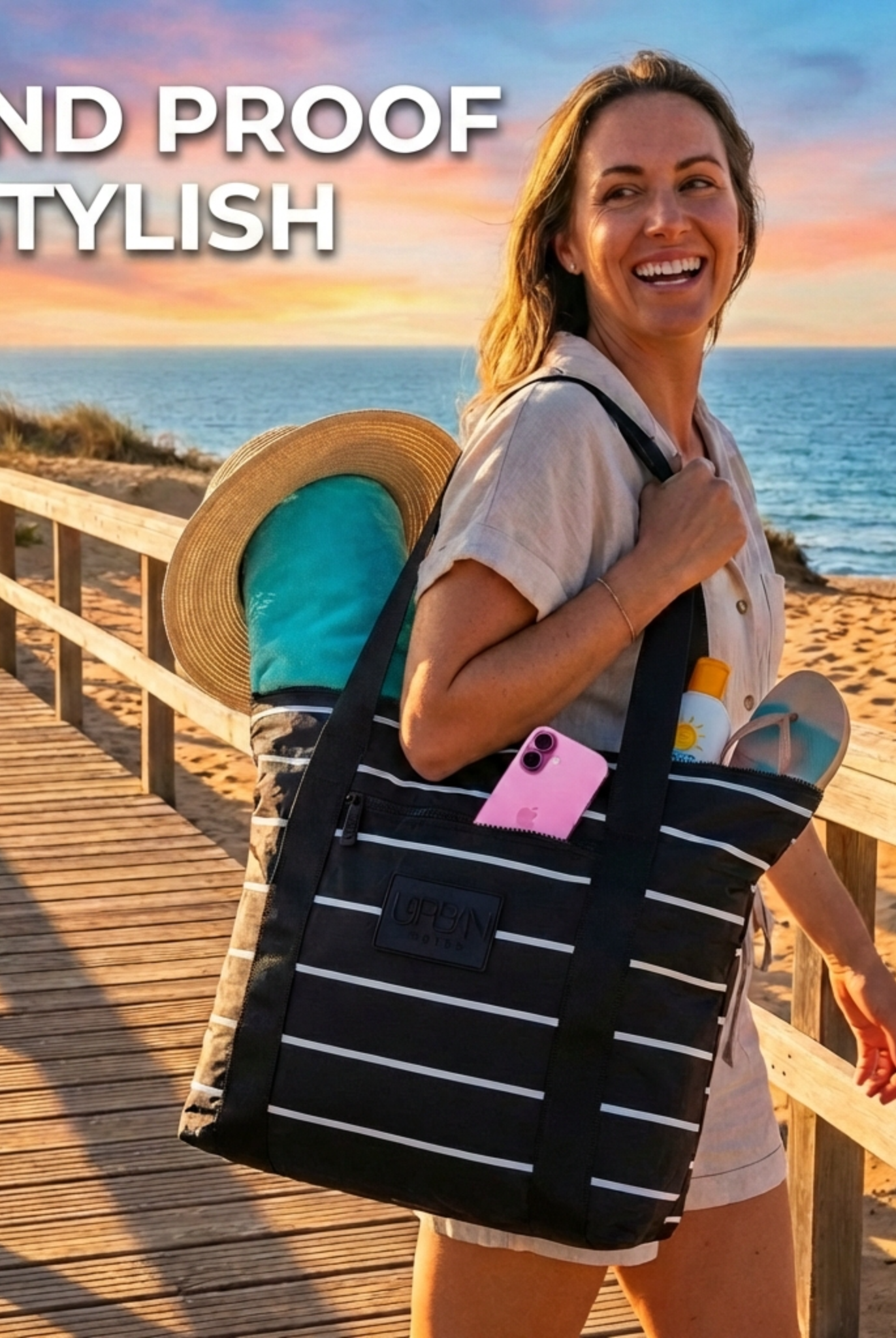
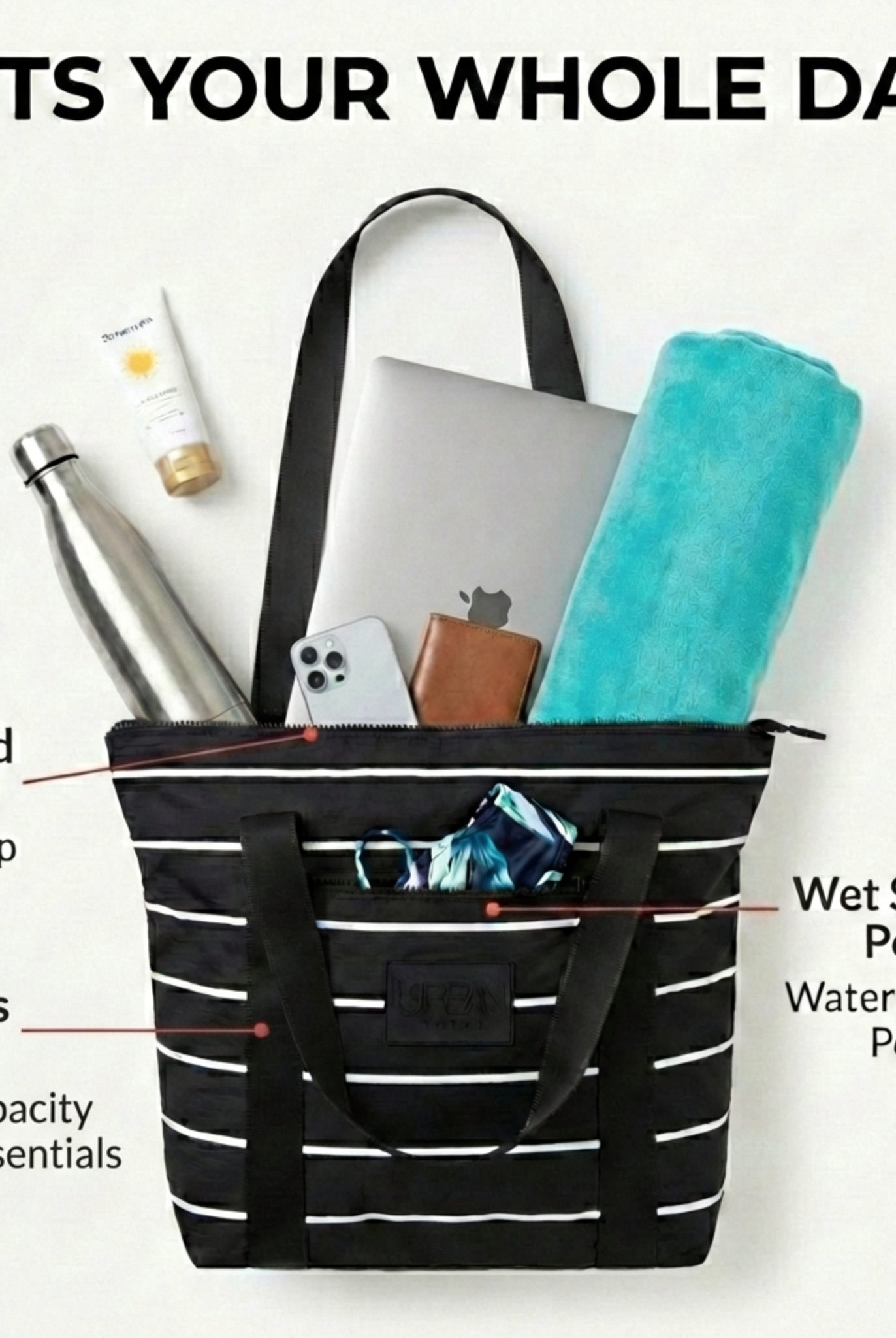
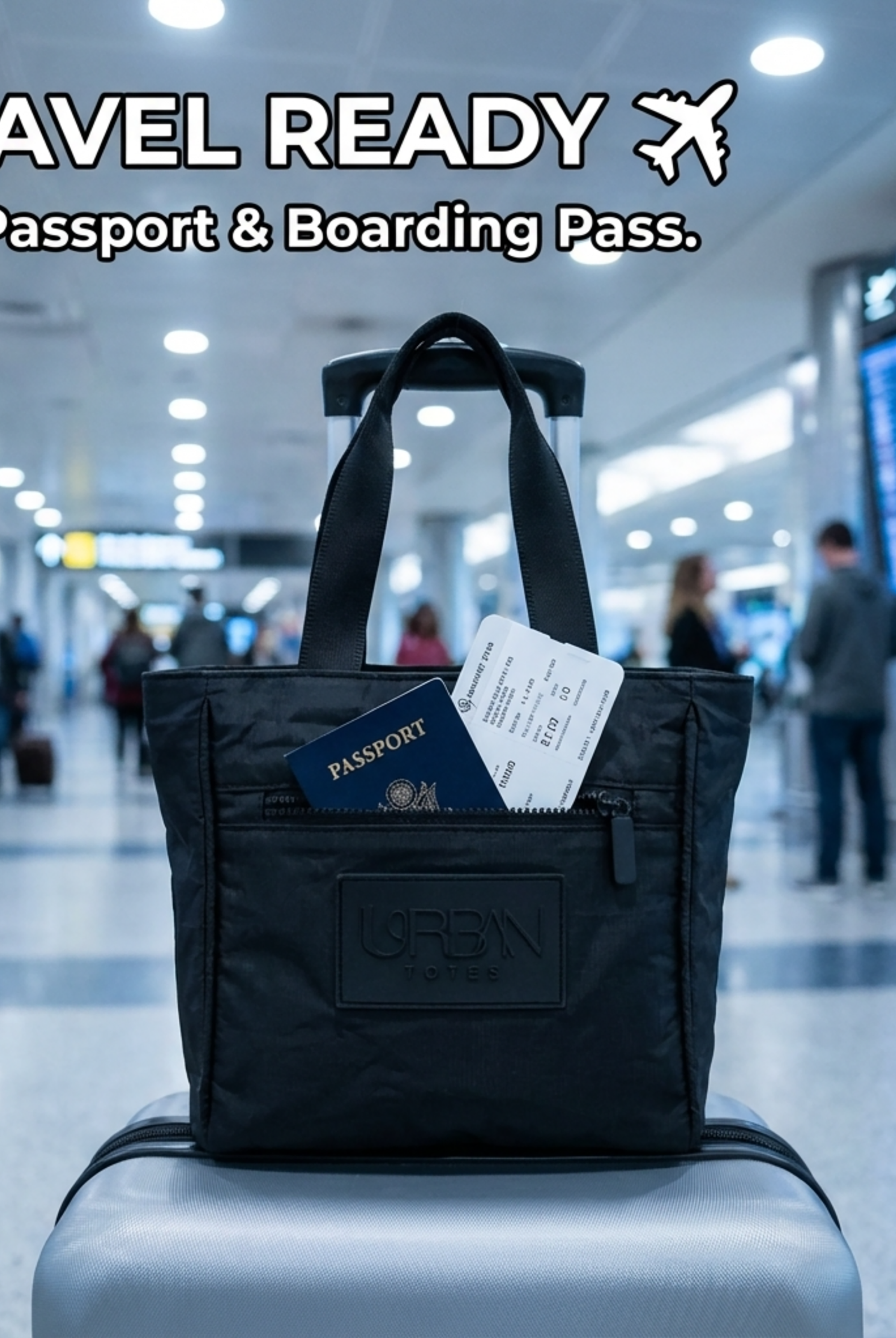
At the airport, a well-designed mini travel bag keeps your boarding pass and phone near the outside, your charger in a secure pocket, and your personal items behind a zip closure. At the beach, it separates sunscreen and sunglasses from a damp swimsuit or snack. During a commute, it keeps keys from disappearing beneath a notebook and lets you move through a crowded platform without swinging a bulky tote into other passengers.
A useful everyday crossbody bag guide is a good starting point if you want hands-free carry with enough organization for real routines. Look for a bag that works with your clothes and your schedule, not one that only looks appealing in a styled photograph.
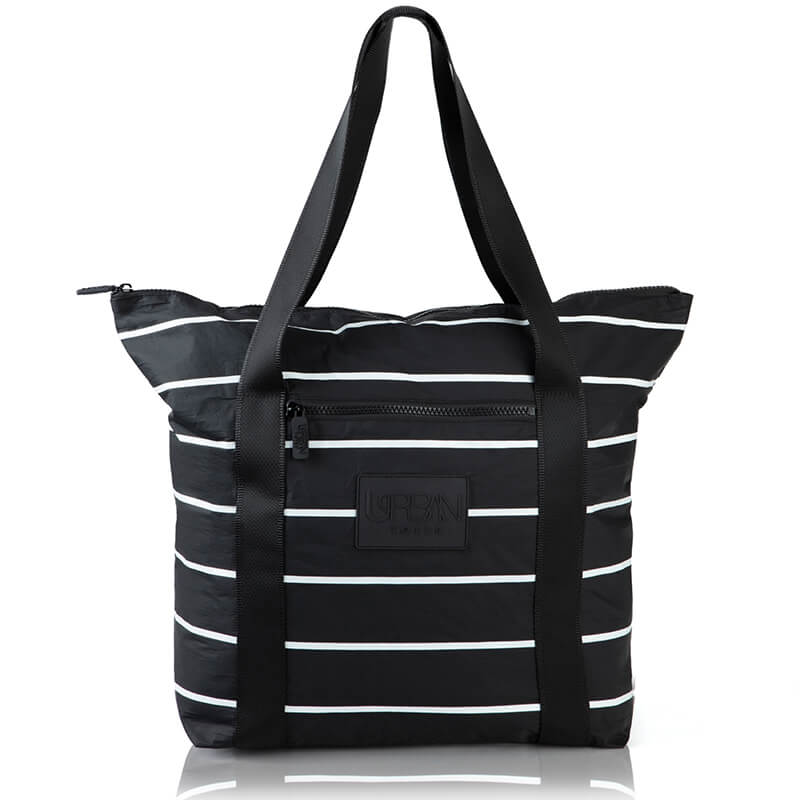
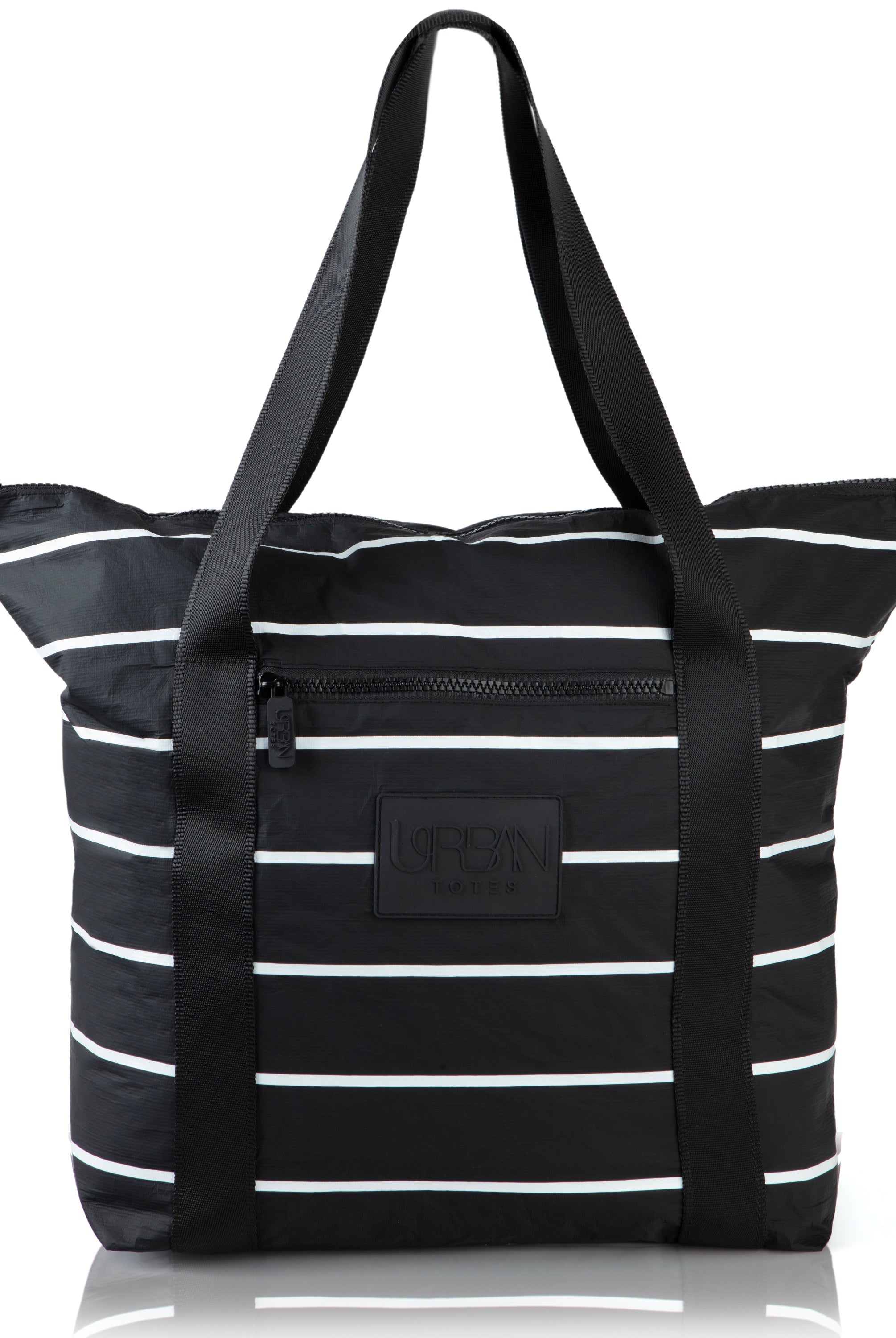
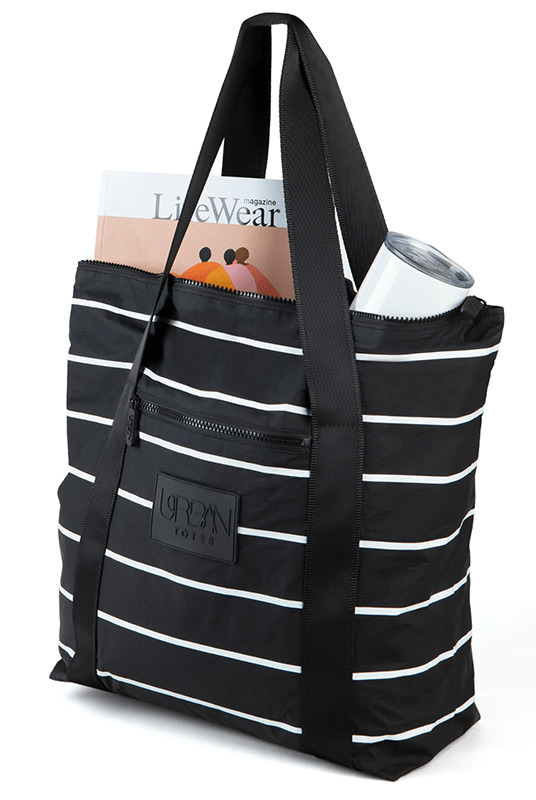
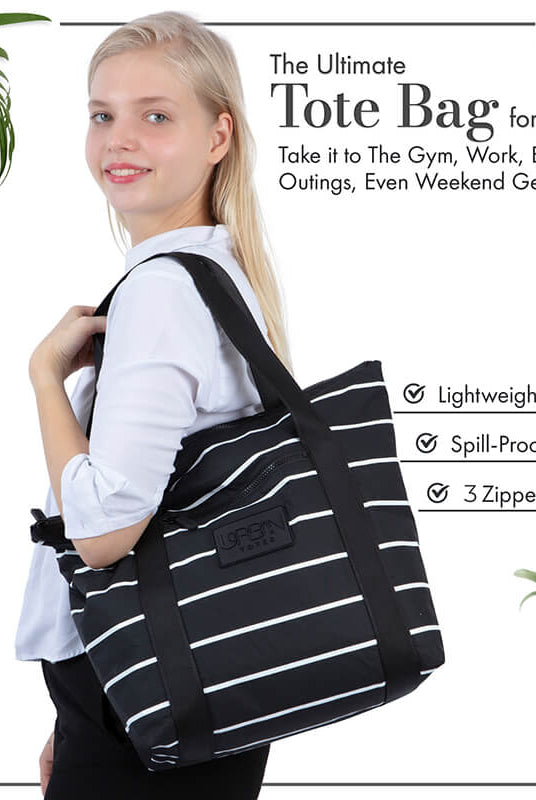
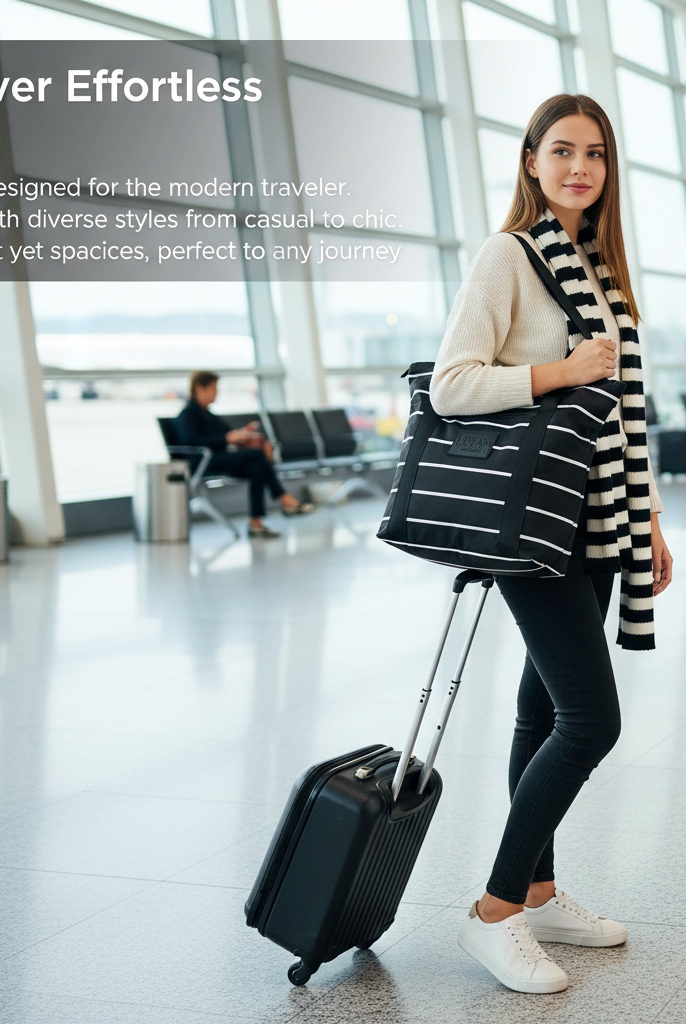
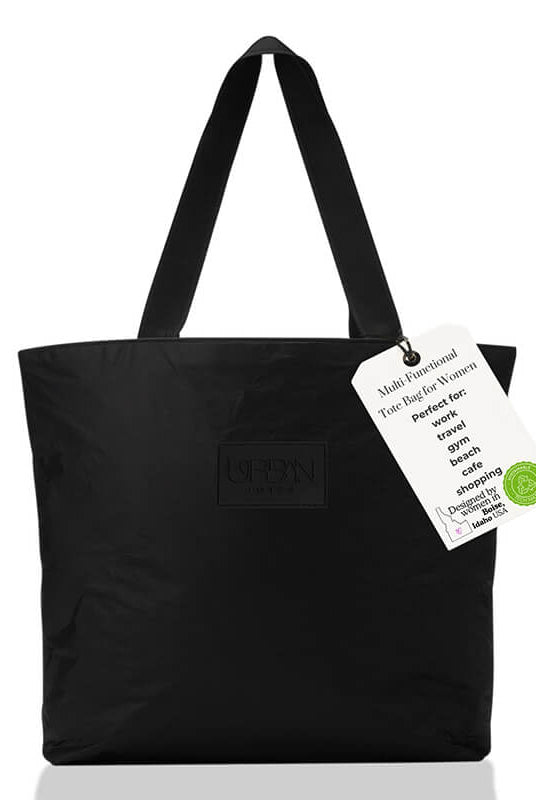
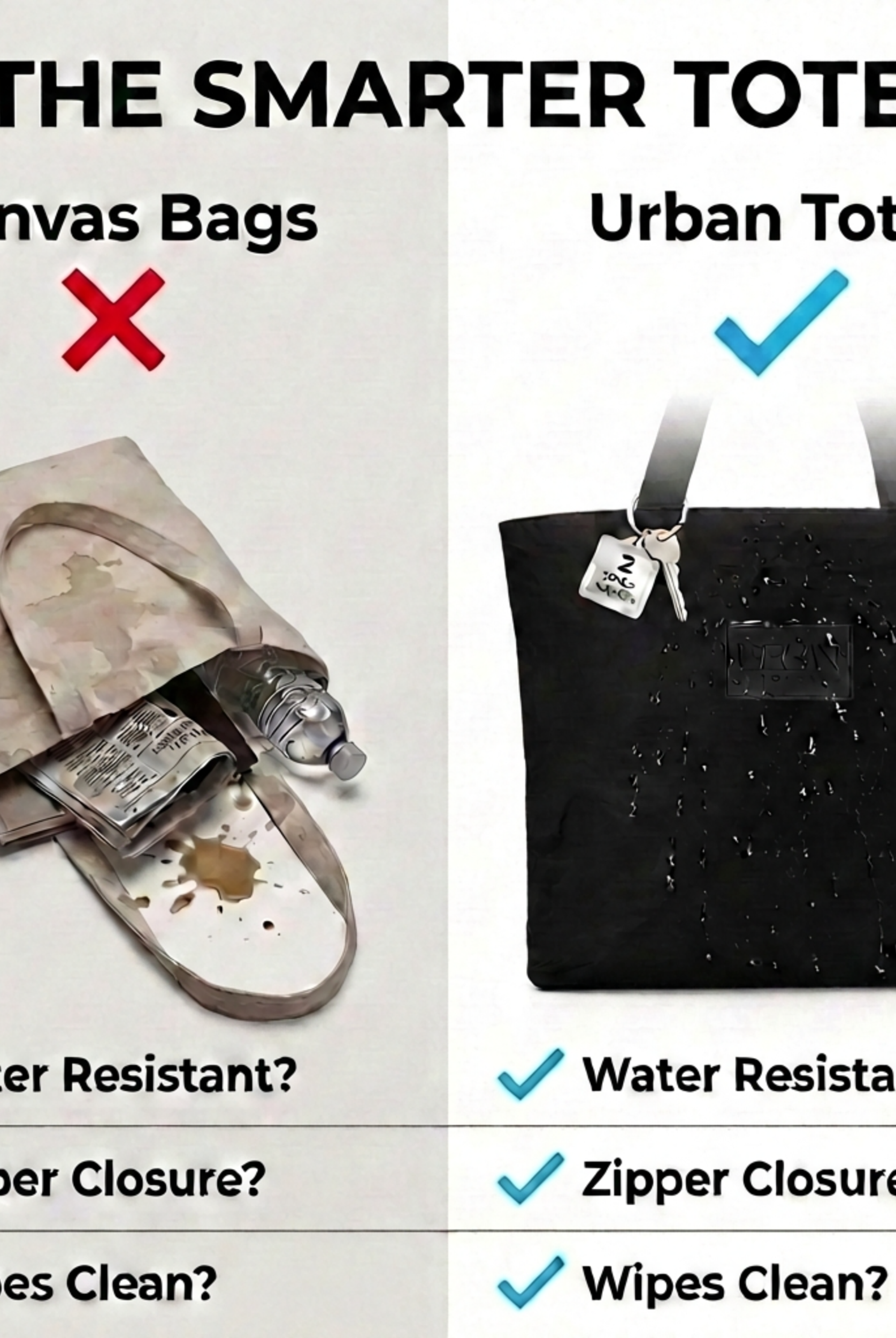
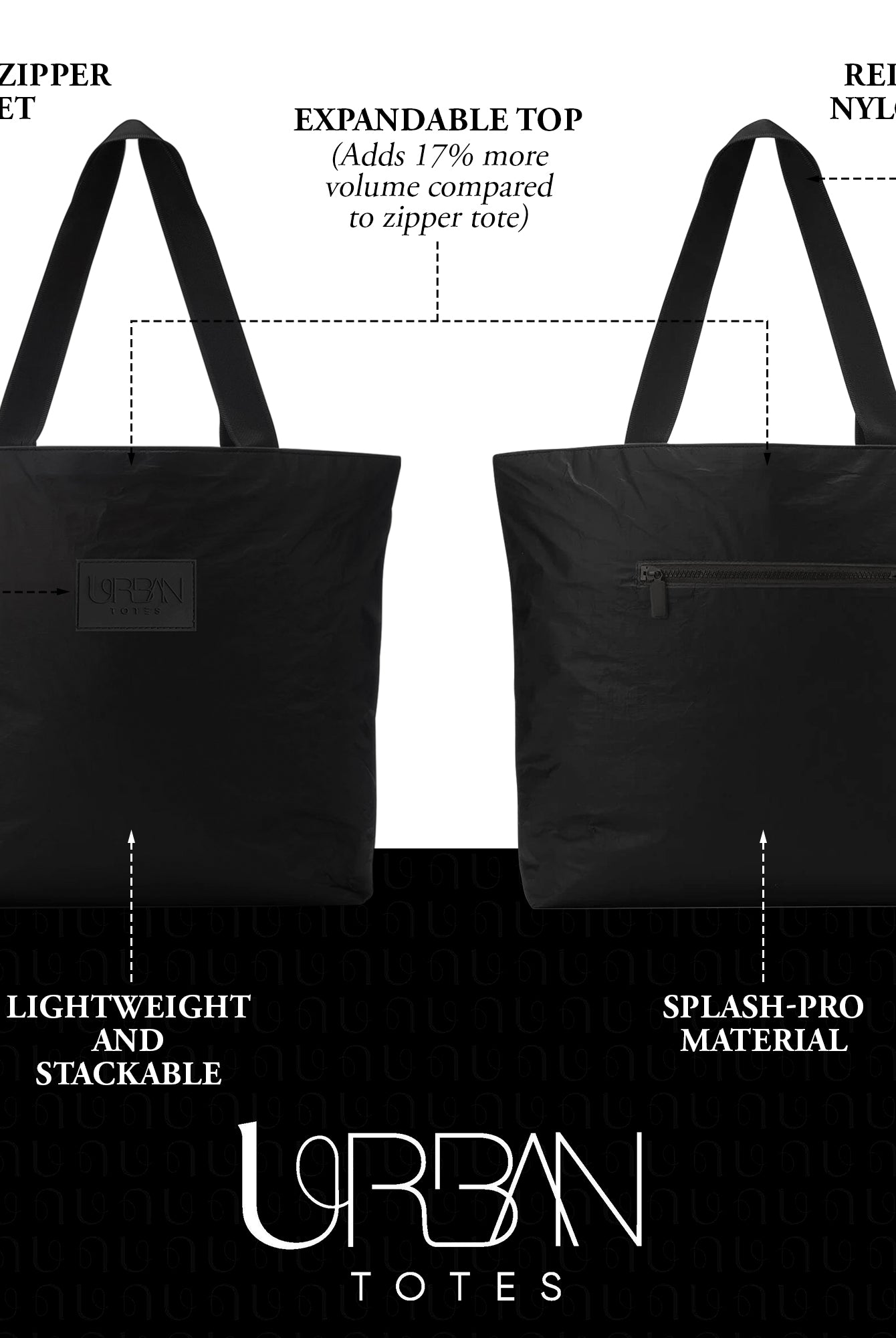
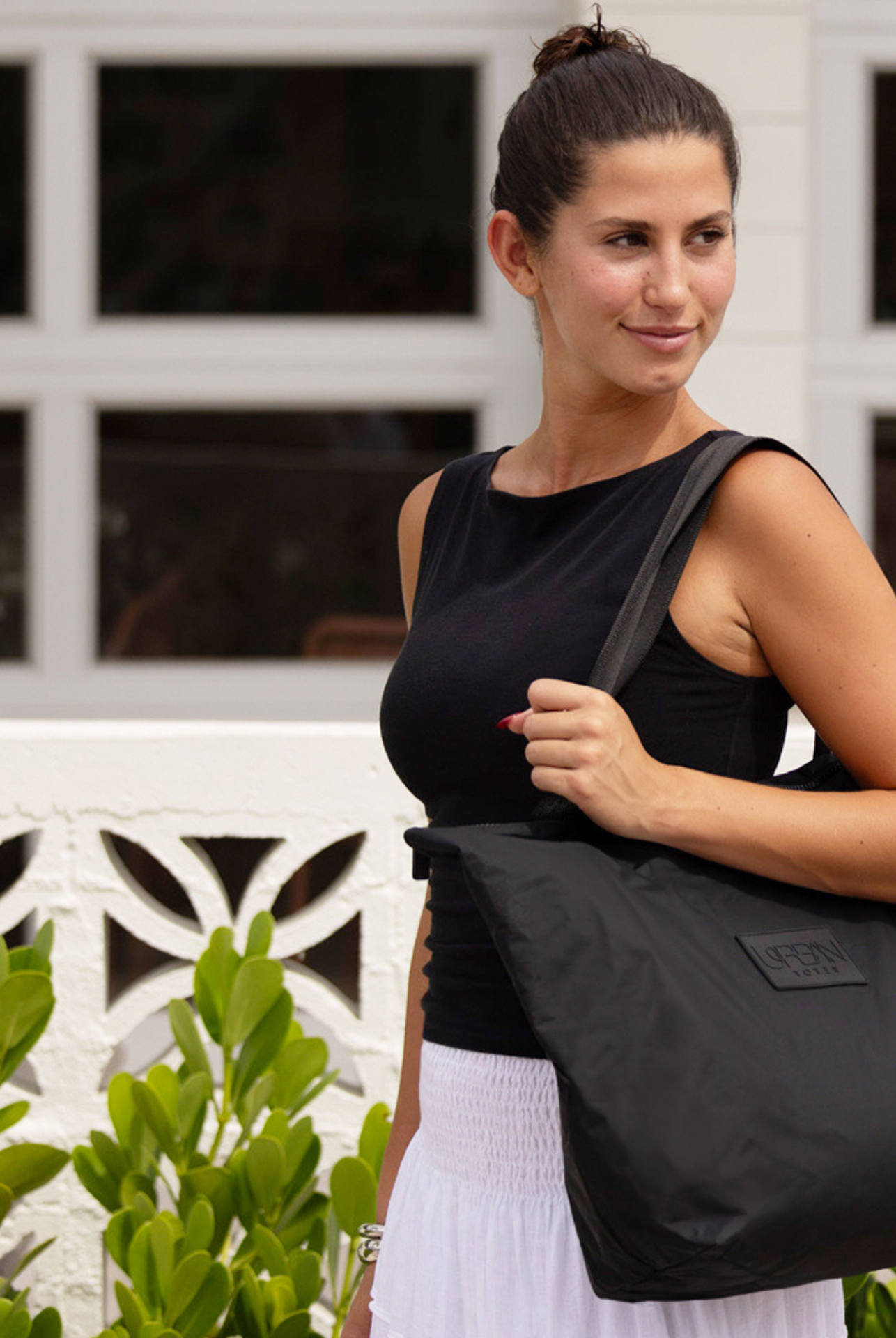
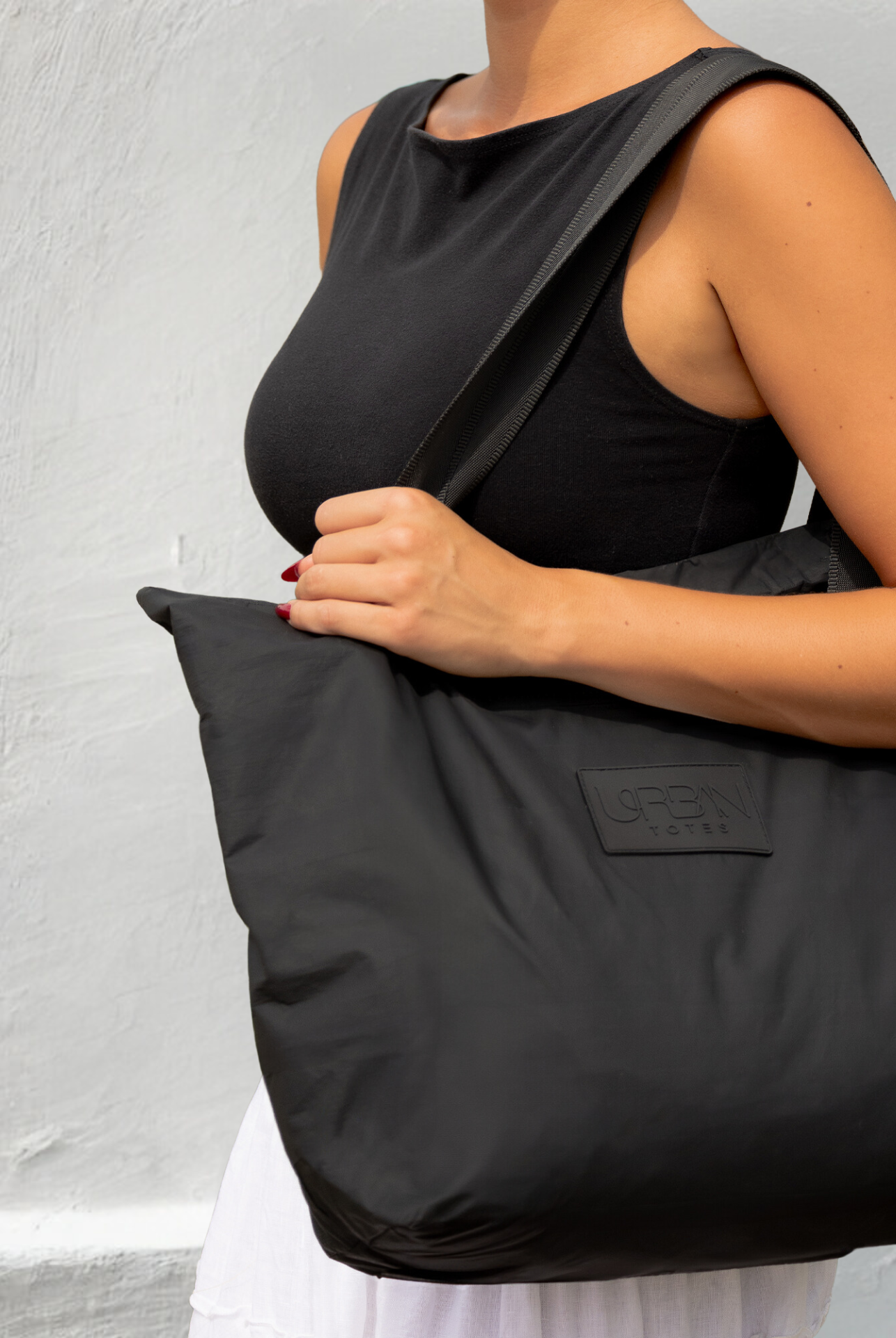
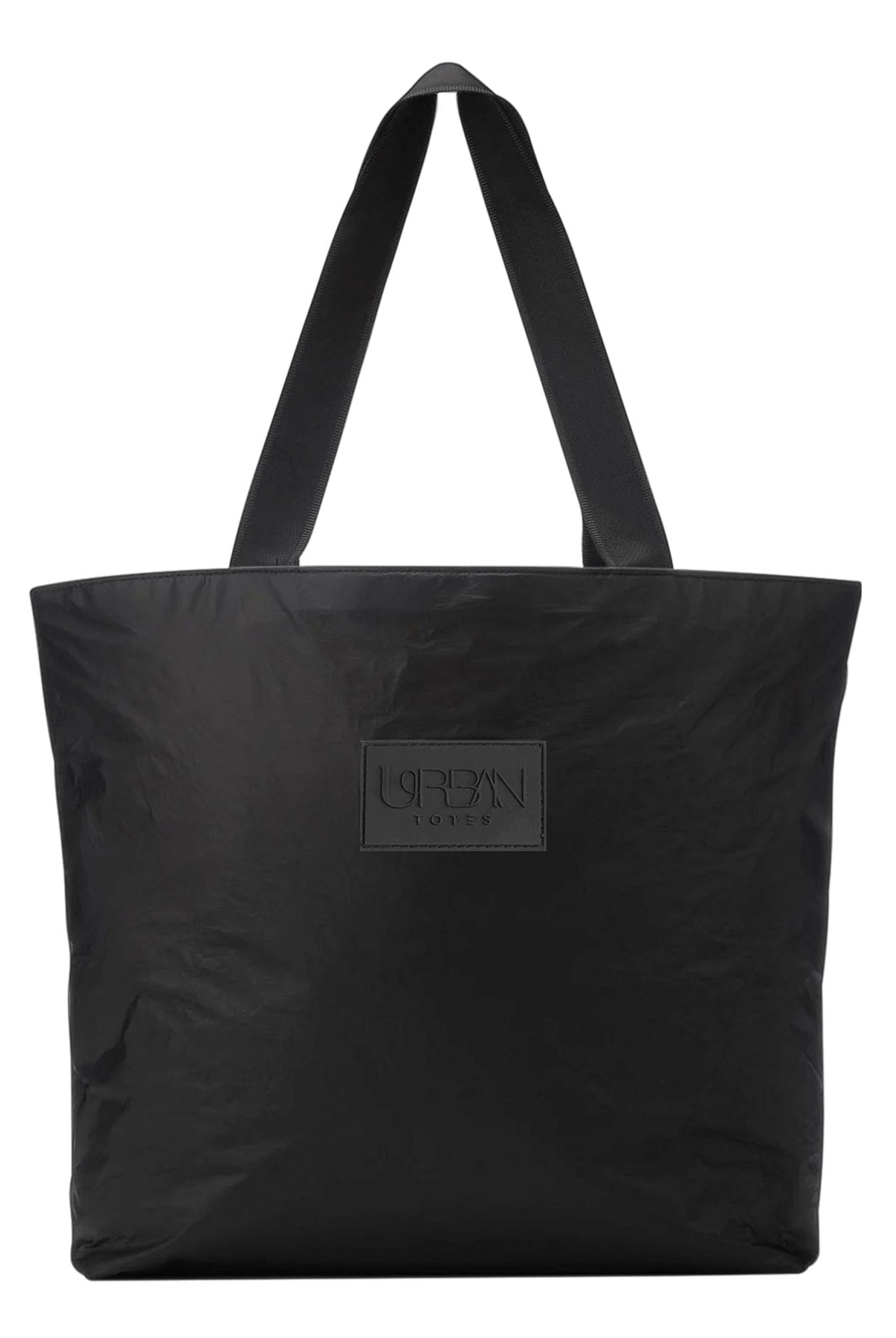
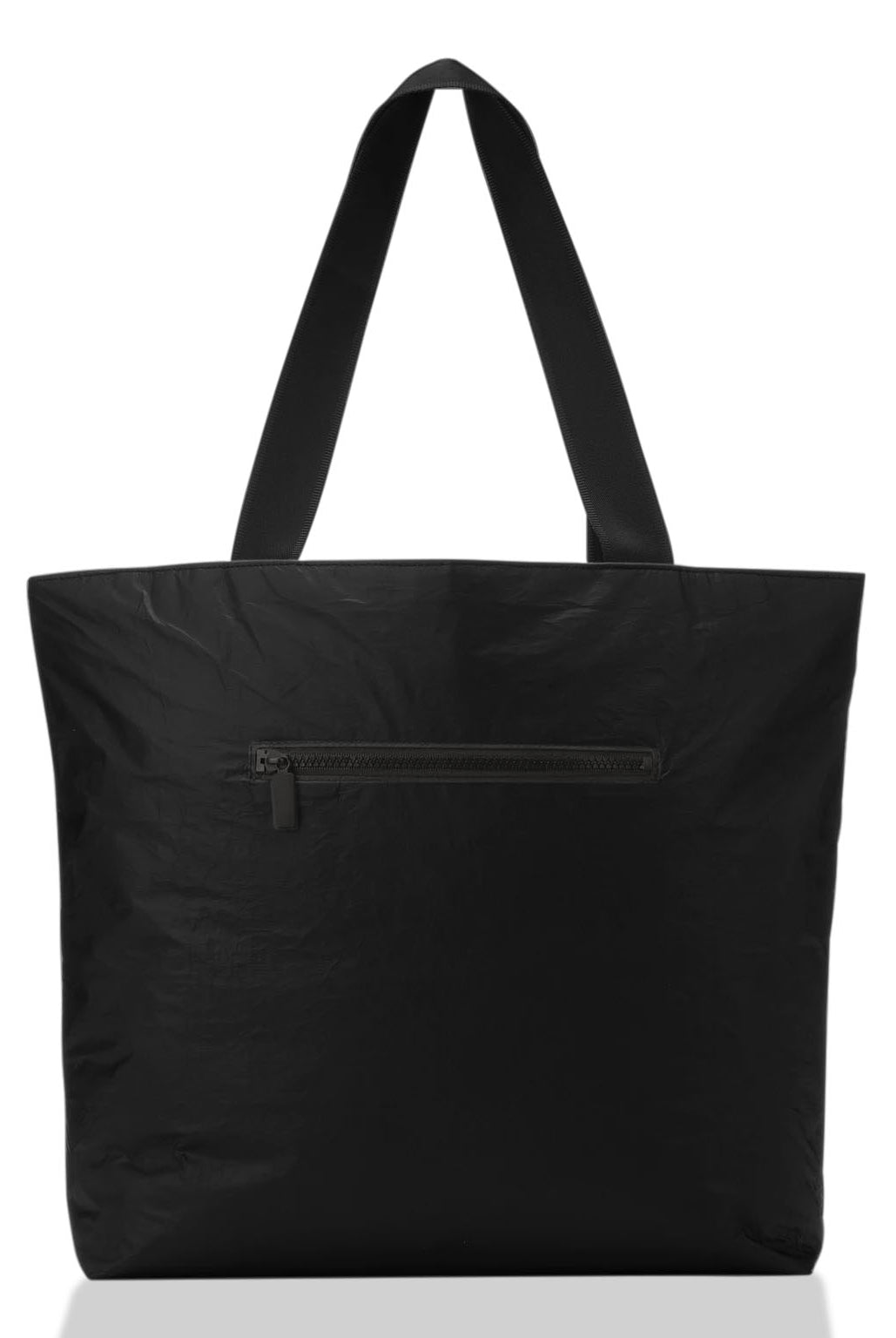
The woman-owned Boise-made brand Urban Totes approaches this category through lightweight, water-resistant, packable, and foldable designs with zipper closures and multiple compartments. That combination suits women who want one go-anywhere bag for errands, beach days, commuting, and travel without giving up a put-together appearance.
Defining the Mini Travel Bag Size and Capacity
The word “mini” causes more confusion than it should. In fashion, it can describe a bag that carries a phone and little else. In travel, the useful question is different: Can the bag hold your essentials, fit your intended airline space, and stay comfortable when carried for hours?
Independent travel guidance places many mini backpacks around 10 to 15 liters, and notes that bags around 12 liters often fit beneath a standard economy seat, while bags above 20 liters usually move toward overhead-bin territory. You can review that practical capacity guidance in this mini backpack travel reference. Airline rules vary, so check the carrier's current personal-item dimensions before departure.
Capacity matters more than the label
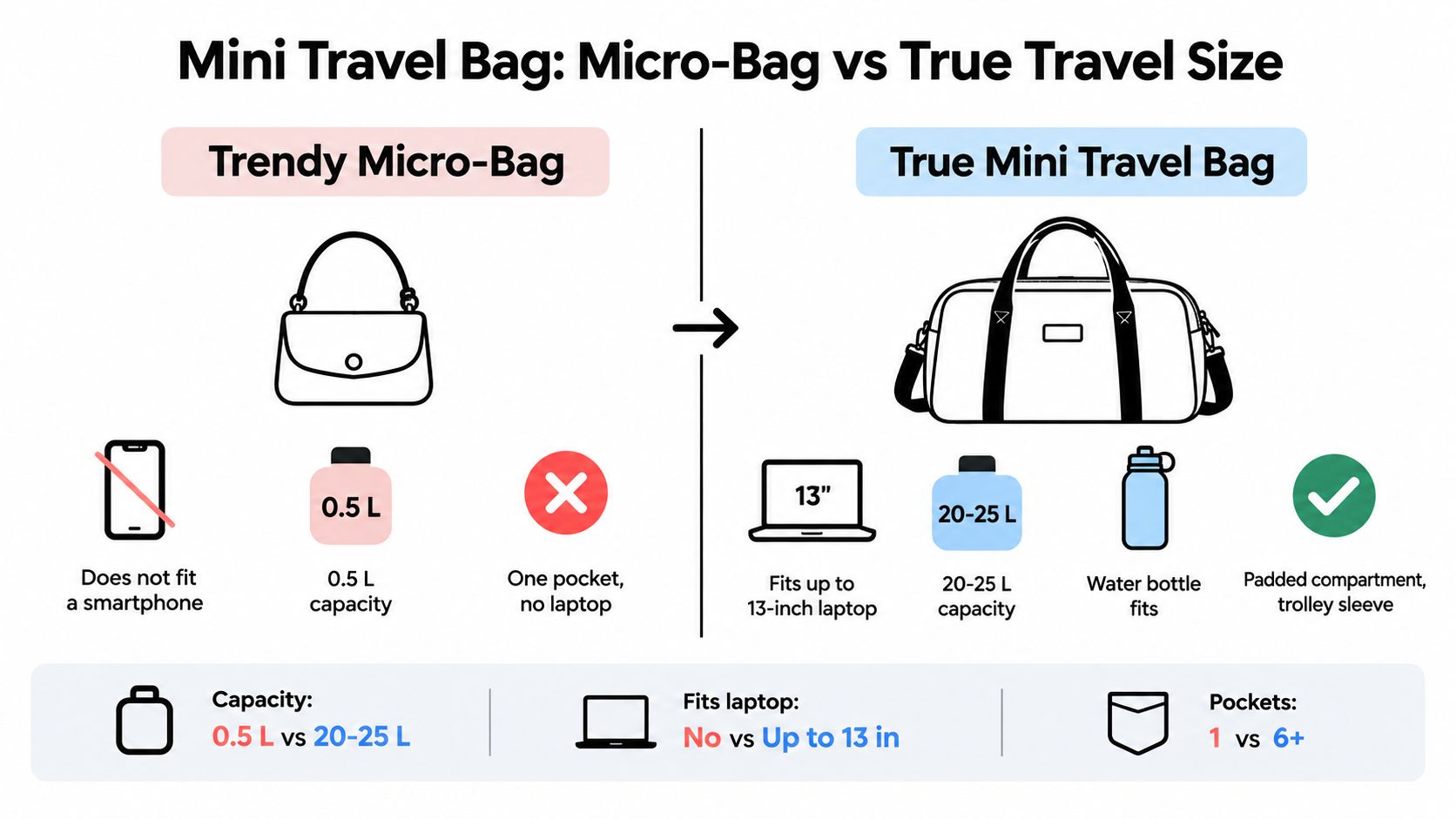
A micro-bag is an accessory. A functional mini travel bag is a compact system for the items you use repeatedly. It should leave enough room for your phone, wallet, keys, charger, sunglasses, and a light layer without forcing the zipper closed over a bulging center.
A useful size framework looks like this:
| Bag type | Best use | What to expect |
|---|---|---|
| Micro-bag | Dinner, events, styling | Phone and a few tiny essentials |
| Mini crossbody | Commuting, sightseeing, errands | Daily essentials with hands-free access |
| Small personal item | Air travel and longer day trips | More room for a charger, pouch, layer, and travel documents |
| Larger carry-on | Overhead travel | Clothing and expanded trip supplies |
Don't treat the numbers in a product graphic as a promise that every airline will accept the bag. The label “personal item” only helps when the actual exterior dimensions match the carrier's rules and the packed shape remains manageable under a seat. A product listing should show dimensions, closure style, pocket layout, and strap details. If it only gives a vague phrase such as “roomy mini,” keep looking.
Choose the smallest useful size
The right capacity depends on your routine. A commuter carrying a phone, wallet, keys, charger, and transit pass may prefer a compact crossbody. A parent adding wipes, snacks, or a small change of clothing needs more flexibility. A weekend traveler may use a small personal item alongside a larger suitcase, rather than trying to compress every possession into one petite bag.
A weekender bag dimensions guide can help you compare a mini travel bag with a larger companion piece. The smartest setup often combines a compact personal item with a separate weekender, instead of asking one bag to handle every stage of a trip.
Read capacity as a practical promise, not a style category. Mini should mean intentionally compact, not functionally inadequate.
Choosing the Right Silhouette for Your Lifestyle
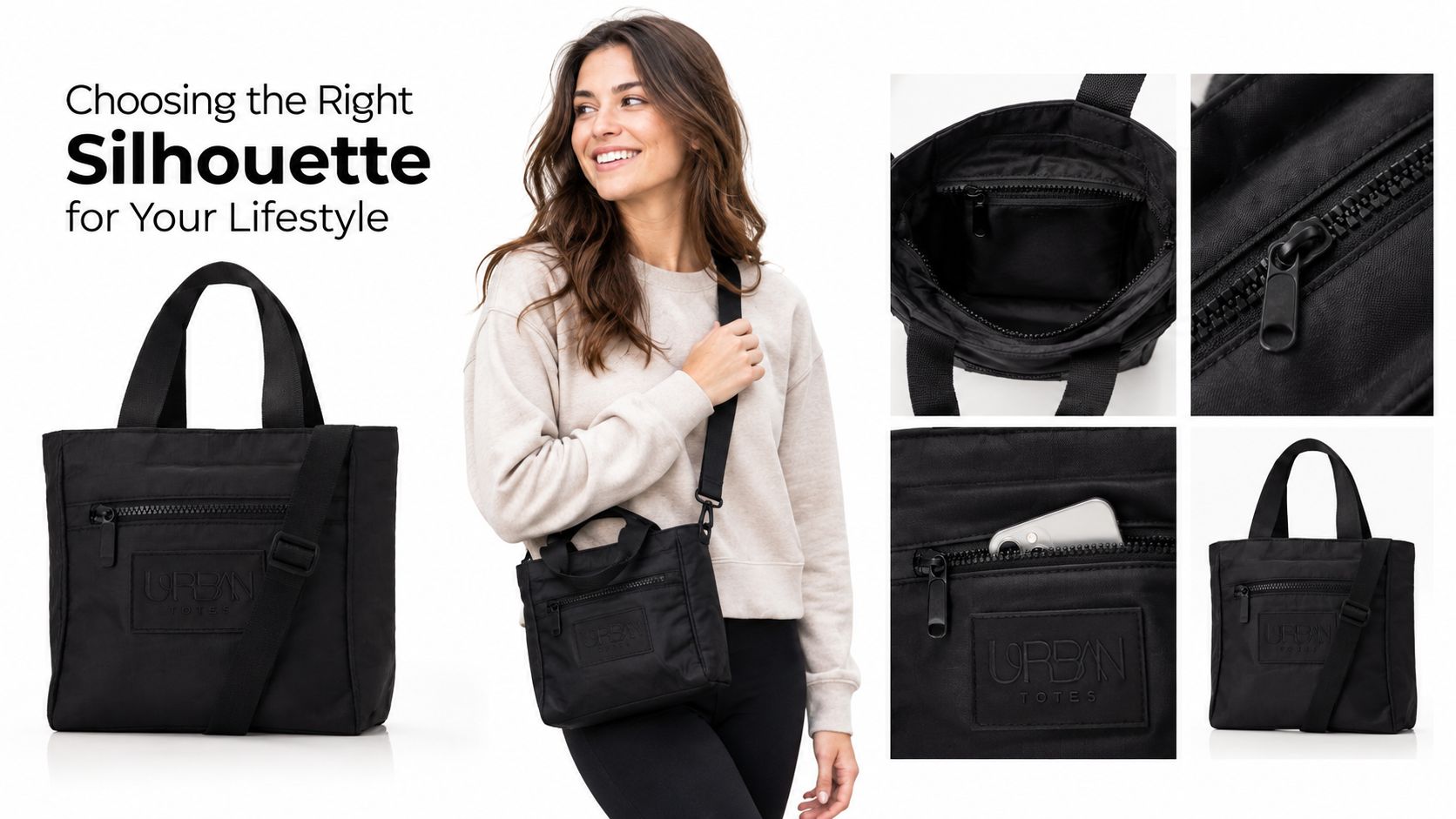
The best silhouette depends on what your hands, shoulders, and schedule are doing all day. A mother carrying a water bottle and a child's jacket needs different access than a commuter standing on a crowded train. A weekend traveler may want a compact bag that shifts easily from airport security to a long afternoon of sightseeing.
Crossbody for hands-free movement
A crossbody is the most practical choice for crowded places, school drop-off, concerts, and city walks. It keeps your hands available and places your phone, keys, and wallet within quick reach. Look for a strap that adjusts comfortably, sits securely against your body, and doesn't cut into your shoulder when the bag is full.
A narrow profile works well for public transit because it stays close to your body. A wider strap distributes the load more comfortably, especially when you'll wear the bag for hours. A zip-top closure matters too. Open compartments make it easy for small items to spill or become difficult to locate.
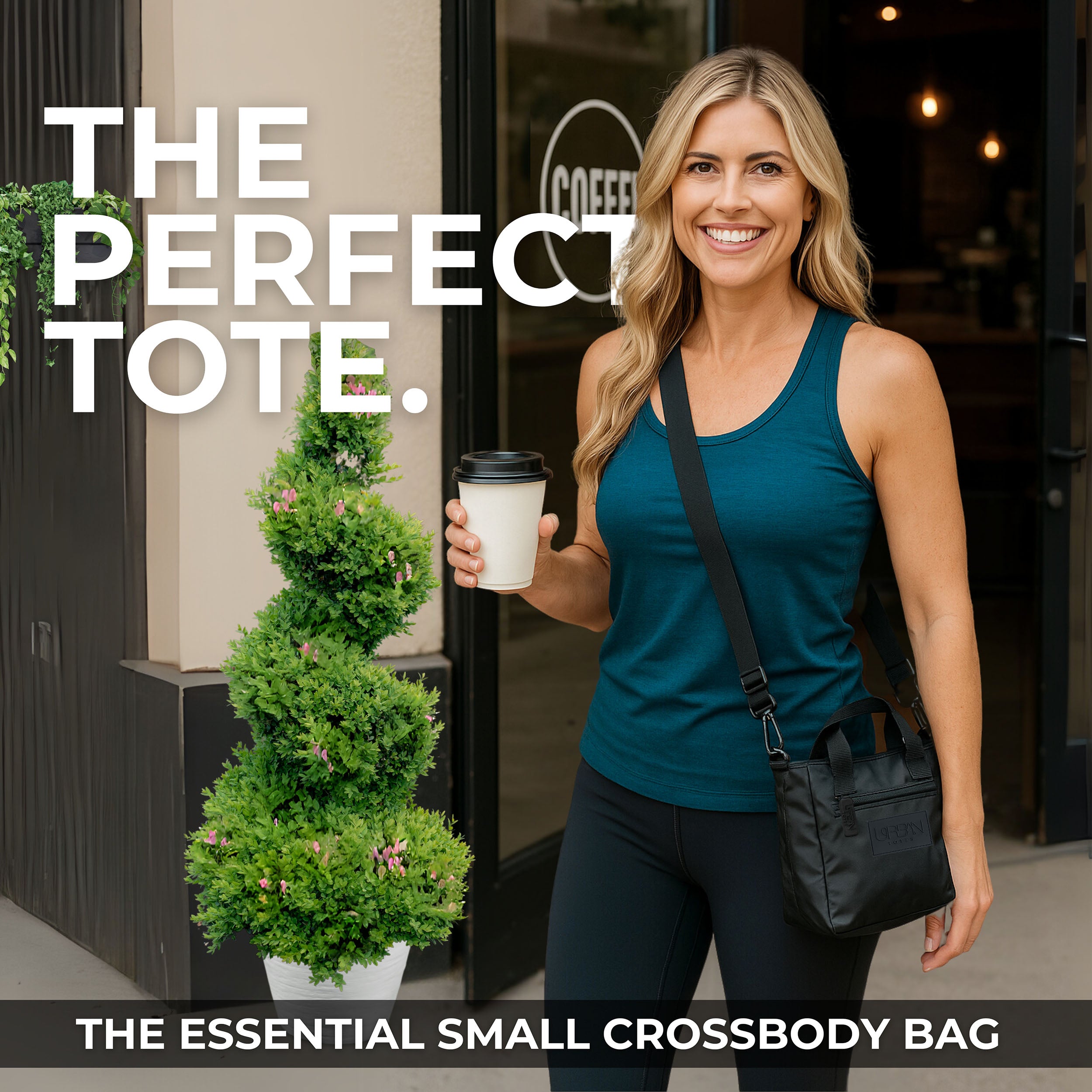
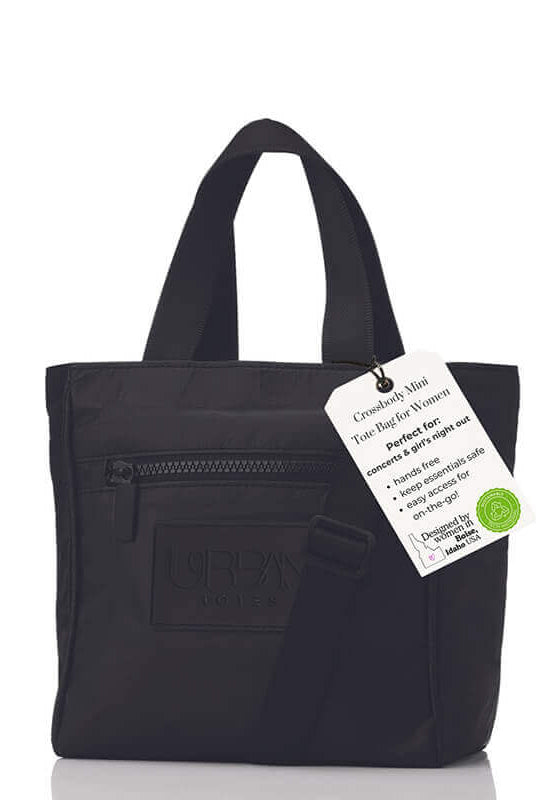
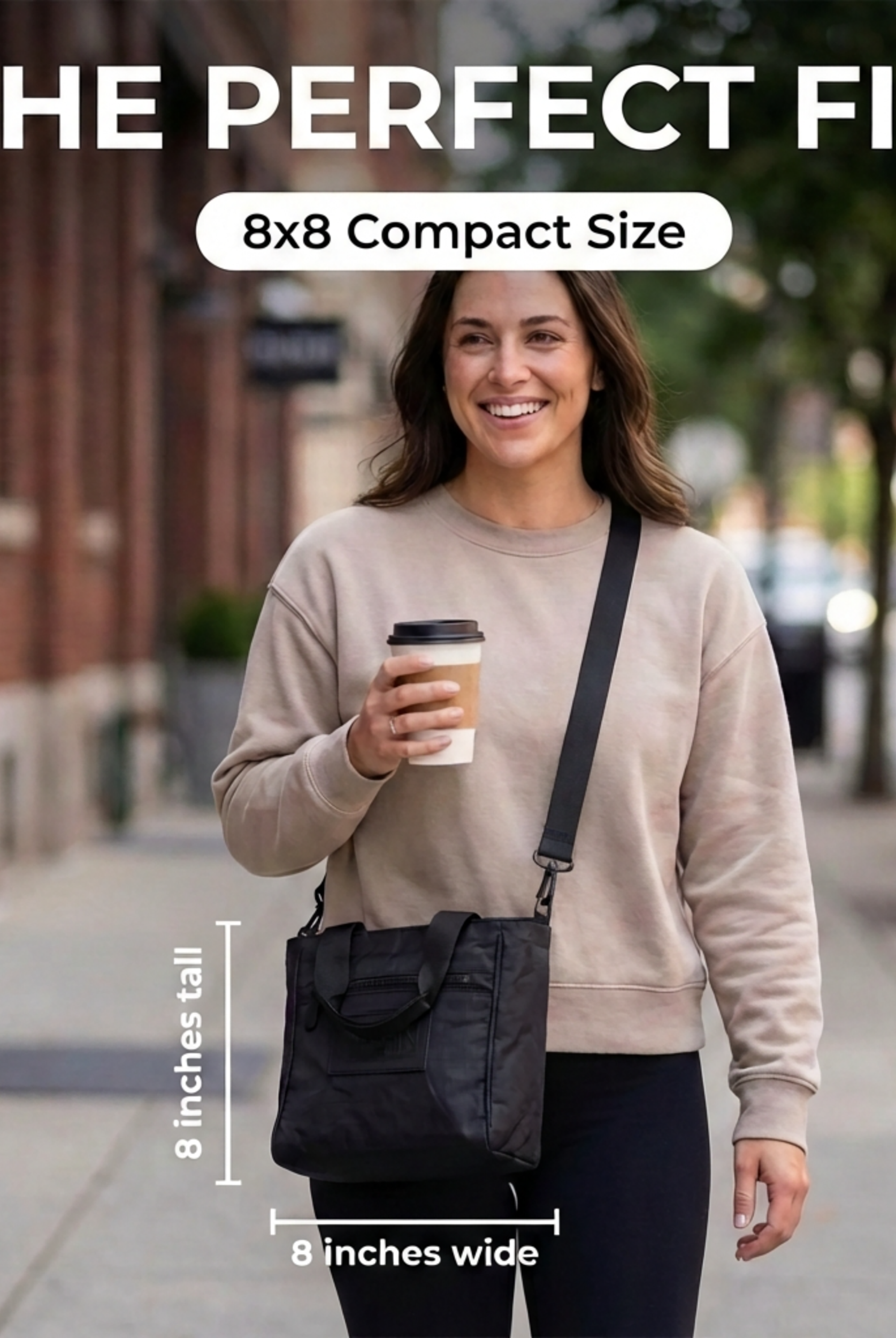
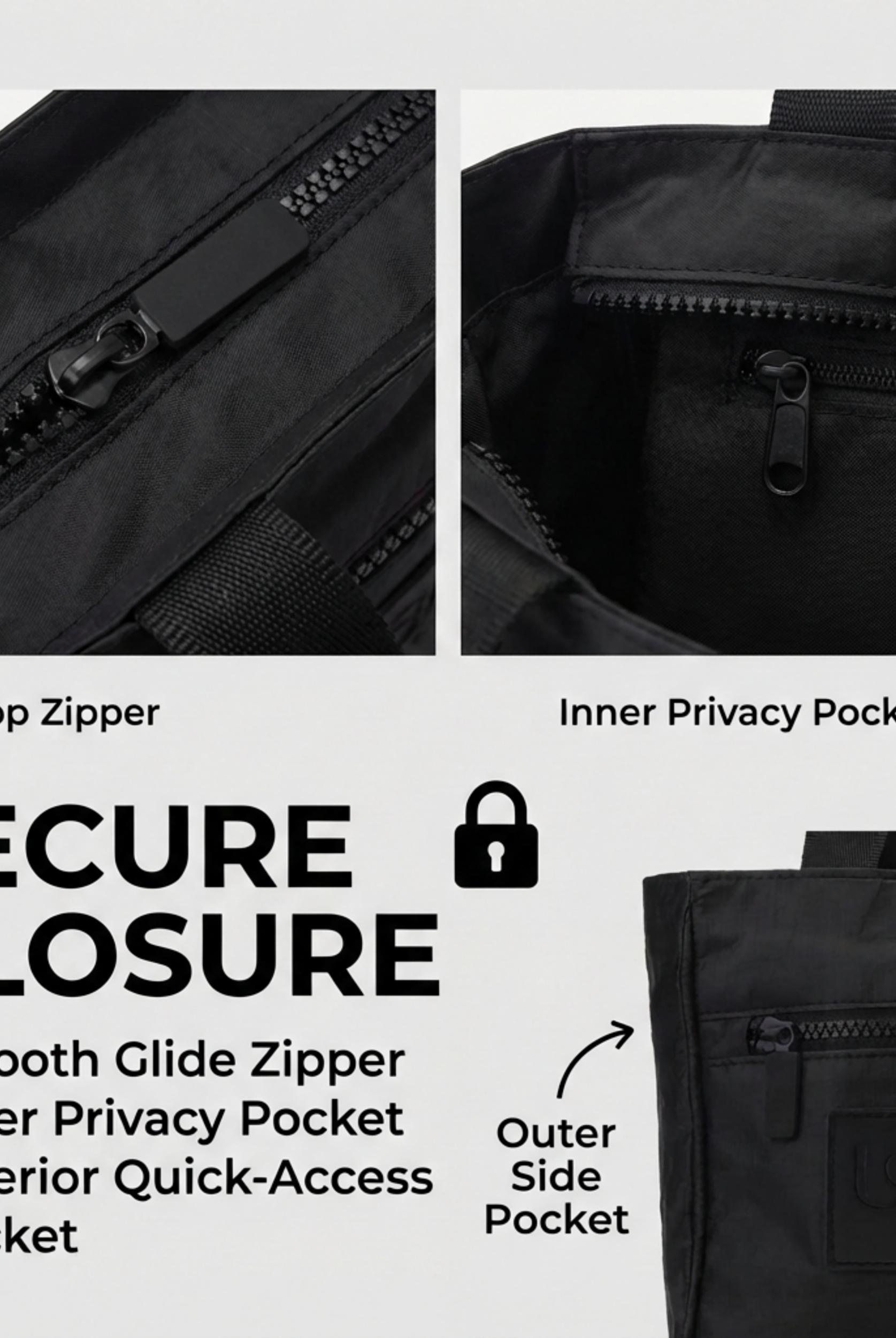
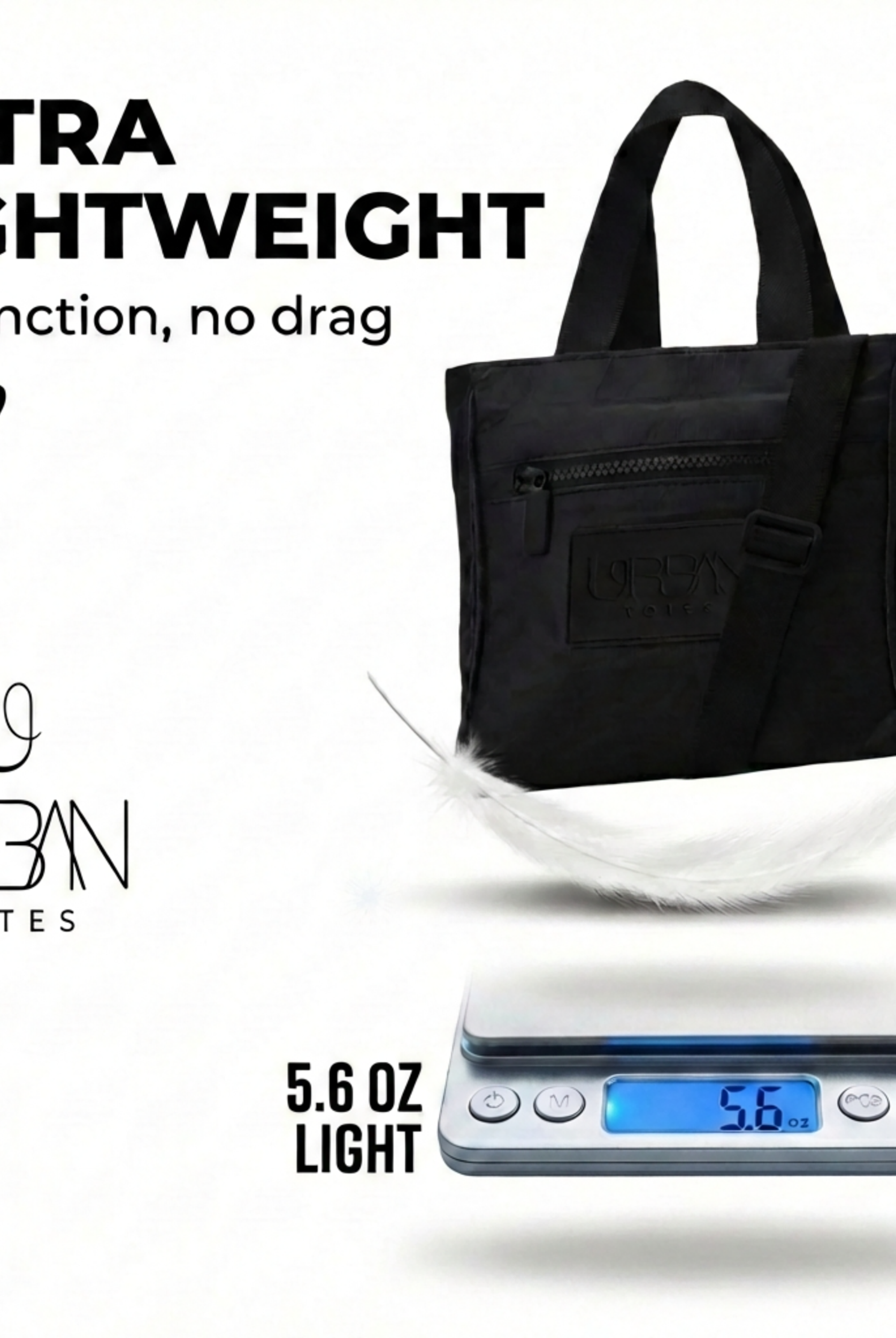
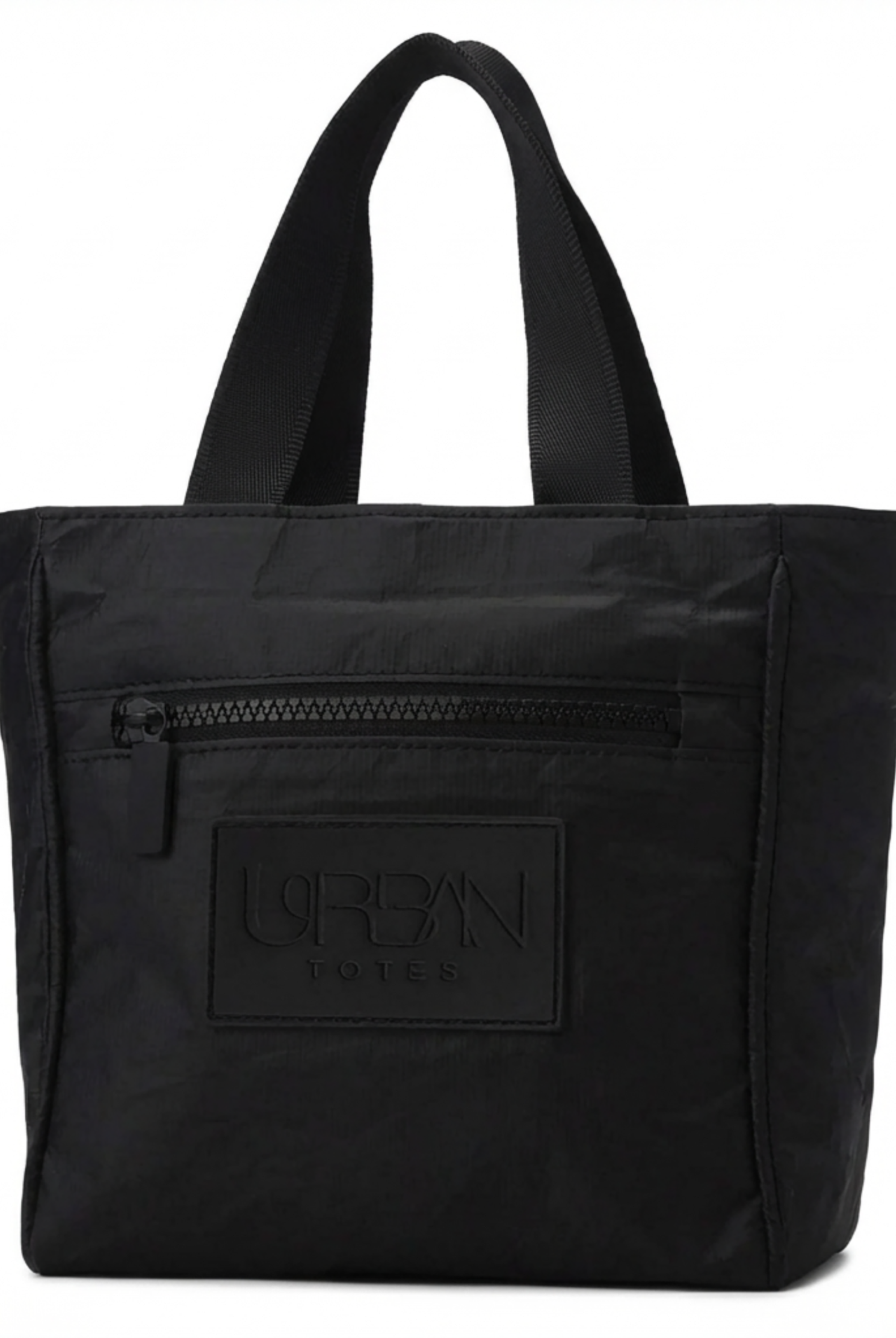
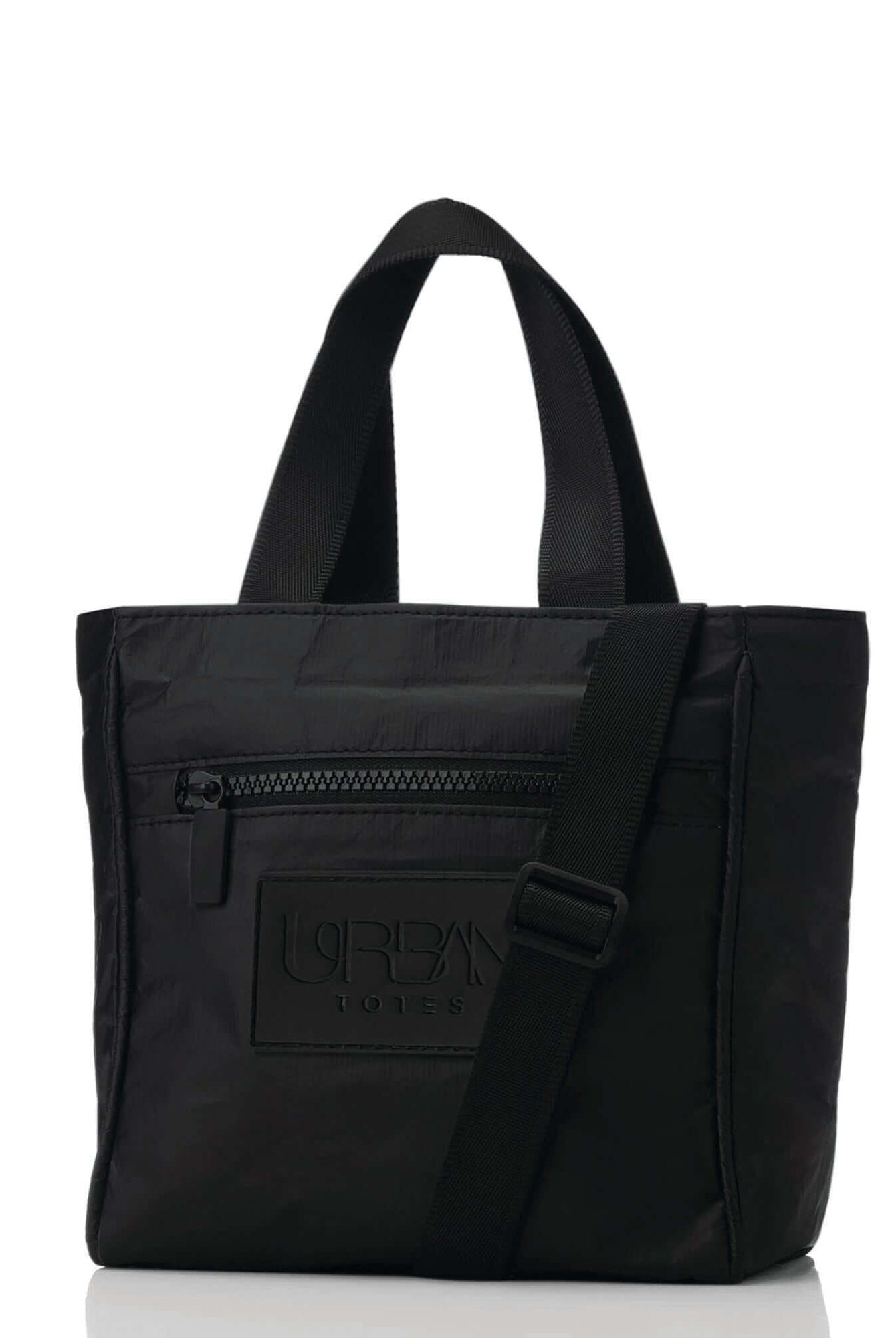
For a concrete example, the Crossbody Tote Bag Mini Purse measures 7.5 x 4 x 7.75 inches, has a 1-inch-wide nylon strap, a removable strap extending to 53 inches, 11-inch handles, a zip-top closure, an outside zipper pocket, an inside zipper pocket, and a large easy-access pocket. Its technical material is described as water-resistant, lightweight, and foldable.
Daypack for balanced carrying
A small daypack distributes weight across both shoulders, making it a strong option for sightseeing, campus walks, and long transit days. Choose one when you carry slightly more or want the bag to stay behind you while your hands remain free. A structured back panel and comfortably shaped straps can make a noticeable difference during a full day on foot.
The tradeoff is access. You may need to remove the bag to reach the main compartment, so exterior pockets become especially useful for your phone, boarding pass, and keys. A daypack can also look more casual than a crossbody, which may matter if your wardrobe leans polished or minimalist.
Mini tote for quick access
A mini tote suits the woman who wants to see and reach everything quickly. It works for the farmers market, office-to-errand days, and beach trips where you need to pull out sunscreen, sunglasses, or a snack without removing the bag.
Handles make a tote easy to grab, but they don't offer the same hands-free security as a crossbody. If you choose one, prioritize a removable shoulder strap and a secure zipper closure. The most versatile version can move from hand carry to shoulder carry while keeping its shape.
| Your routine | Best silhouette | Why it works |
|---|---|---|
| Crowded transit and sightseeing | Crossbody | Close-fitting, hands-free, quick access |
| Long walking days | Daypack | Balanced shoulder carry |
| Beach trips and errands | Mini tote | Open visibility and easy retrieval |
| Airport plus city exploring | Convertible style | Changes with each transition |
For more ideas on combining tote capacity with hands-free movement, browse this guide to a crossbody tote bag. The right shape should support your day first and complement your outfit second.
Key Features That Make a Bag Truly Travel-Ready
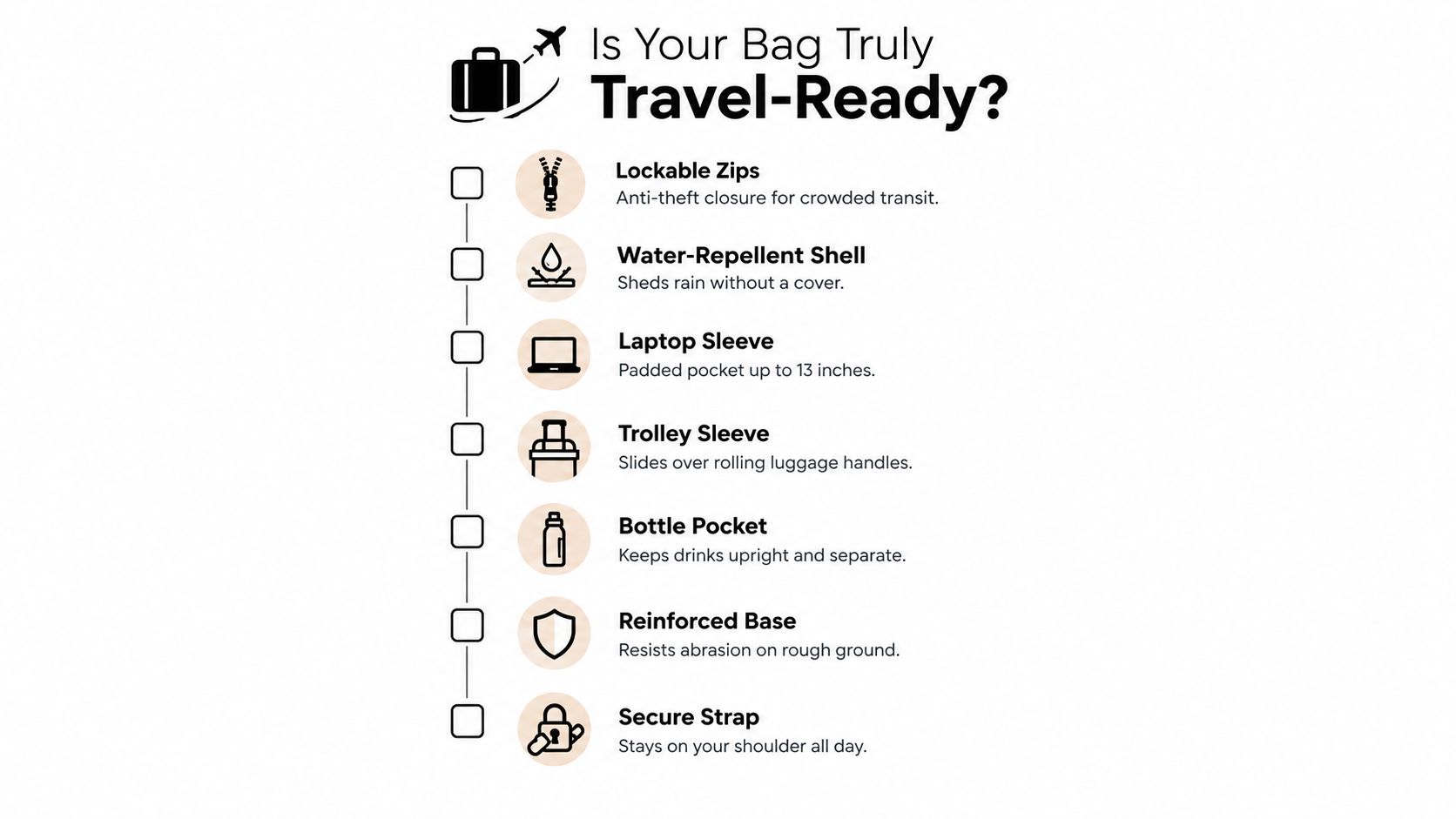
A stylish silhouette won't help if the zipper catches, the fabric absorbs every drizzle, or the interior has one deep cavity where everything disappears. A travel-ready mini bag needs practical mechanics that hold up across airports, commutes, school runs, and outdoor plans.
Start with the closure
A zipper closure keeps the contents inside when you set the bag beneath a seat, place it beside a beach chair, or move through a crowded terminal. Check that the zipper opens smoothly, closes fully, and runs along an opening wide enough to reach the contents. A small bag with poor access becomes frustrating quickly.
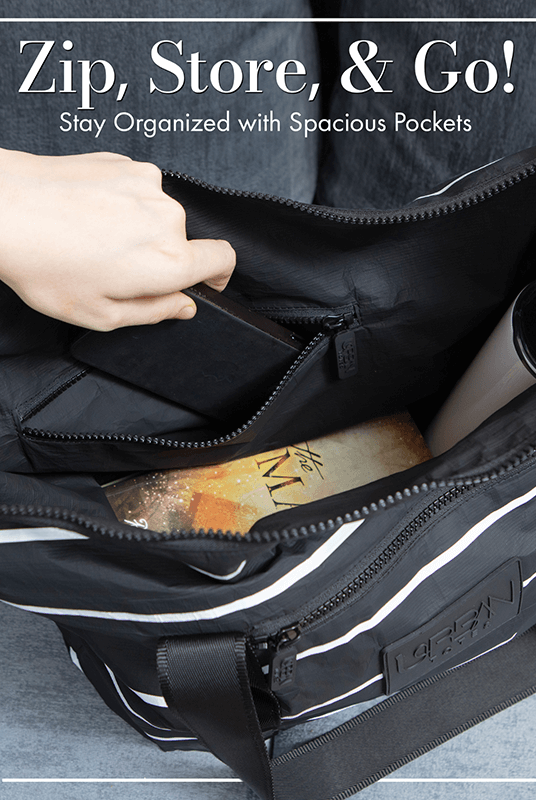
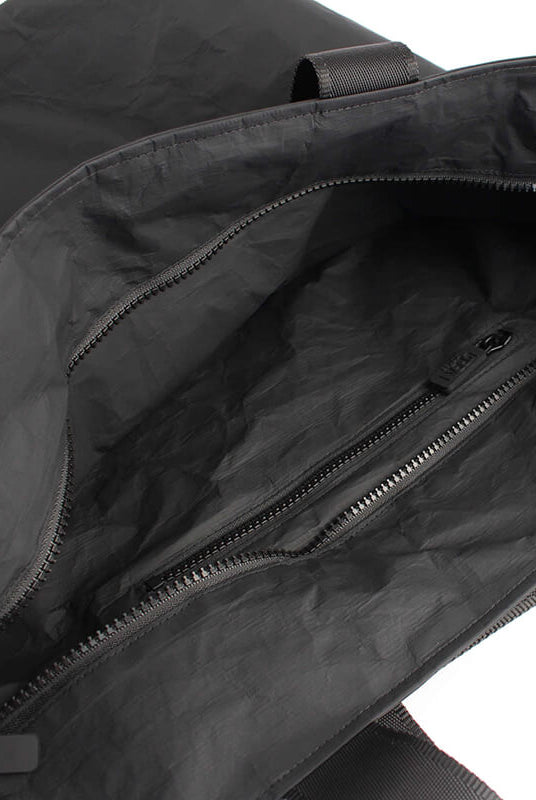
Multiple compartments matter just as much. A dedicated phone pocket should be reachable without opening the main compartment. An interior zipper pocket can hold cards, keys, or travel documents, while a second section can separate toiletries from electronics.
Evaluate the fabric honestly
Water-resistant fabric and coatings can handle light rain for a while, but moisture may eventually pass through, especially at seams. Wirecutter's duffel bag review describes a lightweight woven fabric with a water-resistant coating and self-sealing waterproof zippers. That distinction helps you choose precise language. Water-resistant isn't the same as waterproof.
Recycled polyamide and recycled polyester laminates are common in compact travel bags because they combine low mass with water resistance and abrasion tolerance. A representative small bag uses 100% recycled polyamide, has a 0.8-liter capacity, weighs 85 grams, and includes two pockets, as shown in Fjällräven's High Coast Pocket specifications. These details illustrate why fabric choice and pocket design should be evaluated together.
Look for organization that matches your habits
A larger bag doesn't automatically organize better. One 23-liter travel tote made from 100% recycled polyamide weighs 400 grams and includes five pockets with zippered internal and external storage, according to the High Coast Totepack product details. The useful lesson is simple: compartment placement can add function without creating a heavy carry.
Use this checklist while shopping:
- Secure closure: Choose a zipper that fully closes the main opening.
- Dedicated quick-access pocket: Keep your phone, keys, and transit card easy to reach.
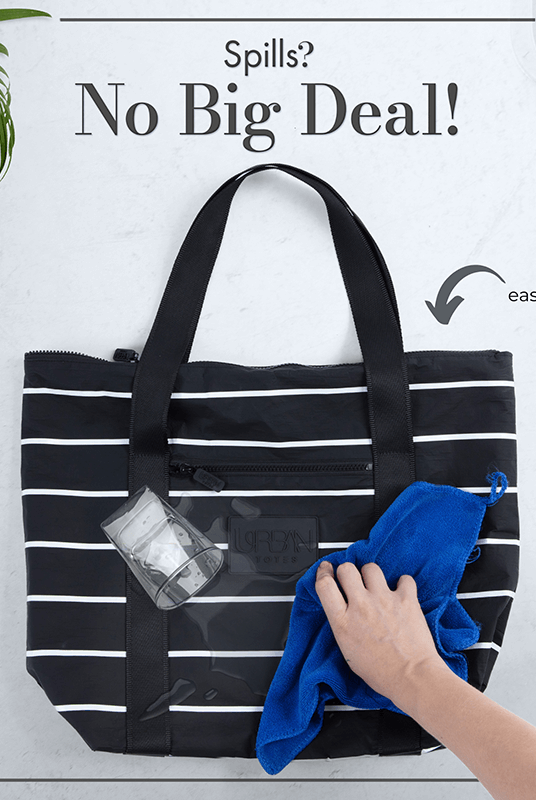
- Water-resistant shell: Expect protection from light weather and spills, not complete submersion.
- Lightweight build: Check the empty weight before adding your daily essentials.
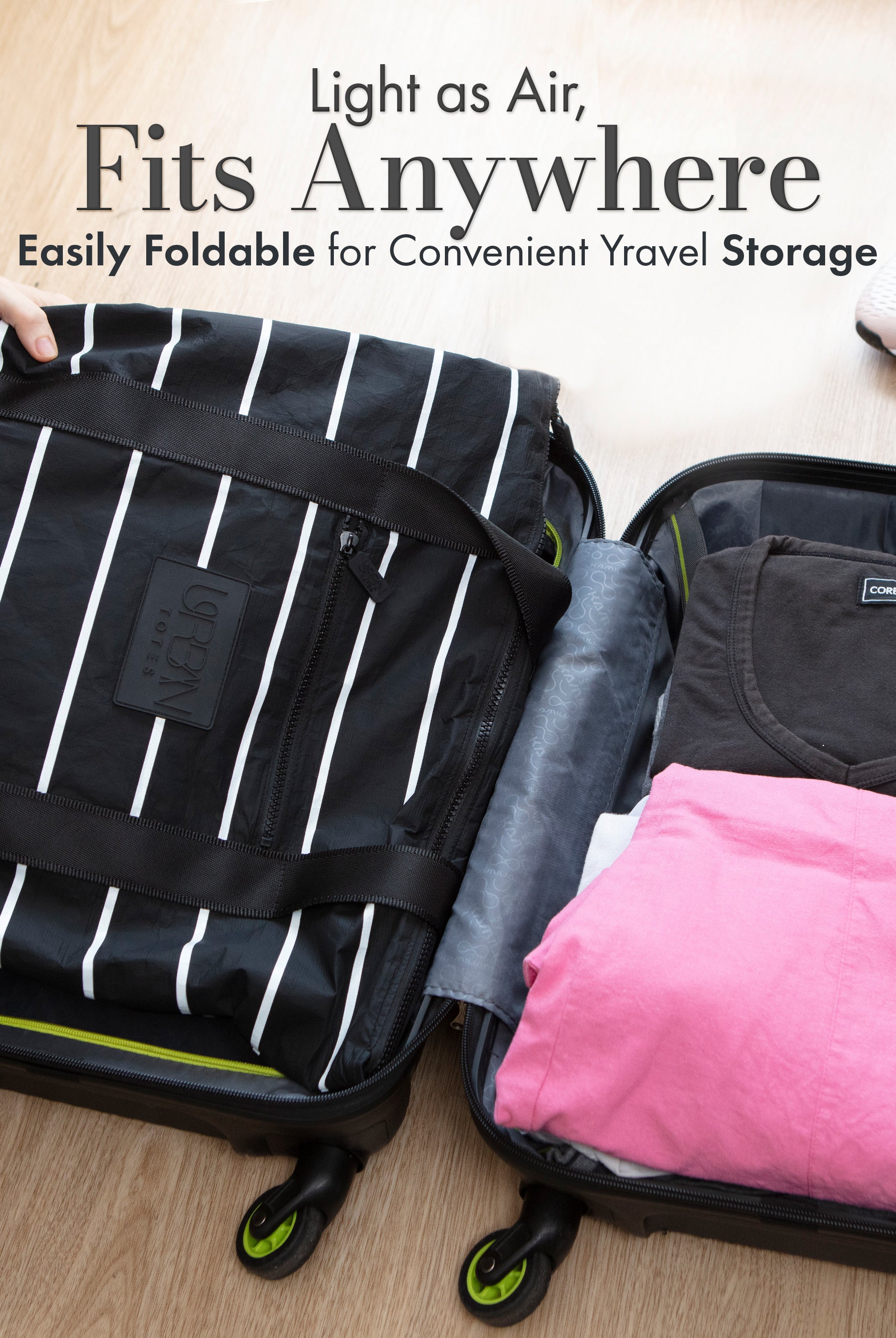
- Packable structure: A foldable bag should compress without becoming difficult to reopen.
- Comfortable straps: Look for an adjustable crossbody strap or handles that sit naturally on your shoulder.
- Easy-care surface: A wipe-clean exterior makes beach days and errands less precious.
For a deeper look at practical closures and carry habits, use this guide to travel bag security. The most useful design is the one you can operate quickly when you're tired, distracted, or balancing three other tasks.
Smart Packing Strategies for Compact Spaces
A compact bag rewards discipline. Don't start by filling every pocket. Start by deciding what must remain accessible, what can go deeper, and what doesn't belong in the bag at all.
Pack by access, not by category alone
Put the items you reach for constantly near the opening or in an exterior pocket. Your phone, boarding pass, keys, and transit card shouldn't share a deep compartment with lip balm, cables, and receipts. Use an interior zipper pocket for smaller valuables, then keep the central section for items you need less often.
Try this order:
- Clear the surface: Remove old receipts, duplicate lip products, and anything you won't use that day.
- Assign the outside pocket: Place your phone, keys, or boarding pass where you can reach them without opening the main section.
- Contain small pieces: Put chargers, earbuds, and adapters in a slim pouch so they don't scatter.
- Add the soft layer: Roll a light cardigan, scarf, or thin cover-up and place it above the harder items.
- Balance the weight: Keep heavier objects close to your body, not at the far edge of the bag.
- Test the closure: Zip the bag before leaving. If the fabric strains or the zipper bows, remove something.
Rolling works well for soft layers because it reduces loose folds and makes the item easier to retrieve. A small pouch can handle cables and toiletries, while this guide to packing with packing cubes offers a system for keeping larger luggage organized around the mini bag.
Pack liquids as a set
Airport security creates a fixed constraint for toiletries. TSA allows liquids, gels, and aerosols in containers of 3.4 ounces, or 100 milliliters, and they must fit into one quart-size bag, according to the TSA liquids rule.
That means you shouldn't toss loose skincare minis into every available pocket. Put the complete quart-size pouch in the mini travel bag first, then see how much space remains for electronics and personal items. If the pouch doesn't fit comfortably, move toiletries to your larger carry-on and keep only the items you'll need during transit.
Keep airline requirements separate from packing advice
A personal item and a carry-on don't always have the same rules. Airlines set their own dimensions, and those requirements can change. Before flying, check the airline's current baggage page and compare the bag's exterior measurements, including handles and straps where relevant.
If you're flying Frontier, review the current Frontier carry on size limits before you pack. Use the information as a planning reference, then confirm the final requirements directly with the airline.
Leave room for the day
A compact bag shouldn't be packed to its absolute limit before you leave home. You may pick up a snack, remove a layer, or need to store sunglasses after sunset. Leave a little flexibility so the zipper remains easy to use and the contents don't become compressed into an unsearchable mass.
The same rule applies to beach days and school runs. Pack sunscreen, wipes, and a water bottle only if the bag's dimensions and closure support them comfortably. A bag that looks small but stays organized is more useful than one that technically holds more and becomes a black hole by noon.
Elevate Your Journey With the Perfect Go-Anywhere Bag
The right mini travel bag isn't defined by a tiny silhouette or a fashionable label. It earns its place by making movement easier. You can reach your phone without stopping, keep your keys separate from your sunscreen, and move from a flight to a coffee shop without changing your entire setup.
Choose the silhouette that matches your day. A crossbody makes sense for hands-free commuting and sightseeing. A compact daypack balances a little more weight. A mini tote gives you quick visibility for errands, beach trips, and short outings. The best bag is the one that supports your actual routine instead of asking you to reorganize your life around it.
Look for water-resistant fabric, lightweight construction, a foldable or packable design, secure zipper closures, and thoughtfully placed pockets. Treat capacity as a practical measurement, check airline rules before flying, and pack by access so the items you need most stay within reach.
Urban Totes brings that approach to a woman-owned brand based in Boise, Idaho, with versatile tote and crossbody styles designed for commuting, errands, beach days, and travel. The collection's practical positioning centers on lightweight, water-resistant, packable, and organized carry for women whose days rarely follow one route.
Shop Urban Totes for lightweight, water-resistant, packable totes and crossbody bags built around zipper closures and useful compartments. Choose a go-anywhere companion that keeps your essentials organized from airport terminal to farmers market, then take it wherever the day leads.