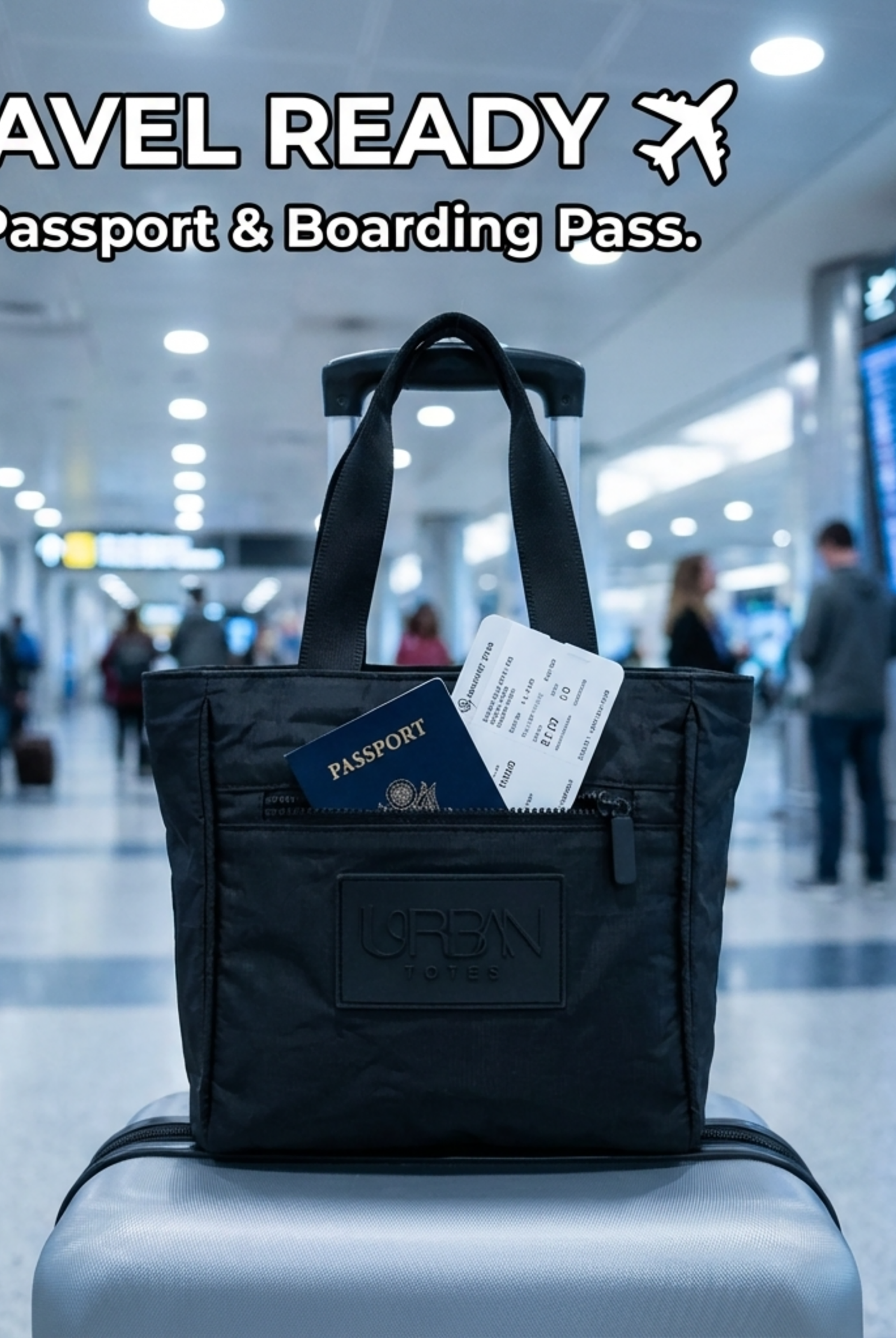
You're in line for coffee at the airport, boarding pass on your phone, a small hand in yours, and your bag sliding off your shoulder for the third time. You need your card, then your phone again, then a tissue, and every search means setting something down. That scramble, not a dramatic theft movie scene, is where most travel stress starts. The safest crossbody bag for travel is the one you can control with one hand, close without looking, and keep against your body while life keeps moving.
Table of Contents
- What Makes a Travel Crossbody Feel Safe on the Go
- The Four Pillars of a Truly Safe Crossbody
- Closures, Straps, and Materials Compared
- Anti-Theft Features That Actually Matter
- Smart Organization for Airports, Trains, and Security Lines
- Matching the Bag to the Way You Actually Travel
- Compact Mini Versus Everyday Crossbody Caps
- Your Safe Crossbody Checklist and Final Word
What Makes a Travel Crossbody Feel Safe on the Go
You're stepping off a train with a rolling suitcase, your phone buzzing with a gate change, and your passport buried somewhere under snacks and chargers. A stranger brushes past, your child asks for water, and you suddenly can't remember whether you zipped your bag. Most bag reviews would tell you to buy more anti-theft hardware. I'd tell you to fix the scramble first.
Crowds are the normal condition now, not an edge case. UN Tourism recorded an estimated 1.4 billion international tourist arrivals in 2024, an 11% increase over 2023 and roughly 99% of the 2019 pre-pandemic level, with international-tourism receipts near USD 1.6 trillion. Airports, stations, markets, and attractions are busy again, and your everyday carry has to work in that density.
Safety means control, not just resistance
I define a safe travel crossbody by four things working together. The zipper closure has to stay shut. The strap has to keep the bag high and close without digging in. The material has to handle rain, spills, and being wedged under a seat. The organization has to give your phone, passport, cards, and medication separate homes so you aren't opening everything to find one item.
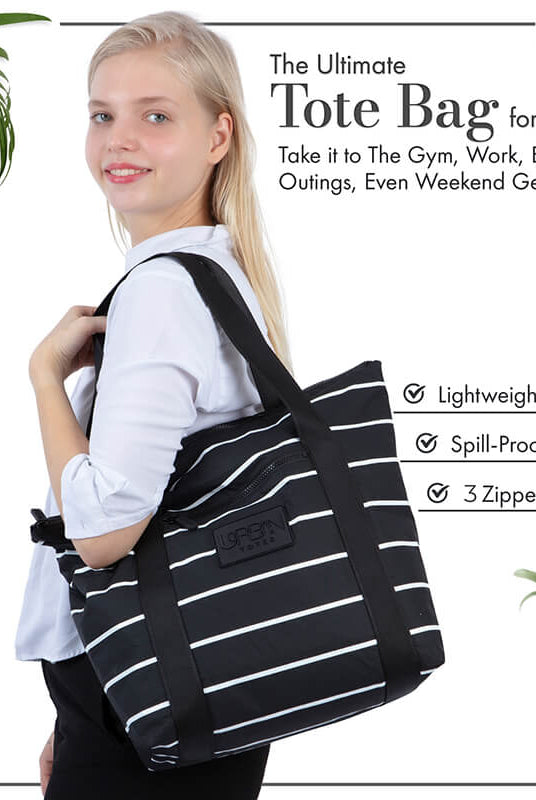
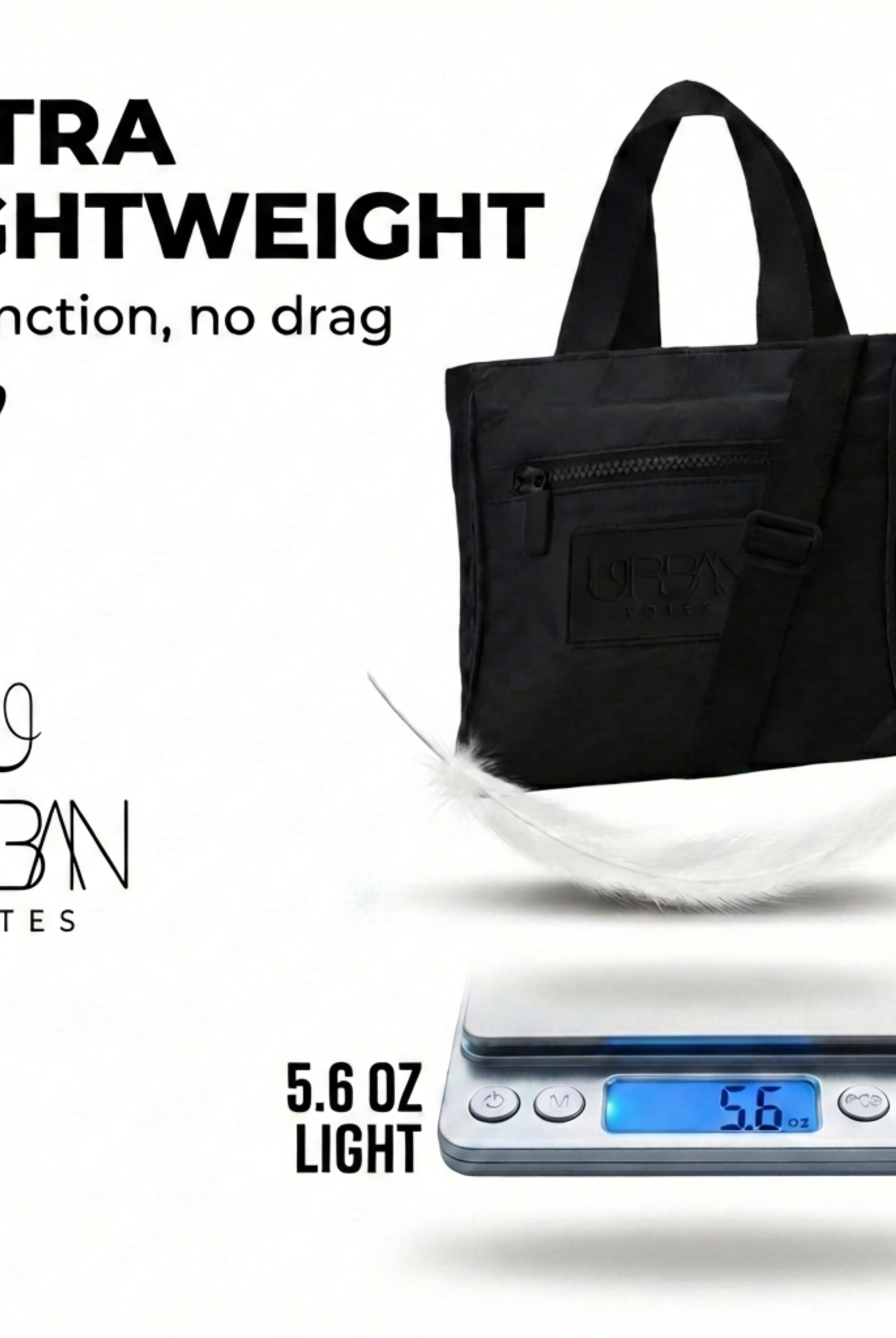
That definition matters more for a busy mom, commuter, or caregiver than for someone strolling through a quiet resort. You don't have a free hand to guard an open tote. You might be holding a toddler, a coffee, a cane, or another bag. A lightweight, water-resistant, multi-pocket crossbody that sits in front of your hip lets you see the zipper, feel the bag against your torso, and reach essentials without taking it off.
A bag you keep closed, close, and organized in a crowd protects you better than a feature-packed bag you leave unzipped because it's awkward to use.
Skip any design that forces trade-offs you'll resent by noon. If it's heavy empty, it'll be miserable full. If the strap slips, you'll keep adjusting instead of watching your surroundings. If there's one cavernous compartment, you'll rummage in public. Go-anywhere should mean school drop-off, farmers market, terminal, and train platform, with the same calm, organized routine in each place.
The Four Pillars of a Truly Safe Crossbody
Don't shop by color first. Score every bag against these four pillars in order, because a weak first pillar makes the others almost irrelevant.
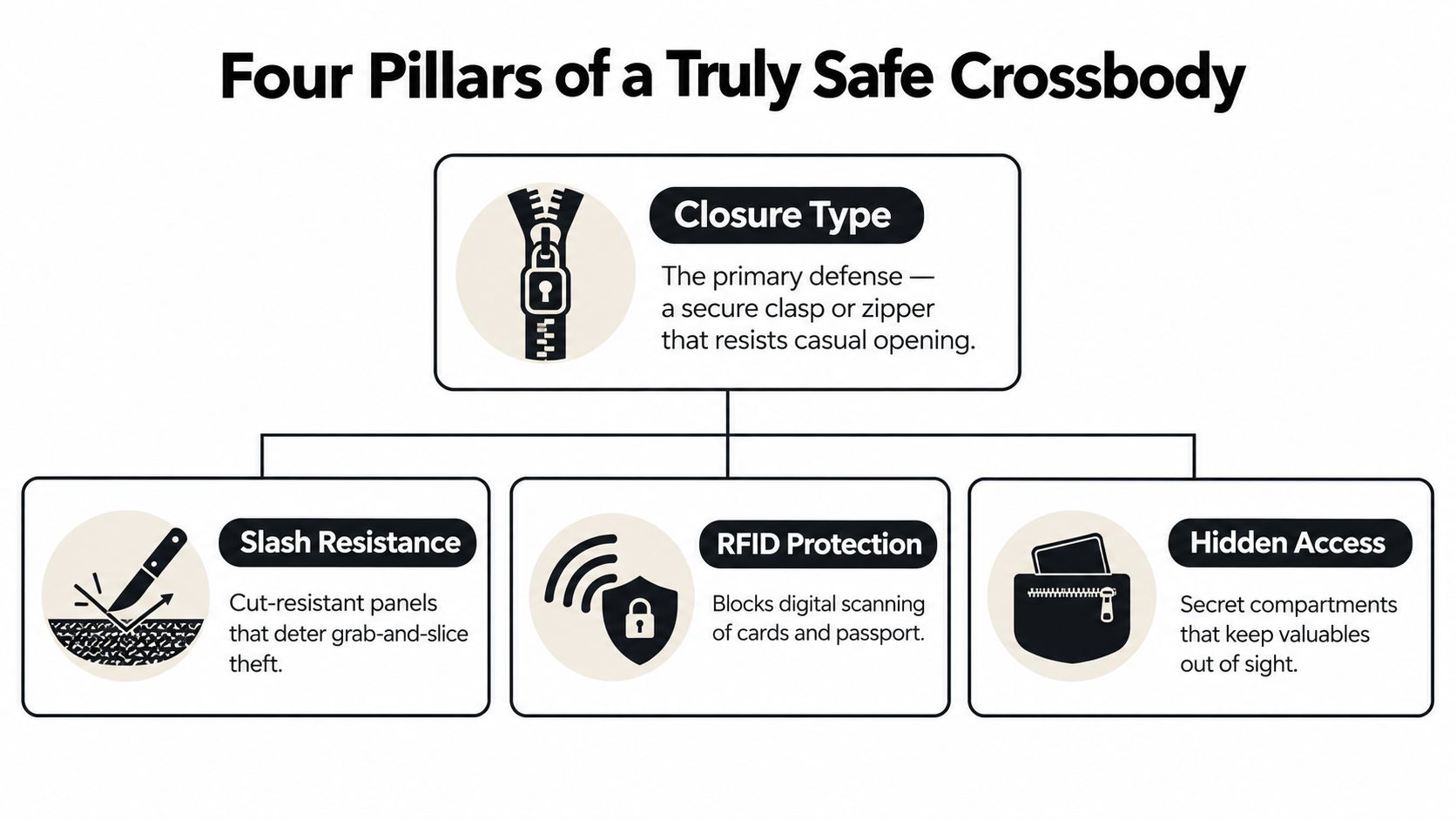
Closure security comes first
An open top is an invitation, and a weak magnetic snap pops open when the bag is bumped on a subway or tipped under a café chair. Choose a full zipper closure for the main compartment, ideally with pulls that meet in the middle or clip together. Test it one-handed in the store or at home. If you need two hands and a flat surface to close it, you won't close it consistently in a security line.
Strap design decides where the bag lives
Your strap should be wide enough to spread weight, adjustable enough to sit high on your torso, and secure enough that the slider doesn't creep longer as you walk. A thin cord strap looks cute for an hour, then saws into your shoulder during a long museum day. Wear the bag in front in dense crowds, at your side when you have space. The right length lets your forearm rest naturally over the zipper without thinking about it.
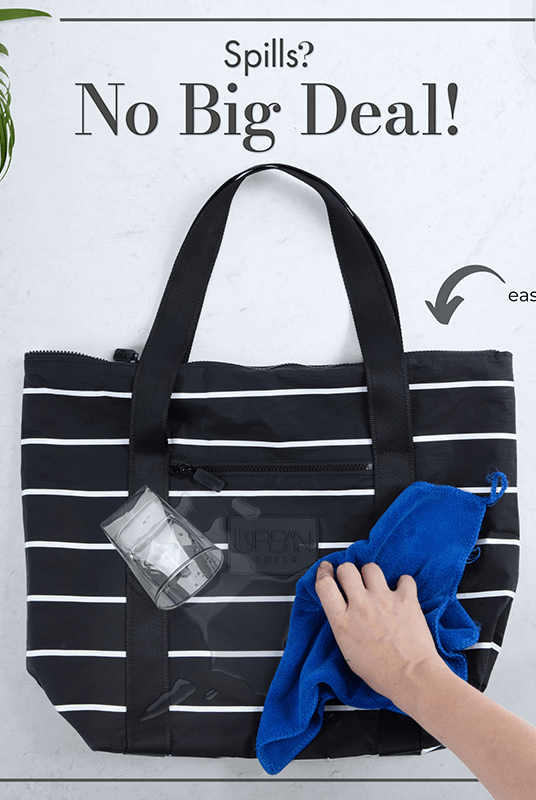
Material is your third check. Look for durable, tightly woven fabric, reinforced seams at stress points, and a finish that handles drizzle and spills. A bag that wets through in a sudden shower puts your passport and phone at risk even if nobody touches it. Water-resistant and easy to wipe clean isn't glamorous, but it's real travel protection.
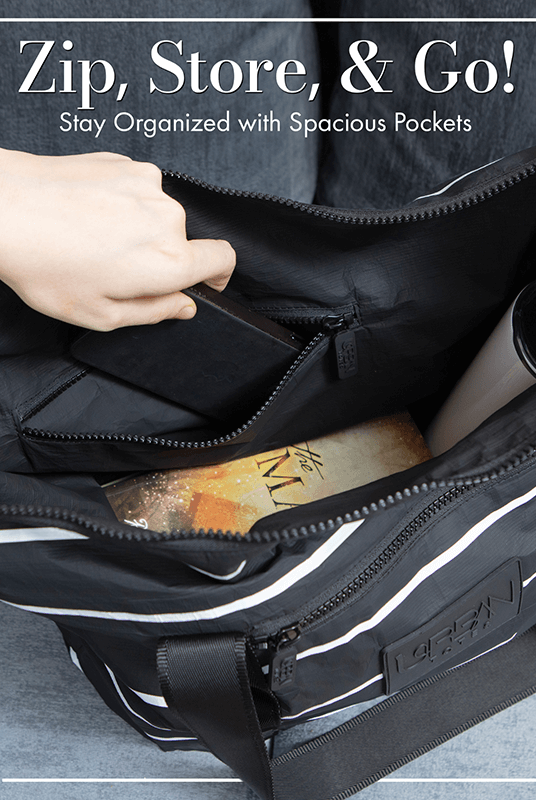
Organization finishes the job. You want multiple compartments, not a dozen tiny pockets you'll never remember. My minimum setup is simple:
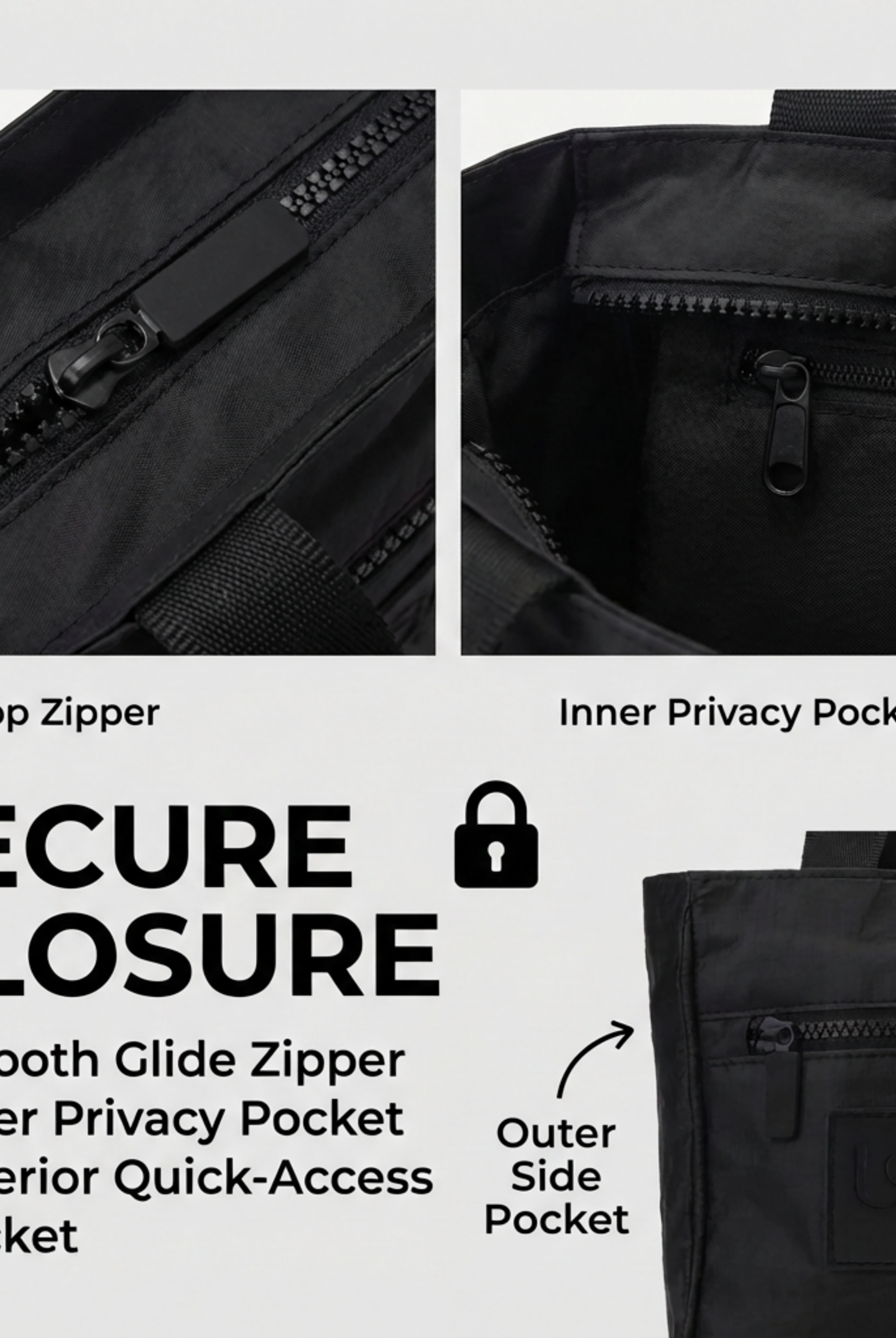
- Outside zip pocket: Phone and transit card, the things you reach for constantly.
- Inside zip pocket: Passport, backup card, and medication, the things you open rarely.
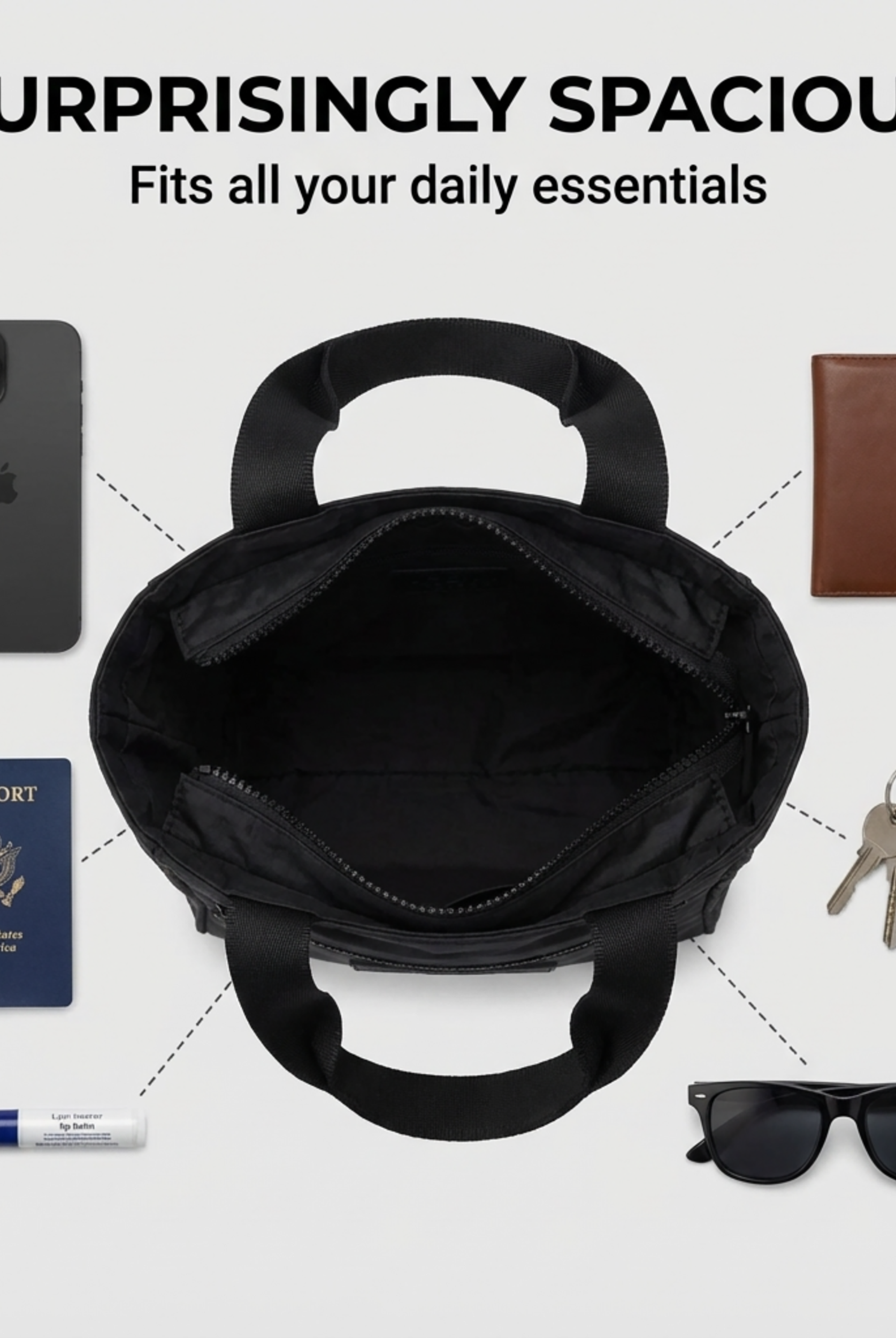
- Main compartment: Wallet, pouch, sunglasses, and small extras, kept closed between stops.
When all four pillars hold, the bag disappears into your day. You stop clutching, digging, and readjusting. That's the point. A thoughtfully designed, versatile crossbody should make you feel in control, not armored.
Closures, Straps, and Materials Compared
Marketing loves the word slash-proof. Be skeptical. A strap attack can let a thief remove the entire bag, whereas a reinforced body mainly protects against direct cutting, and high-denier fabric improves abrasion resistance but a sharp blade applied with sustained pressure can still penetrate 1000D nylon or 1680D polyester. That hierarchy should drive how you spend money. Protect the strap and its attachment points before you pay extra for dramatic body panels.
Closures follow a clear ranking. Locking zipper pulls resist casual opening best. A standard sturdy zipper is your solid everyday choice. Magnetic snaps, drawstrings, and open totes sit at the bottom for crowded travel, though they're fine for a beach chair where your bag stays in sight. If you're weighing a double zipper crossbody design for separate secure compartments, check that each zipper runs smoothly when the bag is full, not just empty.
Closure, Strap, and Material Trade-Offs at a Glance
| Feature | Most Secure Option | Everyday Compromise | When to Accept the Trade-Off |
|---|---|---|---|
| Closure | Locking zipper pulls | Standard top zipper | Quiet resorts, car errands |
| Strap | Reinforced, broad, padded | Wide adjustable nylon | Short outings, light loads |
| Strap seams | Reinforced stitching at body | Double-stitched tabs | Budget bags for low-crowd use |
| Body fabric | Tested cut-resistant panels | High-denier woven fabric | Most city and airport travel |
| Weather finish | Water-resistant coating | Tightly woven canvas | Dry climates, short walks |
How to weigh the table for your trip
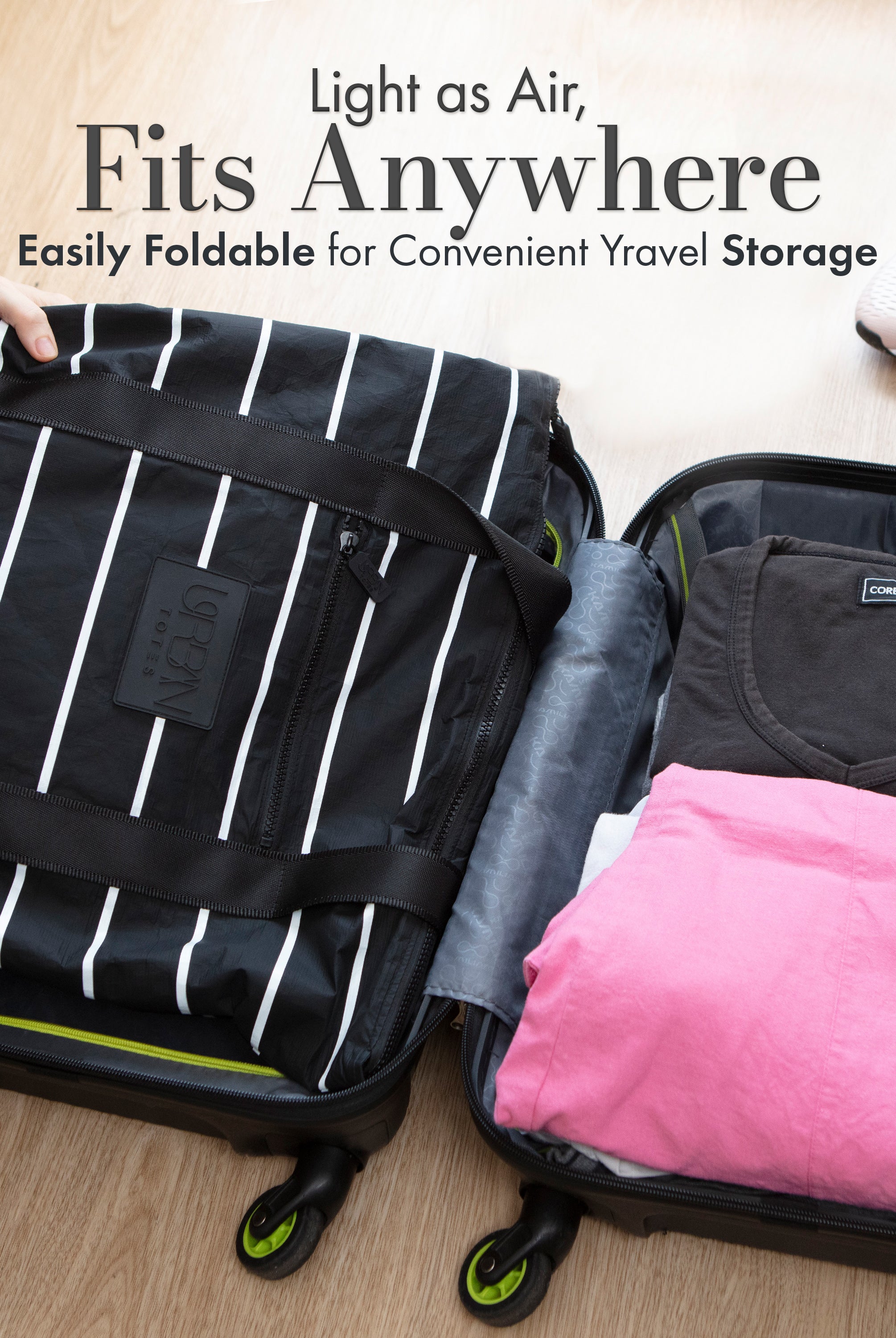
For packed transit, I won't compromise on the zipper or strap-to-body seams. Tug the strap tabs firmly, look for dense stitching, and avoid decorative rings that become weak points. For a quiet beach town, I'll happily trade maximum hardware for a packable, foldable bag that wipes clean and doesn't weigh down my shoulder.
Material labels need the same realism. Ask for a laboratory cut-resistance result such as ISO 13997 if a brand claims serious slash resistance, rather than trusting a hangtag. For most travelers, abrasion resistance, seam quality, and weather protection matter daily, while exotic panels matter rarely. Buy for the risk you will meet, and put the savings toward a better strap and smoother zippers.
Anti-Theft Features That Actually Matter
Some anti-theft features earn their keep. Others mostly make a product page longer. Spend on the first group, and treat the second as optional.
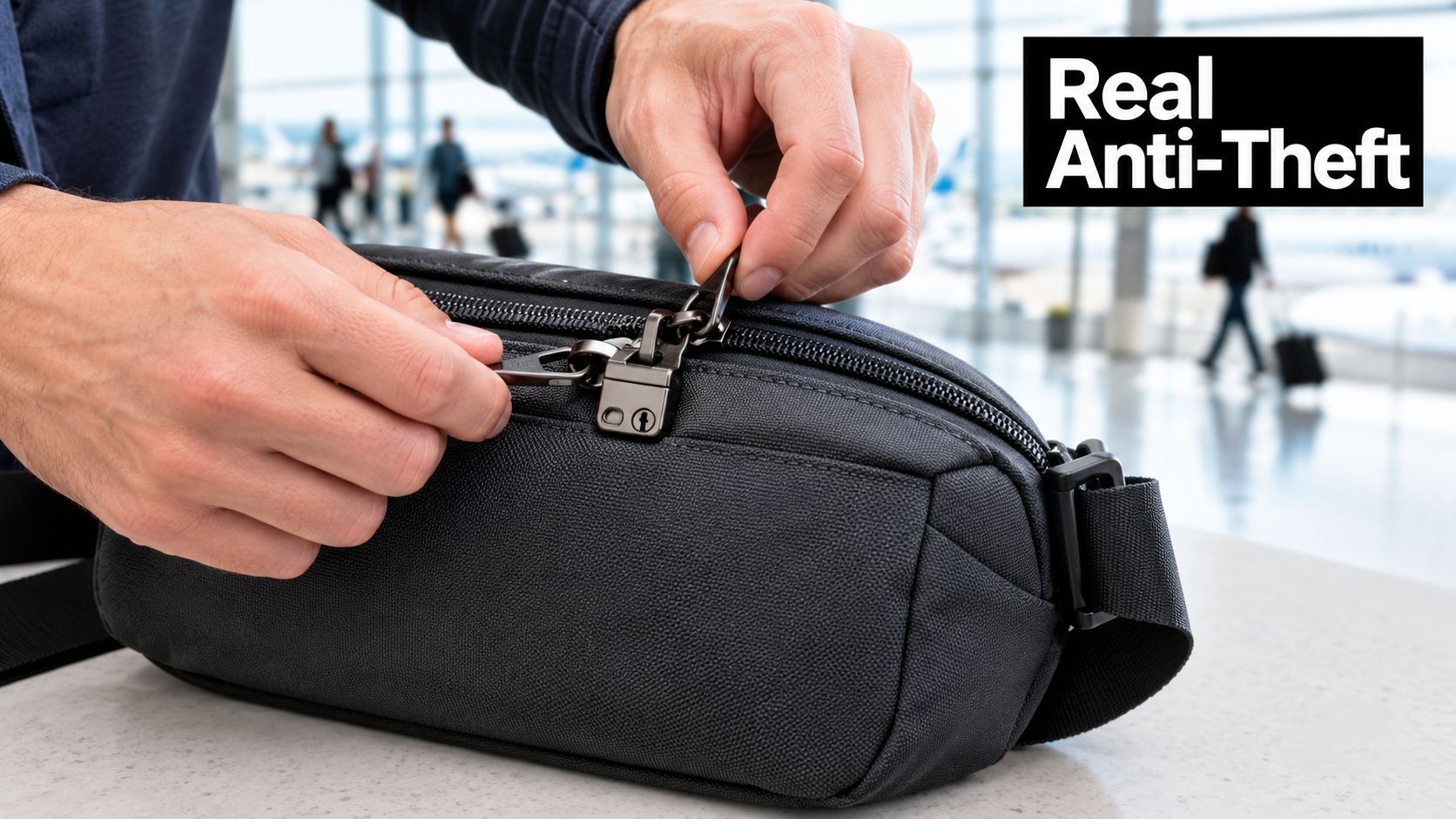
Locking zipper pulls are my top upgrade because they stop the casual swipe, the most realistic threat in a crowd. A pull that clips to a small ring takes two seconds to secure and forces anyone else to fumble visibly. Pair that with a reinforced strap, and you've covered both easy access and grab-and-go removal. Our deeper notes on practical travel bag security habits and features follow the same priority order.
RFID-blocking pockets are situational. They're useful in dense markets if you carry exposed cards, but they add little if your wallet already has shielding or you pay by phone. Don't reject an otherwise excellent crossbody because it lacks an RFID pocket, and don't buy a poorly organized one just because it has one. Put cards in an inside zip pocket either way.
Slash-resistant panels sit in the middle. They're one layer, not a shield, and they can't help if the zipper is open or the strap seam fails. Your bag's profile matters just as much. A slim crossbody worn high and in front gives an opportunist less to grab and keeps the opening under your hand.
There's also a safety layer most anti-theft guides ignore. In 2025 IATA reported 83% of travelers carry a phone, 60% carry a laptop, and 44% carry a power bank, yet 50% incorrectly believe small lithium-powered devices may be packed in checked luggage. Maximum concealment can backfire at an airport if your power bank is buried under everything. You need a compartment that's secure while walking, yet quick to open when staff ask you to remove a device. That's design, not drama.
Budget rule: Pay first for zippers you can lock and a strap that won't fail. Add specialty panels only after those basics are solid.
Smart Organization for Airports, Trains, and Security Lines
Airport safety starts before you reach the checkpoint. Start with an empty bag, check every pocket, and pack so the items you'll remove are already separated from the items that should stay hidden. That one habit ends most checkpoint fumbling.
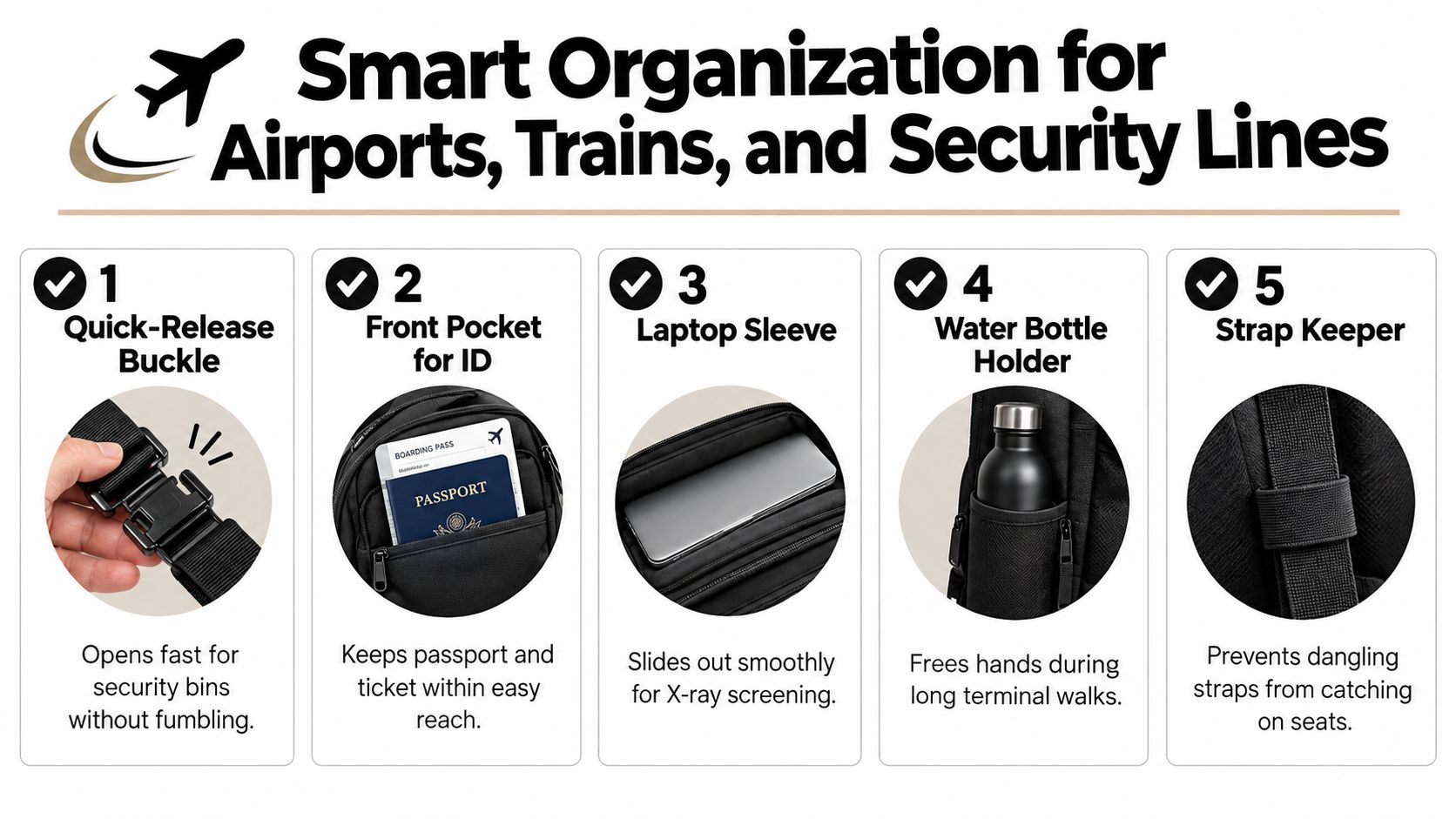
TSA's 3-1-1 rule permits liquids, aerosols, gels, creams, and pastes only in containers of 3.4 ounces (100 milliliters) or less, with all containers fitting inside one clear, quart-sized, zip-top bag, and TSA recommends placing that bag in the front pocket of a carry-on for fast removal. Toothpaste, sunscreen, lotion, and mouthwash all count. Larger containers belong in checked baggage, even if they're nearly empty.
Apply the same logic to electronics. Phones, laptops, and power banks belong in hand baggage, and you may need to pull them from a carry-on if it's gate-checked. Ask one question before you buy. Can I remove my power bank or liquids pouch in seconds without exposing my passport and wallet? If the answer is no, keep shopping. That is the reason a crossbody bag with well-placed pockets beats a fashionable single-pouch design.
Airport-Smart Compartment Checklist
| Compartment | What to Store | Why It Matters |
|---|---|---|
| Front outer pocket | Clear liquids pouch | Fast removal at screening |
| Accessible zip section | Power bank, phone | Quick access at security or gate |
| Inside zip pocket | Passport, backup card | Stays closed and out of sight |
| Main compartment | Wallet, medication, snacks | Controlled access, less rummaging |
| Back panel pocket | Boarding pass, transit card | Reachable without opening the bag fully |
On trains, keep that same map. You'll reach for a ticket while standing, then sit with the bag on your lap rather than on the floor or seat beside you. A functional, travel-ready layout feels boring in the best way. Everything has a place, every place has a zipper, and you move through lines looking calm because you are.
Matching the Bag to the Way You Actually Travel
The right safest crossbody bag for travel depends on your day, not on a generic ranking. Travel demand is uneven across regions, with Europe at 99% of 2019 arrival volume by mid-2024, the Americas at 97%, the Middle East 26% above, and Africa 7% above. Different cities, transit systems, and crowd patterns reward adaptable design over one rigid formula.
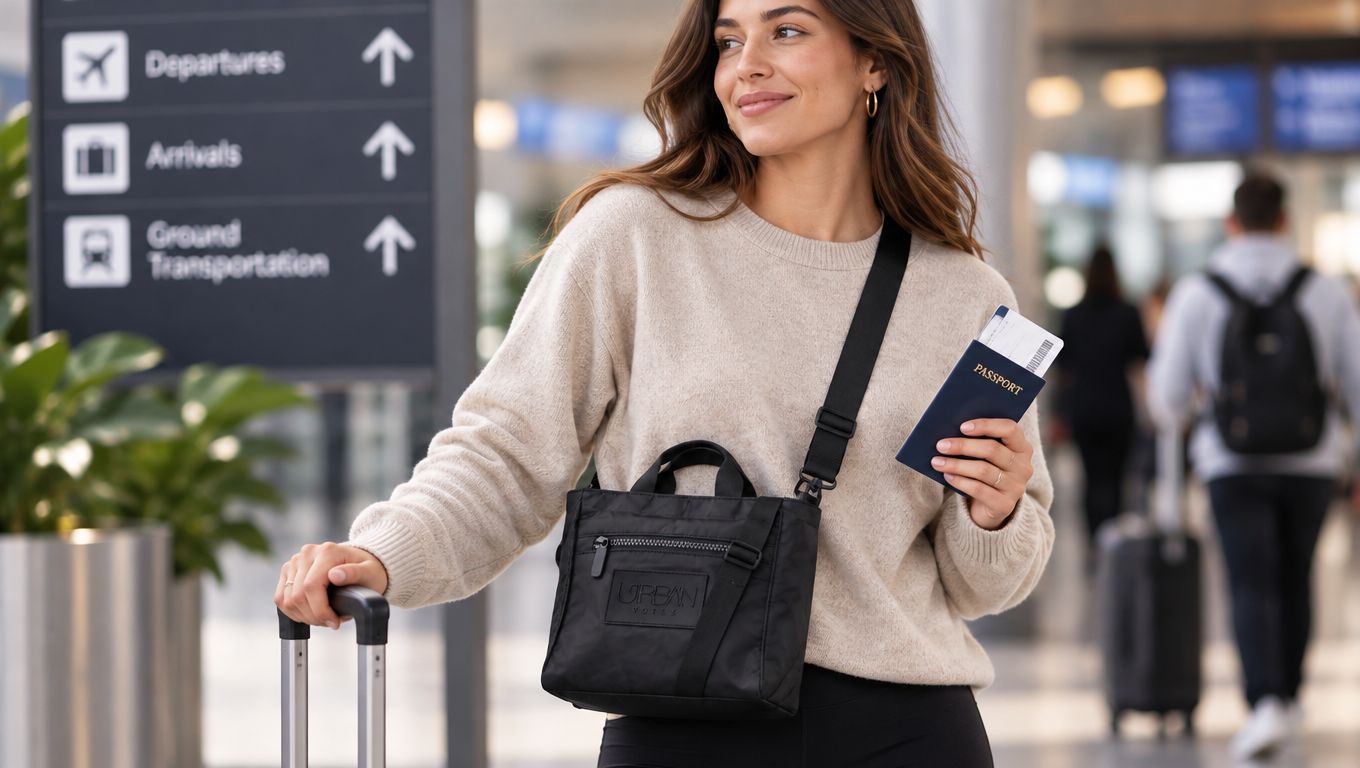
Three travelers, three priority lists
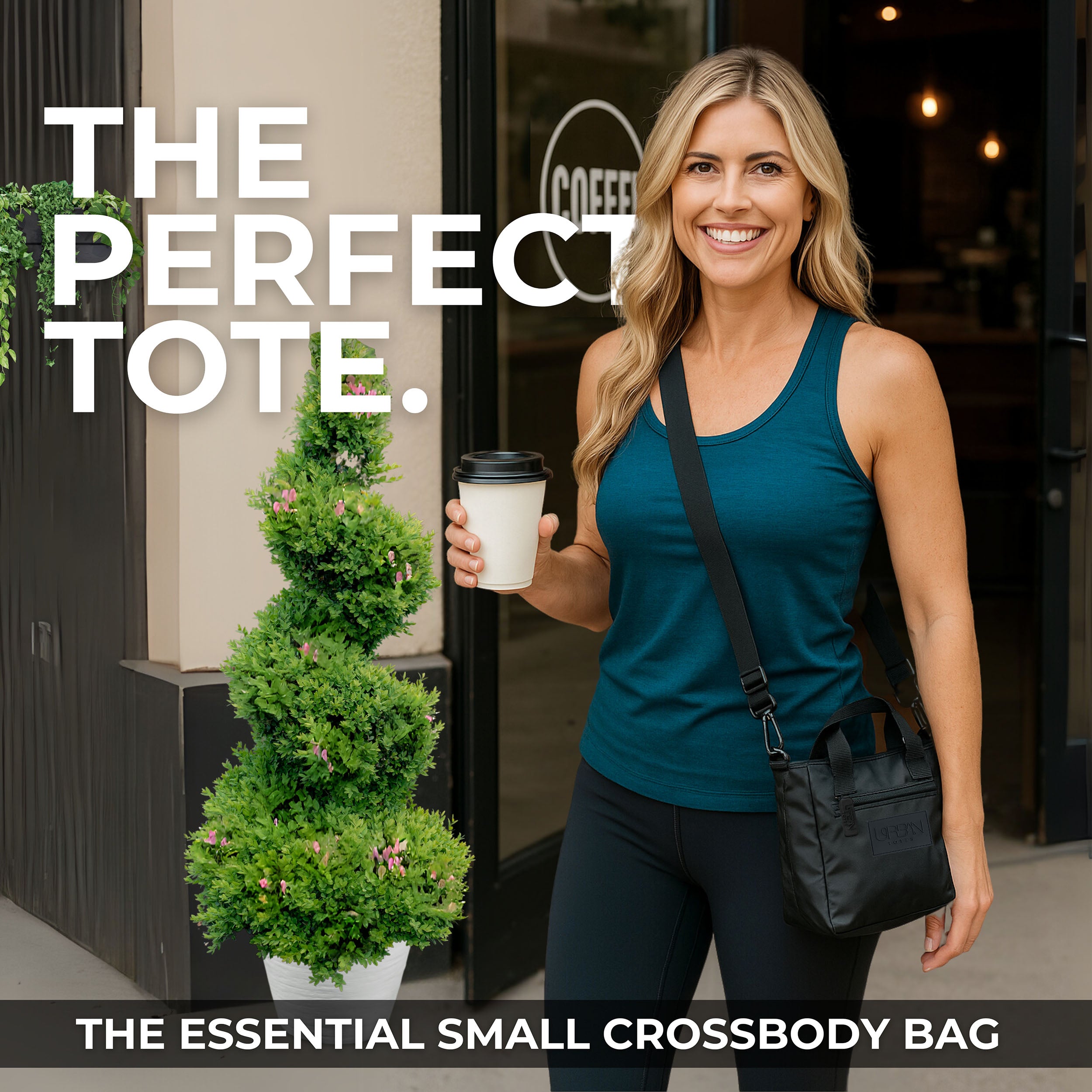
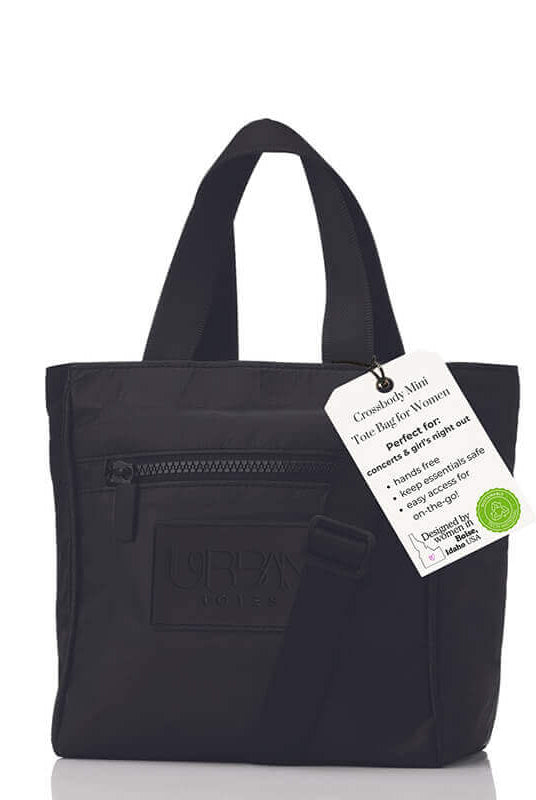
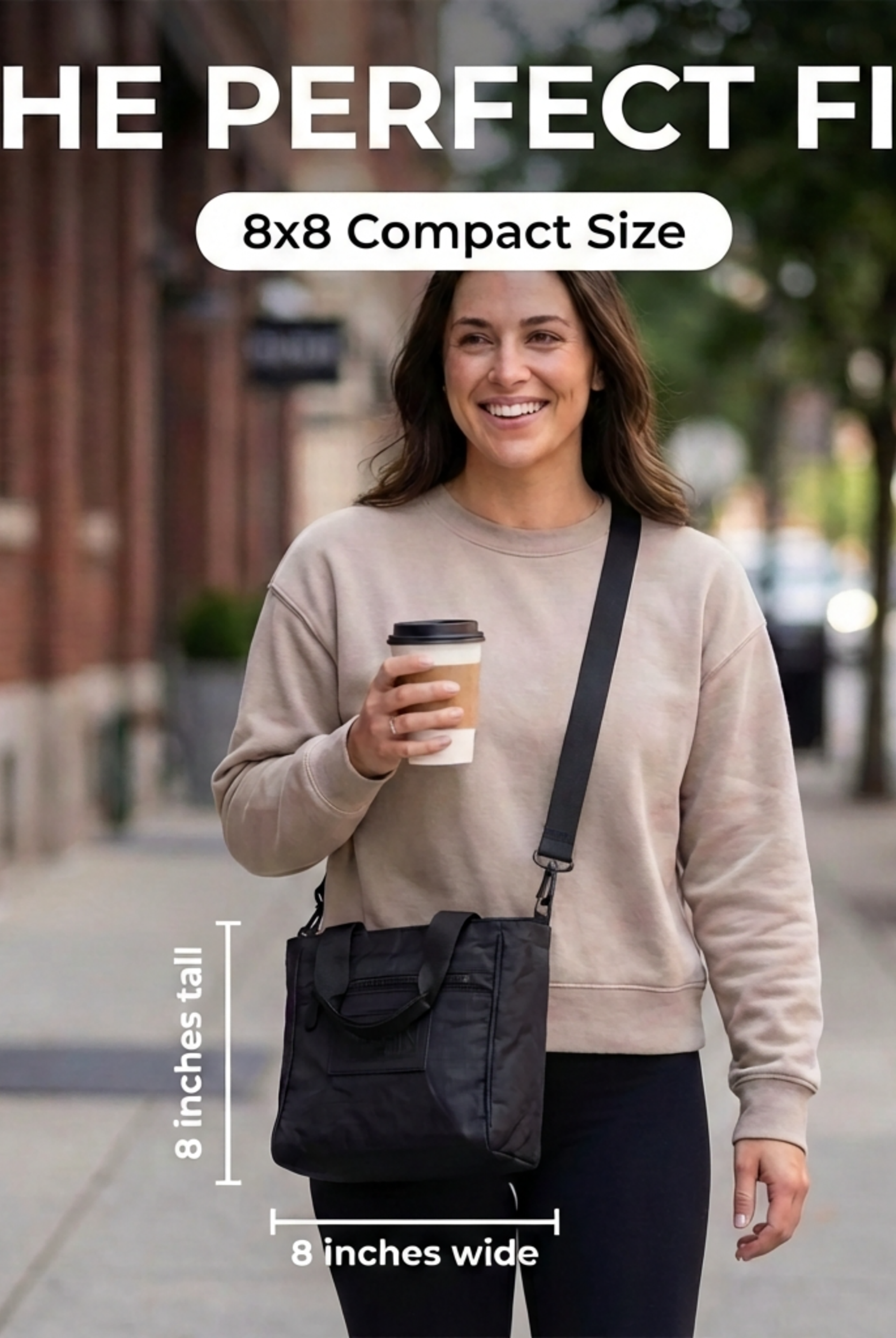
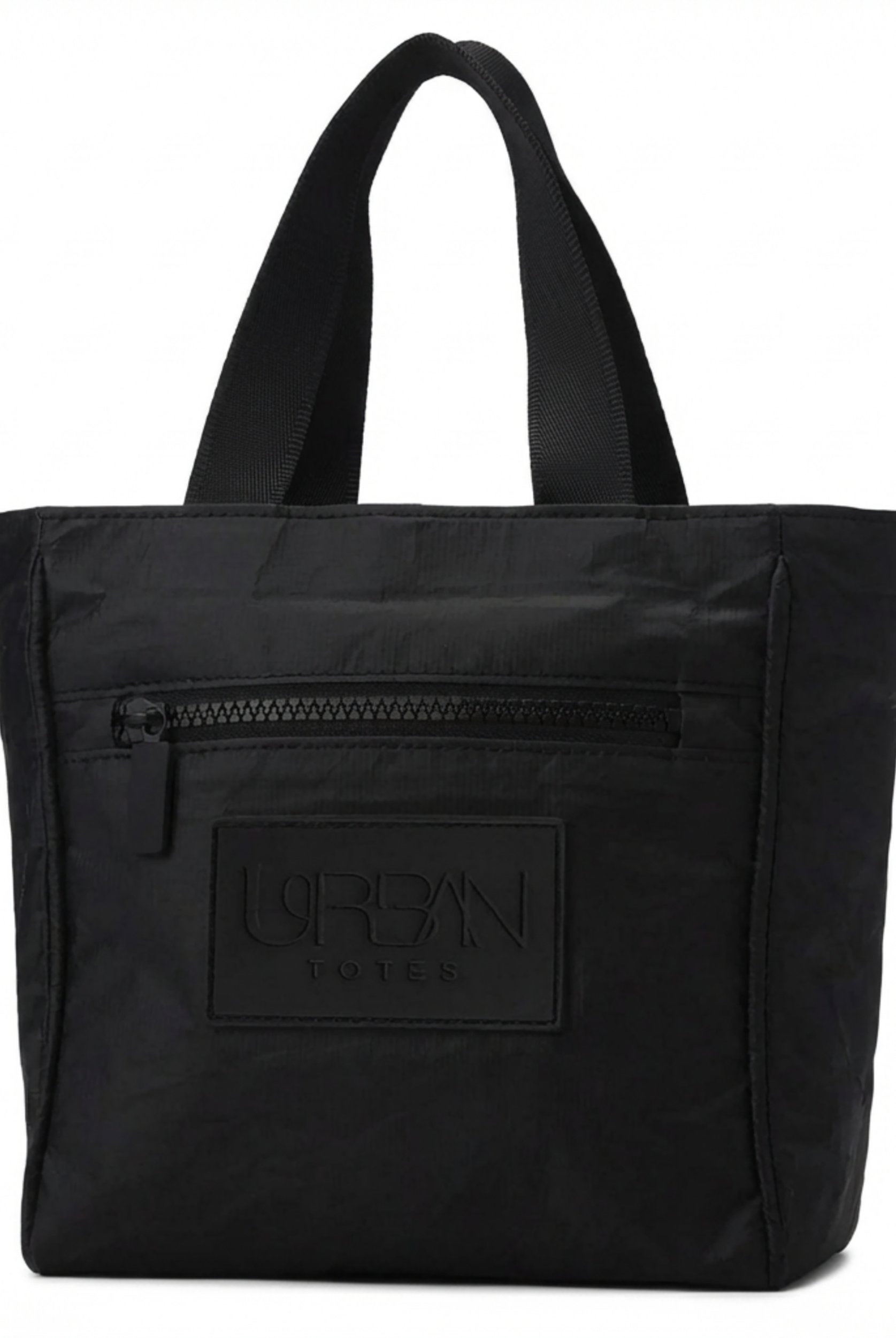
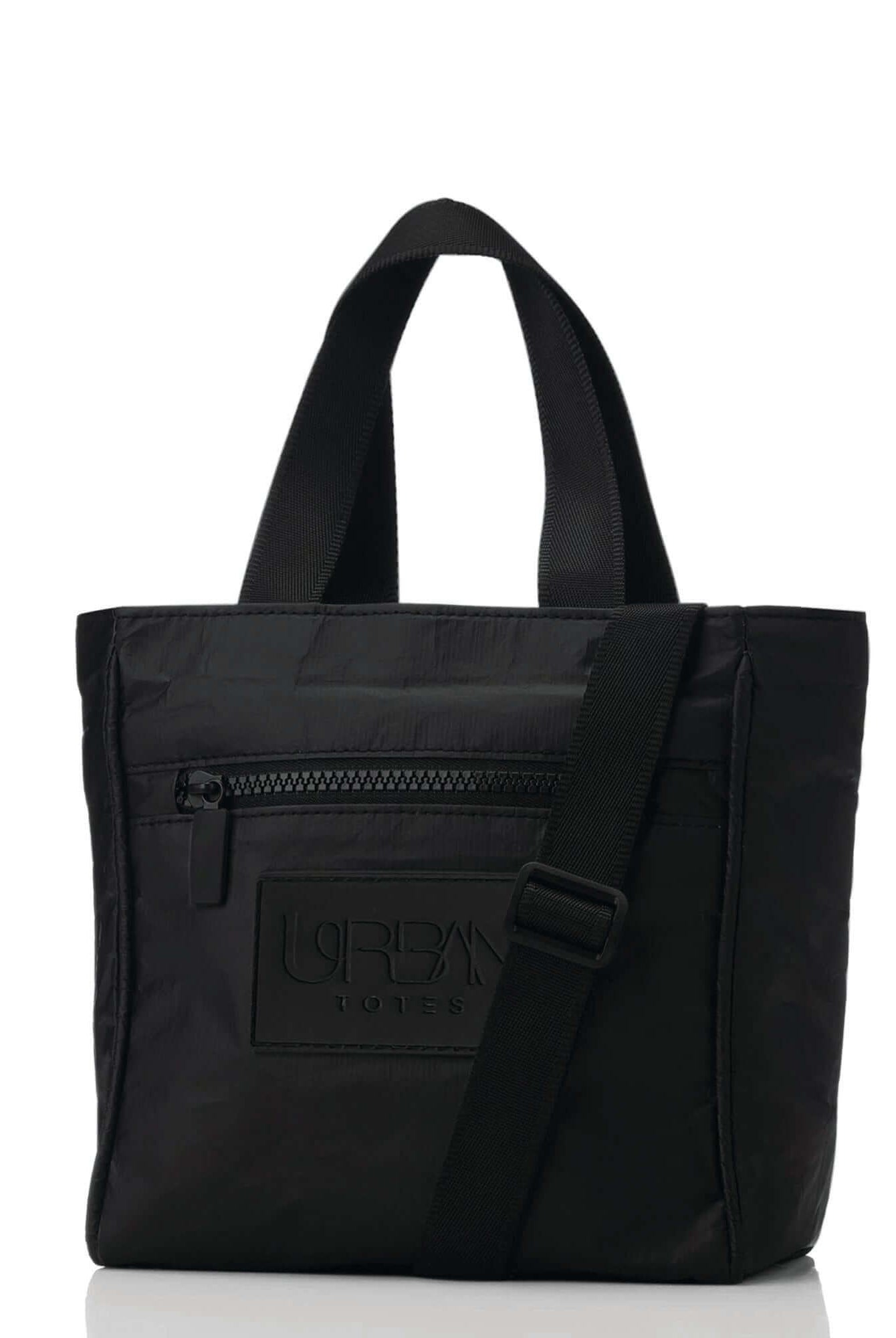
The beach-day mom needs hands free for kids, towels, and a cooler. Her essentials are a lightweight body, fabric that wipes clean after sunscreen spills, and an outside pocket for phone and keys so sand doesn't migrate into everything. One compact option in that spirit is the Crossbody Tote Bag Mini Purse, which measures 7.5 x 4 x 7.75 inches, uses a zip-top closure with outside and inside zip pockets, and has a removable crossbody strap. Treat those specs as a template, then judge fit against your own essentials.
The frequent-flyer commuter lives by speed. She needs a soft, compact bag that compresses under a seat, separates liquids and a power bank for screening, and still looks polished walking into a meeting. Strap adjustment matters here, so review how an adjustable crossbody strap changes fit and control before choosing length based on a photo alone.
The weekend city explorer walks all day through markets, museums, and transit. She can go slightly larger for a light layer and refillable bottle, but she shouldn't surrender a close fit. A broad strap, secure top zip, and enough structure to keep items from pooling at the bottom will save her shoulders and her patience.
Notice that none of these women need every feature. Each needs the right three. Name your pattern, pack a typical day's contents on your bed, and buy for that pile. A stylish bag you'll wear correctly from morning to night beats a technical bag that stays in the hotel room.
Compact Mini Versus Everyday Crossbody Caps
Size is a safety decision, not just a style one. A compact mini forces you to carry less, sits flat in crowds, and is easy to manage one-handed at a farmers market, concert, or school pickup. Its limit is obvious. A tablet, bulky charger, or extra layer may not fit, and overstuffing a mini makes its zipper strain and its shape bulge away from your body.
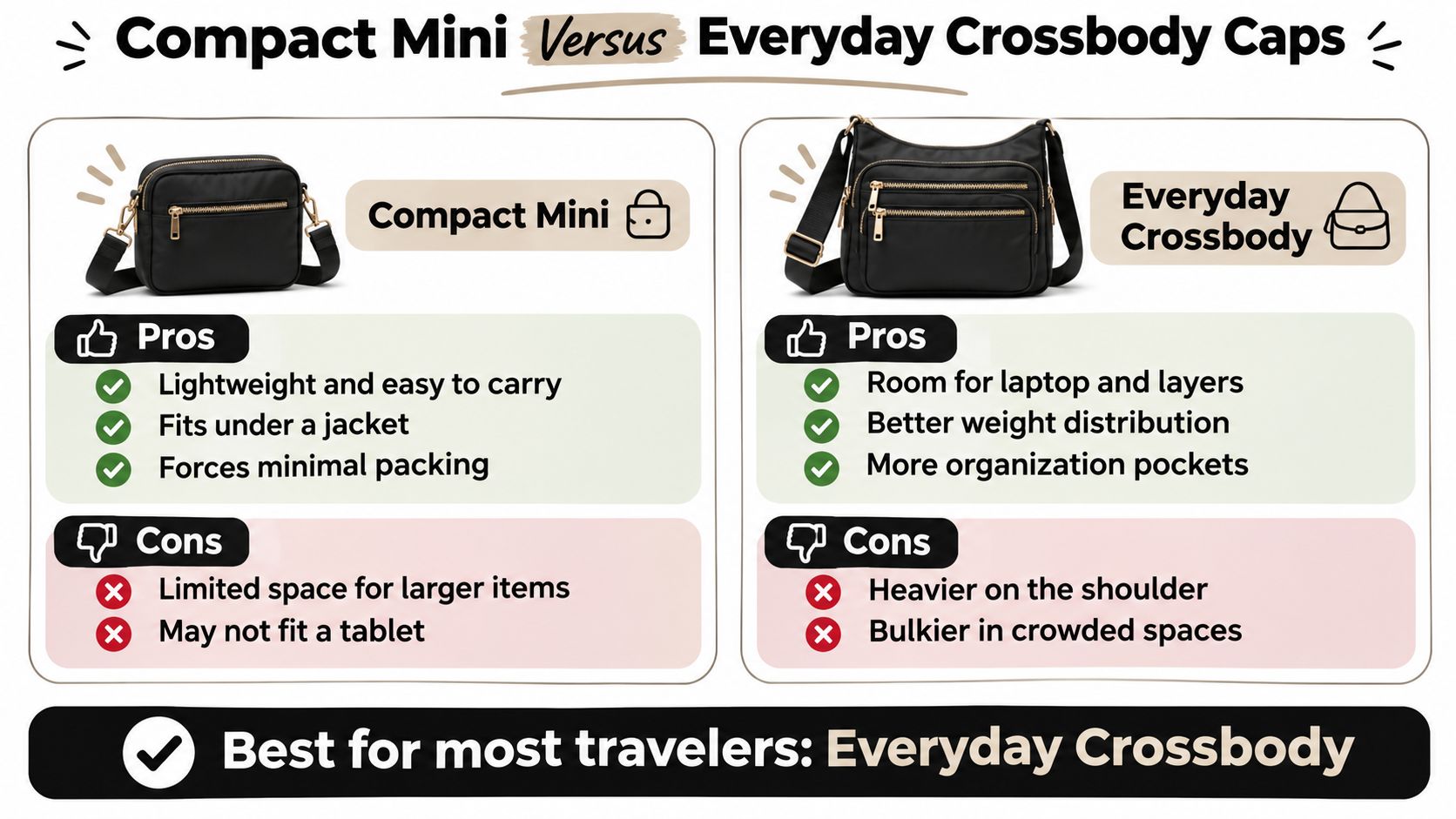
A larger everyday crossbody handles long travel days better. You'll get more pockets, better separation for airport items, and room for medication or snacks. The cost is bulk and shoulder load, especially if you fill every inch just because it's there. That bulk has real consequences in transit. A 2025 inclusive-travel report found 58% of respondents believed people fail to move luggage from priority public-transport spaces because there is nowhere else to store it. A bag that blocks aisles or forces you to set it down creates its own risk.
For caregivers, older travelers, and anyone holding a cane, coffee, or child's hand, one-handed zipper access can matter more than added hardware. If that's your life, start with a mini travel bag format built for essentials only and carry overflow separately. If your days run long and varied, choose the everyday size and enforce a packing limit. There's no universal winner. There's the bag you can keep close, closed, and comfortable for your longest typical day.
Your Safe Crossbody Checklist and Final Word
Use this list in the store or with a bag already in your closet. If a crossbody misses two or more items, I'd pass.
- Secure zip closure: Main compartment closes fully and smoothly, one-handed.
- High, close fit: Adjustable strap stays set and rests against your torso.
- Reinforced seams: Strap tabs feel solid when tugged.
- Water-resistant fabric: Wipes clean after spills or drizzle.
- Multiple compartments: Outer phone pocket plus an inside zip pocket.
- Airport-ready layout: Liquids pouch and power bank remove without exposing valuables.
- Soft under-seat shape: Compresses easily, since IATA lists 56 × 45 × 25 centimeters (22 × 18 × 10 inches) only as a general cabin reference while airlines set their own limits.
Choose calm control over feature clutter. Your safest bag is the one you'll wear closed, in front, and organized all day.
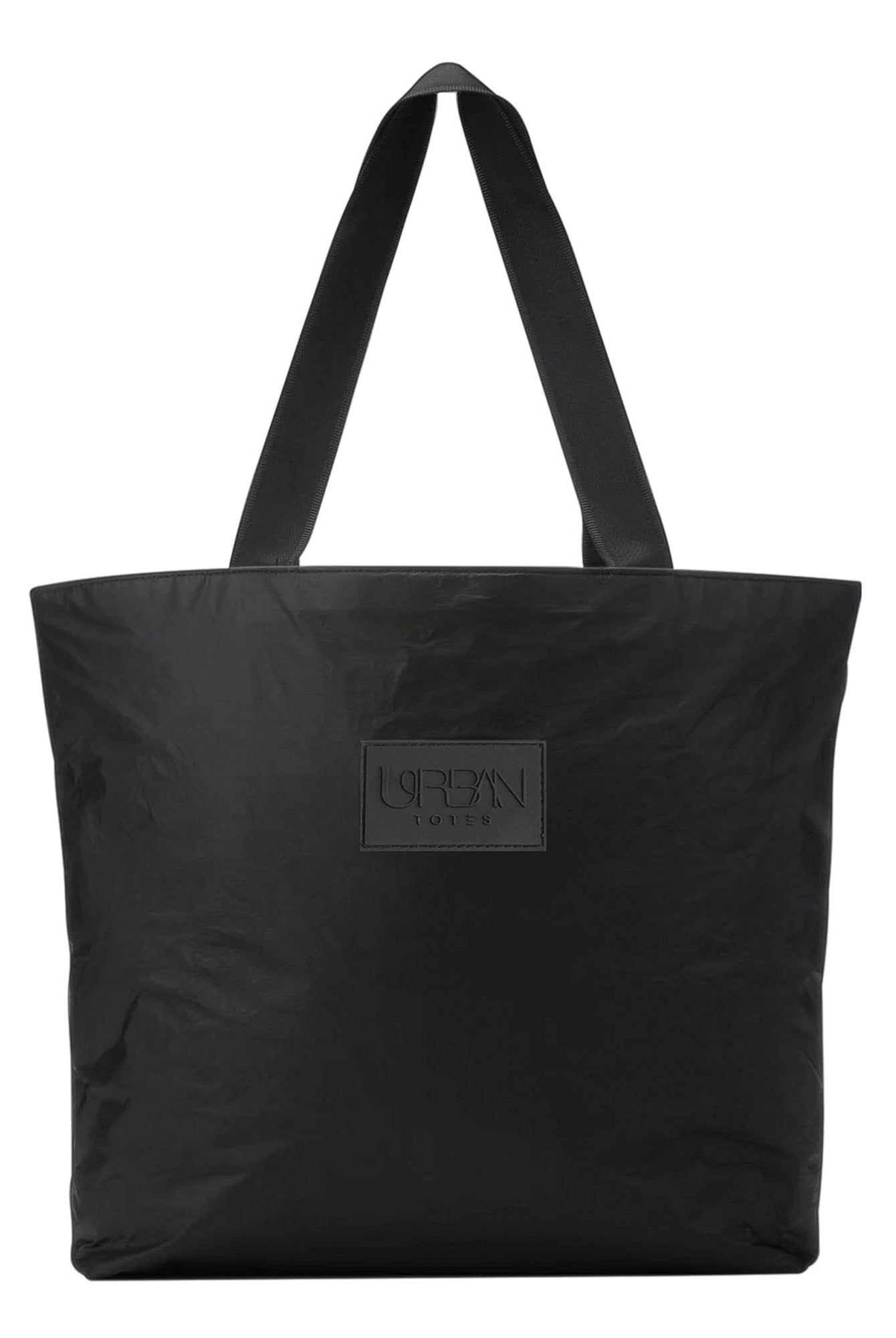
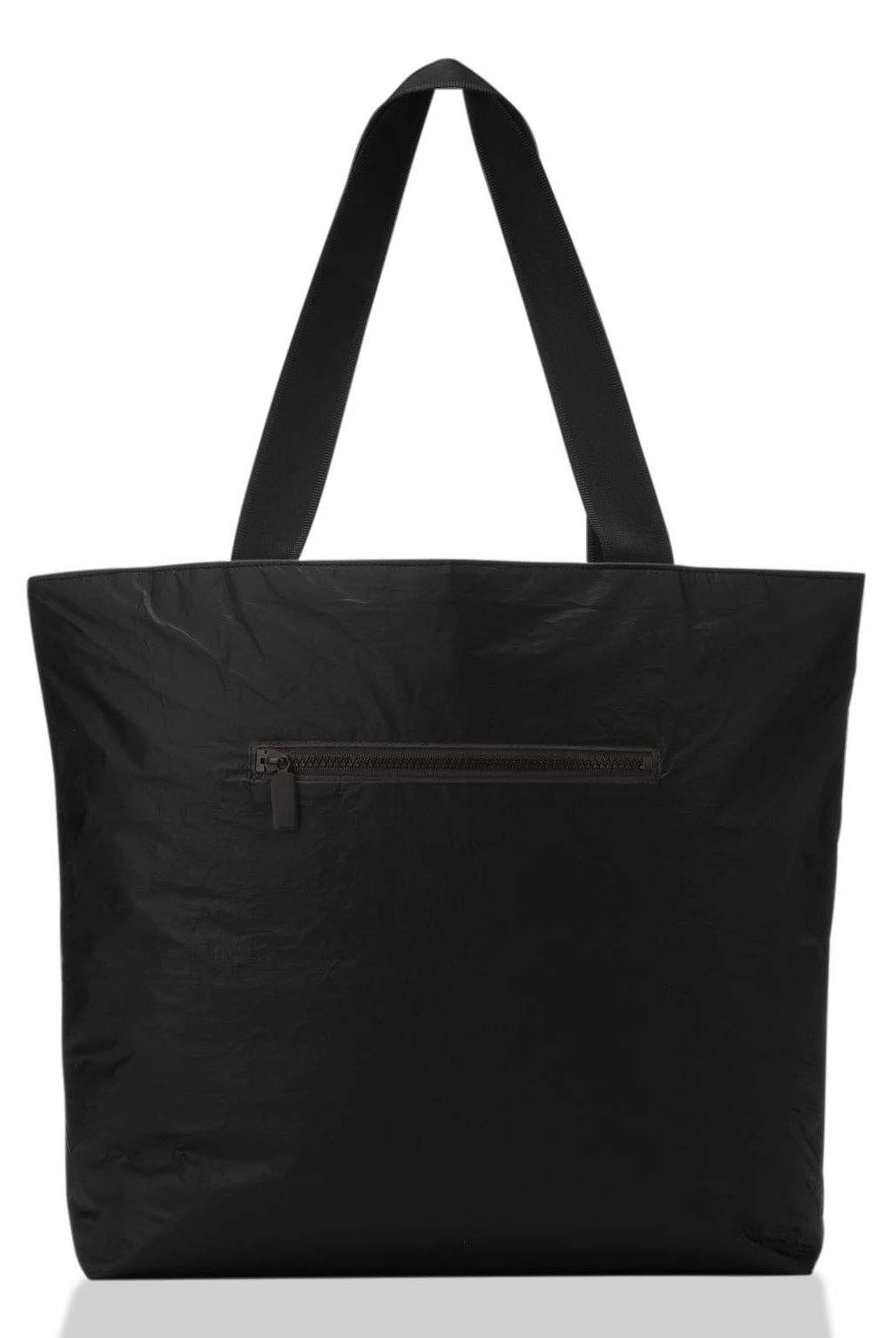
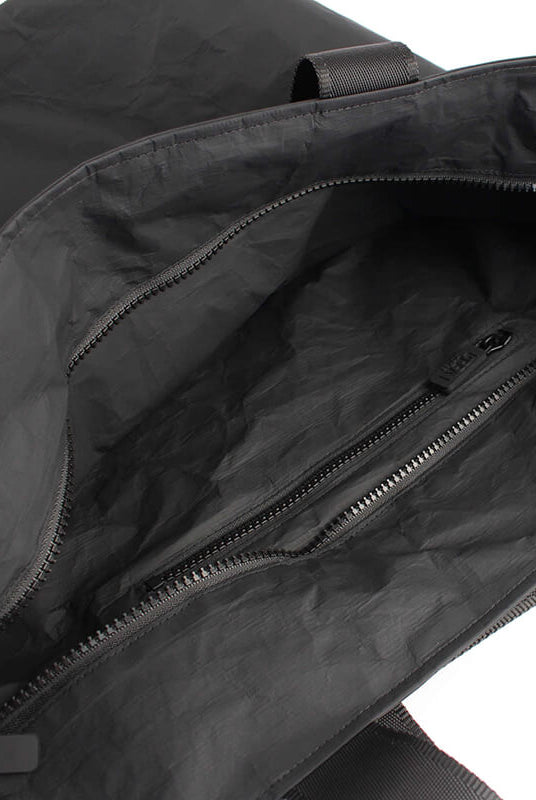
Find your perfect go-anywhere bag at Urban Totes, a woman-owned, Boise-made brand designing lightweight, water-resistant, packable crossbody and tote styles with zipper closures and thoughtful pockets for real days on the move. Shop the collection, pick the size that matches your travel pattern, and head out with your hands free. Go Anywhere. Tote Everything.