Your alarm goes off, coffee is barely poured, and you're already balancing a rolled mat, laptop, water bottle, snack bag, and yesterday's damp towel. A slim mat sling looks tidy until you reach the studio, realize your shoes have nowhere to go, and discover your clean blouse is sharing space with sweaty clothing. Then class ends, and the same bag has to make it through school pickup, a quick errand, or an afternoon at your desk.
The right yoga bag for women isn't just a mat holder. It's an everyday carry piece that keeps wet and dry items apart, protects essentials, feels comfortable on a commute, and still looks pulled together at the studio café. The yoga bags market was estimated at USD 759.69 million in 2024 and is projected to reach USD 1.102 billion by 2030, a roughly 45% increase over six years at a 6.4% CAGR, according to Fact.MR's yoga equipment market coverage. That growth makes sense when one bag can serve a morning class, a workday, and the rest of real life.
Table of Contents
- Why Your Yoga Bag Should Do More Than Carry a Mat
- The Main Yoga Bag Types Worth Knowing
- Materials, Weight, and Cleanability Compared
- Matching a Bag to Your Real Life
- Sizing Your Mat and Planning Your Compartments
- Packing and Care Habits That Make a Bag Last
- How Urban Totes Designs Fit These Scenarios
- Quick Answers to Common Yoga Bag Questions
Why Your Yoga Bag Should Do More Than Carry a Mat
A single-purpose mat carrier works for a short walk from your front door to a nearby studio. It starts falling short when your day has multiple stops. The moment you add sneakers, a change of clothes, a water bottle, wallet, phone, charger, and towel, an open sling becomes a loose collection of items pressed against your mat.
That arrangement creates two immediate problems. First, you lose track of small essentials. Second, the rolled mat and damp gear sit beside clean clothing with no meaningful separation. A better bag gives the mat its own sleeve or external straps, then uses the main compartment for items that need protection from moisture and friction.
Practical rule: If your bag can carry your mat but can't organize the rest of your morning, it's a mat accessory, not a daily yoga bag.
Build around the whole day
A commuter needs a secure zipper closure, a pocket for transit essentials, and room for office items. A mom may need space for snacks, a child's spare layer, and a towel. A traveler wants a bag that folds away easily and can handle a change in plans without becoming awkward luggage.
Look for multi-pocket organization rather than a large, empty cavity. A quick-access phone pocket prevents the familiar sidewalk rummage. A separate shoe or wet pocket keeps dirty soles and damp fabric from migrating through the bag. A padded sleeve matters if your laptop travels with you, while a wide strap distributes the load better than narrow webbing.
Hygiene belongs in the buying decision
Your mat touches studio floors, sidewalks, and car trunks. Your towel and workout clothes collect moisture during class. The bag needs a cleaning routine, but it also needs a layout that makes cleaning practical. Dedicated wet/dry zones, ventilated sections, and breathable mesh panels help reduce moisture transfer between compartments and make it easier to isolate dense, damp items, as explained in this guide to yoga bags with mat holders.
A polished silhouette still matters. You shouldn't have to carry a bulky sports sack into a meeting or café. Choose a versatile, lightweight, water-resistant design that can move from class to errands without looking like it belongs only in a locker room. For broader ideas on why a well-designed tote earns a place in daily life, see these tote bag benefits.
The Main Yoga Bag Types Worth Knowing
Your morning commute, class, and errands should determine the bag format. A yoga bag earns its place as an everyday carry when it handles your mat without sacrificing access, hygiene, or room for the rest of your day.
Match the format to the commute
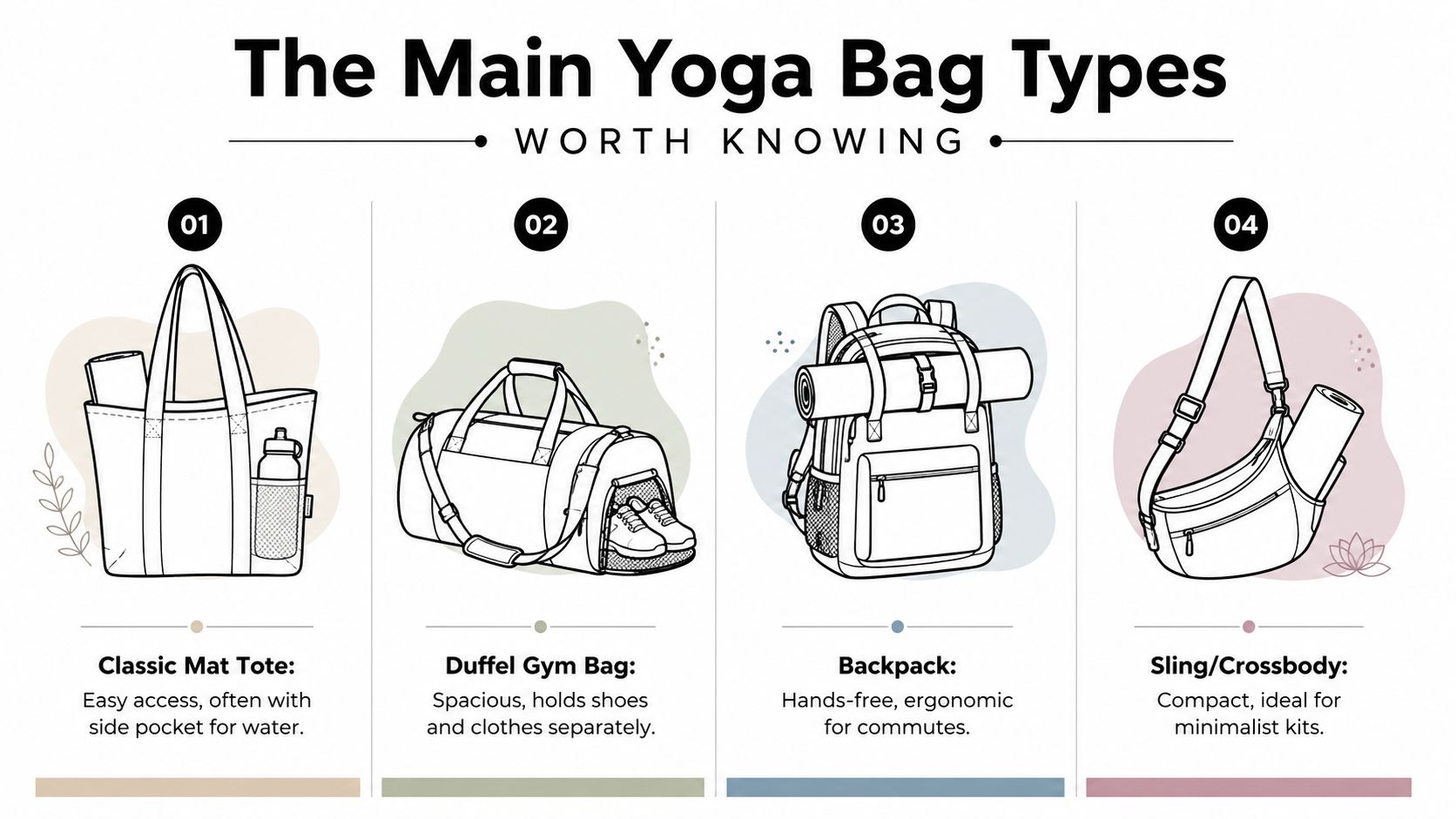
A classic mat tote works for a short trip to the studio. It keeps the mat accessible and often adds a pocket for a bottle or towel. The weakness is shoulder comfort. A thick mat, shoes, and clothing can make a narrow strap press into one side.
Choose a duffel-style yoga gym bag for a full workout day. Its wide opening makes shoes and clothing easy to pack, while internal dividers can separate them. The larger shape takes more space on a crowded train and becomes awkward beside another bag.
A backpack yoga bag keeps both hands free for cycling, walking, or school drop-off. Inspect the back panel and shoulder straps before carrying it heavily. Backpack structure can also reduce the space available for a laptop or larger clothing bundle.
A sling or crossbody hybrid suits a compact kit with a travel mat, towel, bottle, and small essentials. Skip it for bulky shoes, a laptop, or a thick mat unless the design clearly accommodates them.
For airport-heavy routines, a wheeled travel yoga bag reduces the strain of longer carries. A convertible tote-backpack handles route changes better than a fixed format. This glossary of bag types explains the distinctions among common bag designs.
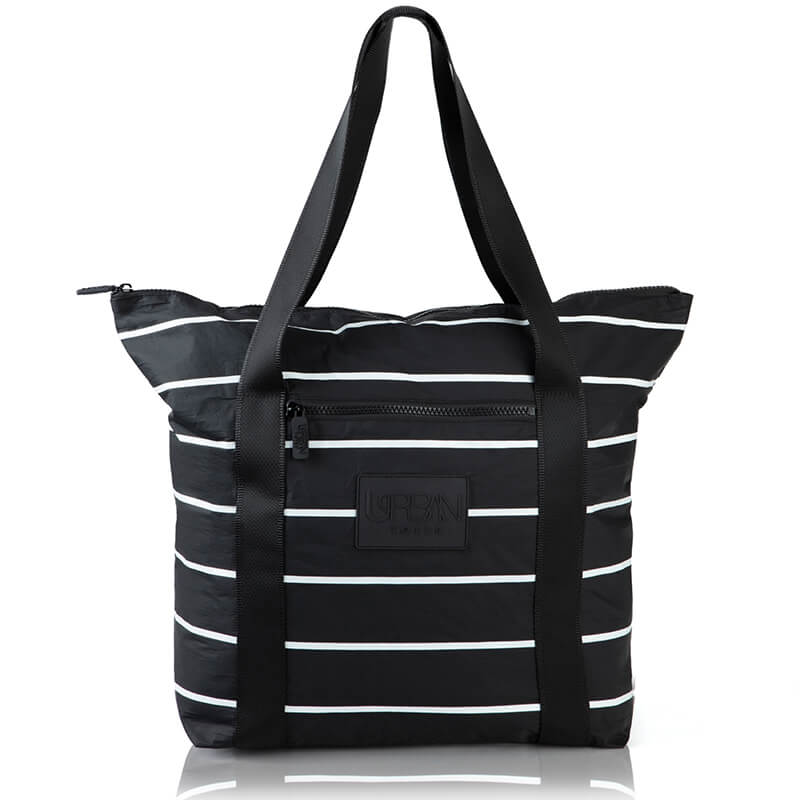
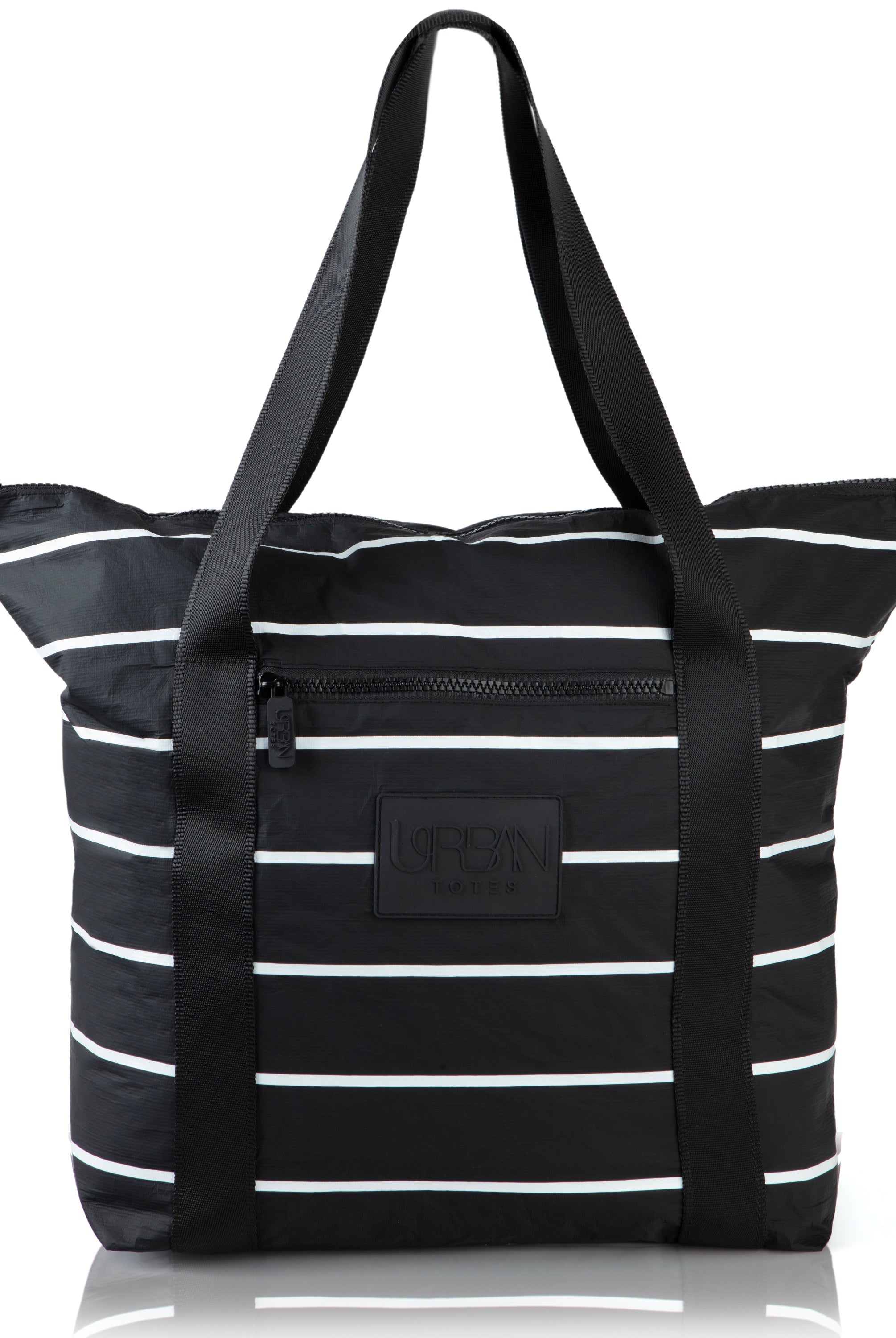
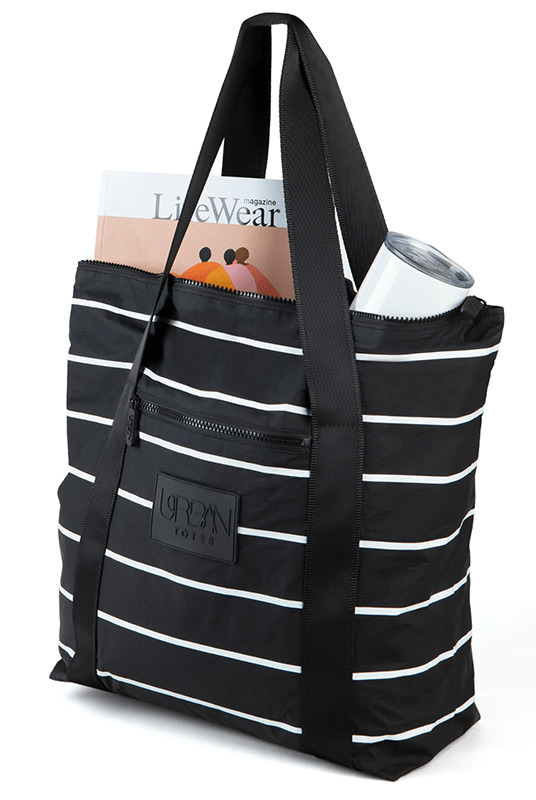
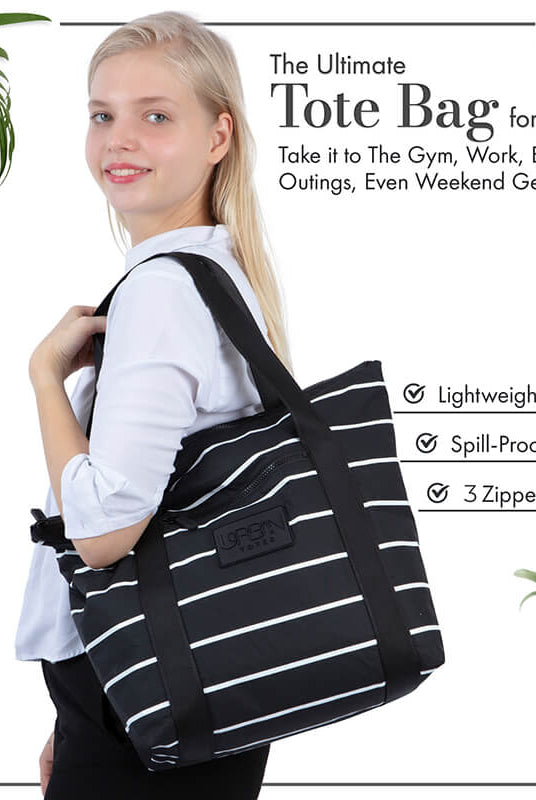
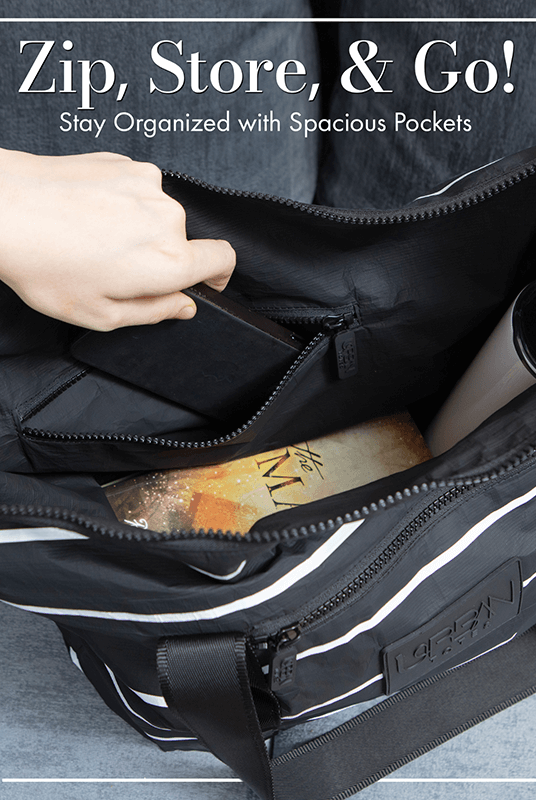
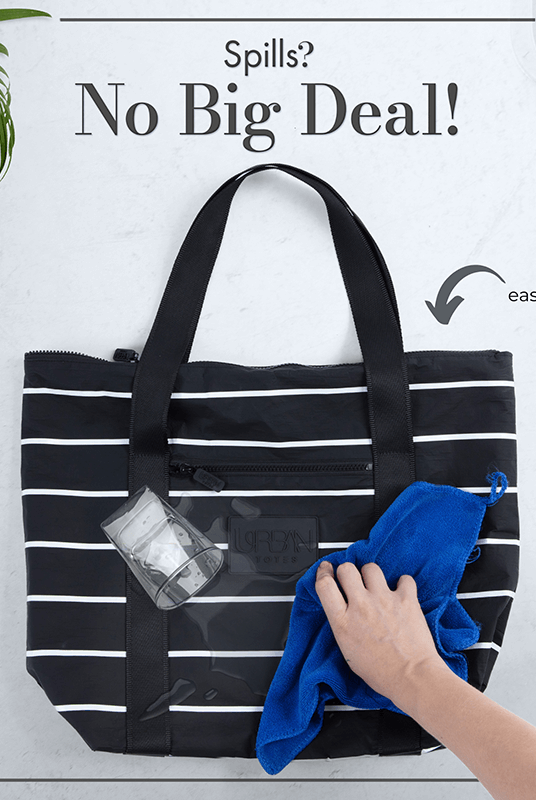
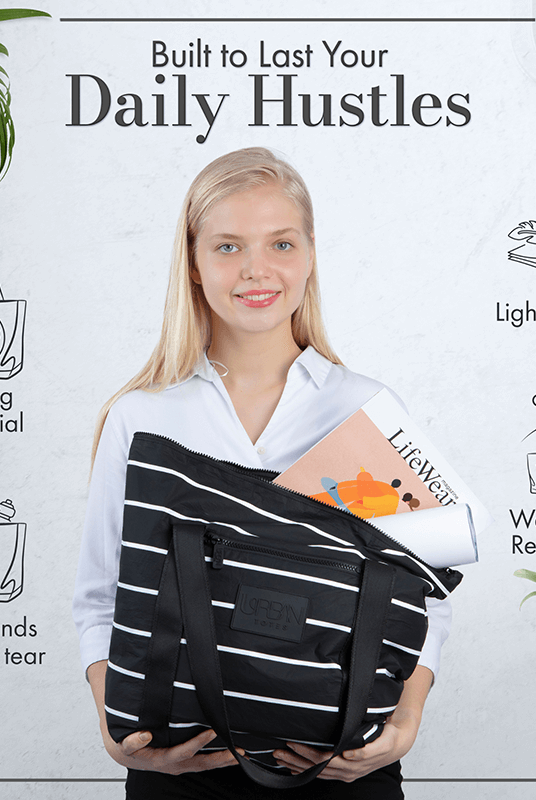
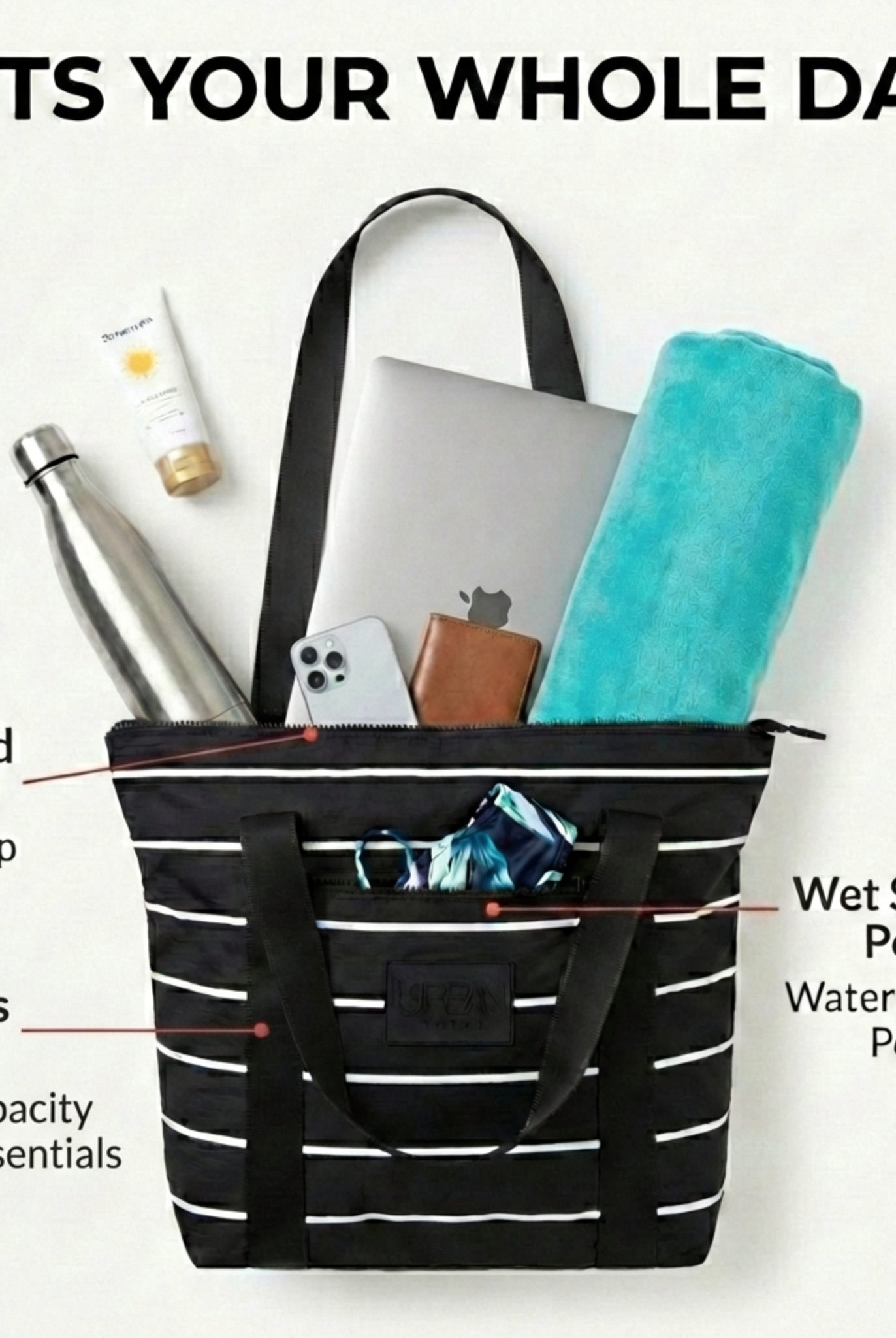
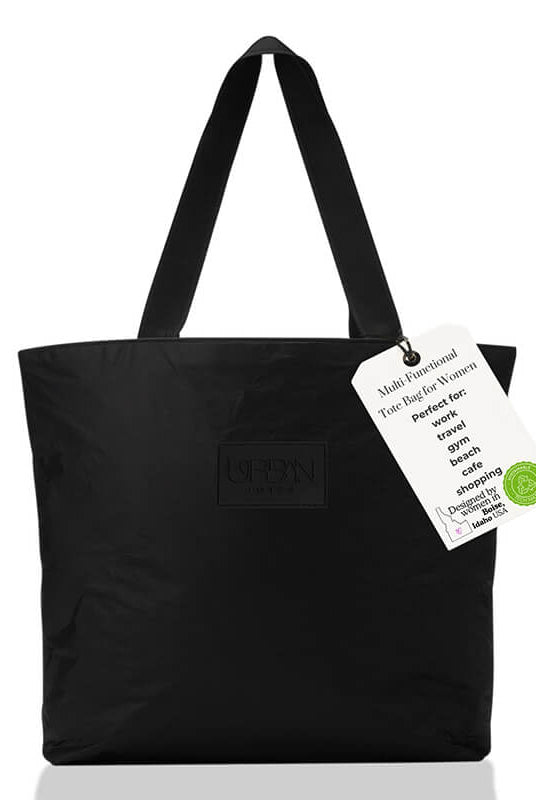
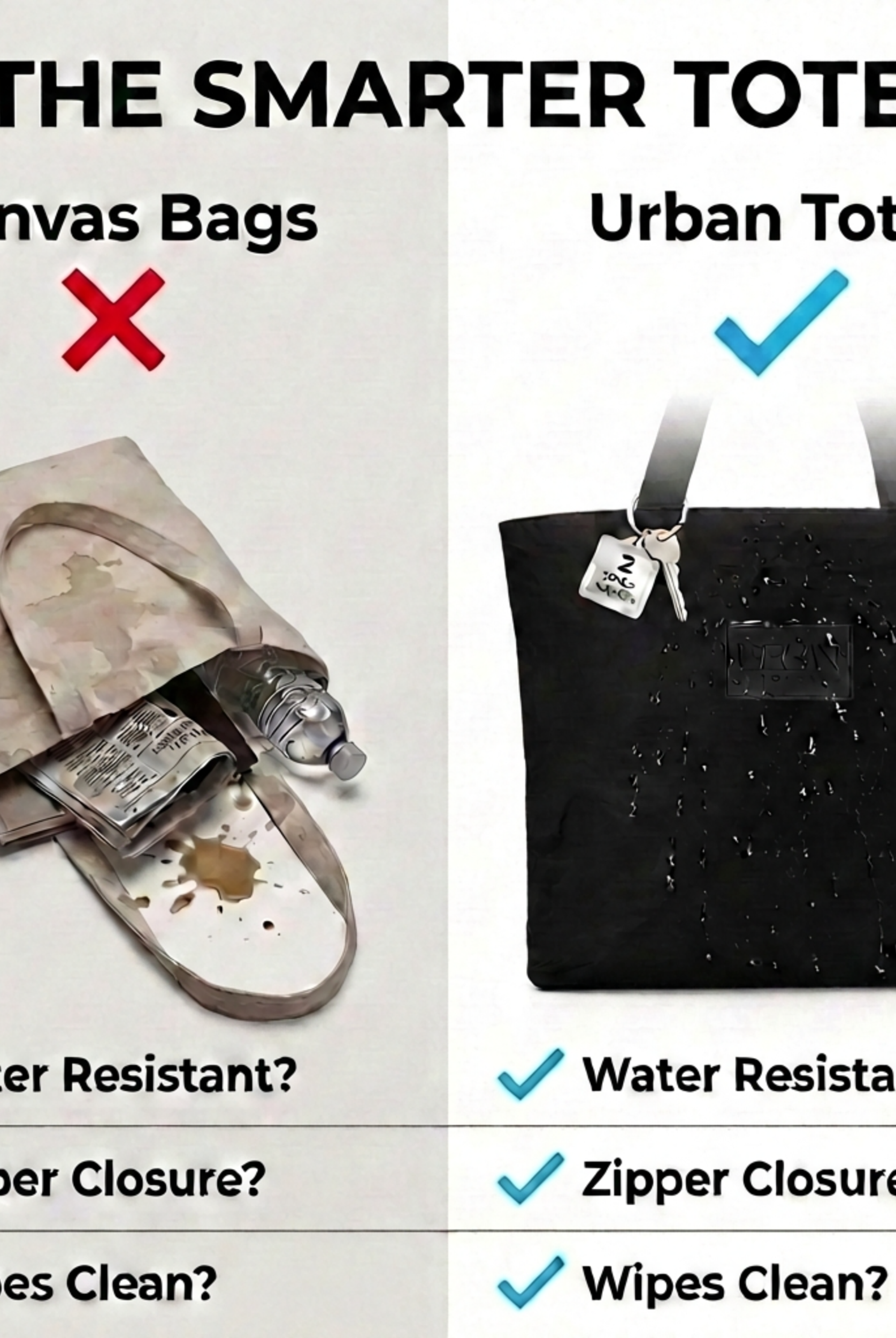
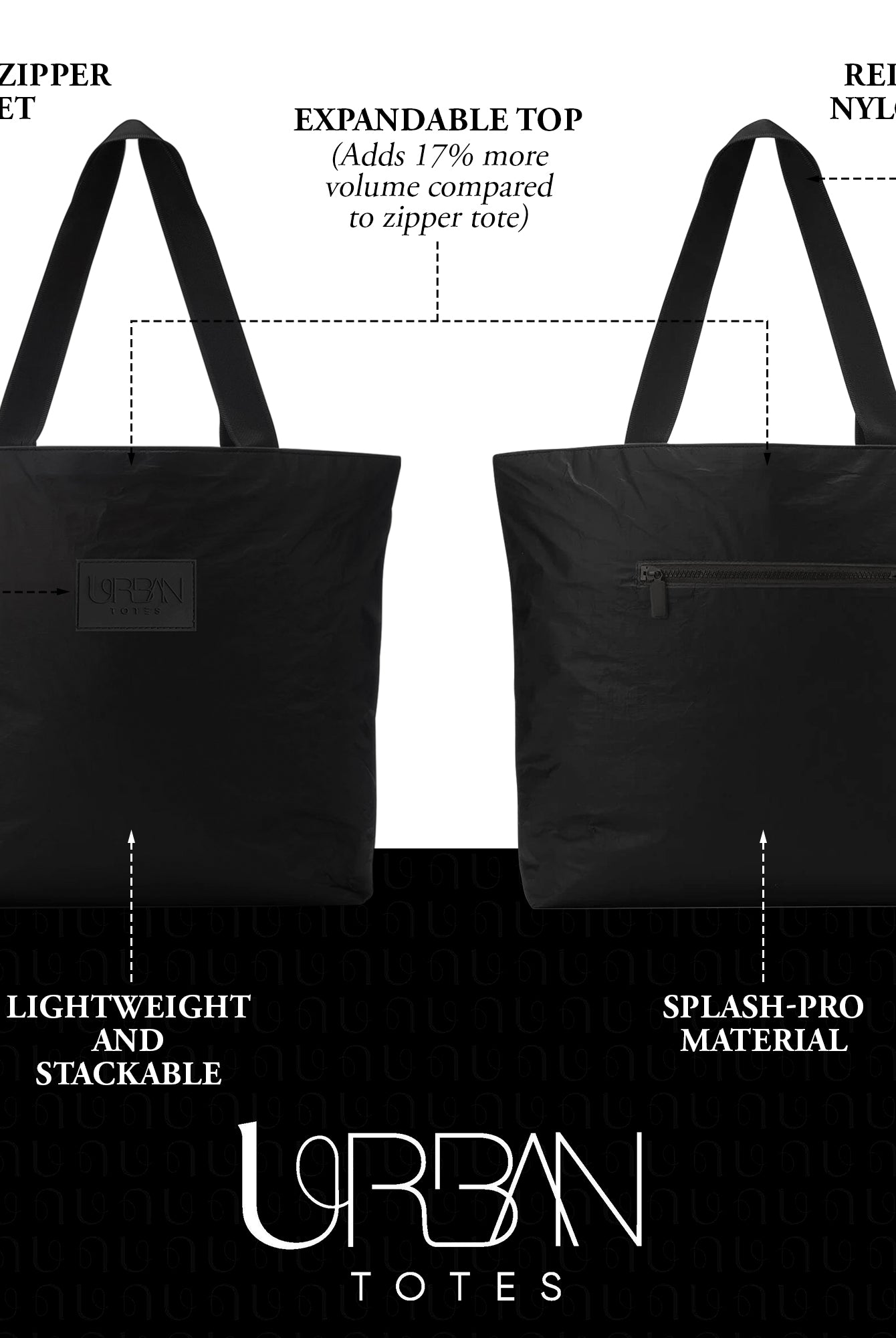
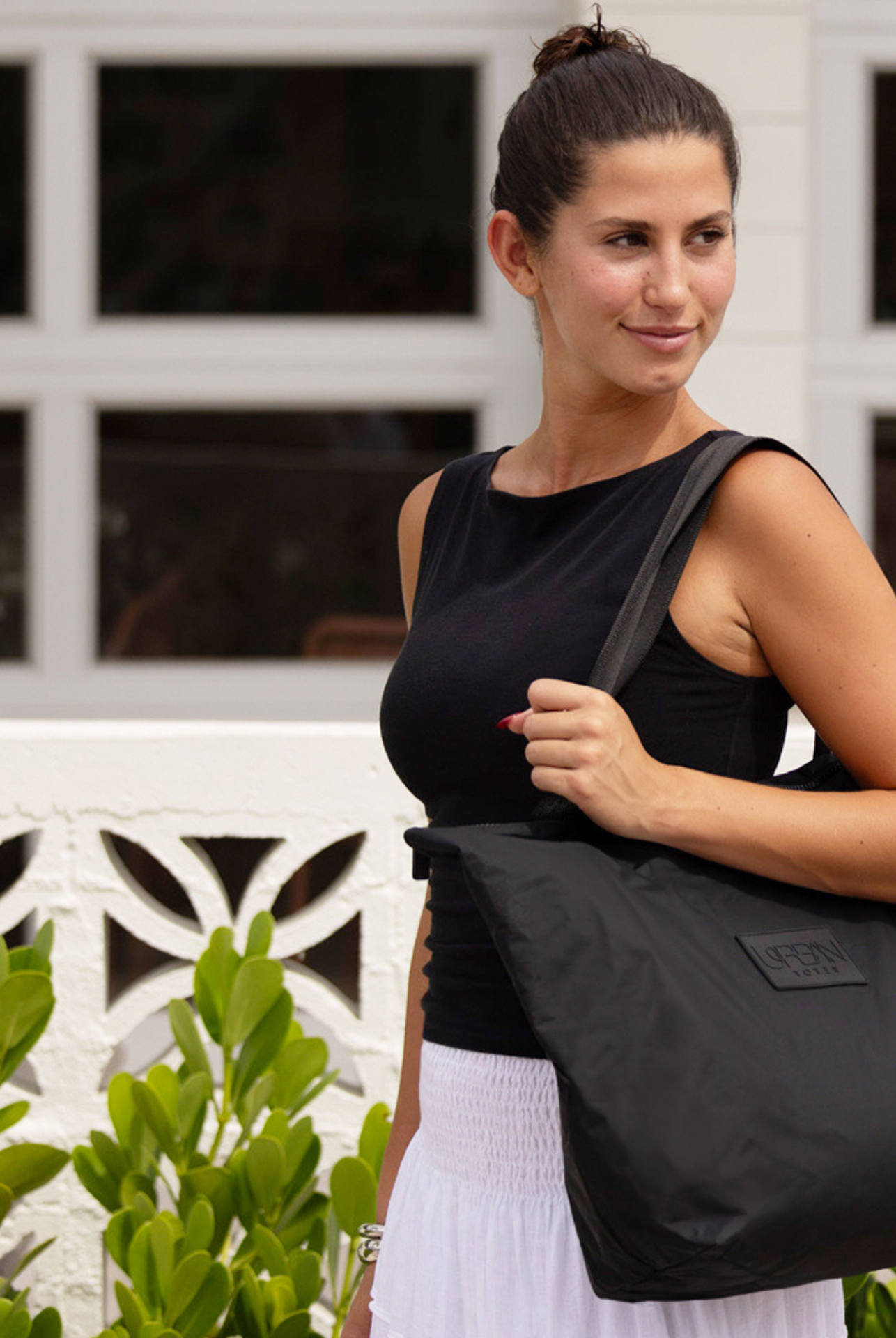
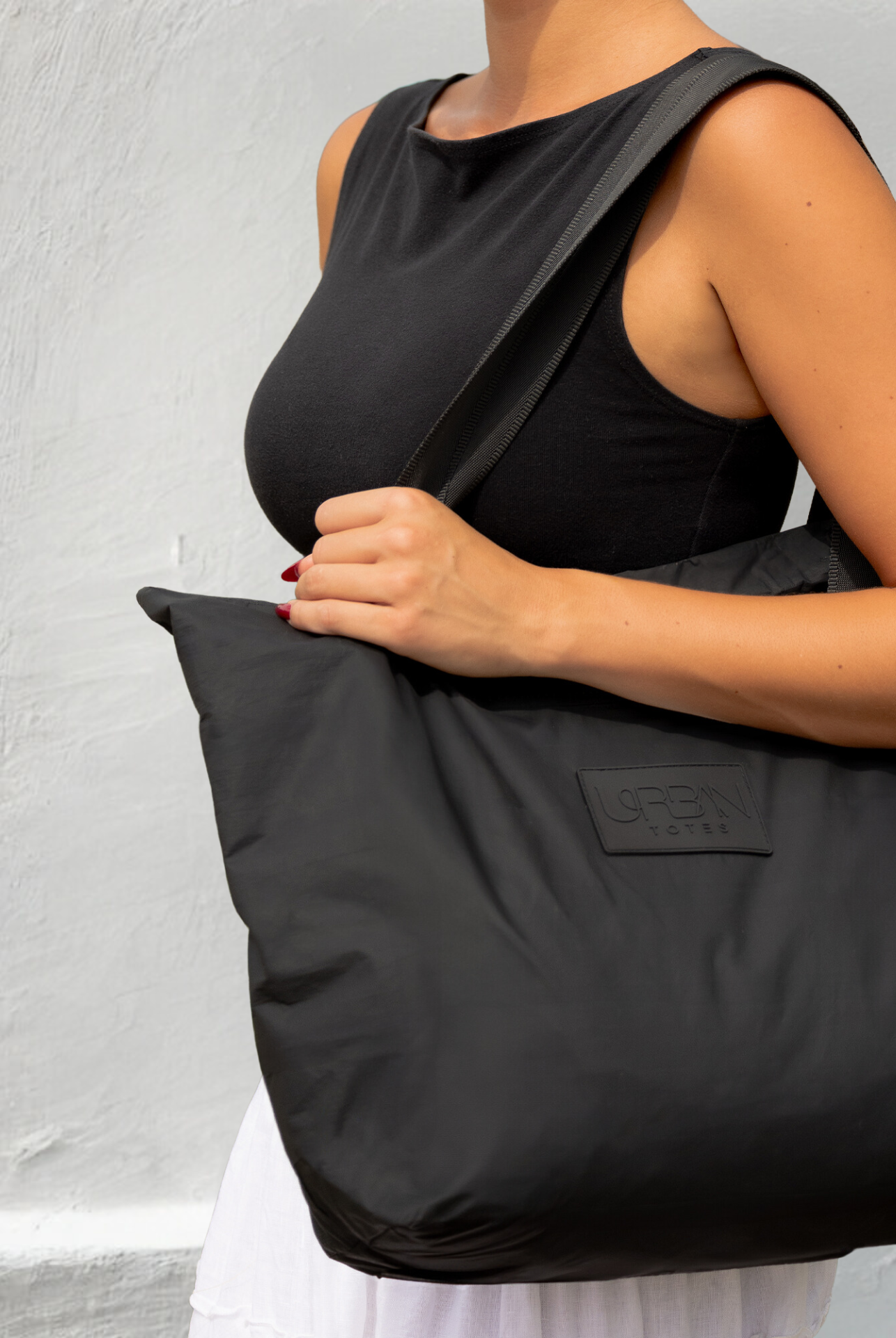
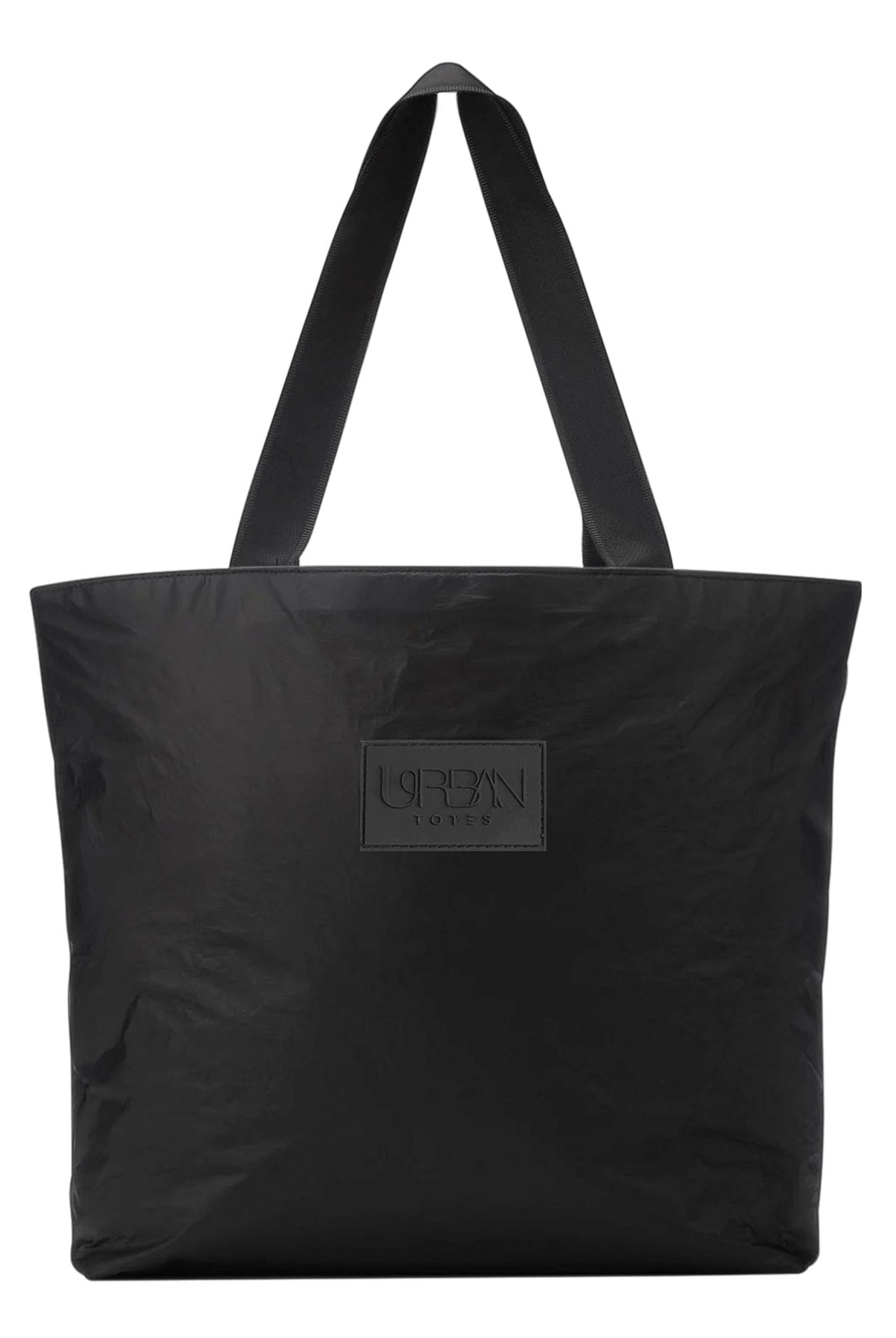
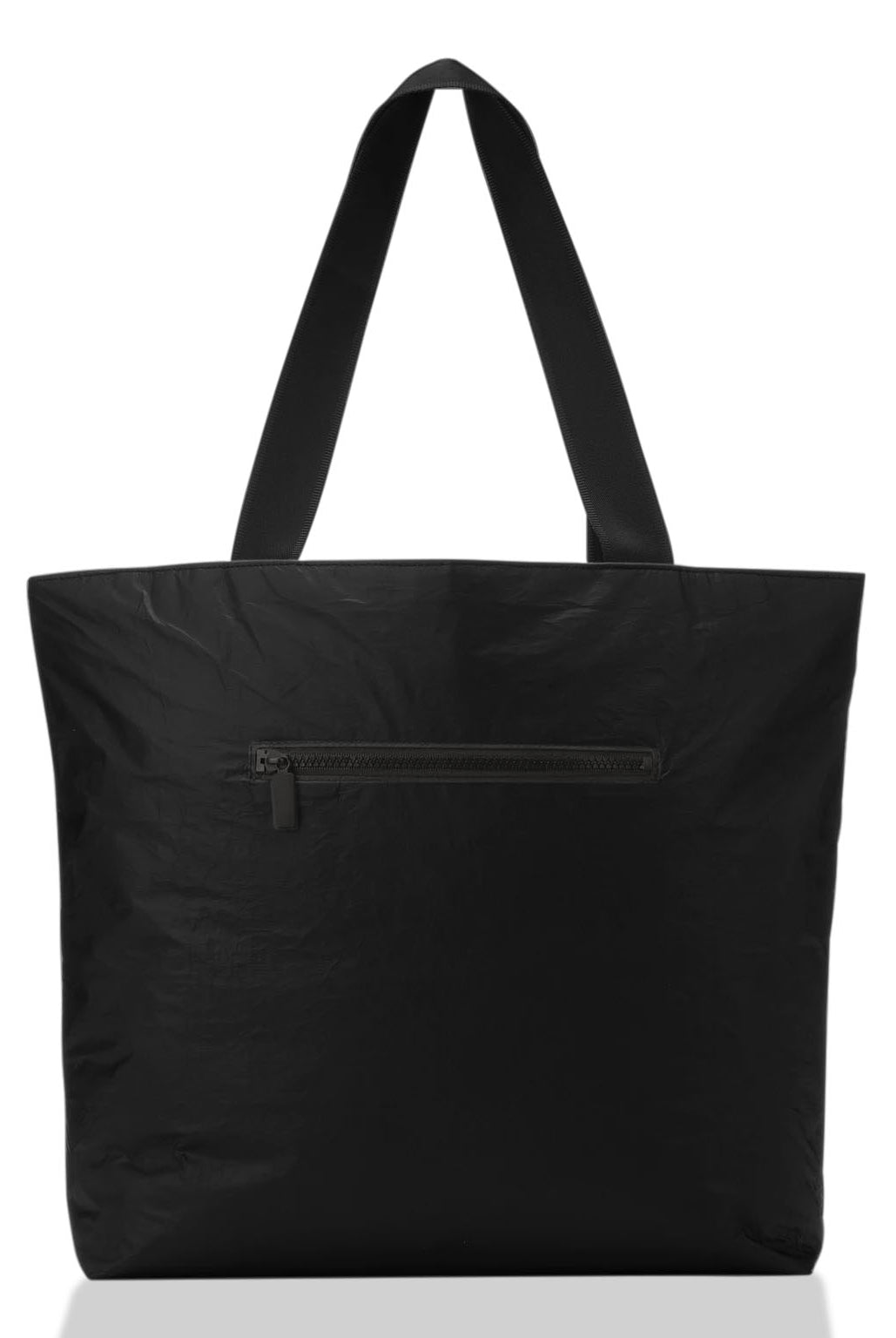
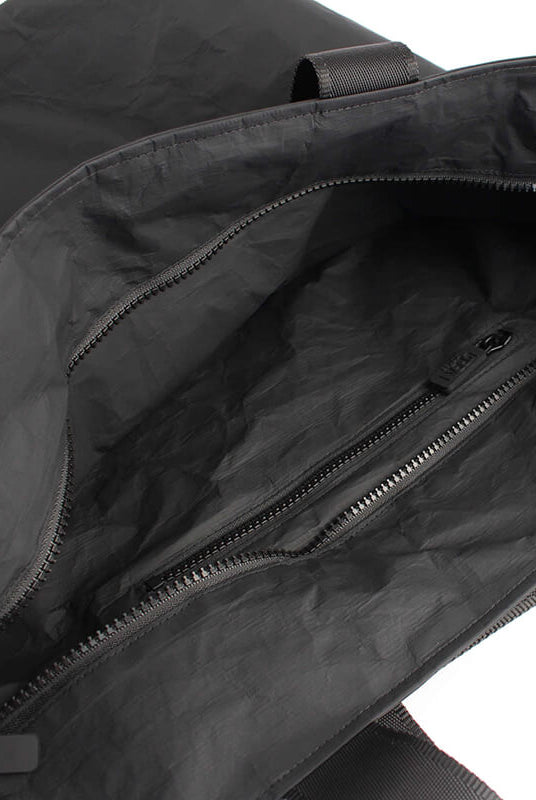
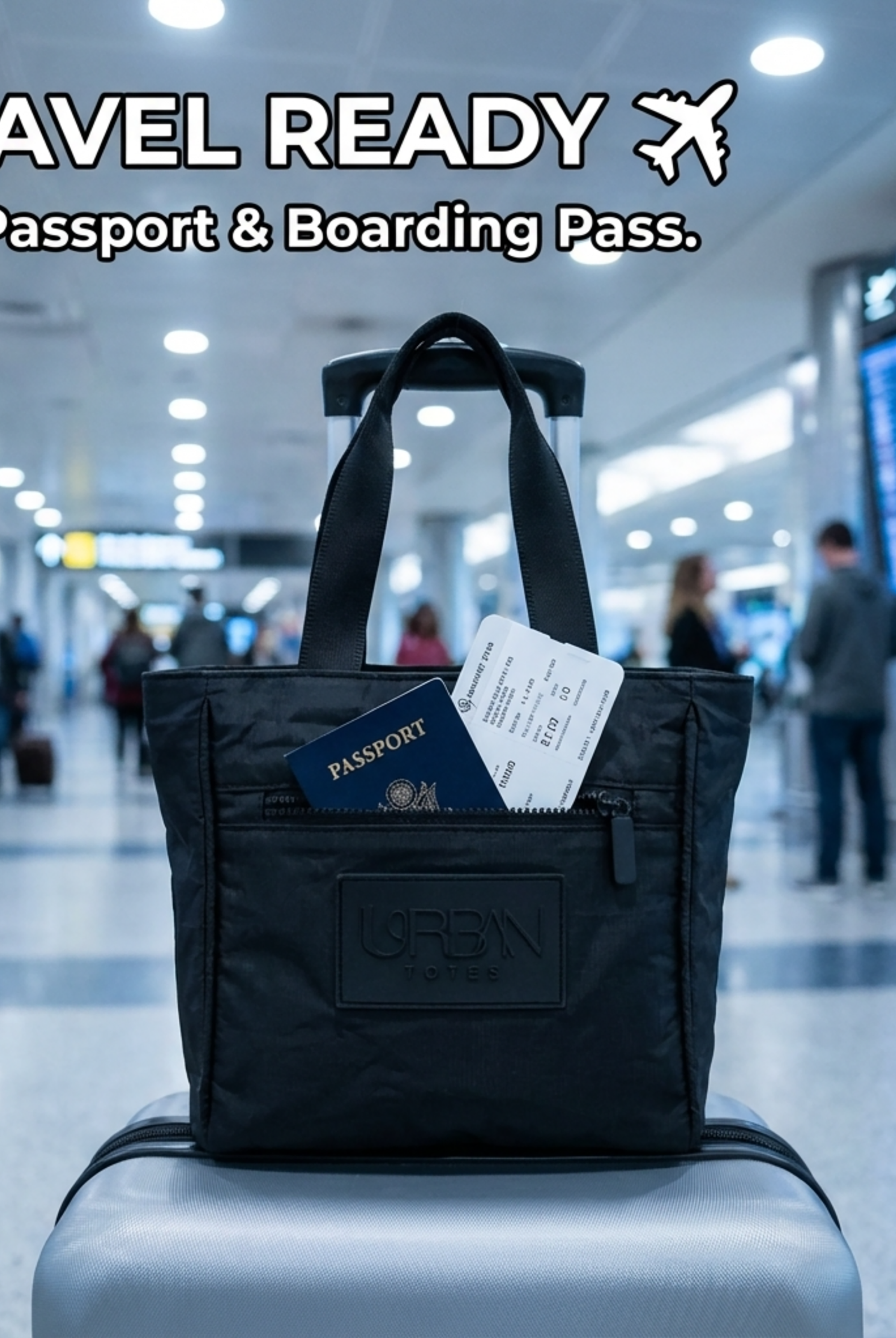
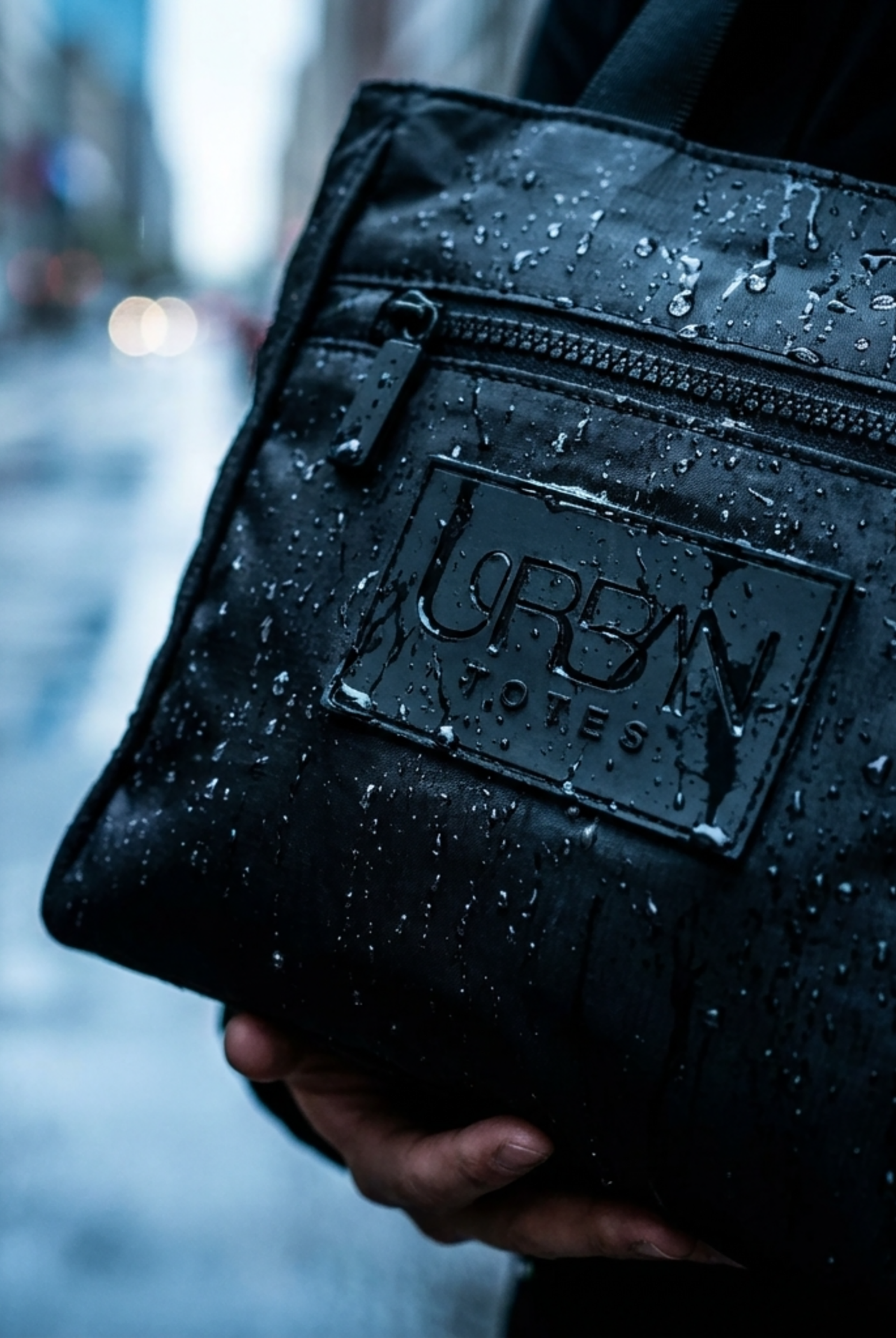
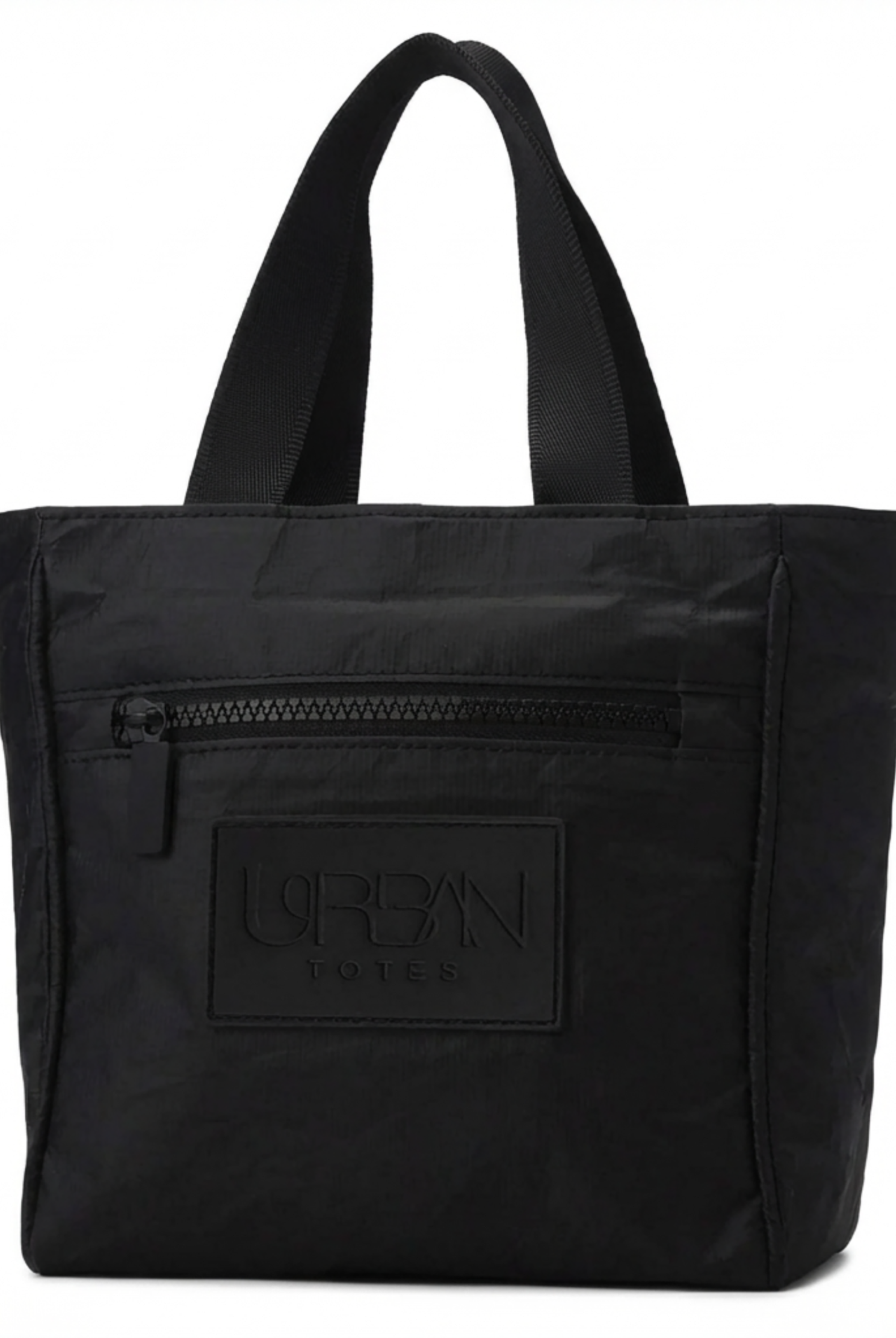
For a lightweight, foldable tote, The OG Zipper Tote Bag by Urban Totes lists three large pockets, inside and outside zipper pockets, water-resistant construction, and dimensions of 19 inches wide by 14.5 inches high. That layout suits a mixed carry better than a narrow mat sling, though you still need to confirm how your specific mat attaches. Think beyond the mat: the right format should keep daily essentials easy to reach without turning a studio bag into bulky luggage.
Materials, Weight, and Cleanability Compared
Material decides how your bag behaves after a sweaty class, a spilled bottle, or an unexpected walk through light rain. It also determines whether cleaning feels like a two-minute wipe or a full weekend project.
Nylon and polyester are my first choices for a practical yoga bag. They're typically lightweight, durable, water-resistant, and easier to wipe down after sweat exposure. Independent yoga-bag guidance also recommends wiping the bag after each use and following the care label for gentle-cycle washing or hand-washing, which helps limit residue and odor retention over repeated carry cycles. This yoga mat bag care guidance is especially useful if your bag moves between the studio, car, and office.
Cotton canvas looks relaxed and substantial, but it absorbs moisture more readily. It can work well for a dry, style-led routine if you're willing to spot-clean it and let it dry completely. Neoprene stretches around a mat and offers a snug feel, although its thickness can add bulk.
Vegan leather and waxed canvas suit women who want a more polished appearance. They can look excellent with workwear, but they demand more deliberate care around scuffs, seams, coatings, and hardware. Don't choose them solely for appearance if your bag regularly carries wet towels.
| Material | Weight | Water Resistance | Cleanability | Best For |
|---|---|---|---|---|
| Nylon | Lightweight | Typically strong | Easy wipe-down | Daily commuters and frequent studio use |
| Polyester | Lightweight | Typically strong | Easy wipe-down | Active routines and travel |
| Cotton canvas | Moderate | Limited unless treated | Spot-cleaning preferred | Dry, casual, style-focused carry |
| Neoprene | Moderate to bulky | Strong surface resistance | Wipe-clean | Snug mat storage and wet environments |
| Vegan leather | Moderate | Varies by finish | Careful surface cleaning | Polished office-to-studio style |
| Waxed canvas | Moderate | Surface shedding of light moisture | Specialized care | Outdoor-minded, fashion-forward users |
Air-dry your mat before putting it away. Even a water-resistant bag can trap dampness if you seal a wet mat inside it. Wipe the interior regularly, check the care label before machine washing, and choose materials that match how sweaty, outdoorsy, and maintenance-friendly your routine really is. More detail on construction and fabric choices appears in this tote bag material guide.
Matching a Bag to Your Real Life
The “right” yoga bag changes with your schedule. A commuter, a mom, and a traveler may all need mat storage, but they won't benefit from the same footprint or strap system.
Five routines, five sensible setups
The daily commuter should start with a slim tote or compact duffel. Prioritize a laptop sleeve, water bottle pocket, secure zipper, and external mat straps so the rolled mat doesn't consume the office compartment. Keep the profile narrow enough for train aisles and under-desk storage.
The mom on the move needs capacity before elegance. A roomy backpack-style carrier with a wipeable interior, separate shoe section, and space for snacks and a child's spare clothes will be more useful than a sleek bag that fills after one stop.
The weekend traveler should choose a lightweight weekender with a trolley sleeve, secure zippers, and a way to separate used clothing. A foldable bag is especially useful as a secondary carry piece once the main luggage is unpacked.
The regular gym-goer benefits from ventilation. Look for a ventilated shoe compartment, towel loop, coated base, and a wet pocket that can be emptied and cleaned without dismantling the entire bag.
The student needs a carry-all that can handle books, electronics, and a mat without becoming unwieldy. Padded laptop protection, pen loops, and a wide strap matter more than an elaborate gym layout.
| Persona | Best Bag Type | Must-Have Features | Watch-Outs |
|---|---|---|---|
| Commuter | Slim tote or duffel | Laptop sleeve, mat straps, bottle pocket | Overloaded shoulder |
| Mom | Roomy backpack carrier | Wipeable interior, shoe compartment, broad opening | Excess weight |
| Traveler | Lightweight weekender | Trolley sleeve, secure zippers, laundry separation | Oversized footprint |
| Gym-goer | Crossbody or gym duffel | Ventilation, wet zone, coated base | Damp gear sharing space |
| Student | Organized carry-all | Padded laptop pocket, pen loops, wide strap | Textbook bulk |
Capacity always has a cost. A larger bag holds more but weighs more and takes up more room. A smaller bag feels easier to carry but forces stricter packing. If hydration is central to your commute or outdoor routine, compare the carrying approach with this resource on the best women's hydration backpack before choosing between a tote, backpack, and crossbody.
Sizing Your Mat and Planning Your Compartments
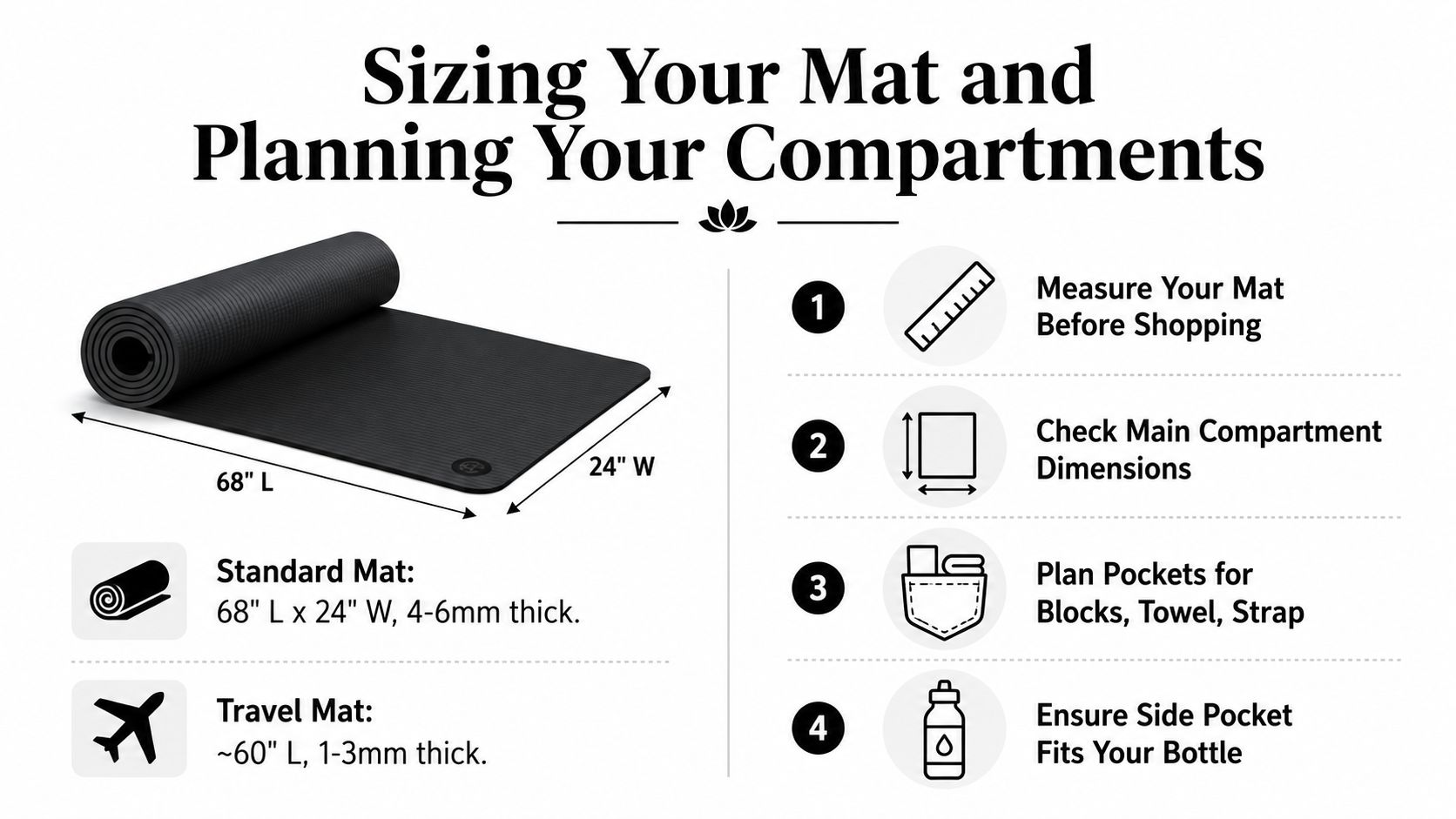
Measure your mat before shopping. A widely cited standard mat measures 68 inches by 24 inches, or about 173 by 61 centimeters, and common adult mats often fall between 68 and 72 inches long, according to this yoga mat size chart. The bag opening and interior length must accommodate the rolled mat without forcing the ends or compressing the roll.
Some thicker or extra-long mats reach 72 inches or 80 to 84 inches, with widths sometimes extending to 26 inches or more, as outlined in this yoga mat dimensions guide. Standard mat width is often 24 inches, while thickness commonly falls in the 3 to 6 millimeter range, and thickness affects the rolled diameter, according to this standard yoga mat size reference.
Plan the interior before you buy
Use the mat's actual rolled length and diameter, then check the listed compartment dimensions. If the manufacturer gives only exterior measurements, ask for interior dimensions. Adjustable straps are more forgiving than a fixed sleeve, especially if you switch between a slim travel mat and a thicker studio mat.
A functional layout usually includes:
- Mat storage: An external strap system or dedicated sleeve keeps the roll away from clean clothing.
- Wet separation: A lined or ventilated pocket isolates a towel, sweaty top, or bottle.
- Electronics protection: A padded sleeve gives a laptop or tablet a defined home.
- Small-item control: A zippered mesh pocket keeps keys, cards, and earbuds from disappearing.
- Fast access: A front pocket holds a phone or transit pass without opening the main compartment.
Before checkout, ask: Does the bag fit my mat's rolled diameter? Can I reach my phone with one hand? Is the wet pocket removable or wipeable? Will the laptop sleeve fit my device? Does the bag stay comfortable when every compartment is full? A bag with compartments should make packing easier, not turn your morning into a search exercise.
Packing and Care Habits That Make a Bag Last
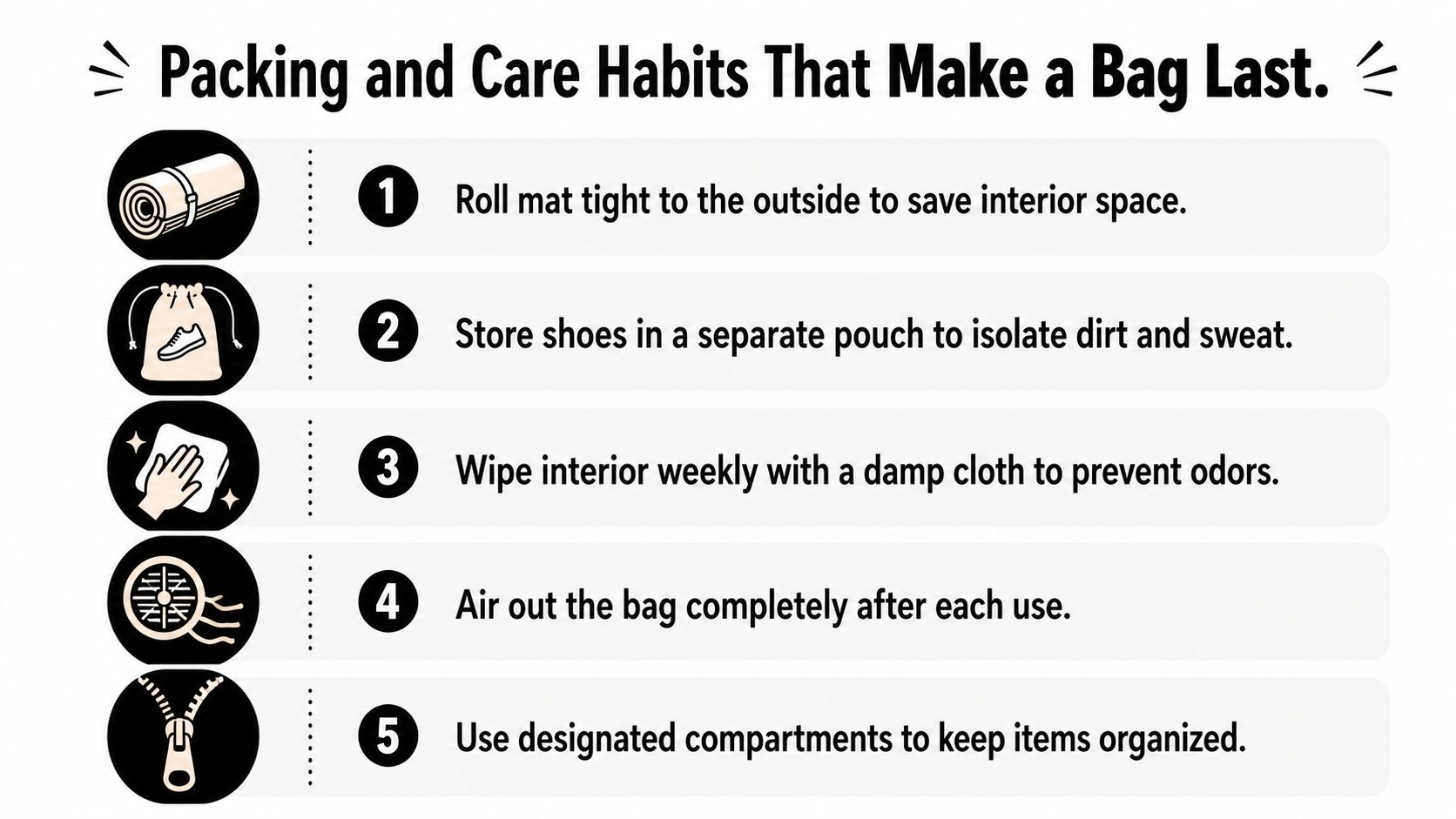
A good bag still needs good habits. Start by rolling the mat tightly and securing it outside the main compartment when the design allows. That preserves interior space for clothing and keeps the mat from pressing against clean items.
Put shoes in a separate pouch, even if the bag has a shoe section. A small mesh laundry bag gives damp clothing somewhere to go after class, while a charcoal sachet near the mat sleeve can help manage residual moisture. Skip scented products that might transfer to towels or clothing.
Use a simple reset routine
Shake out crumbs and grit as soon as you unpack. Wipe coated linings with a damp microfiber cloth and mild soap solution, then spot-clean cotton or canvas with a gentle brush. Hand-wash removable pouches according to their care labels, and let every component air-dry fully before closing the bag overnight.
Treat fabric, waxed surfaces, or leather details only with a protector designed for that specific material. Leather handles may need occasional conditioning, while rotating between bags gives heavily used straps and seams time away from constant load.
Storage habit: Never leave a damp bag sealed in a hot car. Heat and trapped moisture can warp mats and weaken adhesives.
Keep the bag open while it dries, remove bottles before storage, and inspect zipper tracks for grit. These small steps matter more than elaborate cleaning products. If you prefer a tote that can handle regular washing, check its care instructions first and compare options in this guide to washable tote bags.
How Urban Totes Designs Fit These Scenarios
Urban Totes is a woman-owned small business based in Boise, Idaho, and its approach fits the everyday-carry question well: a bag should move through commuting, errands, fitness, travel, and unplanned stops without demanding a complete repack. The brand's positioning centers on water-resistant, lightweight, packable, foldable bags with zipper closures and multiple compartments.
Choose by the morning you actually have
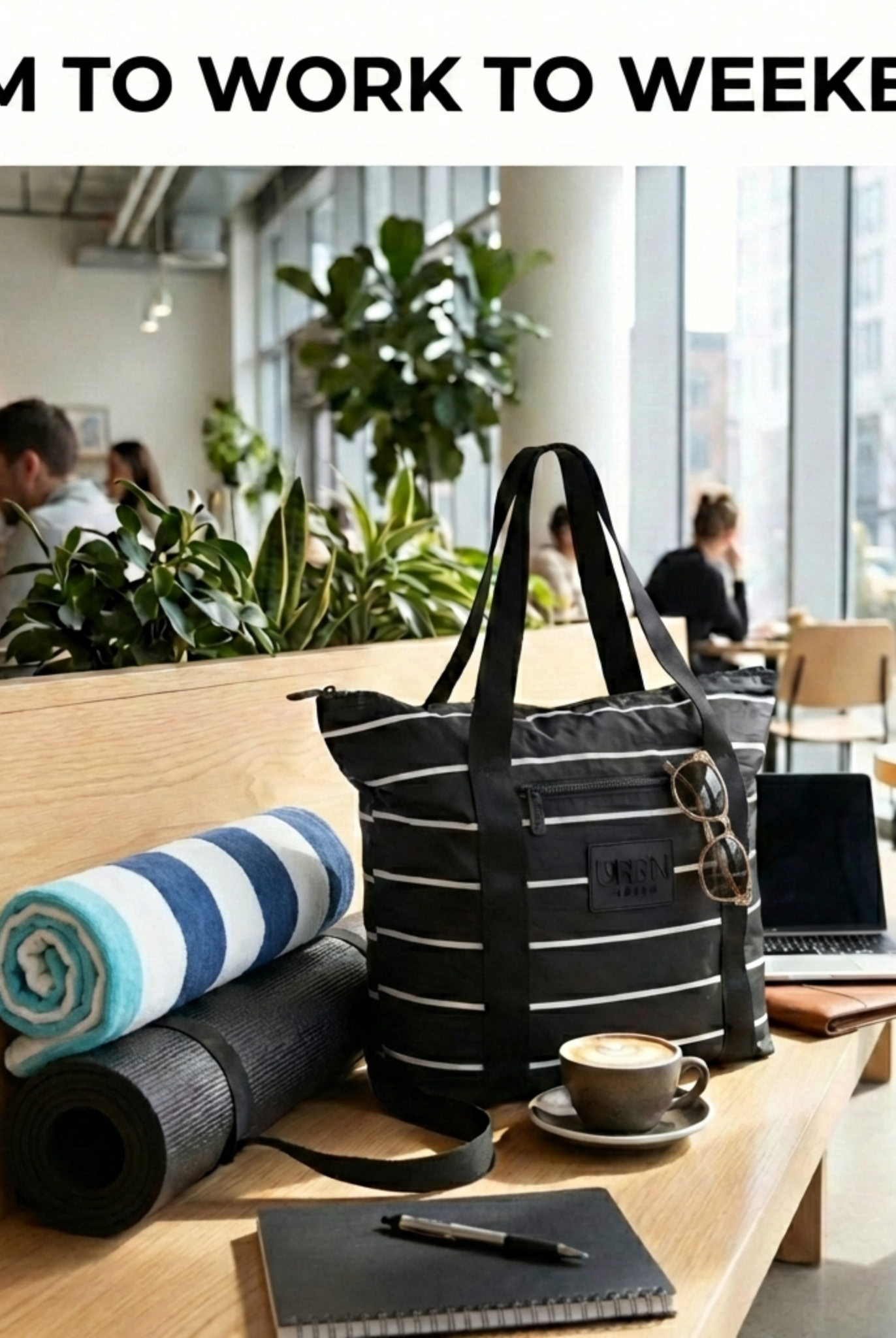
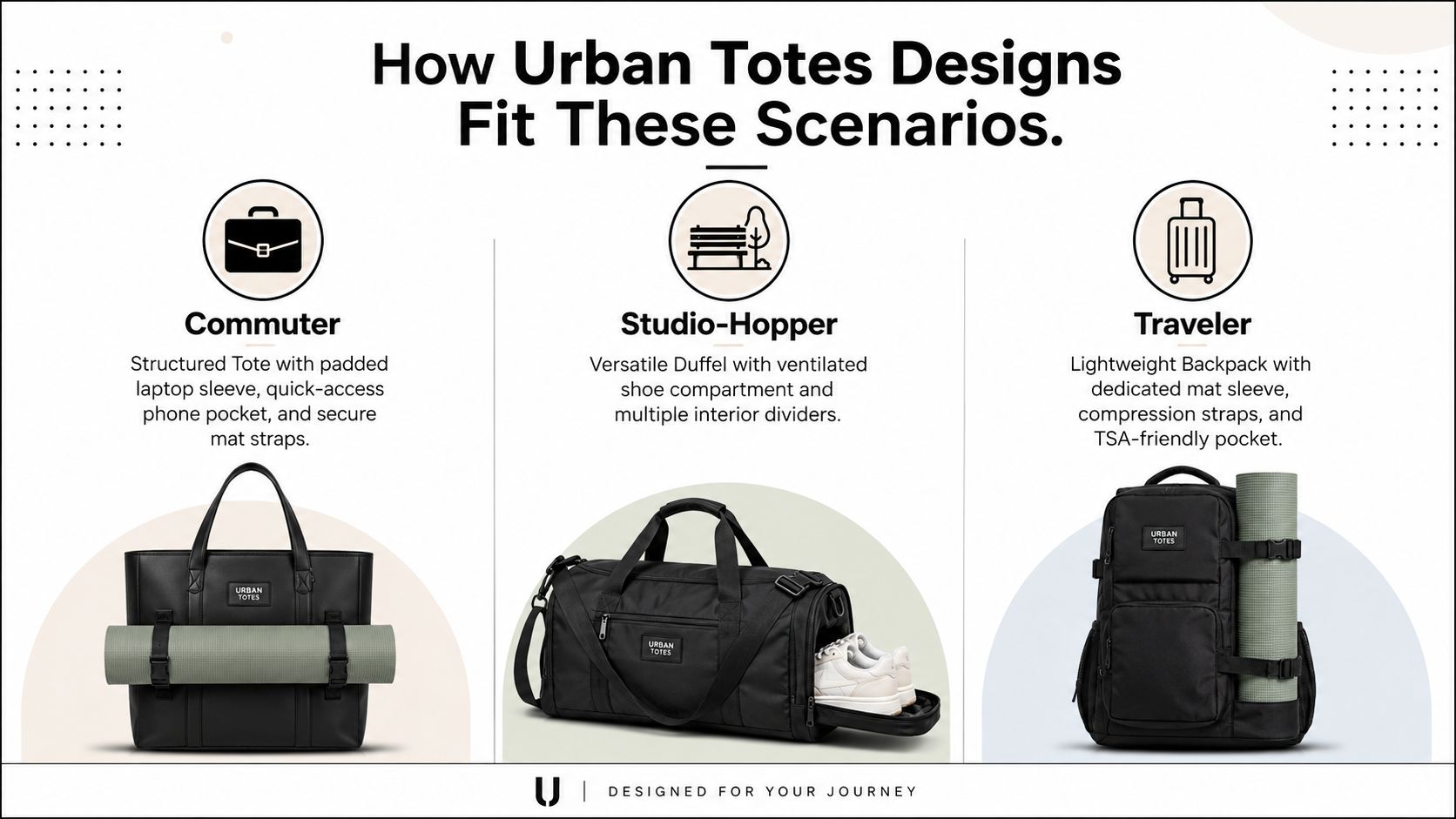
For the commuter, a structured tote with a secure zipper, phone pocket, and space for a laptop makes sense when the mat travels as an outside attachment or a slim roll. The goal is quick access and a contained profile, not a cavernous gym bag.
For the studio-hopper, a flexible tote or duffel with multiple interior sections works better. You can separate shoes, towel, clothing, and daily essentials while keeping the bag useful after class. A foldable design also makes sense if your routine includes errands or a spontaneous stop.
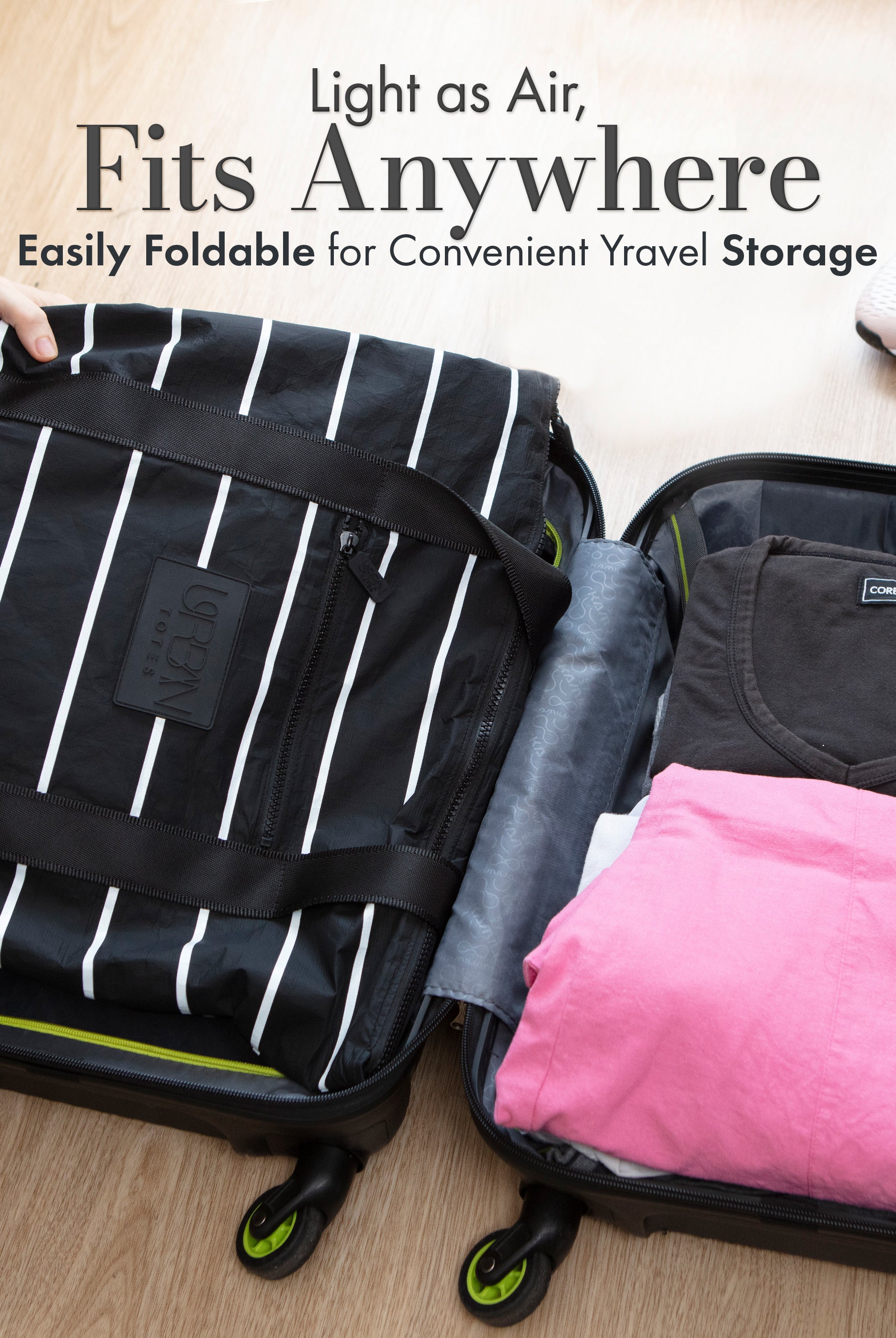
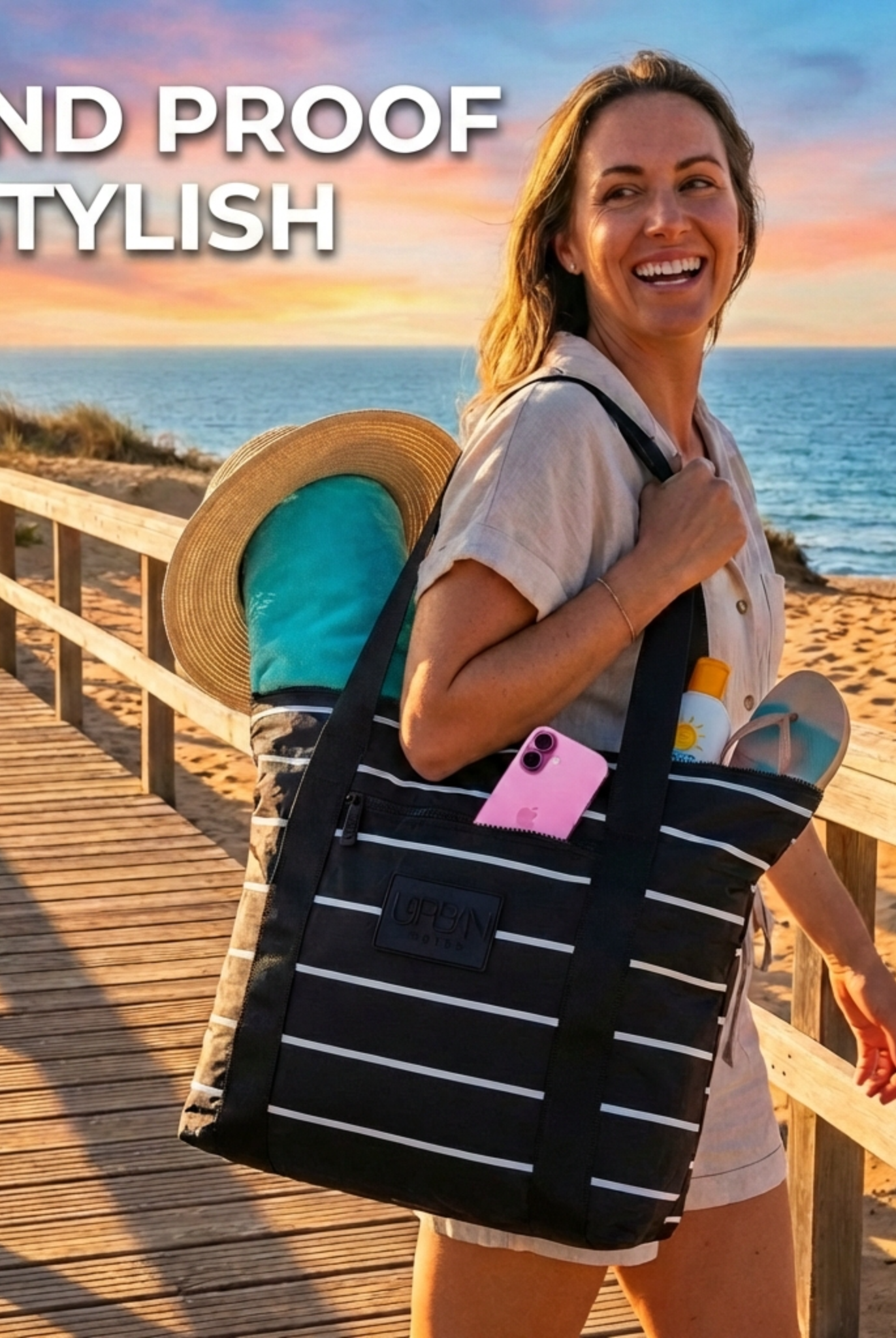
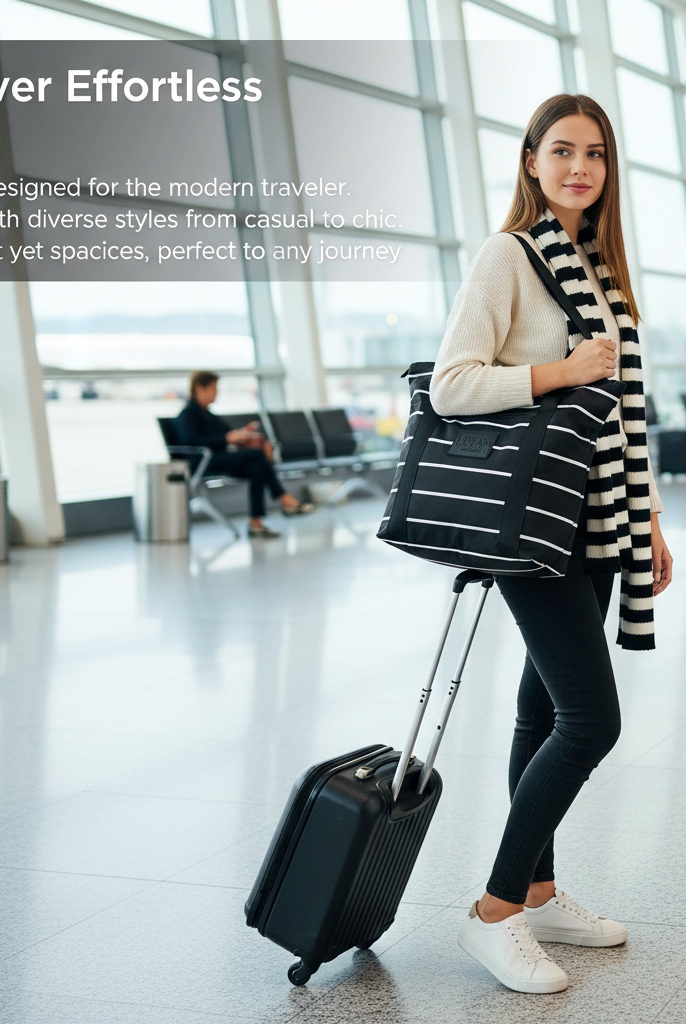
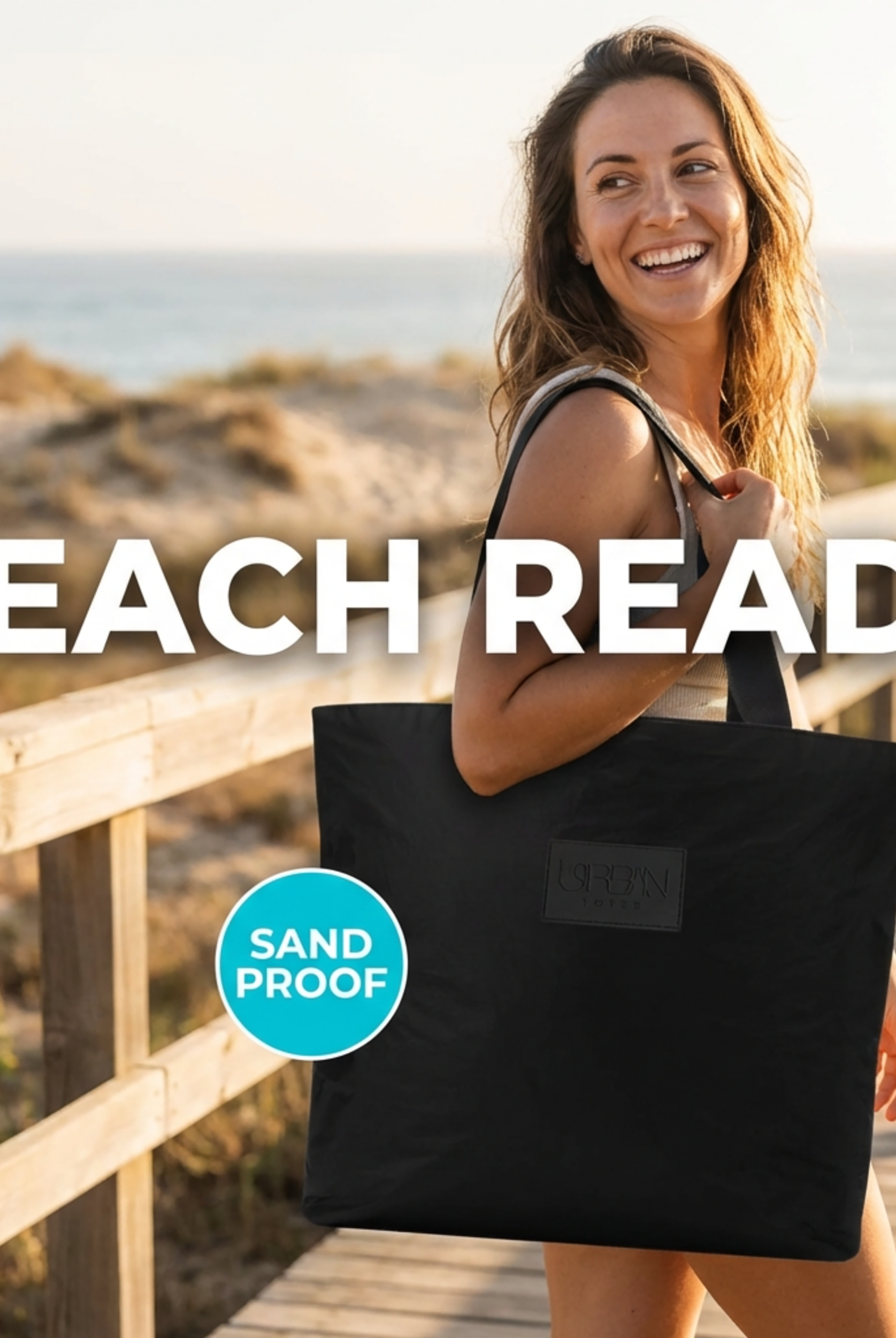
For the traveler, lightweight construction and packability matter. A bag that folds into luggage can become the extra carry piece for a beach day, airport transfer, or short city outing. Secure zipper closures help keep small essentials contained while you're moving.
Urban Totes' catalog describes the Go Anywhere Day Trip Tote, the Weekender, and compact crossbody options as part of a collection built around modern, organized carry. That makes the designs relevant to women who want one stylish bag to cover work, fitness, travel, and ordinary errands rather than buying a different carrier for every activity.
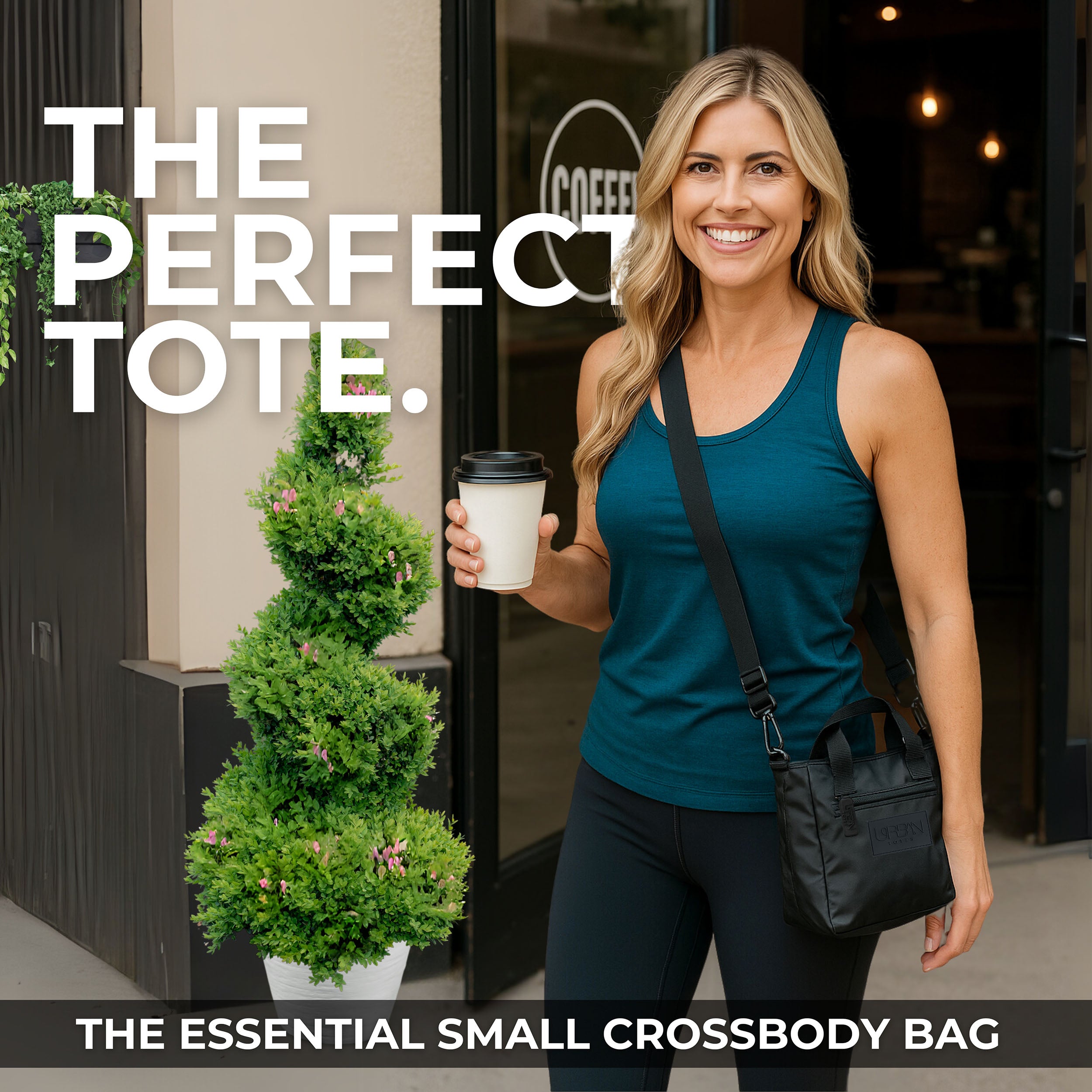
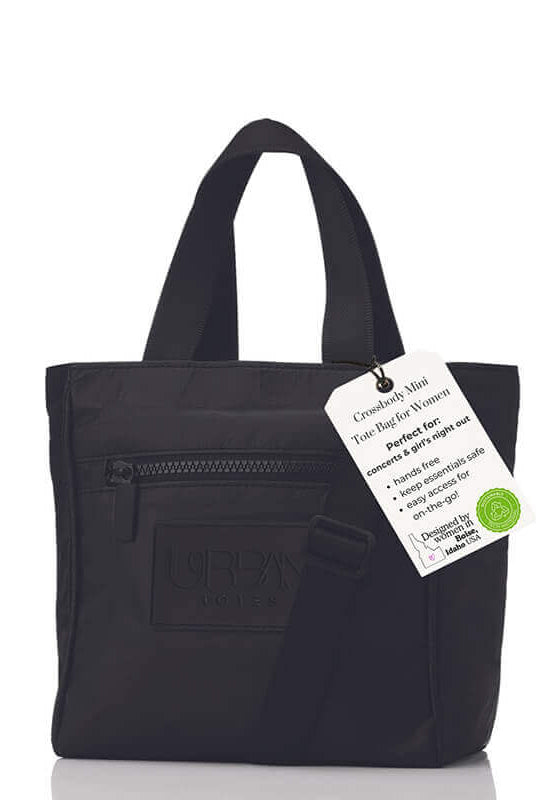
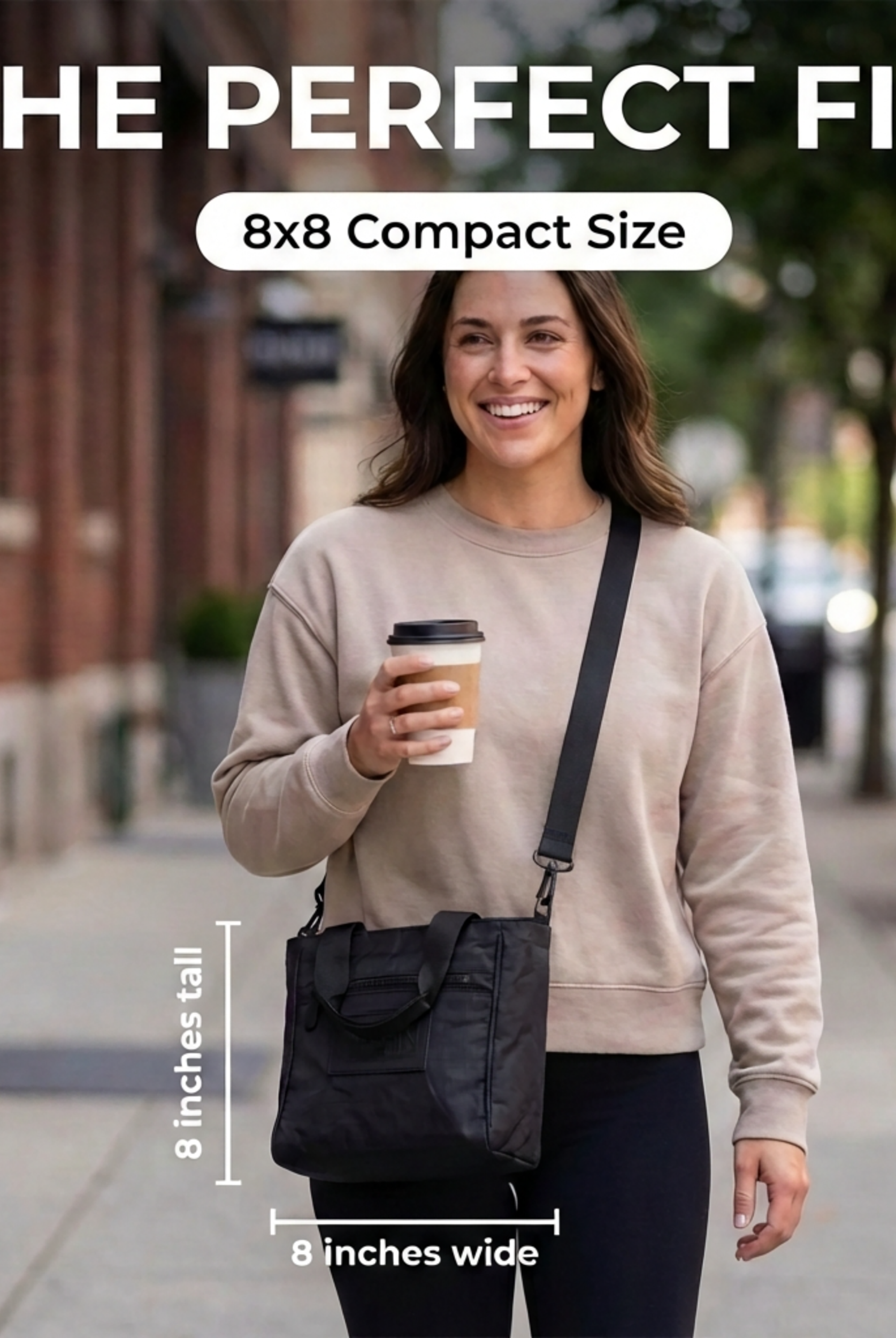
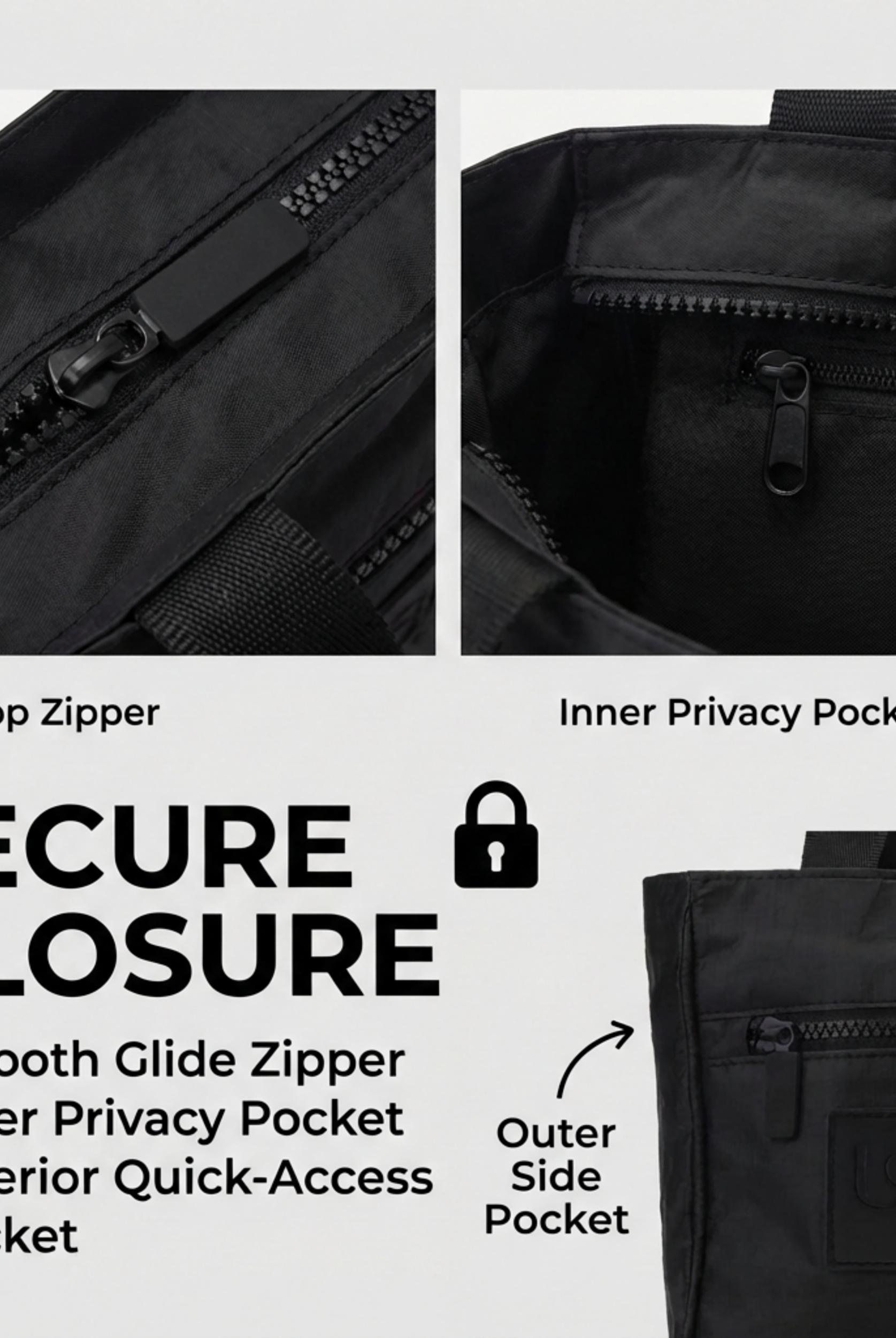
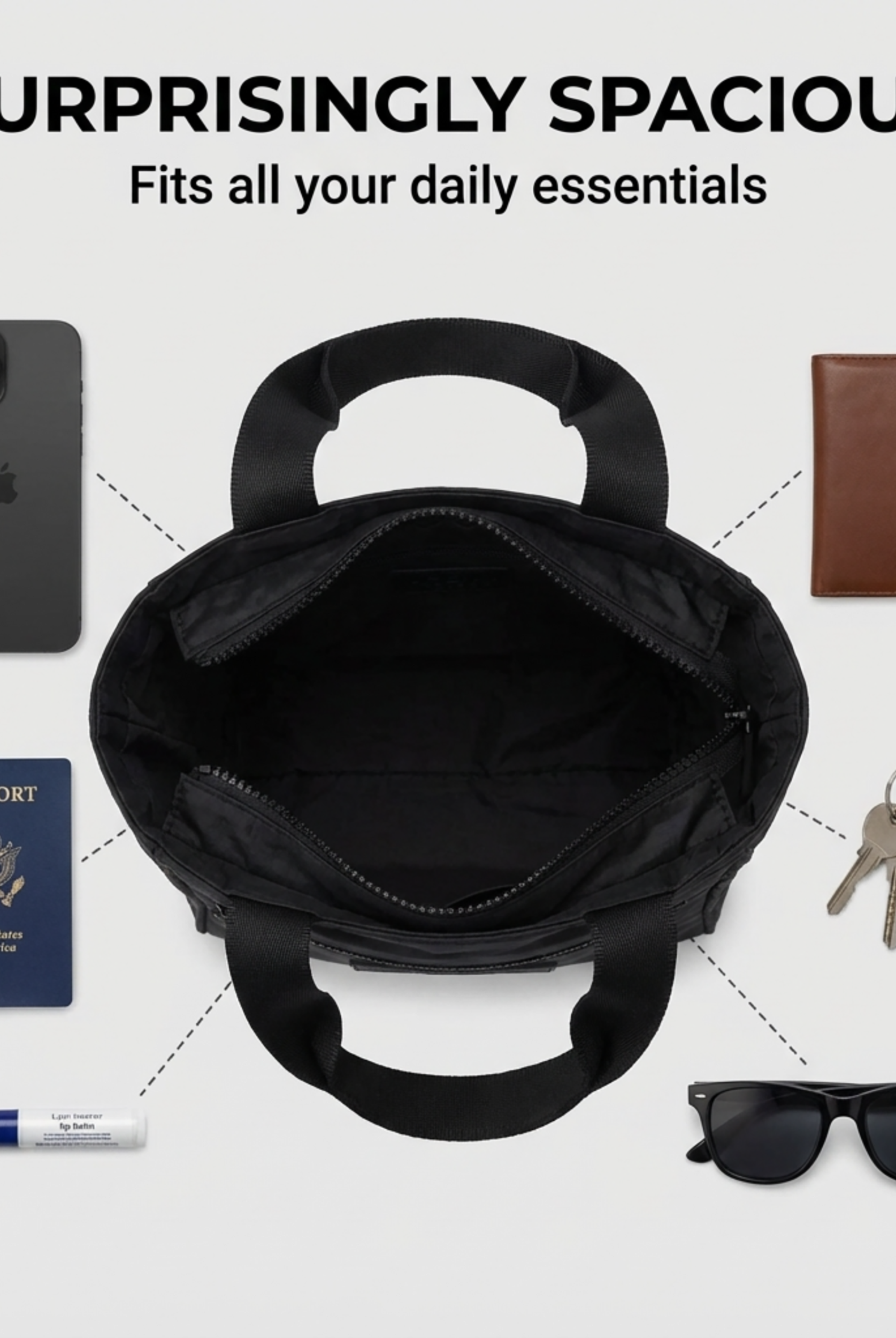
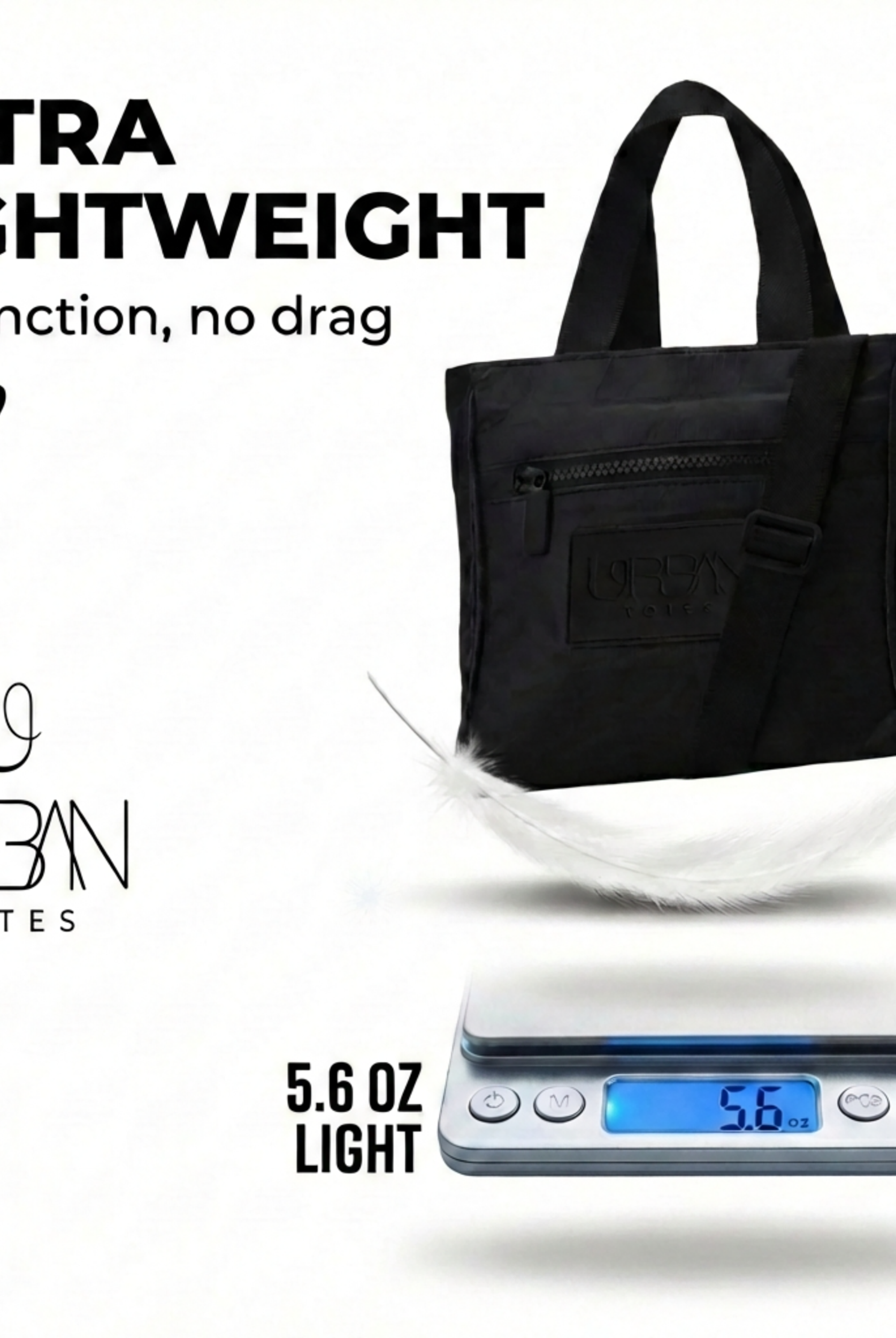
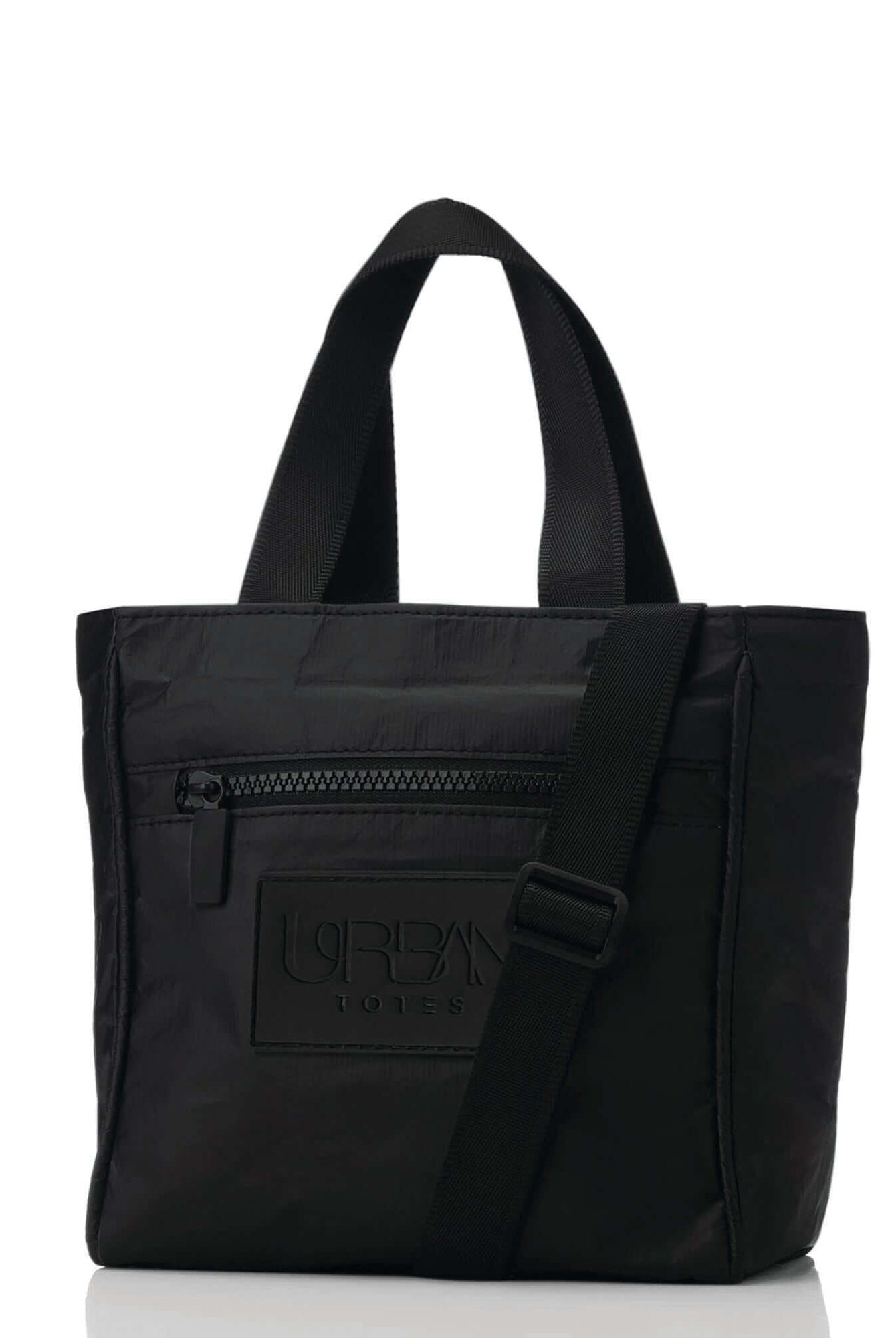
The Crossbody Tote Bag Mini Purse is the compact end of that spectrum. Its catalog lists a zip-top closure, outside and inside zipper pockets, an easy-access pocket, water-resistant materials, foldability, and dimensions of 7.5 by 4 by 7.75 inches. It's suited to essentials and hands-free movement, not a full mat-and-clothing load.
Quick Answers to Common Yoga Bag Questions
Can a regular tote work as a yoga bag?
Yes, if your routine is light and your mat can travel separately. A regular tote can carry a towel, bottle, clothing, and small essentials, but without a mat sleeve or external straps, the mat takes interior space and may rub against clean items. Without a wet compartment, damp clothing also needs its own sealed pouch.
How should I clean canvas, nylon, or vegan leather?
Follow the care label before using water or a machine. Nylon usually handles a careful wipe-down well, canvas is better treated with spot-cleaning unless the manufacturer says otherwise, and vegan leather should be cleaned gently without soaking or harshly scrubbing the surface. Remove pouches and let the bag dry completely before closing it.
Which features matter for hot yoga?
Prioritize ventilation, a dedicated wet zone, and a towel loop. Hot yoga creates a heavier moisture load than a gentle studio flow, so breathable mesh panels and separation between damp gear and clean items become more useful. An anti-microbial lining should only be treated as a feature if the manufacturer clearly documents what it is and how to care for it.
How do I size a bag for a tall or extra-thick mat?
Measure the mat's length, width, and rolled diameter rather than relying on “standard” sizing. Extra-long mats can reach 80 to 84 inches, and some wider mats extend beyond 26 inches, so a fixed pouch may not work. Mats up to 8 millimeters thick will roll larger than thinner options, making adjustable straps or a generously sized sleeve the safer choice.
Urban Totes offers lightweight, water-resistant, packable, foldable totes, weekenders, and crossbody styles with zipper closures and practical compartments for work, travel, errands, and fitness days. Visit Urban Totes to choose a go-anywhere bag that keeps your mat, essentials, and changing schedule together.