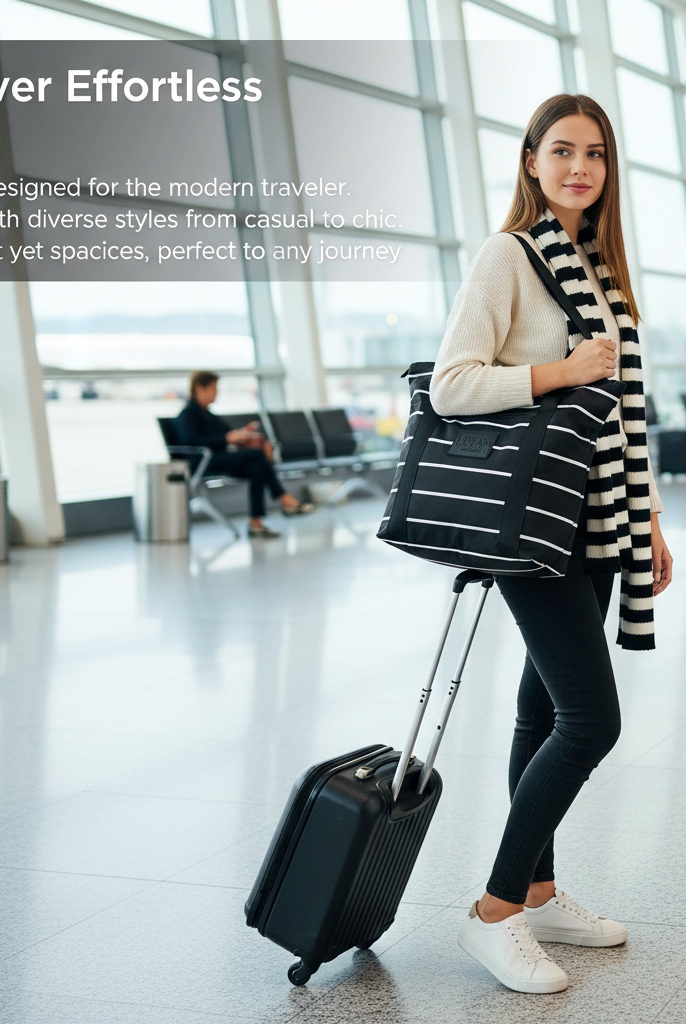
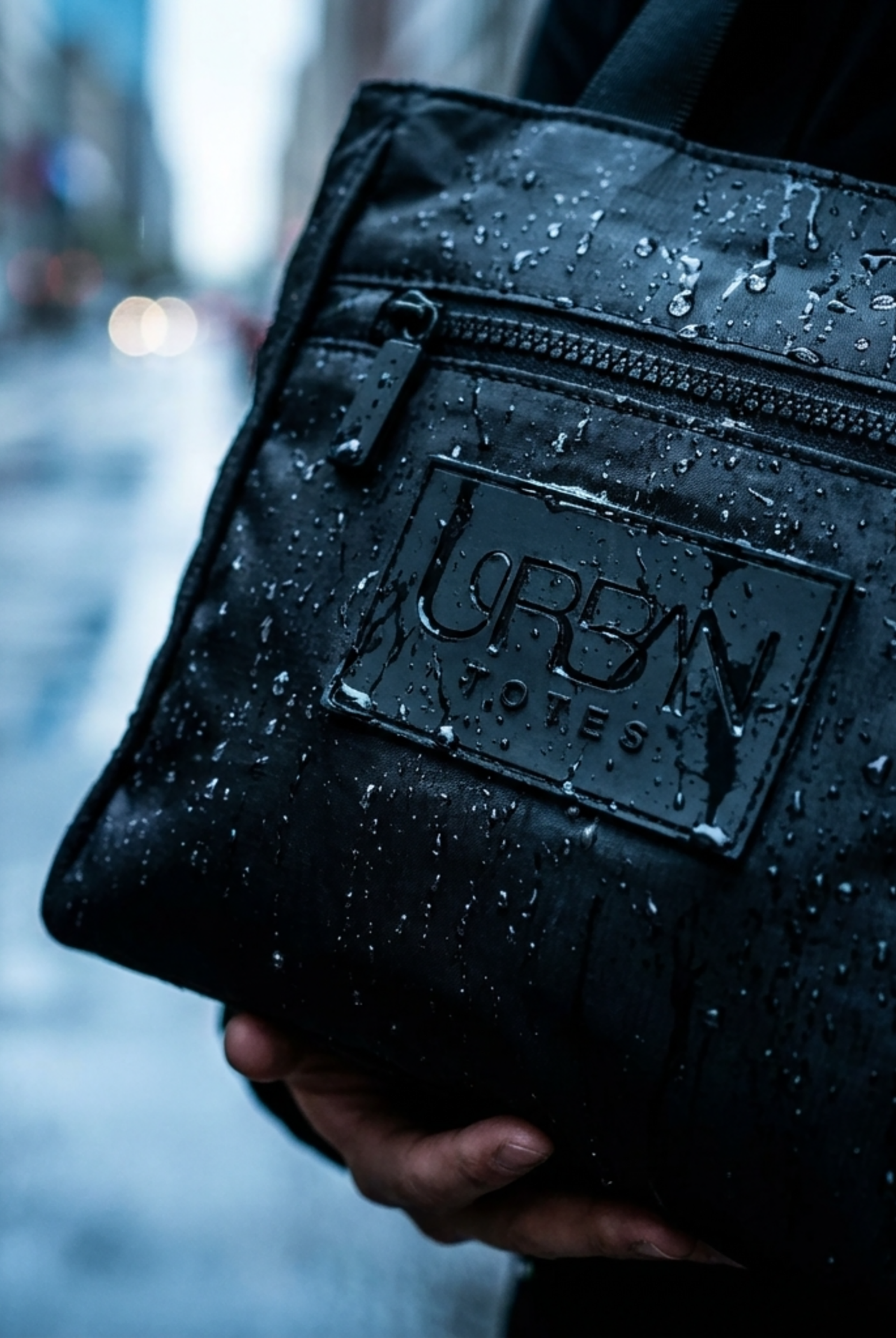
You're halfway through airport security, one hand on your coffee and the other wrestling with a tote that looked chic at home but now behaves like a fabric avalanche. A shoe is pressing against your laptop, your liquids are buried under a cardigan, and the bag's soft sides have expanded far beyond the neat shape you measured before packing.
The best weekender tote has to work in that unglamorous moment, not just in a styled terminal photograph. It should stay manageable when full, keep essentials organized, protect your things from light rain and spills, and remain comfortable from the car trunk to the gate, hotel room, beach chair, or school pickup.
| What to evaluate | Why it matters in real life | My practical preference |
|---|---|---|
| Packed exterior dimensions | Soft bags can expand beyond their empty measurements | Measure the fully packed tote, including pockets, handles, and hardware |
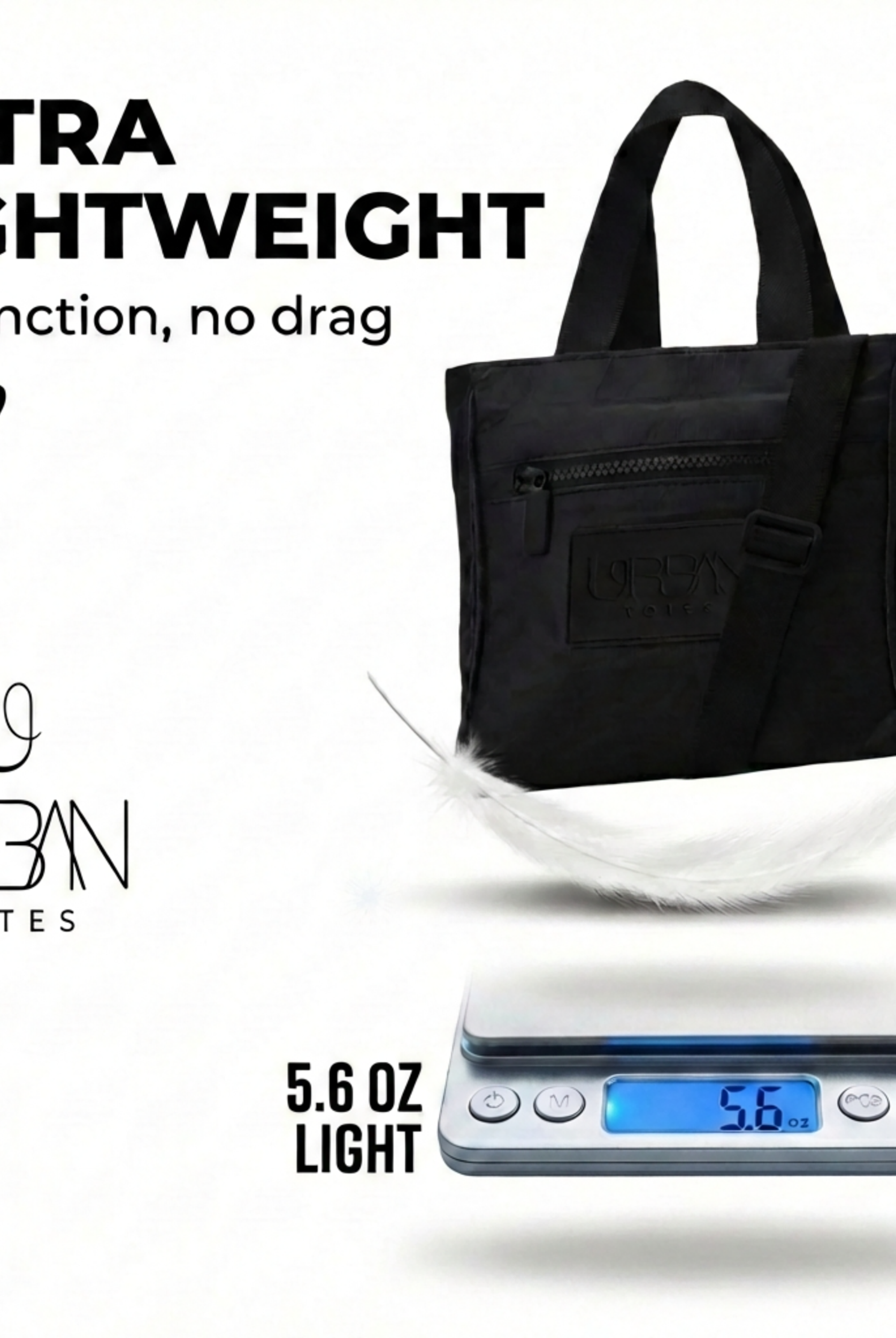
| Empty weight | The bag itself uses part of your carrying capacity | Choose a lightweight design |
| Closure and organization | Open bags turn travel essentials into a digging expedition | Look for a zipper closure and multi-pocket layout |
| Fabric performance | Trips include rain, spills, gym clothes, and beach sand | Choose a water-resistant, easy-clean exterior |
| Carry comfort | One-shoulder loading can become miserable over distance | Test the loaded bag while walking |
| Flexibility | Rigid shapes can fail airline sizers or waste storage space | Prefer packable, foldable construction when appropriate |
Table of Contents
- Why Your Travel Bag Needs an Upgrade
- Navigating Airline Size Rules and Packed Dimensions
- Comparing Materials and Smart Organization Features
- Evaluating Strap Comfort and Load Management
- Why the Urban Totes Weekender Checks Every Box
- Strategic Packing Tips for Maximum Capacity
- Choosing Your Perfect Go Anywhere Companion
Why Your Travel Bag Needs an Upgrade
You leave home with a carefully chosen outfit, a pair of flats, toiletries, a laptop, and the optimistic belief that everything will fit. By the time you reach the gate, the tote has become a lopsided weight on one shoulder. The open top exposes your travel documents, the small items have vanished to the bottom, and the clothes you folded so neatly are now compressed into a wrinkled corner.
That's the wrong kind of travel drama. A weekend bag should make movement easier, not create another problem to manage.
The best weekender tote earns its place by handling the transitions that make real travel tiring. It moves from a school drop-off to the airport, from a rideshare trunk to a hotel lobby, and from a beach day to a casual dinner without demanding a complete repack. Lightweight construction, secure closure, useful compartments, and a shape that responds to the load matter more than a polished empty-bag photograph.
The packed bag is the product you're actually buying.
Budgeting can also shape the right choice. If you're planning a short business trip, a practical resource such as travel costs explained for business can help you think through the wider journey, including transport, accommodation, and what you really need to carry. A lighter, more organized tote won't fix every travel expense, but it can prevent you from treating a bulky bag like a second suitcase.
The problems a better tote should solve
- Too much empty weight: A heavy leather or rigid frame leaves less room for the essential items.
- No visual order: An open cavity forces you to unpack half the bag to find lip balm, keys, or a charging cable.
- Poor closure: A tote without a reliable zipper is vulnerable in crowded terminals, busy markets, and family vehicles.
- Unclear airline fit: Empty dimensions don't reveal how far the sides bulge once shoes and clothing fill every available space.
- Uncomfortable carrying: A beautiful bag can still be wrong for a long concourse, stairs, or a commute involving public transit.
Urban Totes' guide to tote bag benefits is useful background if you're comparing a general everyday tote with a dedicated travel option. The important distinction is function under pressure. Your getaway bag needs enough structure to stay organized, enough flexibility to adapt, and enough restraint to avoid becoming an overpacked catch-all.
Navigating Airline Size Rules and Packed Dimensions
A tote that fits neatly on a store shelf can become a very different bag at the airport. Pack it with shoes, folded clothing, toiletries, a laptop, and a last-minute purchase, then check whether the sides bulge, the handles add height, and the weight still feels manageable on one shoulder. Measure the tote when it's packed, not when it's empty.
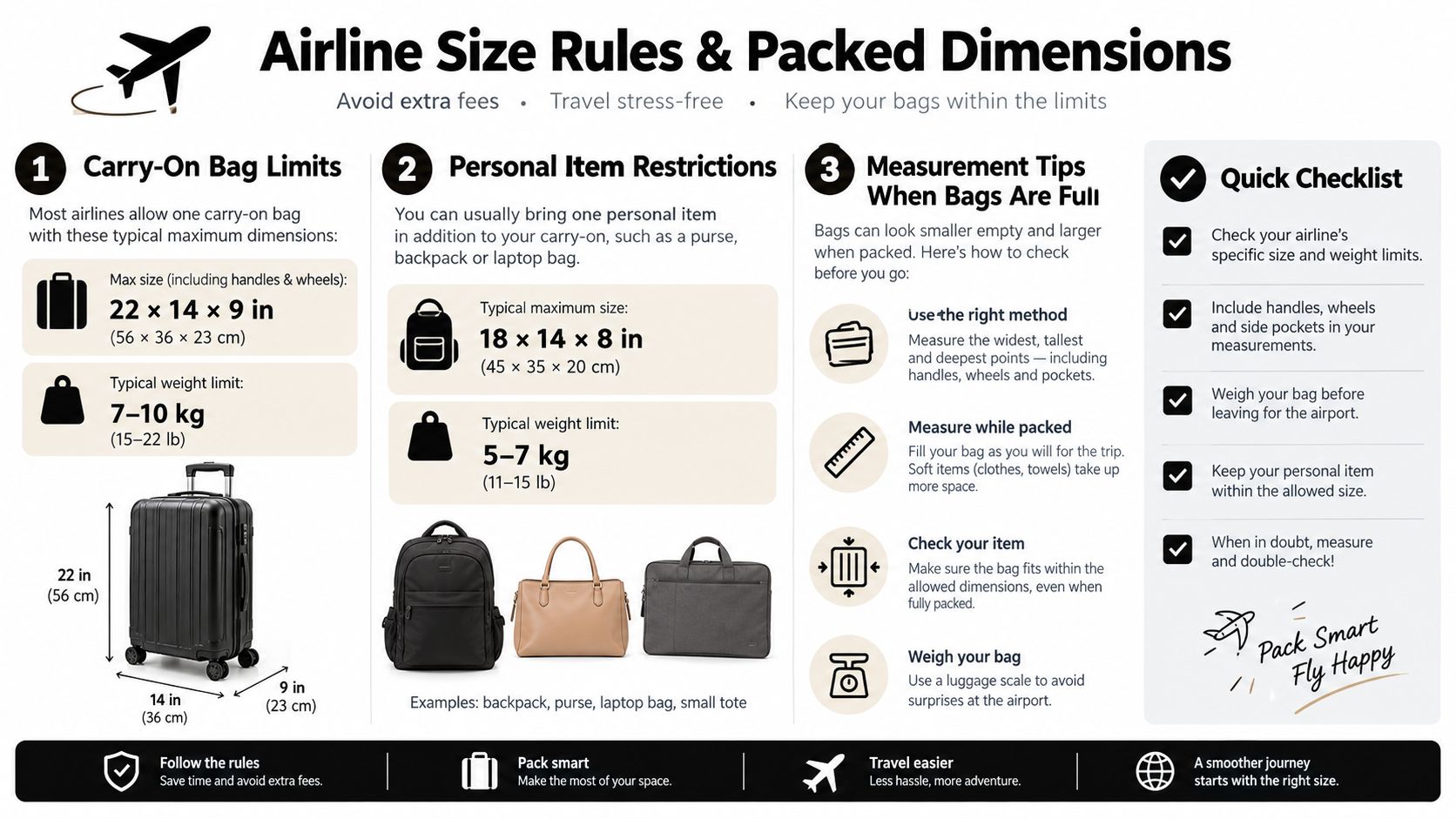
There is no single worldwide cabin-bag standard. The International Air Transport Association recommends a maximum cabin-bag size of 56 × 45 × 25 centimeters, approximately 22.0 × 17.7 × 9.8 inches, including handles, pockets, and other protrusions. That recommendation is voluntary, so individual airlines can set different limits. IATA's passenger baggage rules also distinguish between larger overhead-bin bags and smaller personal items.
Personal item or overhead carry-on
A weekender tote does not automatically qualify as a personal item. Travel guidance often uses a rule of thumb around 18 × 14 × 8 inches, but airline limits differ. Southwest is reported at 16.25 × 13.5 × 8 inches, while United's cited limit is 17 × 10 × 9 inches, as summarized in travel tote guidance from ViaTravelers.
Choose the bag category before you shop. A tote designed to slide beneath the seat needs a far more conservative packed profile than one intended for an overhead bin. The U.S. Transportation Security Administration does not set one cabin-bag size for every flight. It directs travelers to confirm dimensions with the airline and check that the bag fits either in the overhead bin or beneath the seat, as explained in TSA's carry-on size guidance.
Use this packing test:
- Choose the operating airline first. Check the carrier operating the flight, particularly when your booking includes a partner airline.
- Identify the bag category. Decide whether the tote will serve as an under-seat personal item or an overhead carry-on.
- Pack normally. Include the shoes, toiletries, laptop, and outer layer you would bring.
- Measure the widest points. Count handles, exterior pockets, side panels, zipper bulges, and hardware.
- Compress before measuring. Use the zipper and any compression features, but do not force the tote into a shape it cannot hold during travel.
- Leave room for reality. A bag that fits only when perfectly arranged may fail after you add a jacket or a small purchase.
A comparative 2026 dataset covering 81 airlines found that a 40 × 30 × 20 centimeter bag was accepted across all 81 recorded policies, while a 45 × 36 × 20 centimeter format matched 69 of 81 airlines, or 85.2%. The dataset also reported that 86.4% of analyzed airlines published a numeric per-piece weight limit, with a median limit of 8 kilograms. Those findings support a conservative packed size. For a practical reference, check Urban Totes' guide to weekender bag dimensions for packed vs. empty measurements.
Test the packed tote at home
Check more than the main compartment. IATA guidance says measurements can include wheels, handles, and side pockets, and a bag that exceeds the carrier's limits may be refused as cabin baggage or moved to the hold. IATA's baggage standards guidance makes exterior details part of the calculation, so bulky slip pockets and overfilled sections deserve attention.
Your shoulder should get a test too. Carry the packed tote around your home, lift it onto a counter, and walk with it for several minutes. If the bag pulls sharply to one side or the straps cut into your shoulder, a compliant dimension will not make it comfortable.
Traveling with a pet adds another layer of airline rules. Before combining a tote with a pet carrier, prepare with Passpaw's guide and confirm the operating airline's requirements rather than assuming one bag policy covers everything.
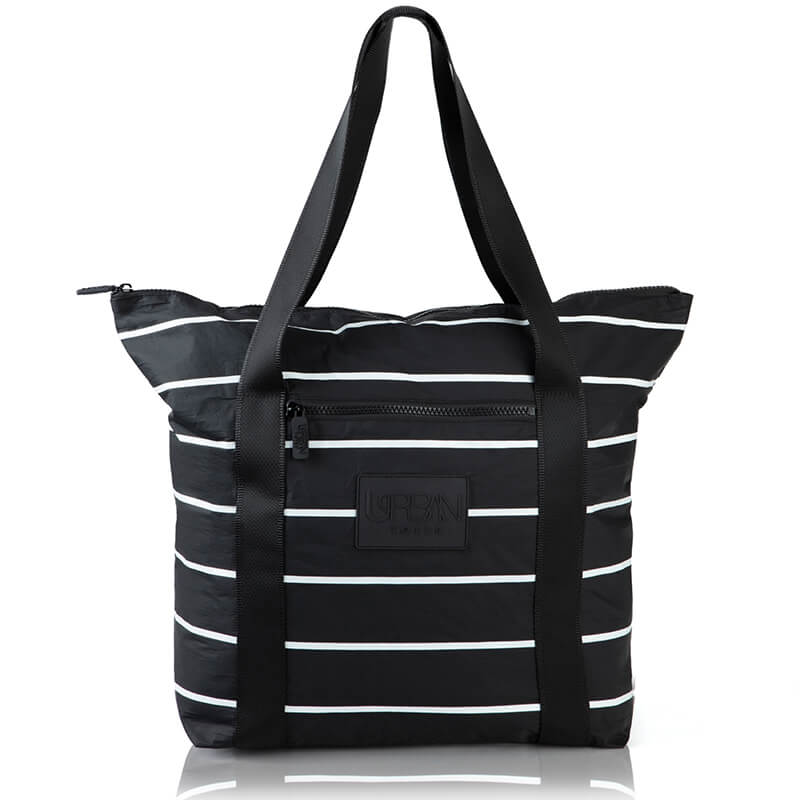
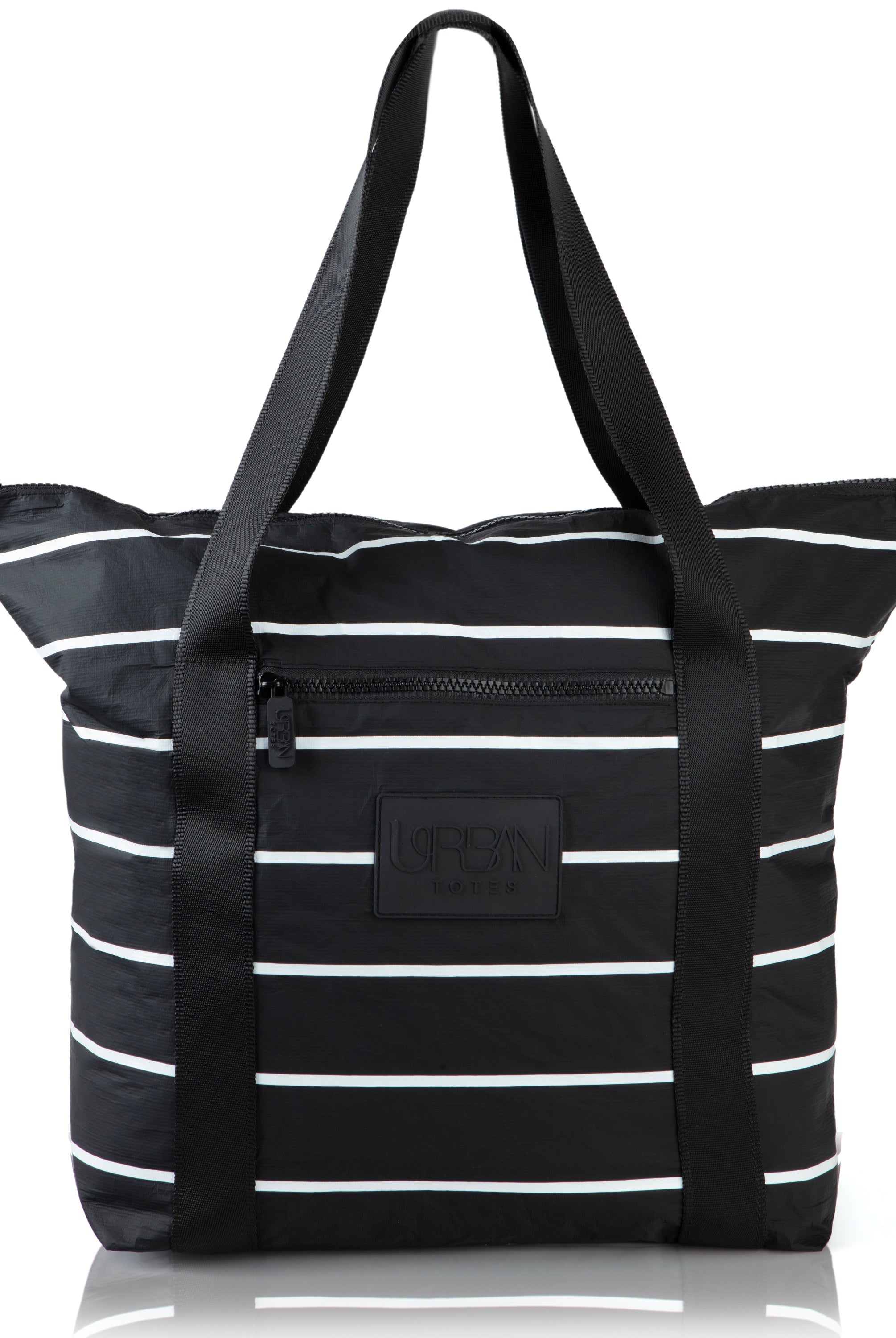
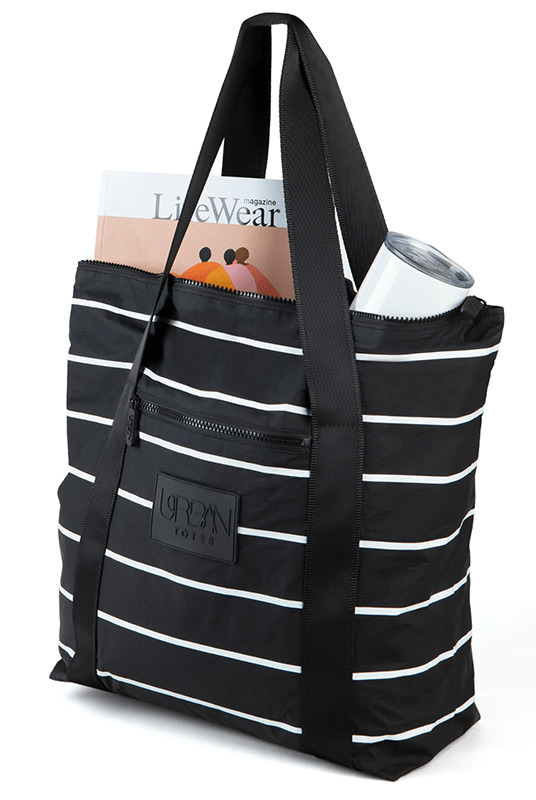
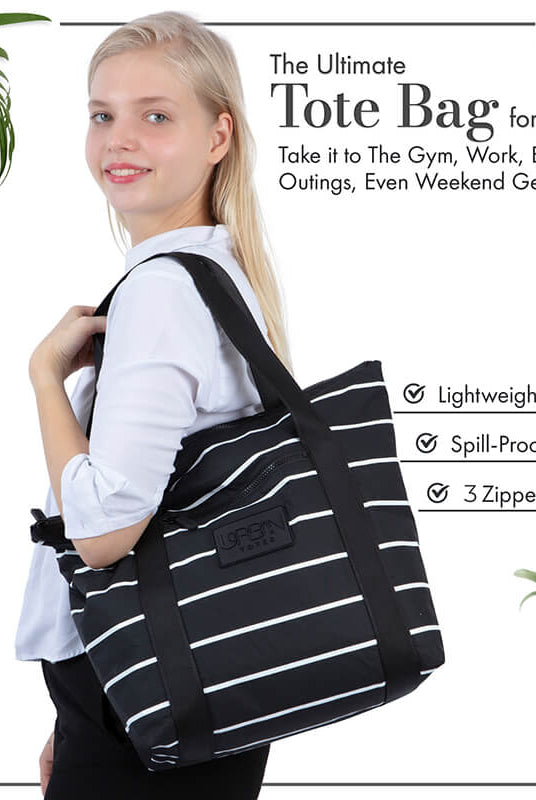
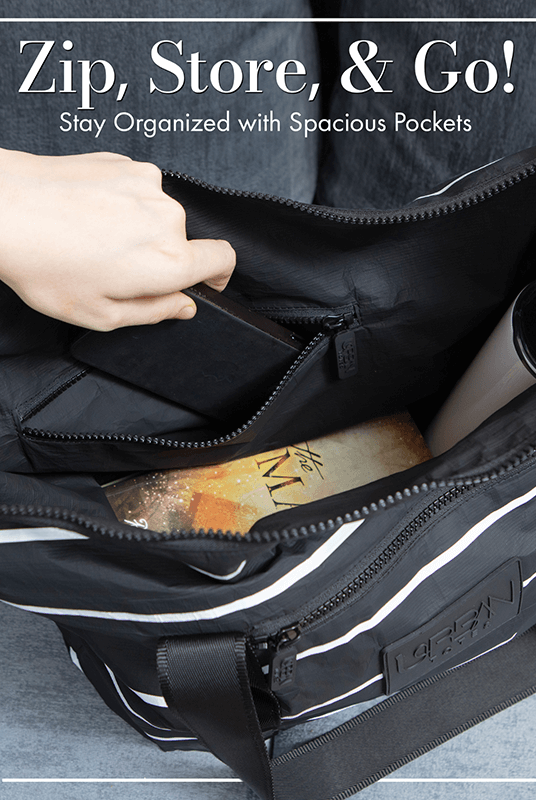
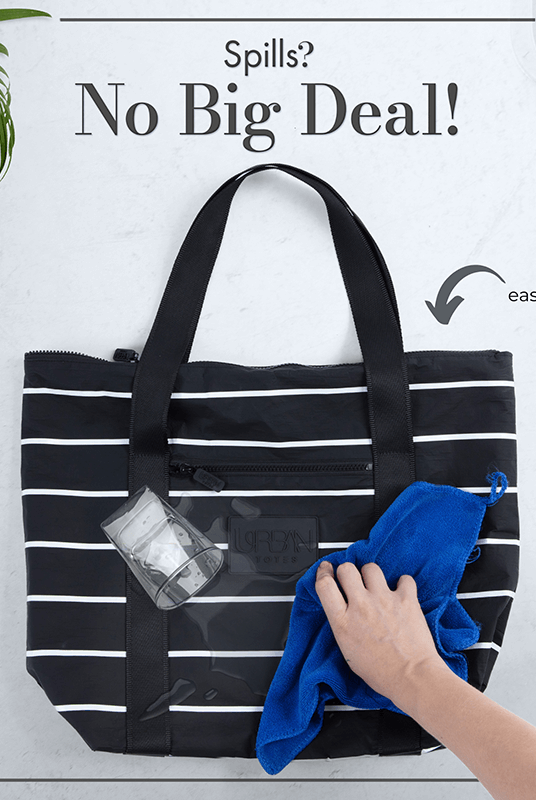
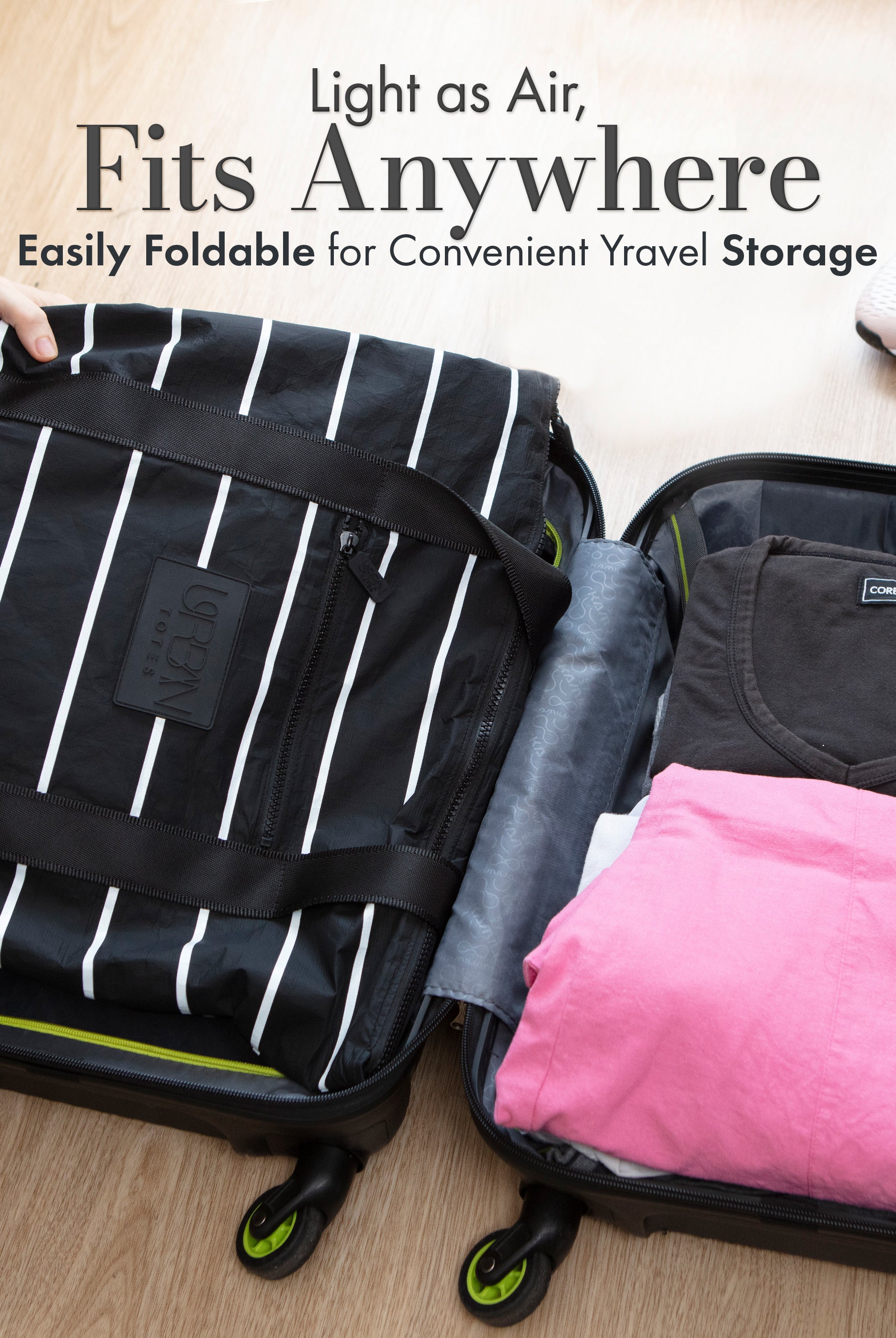
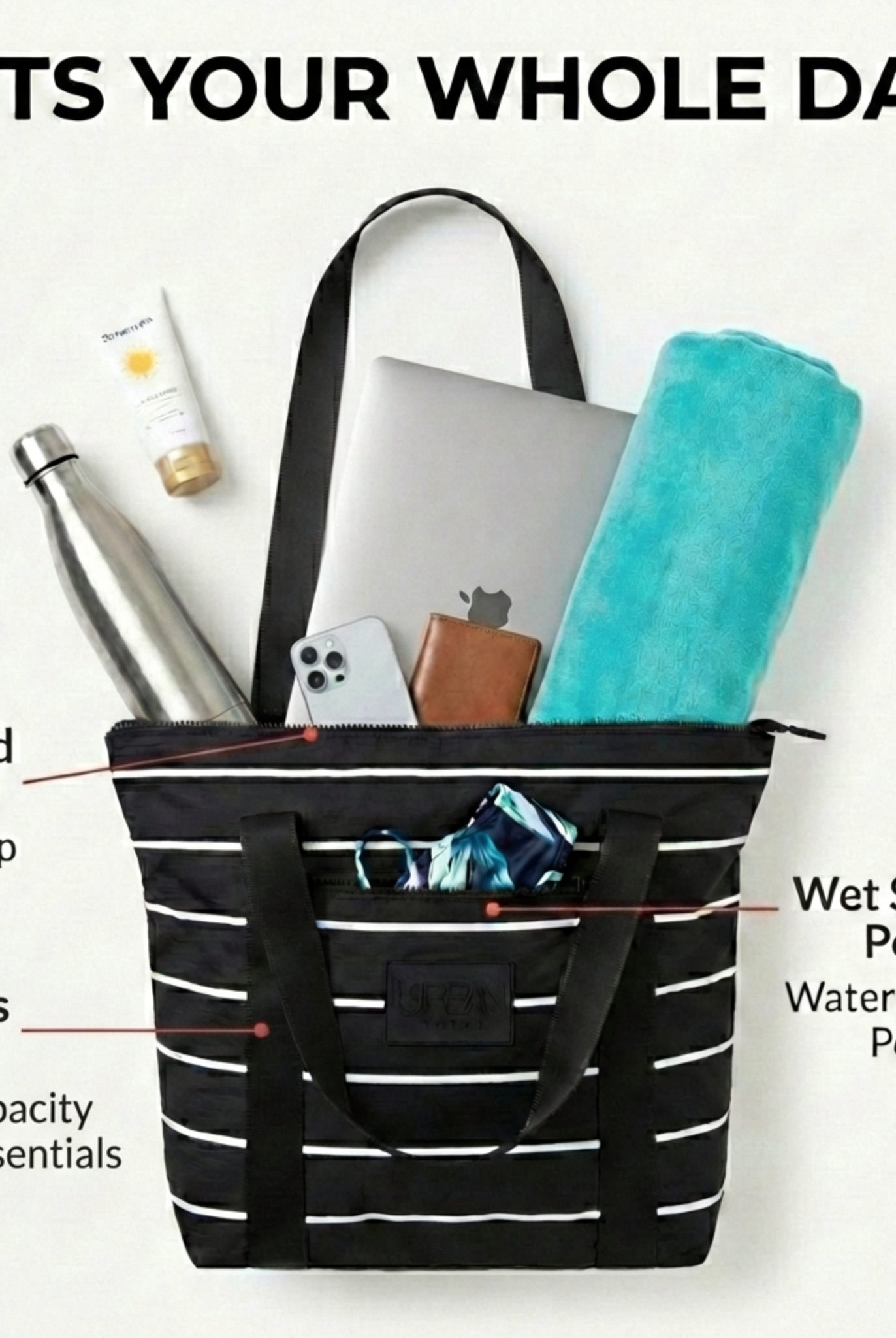
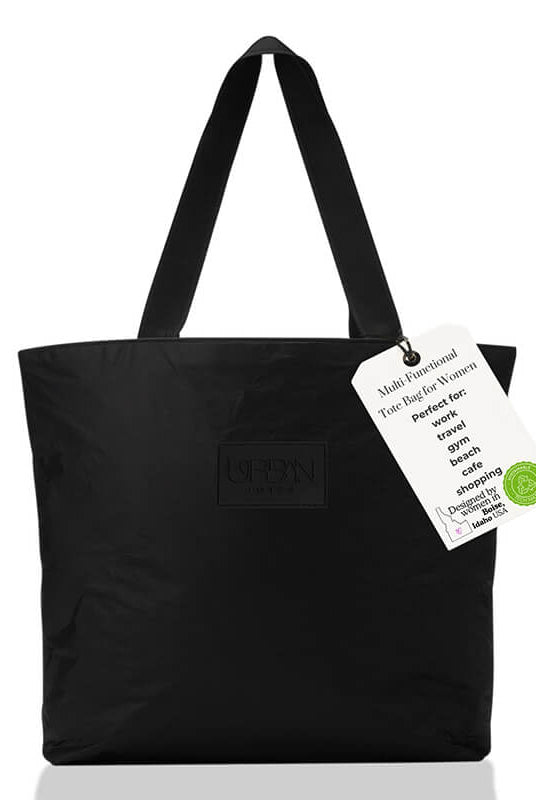
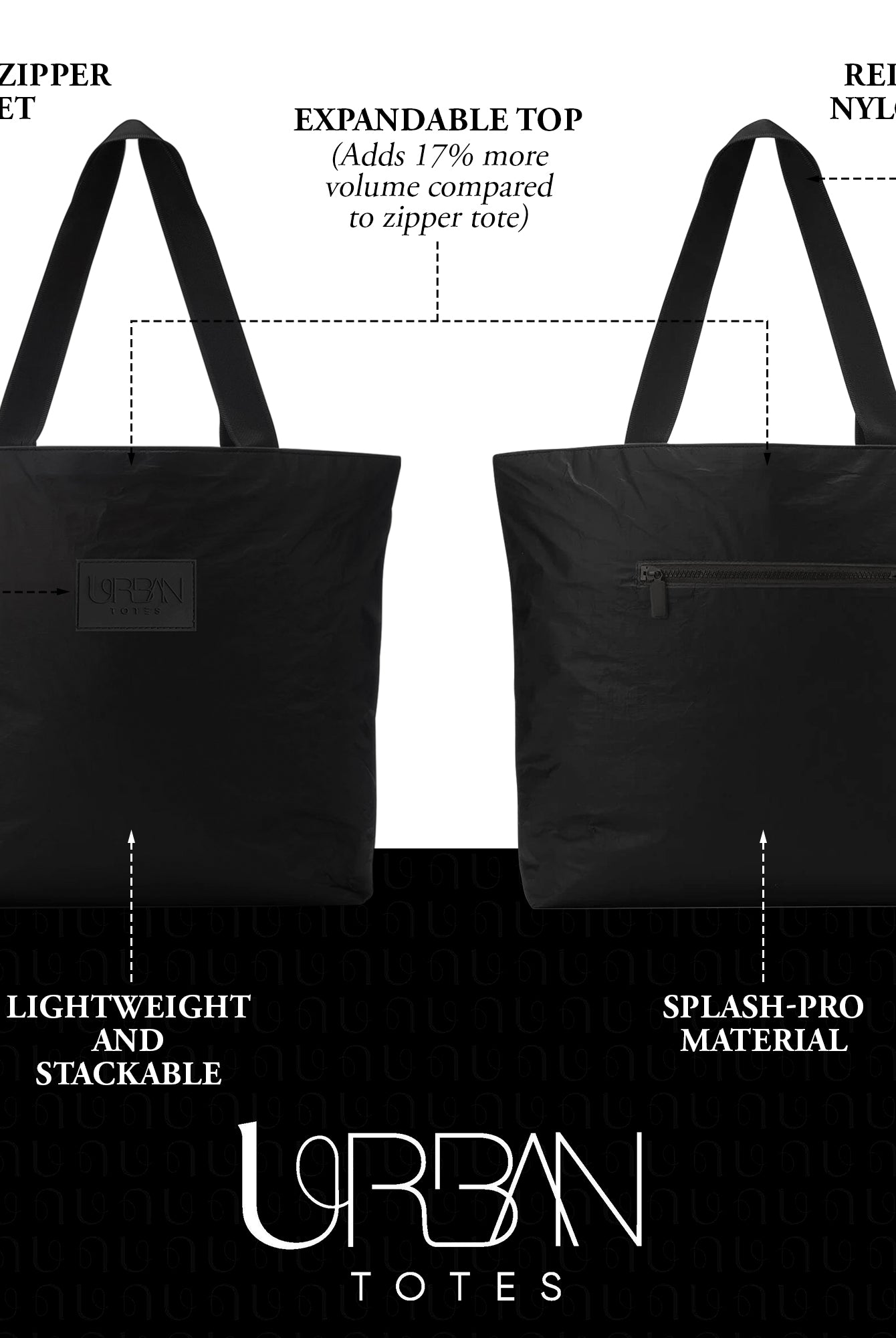
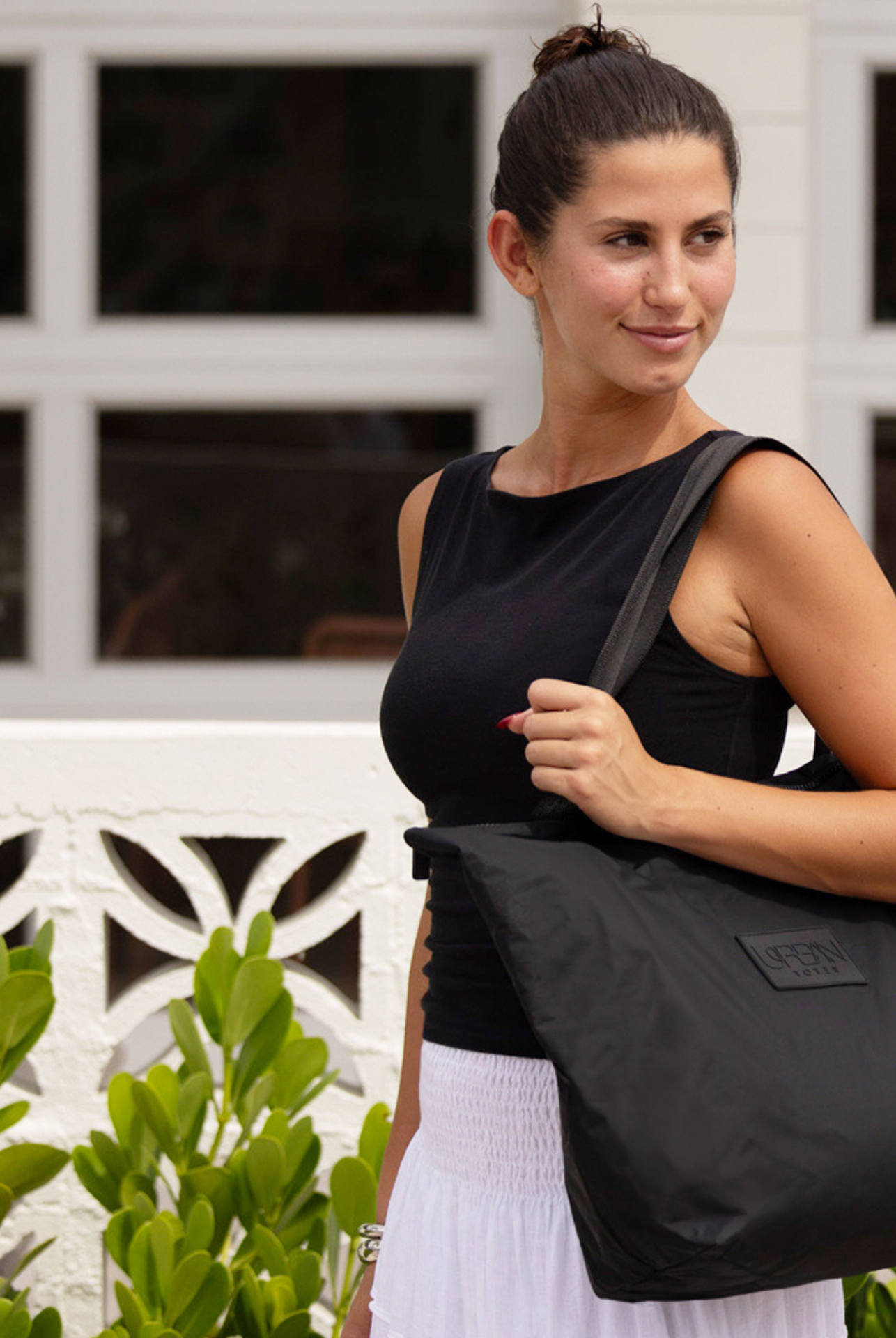
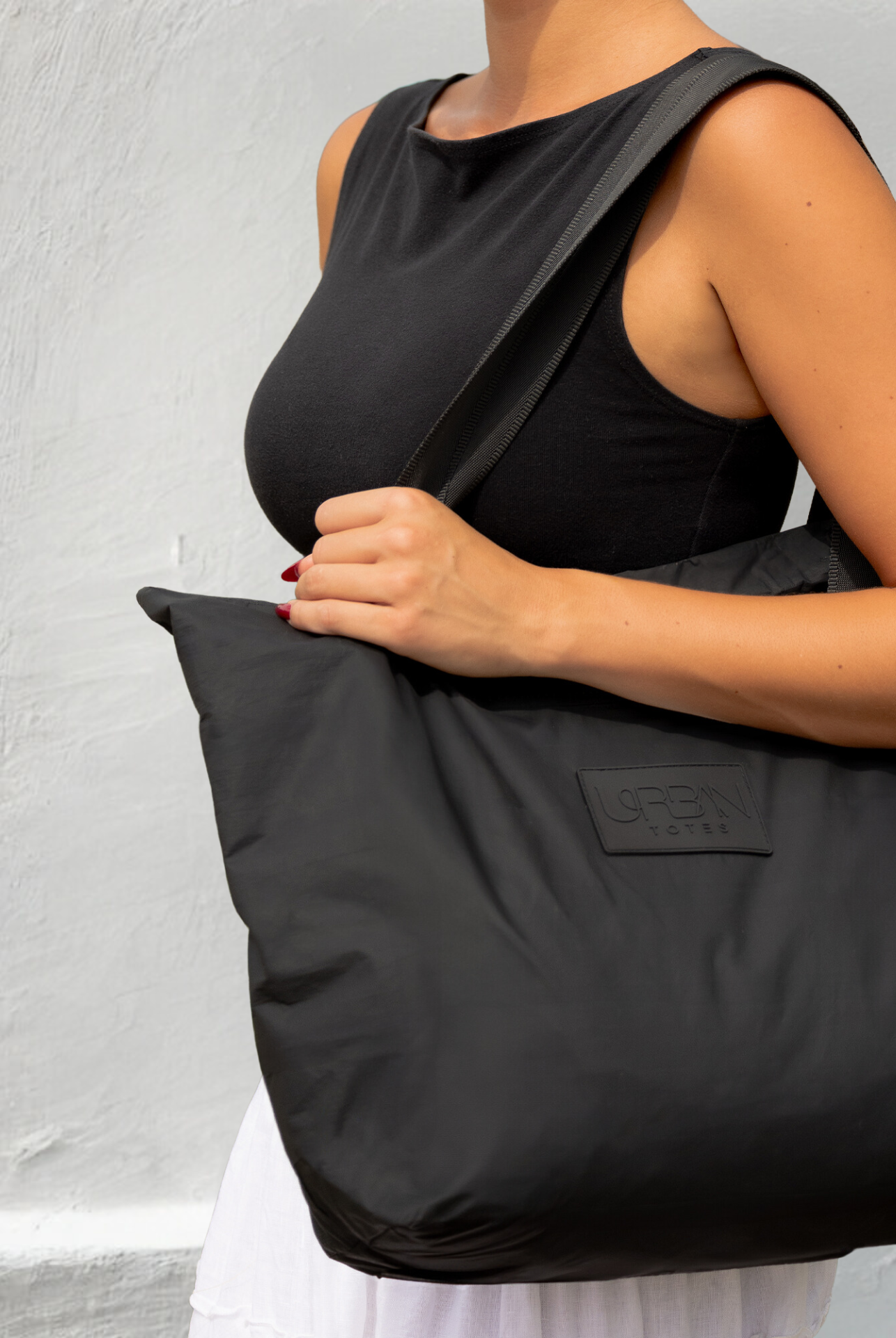
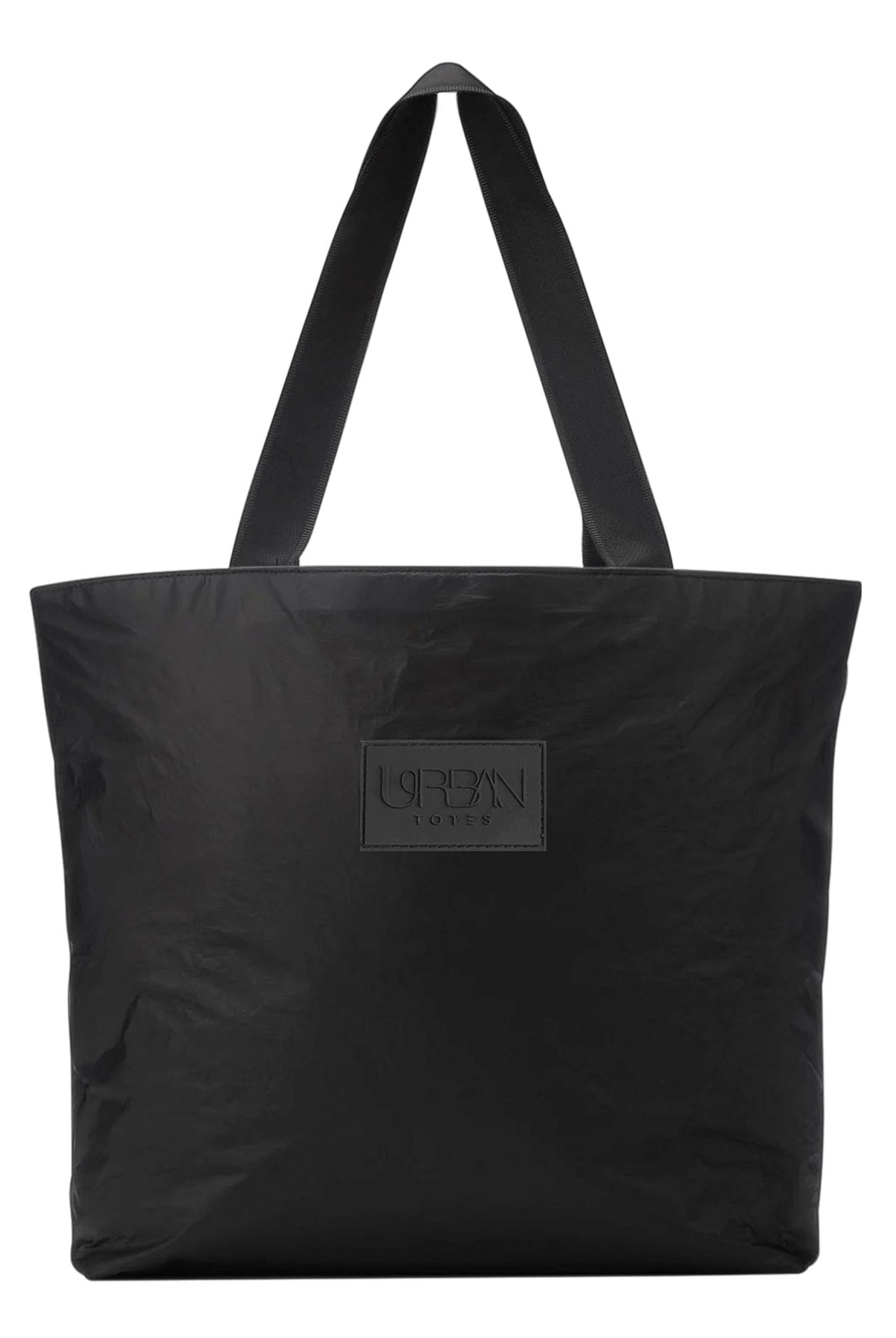
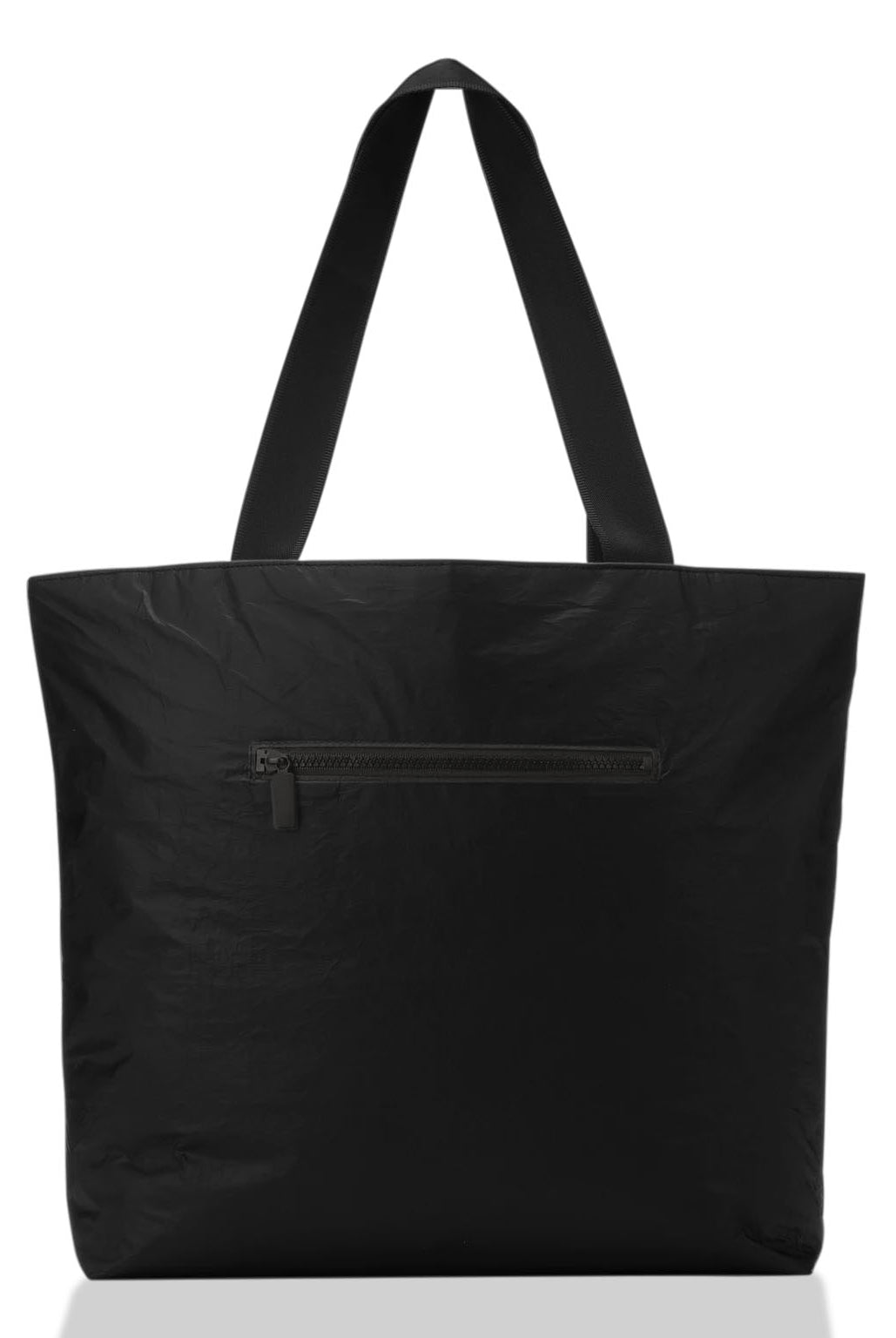
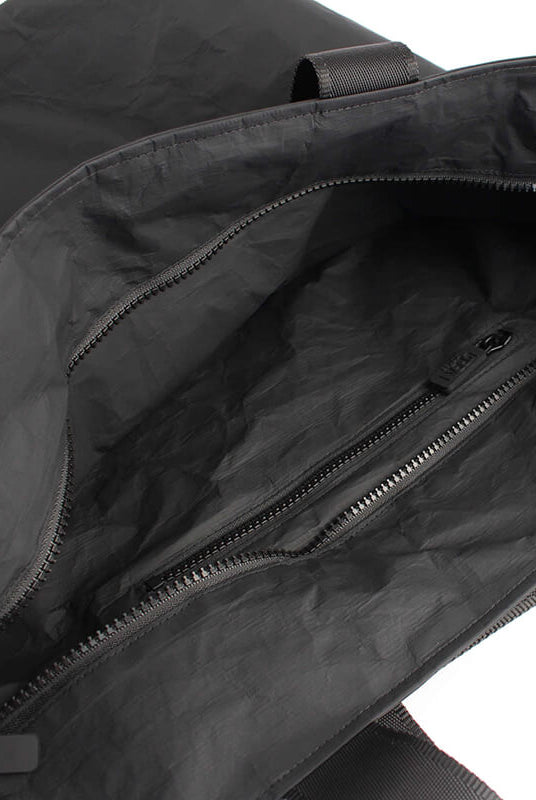
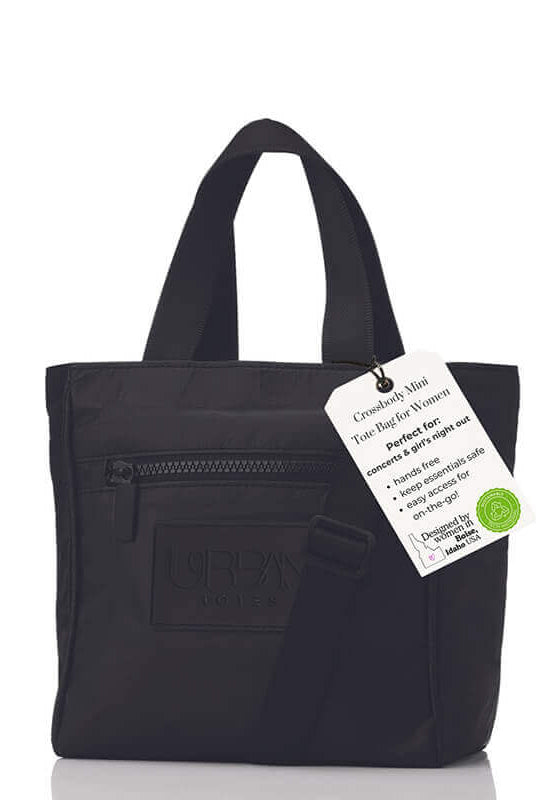
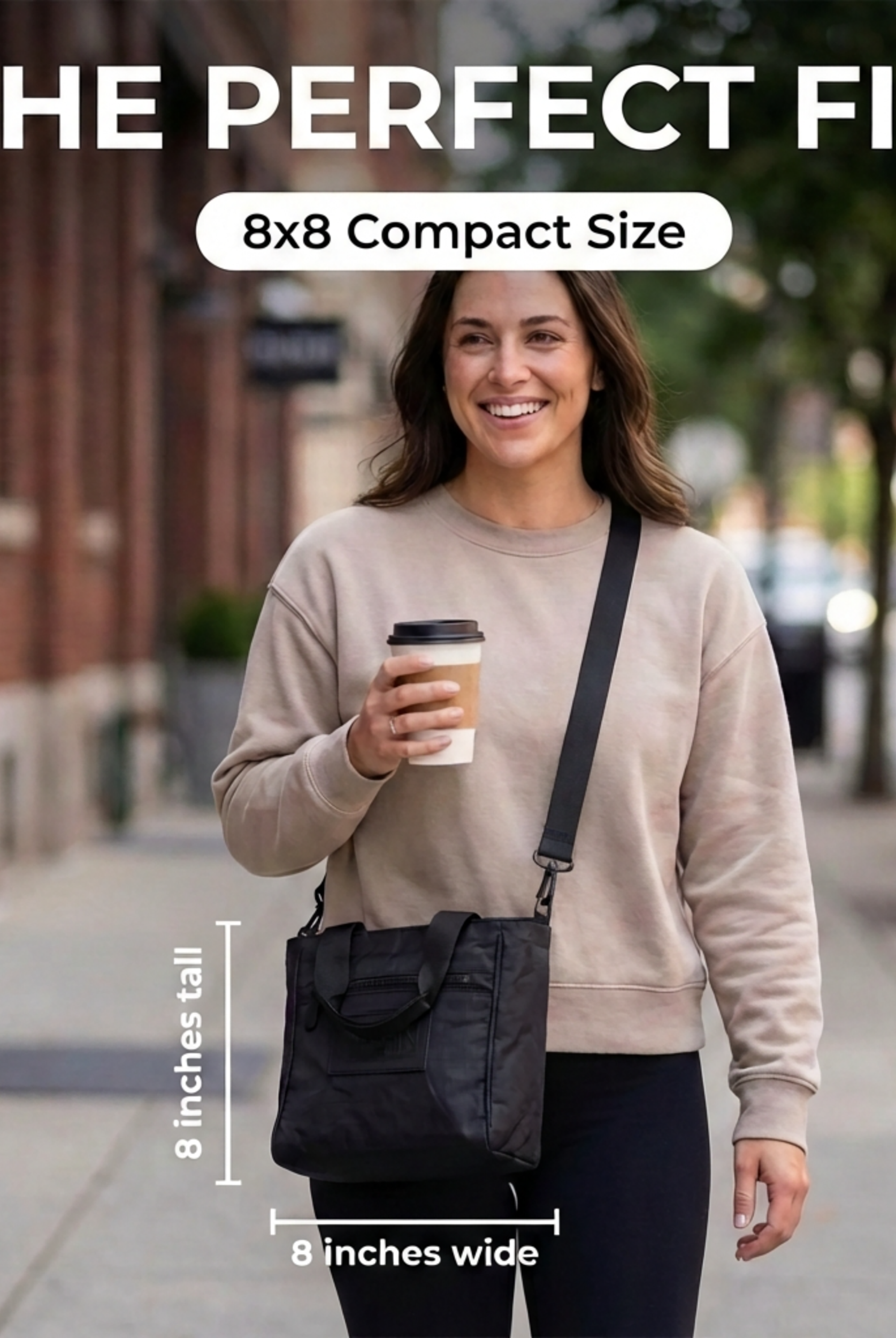
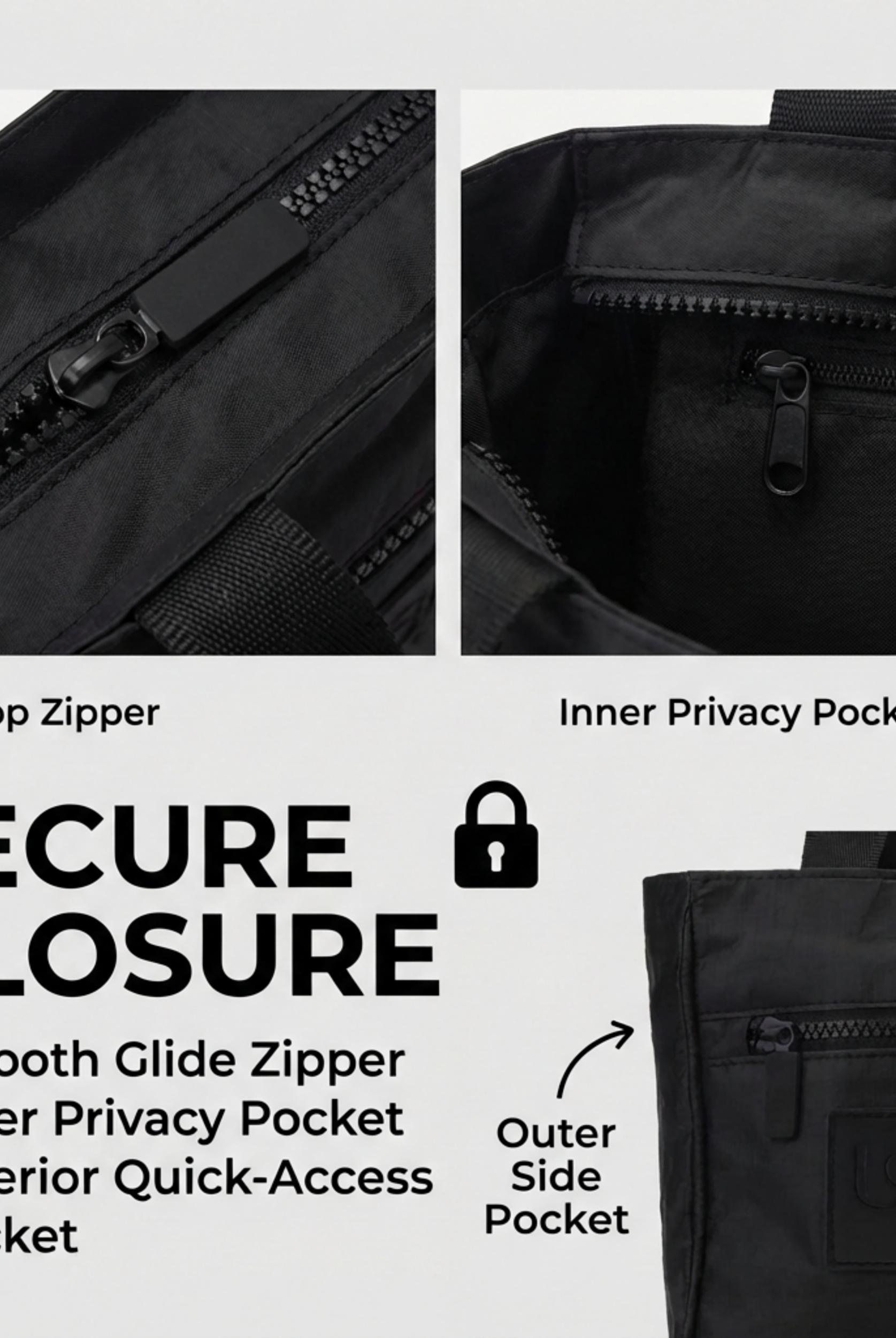
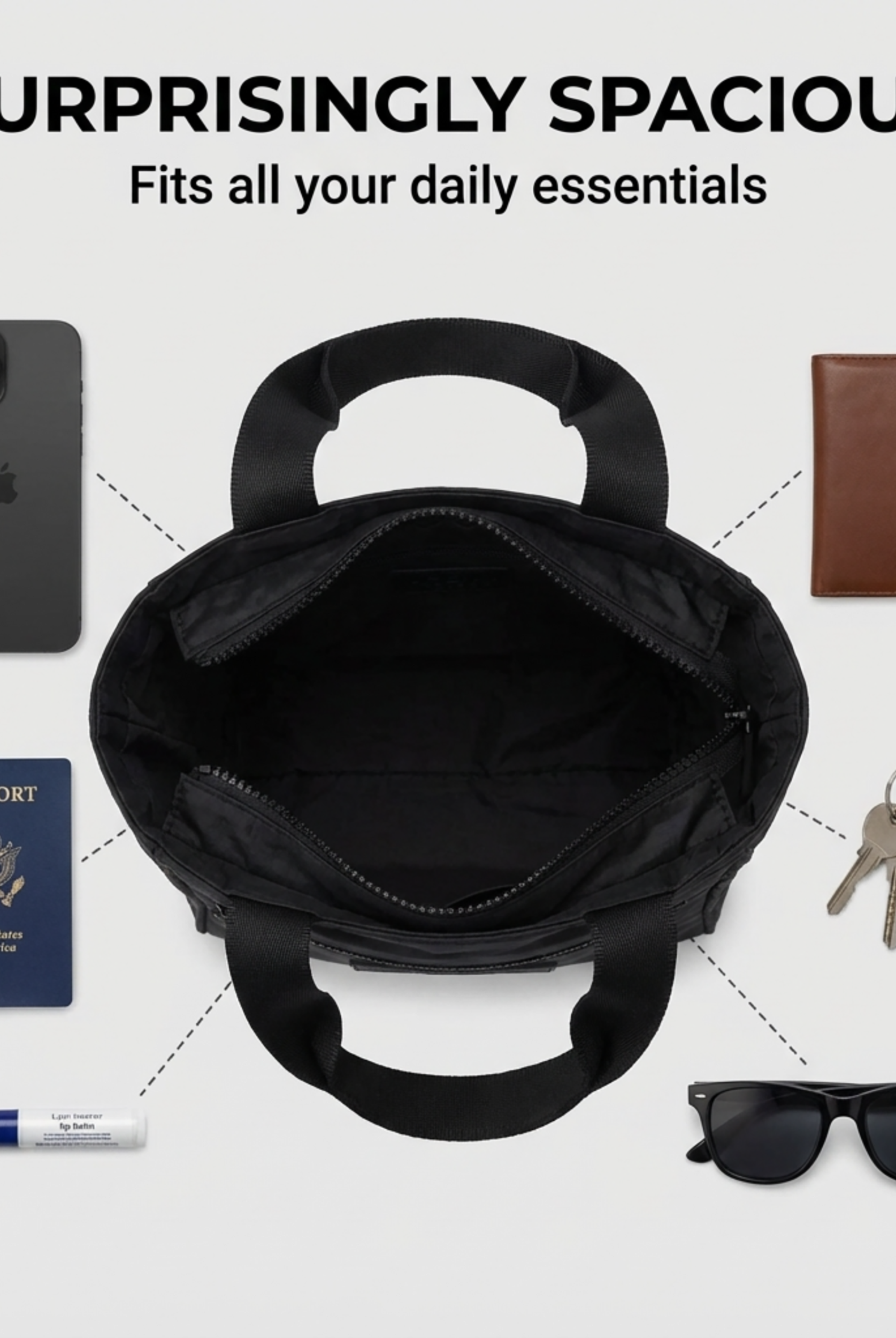
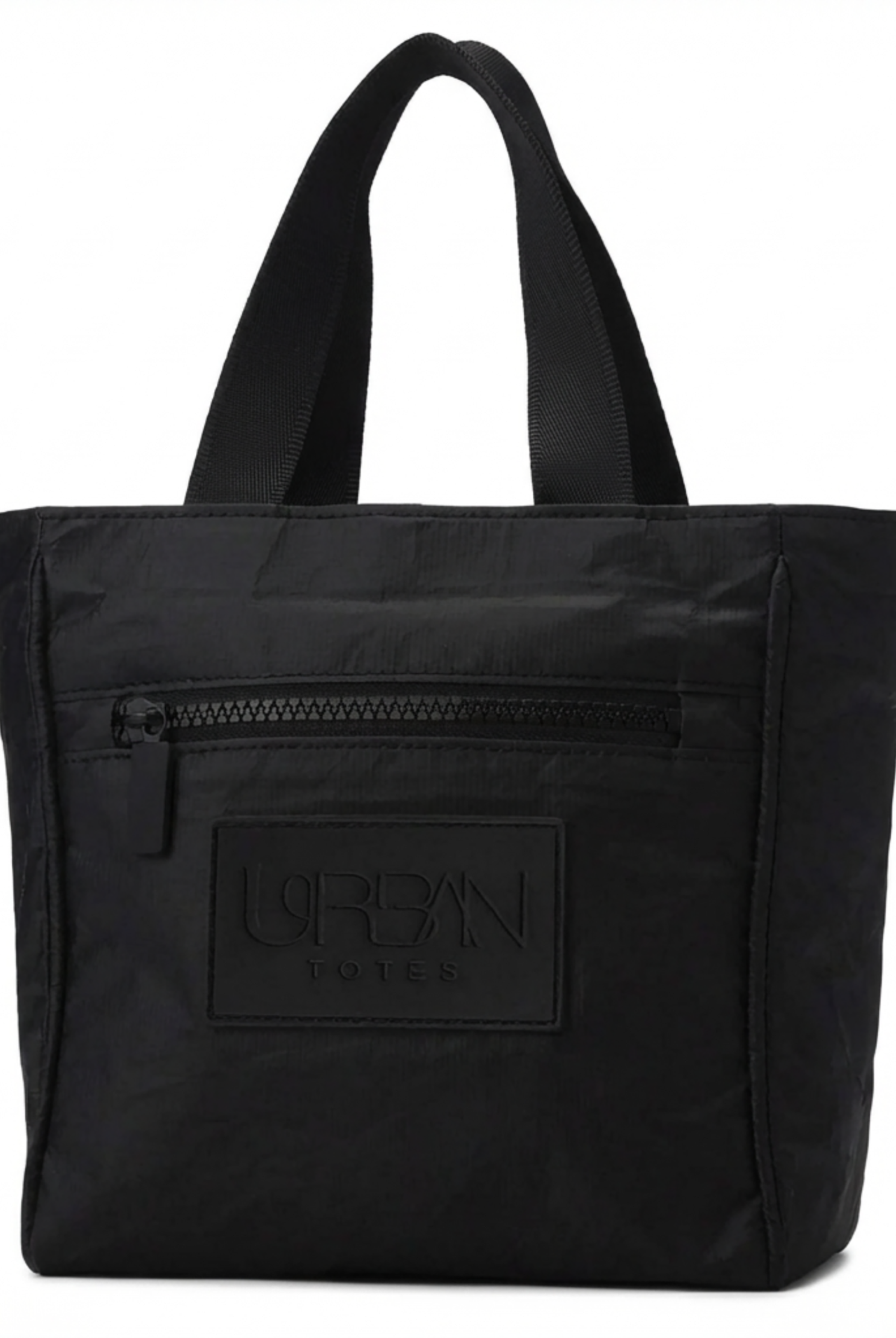
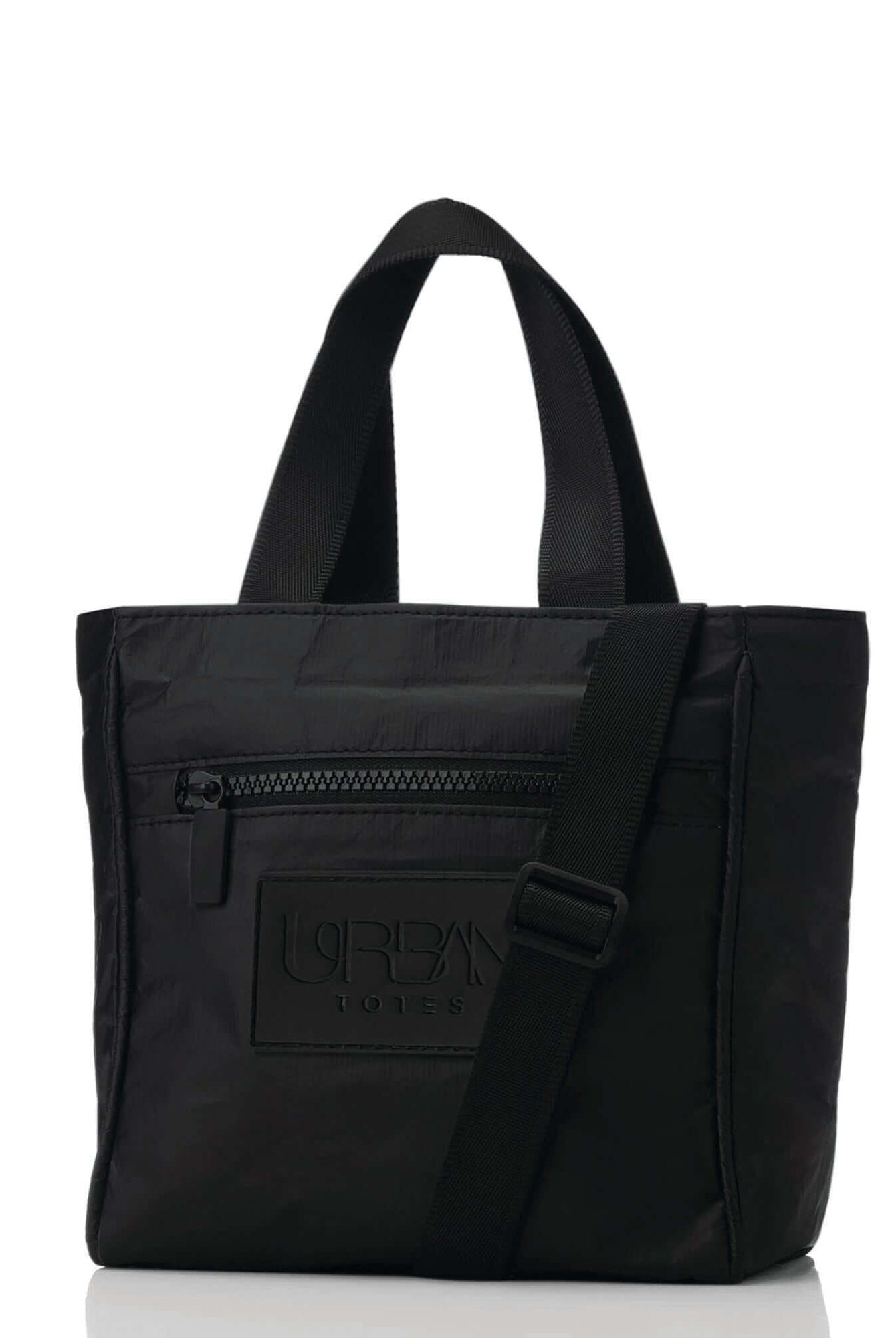
For a tote that supports everyday trips while you check its packed profile, The Go Anywhere Day Trip Tote Bag by Urban Totes has three large zippered compartments, dedicated iPhone and key pockets, a water-resistant easy-clean exterior, comfortable silky straps, and packable, foldable construction. Its listed handle length is 11.5 inches. Measure the full packed exterior instead of treating that handle specification as the airline measurement.
Comparing Materials and Smart Organization Features
Material choice affects how a weekender feels before you put anything inside it. Traditional leather looks polished and can provide a handsome structure, but it often adds weight and resists folding. Heavy canvas offers a relaxed, durable look, yet a fully loaded canvas tote can feel substantial before you've added a laptop or toiletries.
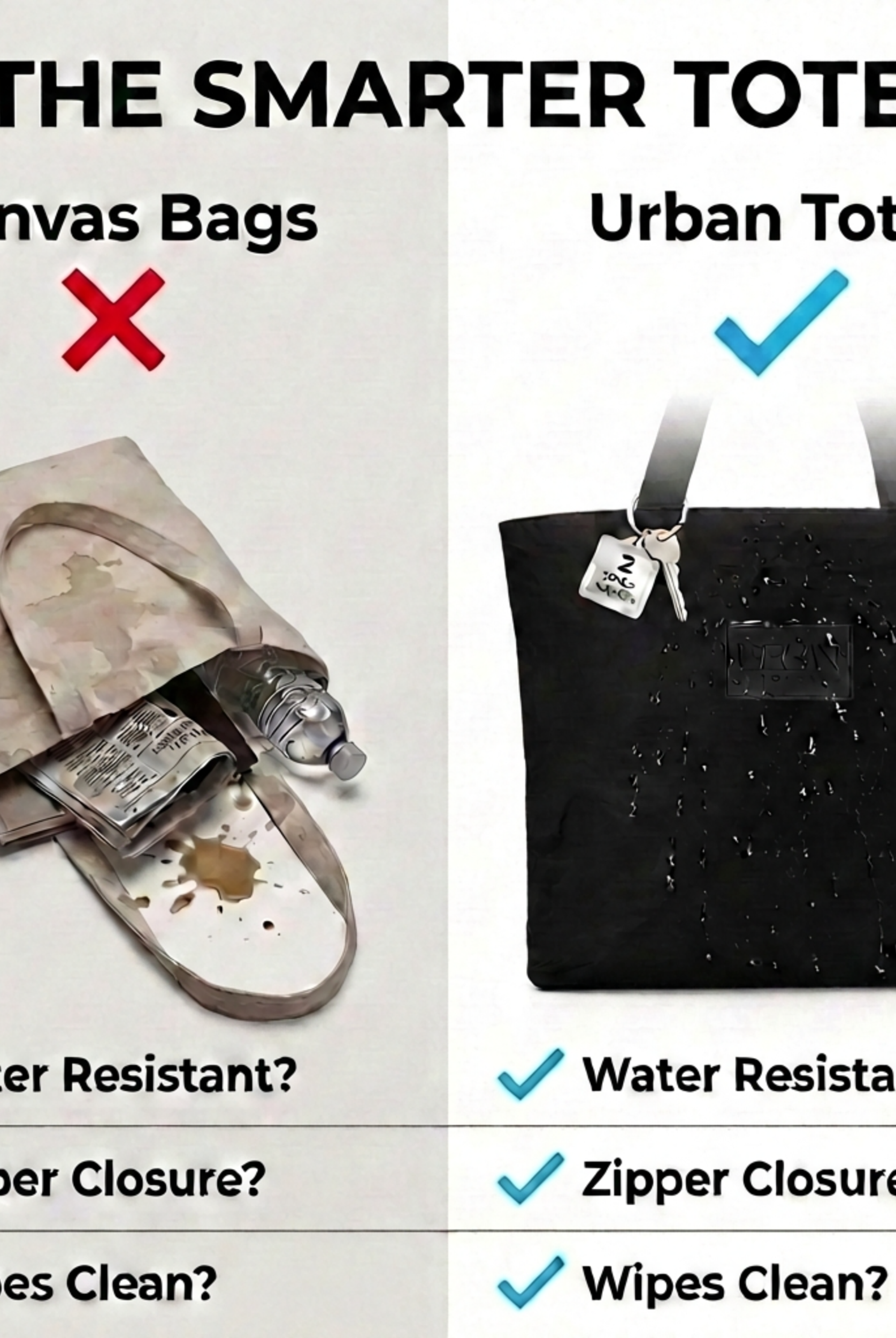
Modern technical fabrics take a different approach. A lightweight, water-resistant, easy-clean exterior makes more sense for a woman moving between beach sand, gym floors, school pickup, and airport seating. It won't turn the bag into a sealed dry bag, but it gives you a practical buffer against light rain, splashes, and the inevitable coffee incident.
| Material type | Weight and packability | Weather resistance | Maintenance and cleaning |
|---|---|---|---|
| Leather | Usually less packable and can feel heavy when structured | Handles everyday use, but finish and construction vary | Wipe carefully and follow the maker's care guidance |
| Heavy canvas | Flexible but often weightier than technical fabric | Can manage everyday wear, though untreated fabric absorbs moisture | May need spot cleaning and longer drying |
| Technical nylon or polyester | Often lightweight, packable, and foldable | Water-resistant finishes suit light rain and spills | Usually easy to wipe clean, subject to care instructions |
| Recycled technical fabric | Can combine low weight with repeated-use design | Performance depends on the finished fabric and seams | Look for clear care instructions and repair options |
For a deeper look at how fabric affects daily use, Urban Totes' tote bag material guide is a useful reference. I'd also ask a brand what “water-resistant” means in practice. ISO 811 evaluates fabric resistance to water penetration by steadily increasing hydrostatic pressure until water appears at three points, and the result is reported as the hydrostatic head resisted before penetration, according to the ISO 811 sample document.
Fabric isn't the entire weather story
A strong textile result doesn't automatically make an assembled tote waterproof. Seams, zippers, the base panel, and the way exterior pockets are attached all influence what happens in actual rain. For commuting and light weather, a water-resistant exterior is sensible. Keep valuables inside a zippered compartment because fabric testing doesn't measure complete bag sealing.
The market also gives you a reason to examine material claims carefully. Industry estimates report that the global bag sector consumes approximately 25 million tons of raw materials annually and generates about 5 million tons of textile waste, with roughly 80% of that waste ending up in landfills. Although 65% of brands reportedly offer some sustainable options, only 12% of total bag production uses recycled materials, and less than 5% of used bags are recycled, according to WorldMetrics' bag industry statistics.
That gap makes durability, easy care, repairability, and credible recycled-content information more useful than a vague label. The same source reports that recycled polyester use in bag production increased 60% since 2020, while recycled nylon use rose 45% since 2021. A 2023 luggage-industry survey cited there found that 71% of millennial and Generation Z travelers preferred eco-friendly luggage options, compared with 42% of baby boomers. Those numbers don't replace a close look at construction, but they explain why material transparency belongs in the buying conversation.
Organization separates a tote from a black hole
A roomy central compartment feels generous until you're searching for your passport beneath a sweater. I prefer a layout that gives every small category a home:
- Secure essentials: A zipper closure keeps the main opening closed in a crowded terminal or busy market.
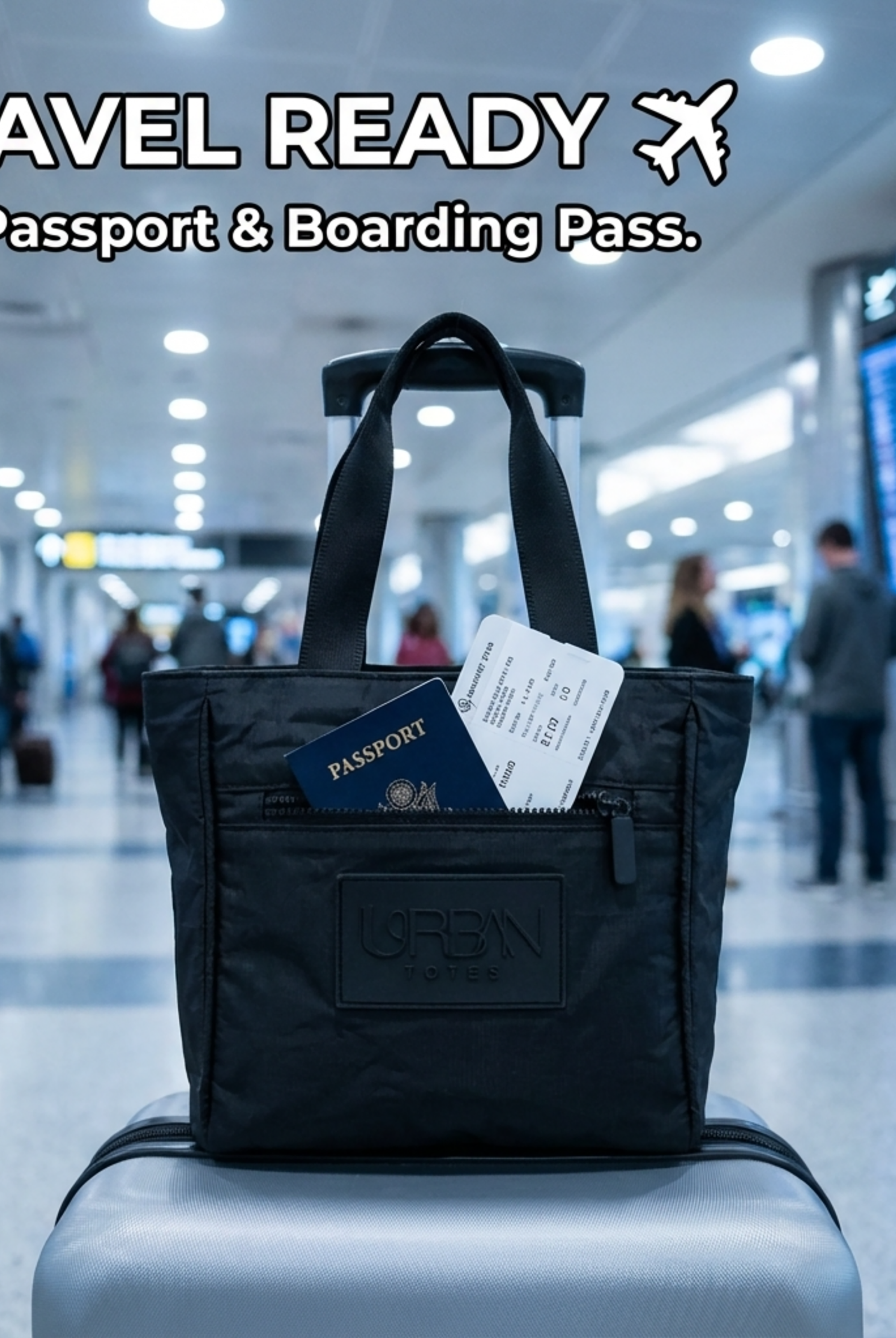
- Quick-access items: An exterior or upper pocket works for boarding documents, lip balm, sunglasses, and a phone.
- Dense objects: Place chargers, toiletries, and other compact weight near the base or against a stable side.
- Flexible clothing space: Leave the central area for soft items that can expand without blocking the zipper.
- Separate messes: A shoe or laundry section is useful when the tote will go from hotel room to beach or gym.
The right layout doesn't make you pack more. It makes the contents easier to see, reach, and redistribute.
Evaluating Strap Comfort and Load Management
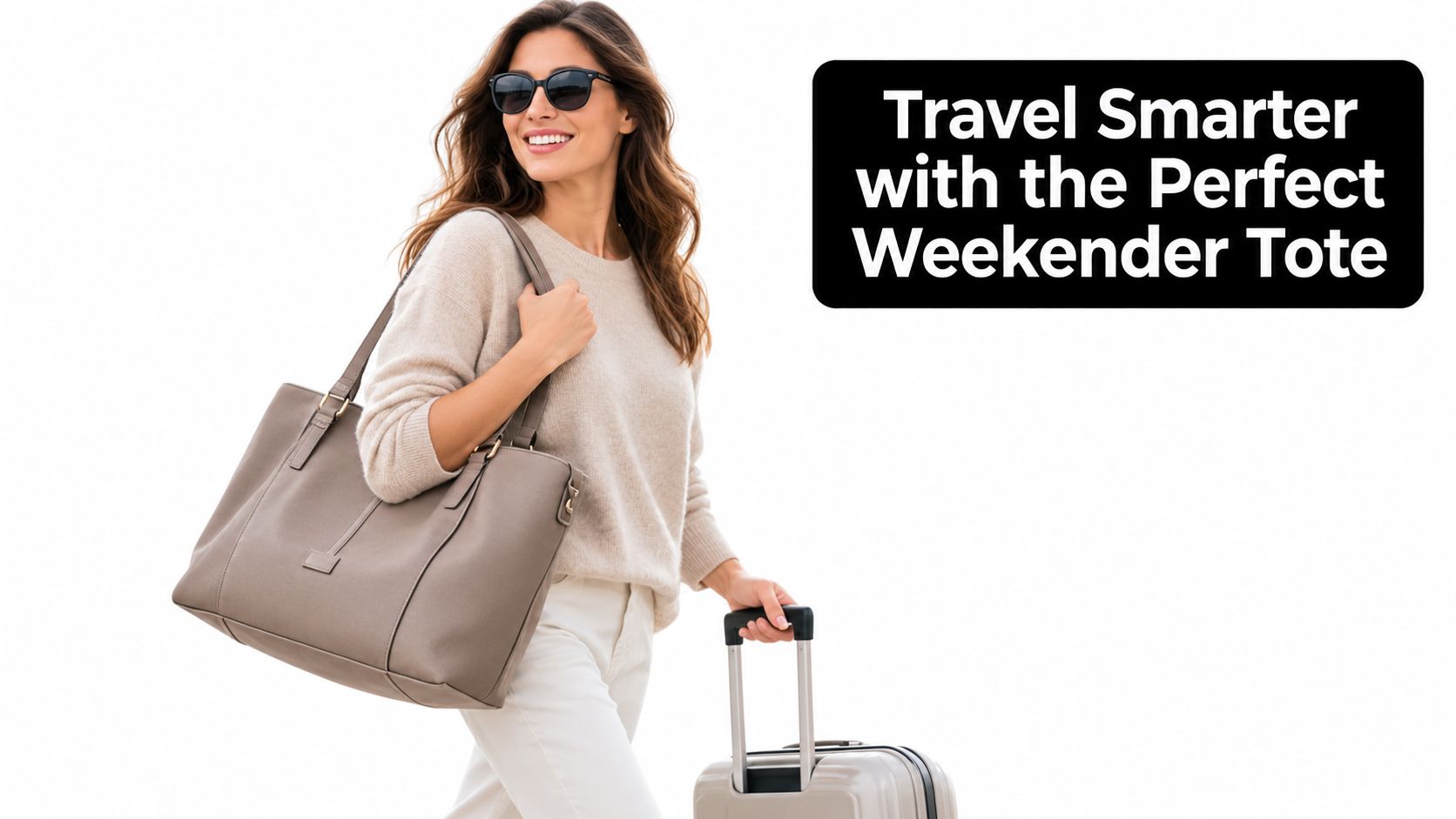
A tote can look effortless and still carry badly. Once you add a laptop, liquids, shoes, and a change of clothes, one-shoulder loading can pull the bag away from your body, create a pressure point, or make you switch sides every few minutes.
Strap drop, handle softness, empty-bag weight, and center-of-mass stability deserve the same attention as pockets. A short transfer from car to hotel may suit a classic shoulder tote. A long walk through a terminal, stairs, crowded transit, or a day without a car may call for a backpack or rolling bag instead.
Use a ten-minute carry test
Before committing to a weekender tote, recreate your normal load at home. Don't test it empty. An empty bag tells you almost nothing about how the straps behave when your laptop and shoes pull the fabric downward.
- Load your real essentials. Use the laptop, toiletry case, shoes, water bottle, and clothing you would typically pack.
- Close every compartment. A zipper closure can change the shape and balance of the bag.
- Walk for approximately 10 minutes. Move around your home, outside, or through a nearby store with turns and changes in pace.
- Notice the movement. Does the bag swing, twist, collapse, or pull away from your body?
- Check your shoulder and hand. Look for pressure from narrow straps, slipping, or uncomfortable handle edges.
- Repeat on the other shoulder. Frequent shoulder switching should feel natural, not like a struggle.
A tote that feels fine for two minutes may feel completely different after a real terminal walk.
The center of mass matters because dense items can gather in one low corner. A multi-pocket interior helps distribute small objects, while a stable base keeps the bag from folding into your leg. Soft construction is useful for airline flexibility, but it shouldn't mean the tote loses all shape when loaded.
If you're comparing carrying options, Urban Totes' guidance on an adjustable shoulder strap offers a helpful lens for thinking about fit and flexibility. My own rule is simple: if the bag becomes awkward before the ten-minute mark, it isn't the best weekender tote for your route, no matter how good it looks in the mirror.
Why the Urban Totes Weekender Checks Every Box
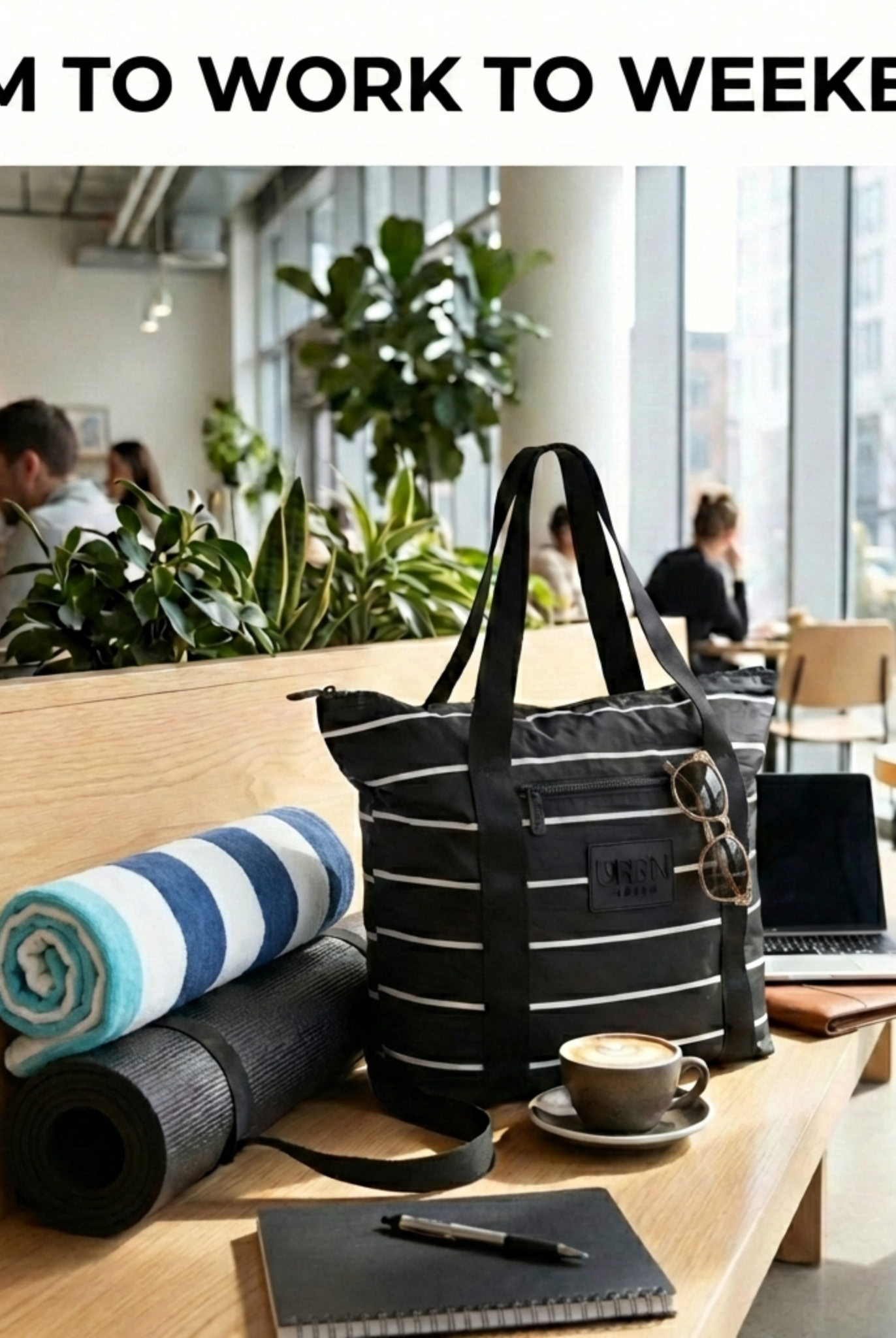
The Urban Totes Weekender is designed for the woman whose day doesn't stay in one lane. A morning school drop-off can turn into a work meeting, an airport transfer, or an unplanned overnight. The bag needs to look at home beside a conference outfit and still handle beach towels, gym layers, or a rushed hotel check-in.
This Boise-made brand focuses on a lightweight, water-resistant, packable, and foldable approach. That combination matters because a weekender often has to serve two jobs. It carries your things on the way out, then folds or stores neatly when the trip is over instead of becoming another bulky object in a closet.
Built for the messy middle of the day
A thoughtfully designed tote earns its keep in ordinary moments:
- At school drop-off: The zipper closure keeps small essentials contained while you're carrying lunch items, paperwork, or an extra layer.
- At the airport: Multiple compartments let you separate travel documents, tech, toiletries, and soft clothing before you reach security.
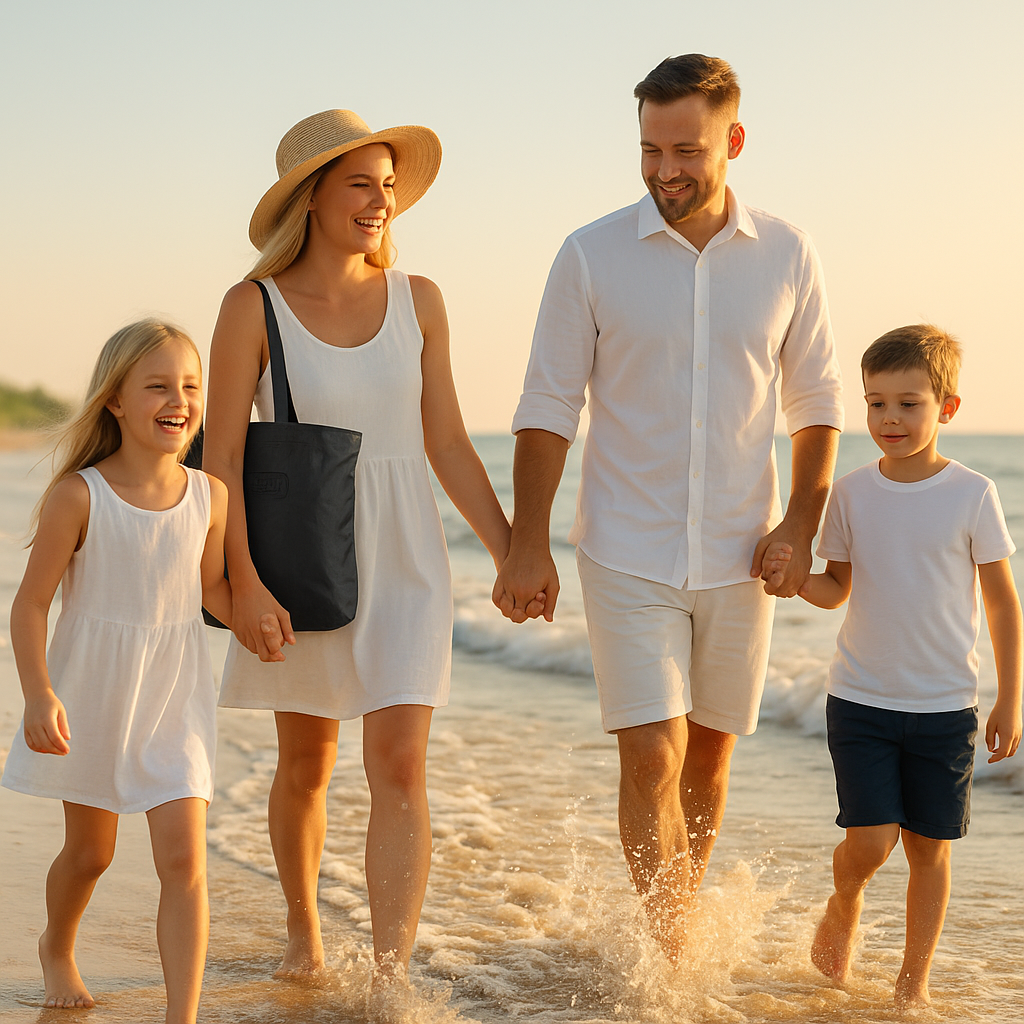
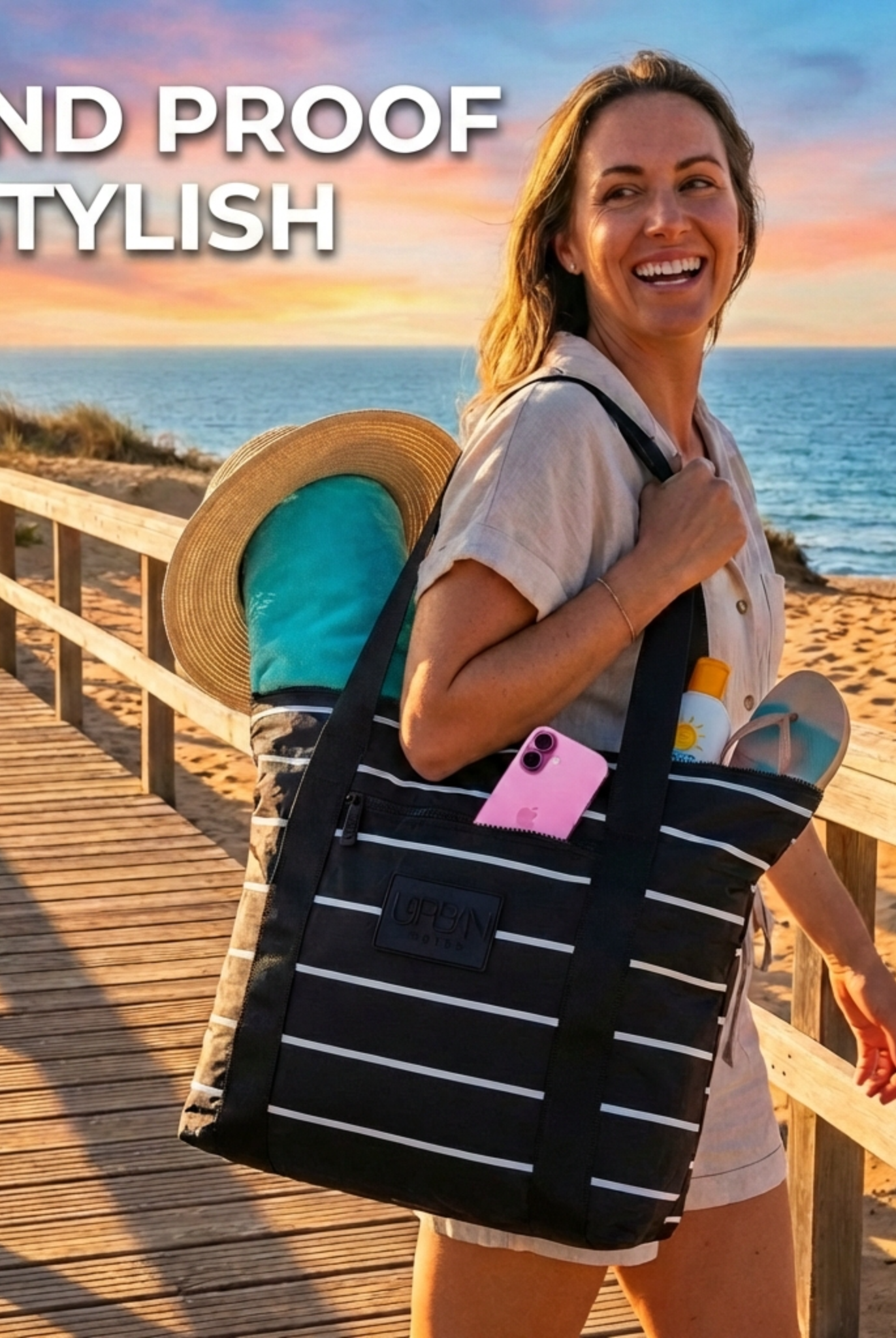
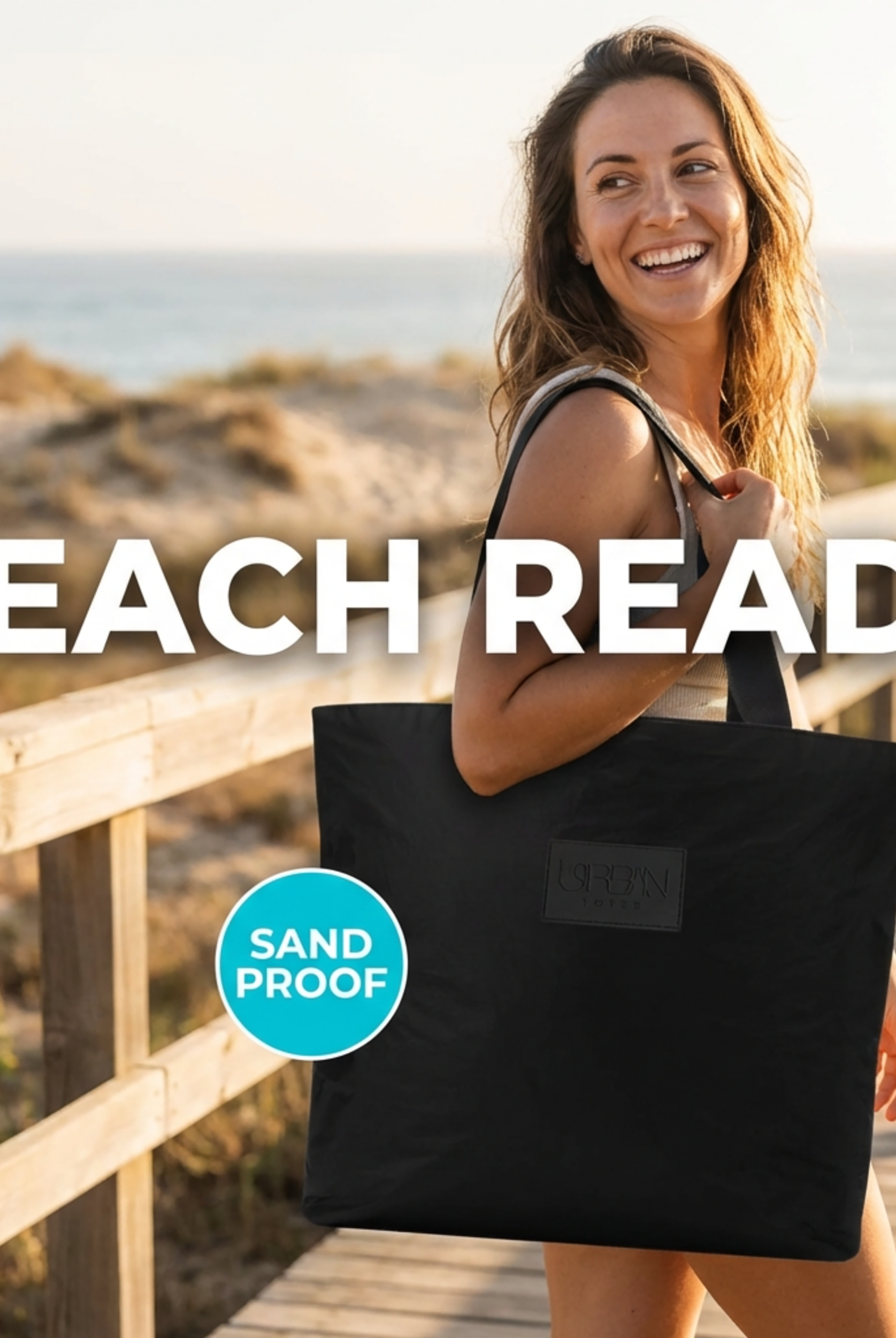
- At the beach: A water-resistant, easy-clean exterior is more practical around splashes, sunscreen, and damp surfaces.
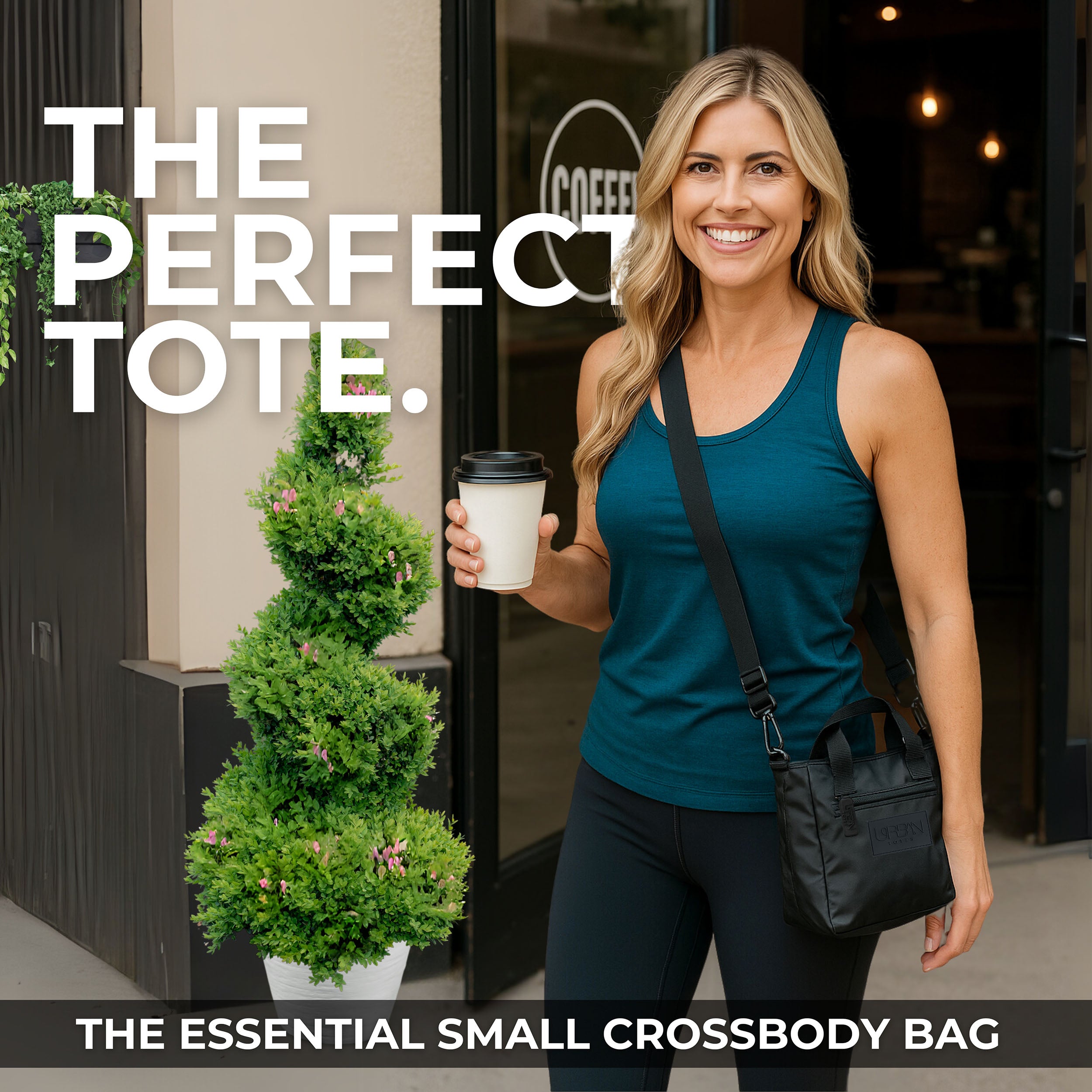
- At the office: A minimalist black-on-black design can move from commute to meeting without looking like specialized luggage.
- On a spontaneous getaway: Packable, foldable construction makes it easier to store the tote before a trip and take it along afterward.
The Weekender's value isn't about filling every available inch. Its appeal is the combination of organized storage and flexible capacity, especially for women who need one bag to cross several settings. A secure zipper closure also changes the daily experience. You can place the tote beside you in a café or under a seat without leaving the entire opening exposed.
Urban Totes is a woman-owned small business based in Boise, Idaho, and that perspective shows up in the focus on real-life practicality rather than decorative extras. The relevant features are straightforward: water-resistant materials, comfortable straps, useful compartments, and a form that can adapt to errands, travel, beach days, and everyday carry.
I'd still measure the fully packed exterior against your operating airline. No flexible tote automatically qualifies as a personal item or carry-on, and airline rules remain separate from the bag's design. But for a woman who wants a stylish, functional, durable companion that can move from errands to an overnight trip, the Weekender addresses the right problems in the right order.
Strategic Packing Tips for Maximum Capacity
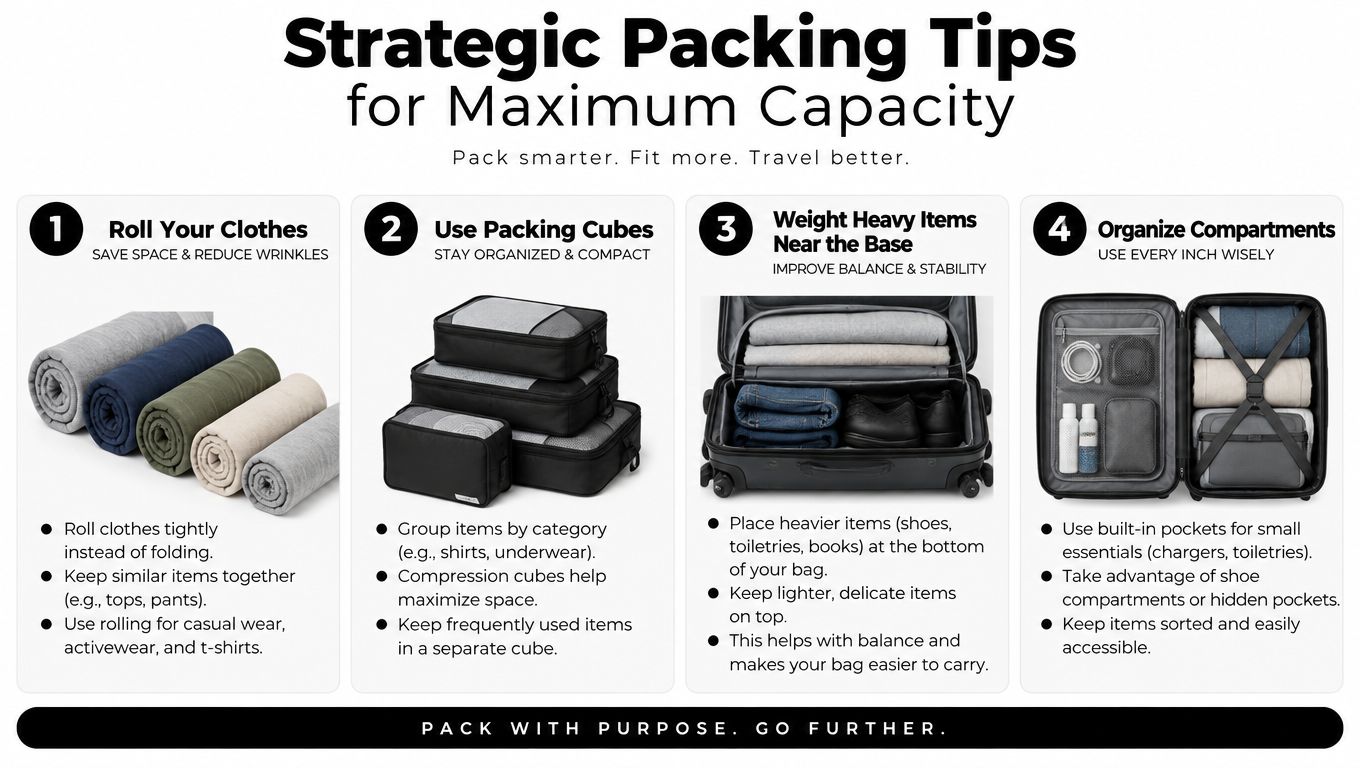
A good tote rewards restraint. Pack the items you'll use, give dense objects a stable home, and leave enough flexibility for the bag to close without bulging. The goal isn't to fill every gap. It's to create a load you can carry and retrieve without unpacking the entire bag.
Pack from the base upward
Start with shoes, a folded jacket, or another dense item at the bottom. Put each shoe in a washable pouch or separate bag, then place the pair in a way that keeps the weight centered rather than pressed against one side.
Roll softer garments instead of stacking them in a tall pile. Rolling makes it easier to see each item and helps you use the corners of a flexible tote. Delicate pieces can go in a packing cube or lie flat near the top.
Use the compartments deliberately
Treat every zipper pocket as a retrieval system, not spare space.
- Main compartment: Rolled clothing and soft layers.
- Interior zipper pocket: Passport, jewelry, medication, or other small valuables.
- Exterior pocket: Boarding pass, phone, lip balm, and sunglasses.
- Separate pouch: Toiletries, cables, and items that could leak or tangle.
- Top layer: The sweater, scarf, or light jacket you may need before reaching your destination.
Carry-on liquids must follow the applicable security rules. IATA passenger guidance says containers must be no larger than 100 milliliters, or 3.4 fluid ounces, and TSA's checklist specifies that liquids should fit into one clear, plastic, zip-top bag measuring one quart, as detailed in IATA's passenger liquid guidance. Keep that clear bag accessible rather than burying it beneath clothing.
Before leaving home, close the tote, lift it, and walk through the same ten-minute test used for strap comfort. Then measure the widest packed points. If the zipper strains or an exterior pocket bulges, remove one item before you leave, not while an airline employee is waiting at the sizer.
For a more detailed packing routine, Urban Totes' guide to packing a tote bag for travel can help you refine the order and placement of your contents.
Choosing Your Perfect Go Anywhere Companion
The right weekender tote balances four things: packed airline dimensions, water-resistant and easy-care material, smart organization, and comfortable carrying. If one of those fails, the bag becomes frustrating quickly. A tote that looks beautiful but overloads one shoulder isn't practical, and a spacious bag that can't close or fit your airline's sizer isn't travel-ready.
Choose a compact, flexible shape for flights, a multi-pocket interior for daily access, and a zipper closure for crowded spaces. If your route includes long walking distances or heavy equipment, compare the tote with a backpack or rolling option rather than forcing a shoulder bag to do every job.
If you want to compare another flexible format, shop the best convertible tote as part of your wider search. Then focus on the bag that matches your actual life, whether that means beach mornings, office commutes, school runs, or spontaneous weekends away.
Urban Totes offers thoughtfully designed, water-resistant, lightweight, packable, and foldable bags with organized compartments and secure zipper closures for everyday carry and travel. Visit Urban Totes to find a stylish go-anywhere tote that helps you carry less stress and tote everything your next getaway requires.